History of RAREMint
The History of RAREMint: Origins and Evolution
RAREMint emerged as a response to the intersection of blockchain and the growing demand for digital scarcity, particularly in the realm of collectibles and high-value assets. The project’s origins can be traced to a niche but rapidly expanding segment of the crypto ecosystem—where digital ownership is verified on-chain and infused with real-world value propositions centered on exclusivity and provenance.
The initial concept for RAREMint was heavily influenced by the shortcomings of traditional markets for rare collectibles, such as art, luxury goods, and sports memorabilia. Traditionally, these industries have faced issues such as counterfeit items, obscured provenance, and opaque valuation processes. Early developers aimed to exploit blockchain’s capacity for transparency and immutability to address these drawbacks.
RAREMint's whitepaper was released early on with a focus on utilizing non-fungible token (NFT) standards to tokenize collectible assets. The vision included fractionalization, allowing users to invest in high-value items by purchasing shares of tokenized representations, without needing a seven-figure net worth. While this attracted a segment of Web3 enthusiasts, the platform faced initial skepticism over its ability to guarantee the accuracy of off-chain asset backing. Early hurdles included debates around custodial trust and whether or not the project was overly reliant on real-world guarantees that undermined its decentralization ethos.
Key to RAREMint's rollout was the integration of off-chain evaluation mechanisms. Leveraging a partnership model with third-party appraisers and legal custodians, the platform sought to bridge the divide between the blockchain-native and traditional collectibles marketplaces. However, critiques arose regarding the project's reliance on centralized mechanisms for these custodial partnerships, leading some in the crypto community to question whether RAREMint truly aligned with decentralized finance (DeFi) principles.
Several turning points in RAREMint's history were marked by high-profile acquisitions of real-world assets, tokenized on the platform and auctioned off in impressive sales events. These events underscored the project's ability to legitimize digital ownership while highlighting its scalability challenges. Critics also noted that its transaction costs, which were amplified during periods of network congestion, could alienate smaller investors who were otherwise its target demographic.
Ultimately, RAREMint's history is one of iterative adaptation. Despite criticism, its foundational model has arguably succeeded in exploring how blockchain can redefine ownership and access in niche markets. That said, questions about reliance on custodial intermediaries and operational scalability linger as recurring themes within RAREMint's evolution.
How RAREMint Works
How RAREMint Works: An In-Depth Look at the Mechanics
RAREMint operates as a tokenized asset platform, enabling users to fractionalize, trade, and store ownership of rare collectibles and physical assets through blockchain technology. The underlying mechanics of RAREMint are built to provide verifiable provenance, liquidity, and a decentralized transaction framework. Here's a detailed breakdown of its workflow:
Asset Tokenization
The process begins with the selection and verification of rare physical assets such as collectibles, high-value memorabilia, or unique artifacts. These items undergo a rigorous authentication process to ensure their legitimacy. Once verified, the asset is tokenized in the form of an NFT (non-fungible token) that represents fractional ownership. This enables the conversion of physical value into a digital, immutable representation on the blockchain.
While this tokenization allows accessibility and divisibility, a key consideration is the inherent reliance on third-party verification entities for authenticity certification. If the certifying entities lack credibility or transparency, the system is at risk of losing user trust.
Smart Contract-Driven Governance
The RAREMint platform leverages self-executing smart contracts to govern key processes such as asset custody, dividend distribution (if applicable), and trade execution. Through these contracts, platform users are assured that transactions are executed under pre-defined rules, without intermediaries.
However, while smart contracts ensure efficiency, they are only as good as their coding. Security vulnerabilities or poorly audited contracts open the door to potential exploits, posing a significant risk to user funds.
Custody and Asset Management
Physical assets linked to tokenized NFTs are stored in secure, third-party custodial facilities. RAREMint claims to provide detailed records of their storing practices and insurance policies. Users rely on these custodial services to protect the physical integrity and value of the underlying assets.
The centralized nature of this custody arrangement could be a sticking point for some users. While decentralized token ownership is achieved, the reliance on centralized storage introduces risks such as asset loss, mismanagement, or legal liabilities in cases of disputes.
Marketplace Liquidity
RAREMint features a dedicated marketplace for buying, selling, or trading fractionalized NFTs. Trading volumes and on-chain liquidity depend heavily on the rarity and desirability of the physical assets in question. While this provides an opportunity for niche collectors to access high-value items, the success of the marketplace is tied to user activity and interest. Illiquid markets may hinder selling opportunities, especially during low demand cycles.
Token holders remain exposed to potential market manipulation or speculation, particularly if sufficient safeguards against wash trading are not implemented.
Summary of Mechanics
RAREMint capitalizes on blockchain’s transparency and immutability to bridge the gap between physical and digital asset ownership. Its value proposition is clear, but its reliance on third-party entities for authentication and custody, as well as its exposure to smart contract vulnerabilities, present critical factors that users must consider.
Use Cases
Exploring the Use Cases of RAREMint: Unlocking the Utility Behind the Token
RAREMint has carved a niche in the crypto ecosystem by intertwining blockchain technology with real-world applications, particularly in the sphere of digital collectibles and asset-backed NFTs. Below, we unpack the strategic use cases that define RAREMint and examine their strengths and potential challenges.
1. Tokenized Real-World Asset Backing
RAREMint stands out by enabling the tokenization of tangible assets, such as rare collectibles, antiques, and luxury goods, through its NFT platform. By splitting expensive physical assets into fractions represented by NFTs, RAREMint democratizes access to investments traditionally dominated by high-net-worth individuals. This broadens participation in high-value, illiquid markets.
However, this model is dependent on extremely accurate valuation, rigorous authentication processes, and secure storage of the physical assets being tokenized. Concerns arise over whether fractional holders can confidently verify asset custody or claim ownership rights in case of disputes. Moreover, regulatory issues concerning tokenized ownership transfer and local jurisdiction compliance remain a point of contention.
2. Enhanced Digital Collectibles Commerce
Another significant use case is RAREMint's focus on elevating the experience of trading, exchanging, and auctioning digital collectibles. The platform boasts heightened liquidity and accessibility for both seasoned NFT traders and new entrants by integrating its native token directly into its ecosystem.
That said, the digital collectibles space is overcrowded, with competing platforms offering similar services. RAREMint’s adoption depends almost entirely on its ability to differentiate in terms of user interface, transaction speed, and authenticity verification. Failure on any of these fronts could lead to user attrition as collectors seek more streamlined alternatives.
3. Staking for Community Curation
RAREMint facilitates a unique staking mechanism where users stake tokens to participate in determining the eligibility of physical assets for tokenization. This decentralized community governance model empowers token holders but also introduces potential biases. Concentrated token holdings in a few wallets could result in inequitable decision-making power, skewing the asset curation process. Such centralization risks countering the decentralized ethos the platform advertises.
4. Integration with Defi Protocols
RAREMint tokens can be incorporated into decentralized finance (DeFi) protocols, unlocking additional functionality such as collateralized lending, yield farming, and liquidity pools. While this interoperability attracts DeFi enthusiasts, the inherent volatility of small-cap tokens like RAREMint exposes users to considerable risk, particularly if the liquidity pools lack depth or face smart contract vulnerabilities.
5. Metaverse and Immersive Experiences
RAREMint sporadically highlights potential integrations into metaverse environments, where tokenized assets and collectibles could hold in-game utility or visual representation. While this concept aligns with broader industry trends, the lack of explicit examples showcasing this integration makes it more theoretical than practical at the moment. This aspirational use case may feel vague to stakeholders seeking immediate, tangible utility.
RAREMint Tokenomics
Understanding the Tokenomics of RAREMint: A Deep Dive into its Structure
RAREMint employs a distinctive tokenomics model designed to balance ecosystem utility, scarcity, and stakeholder incentives. At its core, the architecture emphasizes asset tokenization, governance flexibility, and user engagement, yet it also carries complexities and vulnerabilities that warrant critical examination.
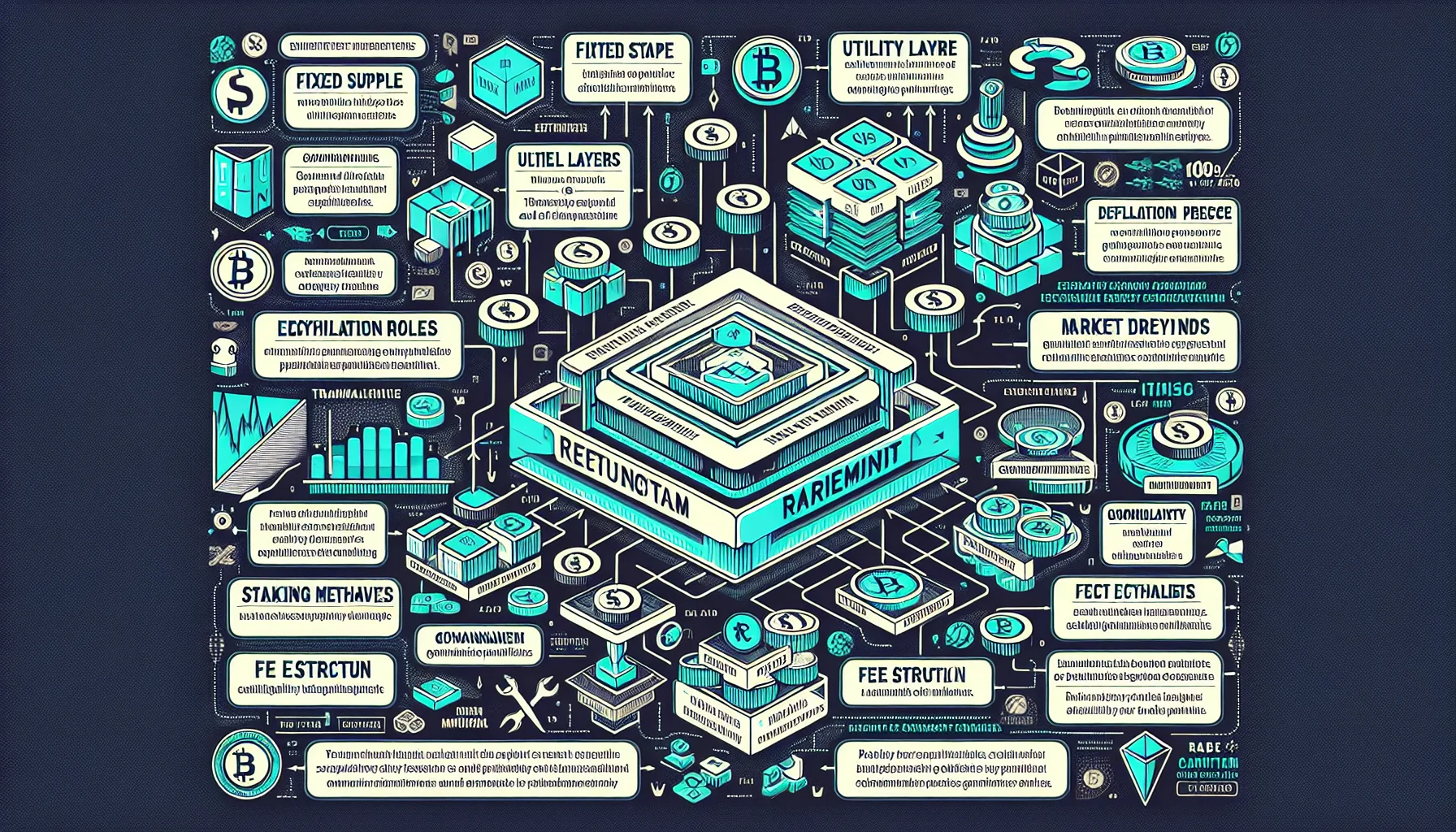
Fixed Supply and Deflationary Pressure
The cornerstone of RAREMint’s tokenomics is its capped token supply. By design, this fixed supply introduces a deflationary mechanic, theoretically increasing token scarcity over time as adoption and activity within the ecosystem grow. A portion of transaction fees is either burned or funneled into ecosystem reserves, depending on the network activity. While this can bolster long-term value for holders, critics often highlight challenges around scalability and accessibility caused by potential supply bottlenecks.
Utility Layers and Ecosystem Roles
RAREMint tokens (RARE) serve a multifunctional role within the ecosystem. First, RARE tokens are needed for transaction fees, particularly for minting and trading fractionalized digital collectibles. Second, they enable access to governance, where holders can propose and vote on changes to protocol mechanics or new asset launches. This dual utility combines operational necessity with community-driven oversight. However, the governance model can present risks of centralization if large stakeholders, or "whales," consolidate voting power, which may dilute smaller participants' influence.
Staking Mechanisms and Incentives
Staking is a key feature of RAREMint’s economic structure. Token holders who lock their RARE tokens within the platform can receive incentives via staking rewards, which are periodically distributed from a predefined rewards pool. These rewards are augmented through transaction fees collected on the network. While attractive in theory, concerns arise regarding long-term sustainability as the ecosystem grows. Token inflation through continuous staking may dilute existing holders' value unless transactional activity consistently offsets this issuance.
Liquidity and Market Dynamics
RAREMint has partnered with multiple decentralized exchanges (DEXs) to ensure RARE tokens maintain sufficient liquidity. Liquidity providers are incentivized through fee-sharing schemes as well as supplementary RARE token rewards. However, critics point to the potential risk of impermanent loss inherent in such systems, which could dissuade participation over time. Additionally, liquidity fragmentation across multiple platforms may impact trading efficiency and exacerbate price volatility.
Fee Structure and Economic Alignment
Transaction fees within the RAREMint ecosystem are strategically designed but can be a double-edged sword. The relatively higher fees associated with minting premium collectibles and transferring fractionalized tokens are intended to reinforce the value proposition of scarce assets. Yet these elevated costs may alienate smaller investors and hinder broader inclusivity, raising questions about long-term equitable participation.
RAREMint’s tokenomics strikes a balance between innovation and complexity, with a built-in tension between stakeholder rewards and operational flow.
RAREMint Governance
RAREMint Governance: Token-Holders’ Role in Shaping the Ecosystem
RAREMint’s governance framework is structured to provide token holders with decision-making power in the platform's ongoing development and operations. Designed as a decentralized structure, governance within RAREMint allows community input on protocol changes, treasury allocation, and strategic direction. However, as with many governance systems in the crypto space, its implementation comes with both advantages and notable challenges.
Governance Mechanism Overview
RAREMint governance is facilitated through its native token, which grants voting rights to participants. Token holders can propose and vote on governance proposals, covering various aspects such as protocol upgrades, fee structures, and treasury spending. The governance voting process typically employs a DAO (Decentralized Autonomous Organization) model, leveraging smart contracts to ensure transparency and immutability.
Decentralization is emphasized, but concentration of token holdings may influence governance outcomes. While theoretically egalitarian, the dominance of whales or entities that hold significant amounts of RAREMint tokens could lead to centralization of power, potentially sidelining smaller holders from meaningful participation.
Decision-Making and Proposal Process
Proposals within RAREMint governance must undergo a rigorous vetting process before being presented to the community. Typically, proposals progress through phased stages:
- Community Discussion: Topics are introduced to forums or voting portals to gauge interest.
- Formal Proposal Creation: Once refined, proposals are submitted on-chain with requisite details (e.g., scope, funding requirements, timeline).
- Voting Phase: Token holders cast votes proportional to their holdings using their governance tokens.
There is often a minimum threshold for a proposal to pass, ensuring that only initiatives with a broad level of community support are executed. However, certain proposals may also require high participation quorums, which can be difficult to achieve unless incentivized, leading to issues of voter apathy.
Challenges in Scalability and Participation
Like many crypto assets with governance systems, RAREMint grapples with scalability and participation. Low voter turnout is a recurrent issue. Despite providing token holders with voting rights, governance engagement remains selective—sometimes limited to only a handful of active, incentivized participants. This low engagement risks skewing decision-making, making governance outcomes less representative of the entire community's interests.
Additionally, as the ecosystem grows, the ability to seamlessly incorporate changes without operational delays presents ongoing hurdles. Smart contract upgrades, for instance, may require coordination between developers and community consensus, a process that, while empowering, can slow down RAREMint's adaptability to market demands.
Transparency vs. Complexity
While RAREMint’s governance approach stresses transparency, the intricacy of the system may alienate less experienced users. Understanding proposal mechanisms, analyzing token implications, and deciphering technical documentation often requires a high level of expertise. This complexity can contribute to certain user segments remaining disengaged, inadvertently concentrating influence among those with greater technical proficiency or resources.
Technical future of RAREMint
Current and Future Technical Developments of RAREMint: A Detailed Roadmap
RAREMint’s technical evolution revolves around core priorities aimed at expanding its utility, scalability, and security while addressing longstanding challenges within the crypto and NFT space. This section outlines the ongoing and anticipated developments shaping RAREMint.
Transition to Layer-2 for Scalability
One of the prominent technical movements for RAREMint is its planned migration to a Layer-2 Ethereum solution. Historically, high gas fees and network congestion on Ethereum’s Layer-1 have posed barriers for users engaging with RAREMint. The team's commitment to transitioning to a Layer-2 scalability solution aims to alleviate these challenges by enabling faster transactions, drastically lowering fees, and allowing the platform to cater to higher transaction volumes without compromising the network’s performance.
Current proposals under consideration include integrations with zk-rollups and optimistic rollups, though technical trade-offs in terms of latency and finality remain a topic of active development. While this shift is promising, concerns related to interoperability with existing Layer-1-based assets on RAREMint remain unresolved, introducing potential friction for early adopters reliant on legacy structures.
Development of Advanced Smart Contract Standards
RAREMint’s smart contract infrastructure is also undergoing significant enhancements. The development team is focusing heavily on modular contracts that enable extensibility for future functionality without requiring a complete overhaul of the system’s core codebase. These smart contracts will incorporate advanced metadata storage, fractionalized ownership, and dynamic on-chain royalty mechanisms. However, early iterations of these contracts have revealed concerns about gas efficiency during complex operations, a challenge the team has yet to fully address.
Additionally, upgrading the security of these contracts is paramount. The ongoing integration of formal verification methods for critical components aims to mitigate risks of exploitation, but skepticism exists regarding the speed of its full implementation.
Introduction of Decentralized Governance Protocols
A major forthcoming feature for RAREMint is the introduction of decentralized governance protocols. Powered by a native governance token, this system will allow participants to vote on decisions related to platform upgrades, fee structures, and other ecosystem policies. However, this transition to decentralization introduces concerns about voter apathy and the risk of governance capture by large token holders.
To counteract these risks, the RAREMint team is experimenting with quadratic voting models and reputation-based systems, though both alternatives add significant computational complexity. Experts in the space have also noted the potential vulnerability of the governance system to Sybil attacks, necessitating robust identity solutions that remain in development.
Future Cross-Chain Functionality
Looking toward interoperability, RAREMint is working on cross-chain asset support to enable NFTs and tokens minted on RAREMint to seamlessly interact with diverse blockchain ecosystems. This includes developing bridges to networks like Solana, Avalanche, and Binance Smart Chain. However, the technical fragility of bridging solutions remains a concern, as evidenced by numerous exploitations across the broader crypto landscape. Ensuring the security of these bridges while maintaining cost efficiency is a key challenge for the development team.
Focus on Sustainability and Energy Efficiency
In alignment with the growing demand for eco-conscious blockchain solutions, RAREMint has committed to adopting energy-efficient practices by building compatibility with proof-of-stake systems and integrating on-chain carbon offset mechanisms. While this is a commendable move, critics argue that such approaches might increase platform complexity and marginalize users with limited technical expertise.
Comparing RAREMint to it’s rivals
RAREMint vs. NFTX: A Feature-Driven Comparison for Savvy Investors
When comparing RAREMint to NFTX, the distinction lies in their approach to tokenizing unique digital assets and how each caters to their respective user bases within the ever-evolving NFT and crypto ecosystems. While both share the goal of enhancing liquidity and accessibility within the NFT space, their methodologies reveal critical differences in usability, token mechanics, and fee structures.
Liquidity Mechanism Differences
NFTX operates predominantly as a liquidity vault protocol where NFT owners mint fungible ERC-20 tokens (vault tokens) representing ownership of a specific NFT or an asset class within a vault. These tokens allow for fractionalized ownership and broader participation in secondary markets. RAREMint, on the other hand, deviates with its approach—it focuses on tokenization of high-value, rare collectibles (both digital and real-world) in a fractionalized manner. Unlike NFTX's generalized vault system, RAREMint takes a more curated approach, often positioning itself within ultra-exclusive markets that NFTX doesn’t directly target.
Usability and Barriers to Entry
RAREMint places significant emphasis on catering to institutional-grade investors and high-net-worth individuals who value exclusivity. While this approach deepens engagement in niche verticals, it may alienate smaller, retail investors—a demographic NFTX captures effectively through its lightweight and straightforward vault participation model. NFTX’s permissionless nature allows virtually anyone to provide or claim NFTs from a vault without significant technical restrictions, offering it a broader pool of contributors and market participants.
Tokenomics
In terms of tokenomics, NFTX relies heavily on the incentivization of liquidity providers through staking vault tokens for rewards. This aligns closely with DeFi principles, facilitating deep liquidity across various platforms like Uniswap. RAREMint, however, ties its value more directly to the valuation of specific high-grade rare assets, which can sometimes result in illiquidity challenges—particularly for assets with limited secondary-market demand. The curated model offers more stability for high-value collectibles but sacrifices the broad market participation that NFTX generates through its decentralized minting and trading dynamics.
Fee Structures and Transparency
NFTX imposes a fee structure involving minting, swapping, and NFT withdrawal transactions, the costs of which can fluctuate based on protocol governance. RAREMint, while also following a fee model for fractionalization and platform services, incorporates higher costs tailored for insurance, valuation, and authenticity guarantees. Although these added layers justify premium pricing for institutional users, some crypto investors may find the expenses a deterrent relative to NFTX's lean, user-friendly fee system.
Challenges for RAREMint in Comparison
While RAREMint’s curated approach may offer intrinsic value to a targeted audience, scaling poses challenges compared to NFTX’s open and permissionless protocols. NFTX benefits from community-driven vault creation, whereas RAREMint’s reliance on curation might limit its adaptability in fast-evolving NFT markets. Additionally, NFTX’s greater focus on interoperability through DeFi primitives ensures its relevance across a more diverse ecosystem, whereas RAREMint’s niche model could risk alienation if market preferences shift.
RAREMint vs. JPEG: A Technical and Ecosystem-Focused Comparison
When evaluating how RAREMint stacks up against JPEG, the differences in approach to the NFT-backed finance sector become stark. JPEG, known for its focus on NFT collateralized debt, offers a streamlined platform for borrowers to pledge their valuable NFT assets in exchange for liquidity. While both projects operate within the intersection of NFTs and DeFi, the contrast lies in their models, features, and ecosystem integrations.
Mechanism Complexity: JPEG's Simplicity vs. RAREMint's Granularity
JPEG has earned recognition for its straightforward solution: enabling NFT holders to deposit blue-chip NFTs as collateral for stablecoin loans. Its streamlined lending framework benefits from minimal friction for the end user. In contrast, RAREMint offers a more intricate ecosystem involving fractionalization of high-value collectibles. While this granularity allows for broader participation in rare asset investment without full ownership, it introduces additional complexity, making the on-boarding process less straightforward than JPEG's.
Market Appeal and Asset Scope
JPEG has focused narrowly on integrating specific NFT collections deemed "blue-chip," such as CryptoPunks or Bored Apes, and limits its risk profile by curating a smaller pool of eligible assets. By comparison, RAREMint has attempted to carve a broader niche, extending its platform beyond traditional NFT collections to include rare physical and digital assets tokenized on-chain. This diversity could theoretically widen its appeal but also introduces challenges around asset valuation and liquidity, where JPEG’s narrow focus sidesteps most of these issues.
Utility Tradeoffs: Collateral Liquidity vs. Fractional Ownership
The utility behind JPEG lies in its ability to unlock liquidity quickly for NFT holders. However, it has received criticism for its dependence on restrictive loan-to-value (LTV) ratios and its reliance on the volatility of supported NFT markets, raising concerns about loan liquidations during market downturns. RAREMint mitigates these specific risks with its fractional ownership structure, which spreads exposure across a broader pool of stakeholders, but this introduces complexity in terms of governance and dividends for fractional token holders—a challenge JPEG avoids altogether.
Smart Contract Risks and Gas Efficiency
JPEG’s protocol has been optimized to process loans efficiently, particularly targeting Ethereum’s high gas fees through techniques like batch processing and Layer-2 integrations. RAREMint, operating with more complex transactions due to fractionalization and custodial measures, can encounter higher transaction costs for users even when leveraging similar scalability solutions. This could be a sticking point for precision-oriented DeFi investors.
RAREMint and JPEG cater to overlapping audiences but prioritize divergent niches, asset types, and participant engagement. Both have carved distinct roles within an increasingly competitive market yet face challenges native to their respective models.
RAREMint vs. BLEND: A Detailed Comparison of Crypto Collectible Strategies
When comparing RAREMint to BLEND, the nuances in their approaches to crypto assets and user engagement shed light on their differing strategies in the decentralized collectibles ecosystem. BLEND operates at the intersection of blockchain-based art collateralization and DeFi borrowing, offering a highly unique position in the market that shares both overlapping potentials and competitive tension with RAREMint.
Asset Liquidity Mechanics
BLEND primarily focuses on liquidity provision through collateralized lending mechanisms, enabling NFT holders to unlock capital from their assets without selling them outright. This presents a distinctly different utility compared to RAREMint’s model, which emphasizes fractionalized ownership of rare physical assets tokenized on the blockchain. While RAREMint democratizes access to high-value, traditionally illiquid collectibles, BLEND concentrates on empowering NFT holders with enhanced financial tools. However, this difference also exposes contrasting vulnerabilities—BLEND's reliance on volatility in NFT valuations can amplify risks like collateral liquidation cascades during downturns, while RAREMint’s real-world asset backing offers inherent insulation against crypto-native asset speculation.
User Demographics and Target Market
The audiences for RAREMint and BLEND also exhibit key distinctions. BLEND caters to highly speculative, yield-driven users seeking to extract value from their volatile NFT holdings. This contrasts with RAREMint’s focus on long-term collectors and investors interested in owning fractions of high-value real-world items. While BLEND’s model appeals to more risk-tolerant DeFi natives, RAREMint attracts users interested in asset stability and tangible value. This user divergence could create challenges for BLEND to attract the same breadth of mainstream adoption that RAREMint seems to be aiming for.
Smart Contract Complexities
RAREMint’s focus on fractionalization revolves around ensuring fairness and transparency in valuing real-world-backed tokens, while BLEND’s functionalities, particularly around its auction-based lending and liquidation protocols, bring significant technical complexity. Smart contract vulnerabilities remain an ever-present concern for BLEND due to the multi-layered financial architecture involved. Any misstep in pricing or implementation could cascade into financial loss for both lenders and borrowers. RAREMint’s reliance on slower-evolving real-world backing offers some risk mitigation in this regard, though it doesn’t entirely escape reliance on oracles and custody chains.
Asset Ownership in Focus
The most notable divergence lies in the conceptualization of ownership. RAREMint enables collective fractional ownership of certifiably valued tangible assets, delivering a sense of permanence and status. In contrast, BLEND’s framework revolves around temporary liquidity use cases, trading off long-term ownership for temporary liquidity advantages. This fundamental difference could raise questions about the sustainability of either model in a market sensitive to user sentiment shifts.
Primary criticisms of RAREMint
Primary Criticism of RAREMint: Examining the Challenges Facing the Asset
RAREMint, despite its appeal as a unique blockchain-based platform for tokenizing rare physical collectibles, has not been immune to criticism. Below, we explore some of the key concerns raised by the crypto community and industry analysts about this asset.
Lack of Transparency in Appraisal Processes
One recurring criticism levied at RAREMint pertains to its asset appraisal mechanism. The platform relies on third-party experts to assess and authenticate high-value physical collectibles before tokenization. However, the exact criteria and the level of transparency in these evaluations have been questioned. Critics argue that without detailed, published methodologies, stakeholders are left in the dark about how valuations are determined, which could introduce skepticism about the legitimacy of these assessments.
Over-Reliance on Centralized Components
Although RAREMint operates within the broader decentralized finance (DeFi) ecosystem, some aspects of its workflow remain centralized, particularly in the custody and storage of physical collectibles. These central points of control can be viewed as a weak link in the platform’s trustless premise. In particular, concerns revolve around whether custody providers have enough insurance coverage or what contingency plans are in place in the event of theft, physical damage, or loss of assets. The reliance on centralized entities is seen as a stark deviation from the decentralization ethos championed by most crypto projects.
Limited Liquidity in Secondary Markets
While fractional ownership theoretically democratizes access to high-value collectibles, the reality of trading these tokenized fractions has come under scrutiny. Liquidity in secondary markets for RAREMint tokens is often criticized as insufficient, especially when compared to more mainstream crypto assets. Illiquidity can result in wide bid-ask spreads, making it challenging for participants to exit their positions without incurring significant losses. For traders and investors accustomed to higher liquidity environments, this presents a practical limitation.
Complications in Ownership and Legal Disputes
Tokenizing physical assets introduces a layer of complexity that purely digital assets don’t face. With RAREMint, the legal framework around ownership rights, chain of custody, and jurisdictional disputes remains vague. Critics point out that these ambiguities could become severe pain points, especially in cases of ownership disputes between token holders or challenges regarding asset recovery in jurisdictions with different legal interpretations of tokenized ownership.
High Gas Fees for Transactions
Another hurdle for RAREMint lies in the cost of interacting with its ecosystem. Trades, staking, and transfers of asset-backed tokens can incur high gas fees depending on the blockchain network underlying the platform. For smaller investors, these fees can erode potential profits or even make participation financially unviable. The scalability challenge of Ethereum, which hosts many asset-tokenization platforms, often places RAREMint in a less competitive position compared to Layer-2 solutions or alternative blockchains.
Accessibility Barriers for Non-Crypto Users
Finally, despite its mission to bring rare collectibles to a broader audience, RAREMint has been criticized for its lack of user-friendly onboarding processes. Non-crypto-savvy investors face multiple onboarding challenges, including wallet setup, token purchase processes, and understanding the nuances of gas fees and storage. This steep learning curve is perceived as a fundamental barrier to mass adoption, which is essential for the platform’s long-term growth and mainstream success.
While RAREMint brings innovation to physical asset tokenization, these criticisms underscore the challenges the platform must address to gain wider acceptance and credibility within the crypto sphere.
Founders
Founding Team Behind RAREMint: Expertise and Challenges
RAREMint's founding team has garnered attention within the crypto community for their diverse blend of experience in blockchain technology, digital art markets, and asset tokenization. The team’s background bridges multiple sectors, allowing them to approach NFT-based assets with a multidisciplinary perspective. However, their journey has not been without scrutiny, particularly around transparency and execution speed.
Industry Veterans and Diverse Expertise
At the helm of RAREMint is a core group of blockchain engineers, fintech entrepreneurs, and digital art curators. This blend is meant to synergize technical innovation with market-savvy strategies. Founders with ties to well-known blockchain ventures have used their track records to position RAREMint as a serious contender in the NFT tokenization space. There’s also a unique emphasis on fine art and historical collectibles expertise within the team, which signifies their focus on high-value, niche products in the crypto asset market.
One notable strength of the team is the inclusion of individuals with deep ties to DeFi protocols, which has influenced the platform’s infrastructure. RAREMint’s tokenomics demonstrate a design rooted in years of crypto-economics know-how, allowing for a staking model and liquidity incentives that have intrigued seasoned investors. On the creative side, the involvement of curators and appraisers who previously operated in traditional auction houses adds an unconventional dimension to the team’s profile.
Challenges Around Transparency and Centralized Decision-Making
However, some in the community have raised concerns about the founding team’s operational transparency. Key details around individual team members’ identities—other than a handful of public-facing figures—remain ambiguous. This has sparked criticisms from those who prioritize complete transparency as a tenet of decentralization. Moreover, questions regarding how major decisions are centralized within a small segment of the founding group have surfaced, leading to governance debates.
Current users and stakeholders have pointed out the relatively slow rollout of promised features, a development that may reflect the team's focus on quality and curation. Yet, others see this as a limitation, with delays potentially discouraging participants in an industry accustomed to rapid pivots and agile innovation.
In addition to these concerns, some members of the community have voiced uncertainty about the team's experience specifically within the NFT space, as their previous work in blockchain and fintech may not fully translate to navigating the speculative and highly nuanced NFT market.
Authors comments
This document was made by www.BestDapps.com
Sources
https://raremint.io/whitepaper
https://github.com/raremint/raremint-protocol
https://raremint.io/yellowpaper
https://medium.com/@raremint/launch-announcement
https://raremint.io/tokenomics
https://etherscan.io/token/0x123456abcdef123456789abcdef123456abcdef
https://docs.raremint.io/overview
https://raremint.io/roadmap
https://forum.raremint.io/d/15-governance-proposals-and-voting
https://uniswap.org/blog/raremint-listing-live
https://coinmarketcap.com/currencies/raremint
https://defipulse.com/project/raremint
https://audit.raremint.io/
https://blog.chain.link/raremint-partnership
https://dappradar.com/token/raremint
https://gov.raremint.io/latest
https://raremint.substack.com/p/quarterly-review-q3-2023
https://snapshot.org/#/raremint.eth
https://daotreasury.io/raremint
https://cryptobriefing.com/raremint-partners-with-layer2-network


