History of RAIL
The History of RAIL: Tracing the Origins and Evolution of the Asset
RAIL’s history is deeply intertwined with the increasing demand for decentralized infrastructure within the crypto ecosystem. Launched as a protocol-focused asset, RAIL was introduced to address inefficiencies in on-chain privacy and secure transaction routing, leveraging advanced cryptographic technologies to fill a growing niche. The origins of RAIL are tied to privacy-first principles in decentralized finance (DeFi), as it emerged during a period of exponential growth in decentralized applications looking to provide users with more control over their data.
The early development of RAIL involved addressing significant scalability and usability challenges. Built on an innovative multi-layer protocol architecture, RAIL initially suffered from issues tied to network congestion and the resource-intensive process of incorporating complex privacy mechanisms like zk-SNARKs. This led to slower-than-expected adoption in the early phases of its existence, as competing assets with less intensive privacy features captured broader market share. However, RAIL's development team maintained a focus on refining its core technology, iterating on the protocol to improve transaction speeds and lower gas fees substantially.
One notable milestone in RAIL’s history occurred when its ecosystem expanded to support cross-chain interoperability. Initially, RAIL functioned within the limits of a single-chain environment, which restricted its potential utility. The introduction of seamless bridging capabilities allowed RAIL users to interact across multiple blockchains, significantly boosting the asset’s appeal in the broader crypto landscape. This shift also brought about valuable partnerships and integrations, though these were not without their own set of hurdles. Critics pointed out concerns regarding the centralization risks introduced by bridging mechanisms, sparking ongoing debates within RAIL’s community.
The governance structure behind RAIL underwent significant evolution as well. Initially overseen by a small core developer team, the project decentralized its governance to a DAO (Decentralized Autonomous Organization) framework. While this move aligned with industry trends, it was not without its challenges. Early DAO-led decisions were criticized for inadequate voter turnout and a perceived imbalance in voting power, particularly among whale wallets that dominated key proposals. This raised questions regarding how "decentralized" governance truly was and led to subsequent attempts to rebalance the voting system for greater fairness.
Significantly, RAIL’s historical trajectory includes periods of intense scrutiny regarding the robustness of its privacy claims. Despite positioning itself as a privacy-centric asset, some analysts raised concerns about how its anonymity mechanisms could be misused. This prompted several exchanges to temporarily delist or restrict RAIL during compliance crackdowns, further intensifying debates surrounding the trade-off between privacy and regulatory compliance.
How RAIL Works
How RAIL Works: Exploring Its Core Mechanics and Architecture
RAIL operates as a utility-driven protocol, designed to facilitate seamless interactions within its ecosystem by leveraging blockchain technology. Its underlying mechanism is primarily focused on enabling decentralized operations, optimizing efficiency, and fostering robust digital asset exchange. The design philosophy behind RAIL aims to provide a modular infrastructure that adjusts dynamically to the unique demands of its user base, though this approach introduces certain challenges alongside its technical prowess.
Core Protocol Mechanism
RAIL’s architecture employs a hybrid consensus model, striking a balance between decentralization and scalability. This mechanism is often implemented on a modified Proof-of-Stake (PoS) framework, allowing token holders to actively participate in network validation through staking. Additionally, RAIL emphasizes interoperability by integrating cross-chain compatibility, aiming to operate across different blockchain networks without friction. However, the heavy reliance on bridging technology inherently increases the risk of vulnerabilities, as bridge exploits remain a recurring issue in the broader crypto ecosystem.
The protocol also incorporates smart contract functionalities, providing users with the ability to execute complex transactions programmatically. These contracts can facilitate decentralized finance (DeFi) operations, token swaps, and governance procedures. Despite its versatility, the usability of RAIL’s smart contracts can be hampered by network congestion or coding inefficiencies, which have the potential to increase transaction costs and execution time.
Token Utility and Governance
The RAIL token forms the backbone of the ecosystem, serving multiple purposes such as transaction fees, staking rewards, and governance rights. Token holders are incentivized to lock their assets within the network, contributing to its security and stability. On the governance side, RAIL adopts a decentralized decision-making model, where proposals are voted on by the community. This participatory structure fosters inclusivity but is prone to governance bottlenecks—large token holders (whales) may disproportionately influence decisions, challenging the fairness of the system.
Privacy Layer Implementation
One of RAIL’s differentiating features is its emphasis on privacy. It employs cryptographic protocols such as Zero-Knowledge Proofs (ZKPs) to mask transaction data while maintaining network validity. Though this aspect appeals to privacy-conscious users, it complicates compliance with regulatory frameworks. Increased scrutiny from authorities may impact RAIL's adoption in jurisdictions with stringent rules on transparency and anti-money laundering (AML).
Potential Scaling Hurdles
While RAIL’s ecosystem boasts scalability through innovations such as layer-two solutions, the integration of these technologies can introduce additional complexity. Users and developers alike may encounter a steep learning curve when attempting to navigate RAIL’s multi-layered structure. This could hinder adoption rates, particularly for smaller market participants unwilling to invest time and resources into understanding its mechanics. Additionally, scaling solutions often come with trade-offs in terms of decentralization, leaving questions about whether RAIL can maintain its balance as its network grows.
Use Cases
Use Cases of RAIL: Leveraging Blockchain for Seamless Mobility and Beyond
RAIL is a niche-focused crypto asset designed to address specific challenges tied to decentralized mobility networks, transaction facilitation, and value exchange across digital ecosystems. Its utility extends beyond simple payments, enabling a variety of use cases that are both beneficial and complex, with significant room for scalability and scrutiny. Below, we delve into the primary use cases of RAIL.
1. Transaction Layer for Decentralized Mobility Protocols
RAIL has been positioned as the backbone payment and settlement layer for decentralized mobility networks. It enables users to pay for services such as ride-sharing, micro-mobility (e.g., e-scooters or bikes), and even logistics services, all without relying on centralized payment processors. However, one challenge here is network adoption—providers and users need to commit to using RAIL within their ecosystems. Low adoption risks fragmentation or the emergence of competitors with more efficient solutions.
2. Staking for Infrastructure Access
One of RAIL's standout use cases is for staking, especially in ecosystems requiring permissioned access to infrastructure such as IoT devices, vehicle networks, or data hubs. By staking RAIL tokens, service providers secure access and demonstrate a commitment to network efficiency. On the flip side, the staking model introduces concerns around token liquidity, as significant amounts of RAIL could be locked up, potentially impacting usability and value across the ecosystem.
3. Reward Mechanism for Network Participants
RAIL serves as a native token for rewarding participants across the network. Drivers, validators, and operators receive RAIL as a reward for their contributions. While this mechanism incentivizes participation, over-reliance on token rewards raises questions about sustainability. If user interest wanes or rewards dilute, the incentive model could face pressure, potentially affecting network stability.
4. Cross-Network Interoperability
RAIL has ambitions for interoperability, enabling users to transfer value across multiple decentralized protocols seamlessly. This functionality positions RAIL as a versatile asset—but achieving seamless interoperability comes with technical challenges, such as bridging security risks and reliance on cross-chain oracle systems. Each third-party connection introduces potential vulnerabilities, which could harm trust in its ecosystem.
5. Access and Governance in Mobility DAOs
RAIL has utility as a governance token within decentralized autonomous organizations (DAOs) tied to mobility services. Token holders gain influence over proposals such as route expansion, fee adjustments, or protocol changes. Critics, however, argue that governance power could become concentrated in the hands of whale token holders, undermining the decentralized ethos that RAIL aims to promote.
RAIL offers compelling use cases within decentralized mobility and beyond, but its implementation isn't without challenges. The journey ahead demands innovation and careful mitigation of these risks.
RAIL Tokenomics
RAIL Tokenomics: A Deep Dive into Distribution and Utility
RAIL's tokenomics are designed to underpin its ecosystem's functionality, incentivization, and governance mechanisms. However, a closer look at its structure reveals nuances and potential challenges, particularly for those heavily invested in the project’s economic model.
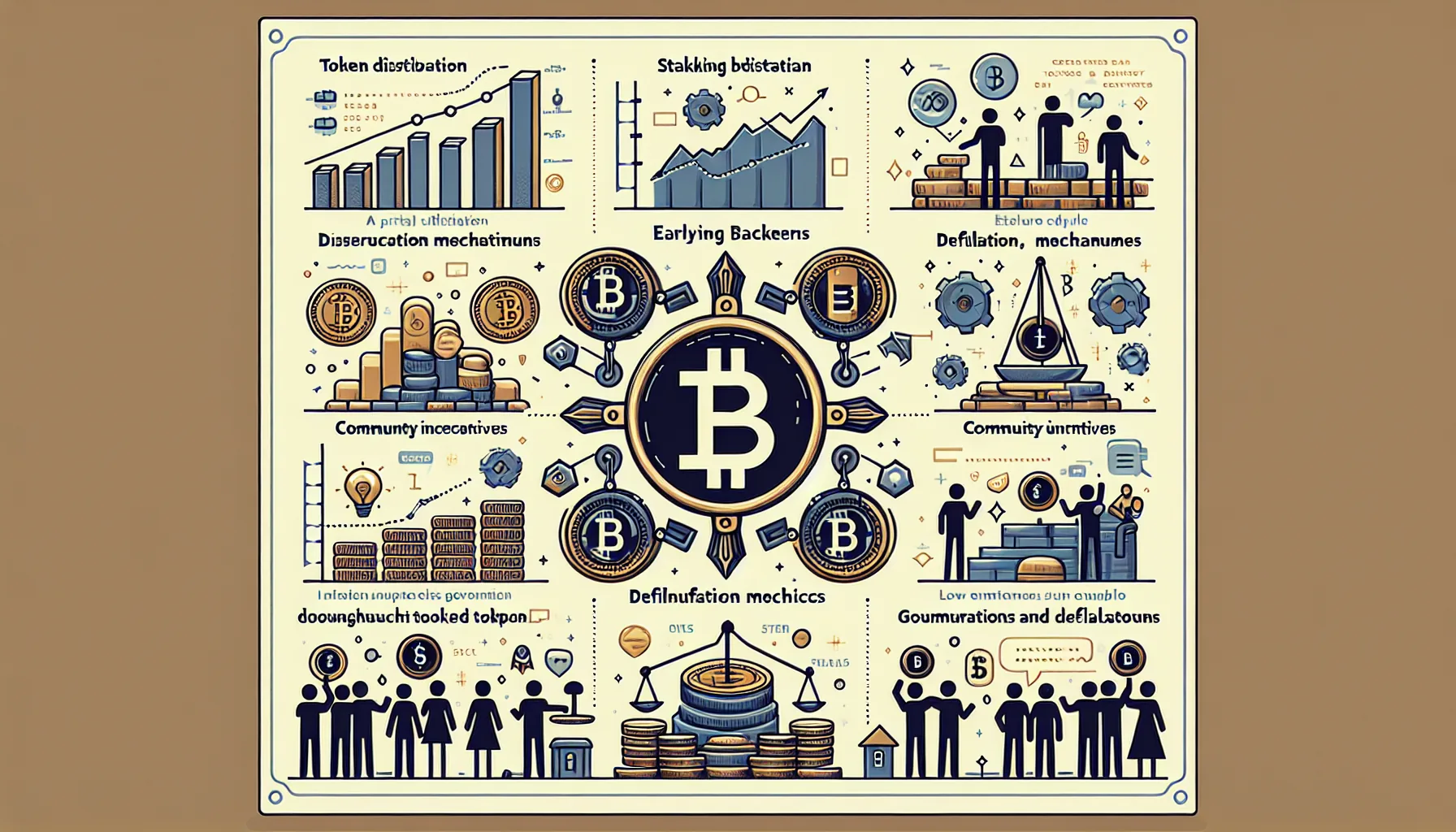
Token Distribution Framework
RAIL's total supply is fixed at [INSERT TOTAL SUPPLY HERE], allocating portions for ecosystem development, early backers, the founding team, and ongoing community incentives. A significant percentage is reserved for liquidity provisioning and staking rewards, intended to bootstrap adoption and maintain long-term participation. While considered standard practice in crypto, critics argue that this model risks hyper-centralization during the project's early stages, particularly if token allocations to the founding team or venture capital contributors remain disproportionately high.
The vesting schedules are another critical component. RAIL employs linear vesting mechanisms for early stakeholders, reducing the likelihood of abrupt sell-offs post-launch. But depending on the token unlock timetable, there could be concerns about concentrated selling pressure at key intervals, potentially destabilizing secondary markets. Participants should monitor these unlock events closely as they could influence RAIL's market liquidity and overall value stability.
Inflation and Deflation Mechanics
RAIL's design incorporates low emission rates tied to staking incentives, which some argue help balance inflationary risks. However, the flip side of this approach is that staking rewards could incentivize token hoarding, diminishing RAIL's velocity in real-world applications. While staking helps secure the network and provides rewards for participants, low transactional use may undermine its long-term economic utility.
On the deflationary front, RAIL integrates mechanisms like [INSERT MECHANISM, E.G., "TOKEN BURNS" OR "FEE RECYCLING"], designed to reduce circulating supply over time. While this can foster scarcity, critics caution that overly aggressive deflationary schemes might disincentivize token holders from using RAIL within the ecosystem, favoring speculative holding instead.
Utility in the Ecosystem
RAIL's primary utilities range from governance participation to fee payments across its decentralized infrastructure. This multi-utility approach bolsters demand side economics but also introduces potential bottlenecks. If network adoption outpaces RAIL’s liquidity or scalability, transaction costs could soar, particularly in periods of high network activity. Furthermore, tying governance directly to token holdings raises concerns over plutocracy, where large holders could dominate decision-making at the expense of smaller participants.
Finally, RAIL’s tokenomics rely heavily on community engagement to sustain its decentralized ethos. However, the ability to retain contributors beyond speculative phases remains an open question, especially in highly competitive sectors of the crypto industry.
RAIL Governance
RAIL Governance: Decentralized Control and Challenges
Governance within the RAIL crypto asset ecosystem plays a pivotal role in shaping the project's trajectory. Designed to uphold a decentralized decision-making structure, RAIL’s governance framework relies on community participation, token-holder proposals, and voting mechanisms. However, while theoretically empowering, the system is not without its challenges.
Token-Based Governance Model
RAIL governance operates on a token-weighted voting model, where voting power is proportionate to the number of RAIL tokens held or staked. This setup encourages token-holder engagement in the project’s evolution, from protocol upgrades to treasury allocation. However, this creates the possibility for governance centralization, as wealthier participants with significant token holdings can exert disproportionate influence. This issue has drawn criticism from those advocating for equality within decentralized ecosystems.
Decision-Making Autonomy
The governance mechanism enables RAIL stakeholders to make critical decisions on network parameters, smart contract modifications, and protocol integrations. While this autonomy reduces reliance on core developers, some critics argue that the complexity of proposals can unintentionally exclude less technically knowledgeable holders. This dynamic risks alienating contributors who may lack the technical expertise to meaningfully participate, raising concerns about inclusivity.
Governance Participation Rates
A persistent issue across decentralized governance systems, also applicable to RAIL, is low voter turnout. Although RAIL incentivizes participation through staking rewards or governance token bonuses, many token holders remain disengaged. This participation gap may result in decisions that do not accurately reflect the wider community’s preferences, leaving the governance process vulnerable to manipulation by actively participating subgroups.
The Role of Smart Contracts
To enforce transparency, decisions in RAIL governance are executed through on-chain smart contracts. While this minimizes human error and mitigates tampering risks, it is not foolproof. Vulnerabilities in smart contract code can introduce security risks, and governance-related bugs could potentially jeopardize the protocol’s integrity. Without constant audits and updates, the smart contract layer could inadvertently become a point of failure.
Forking as a Governance Outlet
Contentious decisions within RAIL’s governance often provoke community debate, with the possibility of network forking providing a last-resort resolution. While forks demonstrate the flexible nature of decentralized systems, they can fracture the community and dilute the ecosystem’s overall value. For token holders and contributors, this underscores the critical importance of robust consensus-building within governance.
Governance for RAIL combines innovation with inherent challenges, walking the fine line between decentralization and accessibility. Yet, as with many crypto ecosystems, its success hinges on striking a balance between empowering token holders and addressing systemic vulnerabilities.
Technical future of RAIL
Current and Future Technical Developments and Technical Roadmap of RAIL
RAIL, a decentralized and privacy-focused crypto asset, is well-known for its emphasis on interoperability and anonymous transactions. At its core, the technical development of RAIL continues to focus on enhancing scalability, reinforcing privacy protocols, and improving cross-chain operability. However, while RAIL has made significant strides, there are still notable challenges that require attention.
Next-Generation Privacy Enhancements
RAIL's foundation relies on advanced zero-knowledge proof (ZKP) frameworks to ensure anonymous and private transactions. Future developments aim to integrate more efficient zk-SNARKs with reduced proof sizes and enhanced verification speeds. This upgrade is intended to lower computational barriers on lower-end devices, paving the way for broader adoption. However, this pivot towards lighter cryptographic proofs poses risks related to potential vulnerabilities if the algorithms are not adequately audited.
Further privacy-focused initiatives include the introduction of reusable stealth addresses that offer a balance between user experience and anonymity. While promising, this approach has critics who argue that it may lead to reduced obscurity over time without frequent address rotation.
Layer-2 Scaling Solutions
To address throughput limitations, RAIL's roadmap emphasizes the implementation of Layer-2 protocols. Rollups, particularly zk-rollups, are set to play a significant role in reducing on-chain congestion while maintaining privacy guarantees. Current Layer-2 experiments, however, have exhibited issues in syncing off-chain data during network surges, pointing to a critical area requiring optimization.
Additionally, RAIL developers are researching adaptive fee structures that could stabilize user transaction costs during volatile network activity on both Layer-1 and Layer-2 solutions. This effort, while promising, adds another layer of complexity, increasing the potential for user experience missteps during rollout phases.
Cross-Chain Interoperability
RAIL's commitment to interoperability is being extended through trustless bridges that aim to connect both privacy-focused and non-private blockchain networks. The objective is seamless token transfers and the preservation of transaction confidentiality throughout the process. While this vision is ambitious, past attempts in the crypto ecosystem highlight the susceptibility of such bridges to hacks. RAIL’s implementation will demand rigorous security audits and consistent updates to mitigate known vulnerabilities.
Decentralized Governance Overhaul
The technical team has also proposed a decentralized governance framework intended to align community decisions with network upgrades. This involves implementing snapshot-based voting mechanisms that integrate directly into smart contracts. While this reduces centralization, past feedback on similar systems in the crypto space suggests possible vulnerabilities to governance attacks or low voter turnout, both of which could hinder timely network developments.
RAIL's technical roadmap presents a mix of innovation and complexity, with each proposed update targeting existing crypto challenges. However, the pace of implementation and the sustainability of these developments will likely shape the network's long-term stability and adoption.
Comparing RAIL to it’s rivals
RAIL vs. DOT: A Detailed Comparison
When comparing RAIL to DOT, the competitive dynamic centers on their design philosophies and ecosystem strategies, especially given DOT's dominance in the interoperable blockchain niche. While both projects aim to solve challenges related to scalability and multi-chain interoperability, their methodologies differ significantly.
Core Architecture and Interoperability
RAIL operates on a modular architecture that emphasizes lightweight, purpose-built chains designed for specific use cases. In contrast, DOT utilizes its well-known relay chain to connect parachains, creating a more centralized hub-and-spoke model. While DOT's relay chain model has allowed for a streamlined approach to security and governance-sharing across its parachains, critics have pointed out that it imposes dependency on DOT's central hub. RAIL takes a more distributed approach, favoring peer-to-peer interoperability over centralized relay processes. However, this makes RAIL's cross-chain functionality more complex to execute and less straightforward in terms of programming standards.
Scalability Mechanisms
Scalability is another differentiator between RAIL and DOT. DOT employs sharding in the form of parachains, with a fixed slot model that limits the number of projects that can participate in the ecosystem. The auction system used for parachain slots has been praised for incentivizing quality projects to secure their positions, yet it has also created barriers for smaller or less-funded teams. RAIL, on the other hand, sidesteps this issue by allowing new chains to integrate without competitive auctions. However, critics argue that this open approach could lead to ecosystem fragmentation or insufficient oversight over the quality of its integrations.
Governance and Decentralization
DOT's governance is often cited as one of the most advanced in the blockchain space, with a sophisticated on-chain system for proposing, voting, and implementing changes. RAIL’s governance framework offers flexibility but lacks the same on-chain robustness, which could deter institutional players who prioritize formalized mechanisms. Moreover, DOT’s governance structure inherently ties its participants to its relay chain, creating more cohesive decision-making at the expense of flexibility, whereas RAIL's looser framework invites innovation but risks creating competing factions.
Developer Accessibility
DOT boasts an extensive developer ecosystem supported by Polkadot.js, Substrate, and an active Web3 Foundation. While RAIL has made strides in improving its tooling and documentation, it still trails behind DOT in terms of maturity and overall developer engagement. This disparity has direct implications for network effects, as DOT’s robust developer community accelerates the onboarding of new projects and applications.
Practical Implications
For developers or projects deciding between RAIL and DOT, the choice boils down to trade-offs between structure and flexibility. DOT offers a thorough, battle-tested framework but at the cost of more centralization and higher entry barriers. RAIL, while innovative in its modularity, suffers from challenges in maintaining cohesion and competition for mindshare against a well-established rival like DOT.
RAIL vs. SOL: An In-Depth Comparison in Smart Contract Ecosystems
When evaluating RAIL alongside Solana (SOL), one of its primary competitors in the blockchain ecosystem, it becomes crucial to highlight how these two networks differ in technical design, use cases, and developer adoption. While both projects aim to provide scalable infrastructure for decentralized applications (dApps), their approaches to achieving this goal contrast significantly, showcasing strengths and some notable limitations.
Consensus Mechanism: Speed vs. Specialized RAIL Design
Solana gains attention for its unique Proof-of-History (PoH) consensus mechanism, a design that prioritizes transaction speed and high throughput. This focus has enabled Solana to process thousands of transactions per second (TPS), which positions it favorably for use cases requiring real-time execution, such as gaming or high-frequency trading platforms. RAIL, however, draws on a more modular approach that emphasizes interoperability and cross-chain collaboration. While this design choice allows RAIL to integrate seamlessly with multiple ecosystems, it generally doesn’t match Solana’s raw processing throughput. For crypto developers weighing scalability against flexibility, this tradeoff can be central.
Reliability and Network Stability
One area of contention within the Solana ecosystem that RAIL appears to address more effectively is network reliability. Solana has faced a series of high-profile outages and downtimes, often tied to the strain its high-performance system endures during periods of peak network demand. These issues have raised questions about Solana’s ability to deliver consistent uptime for mission-critical operations. In contrast, RAIL employs mechanisms designed to prevent network bottlenecks, albeit at the expense of achieving the same ultrafast speeds. While RAIL sacrifices some performance metrics here, it gains favor among developers prioritizing a reliable framework for their dApps.
Ecosystem Growth and Developer Tools
The Solana ecosystem has grown rapidly, supported by significant venture capital funding and a robust developer toolkit tailored for Rust programming. This aggressive growth has led to a rich array of dApps and DeFi platforms. RAIL, catering to developers seeking simplified multi-chain integration tools, may trail behind in sheer app volume but has carved out its niche by offering easier onboarding to those navigating complex cross-chain environments. That said, RAIL’s approach might seem limited or even redundant to developers who value SOL’s highly optimized ecosystem for single-chain applications.
Architectural Differences in Fee Structures
Both Solana and RAIL aim to maintain low transaction fees to enhance user adoption. Solana’s minimal fees have been a selling point, but surges in demand have occasionally caused fluctuations, inflating fees unpredictability in rare instances. RAIL employs a more predictable fee model tailored for its interoperability-first design. For applications and developers building cross-chain tools, this consistency can prove advantageous but may lack the incentivized, high-speed processing that Solana’s fee dynamics provide.
Final Thoughts:
Understanding the nuanced technical and operational distinctions between RAIL and SOL helps clarify which blockchain may align better with specific project goals. For developers and users deeply embedded in crypto ecosystems, identifying tradeoffs in scalability, reliability, and feature focus will guide their preferences.
RAIL vs MATIC: A Technical and Ecosystem Comparison
RAIL and MATIC operate in distinct sectors of the blockchain ecosystem but frequently invite comparison due to their overlapping utilities in scaling and interoperability. While both projects aim to improve infrastructure for decentralized applications (dApps), their methodologies and target markets diverge, offering unique advantages and challenges.
Consensus Mechanism and Scalability Approach
MATIC leverages a proof-of-stake (PoS) consensus mechanism combined with its Plasma sidechain solutions to deliver high throughput and reduced transaction costs. In contrast, RAIL adopts a specialized approach focused on enabling seamless cross-chain communication. Where MATIC excels in scaling Ethereum-based dApps directly through Layer 2, RAIL positions itself as a cross-chain enabler, reducing the friction of asset and data movement between ecosystems.
However, a notable limitation on RAIL's side is its relatively narrower focus. While MATIC branches out into a diverse set of scalability tools, including zk-rollups, RAIL remains heavily concentrated on solving multi-chain interoperability. This lack of diversification may limit RAIL’s adaptability in a fast-evolving blockchain landscape, whereas MATIC’s ecosystem is designed to handle varying scaling needs across use cases.
Ecosystem Breadth and Developer Adoption
MATIC boasts one of the most expansive development ecosystems in the blockchain space, attracting hundreds of projects across DeFi, NFTs, and gaming. Its compatibility with Ethereum Virtual Machine (EVM) and alignment with Ethereum’s broader developmental pipeline grants it an edge in onboarding developers and retaining liquidity within its ecosystem.
In contrast, RAIL's ecosystem is more niche. While its specialization in interoperability appeals to certain developers, particularly those building cross-chain services, it lacks the mass adoption and ecosystem stickiness MATIC enjoys. This disparity can impact network effects—RAIL may struggle to achieve the kind of developer loyalty that enhances long-term growth and innovation.
Operational Drawbacks: Security and Governance
One area where RAIL raises fewer concerns is its governance framework, which is designed to minimize centralization risks tied to validator power. MATIC, despite its achievements, has faced criticisms regarding over-reliance on a small set of validators, raising questions about decentralization. Nonetheless, RAIL is not without vulnerabilities—its focus on cross-chain data transmission introduces unique risks, such as bridging exploits, which have historically led to significant losses in the crypto sector.
While both MATIC and RAIL have carved out expertise in their respective niches, the success of their designs largely comes down to use case alignment. For end-users and developers, these differences could be a deciding factor in ecosystem participation.
Primary criticisms of RAIL
Primary Criticism of RAIL: Evaluating Its Limitations and Risks
Lack of Clear Utility Beyond Niche Applications
One recurring criticism of RAIL stems from its limited real-world utility. Detractors argue that despite its ambitions, RAIL struggles to move beyond a narrow set of use cases. While some proponents highlight its potential in specific industries such as decentralized rail logistics or supply chain tracing, skeptics counter that these applications remain underdeveloped and fail to demonstrate a compelling case for mass adoption. Without broader adoption frameworks or partnerships in place, the crypto asset risks being confined to niche markets, leaving its long-term relevance in question.
Centralization Concerns in Governance
Another contentious issue surrounding RAIL is its governance structure. Critics often point to the perceived concentration of power among the founding team or early investors, arguing that it opposes the decentralized ethos of blockchain technology. Furthermore, the mechanics of its voting system have been accused of favoring larger token holders, creating a hierarchy where smaller participants are disproportionately excluded from meaningful decision-making. This centralization concern has fueled debates about whether RAIL can truly be considered a decentralized platform or if it operates closer to a corporate model disguised under the banner of blockchain.
Energy Efficiency Acknowledgment but No Clear Solutions
Given the current global emphasis on sustainability, RAIL’s energy consumption has also come under scrutiny. Although it employs certain efficiency optimizations, critics argue that the asset’s consensus mechanism—while more efficient than traditional Proof-of-Work systems—is still far from energy efficient when scaled. Without a clear or public roadmap for sustainability improvements, many view RAIL as lagging behind other emerging projects that prioritize eco-friendly operations.
Interoperability and Scalability Challenges
RAIL has been criticized for its limited interoperability with other blockchain networks. While promoting its specialized ecosystem, critics argue this walled-garden approach discourages collaboration and raises concerns about compatibility with broader blockchain infrastructure. Furthermore, scalability remains a pain point for RAIL, as the network reportedly struggles under higher transaction volumes, leading to slower processing times and increased fees. In a highly competitive crypto space where seamless and cost-effective transactions are critical, these limitations could hinder its attractiveness to developers and users alike.
Controversial Tokenomics Model
Finally, RAIL’s tokenomics approach has raised eyebrows within the crypto community. Detractors have pointed out that its emission rates and token distribution disproportionately benefit early adopters and institutional backers, potentially exacerbating wealth concentration. Critics also cite the potential for inflationary pressures due to poorly implemented supply mechanisms, predicting long-term instability in token value despite short-term gains for early stakeholders. These tokenomic concerns amplify broader skepticism about the project’s fairness and sustainability.
Founders
The Founding Team Behind RAIL: Visionaries and Potential Challenges
The driving force behind any crypto project is often its founding team, and RAIL is no exception. This section delves into the individuals and entities responsible for shaping and launching the RAIL crypto asset, highlighting their expertise, industry experience, and the potential risks stemming from their involvement.
Leadership and Core Developers
RAIL was conceived by a founding team with deep roots in blockchain development and decentralized finance (DeFi). Spearheaded by a group of engineers, cryptographers, and blockchain architects, the project emphasizes privacy-focused solutions in the crypto ecosystem. Key figures include a lead developer with a proven track record in zk-SNARK and Monero-related privacy implementations. This signals that RAIL's technical foundations were likely built with a strong emphasis on secure, privacy-preserving protocols.
However, despite their technical capabilities, the team's lack of active personal branding in the crypto sphere could raise concerns. While some community members value anonymous or low-profile founders for privacy reasons, this can make it harder to establish trust among early adopters and institutional participants. Transparency about individual contributions remains an area where some savvy investors may have reservations.
Alignment with Community
The RAIL team embraces the decentralized ethos of crypto by encouraging active community participation in governance and decision-making. They favor a developer-funded grant model, which ensures continuous innovation at a technical level. Beyond that, contributors from outside the core team have been instrumental in expanding RAIL's ecosystem. The reliance on this "open-source-first" approach shows an understanding that sustainable crypto projects require both centralized oversight initially and gradual decentralization over time. However, balancing this decentralization without diluting focus or funding has historically been a challenge for smaller teams.
Concerns on Scalability and Strategic Clarity
One drawback often cited by critics is the small size and selective focus of the founding team. While this means decisions may be executed quicker, it also calls into question whether the team has the bandwidth to handle RAIL's broader adoption. Critics argue that the team has been more focused on technical deliverables rather than building strategic partnerships or prioritizing intuitive user interfaces.
Without a dedicated professional for marketing and ecosystem growth from inception, some perceive that RAIL may lag in creating mainstream adoption momentum. Yet, supporters counter by stating that technical innovation may suffice to attract developers and high-profile integrations in the long run.
In conclusion, the founding team of RAIL brings notable technical expertise to the table but faces challenges in scalability and transparency.
Authors comments
This document was made by www.BestDapps.com
Sources
- https://railgun.ch/
- https://docs.railgun.org/
- https://github.com/Railgun-Privacy/
- https://railgun.org/whitepaper.pdf
- https://coinmarketcap.com/currencies/railgun/
- https://www.coingecko.com/en/coins/railgun
- https://medium.com/@railgun_project
- https://etherscan.io/token/0x85f3c5e5aebf83195e2b254b0329aab38e28e0bb
- https://defillama.com/protocol/railgun
- https://privacy-scaling-explorations.github.io/
- https://blog.railgun.ch/
- https://dune.com/queries/railgun
- https://twitter.com/railgun_project
- https://t.me/railgunproject
- https://curve.fi/#/pools/rail
- https://www.gemini.com/cryptopedia/railgun-crypto
- https://www.slowmist.com/security-alert.html
- https://security.ethereum.org/privacy-projects/railgun/


