History of RAD
The History of Radicle (RAD): Building Decentralized Collaboration
Radicle (RAD) emerged as a crypto asset to power the Radicle protocol, a decentralized platform designed for peer-to-peer code collaboration without reliance on centralized intermediaries like GitHub. The idea behind Radicle was conceived by Monadic, a Berlin-based software development team, who sought to rethink version control systems for developers by utilizing open protocols and cryptographic primitives. The goal was to align with the broader ethos of Web3 by enabling software collaboration in a trust-minimized and censorship-resistant environment.
Radicle’s development picked up momentum in 2018, leveraging a protocol called Radicle Link—inspired by [git], but adapted to operate over peer-to-peer networks. Radicle Link ensures that repositories and changes can propagate across nodes without needing a centralized server, with operations secured cryptographically. By 2020, Radicle had launched its beta phase, allowing the community to begin interacting with its core functionality. Unlike centralized platforms that depend on user accounts, Radicle anchored its activities and identity verification to public-key cryptography. This decision was instrumental in establishing the protocol as a significant step toward decentralization in developer tools.
In late 2020, Radicle introduced its governance token, RAD, to decentralize decision-making on the platform further. RAD wasn’t just an upgrade to the protocol—it symbolized a pivotal shift in shaping how users could influence its future. Through RAD, holders gained the ability to participate in on-chain governance, voting on protocol upgrades, treasury management, and other ecosystem decisions. However, governance was structured cautiously to avoid concentrating power, with mechanisms in place to discourage whales from wielding excessive control.
Despite its ambitions, Radicle’s growth has faced notable obstacles. Adoption has been gradual, as leaving well-established centralized alternatives poses practical challenges, even to the most ideologically aligned developers. Centralized tools offer significant convenience, network effects, and familiarity that Radicle has struggled to replicate. Furthermore, running a fully decentralized peer-to-peer protocol demands higher technical literacy from users, potentially excluding less tech-savvy developers. Scalability concerns have also emerged as a critical issue, as the network grapples with ensuring performance at scale without compromising its decentralized ethos.
Radicle’s early history reflects the crypto community's broader ideals of decentralization and sovereignty. However, its ability to overcome adoption barriers while fostering sustainable growth remains a crucial test for the project’s vision of revolutionizing how open-source development unfolds.
How RAD Works
How RAD Works: A Deep Dive into Its Protocol Mechanics
At its core, the RAD crypto asset operates as the native utility and governance token of the Radicle network, a decentralized protocol designed for code collaboration. Unlike centralized platforms, Radicle introduces peer-to-peer approaches to facilitate version control, repository hosting, and project development. RAD token plays a critical role in enabling decentralized governance and incentivizing participation, but its utility is deeply tied to the architecture of the Radicle ecosystem.
Peer-to-Peer Foundation
The Radicle network is designed to eliminate reliance on centralized servers. By leveraging a peer-to-peer model, it ensures that repositories are stored and accessed through a distributed network of nodes. This model utilizes the Git protocol as a foundation for version control, while extending its functionality through a gossip protocol. In this decentralized structure, RAD does not function as a transaction layer but as a governance and incentivization layer, preserving the project’s focus on autonomy for developers.
Governance Through RAD
RAD token holders govern the Radicle protocol by participating in the Radicle Governance framework. This framework is driven by a decentralized autonomous organization (DAO), allowing token holders to propose, discuss, and vote on updates or funding mechanisms for the protocol. This governance model can lead to challenges when low voter turnout occurs or when governance gets concentrated in the hands of large token holders. Critics argue this might dilute the ethos of decentralization if unchecked.
Funding Open Source Development
A standout functionality of RAD is its integration into the Radicle Treasury. The Treasury is a community-controlled pool of funds aimed at supporting the growth and development of the Radicle ecosystem. Funding proposals are submitted and voted on by RAD holders, incentivizing contributors to engage with the ecosystem. However, since contributions are dependent on community consensus, bureaucratic delays or disagreements among token holders can sometimes hinder rapid decision-making, especially for time-sensitive proposals.
Token Economics in Protocol Activity
RAD tokens also serve as an optional payment mechanism for developers seeking to monetize their open-source projects. While this adds utility, adoption relies heavily on attracting developers and convincing them to migrate from well-established, centralized platforms. Additionally, given that transactions are optional, the token may face challenges in finding consistent demand within the Radicle network.
Limitations in Scalability
Despite its innovative structure, scalability within the peer-to-peer architecture can present issues over time. The reliance on connected peers for repository updates may lead to inefficiencies, particularly in larger networks where data propagation is slower compared to centralized systems. Token holders play no direct role in resolving these technical limitations, which remain an area requiring ongoing improvement.
Use Cases
Exploring the Use Cases of RAD Crypto Asset
The RAD token serves as the native cryptocurrency of the Radicle protocol, a decentralized network for code collaboration. As a governance and utility token, RAD powers various functions, aligning with the mission of enabling peer-to-peer, censorship-resistant software development. Below are its primary use cases, alongside potential considerations for users.
1. Governance Participation
RAD holders can actively participate in the decision-making processes of the Radicle protocol. This includes voting on proposals to update the protocol, resource allocation, and managing community-driven improvements. While this empowers decentralized governance, it also introduces challenges related to token distribution. Governance systems can be influenced by concentrated token ownership, potentially skewing decisions toward large stakeholders rather than the broader community.
2. Incentivizing Upkeep and Contributions
The RAD token is used to incentivize code contributors, maintainers, and participants who improve the protocol or its ecosystem. Users can allocate RAD tokens to reward these efforts, fostering an open-source environment. However, this token-based incentive model relies on sustained demand and participation, which could waver during periods of crypto market downturns or diminished project activity.
3. Protocol Fee Payment
The token may be utilized for payment of protocol-related fees. These could include fees tied to hosting code repositories or interoperating with other blockchain projects. While this streamlines economic activity within the Radicle network, it adds complexity for users unfamiliar with token mechanics or those who may be impacted by high network transaction fees in periods of blockchain congestion.
4. Decentralization of Code Collaboration
RAD supports the Radicle mission of providing a censorship-resistant infrastructure. Users can fund or stake RAD to maintain independent infrastructure for hosting and sharing code. However, reliance on community-led infrastructure introduces risks of lower replication and availability compared to centralized platforms, particularly in the face of low participation or insufficient financial incentives.
5. Boosting Network Sustainability
The staking or locking of RAD tokens may be implemented to improve the protocol’s long-term financial sustainability. This aligns user incentives with ecosystem health but can tie up liquidity for participants, limiting their flexibility in fast-moving crypto markets.
RAD’s use cases highlight its role in promoting decentralized code collaboration, yet issues like governance centralization, liquidity constraints, and user onboarding challenges showcase areas for scrutiny. Each application carries trade-offs, reinforcing the need for an active and balanced community approach.
RAD Tokenomics
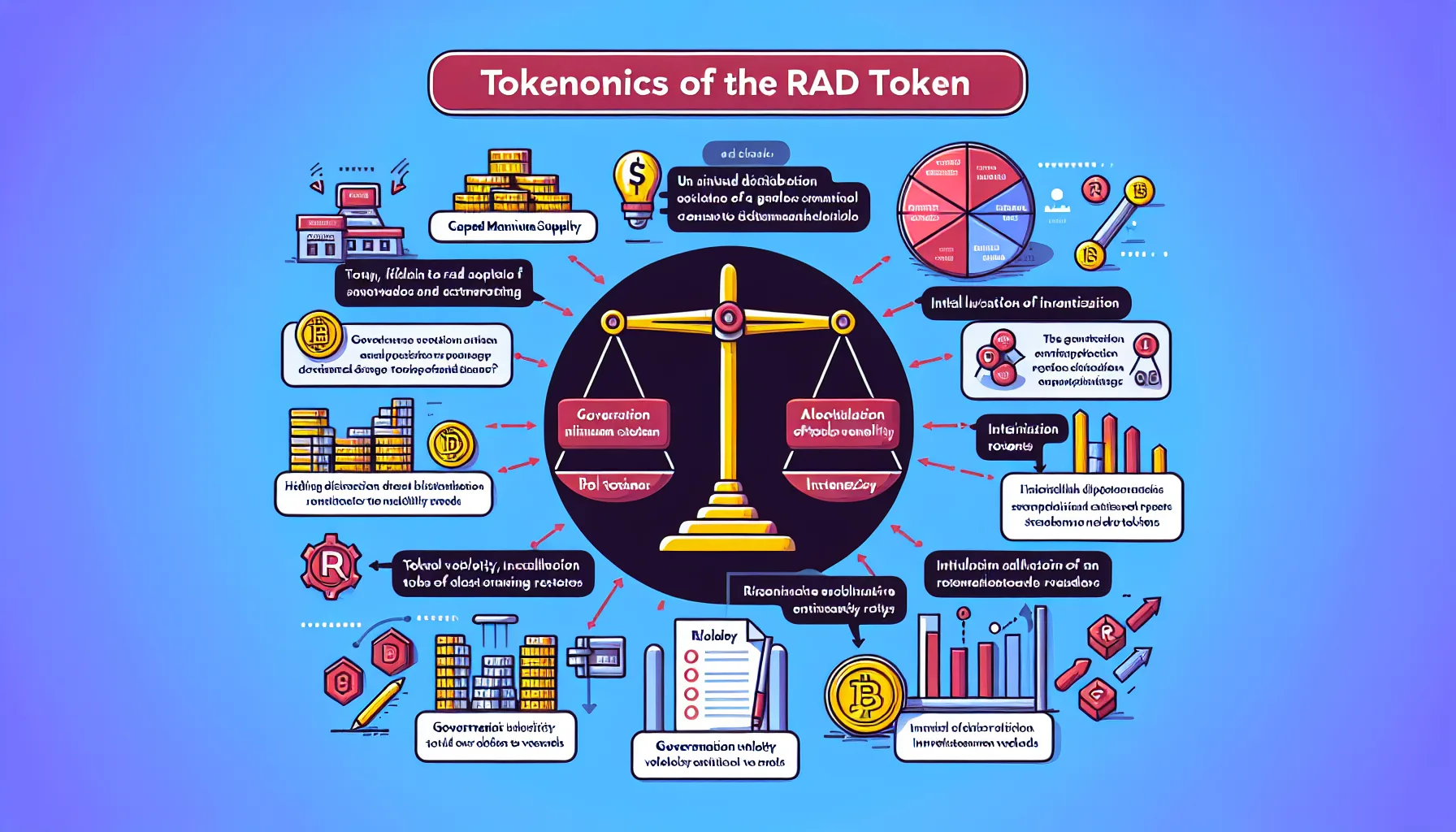
Tokenomics of the RAD Token: Supply, Distribution, and Incentive Structures
The RAD token operates as the native crypto asset of the Radicle network, with its tokenomics deeply woven into the governance, incentives, and economic mechanisms driving the protocol. Designed to facilitate decentralized collaboration, RAD's tokenomic structure highlights both opportunities and challenges when it comes to aligning the ecosystem's long-term incentives.
Fixed Supply and Deflationary Considerations
RAD operates with a capped maximum supply of 99,999,620 tokens, setting a clear upper limit to its issuance. This fixed-supply model introduces a deflationary aspect over time by restricting inflationary pressures. However, the token's scarcity also places significant weight on the initial distribution and subsequent allocation mechanisms. Critics have pointed out how limited token availability may disadvantage late adopters or lead to outsized control by early stakeholders.
Initial Distribution and Allocation Breakdown
At genesis, RAD's token distribution allocated a significant proportion of the supply to strategic participants, including 50% reserved for the Radicle Treasury to fund long-term development and ecosystem expansion. Of the remaining tokens, a substantial share was allocated to early supporters, protocol contributors, and private investors.
This allocation scheme has drawn scrutiny for its concentration. Early backers and investors control a notable portion of the supply, raising concerns about potential centralization risks early in the token's lifecycle. While the treasury's significant allocation aims to address these concerns through decentralized decision-making processes, critics warn that the governance structure may still disproportionately favor those with large token holdings.
Governance Utility and Incentivization
RAD tokens play a vital role in Radicle's decentralized governance, allowing holders to vote on proposals that shape the protocol's future. This governance utility is central to driving community participation; however, the power dynamic between small and large stakeholders remains an area of debate. Larger holders can exert outsized influence, potentially deterring smaller participants from engaging in the decision-making process.
Furthermore, the RAD tokenomics incentivize protocol activity through community grants and staking mechanisms. These initiatives aim to encourage long-term involvement and attract skilled developers. Challenges persist, however, as the allocation and distribution timing of these rewards can be difficult to optimize, risking imbalances between short-term speculation and genuine value creation.
Closing Thoughts on Token Velocity
The RAD tokenomics also attempt to balance token velocity by discouraging rapid transfers for speculative purposes. Lock-up periods and staking mechanisms are in place but may not fully mitigate the risk of volatility. Token holders must carefully assess how RAD’s economic model impacts alignment across the ecosystem, particularly as the network matures.
RAD Governance
Governance in RAD: Framework, Challenges, and Decentralized Decision-Making
RAD, the governance token of the Radicle protocol, serves as the backbone of its decentralized decision-making framework. At its core, RAD holders help shape the future of Radicle by participating in governance processes that drive the evolution of the protocol. Governed through an on-chain mechanism, the system relies on token-weighted voting, where the power to influence decisions is proportional to the number of tokens held.
The governance framework enables RAD holders to propose and vote on changes, such as funding allocations, feature developments, system upgrades, or adjustments to the protocol’s parameters. Any proposed changes must first undergo discussion within the Radicle community, fostering a decentralized yet organized decision-making process. The inclusion of token-weighted voting, while standard in many DAOs, is not without criticism—raising concerns regarding the concentration of influence among large holders (colloquially referred to as whales). This centralization risk is inherent in many governance token systems, and RAD is no exception.
Radicle’s governance also emphasizes self-sustainability, with treasury management being a cornerstone of decision-making. A portion of the RAD token supply is allocated to the protocol’s treasury, where spending proposals are subject to community approval. Although this approach empowers contributors to fund innovation, it also necessitates careful scrutiny to avoid potential inefficiencies or misuse of funds. The governance model balances inclusivity with risk, but trade-offs persist given the lack of mechanisms to prevent malicious actors or voter apathy, both of which could undermine progressive development.
A notable issue in RAD governance lies in participation rates. Governance systems often face challenges with voter turnout, and RAD is not immune to this. Low participation compromises the legitimacy of decisions and increases the probability of governance stagnation. Moreover, the learning curve for understanding governance proposals and their implications can alienate less active community members, further reducing engagement levels.
Finally, governance token utility is often influenced by speculative tokenomics, and RAD is no exception. While voting rights are pivotal for protocol development, some holders may simply see RAD as an investment vehicle rather than a mechanism for community collaboration. This tension between utility and speculation remains a challenge for RAD governance and raises questions about how to incentivize sustained, meaningful participation beyond financial motivations.
Technical future of RAD
Current and Future Technical Developments of the RAD Crypto Asset: A Technical Roadmap
The RAD crypto asset, central to the Radicle decentralized software collaboration stack, has seen iterative improvements and showcases a robust technical direction. To understand its ongoing and future potential, contemplating its technical development framework and roadmap is essential.
Decentralized Governance Enhancements
One prominent development surrounding RAD is the push for decentralization at the governance layer. While Radicle has made strides in reducing dependency on centralized infrastructures, there are ongoing efforts to refine governance mechanics via on-chain voting. However, challenges have emerged, including the relatively low participation in governance proposals—a common issue in crypto ecosystems. Future improvements aim to streamline proposal processes and incentivize higher user engagement in governance decisions, perhaps by rethinking staking mechanisms.
Scaling Challenges and Layer-2 Possibilities
With the growth in adoption, scalability remains a technical focus for RAD and the Radicle protocol. Current efforts include exploring potential integrations with Layer-2 solutions to ensure faster transaction settlements and reduced gas costs for users. While these scaling initiatives promise to enhance usability, the team must carefully consider balancing decentralization with performance—a task historically fraught with trade-offs.
Protocol-Level Refactoring
The Radicle protocol relies on a peer-to-peer architecture underpinned by Git-based software version management tools. There are active initiatives to optimize the networking layer to provide greater resilience against performance bottlenecks, such as network congestion or inefficient peer discovery. Additionally, improving interoperability with other decentralized systems is a high priority as the space leans closer to cross-chain connectivity.
Smart Contract Audits and Security Concerns
Security remains a critical area of focus. The continuous auditing of RAD’s smart contracts and voting logic represents a significant effort to mitigate vulnerabilities. However, as the ecosystem grows, potential risks increase, including technical exploits inherent to complex smart contract logic. Future updates will likely feature runtime mechanisms to minimize attack surfaces.
Enhanced User Experience Through Protocol Integrations
Radicle’s technical roadmap also includes better tooling and integrations with popular Web3 infrastructure. This involves extending its existing feature set to attract developers through improved CLI tools, graphical interfaces, and comprehensive documentation. However, maintaining compatibility across diverse Web3 stacks might strain development resources and could necessitate a slower, more deliberate rollout cadence.
Conclusion on Emerging Technical Trends
The RAD technical roadmap reflects a balance between immediate protocol needs and long-term innovations. With a persistent emphasis on decentralization, scalability, and security, the RAD ecosystem has set a demanding technical direction. However, the inherent challenges in governance participation, scaling trade-offs, and multi-system interoperability remain focal areas of scrutiny in its design evolution.
Comparing RAD to it’s rivals
Comparing RAD to ATOM: A Detailed Look at Architectural and Functional Differences
When comparing RAD (Radicle) to ATOM (Cosmos), the discussion centers on differences in purpose, architecture, and how each approaches decentralization and interoperability. While both projects cater to decentralized ecosystems, their methods and focus areas vary significantly, with pros and cons on each side that savvy investors and developers scrutinize.
Core Purpose and Ecosystem Design
RAD is designed to facilitate peer-to-peer (P2P) software collaboration, with a focus on decentralizing version control systems. Radicle seeks to replace centralized Git repositories with a decentralized, censorship-resistant alternative where code hosting and collaboration occur without relying on intermediaries. On the other hand, ATOM powers the Cosmos network, which focuses on interoperability protocols to connect multiple blockchains and enable cross-chain transactions. Radicle’s P2P focus contrasts sharply with Cosmos’s goal of building a network of interconnected blockchains, making these projects complementary in some areas but incomparable in others.
ATOM's use case within Cosmos leans heavily on the implementation of the Inter-Blockchain Communication (IBC) protocol. This creates a cohesive network of blockchains exchanging value and data, whereas RAD primarily serves developers working within niche, Git-based workflows. Cosmos serves a broader market aimed at blockchain scalability, while Radicle’s application is industry-specific—highlighting utility tradeoffs.
Distribution Models and Token Utility
A key differentiator between RAD and ATOM lies in token mechanics. ATOM serves as the staking and governance token for the Cosmos Hub, allowing validators and delegators to secure the network while ensuring its scalability through Proof-of-Stake (PoS). In contrast, RAD tokens are used to incentivize development and participation in the Radicle ecosystem, emphasizing governance over the protocol's direction and sustainability.
Notably, ATOM benefits from broader staking functionality and network rewards, which inherently drive participation. RAD, while decentralized and secure, struggles to incentivize outside contributors at the same scale due to a narrower use case. Over time, Radicle's adoption may hinge upon its ability to extend beyond its developer niche or create additional integrations or partnerships, a challenge ATOM has largely addressed through its modular infrastructure.
Decentralization and Technical Considerations
While both projects emphasize decentralization, Radicle extends this value directly into its architecture by eliminating central server dependencies entirely. Git repositories in Radicle are hosted on its peer-to-peer network. By contrast, ATOM supports decentralized functionality indirectly by facilitating interconnectivity between blockchains, leaving individual networks to determine their levels of centralization.
A limitation in Radicle’s design is its dependency on a growing user base to strengthen its P2P swarm. Without mass adoption, P2P dynamics could face bottlenecks in performance or security robustness. ATOM sidesteps these issues by leveraging a larger Cosmos ecosystem that provides value almost immediately to blockchain developers seeking scalability through interoperability, though ATOM itself as a token doesn’t directly power every blockchain built using Cosmos SDK.
Understanding these divergences highlights RAD and ATOM's distinct roles in the broader crypto ecosystem.
Comparing RAD to DOT: Key Differences in Infrastructure and Design
When placing RAD (Radicle) side by side with DOT (Polkadot), the foundational distinctions in their architectures and use cases become striking. Both projects are designed to address critical limitations in the blockchain space, but their approaches diverge significantly, reflecting their unique visions.
Governance and Decentralization: Contrasting Approaches
While Radicle emphasizes a true decentralized peer-to-peer infrastructure for code collaboration, DOT's Polkadot network revolves around shared security and interoperability across parachains. DOT boasts a sophisticated on-chain governance system that allows stakeholders to propose and vote on updates, significantly reducing the risk of centralized decision-making. RAD, by contrast, takes a more focused approach with governance tied specifically to its developer-focused ecosystem. The narrower governance scope in RAD creates a dedicated environment suited for its users but limits its ability to cater to broader blockchain interoperability challenges that DOT aims to solve.
Core Focus: Open-Source Collaboration vs. Interoperability
One of the most apparent differentiators lies in RAD’s emphasis on decentralized Git repositories for open-source software development through the Radicle protocol. This specialization allows it to compete with centralized platforms like GitHub. DOT, on the other hand, is not aimed at single-use verticals like software development but instead serves as a broader platform for cross-chain communications and economic activity through interoperability. Consequently, RAD is narrower in scope, while DOT’s ambitions seek to unite diverse blockchains under a single ecosystem, potentially giving DOT a broader market appeal.
Tokenomics: Utility Variances
DOT operates with utility deeply integrated into securing the network through staking, participation in governance, and coordinating parachains within the Polkadot ecosystem. RAD’s token, however, centers around incentivizing decentralized collaboration between developers and ensuring governance within its highly specialized niche. This sharp contrast in utility exposes a common critique of RAD: its token's use case, while clear, may lack the versatility required to compete at the same scale as DOT’s more diverse economic incentives.
Scalability: Ecosystem vs. Application Focus
Polkadot was built with scalability at its core via its relay chain and parachain design, enabling high throughput and parallel transaction execution. RAD does not directly address scalability in the same way, as it remains focused on decentralized coding environments, not serving as a generalized blockchain infrastructure like Polkadot. This could make RAD less appealing to projects looking for broader scalability benefits.
RAD vs. DOT highlights a fundamental philosophical difference: RAD prioritizes decentralized, niche utility, while DOT aims for expansive interoperability. However, RAD’s narrower focus allows it to excel within its domain, even if it doesn’t match DOT's ecosystem-scale ambitions or cross-chain innovations.
Comparing RAD to Avalanche (AVAX): Strengths and Limitations
When evaluating RAD alongside Avalanche (AVAX), the comparison naturally focuses on scalability, decentralization, and ecosystem dynamics, as both projects aim to optimize blockchain infrastructure, albeit with differing methodologies. While Avalanche has made a name for itself through its multi-chain architecture and high throughput, RAD approaches network design from a fundamentally different angle, which presents unique strengths as well as challenges.
Scalability and Network Design
Avalanche's high-profile introduction of its "subnet" architecture enables developers to create custom blockchains tailored to specific use cases, isolating traffic and avoiding congestion on its primary chain. RAD, however, takes a distinct route by emphasizing governance and developer incentives at the protocol layer. While this focus promotes innovation for application builders, RAD may trail behind Avalanche in raw throughput and user-friendly infrastructure scalability. AVAX's ability to process thousands of transactions per second across its subnets gives it a clear performance edge in this regard. For RAD, the absence of such multi-chain capabilities could become a noticeable bottleneck as adoption grows.
Decentralization and Governance
One area where RAD shines in contrast to Avalanche is its explicit prioritization of decentralized governance. RAD token holders are tightly integrated into protocol decision-making, streamlining mechanisms by which upgrades, incentives, and long-term strategy are determined. In comparison, Avalanche operates a more hybrid model, with varying levels of decentralization based on subnet configurations—some of which may have fewer validators, depending on their intended use case. This decentralized flexibility is a strength for AVAX, but critics argue it opens the door to potential centralization risks at the subnet level. Still, RAD's governance model comes with its own trade-offs, particularly the potential for slower consensus formation amidst larger or fragmented stakeholder participation.
Ecosystem and Development
Avalanche's ecosystem expansion has been fueled by aggressive grant programs, partnerships, and a multi-asset infrastructure enabling tokenized assets, DeFi, and gaming projects to flourish. RAD, while boasting a robust foundation-layer focus, has yet to match Avalanche's breadth of dApp activity. This may underscore RAD's narrower appeal at present, with developers potentially gravitating toward platforms that already offer extensive tooling and liquidity incentives. Furthermore, Avalanche's rapid ecosystem growth also exemplifies its ability to attract high-quality projects quickly, creating a network effect that RAD—as of now—struggles to replicate.
Interoperability Trade-Offs
Interoperability is another domain where Avalanche's architecture presents clear advantages due to the ease of designing custom subnets with tailored bridge functionality. RAD, while interoperable in design, does not explicitly offer the same modular framework for building interconnected chains. For developers requiring bespoke environments, the lack of comparable flexibility may deter adoption. This difference illustrates one of RAD's key limitations in addressing network-wide customization when stack complexity increases.
RAD's governance-centric strategy offers a compelling counterpoint to Avalanche's performance-driven ethos but reveals gaps when directly matched to AVAX's architectural versatility and ecosystem depth. Nevertheless, the divergence in focus reflects broader philosophical differences in blockchain development, drawing different types of users and builders to each platform.
Primary criticisms of RAD
Primary Criticism of the RAD Crypto Asset
When examining the RAD token, several key criticisms emerge that have sparked debates within the crypto community. While the protocol underlying RAD offers unique value propositions, certain aspects of its design and ecosystem have drawn scrutiny from both users and developers.
Token Utility and Centralization Concerns
One of the most significant criticisms of RAD revolves around questions surrounding its token utility. Critics argue that its tokenomics model lacks clarity in incentivizing long-term holders and platform participants. Additionally, concerns about centralization have been voiced, particularly with respect to the token distribution. A substantial portion of RAD is held by early investors, core developers, and insiders, which creates an uneven playing field that some believe undermines the token’s decentralized ethos. This concentrated distribution raises apprehensions about potential manipulation of governance decisions, as power within the ecosystem could be disproportionately skewed toward a small group of stakeholders.
Governance Model Critiques
RAD’s governance structure has faced particular scrutiny. While its on-chain governance mechanism seeks to place control in the hands of token holders, critics point to practical challenges in ensuring meaningful and fair participation. Low voter turnout is a pervasive issue in decentralized governance, and RAD is no exception. Some argue this creates a governance model that is more symbolic than functional, with decisions ultimately falling to the most active (and often wealthiest) participants, rather than truly reflecting the collective wishes of the broader community.
Network Scaling and Usability
As the ecosystem surrounding RAD has grown, persistent scalability issues have surfaced. Participants have pointed out inefficiencies in transaction throughput and network responsiveness, particularly during moments of high activity. These bottlenecks undermine the user experience and limit the protocol's ability to compete with more scalable Layer 1 and Layer 2 options. Developers have cited the complexity of onboarding new users and integrating dApps as additional pain points, which further complicates the pathway to mass adoption.
Economic Design and Sustainability Risks
The long-term sustainability of RAD’s economic design is another area of criticism. Observers have raised questions about its reward mechanisms and whether they are sufficient to attract and retain developers to the ecosystem. Some contend that the project's emphasis on short-term incentives may dilute its viability over time, especially in the face of competition from alternative decentralized systems with more robust economic models.
These factors—alongside other emerging criticisms—continue to fuel debates about RAD’s viability and its position within the broader crypto landscape.
Founders
The Founding Team Behind RAD: Insights and Challenges
The crypto asset RAD, the governance token of the Radicle protocol, originates from a founding team deeply rooted in open-source software development and decentralized systems. This team, headquartered under the banner of Monadic, has emphasized creating tools that empower developers to collaborate without relying on centralized platforms. While this ethos sets a solid foundation for RAD’s philosophy, the journey of the founding team has not been without its complexities.
Radicle’s core idea of peer-to-peer, decentralized code collaboration stems from the team’s collective experience in software engineering and blockchain development. These individuals possess a strong technical pedigree, with backgrounds contributing to a range of open-source projects. Their commitment to advancing decentralized protocols is evident in Radicle’s design, which leverages Git’s distributed nature but integrates decentralized ledger technologies to manage governance and funding. This alignment of technical acumen with long-standing developer needs has fueled the project’s appeal within niche crypto and open-source communities.
However, the founding team's close ties to open-source ecosystems raise questions regarding scalability. While their passion and expertise have attracted technically savvy users, critics argue that the team’s vision may overshoot the practical usability needs of mainstream developers unfamiliar with decentralized technologies. This gap between ideological commitment and market adoption remains a critical challenge for RAD's growth.
Another point of contention has been transparency. The founding team’s decision to bootstrap the project and later introduce governance mechanisms via the RAD token has drawn both admiration and skepticism. Early adopters praised the team for putting decision-making power into the hands of token holders, but questions arose regarding the allocation and distribution of the tokens themselves. Some in the crypto community have expressed concern that the initial allocation dynamics may have disproportionately favored insiders, a common criticism of governance token launches.
Furthermore, the team’s execution speed occasionally faces scrutiny. Although developing decentralized systems is inherently complex, some community members and stakeholders have pointed to delays in promised updates or new features as a sign of organizational inefficiency. Whether this is a byproduct of the team’s commitment to meticulous testing or a lack of resources remains a speculative but hotly discussed topic.
Overall, the founding team of RAD comprises capable and innovative developers who have built a system aligned with their principles. Yet, challenges around adoption, transparency, and execution continue to spark debate within the highly critical crypto landscape.
Authors comments
This document was made by www.BestDapps.com
Sources
https://radicle.xyz/
https://github.com/radicle-dev/radicle-whitepaper/blob/master/README.md
https://github.com/radicle-dev/radicle-docs
https://radicle.xyz/blog/
https://github.com/radicle-dev/radicle-link
https://radicle.network/
https://radicle.community/
https://docs.radicle.xyz/docs/what-is-radicle/overview
https://github.com/radicle-dev/radicle-upstream
https://etherscan.io/token/0x2f6ad7743924b19010522c59f51e7b4e55e91377
https://coinmarketcap.com/currencies/radicle/
https://messari.io/asset/radicle
https://medium.com/radicle
https://web3.foundation/grants/
https://github.com/radicle-dev/
https://radicle.foundation/
https://tokenomics.mirror.xyz/
https://defillama.com/protocol/radicle