History of QKL
The History of QKL: Tracing Its Origins and Evolution
QKL, a lesser-known yet technologically intriguing crypto asset, has a history rooted in niche problem-solving and blockchain innovation. Launched as a response to a specific inefficiency in distributed ledger systems, its origins can be traced back to a group of developers frustrated with limitations in transaction scalability and cross-chain operability. While the founding team initially operated under pseudonyms, their technical whitepaper and open-source codebase provided enough transparency to position QKL as a project worth monitoring in the crypto landscape.
QKL's most identifiable milestone was its highly technical and low-profile launch. Unlike the splashy marketing campaigns and oversubscribed token sales that define some other assets, QKL opted for a quiet grassroots introduction, reflecting its focus on functionality rather than hype. The asset gained traction among a select group of blockchain developers drawn to its modular architecture, which emphasized a high degree of flexibility for building decentralized applications (dApps). At its core, QKL aimed to address the friction points between high-speed finality and decentralized security—two aspects other blockchain networks often compromised on.
However, QKL's growth trajectory has not been without controversy. Early issues with its validator network raised significant concerns about centralization risks. Several savvy crypto analysts highlighted how a small cluster of validators controlled a disproportionate share of network power, leaving it more vulnerable to collusion and potential governance manipulation. While the development team has since implemented protocol updates to address these concerns, critics argue that meaningful decentralization remains an unresolved challenge.
Another polarizing chapter in QKL's history was its contentious hard fork. Disagreements within the community about altering the block reward structure led to a faction of miners and developers splitting from the main chain. This resulted in the creation of a competing asset that sought to remain closer to QKL’s original principles. While the contentious fork underlined the ideological divides within its ecosystem, it also underscored the complexity of governance in decentralized networks.
Despite its ups and downs, QKL has consistently found itself adopted in experimental use cases related to interoperability—a niche it initially targeted. Its past illustrates a mix of innovation, technical setbacks, and governance complexities, making it a distinctive example of the challenges and opportunities in blockchain development.
How QKL Works
How QKL Works: A Deep Dive into its Core Mechanics
QKL operates on a blockchain architecture designed to resolve issues of scalability and efficiency commonly faced by many decentralized systems. Its protocol focuses on combining innovative consensus mechanisms and unique transaction validation processes to achieve high throughput without compromising decentralization.
Consensus Mechanism and Validation
At the heart of QKL is its bespoke consensus model, which blends features of Proof-of-Stake (PoS) and Practical Byzantine Fault Tolerance (PBFT). This hybrid design is intended to enable faster block finality, as validators only need minimal confirmations to seal a transaction irreversibly. However, while this structure improves transaction speeds and reduces unnecessary block production, it introduces concerns about validator centralization. With fewer nodes required to finalize blocks, there’s a risk of power consolidating in the hands of fewer participants.
Unlike many blockchains that rely on intensive computational exercises, QKL adopts a stake-weighted model where validators are selected based on their token holdings. While this reduces energy consumption and encourages long-term investment, critics argue that it disproportionately benefits wealthy token holders, underscoring potential equity issues in network participation.
Layered Infrastructure Design
QKL operates on a multi-layered infrastructure that separates transaction execution, network consensus, and data storage. This modular approach allows for parallel processing, significantly boosting network throughput. The network leverages sharding to divide transaction loads across multiple subnetworks, which enhances scalability. However, implementing sharding mechanisms brings challenges related to cross-shard communication failures and security risks if shards become isolated from the broader network.
Additionally, QKL employs a virtual machine for executing smart contracts. This virtual machine focuses on compatibility and efficiency but has faced criticism for its reliance on a niche, proprietary coding language rather than adopting more established languages like Solidity. The result is a steeper learning curve for developers, potentially limiting ecosystem growth.
Privacy and Security
QKL integrates optional privacy features through zero-knowledge proofs (ZKPs), enabling users to shield transaction data while ensuring verifiability. While these features are a significant draw for privacy advocates, they have also raised regulatory scrutiny since fully anonymous transactions can conflict with anti-money laundering (AML) and know-your-customer (KYC) standards.
Security is further bolstered via checkpointing mechanisms that periodically anchor network states, reducing the potential for chain reorganization attacks. Despite this, concerns remain about the system's resilience against large-scale coordinated attacks, especially given its reliance on validator trust.
QKL’s design choices offer a unique blend of efficiency and functionality, albeit not without inherent trade-offs that warrant further scrutiny.
Use Cases
QKL Use Cases: Unlocking Niche Applications in Blockchain Technology
QKL has carved out a unique space within the blockchain environment, offering use cases that blend customizability and scalability. Its technology framework enables both traditional and emerging industries to adopt decentralized solutions effectively. Below, we examine its specific use cases and the challenges they may present to adopters.
Enterprise-Grade Supply Chain Tracking
One of QKL's most prominent use cases is found in supply chain management. Leveraging its custom tokenization protocol, QKL allows enterprises to create immutable records of origin, movement, and quality control data. This is particularly valuable for industries like pharmaceuticals, luxury goods, and agriculture, where traceability is paramount. However, there are technical considerations. The network's reliance on resource-intensive node operations may limit adoption among smaller entities with limited technical capacity or budget for integration.
Decentralized Identity Verification
Through its underlying smart contract architecture, QKL powers decentralized identity (DID) solutions without compromising user privacy. This use case is especially relevant for entities requiring high-security user authentication, such as financial institutions and digital healthcare platforms. While QKL's speed and modular framework align well with DID applications, concerns arise regarding interoperability with other blockchain networks. Many competitors in the DID landscape have robust cross-chain support, while QKL's ecosystem remains relatively isolated.
Custom Token Ecosystems for DAOs
QKL has been embraced by communities deploying decentralized autonomous organizations (DAOs), offering straightforward token creation and governance tooling. The capability to spin up governance structures within its ecosystem gives creators flexibility in running community-driven projects. However, there’s a tradeoff: QKL's governance models can be rigidly tied to its native development framework. Critics argue this lack of flexibility may stifle DAO innovation, as projects must work within QKL’s coding parameters rather than tailor governance systems freely.
Real-Time Microtransactions
QKL's low-latency infrastructure supports practical, small-value payment systems, making it a strong player within the microtransaction economy. This use case fits industries such as gaming, content distribution, and IoT solutions, where instantaneous payment execution matters. However, questions remain about the network's sustainability. As microtransaction volumes scale, QKL could face network congestion or rising transaction fees, depending on how effectively its design handles resource distribution under high demand.
Challenges in Scalability and Use Case Expansion
Although QKL has strong technical foundations for these use cases, scaling challenges could bottleneck its expansion. The reliance on validator incentives, while fostering decentralization, may deter institutions with needs for predictable, low-cost operations. Without additional ecosystem partnerships or enhancements to cross-chain operability, users may seek alternative platforms with broader feature sets.
QKL Tokenomics
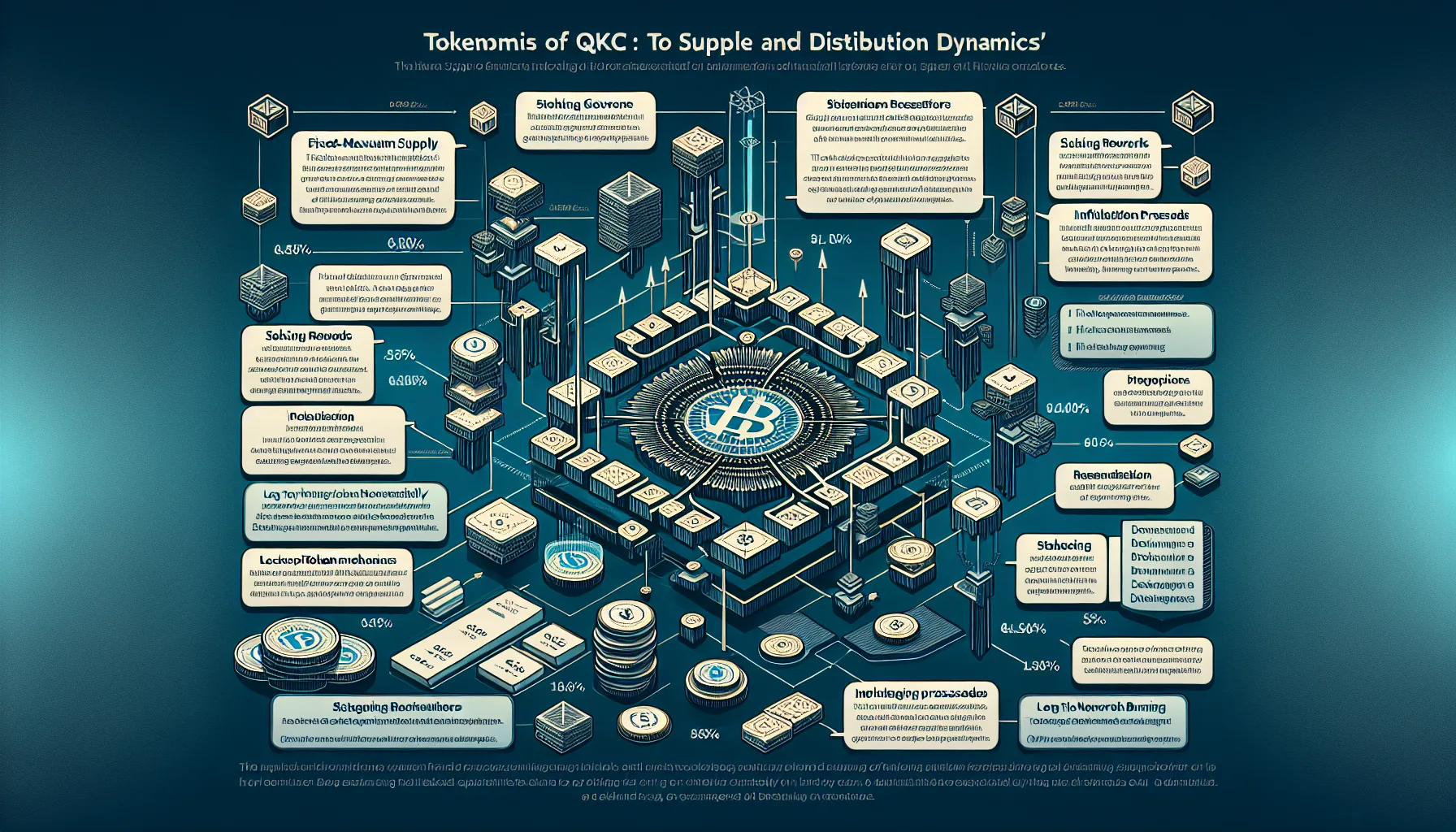
Tokenomics of QKL: A Deep Dive into Supply and Distribution Dynamics
QKL's tokenomics framework is intricately designed to balance utility, governance, and long-term network sustainability, but it is not without its complexities and potential weaknesses. The distribution model, token supply control, and staking incentives all play pivotal roles in defining QKL's economic structure.
Fixed Supply vs. Emission Model
QKL operates on a fixed maximum supply model, which inherently introduces a deflationary mechanism over time as tokens are removed from circulation through staking or burning initiatives. However, fixed supply models can also lead to potential centralization issues, particularly if a small number of early adopters or institutional players dominate the token holdings. This risk is compounded by the uneven initial allocation schema, where significant portions of the supply are often allocated to the founding team, ecosystem growth, and private investors.
Initial Allocation Breakdown
The QKL token's initial allocation is a critical component of its tokenomics and raises important considerations. Approximately 10% of the supply is earmarked for the core team, designed to incentivize ongoing project development. An additional 25% is allocated to private investors during the seed and strategic funding phases, providing early-stage capital but potentially creating short-term sell pressure upon token unlock events. A further 15% is set aside for ecosystem initiatives such as partnerships, liquidity provision, and community development. The remaining 50% is distributed through staking rewards and mining incentives, ensuring token circulation grows in tandem with network use.
This structure, while common, poses risks in terms of token holder centralization. If private and institutional investors hold large portions of the supply, the token's governance framework could be skewed toward their interests, undermining community-centric decision-making.
Staking Rewards and Inflationary Pressures
QKL encourages network participation through staking incentives, with annual percentage yields (APY) determined algorithmically based on network activity and participation rates. While this fosters active engagement, it also introduces inflationary pressures in the short term. The dual narrative of fixed supply and reward-based inflation is something users must carefully monitor, particularly as the staking pool mechanics impact circulating supply dynamics.
Additionally, QKL’s staking mechanisms introduce lock-up periods, which could disincentivize certain retail participants or investors seeking liquidity. On the other hand, these lock-up periods help to stabilize token value by reducing immediate sell pressure, albeit at the cost of limiting real-time flexibility.
Burn Mechanism and Deflationary Impact
QKL employs a periodic burn mechanism for managing token supply, funded through transaction fees and protocol penalties for validators failing to meet performance standards. While this deflationary measure can bolster scarcity, its real-world effectiveness hinges on sustained network adoption and usage. Misalignment between burn rates and token minting could lead to fluctuating supply dynamics, a factor that invites scrutiny from token holders.
QKL Governance
QKL Governance: Navigating Decentralized Decision-Making
QKL operates on a decentralized governance framework that empowers its community of token holders to influence key decisions surrounding the protocol. At its core, QKL governance relies on token-weighted voting mechanisms, allowing participants to propose, debate, and decide on protocol upgrades, fee structures, and other critical ecosystem parameters. However, this model comes with both strengths and challenges, shaping how power and consensus are reached within the QKL network.
Token Mechanics in Governance
QKL governance is intrinsically tied to its native token, which enables voting power proportional to the amount of tokens held or staked by participants. While this incentivizes investment and alignment with the platform's success, it inevitably raises concerns about centralization of control. The risk stems from large token holders or institutional entities dominating the decision-making process, potentially overshadowing smaller participants. This creates an ongoing tension between decentralization ideals and practical governance execution.
Proposal and Voting System
The governance process within QKL is structured to encourage community-driven proposals. Any participant meeting a minimum token threshold can submit a proposal, outlining changes such as adjusting consensus rules, creating token burn schedules, or allocating funds from the project’s treasury. Yet, this high entry barrier for proposal submission has been criticized for potentially excluding smaller stakeholders, limiting grassroots involvement. The voting periods, while sufficiently transparent, have also raised questions about low participation rates among token holders, a common issue in decentralized ecosystems.
The Role of Governance Tokens
QKL governance emphasizes staking mechanisms to deter malicious actors and incentivize long-term commitment to the network. Staking tokens not only grants voting rights but also locks capital, which could otherwise be liquid. While this system secures the network and aligns incentives, critics argue it disproportionately benefits early adopters and larger token holders, exacerbating wealth disparities within the ecosystem.
On-Chain vs. Off-Chain Decision Dynamics
A unique aspect of QKL’s governance framework is its dual-layer approach to decision-making, combining on-chain voting with off-chain discussions. Forums, Discord communities, and other informal channels play a significant role in shaping proposals before they reach the voting stage. However, this reliance on off-chain dynamics has sparked debates about transparency. Influential figures or groups can shape narratives outside the chain’s purview, leading to imbalanced power dynamics and potential conflicts of interest.
QKL governance remains evolving, presenting an intricate balance between decentralization principles and practical constraints. Its design offers opportunities for community-driven decision-making while also exposing vulnerabilities tied to stakeholder engagement and token distribution dynamics.
Technical future of QKL
Current and Future Technical Developments and Roadmap of QKL
The QKL blockchain is engineered with a strong focus on scalability, interoperability, and decentralized application (dApp) integration. Its technical development roadmap emphasizes innovative solutions, yet challenges remain in execution.
Current Technical Highlights
One of QKL's standout features is its high-performance consensus mechanism, a hybrid combining Delegated Proof-of-Stake (DPoS) with Byzantine Fault Tolerance (BFT). This framework allows for fast confirmation times and energy efficiency, making it a potential competitor in transaction-heavy ecosystems. QKL's smart contract layer is EVM-compatible, ensuring seamless integration with Ethereum-native tools, while also offering its own lightweight virtual machine for resource optimization. This dual support caters to developers looking to migrate or build novel applications.
Layer-2 scaling has also been prioritized, with an active zk-rollup integration in progress. This aims to reduce on-chain congestion for applications requiring high throughput, such as NFT marketplaces or DeFi protocols, all while maintaining the trustless security of the base chain. However, adoption of these Layer-2 solutions has been slower than anticipated, partially due to fragmented tooling and limited documentation, which the team has acknowledged as areas requiring focus.
Future Technical Roadmap
Looking forward, QKL plans to implement cross-chain bridges to strengthen interoperability across ecosystems. A Polkadot-compatible parachain is under development and could open doors to seamless interaction with other blockchain networks. Despite these ambitions, concerns linger regarding the security modules for these bridges—historically a weak point across the industry. To mitigate this, QKL is reportedly exploring cryptographic techniques like threshold signatures and multi-party computation.
Another future technical initiative is the introduction of on-chain governance powered by quadratic voting. While this move aims to decentralize decision-making and prevent governance token whale dominance, its practicality is yet to be determined. Early testing indicates complications in ensuring fair representation across different user cohorts.
Lastly, the development team is working on native privacy solutions, such as zk-SNARKs for confidential transactions. These upgrades are poised to enhance QKL's appeal in regulatory-sensitive sectors. However, the implementation timeline and compliance challenges pose hurdles. Striking a balance between privacy and transparency to satisfy regulatory scrutiny remains an unresolved task.
QKL's technical roadmap presents promising advancements but also significant risks tied to execution delays, developer ecosystem development, and security concerns in critical areas like interoperability and governance infrastructure.
Comparing QKL to it’s rivals
QKL vs. BRT: A Detailed Comparison in Utility and Network Efficiency
In evaluating QKL against one of its notable rivals, BRT, the key differences emerge in utility alignment, network efficiency, and technical architecture. While both projects aim to occupy positions of utility within decentralized ecosystems, they approach their goals through divergent routes, each with strengths and weaknesses.
Core Utility Focus
QKL positions itself as a highly adaptable layer-1 blockchain with advanced modularity, emphasizing customizable smart contract support and cross-chain compatibility. In contrast, BRT aims to dominate within decentralized finance (DeFi) by offering sector-specific infrastructure, particularly focused on institutional-grade financial solutions and automated liquidity scaling mechanisms. While QKL's adaptability offers broader use case potential, BRT's more focused utility often enables faster adoption in niche markets. However, this narrow specialization has been criticized for potentially limiting scalability outside DeFi-based innovation.
Network Efficiency and Scalability
QKL incorporates a sharding-based architecture, enabling horizontal scaling for transaction throughput without diluting decentralization. Sharding allows QKL to compete with high-throughput blockchain platforms by maintaining consistent performance irrespective of network congestion levels. BRT, on the other hand, relies on a consensus mechanism featuring dynamic pruning and computational offloading. While this achieves commendable efficiency under optimal conditions, BRT has faced community criticism regarding bottlenecks during periods of high on-chain activity, leading to transaction delays. The dynamic pruning algorithm, while innovative, has also sparked debates over whether it compromises long-term data integrity for short-term speed gains.
Tokenomics and Incentive Structures
Regarding token distribution, BRT is notable for its capped token supply coupled with automated yield adjustments tied to network demand. This design heavily incentivizes staking but has led to questions about long-term deflationary pressure and decreased trader liquidity. On the other hand, QKL employs a balanced tokenomics strategy that incorporates inflationary rewards for validators without undermining the token value due to its governance-controlled monetary policy. This has allowed QKL to sustain a more stable reward distribution while avoiding the liquidity traps observed in hyper-deflationary ecosystems like BRT's.
Smart Contract Ecosystem
Another defining characteristic of BRT is its use of a proprietary programming language for smart contracts, built for enhanced security in DeFi transactions but criticized for its closed-nature ecosystem. Developers often cite limited compatibility with Ethereum Virtual Machine (EVM)-based protocols as a barrier to adoption. QKL, by contrast, supports full EVM compatibility, along with additional developer tools that streamline dApp deployment. This open approach fosters a more collaborative ecosystem, albeit one that some critics argue lacks the security guarantees BRT offers within its guarded sandbox model.
In summary, QKL and BRT chart distinct paths, with QKL opting for versatility and interoperability, while BRT remains heavily rooted in DeFi optimization. Their trade-offs largely hinge on user priorities, from cross-chain capabilities to high-performance niche specialization.
QKL vs. ZYN: A Detailed Comparison
When analyzing QKL's position in the crypto landscape, an essential point of comparison is ZYN. Both assets target overlapping niches but employ distinct approaches that differentiate them on both technical and functional levels.
Consensus Mechanism Differences
ZYN operates on a unique Delegated Proof-of-Stake (DPoS) framework, emphasizing high transaction throughput at the expense of decentralization. In comparison, QKL utilizes an optimized Proof-of-Work (PoW) model. While QKL’s PoW mechanism prioritizes network security and a trustless environment, ZYN’s DPoS introduces potential centralization risks due to the reliance on a limited number of active validators. This structural difference makes ZYN more appealing to speed-focused ecosystems but raises concerns about governance centralization and validator collusion.
Smart Contract Execution and Developer Ecosystem
ZYN's smart contract platform is based on a proprietary language that some developers find challenging compared to QKL’s Ethereum Virtual Machine (EVM) compatibility. This limits ZYN’s ability to attract developers familiar with popular programming standards like Solidity, giving QKL an edge in fostering a broader and more sustainable developer ecosystem. However, ZYN compensates by offering lower gas fees for complex smart contract transactions, which has attracted certain niche projects that prioritize cost efficiency.
Scalability Trade-offs
ZYN heavily markets its Layer-1 scalability, boasting transaction finality times significantly faster than QKL. While this provides a smoother user experience for high-frequency platforms such as microtransactions, it comes at the cost of node requirements that are more demanding. Consequently, participation in ZYN's network is costlier and more resource-intensive, potentially disincentivizing smaller operators, whereas QKL's more accessible hardware requirements support a broader network of nodes.
Governance Dynamics
Another point of contrast lies in governance. ZYN allows token holders to stake and vote on key network decisions through its DPoS model. While this incentivizes engagement, critics have raised concerns regarding vote-buying and the influence of whale accounts. In contrast, QKL opts for more decentralized and less frequent governance updates, which some argue hampers adaptability but ensures broader participant equity.
Niche Focus
ZYN’s ecosystem leans heavily into building decentralized applications (dApps) in the gaming and entertainment sectors, resulting in a concentrated use case focus. While this specialization has driven unique partnerships and adoption in those industries, it also risks over-reliance on a narrow market segment. On the other hand, QKL’s broader, multi-sectoral approach provides diversification, though some argue this dilutes its branding focus.
By honing in on these distinctions, ZYN offers speed and cost efficiencies in targeted niches, but with notable trade-offs in decentralization and accessibility when compared to QKL’s broader, more trustless framework.
Comparing QKL to MFX: Evaluating a Competitive Edge in the Crypto Space
When contrasting QKL with MFX, it's clear that both projects operate in highly competitive niches within the crypto ecosystem, yet they showcase divergent approaches in terms of scalability, use cases, and technical structure. MFX, often seen as an ecosystem-driven asset, has managed to carve out a reputation for its modular architecture, which allows developers to build specific solutions on top of its framework. While this modularity is an asset, it also introduces complexities that may deter adoption when compared to QKL's streamlined, all-in-one infrastructure.
One key area where QKL distinguishes itself from MFX is transaction efficiency. MFX relies on an adaptive consensus mechanism that, while innovative, has been criticized for its inconsistency in peak network conditions. This can lead to unpredictable transaction times and fluctuating fees. QKL, on the other hand, employs a more consistent mechanism that enables uniformity in processing times—a feature that appeals to projects seeking operational reliability.
Another contrast arises with token utility. MFX has leaned heavily on incentivizing developers to integrate its token into niche decentralized applications (dApps). This approach has fostered a fragmented ecosystem where the token’s utility can vary vastly depending on the application. QKL's token model is more centralized around a unified purpose, prioritizing interoperability without diluting its core functionality. While MFX's modular strategy empowers flexibility, the disjointed nature could potentially alienate users looking for a cohesive ecosystem.
Security also stands out as a point of contention between the two assets. MFX has been noted for enabling high levels of customization; however, this adaptability comes at a cost. Highly customized implementations can inadvertently introduce vulnerabilities into its ecosystem. QKL mitigates such risks by relying on a standardized approach, which limits exposure to novel attack vectors, albeit at the expense of limiting certain types of innovation.
Scalability, typically a sticking point for many crypto projects, reveals a deeper divide. MFX targets vertical scalability by optimizing its infrastructure for specific industry use cases—digital identity, supply chain, and gaming being prominent examples. While this specialization yields higher performance in niche environments, it struggles to generalize beyond these sectors. Conversely, QKL's broader focus allows it to support a variety of industries, albeit potentially sacrificing the depth of optimization that MFX offers in its hallmark niches.
Ultimately, MFX's strengths lie in its niche-specific applications and developer-driven ethos. However, these advantages come with clear tradeoffs in terms of ecosystem cohesion, scalability uniformity, and security. Compared to QKL's comprehensive approach, some might see MFX as a more fractured player in the broader landscape of crypto innovation.
Primary criticisms of QKL
Primary Criticism of QKL: Structural and Operational Flaws in Its Ecosystem
QKL has garnered significant attention among crypto enthusiasts, but it hasn’t escaped criticism, particularly concerning its structural and operational foundation. Below, we outline some of the most pressing and widely discussed concerns surrounding QKL’s ecosystem.
Centralization vs. Decentralization Debate
One of the core criticisms leveled against QKL is its perceived lack of robust decentralization. While QKL markets itself as a decentralized platform, skeptics argue that its validator network is heavily concentrated among a small number of entities. This raises concerns about potential collusion, manipulation, or governance imbalances. Critics often highlight that true decentralization isn't just technical but social, and QKL’s ecosystem may not meet these standards as effectively as some competing blockchain projects.
Inefficient Governance Mechanisms
The governance mechanism of QKL has been another focal point of criticism. Though it allows token holders to participate in network decisions, critics note the voting structure may unintentionally favor wealth concentration. Governance challenges include low participation rates and the risk of influential stakeholders disproportionately swaying decisions. The lack of transparency in some governance resolutions has further fueled concerns about the inclusivity and reliability of QKL’s system.
High Dependency on External Integrations
QKL’s ecosystem is highly reliant on external integrations and partnerships to maintain its functionality and appeal. While such a strategy can accelerate adoption, it creates risks if key partnerships falter or external platforms fail to support QKL. Critics see this dependency as a structural vulnerability, potentially exposing the ecosystem to disruptions or loss of features.
Scalability Trade-offs
Although QKL is praised for faster transaction speeds and lower fees compared to legacy blockchain systems, these efficiencies come with certain trade-offs. The consensus mechanism has been scrutinized for potentially sacrificing some degree of security and decentralization to achieve scalability. Critics argue that QKL’s approach might not hold up under significant long-term growth, as performance optimizations could lead to network bottlenecks or decreased trust in the protocol.
Lack of Transparency in Tokenomics
Another major point of contention lies in QKL’s tokenomics. Some in the community feel the allocation of tokens heavily favors insiders, such as early investors, developers, or private sale participants, at the expense of broader community participation. The unclear distribution schedules and potential for dilution of token value over time have left some users questioning QKL’s long-term incentive alignment.
Limited Developer Outreach
Finally, despite positioning itself as an innovative ecosystem, QKL has faced criticism for its limited outreach to developers. Critics argue the project lacks comprehensive support and resources for third-party developers to build on its platform. A smaller developer community could hinder the growth of the ecosystem compared to more developer-focused blockchains.
Founders
Founding Team Behind QKL: Visionaries or Controversial Architects?
The founding team of QKL is a central aspect of understanding the project's foundations and ongoing trajectory in the blockchain ecosystem. Known for their technical expertise and ambitious vision, the team comprises former developers and contributors from major tech firms and blockchain projects. However, their reputation is not without contention, as some community members point to a lack of transparency in decision-making and a highly centralized initial phase.
Core Team Members and Backgrounds
QKL's founding team includes a small group of cryptography specialists, blockchain developers, and business strategists with decades of combined experience in distributed systems, cybersecurity, and fintech. A notable figure in the team is its lead architect, whose work on scalable blockchains predates QKL’s inception. Their expertise in high-speed smart contract infrastructure has been praised, especially in developer communities.
Despite their technical accolades, critics highlight the team’s reluctance to release full biographical details or clarify their roles beyond public-facing portfolios. While some argue this is standard in privacy-conscious crypto projects, others believe it contrasts with the transparency ethos often championed within decentralized ecosystems.
Centralization Concerns in Early Stages
One recurring critique of the QKL founding team is their control over the project's initial token allocation and governance mechanisms. During the genesis phase, the team retained a significant portion of QKL tokens, ostensibly to fund ongoing development and marketing. While this strategy is not uncommon, critics question the lack of clarity on vesting periods and expenditure accountability.
Moreover, governance has been flagged as heavily reliant on founding team input during pivotal decision-making moments. Decentralized governance mechanisms, while outlined in the project’s roadmap, have been implemented slower than anticipated. Some community members suggest the team’s tight grip undermines the ethos of decentralization that QKL originally promoted as one of its core tenets.
Transparency and Communication Issues
Another point of contention lies in the team’s communication practices. While the QKL team has been active in technical discussions on social channels and maintains a detailed coding repository, skeptics argue that these do not fully substitute clear, consistent updates on broader project goals. Regular transparency reports, which have become common in other blockchain projects, have not been prominently adopted by QKL’s founders.
These issues have raised questions about the potential risk of centralization and gaps in trust between the founding team and the broader QKL community. For a project promoting decentralized principles, striking the balance between operational control and fostering trust may remain an ongoing challenge.
Authors comments
This document was made by www.BestDapps.com
Sources
https://qklofficial.com/whitepaper
https://qklofficial.com/yellowpaper
https://github.com/qkl-core/qkl
https://docs.qklofficial.com/
https://medium.com/@qklofficial
https://explorer.qklofficial.com/
https://qklofficial.com/tokenomics
https://qklofficial.com/staking-overview
https://forum.qklofficial.com/
https://qklofficial.com/developer-resources
https://qklofficial.com/roadmap
https://blog.qklofficial.com/
https://support.qklofficial.com/hc/en-us
https://www.coingecko.com/en/coins/qkl
https://coinmarketcap.com/currencies/qkl/
https://qklofficial.medium.com/security-audit
https://qklofficial.com/{INSERT_API_DOCS}
https://defillama.com/protocol/qkl
https://qklofficial.medium.com/token-distribution-details


