History of QKC
The History of QKC: A Deep Dive into QuarkChain's Origins and Development
QuarkChain (QKC) emerged in the crowded arena of blockchain technologies in its bid to tackle one of the industry's persistent challenges: scalability. Conceived as a high-throughput blockchain network, QuarkChain’s history reflects its ambition to balance decentralization, security, and scalability—the so-called blockchain trilemma. As such, understanding QKC’s origins reveals the strategic decisions that shaped its technical roadmap and market position.
QuarkChain’s journey began with its whitepaper release, which introduced its novel two-layered architecture. Unlike monolithic blockchains that rely on a single chain to process transactions, QuarkChain proposed a sharded infrastructure. The first layer utilizes shards that process transactions independently, while the second layer employs a root chain to confirm blocks. This design sought to scale transaction throughput horizontally without sacrificing chain security. While shards improve scalability, critics in the blockchain community have noted potential vulnerabilities in cross-shard communication, which QuarkChain acknowledged early on as an area requiring optimization.
Following its technical proposal, QuarkChain conducted an Initial Coin Offering (ICO), securing funds primarily through community engagement and institutional investment. Notably, its ICO sparked discussion about token distribution fairness and long-term economic sustainability. Critics of the ICO model argue that heavy reliance on speculative interest during this phase may have overinflated expectations for short-term returns, placing undue pressure on the development team.
QuarkChain’s subsequent milestones have revolved around implementing its vision of high throughput and compatibility. Early network testnets demonstrated significant TPS (transactions per second) potential, which appealed to use cases involving microtransactions or complex dApps. However, doubts lingered over real-world adoption and whether such performance metrics could scale meaningfully under actual network stress.
Governance and decentralization are other historical focal points for QKC. While QuarkChain marketed its network as a permissionless environment, concerns arose that the technical complexity of its infrastructure might centralize influence among power users or developers proficient in navigating its architecture. These concerns highlight ongoing trade-offs between accessibility and system sophistication.
Furthermore, QuarkChain made a strategic choice to support EVM compatibility, enabling the migration of Ethereum-based dApps to its platform. While this facilitated interoperability, critics questioned whether this decision left QuarkChain overly reliant on Ethereum’s ecosystem, potentially limiting its differentiation as a standalone blockchain.
The history of QKC reveals a project grappling with ambitious technical goals, execution challenges, and issues tied to scalability and decentralization. QuarkChain's ability to refine its architecture while addressing long-standing questions about governance and real-world utility remains central to its narrative.
How QKC Works
How QKC Works: The Mechanics Behind QuarkChain
At its core, QKC (QuarkChain) is designed as a high-performance blockchain solution that employs a multi-layered, sharding-based architecture to address the trilemma of scalability, decentralization, and security. The protocol’s functionality hinges on its ability to process transactions and smart contracts across multiple shards, offering a distinct approach to scaling compared to traditional, monolithic blockchains.
Sharding Architecture in QKC
The QuarkChain network is structured with two critical layers: the shard layer and the root chain layer.
-
Shard Layer: This is where QKC divides its blockchain into multiple shards. Each shard operates semi-independently, handling its own set of transactions, smart contracts, and account balances. This horizontal partitioning increases throughput by allowing many transactions to be processed simultaneously across different shards. Unlike single-shard systems prone to bottlenecks, the division of workload significantly enhances scalability.
-
Root Chain Layer: The root chain, functioning atop the shard layer, plays a key role in maintaining network security and cross-shard transaction consistency. This chain stores block headers from each shard and facilitates inter-shard communication. However, some critics have raised concerns about potential reliance on the root chain as a single point of potential failure. While the QuarkChain team highlights its robust design, any compromise to the root chain could theoretically disrupt the entire network.
Transaction Processes and Cross-Shard Challenges
One of QKC’s most notable features is its ability to support cross-shard transactions, which are verified within a two-block confirmation timeline. This enables seamless asset movement and interaction between different shards. However, the need for frequent cross-shard transactions increases the risk of latency and congestion in inter-shard communication, especially as the network scales. Developers must design dApps with this complexity in mind, as overly frequent cross-shard interactions could counteract the promised throughput benefits.
Consensus Mechanism
QuarkChain uses a hybrid consensus mechanism. Each shard layer operates through a proof-of-work (PoW) model, while the root chain employs a higher-power PoW to secure the overall network. This dual-consensus structure ensures shards remain decentralized but introduces overhead that can potentially raise energy consumption. Additionally, critics have highlighted resource allocation concerns—miners favoring higher-reward shards could lead to uneven distribution of computational power across shards.
Smart Contract Ecosystem
QKC supports the Ethereum Virtual Machine (EVM), making it interoperable with Ethereum’s vast dApp ecosystem. However, sharding presents challenges for developers integrating complex smart contracts that must interact across shards. The need to optimize code for sharded environments may add development overhead compared to non-sharded platforms.
In all, QuarkChain’s innovative design tackles scalability effectively but brings with it trade-offs such as potential centralization risks at the root chain level, cross-shard latency concerns, and increased complexity for developers. The balance of these factors heavily defines how QKC operates and evolves in a competitive blockchain landscape.
Use Cases
Exploring the Use Cases of QuarkChain (QKC): Scalability and Beyond
QuarkChain (QKC) is an innovative blockchain project designed to tackle one of the most pressing challenges in the cryptocurrency space—scalability. Its dual-layered architecture featuring sharding ensures high throughput and efficiency, unlocking specific use cases that cater to a variety of industries. However, these use cases are not without their limitations and complexities.
1. Decentralized Applications (dApps) with High Throughput Needs
QuarkChain’s multi-chain framework offers significant promise for hosting decentralized applications, especially resource-heavy ones like gaming platforms, DeFi protocols, and NFT marketplaces. The ability to support over 10,000 transactions per second (TPS) means that high-volume applications can function without the usual bottlenecks seen in traditional blockchains. However, dApp developers must take into account the complexity in integrating QuarkChain's layered sharding system. Challenges such as cross-shard communication can increase the development workload and create potential points of failure if not implemented correctly.
2. Cross-Border Payments and Microtransactions
The low transaction fees on QuarkChain make it ideal for cross-border payments and microtransactions. Applications in remittance services, freelancing platforms, or e-commerce marketplaces can leverage its high scalability to support near-instant, cost-efficient transfers. However, while the network's performance in controlled environments is robust, its real-world adoption could encounter hurdles such as regulatory scrutiny and reliance on wallet compatibility with major cryptocurrencies.
3. Enterprise Blockchain Solutions
QuarkChain’s elastic sharding makes it an attractive option for enterprise-level implementations, where businesses can customize the network according to their specific throughput and security requirements. Enterprises can use private chains within the QuarkChain ecosystem while still benefiting from connectivity to the public network. Despite this flexibility, adoption in the enterprise space remains limited, often stunted by concerns around technical expertise required to deploy customized shards and the potential interoperability issues with existing blockchain systems.
4. IoT Data Management
Another intriguing use case is the potential for Internet of Things (IoT) data management. With billions of IoT devices generating vast amounts of data, QuarkChain’s scalability could prove instrumental in handling the high throughput these systems demand. However, the IoT sector’s reliance on standardized protocols poses a significant barrier that QuarkChain currently has yet to overcome.
5. Tokenomics-Driven Incentives
The QKC token offers incentives for miners and validators by balancing security and decentralization across shards. This opens up staking and mining opportunities. On the flip side, its relatively complex economic model requires users to maintain knowledge of how rewards are distributed across the shards, which can be a deterrent for less technically savvy participants.
QuarkChain’s innovative architecture undeniably showcases its potential to disrupt traditional blockchain use cases, but challenges like integration hurdles, regulatory compliance, and competition in the scalability niche may slow adoption.
QKC Tokenomics
QKC Tokenomics: A Deep Dive into Supply Dynamics and Utility
QuarkChain (QKC) employs a distinct tokenomic framework aimed at supporting the network's sharding-based blockchain architecture. However, dissecting the finer aspects of its supply model and utility reveals areas of strength alongside potential challenges for participants in the ecosystem.
Total Token Supply and Distribution Mechanics
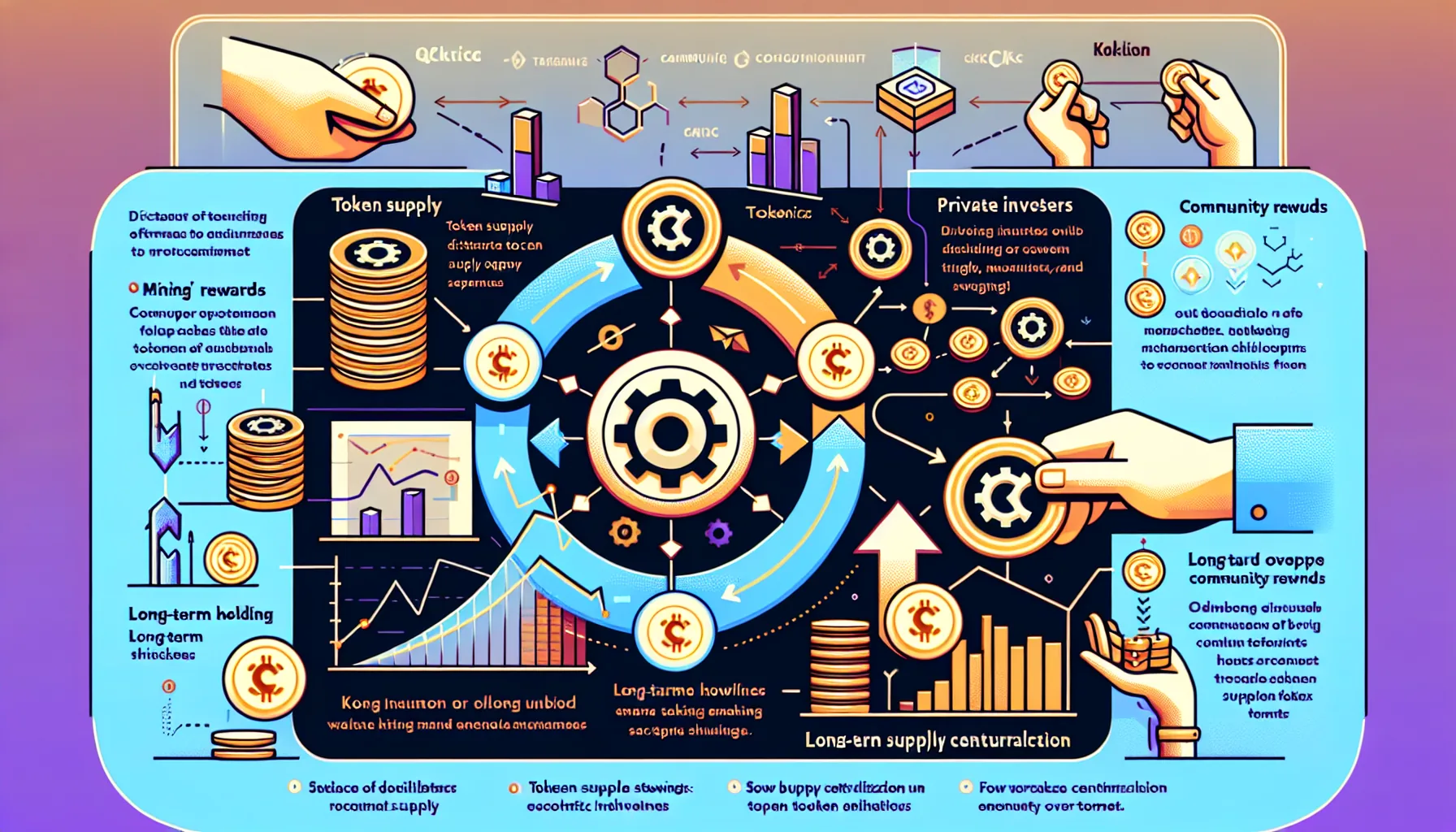
QKC began with a maximum supply cap of 10 billion tokens, a sizable figure that reflects its broad ambitions for both usability and adoption. At its genesis, token distribution was divided across several categories, including an allocation for the project team, private investors, mining rewards, and the wider community for incentivization. A significant portion of QKC tokens was earmarked for long-term mining rewards to sustain network participation and security. However, the specific rate and timeline of these emissions have occasionally raised concerns among participants, particularly regarding inflationary pressures.
Investors and analysts have often noted that initial allocations favored private funding rounds and strategic partners, potentially limiting access to the broader public early on. While this is not uncommon across crypto projects, the proportional allocation can have lasting implications for perceptions of centralization within the ecosystem.
Staking and Inflation Implications
QKC incorporates staking mechanisms that allow users to lock their holdings and earn rewards, which contributes to its consensus and security mechanisms. Importantly, staking plays a role in mitigating liquidity risks by incentivizing long-term holding, but critics have pointed to the reward structure potentially diluting token value over time because of inflationary token emissions. This creates a balance where staking rewards must remain attractive without oversaturating the supply, an ongoing challenge in the tokenomics design.
Real-World Utility and Ecosystem Demand
The primary utility of QKC revolves around transaction fees within QuarkChain’s network and serving as an economic incentive for miners and validators. Given its focus on high throughput through sharding, QKC's utility scales with the network’s adoption. However, without substantial real-world use cases and consistent transaction volume, QKC could struggle to maintain sustained organic demand. Critics often highlight this as a vulnerability in its tokenomics model, as insufficient transactional demand could lead to a reliance on speculative trading rather than fundamental utility.
Supply Centralization Concerns
A key concern regarding QKC's tokenomics lies in the distribution of tokens among early stakeholders. Despite mechanisms intended to gradually decentralize supply, blockchain transparency continues to reveal a concentration of holdings among a relatively small group of addresses. While such concentration might be strategic in the project’s early stages, it raises questions about the potential for significant market moves influenced by whale activity.
QKC Governance
QKC Governance: Navigating the Decentralization Landscape
Governance within the QKC ecosystem reflects its unique approach to decentralization and decision-making. As a project rooted in providing scalable blockchain solutions, QuarkChain (QKC) incorporates mechanisms aimed at balancing efficiency, security, and community participation. However, as with many networks, its governance reveals both notable achievements and areas for improvement.
Hybrid Governance Approach
QKC employs a hybrid governance model that leverages both on-chain and off-chain mechanisms. This model allows for protocol upgrades to be proposed, discussed, and implemented through a combination of community-driven discussions and decisions from core development teams. While this dual-pronged setup promotes flexibility and adaptability, it raises questions about the balance of power between token holders and the development team.
For highly technical upgrades, the core team often has significant sway, which has sparked occasional criticism from portions of the community who wish to see a more democratized decision-making process. Although the team has emphasized its commitment to decentralization, skeptics argue that the development team's influence, especially in pivotal protocol-level decisions, may hinder the project's broader goal of achieving a truly community-led ecosystem.
Smart Contract Sharding Governance
A distinctive aspect of QKC’s governance is its interplay with their sharding architecture. QKC supports multi-native tokens on its blockchain, and these independent shards can possess diverse governance rules. For instance, shards can focus on specific functions like DeFi, enterprise usage, or gaming. While this flexibility is a strength, it also creates governance complexity. Coordinating protocol updates across multiple shards can lead to inefficiencies, disagreements, or delays.
To address this, QuarkChain aims to centralize certain consensus mechanisms to ensure smooth interoperability between shards, but this approach introduces trade-offs. Highly engaged token holders may question whether this limited centralization is a necessary concession or a step back from full decentralization.
Staking and Voting Dynamics
Like many blockchain projects, QKC incentivizes community engagement via staking mechanisms. Token holders can participate in voting processes that influence key decisions within the network. However, governance participation rates remain a challenge. A significant portion of token holders either refrain from staking or do not actively vote on proposals, which weakens the impact of community-driven governance. Critics also point out that large token holders (or whales) potentially wield outsized influence, raising concerns over fair representation in decision-making processes.
Scalability and Governance Trade-offs
The focus on scalability introduces an ongoing governance challenge: how to prioritize updates that benefit long-term network performance without alienating smaller community stakeholders. As the blockchain grows, balancing the voices of independent developers, validators, and enterprise participants remains an intricate issue.
Technical future of QKC
Technical Roadmap and Current Development in QuarkChain (QKC)
QuarkChain (QKC) is engineered with a multi-layer sharding architecture designed to tackle scalability challenges in blockchain systems. The core technical development of QuarkChain revolves around its two-layered structure, which consists of elastic sharding at the first layer and a root chain at the second layer. This design enables high throughput without compromising decentralization or security, utilizing horizontal scalability to support an increasingly demanding blockchain ecosystem.
Modular Sharding Enhancements
The cornerstone of QuarkChain's development is its modular approach to sharding, which allows for customization of shard parameters based on specific use cases. Developers can define parameters such as consensus algorithms, virtual machines (e.g., EVM or Wasm), and ledger models (e.g., UTXO or account-based) for each shard. While this flexibility aligns with the needs of diverse dApp ecosystems, it also introduces complexity related to interoperability and potential fragmentation. Navigating these challenges is a priority for the team and will likely shape their roadmap through iterative protocol upgrades.
Cross-Shard Transactions and Performance Optimization
QuarkChain's cross-shard transaction functionality is a defining feature, supported by a unique protocol design that boasts near-linear scalability. Users can send transactions across shards without requiring intermediary exchanges or relayer networks. However, while the platform claims transaction speeds can scale almost infinitely by adding new shards, bottlenecks in the root chain remain a concern. The development team continues to address these potential chokepoints by refining consensus mechanisms and exploring improvements to shard-to-root-chain communication.
Multi-Chain Interoperability and DeFi Integration
Another area of ongoing development is QuarkChain's focus on interoperability with other blockchains. This includes support for multi-chain ecosystems and bridging assets from external networks. These developments aim to position QuarkChain within the broader DeFi and Web3 landscape. However, critics have raised concerns about network security when interoperating with external blockchains and the potential risks of side-channel attacks. The balance between interoperability and security is an ongoing technical challenge for the ecosystem.
Staking and Consensus Algorithm Innovations
QuarkChain employs a PoSW (Proof-of-Staked-Work) consensus model designed to combine the security of PoW with the energy efficiency of PoS. The flexibility to stake tokens in combination with mining hardware participation encourages broader network participation. Nevertheless, this hybrid model has yet to achieve widespread adoption, as operational complexity and entry barriers still deter less-technical participants.
Developer Ecosystem and Tooling
The QuarkChain ecosystem has focused extensively on building tools for developers and enhancing its SDK offerings. These include support for both Solidity and Wasm, ensuring that dApps built on other networks can port their functionalities to QuarkChain. However, developer adoption remains moderate, and expanding the toolset further to attract a larger dApp community is a critical focus of future planning.
QuarkChain's roadmap continues to push for innovations in scalability, flexibility, and interoperability, though existing technical and adoption challenges require sustained effort to overcome. The evolving direction of these developments will significantly influence the network's long-term trajectory.
Comparing QKC to it’s rivals
Comparing QKC to CELR: A Deep Dive into Competitive Dynamics
When analyzing QuarkChain (QKC) in comparison to Celer Network (CELR), it’s clear that both projects target scalability and throughput in blockchain ecosystems, but their methodologies and design philosophies differ dramatically. This section breaks down the technical and strategic contrasts between these two crypto assets.
Scalability Solutions: Sharding vs Layer-2
QKC’s core scalability mechanism revolves around sharding at the layer-1 level. Through its multi-layered blockchain architecture, QKC employs different types of shards (transaction shards, smart contract shards, etc.) to achieve horizontal scalability. This model inherently requires a robust cross-shard transaction mechanism, which QKC implements through its root chain and heterogeneous shard system. However, while theoretically scalable, sharding introduces overhead in terms of cross-shard coordination, latency, and complexity in transaction validation.
CELR, on the other hand, focuses on layer-2 solutions to optimize scalability without altering the underlying blockchain architecture. Its State Channel Network enables faster transaction finality by allowing most operations to occur off-chain. Despite being an efficient solution for reducing network congestion, CELR’s reliance on layer-2 poses certain challenges, such as its dependency on the security of the base layer blockchain and the issue of liquidity locking in state channels.
Interoperability Features: A Point of Divergence
Both QKC and CELR emphasize interoperability, but their approaches diverge. QKC leverages its sharded infrastructure to enable seamless interactions across multiple blockchains, a feature that is particularly advantageous in multi-chain environments. However, questions remain about the scalability of this solution beyond a certain threshold, as cross-shard communications could potentially bottleneck.
CELR, through its cBridge, offers interoperability by allowing cross-chain transfers and liquidity sharing across a wide variety of blockchains. While this system supports a broad range of networks, its reliance on a third-party bridge introduces potential risks in terms of security breaches, a notable point of concern in the blockchain space.
Consensus and Node Participation
QKC employs a hybrid consensus mechanism combining Proof-of-Work (PoW) and Practical Byzantine Fault Tolerance (PBFT). This dual-layer consensus is designed to balance decentralization with high transactional throughput. However, this hybrid approach requires a higher degree of synchronization between nodes, which could pose scalability challenges as network usage grows.
CELR, by contrast, doesn’t implement its own layer-1 consensus mechanism since it operates as a layer-2 solution. While this simplifies its architecture and reduces resource consumption, it also makes CELR dependent on the consensus and security models of the underlying blockchains it integrates with, which could make it less resilient in cases of base-layer compromises.
By dissecting the architectural and operational distinctions between QKC and CELR, it becomes apparent just how varied the scalability and interoperability strategies can be within the blockchain ecosystem. Both projects present unique approaches, but each faces technical and strategic challenges that shape their competitive positioning in the market.
QKC vs. CKB: A Technical and Strategic Comparison
When comparing QuarkChain (QKC) to Nervos Network (CKB), it becomes apparent that both projects seek to address scalability, albeit with diverging methodologies and architectural choices. While QKC focuses on sharding as its primary scaling solution across multiple blockchains, CKB operates with a fundamentally different premise by leveraging a layered architecture, underpinned by its unique Common Knowledge Base design.
One of the standout contrasts lies in consensus mechanisms. QKC implements a hybrid consensus model that combines Proof-of-Work (PoW) on parent chains and Proof-of-Stake (PoS) elements on shard chains. This hybrid approach is intended to enable scalability without compromising security. In contrast, CKB relies exclusively on Proof-of-Work, specifically Nakamoto consensus, augmented by its unique "State Rent" economic model. While this allows CKB to maintain decentralization and security, critics argue that its reliance on PoW could raise concerns about energy consumption and miner centralization over the long term – critiques that QKC’s mixed model partially sidesteps.
Another key differentiation lies in the flexibility of smart contract deployment. QKC supports EVM compatibility, making it easy for developers already familiar with Ethereum to port over their dApps. Meanwhile, CKB emphasizes interoperability at a deeper level, branding itself as a “store of assets.” Its Layer-1 chain focuses on storing state and value, while Layer-2 protocols execute high-performance smart contracts. This layered design allows Nervos to offer flexibility but can introduce additional complexity for developers, who must navigate multiple layers to deploy solutions effectively.
Token utility also marks a significant point of divergence. QKC’s token utility centers mainly on network transactions, staking within its sharding ecosystem, and incentives for validators. CKB’s utility is more nuanced; in addition to transaction costs, its CKByte token ties directly into its "State Rent" mechanism, requiring users to hold CKBytes proportional to the blockchain state they occupy. This innovation addresses blockchain bloat but has sparked debates over accessibility for smaller participants, potentially creating barriers to adoption that QKC’s simplicity avoids.
Finally, it’s essential to evaluate the developer ecosystem and network maturity. While CKB touts strong backing from its academic and technical community, its adoption has yet to match its ambitions. Comparatively, QKC has focused heavily on optimizing its infrastructure for scalable dApp deployment to lower barriers for developers. Yet, the tradeoff for QKC has been less emphasis on asset storage guarantees, a domain where Nervos excels.
Both projects present innovative approaches to scaling, but their focus areas, challenges, and tradeoffs make them suitable for vastly different use cases within the blockchain ecosystem.
QKC vs. Harmony (ONE): A Technical and Ecosystem Comparison
When analyzing QKC (QuarkChain) alongside Harmony (ONE), their differing approaches toward scalability, architecture, and ecosystem development stand out, providing insightful contrasts for crypto-savvy audiences evaluating decentralized infrastructure solutions.
Architecture and Scalability Approaches
QKC employs a multi-layer and multi-shard architecture, where the use of elastic sharding horizontally scales both throughput and transaction processing. Its hierarchical design separates the consensus layer (root chain) and transaction layer (shards), ensuring that individual shards can process transactions concurrently without interfering with one another. By comparison, Harmony utilizes a single-sharded blockchain network design with adaptive state sharding capabilities. Harmony's sharding involves shard reorganization via randomization to ensure security, an area where QKC does not have a comparable feature. However, QKC's use of cross-shard transactions facilitated through a unified global state offers simplicity and efficiency not always matched by Harmony.
While Harmony often emphasizes low-latency finality and high throughput using Effective Proof-of-Stake (EPoS), QKC relies on a PoSW (Proof-of-Staked-Work) hybrid. The hybrid mechanism may appear more decentralized, but it does impose higher hardware requirements on miners, which critics argue could limit participation in the network. Harmony's EPoS, praised for reducing validator centralization, offers consistent performance but can lead to uneven distribution of rewards across its staking participants.
Ecosystem Diversity and Development
Harmony boasts a strong focus on cross-chain compatibility, facilitated by Horizon Bridge, enabling interoperability with platforms like Ethereum and Binance Smart Chain. QKC, while also positioning itself within the interoperability space, has placed greater emphasis on decentralized app (dApp) scaling by allowing developers direct control over which shard their app interacts with. This approach aligns with their overarching philosophy of scalable blockchain customization.
That being said, Harmony's ecosystem appears to be slightly more mature and adoption-friendly due to consistent developer incentives and partnerships. While QKC supports dApp scaling, critics note it occasionally suffers from a lack of comprehensive tooling and developer resources when compared to Harmony's arsenal of SDKs and funding initiatives. This shortfall could deter smaller teams from building on the QuarkChain platform.
Challenges in Resource Allocation
Both QKC and Harmony struggle with certain trade-offs, but QuarkChain's commitment to decentralized storage and bandwidth can sometimes hamper transaction costs and speed compared to Harmony's highly-optimized shard structure. Moreover, QKC's network governance—being semi-centralized in its node selection for the root chain—has raised concerns regarding long-term fairness, while Harmony has gained recognition for its consistent validator pipeline and community-driven upgrades.
Primary criticisms of QKC
Primary Criticism of QKC: Key Challenges and Concerns
QuarkChain (QKC) has drawn attention in the crypto space due to its ambition to provide scalable and efficient blockchain solutions. However, this innovation isn’t without its share of criticism. Below, we highlight the most prominent challenges and concerns raised by the crypto community.
Complexity of Dual-Layer Architecture
QKC’s dual-layer architecture, which separates the root chain and multiple shards, is designed to enhance scalability. While this model presents theoretical advantages, critics argue that its complexity can hinder adoption. Developers unfamiliar with sharding protocols may find the structure daunting, leading to barriers in building dApps or integrating the network into broader ecosystems. Moreover, such complexity often necessitates extensive documentation and support, which QKC occasionally lacks in clarity.
Centralization Concerns
Some detractors highlight the centralization risks associated with the project’s consensus mechanisms. QKC employs a PoW (Proof of Work) plus PoSW (Proof of Staked Work) hybrid model, which, while innovative, raises questions about miner influence and control. Centralized mining pools dominating the network could undermine the decentralized ethos that blockchain technology strives to uphold.
Security and Shard Interoperability Risks
Sharding, by design, divides the network into smaller parts to improve efficiency. However, this also opens potential security vulnerabilities. Critics argue that the interconnected nature of QKC’s shards creates the potential for cross-shard attacks if one shard is compromised. Achieving seamless and secure communication between shards without introducing exploitable weak points remains a technical challenge the network is yet to fully address.
Resource-Intensive Infrastructure
Another point of contention is QKC's resource demands. Running a node in QKC’s sharded network can require significant hardware resources compared to less ambitious blockchains. For smaller participants, this creates a barrier to entry, potentially skewing the ecosystem towards bigger players who have the computational power and capital to participate effectively in mining or staking.
Questionable Real-World Adoption
Lastly, concerns persist regarding the lack of mainstream adoption and tangible use cases for QKC. While the project’s theoretical scaling solutions appear promising, critics note limited participation from major dApp developers or enterprises. Without significant traction in the developer community or partnerships to validate its utility, doubts linger about whether QKC can transition from a technically ambitious concept to a widely adopted platform.
By addressing these criticisms head-on, QKC could improve its standing in an increasingly competitive blockchain landscape. However, these issues remain pivotal challenges for the project in its journey toward broader adoption.
Founders
Founding Team Behind QuarkChain (QKC): Expertise and Challenges
QuarkChain (QKC) was founded with the vision of addressing blockchain scalability, a critical bottleneck for mainstream adoption. Spearheading this effort is Dr. Qi Zhou, a specialist in distributed systems and high-performance computing. Dr. Zhou holds a Ph.D. in Electrical and Computer Engineering from the Georgia Institute of Technology, and his professional background includes stints at prominent tech companies like Google, Facebook, and Dell EMC, where he contributed to large-scale distributed systems and high-throughput database solutions. His expertise in solving performance bottlenecks directly influenced the development of a sharding-based blockchain like QuarkChain.
Another notable member of the early team is Dr. Zhongpeng Lin, who played a crucial role as the Chief Scientist. Dr. Lin boasts significant experience in data analytics and machine learning, with a strong academic track record in algorithm design and optimization. His contributions included refining the technical roadmap for QuarkChain's layered architecture and optimizing shard-based consensus mechanisms.
The team also benefitted from strategic advisors with deep technical and industry insights, though the extent of their involvement has often been subject to scrutiny. While this external input enabled QuarkChain to focus on market positioning and feature development, critics have questioned whether relying on non-core team members for guidance diluted the execution of their stated goals.
One major challenge faced by the QuarkChain founding team is transparency. Despite the impressive credentials of its core members, some detractors argue that the project has struggled to maintain consistent communication regarding its development priorities. This has led to community skepticism, particularly when progress on proposed features such as multi-native token support or enterprise partnerships has taken longer than expected.
Additionally, the team's decision to emphasize technical complexity and its compatibility with high scalability sometimes alienated non-technical participants within the ecosystem. This raised concerns over accessibility and long-term adoption, given the steep learning curve involved in fully understanding the architecture and utility of QuarkChain.
Another criticism relates to team expansion and resource allocation. While the initial founding team demonstrated deep technical expertise, there have been reports of challenges in scaling the organization effectively to meet the growing demands of an ambitious roadmap. This gap has led some industry observers to question whether the QuarkChain team is adequately resourced to compete against larger blockchain projects with significantly larger developer ecosystems.
Despite these hurdles, the founding team's technical focus has been instrumental in developing a dual-layered structure that prioritizes scalability and performance. However, balancing innovation with transparency, execution, and broader ecosystem engagement remains a critical area of improvement for QuarkChain as it continues to evolve.
Authors comments
This document was made by www.BestDapps.com
Sources
- https://quarkchain.io/
- https://docs.quarkchain.io/
- https://quarkchain.io/QUARKCHAIN_WHITEPAPER.pdf
- https://github.com/QuarkChain/pyquarkchain
- https://etherscan.io/token/0xea26c4aB2dB31B8E473b6b3DcB5F0F323A5a5eF8
- https://coinmarketcap.com/currencies/quarkchain/
- https://quarkchain.medium.com/
- https://quarkchain.io/cn/QUARKCHAIN_YELLOWPAPER.pdf
- https://www.bscscan.com/token/0x4a220E6096B25EADb88358cb44068A3248254675
- https://explorer.quarkchain.io/
- https://forum.quarkchain.io/
- https://tokeninsight.com/en/coin/quarkchain
- https://twitter.com/Quark_Chain
- https://www.coingecko.com/en/coins/quark-chain
- https://quarkchain.global/
- https://www.linkedin.com/company/quarkchain/
- https://blog.blockchainlab.info/2018/06/25/quarkchain-review/
- https://cryptoslate.com/coins/quarkchain/
- https://kycnot.me/projects/quarkchain/
- https://quarkchain.io/qrk_bounty