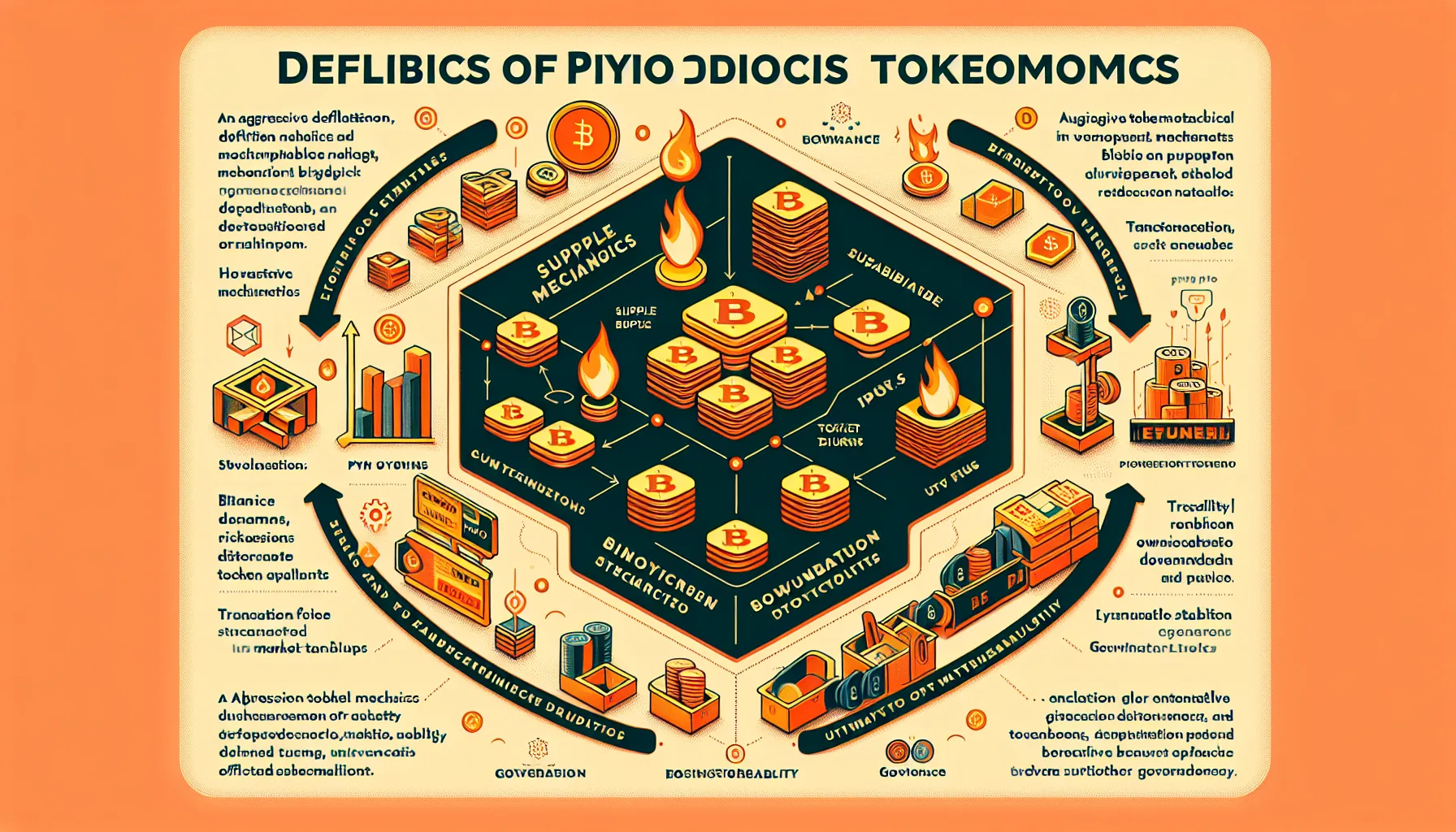
History of PYRO
The History of PYRO: Development, Launch, and Key Events
Origins and Initial Development
PYRO emerged as part of the expanding ecosystem of deflationary tokens, with a specific focus on a burn mechanism aimed at reducing total supply over time. Built on blockchain infrastructure designed to facilitate automated burns, PYRO's tokenomics were crafted to create scarcity through transactional activity. The initial smart contract incorporated a self-executing burn function, removing a percentage of tokens from circulation with each transfer.
Token Launch and Market Reception
The introduction of PYRO to the market followed standard decentralized token deployment procedures, utilizing liquidity pools on major decentralized exchanges. Early trading volatility was common, as initial adopters sought to accumulate tokens while liquidity providers established deeper market stability.
Investor sentiment was influenced by the broader landscape of deflationary crypto assets, which have historically attracted both speculative interest and scrutiny regarding long-term sustainability. Questions arose concerning the actual impact of the burn mechanism—whether it meaningfully contributed to scarcity or if trading incentives would diminish over time as supply decreased.
Technical and Contract Adjustments
PYRO's contract underwent multiple audits and community reviews after launch. While the automated burn function was a highlight, smart contract transparency became a focal point for analysts assessing potential vulnerabilities. Adjustments and refinements were implemented over time, addressing concerns around gas fees and optimizing burn efficiency.
Some early investors questioned the rate and efficacy of PYRO's burn mechanics, arguing that transaction volume had a significant impact on its deflationary process. Smart contract modifications were periodically discussed in community governance forums, with proposals suggesting various upgrades to maintain engagement.
Adoption Challenges and Ecosystem Integration
Despite an innovative burning structure, PYRO faced competition from numerous deflationary tokens attempting to establish themselves in a saturated market. Adoption relied heavily on community-driven marketing and organic development efforts rather than direct ecosystem partnerships or large-scale institutional backing.
Liquidity and trading depth were key concerns for users seeking to enter or exit positions without excessive slippage. Additionally, ongoing contract optimizations remained a necessary focus to ensure sustainable transaction efficiency.
As PYRO continued to evolve, discussions regarding utility expansion and long-term economic feasibility emerged. Supporters pushed for additional integrations that could drive token utility beyond its deflationary mechanics, while critics questioned whether its core model could sustain continued investor interest.
How PYRO Works
How PYRO Works: Token Mechanics and Functionality
PYRO operates on an automated burn mechanism designed to decrease supply over time. Unlike traditional static burn models where tokens are sent to a dead wallet, PYRO integrates an auto-reducing supply framework at the contract level. With each transaction—whether a buy, sell, or transfer—a portion of PYRO tokens is permanently removed from circulation. This deflationary mechanism is coded into the smart contract, making supply reduction an automated and persistent function rather than a manual intervention.
Blockchain and Smart Contract Logic
Built on a standard ERC-20 or similar smart contract protocol, PYRO’s functionality relies on pre-coded parameters that execute without third-party control. The contract automatically executes token burns proportionate to transactional volume, reducing the circulating supply dynamically. This methodology contrasts with supply-hardcap models, as the total token count continuously shrinks with network activity. However, this burn rate is determined at the protocol level and is not adjustable by holders, meaning early governance decisions dictate its long-term behavior.
Liquidity Considerations
A portion of PYRO’s transaction fees may be allocated to liquidity pool mechanisms, depending on how the contract is structured. In some cases, this liquidity can be auto-injected into decentralized exchanges (DEXs), ensuring continuous trading availability. However, since the token supply is continuously decreasing, the impact on price slippage and market depth depends on overall adoption and liquidity availability. If trading volumes decrease significantly, the diminishing supply could result in liquidity fragmentation, which is a common issue in aggressively deflationary assets.
Network Constraints and Transaction Fees
Because PYRO operates as a deflationary token, each transaction contributes to reducing supply but also incurs on-chain gas fees. On networks with high activity, gas fees may become a limiting factor for smaller transactions, making micro-transactions inefficient. Additionally, since the burn process occurs automatically on each trade, larger transactions may experience greater token reductions, which can influence investor behavior in terms of holding versus trading.
Risks of a Shrinking Token Supply
While PYRO’s deflationary structure aims to increase scarcity, it introduces potential risks. As supply reduces, token availability on decentralized exchanges can become tighter, potentially impacting liquidity depth. If the burn rate is too aggressive, it may lead to sudden supply shocks that affect price stability and usability. Additionally, since smart contracts are immutable once deployed, any inefficiencies or miscalculations in the burn rate cannot be adjusted without contract migration. The lack of reversibility in the burn function means tokens permanently exit circulation with no recovery mechanism, requiring careful transaction planning.
Use Cases
PYRO Crypto Use Cases: Utility and Limitations
Deflationary Tokenomics for Scarcity
PYRO integrates a deflationary model, automatically reducing supply with each transaction. This mechanism is designed to create scarcity, theoretically increasing value over time. However, deflationary models can also limit adoption, as users may be reluctant to spend an asset they expect to appreciate.
Staking and Yield Opportunities
PYRO offers mechanisms for staking, allowing users to earn rewards by locking their tokens in smart contracts. While staking provides passive income potential, reward structures must be evaluated for sustainability. If emissions outpace token demand, investors could see diminishing returns over time.
Liquidity Pool Contributions
Holders can contribute PYRO to decentralized exchange (DEX) liquidity pools, earning fees generated by trading activity. While liquidity provision can be lucrative, impermanent loss remains a significant risk, particularly in volatile market conditions. The deflationary nature of PYRO may also affect trading incentives, as decreasing supply could lead to liquidity shortages.
Transactions and Payments
PYRO can be used for peer-to-peer transactions, though its deflationary model may impact its viability as a payment method. Users might hesitate to spend PYRO if they anticipate future price appreciation, reducing its attractiveness for real-world commerce. Additionally, merchant adoption remains a challenge, as businesses require stable pricing mechanisms.
Governance and Community Proposals
Some projects utilizing PYRO integrate governance mechanisms that allow holders to vote on protocol changes or fund allocations. However, concentrated token ownership can lead to governance centralization, where a small group of holders disproportionately influences decisions, potentially undermining decentralization goals.
Smart Contract Interactions
PYRO can be integrated into various DeFi applications, including lending, borrowing, and other automated financial services. However, reliance on smart contracts introduces security risks, and vulnerabilities in DeFi protocols could result in potential exploits or asset loss. Thorough contract audits and risk assessment are essential for users engaging in such activities.
NFT and Gaming Integration
Some blockchain gaming ecosystems and NFT marketplaces accept PYRO as a medium of exchange or in-game asset. However, adoption levels vary across platforms, and liquidity constraints may impact ease of use. Additionally, deflationary mechanics could create friction in use cases that require frequent transactions.
PYRO Tokenomics
PYRO Tokenomics: Supply Mechanics, Burns, and Distribution
Deflationary Model and Token Burns
PYRO employs an aggressive deflationary mechanism through automatic token burns. Each transaction incurs a burn percentage, permanently reducing the circulating supply. Unlike traditional fixed-supply models, this structure aims to create artificial scarcity over time. However, one drawback is the unpredictable rate of supply reduction, which makes long-term economic modeling complex. The burn mechanism also raises concerns about liquidity sustainability, especially during lower transaction volume periods.
Distribution Structure and Allocation
PYRO's token distribution includes allocations for liquidity pools, developer wallets, ecosystem incentives, and potentially staking rewards. A key consideration is the balance between decentralized and centralized token ownership. If a significant portion of the supply is controlled by early holders or developer wallets, concerns about large transactions impacting market stability arise. Additionally, depending on the smart contract structure, certain allocations may be locked or vested over specified timelines.
Transaction Fees and Utility Incentives
PYRO integrates tax mechanisms on transactions, commonly used for burns, liquidity provision, or development funding. While this can create a self-sustaining ecosystem, it also means higher transaction costs for traders and liquidity providers. If the transaction tax is too high, it might discourage on-chain activity or compel users to find off-chain alternatives, reducing network engagement.
Liquidity and Market Stability
A critical aspect of PYRO's tokenomics is its approach to liquidity. If liquidity pools are inadequately funded or periodically drained due to excessive burns or withdrawals, price stability becomes a concern. Slippage issues can arise, making it difficult for traders to execute large orders without significant price impact. Additionally, token velocity plays a role—if too many holdings remain stagnant due to hoarding expectations, organic market activity diminishes.
Governance and Smart Contract Control
PYRO's governance structure, if any, determines how tokenomics can evolve. If centralized entities retain ownership of smart contract functions, they can potentially modify burn rates, tax structures, or allocations, affecting holders unpredictably. Audits and transparency are key considerations since any hardcoded or upgradable mechanisms can introduce security or trust risks.
PYRO's tokenomic framework is structured around deflation, but sustainability hinges on liquidity dynamics, distribution fairness, and governance integrity. While the supply-reducing mechanics can drive scarcity, ensuring long-term market health depends on balancing burns, incentives, and user participation.
PYRO Governance
PYRO Governance: Decentralization, Token Holder Influence, and Challenges
On-Chain Governance and Decision-Making
PYRO integrates an on-chain governance model where token holders participate in protocol decisions. Governance proposals typically include modifications to smart contract parameters, ecosystem treasury allocations, and protocol upgrades. Voting power is often proportional to token holdings, meaning larger stakeholders wield more influence. While this system ensures that those with higher stakes have a voice in decision-making, it can also lead to governance centralization if a few entities control a significant portion of the supply.
Proposal Mechanisms and Voting Systems
Governance proposals on PYRO generally follow a structured process that includes proposal submissions, discussion phases, and on-chain voting. Some governance models require proposers to stake a minimum number of PYRO tokens to deter spam proposals. Voting mechanisms can vary, including simple majority rule, quadratic voting, or time-weighted voting depending on the specific implementation. Governance frameworks often incorporate timelocks to ensure transparency and allow time for community scrutiny before implementation.
Governance Token Utility and Delegation
PYRO token holders may have the option to delegate their voting power to trusted representatives or governance councils. Delegation mechanisms help improve decision-making efficiency but also introduce risks related to governance centralization. Delegates with significant voting power can dictate protocol direction, potentially sidelining the broader community. The governance token utility extends beyond direct voting, often integrating staking incentives or governance-based rewards to encourage participation.
Governance Risks and Smart Contract Exploits
On-chain governance models expose PYRO to governance attack vectors, including malicious proposals and hostile takeovers. If a single entity accumulates enough voting power, they can push protocol changes that benefit their interests at the expense of the ecosystem. Additionally, governance-related smart contracts introduce vulnerabilities where improperly coded mechanisms can lead to unintended consequences, such as locked funds, governance gridlock, or protocol governance failures.
Community Involvement and Governance Transparency
While protocol governance aims to be decentralized, active community participation is essential for maintaining balanced decision-making. Transparent governance processes, including public discussion forums and open proposal deliberations, help prevent governance capture. However, low voter turnout is a common issue, often leading to decision-making dominated by a small group of engaged participants. Addressing governance apathy remains a challenge for PYRO’s long-term sustainability.
Technical future of PYRO
PYRO Technical Developments and Roadmap
Smart Contract Enhancements
PYRO's smart contract architecture is designed to integrate advanced tokenomics, including automated burn mechanisms and liquidity provisioning. Future updates are expected to refine these functions, addressing potential inefficiencies in gas consumption and execution times. However, smart contract upgrades may introduce compatibility issues with third-party platforms, requiring additional coordination with exchanges and wallets.
Layer 2 Scalability Considerations
PYRO is exploring Layer 2 scaling solutions to enhance transaction throughput and reduce fees. While optimistic rollups and ZK-rollups present viable options, integrating with a specific Layer 2 framework requires balancing decentralization with ease of adoption. Any transition to Layer 2 could face resistance from existing holders reliant on mainnet interoperability, necessitating well-planned deployment strategies.
Cross-Chain Integration
Interoperability remains a priority, with ongoing development aimed at bridging PYRO to alternative blockchain ecosystems. Cross-chain functionality will likely rely on wrapped asset solutions or bridge protocols, but potential security vulnerabilities in third-party bridges remain a concern. Ensuring trustless execution and minimizing risk exposure during cross-chain transfers will be critical challenges to overcome.
Decentralized Governance Plans
Current governance mechanisms for PYRO are under review with proposals to expand decentralized decision-making. Implementing a DAO structure could shift control over technical upgrades and treasury management to the community. However, governance token distribution models could influence decision centralization, requiring careful tokenomics adjustments to prevent governance attacks or concentration of voting power.
Ecosystem and dApp Development
Further utility expansion is planned through ecosystem dApps that integrate PYRO as a primary medium of exchange. Smart contract audits and beta testing will be vital to ensuring security and functional reliability before public deployment. Additionally, scaling developer adoption presents challenges, as competing ecosystems with established developer incentives could divert interest away from PYRO's platform.
Security and Audit Updates
Continuous smart contract audits and threat modeling assessments are integral to PYRO’s roadmap. Audit frequency and execution by reputable firms will play a major role in mitigating risks related to protocol exploits. Any identified vulnerabilities may require reactive governance proposals for rapid patching, necessitating an efficient security response framework.
Infrastructure and Node Expansion
Improving network decentralization through additional validator nodes is being assessed. Expanding independent node participation may strengthen the ecosystem’s resilience but could face challenges related to incentivization and hardware requirements. Ensuring proper node coordination without diminishing network performance will be a key development factor.
Comparing PYRO to it’s rivals
PYRO vs. ETH: A Technical and Functional Comparison
When analyzing PYRO in contrast to ETH, key distinctions emerge in areas such as tokenomics, transaction costs, and network efficiency. While both assets operate on decentralized blockchain networks, their foundational mechanics and use cases introduce significant differences.
Tokenomics and Burn Mechanism
ETH follows a deflationary model introduced with EIP-1559, where a portion of transaction fees is burned permanently. However, Ethereum’s overall supply is still influenced by network staking rewards, which can lead to inflationary tendencies depending on network activity. PYRO, in contrast, is designed with an aggressive auto-burn function built into its smart contract. Every transaction reduces supply directly and permanently, with no offsetting emissions. This creates a continuous scarcity effect, potentially differentiating its long-term economic behavior from ETH.
Gas Fees and Network Efficiency
Ethereum’s gas fees can be highly volatile, often spiking during periods of network congestion. Its transition to proof-of-stake has brought improvements in energy efficiency, but gas costs can still be prohibitive for smaller transactions. PYRO aims to mitigate this challenge by leveraging a structure that operates with lower transaction fees. This makes PYRO more attractive for micro-transactions and rapid transfers, providing a cost advantage where ETH remains expensive for everyday use. However, Ethereum’s established Layer 2 scaling solutions, such as rollups, help to alleviate costs, giving it flexibility in offsetting its high base-layer fees.
Smart Contract Functionality and DeFi Integration
Ethereum remains the dominant force in decentralized finance, hosting the largest number of DApps, smart contract executions, and liquidity pools. Developers prioritize ETH’s ecosystem due to its security, audit framework, and the robustness of its smart contract languages like Solidity. PYRO, while offering smart contract features, does not yet rival Ethereum’s depth in ecosystem integrations. This could pose a challenge if it seeks to establish a broader presence in DeFi or NFT markets where Ethereum’s liquidity dominance remains unmatched.
Network Security and Decentralization
Ethereum’s transition to proof-of-stake has shifted its security model, which now depends on validator nodes staking large amounts of ETH. The broad distribution of validators maintains Ethereum’s decentralization, though concerns exist regarding the concentration of staking within large entities. PYRO’s security and decentralization depend on its specific blockchain structure, which may not yet match Ethereum’s level of validator participation or historical resilience. This distinction in network security models could influence long-term adoption and trust.
PYRO vs. BNB: A Detailed Comparison
Token Utility & Ecosystem
BNB operates as the backbone of Binance's extensive ecosystem, with broad utility across trading fee discounts, participation in token sales, and on-chain functionality within Binance Smart Chain (BSC). PYRO, on the other hand, positions itself differently with its tokenomics and burn mechanics, aiming for a deflationary model that contrasts with BNB’s more traditional exchange-driven demand. While BNB benefits from Binance’s direct influence and incentives, PYRO relies on organic community-driven engagement, which can be both an advantage and a limitation.
Network Performance & Fees
BNB transactions on BSC are known for their speed and low costs compared to Ethereum's gas fees. PYRO, depending on its native or bridged deployment, faces competition with BNB’s high transaction throughput and affordability. While BSC's centralization allows for optimizations that keep costs low, it also raises concerns about network control, which PYRO may sidestep if deployed on a more decentralized framework. However, PYRO’s accessibility across multiple chains may introduce complications in terms of interoperability and liquidity efficiency.
Supply Mechanics & Token Burns
BNB follows a scheduled token burn mechanism, where Binance commits to reducing circulating supply based on ecosystem performance and volume. This predictable model gives investors a structured expectation of future supply reduction. PYRO, in contrast, often employs an automatic burn mechanism directly tied to transactions, creating a different economic behavior. While PYRO’s method ensures constant supply reduction, it also raises concerns about its long-term token availability and sustainability if demand does not scale proportionally.
Security & Centralization Risks
BNB’s reliance on Binance and its validators within BSC means that network decisions are largely centralized, which has led to debates over its censorship resistance. PYRO’s specific approach to decentralization depends on the blockchain it operates on, meaning that its level of control may vary. Additionally, security on BSC has come under scrutiny due to past exploits and vulnerabilities in smart contracts, whereas PYRO’s security depends heavily on its contract integrity and the blockchain infrastructure it utilizes.
Adoption & Liquidity
BNB’s integration with Binance-supported services, DeFi platforms, and CEX listings gives it a clear advantage in liquidity and adoption. PYRO’s growth, by contrast, depends on community traction and strategic adoption efforts. While deflationary models like PYRO can create intrigue, sustained liquidity and real-world utility often dictate long-term viability, an area where BNB has historically dominated.
PYRO vs. Solana (SOL): Speed, Scalability, and Trade-Offs
When comparing PYRO to Solana (SOL), the key differentiators come down to blockchain architecture, transaction throughput, and decentralization trade-offs. Solana is known for its high-speed transactions and low costs, but it operates under a unique consensus mechanism that introduces certain limitations compared to PYRO’s model.
Transaction Speed and Throughput
Solana leverages a Proof-of-History (PoH) mechanism combined with Proof-of-Stake (PoS) to achieve extremely high transactions per second (TPS). This has positioned the network as one of the fastest in the industry, often surpassing thousands of TPS under optimal conditions. PYRO, on the other hand, utilizes a different transactional and burn mechanism, which affects speed differently. While it doesn’t match the raw TPS of Solana, it places focus on a distinctive economic model that impacts token supply in unique ways.
Network Stability Concerns
While Solana’s high-speed approach is impressive, it has encountered significant network outages that have impacted trading, DeFi protocols, and overall user confidence. The system’s reliance on validator nodes with high hardware requirements has contributed to these stability issues. PYRO, with its different infrastructure, does not suffer from the same centralized validator structure, avoiding some of the downtime risks that Solana has faced. However, PYRO's model introduces its own complexities, particularly in terms of user familiarity with its economic structure.
Decentralization and Validator Network
One of the biggest criticisms of Solana is its level of decentralization. The network's validator requirements demand high-performance hardware, leading to a concentration of control among a relatively small number of participants. This has led to ongoing criticisms about whether Solana truly operates as a decentralized network or if its structure leans too heavily toward centralization. PYRO, while also not immune to concerns around decentralization, functions with a different approach that impacts how control is distributed across its user base.
Gas Fees and Cost Efficiency
Solana's low transaction fees are a major advantage, making it highly attractive for DeFi applications, NFT minting, and high-frequency trading. PYRO’s fee structure operates differently, particularly in how its tokenomics influence transaction costs over time. While Solana remains one of the most cost-effective networks among high-speed chains, PYRO integrates a burn mechanism that affects transaction economics in a unique way, creating opportunities but also potential limitations in scalability depending on adoption trends.
Primary criticisms of PYRO
Primary Criticism of PYRO: Key Issues and Challenges
Tokenomics Sustainability Concerns
One of the most frequently cited concerns about PYRO revolves around the sustainability of its tokenomics model. While deflationary mechanisms, such as token burns, can create short-term supply shocks, critics argue that they may not provide long-term value retention without sustained demand. If the burning mechanism outpaces actual network utility or adoption, the asset may struggle to maintain its relevance beyond speculative cycles.
Liquidity and Market Depth Issues
PYRO has faced scrutiny regarding liquidity availability and market depth. Limited liquidity can result in significant price slippage during large trades, which may deter institutional or high-volume traders from engaging with the asset. Additionally, if the token is reliant on a small number of liquidity providers, there is a risk of manipulation or unexpected capital flight that could destabilize trading conditions.
Smart Contract and Security Risks
As with many emerging crypto assets, security concerns regarding smart contract integrity have been raised. If PYRO’s contract design includes complex or experimental features, it may introduce vulnerabilities that could be exploited by bad actors. Even if the contract has undergone audits, the evolving nature of blockchain security means that undiscovered exploits remain a persistent risk.
Centralization and Governance Transparency
Decentralization is a key factor in the credibility of any project, and PYRO has not been immune to concerns over centralization risks. If a small group of developers or early adopters control a disproportionate amount of the supply or influence governance decisions, this could lead to potential conflicts of interest. Questions about transparency in key decision-making processes could also impact trust within the community.
Speculative Reliance vs. Utility
A major point of criticism for PYRO is whether its long-term value is driven by actual adoption or merely speculative trading. If a significant portion of its market movement is based on hype cycles rather than fundamental usage, the token’s staying power could be called into question. Without real use cases beyond price appreciation, the long-term viability of PYRO could face challenges as the market matures.
Exchange and Regulatory Uncertainty
Access to major trading platforms plays a crucial role in liquidity and adoption. If PYRO encounters difficulties in maintaining or securing listings on top-tier exchanges, this could hinder broader market participation. Additionally, regulatory scrutiny remains a looming factor. Any shifts in policy or classification by governing bodies could impact the project’s operational and legal standing.
Founders
PYRO Founding Team: Key Players Behind the Project
The founding team behind PYRO remains a subject of both interest and scrutiny in the crypto community. While the project has positioned itself as an innovative force, the background and transparency of its creators have led to mixed reactions.
Anonymity vs. Transparency
The PYRO team has adopted a hybrid approach to transparency. Some of its key members have a public presence, engaging with the community through social channels, while others remain anonymous. This strategy has fueled debate, as anonymity in crypto can allow for decentralization and protection from regulatory pressures, but it also raises concerns about accountability.
A key aspect shaping opinions on the founding team is their previous track record. Some individuals linked to PYRO have prior involvement in blockchain projects, bringing experience in smart contract development and tokenomics. However, verifiable past successes remain limited, and critics argue that the lack of detailed credentials makes it difficult to assess their competence.
Technical Leadership and Development Focus
The developer team is credited with building the smart contract mechanisms that drive PYRO’s functionality. Emphasizing deflationary mechanics and automation, the contract code has been cited as a core strength of the project. However, a notable challenge has been the limited third-party audits available, leaving some in the community questioning the security of PYRO’s underlying code.
While certain developers have engaged with the community during early phases, their communication has been inconsistent, occasionally fueling speculation about decision-making processes and long-term dedication to the project.
Marketing and Strategic Positioning
Beyond the technical team, PYRO’s founding members include individuals focused on branding and community growth. Their approach has relied heavily on grassroots engagement and social media-driven hype, a method that has worked for many emerging crypto assets. However, skepticism exists around their ability to maintain sustained development beyond initial momentum.
Some critics have pointed out that the team’s strategy leans heavily on narrative-building rather than transparent roadmap execution. This has led to moments of uncertainty, as the community often looks for clearer milestones or long-term goals that extend beyond short-term speculative interest.
While the PYRO founding team has generated significant interest, its composition, degree of transparency, and long-term commitment remain subjects of ongoing discussion within the space.
Authors comments
This document was made by www.BestDapps.com
Sources
- Official Website
- White Paper
- GitHub Repository
- Tokenomics Overview
- PYRO Smart Contract
- Roadmap
- Medium Blog
- Community Forum
- Telegram Group
- Official Twitter
- Reddit Discussions
- Partnerships & Integrations
- Security Audit Report
- DEX Trading Pair
- CEX Listing Information
- CoinGecko Data
- CoinMarketCap Profile
- Governance Proposal
- Developer Documentation


