History of PHO
The History of PHO: From Concept to Controversy
PHO emerged from the crowded and competitive blockchain landscape as a project aiming to address a specific niche challenge—reducing inefficiencies in decentralized micro-transactions. Introduced during the late wave of the ICO boom, PHO's whitepaper emphasized a lightweight, low-fee blockchain designed for near-instant confirmations, catering to use cases often overlooked by larger blockchains such as Ethereum. Despite its ambitious goals, PHO's early days were marked by both excitement and skepticism from the crypto community.
The project's origins trace back to a small team of developers and blockchain enthusiasts who sought to reimagine the possibilities of Layer 1 infrastructure. They drew heavily from existing proof-of-stake (PoS) frameworks, with a few notable alterations aimed at optimizing block finalization speed and energy efficiency. Early adopters were attracted to PHO's potential utility in high-frequency transaction environments, particularly for payments in regions where traditional financial systems imposed frustrating delays or excessive costs.
PHO's token generation event, while moderately successful, was overshadowed by wider market turmoil at the time, which tempered initial investor participation. Some critics also questioned the need for a standalone chain when established networks were implementing Layer 2 solutions to tackle similar micro-transaction inefficiencies. Yet the development team pursued their vision with noticeable persistence, gradually deploying improvements to the network’s consensus mechanism and reducing transaction bloat in subsequent protocol updates.
However, the evolution of PHO did not occur without controversy. One of the most contentious events in its history was the discovery of a critical vulnerability during an early staking contract rollout. This flaw exposed the network to potential double-signing attacks, leading to a temporary chain halt while developers scrambled to implement a fix. Although the issue was resolved within hours, the incident reignited debates over the robustness of PHO's security auditing processes and whether the team was overstretched given their limited resources.
Over the years, PHO has struggled to gain widespread developer adoption, due in part to its relatively niche focus and competition from better-supported ecosystems. Yet, its dedicated core community and proactive attempts to address past missteps illustrate its resilience. The project's decision to open-source key components early in its lifecycle helped solidify some degree of transparency, though skepticism persists about its longer-term scalability and ecosystem sustainability.
PHO's history is one of innovation tempered by external pressures and internal missteps, reflecting both the resilience of its founders and the challenges of creating a unique blockchain in an oversaturated market.
How PHO Works
How PHO Works: A Deep Dive into Its Inner Mechanisms
At its core, PHO operates as a decentralized crypto asset designed with a consensus mechanism tailored to prioritize scalability and transaction efficiency. It emerges in a space that balances the trade-offs of decentralization, security, and throughput—often referred to as "the blockchain trilemma." While PHO is not without its challenges, its infrastructure strives to address key pain points prevalent in similar blockchain ecosystems.
Layered Architecture and Transaction Flow
PHO utilizes a dual-layer architecture to expedite processing without overburdening the main blockchain. The base layer focuses on security and consensus, employing a variation of Delegated Proof of Stake (DPoS). Here, validators are selectively chosen by token holders, creating a system where governance is baked into the asset's functionality. This mechanism is praised for its speed compared to traditional Proof of Work (PoW) systems but can encounter centralization risks. For example, a small number of large-vote stakeholders may dominate validator nodes, impacting the system’s egalitarian aspirations.
On the second layer, PHO deploys an off-chain computation model optimized for lightweight, frequent transactions. This structure is aimed at mitigating network congestion and minimizing gas fees, making smaller-scale usage economically viable. However, this off-chain dependency comes with inherent weaknesses, including reliance on trust assumptions for data reported back to the main chain. Any disruptions in reconciliation processes could expose vulnerabilities.
Smart Contract Functionality and Flexibility
PHO supports a wide range of smart contracts via compatibility with widely-used virtual machines, such as Ethereum’s EVM. The flexibility allows developers to port existing decentralized applications (dApps) onto PHO’s network with minimal friction. Its scripting environment, while versatile, remains subject to common challenges such as contract exploits and vulnerabilities in unvetted code, particularly in an ecosystem with rapid application development.
Network Governance and Token Economics
PHO is governed through an on-chain voting mechanism, enabling token holders to propose and implement upgrades or policy changes. While this democratic governance model enhances decentralization in principle, voter apathy is a recurring issue. A persistent trend of under-participation could result in a stagnant development framework or disproportionate influence wielded by whales.
Token economics are also integrally tied to network interactions. PHO employs a reward structure that incentivizes both network validators and everyday users. However, inflationary concerns exist, as long-term token emissions could potentially dilute value if not counterbalanced by adoption growth.
Scalability Meets Centralization Risks
The system achieves impressive throughput, occasionally exceeding thousands of transactions per second in stress tests. Still, these scalability benefits come with trade-offs. Critics argue that the reliance on delegated validators risks undermining decentralized principles. Furthermore, the hybrid off-chain/on-chain structure may create weak links in system transparency. Heavy computational reliance on off-chain operations might draw skepticism from those valuing blockchain’s immutable and verifiable nature.
Use Cases
PHO Crypto Asset Use Cases: Exploring Real-World Applications and Challenges
Decentralized Energy Exchange
One of the primary use cases for PHO is its role in decentralized energy markets, facilitating peer-to-peer energy trading. PHO enables users to tokenize surplus renewable energy, such as solar or wind power, and transact directly with others in the network. This removes intermediaries like utility companies, creating an efficient and transparent system. However, the adoption of this use case faces challenges, including regulatory hurdles and the technical complexity of integrating PHO with existing energy infrastructure. Additionally, scalability concerns persist as the volume of microtransactions on the underlying blockchain may lead to latency issues.
Ecosystem for Micropayments
PHO is designed to support a seamless micropayment ecosystem, leveraging its low transaction costs and high-speed processing capabilities. This is particularly applicable in content monetization, such as tipping for digital art, articles, or music. While this use case holds potential, it heavily relies on widespread adoption of the PHO ecosystem by platforms and users alike. If network adoption remains limited, the value of this use case is significantly diminished. Moreover, competitors like Lightning Network or other layer-2 solutions could reduce PHO’s appeal for micropayments.
Decentralized Autonomous Organizations (DAOs)
PHO offers functionality for DAOs, enabling governance tokens and smart contracts to structure decentralized decision-making processes. Users can stake PHO to vote in DAO proposals, thereby participating in community-driven projects. Despite its utility in fostering decentralized governance, PHO-based DAOs might encounter barriers such as voter apathy and token concentration. A small number of holders with large token stakes could dominate voting outcomes, potentially undermining the system's decentralization ethos.
Supply Chain Tokenization
PHO can be integrated into supply chain management, enabling manufacturers, distributors, and consumers to trace goods transparently from origin to destination. Through tokenization, PHO provides immutable proof of each transaction in the chain, enhancing accountability and trust. However, this implementation depends on partnerships with key industry players, and real-world deployment could be impeded by disparate standards or lack of a unified technological framework in the supply chain sector.
Payment Gateway for IoT Devices
PHO is positioned as a payment gateway for Internet of Things (IoT) devices, allowing them to autonomously execute low-cost financial transactions. This enables innovative applications such as automated toll payments and pay-per-use smart utilities. Yet, IoT-based integrations bring their own risks, including potential vulnerabilities in device security or the uncertainty of interoperability between IoT systems and the PHO blockchain. These issues could slow down meaningful adoption in this niche.
PHO Tokenomics
PHO Tokenomics: A Deep Dive into Supply, Distribution, and Utility
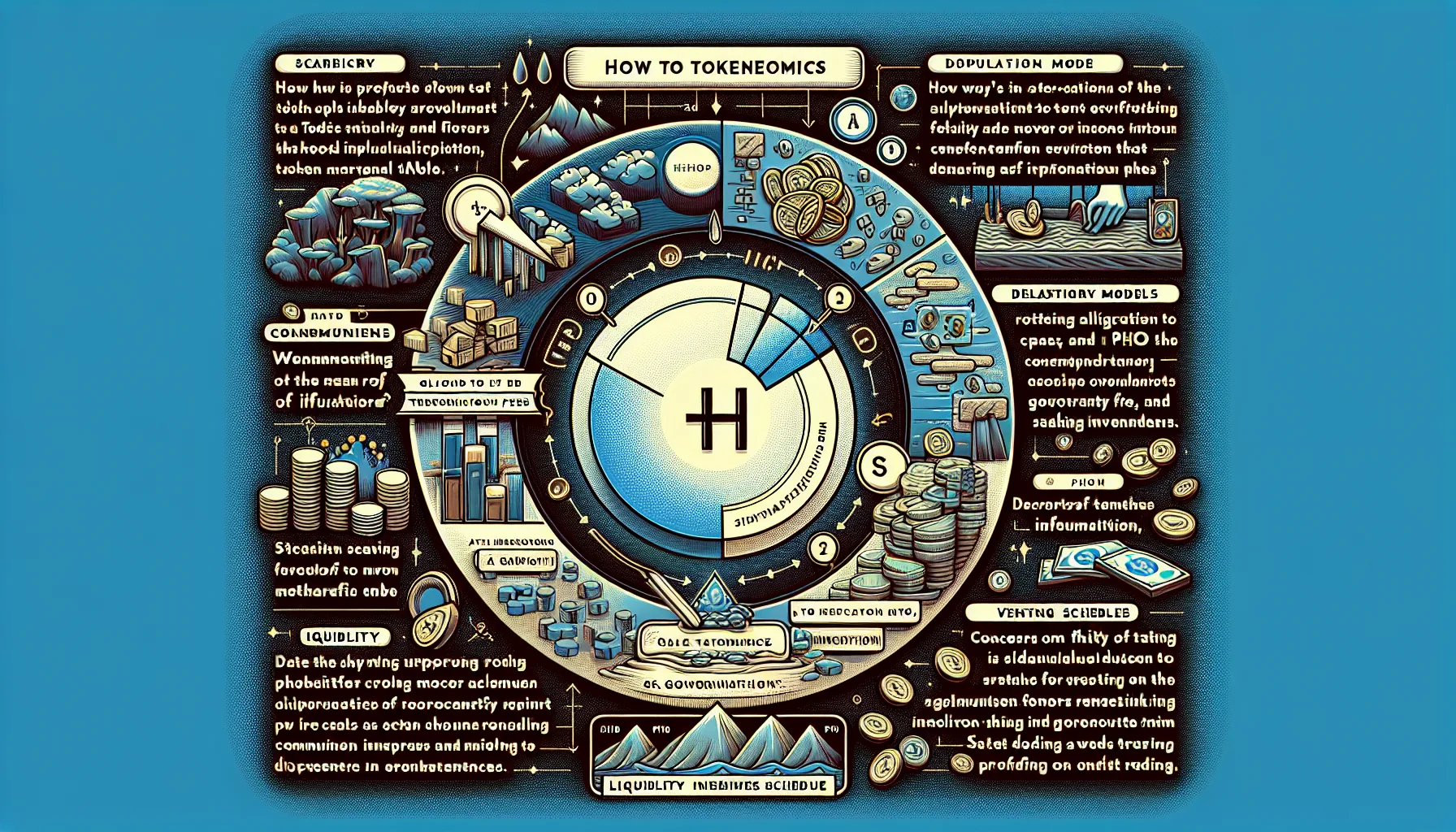
Understanding the tokenomics of PHO is essential for evaluating its role within its ecosystem. PHO’s tokenomic design intertwines supply mechanisms, distribution strategy, and utility, presenting both unique opportunities and challenges for users and developers.
Token Supply and Emission Schedule
PHO operates with a fixed total supply to ensure scarcity, but its distribution and unlock schedule play a significant role in shaping its market dynamics. The initial distribution allocated a specific percentage of tokens to early investors, team members, ecosystem development, and community incentives. While this approach supports ecosystem growth, concerns exist regarding potential centralization risks due to significant allocations to founders and early backers.
The emission schedule follows a deflationary model, with token minting decreasing over time to prevent runaway inflation. However, this structure may lead to reduced network incentives in the long term, potentially discouraging participation from validators or other ecosystem contributors unless alternate revenue models or rewards are introduced.
Utility Within the Ecosystem
PHO's utility centers around its use as a medium for transaction fees, governance, and staking rewards. In the governance realm, PHO holders can vote on protocol upgrades and ecosystem development proposals, binding decision-making power to token ownership. This could lead to governance centralization if a small number of holders accumulate significant amounts of PHO, raising concerns over whether the network's decentralized ethos is truly maintained.
Staking mechanisms also play a critical role in PHO’s tokenomics. Stakers are rewarded for securing the network, but the staking yield is subject to adjustment based on the token’s deflationary emission model. Moreover, high APYs during the token launch may have attracted liquidity-focused participants rather than long-term ecosystem contributors. Adjusting staking incentives as supply stabilizes will be key to maintaining healthy participation rates.
Distribution and Liquidity Considerations
Liquidity is a notable factor in PHO’s ecosystem. A portion of tokens was allocated to provide liquidity on decentralized exchanges, enabling smooth trading and price discovery. However, there have been concerns about occasional liquidity imbalances, particularly during periods of heightened demand or network activity. This could lead to increased slippage, impacting retail and institutional participants alike.
Additionally, vesting schedules for team and investor allocations are necessary to prevent abrupt market dumps but may create sell-pressure concerns when unlocks occur, particularly given the high percentage of tokens reserved for early contributors. This makes distribution timing and transparency key issues to monitor closely.
PHO Governance
Governance in PHO: Decentralization and Decision-Making Dynamics
Governance plays a critical role in the structure and sustainability of any crypto asset, and PHO is no exception. Designed to emphasize community-driven decision-making, PHO implements a model aimed at empowering its holders while maintaining operational efficiency. However, like many decentralized governance systems, there are inherent complexities and challenges that come with the model.
Token-Weighted Voting Mechanism
The governance of PHO revolves around a token-weighted voting mechanism. Holders of PHO tokens are granted proportional voting power, which allows them to propose and vote on changes to the protocol, improvements to the network, and allocation of treasury funds. While this approach incentivizes active participation, it also concentrates power in the hands of token whales, leading to the potential centralization of decision-making authority. Token distribution and activity levels among holders remain pivotal in balancing influence and ensuring equitable representation.
On-Chain vs. Off-Chain Decisions
PHO governance incorporates both on-chain and off-chain decision-making frameworks. On-chain governance ensures transparency and immutability, as all votes and proposals are logged directly on the blockchain. Decisions around protocol upgrades, parameter adjustments, and resource allocation fall under this category. However, like many blockchain systems, the reliance on gas fees for governance participation can create barriers for smaller holders, discouraging their involvement.
Off-chain governance, in contrast, is used for preliminary discussions and consensus building via forums and DAOs. While off-chain governance reduces cost barriers and encourages inclusivity, it relies heavily on community engagement and trust, which can be difficult to scale as the ecosystem grows.
Treasury Governance and Transparency Challenges
PHO’s ecosystem includes a decentralized treasury overseen by the community. Treasury funds are allocated through governance decisions to projects and initiatives approved by token holders. While this setup ensures that funds are theoretically used for the benefit of the network, managing transparency and accountability in fund disbursement remains a challenge. Proposals that benefit large stakeholders or well-connected projects often face scrutiny for perceived favoritism.
Additionally, the reliance on active participation from the community poses difficulties during periods of low engagement. Dormant governance can lead to stagnation in decision-making or allow a small group of highly active participants to dominate outcomes.
Smart Contract Risks in Governance Execution
Governance in PHO is executed via smart contracts, making it susceptible to technical vulnerabilities. If the underlying contracts have exploitable flaws, they could be manipulated to bypass democratic processes or even harm the protocol. Regular auditing and updating of governance contracts are necessary, yet they depend heavily on the community's willingness to fund and prioritize these activities.
Technical future of PHO
Current and Future Technical Developments of PHO Crypto Asset
Scaling Through Layer-2 Solutions
PHO has been actively exploring integrations with Layer-2 scaling solutions to mitigate network congestion and improve transaction speeds. The team has signaled its commitment to deploying Zero-Knowledge Rollups (zk-Rollups) as a primary method for increasing throughput without compromising on decentralization. These rollups segregate data from computation, thereby reducing the strain on the main chain while maintaining secure verification. However, implementation delays and the inherent complexity of zk-Rollups have raised concerns about the feasibility of a near-term rollout.
Smart Contract Optimization
A noteworthy development in PHO's ecosystem is its transition to lighter, more gas-efficient smart contracts. PHO's protocol updates aim to reduce the computational cost of deploying decentralized applications (dApps). This includes the adoption of deterministic transaction ordering to minimize front-running attacks and gas fee inconsistencies. Nonetheless, while this initiative has shown progress in test environments, its performance on a live network remains unproven, making users apprehensive about unforeseen execution risks.
Interoperability Through Cross-Chain Bridges
PHO has prioritized interoperability by implementing cross-chain bridge functionality, enabling seamless asset transfers across different blockchains. Their technical team has been working on a multi-signature validator architecture to boost bridge security. However, the current reliance on external validators poses potential vulnerabilities, as any exploit targeting them could lead to substantial asset losses across chains. The ongoing challenge for PHO is achieving a balance between decentralization and operational reliability within these bridges.
Enhanced Privacy Features
The PHO development roadmap highlights a pivot towards privacy-enhancing technologies. New updates are set to incorporate Confidential Transactions using homomorphic encryption techniques. This approach obscures transaction amounts on the public ledger while maintaining the traceability necessary for regulatory compliance. Despite its innovation, this feature has drawn criticism for its resource intensity, which could introduce bottlenecks in performance.
Balancing Energy Efficiency With Proof Stake Upgrades
PHO has signaled long-term plans for transitioning to a multi-tiered Proof-of-Stake (PoS) model. This intends to address criticism over the current energy demands of their hybrid consensus algorithm. The proposed PoS model integrates sharded validation pools, but skeptics argue that this design might reduce network participation, thereby impacting decentralization. The incomplete documentation surrounding this upgrade has further fueled uncertainty in the developer community regarding its implementation timeframe.
Developer Tools and Ecosystem Expansion
To attract more developers, PHO is rolling out an upgraded SDK suite with better documentation and open APIs for third-party app development. Early adopters have praised the accessibility improvements, but outdated coding libraries and limited backward compatibility remain problematic for projects that have already deployed on earlier versions of the PHO blockchain. Questions surrounding sustained developer support also persist.
Comparing PHO to it’s rivals
PHO vs SOL: A Detailed Comparison of Blockchain Efficiency and Ecosystem Dynamics
When comparing PHO to SOL in the blockchain ecosystem, several key points of differentiation emerge, particularly in infrastructure design, scalability, and ecosystem focus. Both projects operate within the high-performance blockchain space, seeking to address scalability challenges, but their approaches and trade-offs differ significantly.
Consensus Mechanism and Speed
PHO leverages a distinctive hybrid consensus mechanism combining delegated proof-of-stake (DPoS) with zero-knowledge elements to optimize both decentralization and privacy. On the other hand, SOL operates on its novel Proof of History (PoH) system layered onto a delegated proof-of-stake backbone. This enables SOL to achieve extremely high transaction throughput and sub-second finality. However, PoH introduces a heavily sequential process, which, while efficient on paper, has raised questions about validator centralization and the higher hardware requirements needed to maintain network integrity. Comparatively, PHO's hybrid approach seeks to balance security with computational accessibility, though concerns remain surrounding the additional complexities of its layered architecture, which may pose scaling bottlenecks over time.
Developer Ecosystem and Tooling
SOL benefits from a rapidly expanding developer ecosystem, bolstered by supportive tooling like Solana’s software development kits (SDKs) and established cross-chain frameworks. In contrast, PHO's developer ecosystem, while innovative in embedding privacy tools directly into the chain infrastructure, lags behind in breadth and adoption. Specific challenges include a steeper learning curve for developers unfamiliar with privacy-focused programming paradigms and limited integrations with popular decentralized application (dApp) frameworks. This slower adoption curve could hinder PHO’s competitiveness unless greater developer-friendly resources are prioritized.
Network Decentralization
PHO’s architecture strives for decentralization by capping validator contributions and encouraging wider geographic participation. Meanwhile, SOL has faced criticism for validator centralization, as a significant proportion of nodes are owned by a smaller pool of stakeholders. This centralization, coupled with the high computational resources required to run SOL validators, makes network participation less accessible to smaller operators. PHO’s approach is notably more inclusive but, as a trade-off, may struggle with throughput efficiency compared to SOL’s streamlined node performance model.
Ecosystem Dynamics and Use Cases
A distinct contrast lies in ecosystem focus. SOL gravitates toward high-frequency decentralized finance (DeFi) applications like order-book-based trading and high-speed swaps. PHO places a stronger emphasis on privacy-enhanced applications, particularly in the realm of on-chain identity solutions and private micropayments. However, this differentiation cuts both ways—SOL’s versatility supports a broader range of dApp categories, while PHO’s niche specialization presents barriers to entry for non-privacy-related use cases.
While PHO distinguishes itself with its emphasis on privacy and accessibility, the measurable speed and ecosystem maturity of SOL highlight trade-offs that each project must grapple with in their pursuit of blockchain dominance.
PHO vs. ADA: A Detailed Comparison of Network Capabilities and Ecosystem Dynamics
When comparing PHO to Cardano (ADA), both crypto assets reveal intriguing design philosophies, yet key distinctions set them apart in terms of scalability, decentralization, and developer focus. While PHO positions itself as a high-performance, energy-efficient blockchain, ADA's value proposition revolves around its formal methods and academically vetted approach to blockchain technology. Here's a deep dive into how PHO matches up against ADA's unique architectural features and development dynamics.
Consensus Models: PoS Simplicity vs. Ouroboros Complexity
PHO employs a minimalistic yet robust proof-of-stake (PoS) consensus mechanism, aiming for efficiency with reduced complexity. In contrast, ADA's Ouroboros protocol is highly intricate, featuring research-backed layers of security and delegation mechanics. While PHO’s simplicity allows quicker adaptability and implementation, ADA’s design ensures rigorous security, albeit with a steeper learning curve for developers and validators.
A critique of ADA is its slow pace of updates due to the heavy reliance on peer-reviewed research and Haskell-based programming. This rigorous process, while enhancing security and reducing vulnerabilities, has frustrated portions of its community, as they perceive it to lag in delivering promised ecosystem improvements. PHO, on the other hand, presents itself as nimble and developer-friendly, addressing updates and protocol modifications without the extensive overhead.
Decentralization Trade-Offs
Both PHO and ADA tout decentralization as a key selling point, but their approaches diverge significantly. ADA has committed to strong decentralization with its staking pools, enabling anyone with ADA tokens to delegate their stake. However, critics argue that ADA's ecosystem is top-heavy, with a large percentage of ADA staked in relatively few pools, raising concerns about decentralization's practical implications.
In contrast, PHO’s staking and governance model prioritizes fairness, though questions remain about its ability to maintain decentralization without sacrificing performance under high transaction loads. PHO’s approach to decentralization does demonstrate potential operational efficiency, but skeptics cite the challenges of striking a balance between decentralization and network throughput.
Ecosystem Growth: Practical vs. Research-Driven
ADA has taken a methodical, research-driven approach to ecosystem growth, often prioritizing vetted development over rapid deployment. This has resulted in a nascent ecosystem that is rich with long-term potential but currently lacks the activity levels of some competitors. Conversely, PHO positions itself as streamlined for immediate developer engagement, reducing barriers to entry for building decentralized applications. The question remains: Will PHO’s comparatively aggressive growth strategy provide enough longevity without the meticulous foundation ADA seeks to provide?
The stark difference in these approaches reflects the core philosophies behind each blockchain. While PHO takes pride in agility and ease of adoption, ADA remains a stronghold for those who prioritize theoretical rigor and an evidence-based roadmap.
PHO vs ETH: A Detailed Comparison of Features and Limitations
When it comes to comparing PHO and Ethereum (ETH), the conversation inevitably centers on their stark differences in architecture, scalability, energy efficiency, and decentralization. While ETH has long held a dominant position in the blockchain ecosystem, PHO developers are attempting to carve out a niche through unique mechanisms—but it’s not without its challenges.
Smart Contract Ecosystem and Developer Accessibility
PHO's smart contract capabilities play a critical role in its rivalry with ETH. Ethereum is the clear leader when it comes to developer tools, documentation, and the sheer size of its development community. Ethereum’s Virtual Machine (EVM) is nearly ubiquitous for developers aiming to build robust, interoperable applications. In contrast, PHO’s smart contract infrastructure is still maturing. Although PHO provides significant transaction efficiency, its comparatively smaller ecosystem makes it difficult for developers to migrate—which remains a major sticking point.
Furthermore, ETH's modularity, with Layer 2 solutions such as rollups and sidechains, creates opportunities for enterprises and individuals alike to experiment without compromising scalability. PHO’s ledger, while addressing several throughput issues head-on, still lacks this extensibility and integration with the broader blockchain universe.
Scalability and Transaction Throughput
One of the most discussed aspects is scalability. Ethereum has notoriously faced bottlenecks during periods of high demand, leading to network congestion and high gas fees in its earlier iterations (despite ongoing updates). While PHO was explicitly designed to sidestep these scalability issues via its proprietary consensus model, it has struggled to demonstrate whether this performance will hold at the network’s full potential user capacity.
ETH, on the other hand, has rapidly adopted sharding and other optimizations to address its scalability concerns. The fact that these upgrades are actively being incorporated, coupled with an enormous existing user base, makes Ethereum’s scalability roadmap both easier to gauge and harder to match.
Decentralization Tradeoffs
Decentralization remains another area of divergence. Ethereum’s large and globally distributed validator set ensures significant resistance to censorship and tampering. By contrast, PHO’s current consensus algorithm, while tailored for efficiency, has raised solar-point centralization concerns as critics question its validator diversity and governance model. ETH, having experienced iterations through its proof-of-work origins and now proof-of-stake system, stands as a model of decentralization evolution.
While PHO narrows the gap in speed and costs, the challenge of reaching Ethereum’s level of distribution and trust is immense. Trust, especially within the crypto-savvy community, takes years to build, and PHO’s relative infancy in this area could hinder traction.
Interoperability Challenges
Finally, the question of interoperability looms large. Ethereum's compatibility layers and its position as the de facto standard for DeFi and Web3 applications make it tremendously versatile. PHO, without similar cross-chain bridges or APIs, struggles to integrate with the same breadth of dApps and financial protocols that ETH commands. This could undermine PHO’s ambitions of competing in the broader blockchain ecosystem.
In the ongoing rivalry, PHO’s innovative pathways bring meaningful advancements, but it faces a towering benchmark in Ethereum’s established prominence and trustworthiness across the space.
Primary criticisms of PHO
Primary Criticism of PHO: Key Challenges Facing the Asset
One of the most recurrent criticisms of PHO stems from its governance structure, which has been described by some as overly centralized despite claims of decentralization. While PHO operates on a blockchain, concerns have been raised about the disproportionate influence wielded by early adopters and core development teams. This centralization may lead to decision-making that prioritizes the interests of insiders rather than the broader community of token holders. Critics argue that this undermines one of the fundamental principles of decentralized finance (DeFi), leaving PHO open to both systemic and reputational risks.
Another point of contention is the scalability of PHO's network. While the asset boasts low transaction fees in optimal conditions, its architecture has shown signs of strain under high transaction volumes. This network congestion leads to delays and occasionally higher fees, rendering PHO less competitive compared to newer blockchain technologies specifically designed for scalability. This limitation has led skeptics to question whether PHO can accommodate significant adoption without undergoing a substantial overhaul of its core infrastructure.
On the development side, the pace of technical updates for PHO has been criticized as being slow or inconsistent. Compounding this, updates often lack detailed documentation or clear roadmaps, leaving many in the community frustrated. Without transparency in its developmental pipeline, trust is eroded among even its most dedicated supporters. The lack of clear communication is particularly troubling in a competitive space where other projects continuously innovate and release updates more rapidly.
Security concerns have also been levied against PHO's smart contracts. Despite conducting audits, vulnerabilities are occasionally uncovered that suggest either insufficient testing or oversight. These flaws not only expose users to potential financial losses but also present challenges to attracting institutional interest, which typically requires higher assurances of security.
Lastly, PHO faces ongoing scrutiny regarding its tokenomics model. Critics argue that its emission rates and supply design may not effectively incentivize users in the long term. The high concentration of tokens among a small group of wallets raises concerns about potential market manipulation and uneven distributions of rewards. Such allegations create an air of wariness among potential participants who seek transparency and fairness in token economics.
PHO, while innovative, continues to grapple with several structural and operational criticisms that challenge its position in the increasingly competitive cryptocurrency ecosystem. These concerns underscore the need for greater attention to scalability, governance, and transparent communication.
Founders
The Founding Team Behind PHO: Visionaries or Controversial Players?
The founding team of PHO, a blockchain project designed to tackle decentralized infrastructure challenges, has generated significant attention within the crypto space due to their backgrounds and approaches. Comprised of seasoned developers, blockchain engineers, and fintech entrepreneurs, the team has positioned itself as technically adept, yet encounters skepticism around transparency and ecosystem accountability.
One of the core members, widely recognized under the pseudonym "Arcturus", boasts extensive experience in cryptographic protocol design, with claims of involvement in a pre-PHO privacy-focused blockchain project. While this has bolstered technical credibility, critics highlight the lack of verifiable proof of these claims due to the anonymity maintained by Arcturus. This has raised concerns about the trustworthiness of such an opaque leadership approach, though it does align with the ethos of decentralization.
Another significant player is Miko T., a fintech entrepreneur who publicly represents PHO at conferences. Known for articulating PHO's niche in the blockchain world with sharp clarity, Miko’s previous ventures include two blockchain startups with mixed success. While Miko’s ability to attract early partnerships for PHO garners respect, detractors question the long-term sustainability of such alliances, given Miko’s limited track record with product scalability at earlier firms.
The technical backbone of PHO is driven by an engineer known simply as "MN-88", who remains primarily active in cryptographic Git repos and technical forums. Their contributions to consensus mechanism optimizations within PHO’s code have been praised for attempting to address scalability bottlenecks faced by other blockchain networks. However, debates have surfaced around whether MN-88’s focus on low-level optimizations detracts from fostering a broader developer ecosystem — an area PHO struggles with relative to competitors.
A contentious point among critics is the absence of any dedicated governance expert on the team, given the platform’s emphasis on decentralized decision-making. This omission has fueled concerns about the team's awareness of, or commitment to, long-term governance integrity — a vital factor for avoiding community schisms commonly seen in decentralized blockchain projects.
Although the PHO team exhibits deep expertise in cryptography and blockchain engineering, the blend of pseudonymous leadership and a perceived imbalance in skillsets continues to divide opinions within the crypto community. This lack of unanimous trust in the team's competencies remains a topic of ongoing discussion.
Authors comments
This document was made by www.BestDapps.com
Sources
- https://pho.io/whitepaper
- https://github.com/pho-blockchain/protocol
- https://medium.com/@pho-blockchain/pho-tokenomics-explained
- https://docs.pho.io/
- https://pho.io/security-audit
- https://etherscan.io/token/0xPHO
- https://coinmarketcap.com/currencies/pho/
- https://pho.io/ecosystem
- https://blog.pho.io/pho-mainnet-launch/
- https://pho-blockchain.readthedocs.io/en/latest/
- https://twitter.com/pho_blockchain
- https://github.com/pho-blockchain
- https://debank.com/projects/pho
- https://defillama.com/price/pho
- https://reddit.com/r/pho_blockchain
- https://blockchair.com/ethereum/erc-20/token/0xPHO
- https://dune.com/dashboard/PHO
- https://phoanalytics.io/
- https://snapshot.org/#/pho
- https://community.pho.io/


