History of PHA
The History of Phala Network (PHA): Origins and Development
Phala Network’s journey began with a vision to bridge the gap between blockchain technology and privacy-preserving computation. At its core, Phala was conceived to address a fundamental challenge that decentralized systems face: the inability to process sensitive data securely. Its foundational development traces back to the creation of a decentralized cloud computing protocol, leveraging blockchain technology alongside Trusted Execution Environments (TEEs).
Phala Network's origins are closely tied to the Substrate framework, making it one of the pioneers in the Polkadot ecosystem. This strategic alignment gave the project a significant advantage, as Polkadot’s interoperability allowed Phala’s solution to integrate seamlessly with other blockchains. However, this decision also came with its complexities. Building atop Substrate required overcoming technical hurdles such as maintaining scalability while ensuring the integrity of private computations—a balance that many similar projects struggled to achieve.
The network gained momentum with the launch of its testnet, a phase that highlighted the potential of Phala’s TEE-based architecture. Yet, it also unveiled challenges. Early community feedback pointed to issues such as hardware dependencies; specifically, the reliance on TEEs raised concerns about centralization risks, given that TEEs are predominantly manufactured by a few large corporations. Critics questioned whether this reliance on third-party hardware providers undermined the decentralization ethos of blockchain technology.
Phala Network's entrance into the public market was marked by the issuance of its native token, PHA. The token's initial utility was designed to incentivize node operators, facilitate staking, and enable users to access privacy-preserving computational services. Over time, the token’s scope expanded to encompass governance functions, allowing the community to influence the project’s roadmap through decentralized decision-making processes. Still, the rollout faced scrutiny from some developers and users, who argued that certain governance mechanisms leaned heavily toward influential token holders.
Furthermore, as the project progressed, competition within the Web3 privacy and computing space intensified. Other networks with similar goals surfaced, raising questions about Phala’s ability to differentiate itself. Despite its first-mover advantage in leveraging TEEs within the Polkadot ecosystem, some critiques focused on whether its architecture offered true technological innovation or merely combined existing components in a novel way.
The implementation of parachain auctions marked another pivotal moment in Phala’s development, further solidifying its integration within Polkadot’s infrastructure. However, as with many parachain projects, Phala’s initial slot auction highlighted the challenges of securing sufficient community support amidst fierce competition for limited slots.
How PHA Works
How PHA Works: A Deep Dive into Its Privacy-Preserving Protocols
Phala Network (PHA) operates as a privacy-preserving cloud computing platform built on Substrate, with its key innovation centered around utilizing trusted hardware to enable confidential smart contracts. At its core, PHA's mechanics leverage Trusted Execution Environments (TEEs) to process sensitive data off-chain while still delivering tamper-proof verifiability on-chain. This architecture is specifically designed to address the trade-off between decentralization and computational privacy, a critical challenge for privacy-conscious crypto applications.
Trusted Execution Environments (TEEs) as a Foundation
The main technical backbone of PHA is the Trusted Execution Environment, a secure enclave within modern processors such as Intel SGX. TEEs ensure that computations on sensitive data remain encrypted and isolated from the host operating system and any decentralized network participants. When a user submits a transaction to the network, it is processed within a TEE, where the data is shielded during execution. This ensures privacy, as no validator, miner, or other participant can view the transaction's raw inputs or outputs until they are deliberately disclosed by the sender.
However, relying on hardware-based security introduces inherent risks. For instance, TEEs are not entirely immune to side-channel attacks or vulnerabilities like the Spectre and Meltdown exploits. Therefore, PHA's reliance on this technology makes it dependent on ongoing advancements in processor security, which is beyond the network's control. This reliance poses potential concerns for long-term robustness.
Off-Chain Confidentiality, On-Chain Verification
PHA operates via a dual-process model: confidential calculations occur off-chain within TEEs, while essential transaction proofs are committed on-chain. This hybrid setup dramatically reduces computational and storage overhead for the blockchain, but it introduces complexities in ensuring data integrity. The network relies on a combination of remote attestation (to verify the authenticity of TEEs) and cryptographic guarantees to confirm that computations were performed correctly.
This duality creates challenges in decentralization. By depending on specific hardware configurations, the network’s validators must maintain access to compatible equipment, which may deter broader participation. Additionally, questions about hardware centralization and reliance on a limited number of manufacturing entities like Intel raise concerns about the resilience of the network in a truly trustless ecosystem.
Utility in dApps and Beyond
PHA is particularly attractive for decentralized applications (dApps) requiring high levels of privacy, such as identity management, confidential voting systems, and sensitive financial services. Its interoperability within the Polkadot ecosystem expands its scope for use cases, thanks to cross-chain communication.
However, its real-world utility is constrained by the scalability limitations of TEE hardware, which may not yet handle massive concurrent workloads. Furthermore, the need for trusted hardware introduces barriers to accessibility for developers and users, which may hinder adoption when compared to purely software-driven privacy solutions.
Use Cases
Exploring the Use Cases of PHA: Privacy and Beyond
PHA, the native token of the Phala Network, is designed to play a critical role in a decentralized infrastructure oriented towards privacy preservation. At its core, PHA fuels the network's unique Trusted Execution Environment (TEE)-based computing model, unlocking a range of use cases tailored for privacy-centric applications. Below, we dive into these specific utility scenarios while addressing potential challenges.
Private Cloud Computing for dApps
One of the primary use cases of PHA is enabling privacy-enhanced cloud computing for decentralized applications (dApps). By leveraging TEEs, the Phala Network allows developers to run computations in a secure and isolated environment while keeping the data encrypted even during processing. This is especially valuable for dApps dealing with sensitive information, such as financial services, healthcare records, or enterprise data processing. However, a limitation lies in the scalability of TEE-based systems. High computational requirements can challenge the efficiency of the infrastructure, and reliance on hardware compatibility for TEEs further complicates adoption.
Data Confidentiality in DeFi
PHA facilitates confidential smart contracts, offering privacy layers for sensitive financial activities within the DeFi ecosystem. These private contracts allow institutions or individuals to transact without exposing their data to third parties or competitors. However, the integration of confidential contracts into existing DeFi protocols has not been seamless. The lack of uniform standards for privacy-focused smart contracts creates hurdles for interoperability across different blockchain systems.
Decentralized Identity Management
PHA supports use cases in decentralized identity (DID) frameworks, where users retain control over their personal data while interacting with web3 applications. By encrypting identity data in secure enclaves, PHA-powered solutions aim to eliminate the need for centralized custodians. This use case holds promise for privacy-conscious users, but challenges remain, including the complexity for end-users to manage and recover encrypted identity tokens securely.
Cross-Chain Privacy Solutions
PHA’s compatibility with standardized cross-chain frameworks positions it as a tool for addressing privacy gaps in multi-chain ecosystems. This includes anonymizing transactions and enabling private bridges between blockchains. However, execution in this domain is challenging due to potential bottlenecks in throughput when supporting communication across heterogeneous networks.
Rewards and Decentralized Governance
Beyond enabling privacy functions, PHA is also integral to incentivizing participants within the Phala ecosystem, particularly node operators and developers. Additionally, PHA holders can engage in governance to influence protocol upgrades or network policies. Critics, however, argue that token-based governance can risk consolidating power among major stakeholders, potentially undermining decentralization.
By scrutinizing these specific use cases and the accompanying challenges, it becomes clear that while PHA offers innovative approaches to privacy, its ecosystem faces technical and adoption hurdles that require continued attention.
PHA Tokenomics
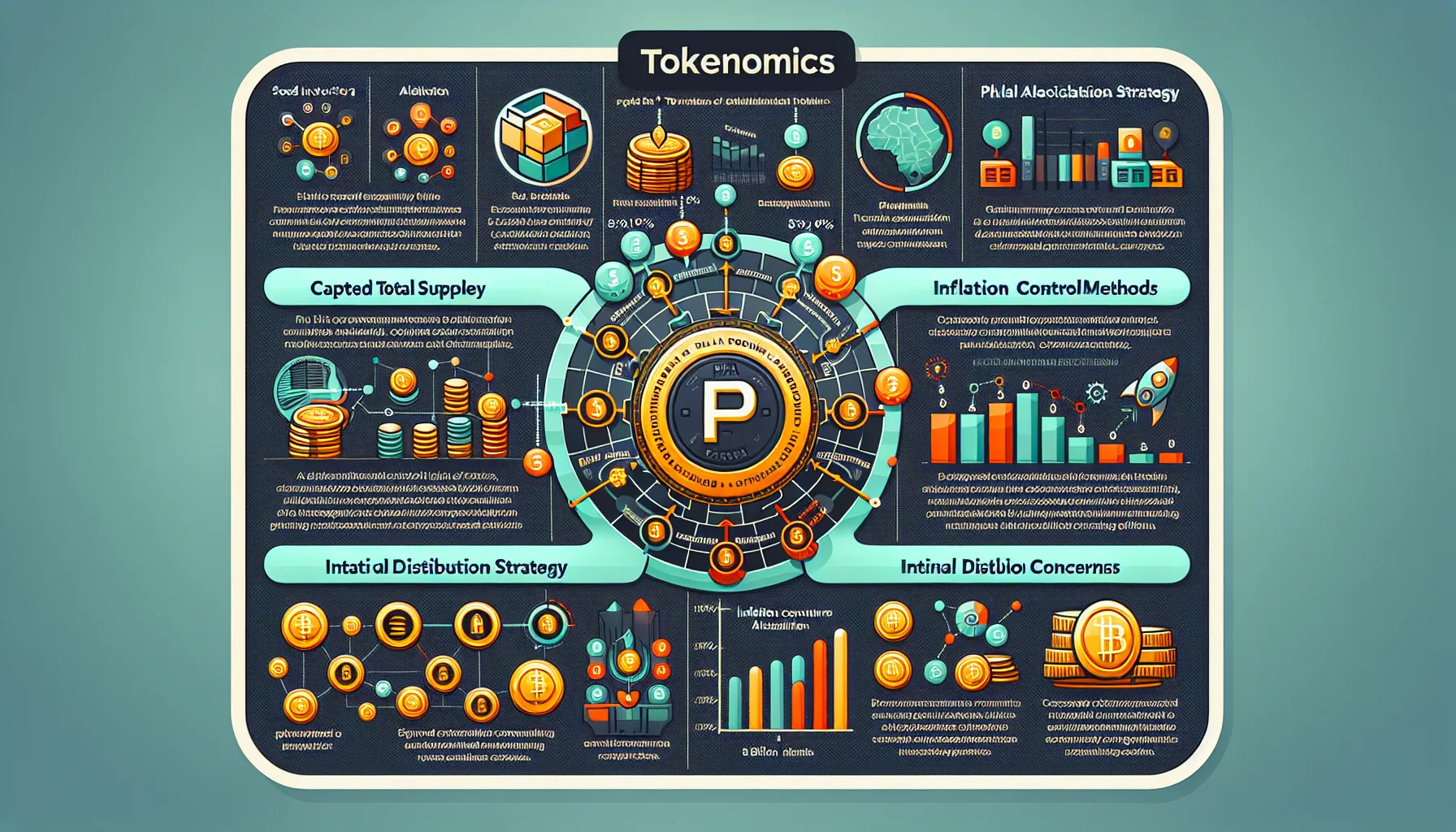
PHA Tokenomics: Deep Dive into Supply, Utility, and Distribution
Phala Network's native token, PHA, plays a central role in the protocol’s decentralized infrastructure, but its tokenomics reveal several nuances and potential challenges that warrant a closer examination. This section dissects the core mechanisms behind PHA’s supply dynamics, utility, and distribution strategy.
PHA Supply Dynamics and Inflation Control
PHA has a capped total supply of 1 billion tokens, distributed through several allocation mechanisms. While the majority of PHA is already minted, an essential inflationary aspect arises from the mining rewards program. Miners are incentivized to contribute computational resources to Phala’s trusted execution environments (TEEs), earning PHA as rewards. This ongoing issuance can lead to inflationary challenges, depending on the rate of miner participation and the network’s incentive adjustments.
To counterbalance inflation, the network employs periodic halvings in mining rewards, directly impacting token emissions over time. However, this mechanism introduces potential conflicts between incentivizing miners and maintaining long-term value appreciation for token holders. As token supply near its cap, it raises a critical question: can Phala sustain its ecosystem incentives without diminishing token scarcity?
Token Utility in the Phala Ecosystem
PHA’s primary utility lies in driving decentralized computing services on Phala Network. Users stake PHA to access private cloud storage and computational capabilities, ensuring network security by locking liquidity. Additionally, developers deploying secure applications within the Phala ecosystem rely on PHA for gas fees and computational task execution.
However, some critics raise concerns regarding token demand limitations. While the network's privacy-preserving computation services are innovative, adoption is still primarily infrastructure-level, lacking visible mainstream use cases. If demand for Phala’s services grows slower than expected, this could hinder PHA’s utility-driven value generation.
Distribution and Decentralization Concerns
PHA’s initial distribution prioritized ecosystem development and early investors. According to the token allocation model, roughly 15% of the supply was reserved for seed investors and strategic partnerships, while 35% went toward the mining mechanism. The remaining allocation includes the foundation, team, ecosystem projects, and a small buffer for liquidity and marketing efforts.
Such distribution raises some decentralization concerns—significant portions of PHA are controlled by the foundation and early backers. Critics argue this concentration of supply could create vulnerabilities regarding governance and price manipulation. Although mining incentives help distribute tokens organically, true decentralization will rely on growing participation by a broad user base.
Conclusion
Phala Network’s PHA tokenomics presents a carefully designed balance between incentivization, utility, and distribution. However, challenges surrounding inflation control, demand scalability, and decentralization remain relevant for stakeholders to monitor closely.
PHA Governance
Governance Mechanisms in the Phala (PHA) Ecosystem
Phala Network (PHA) adopts a governance framework designed to balance decentralization with effective decision-making. This governance structure emphasizes community participation, transparently allocating decision-making power to stakeholders holding PHA tokens. However, as with any decentralized protocol, governance in the Phala ecosystem is not without challenges.
On-Chain Governance Model
Phala’s governance is executed through an on-chain voting mechanism. PHA token holders can propose and vote on network updates, protocol adjustments, and resource allocations, ensuring the community has a direct say in critical decisions. Governance proposals often require documentation and pre-vote discussions to properly assess their impacts on the network. These on-chain mechanisms are intended to make governance both transparent and tamper-proof, leveraging the native capabilities of blockchain technology.
To incentivize participation, Phala rewards voting activity by distributing a small portion of network rewards to those who engage in governance. However, this system assumes active and informed participation—raising concerns about potential voter apathy or stakeholders prioritizing short-term gains over long-term network health.
Staked Voting Power and Centralization Risks
Governance in the Phala ecosystem links voting power to token stakes. Stakeholders with larger amounts of staked PHA have a proportional influence over governance decisions. While this ensures alignment between economic incentives and decision-making, it can also result in centralization of power. If a few large stakeholders dominate token holdings, governance risks becoming overshadowed by centralized interests.
Furthermore, the barrier to entry caused by token requirements could marginalize smaller community members or newer participants. This could limit the diversity of voices in decision-making, a common critique in token-weighted governance models across the blockchain space.
Proposal Process and Execution Complexity
The process of submitting a governance proposal in the Phala Network involves multiple layers of scrutiny, including community discussions and technical evaluations. While these checks are essential for minimizing adverse effects on the protocol, they can slow down the decision-making process, particularly during urgent situations. In rapidly evolving markets, this could hinder Phala’s ability to adapt swiftly.
Additionally, implementing approved governance proposals often requires developers and other stakeholders to cooperate closely, which could lead to delays if technical compatibility issues arise or resources are stretched thin. This operational complexity underscores a broader industry challenge when integrating governance with actionable execution.
This decentralized governance design embodies both the strengths and inherent complications of blockchain systems, reflecting Phala’s commitment to transparency while navigating practical trade-offs within its decision-making processes.
Technical future of PHA
Current and Future Technical Developments for PHA: A Deep Dive into Phala Network's Roadmap
Phala Network (PHA) is a privacy-focused blockchain ecosystem built on Polkadot, leveraging Trusted Execution Environment (TEE) hardware to enable confidential computation. This section details the network’s ongoing technical advancements and its roadmap for upcoming innovations, while addressing challenges that could impact its trajectory.
Current Technical Developments
-
Expansion of Fat Contracts
Fat Contracts, Phala’s unique off-chain computation solution, continues to be a core focus. These contracts allow developers to execute CPU-intensive operations in a privacy-preserving manner, which would otherwise strain on-chain resources. Recent updates center around enhancing compatibility with multiple programming languages and improving execution scalability. However, critics often point out the potentially limited developer adoption due to the broader learning curve required to integrate TEE-based development. -
Cross-Chain Integration
Phala Network has implemented key integrations within the Polkadot ecosystem, allowing its services to interoperate with parachains via XCM (Cross-Consensus Messaging). While this ensures seamless data privacy solutions are available to other chains, the long-term reliance on Polkadot’s success may pose ecosystem centralization risks. -
Decentralization of TEE Nodes
A major milestone involves transitioning from centralized TEE (Trusted Execution Environment) adoption to a truly decentralized node architecture. By enabling more participants to operate TEE nodes, the network enhances its censorship resistance. However, the complex hardware requirements for TEE nodes may still limit broader participation.
Future Technical Roadmap
-
pRuntime 2.0 Release
pRuntime, Phala’s privacy computation runtime, is undergoing a substantial upgrade. The next iteration aims to enhance hardware flexibility, allowing for expanded compatibility with non-Intel architectures. While this reduces dependency on Intel SGX, early reports suggest potential performance tradeoffs as Phala works to optimize these systems. -
Integration with Zero-Knowledge (ZK) Technology
Recognizing the growing importance of zero-knowledge proofs in the blockchain space, Phala plans to incorporate ZK functionality for additional privacy assurance. This would complement their TEE-based approach, particularly for use cases where TEE technology may face scrutiny for hardware-based vulnerabilities. While promising, a clear implementation timeline remains unavailable, leaving some uncertainty within the community. -
Middleware for Off-Chain Rollups
As scalability remains a critical topic in blockchain development, Phala has hinted at developing middleware solutions to support off-chain rollups. These would allow private computations to occur alongside scaled, off-chain verification. However, given limited details, skepticism persists about whether this could materialize in the near term.
Emerging Challenges
Although Phala’s technical vision remains ambitious, it faces notable hurdles. Centralized hardware requirements, regulatory scrutiny surrounding trusted hardware, and potential network dependencies on Polkadot’s infrastructure are key concerns. Furthermore, the race to integrate with alternative privacy frameworks like ZK-SNARKs introduces competitive pressure that could impact Phala's dominance in its niche.
Comparing PHA to it’s rivals
PHA vs. OAS: How Phala Network Stacks Up Against Oasis Network
When evaluating Phala Network (PHA) in comparison to Oasis Network (OAS), it’s essential to dissect their approaches to privacy-first blockchain solutions, as both project designs cater to users demanding enhanced data confidentiality within decentralized ecosystems. While the overarching goal of secure computing is shared, their technical implementations, performance nuances, and adoption strategies highlight sharp contrasts.
Privacy Architecture and Execution
Phala Network leverages Trusted Execution Environments (TEEs) to ensure secure and private data processing. Its infrastructure relies on hardware-based trust provided by Intel SGX, allowing data to be processed in isolated environments without compromising its security. On the other hand, Oasis Network approaches privacy with ParaTimes, a layer-specific execution model that segregates computation workloads. OAS emphasizes customizable privacy features via confidential ParaTimes, which use secure enclaves optionally but are not inherently tied to specific hardware like Phala's TEEs.
This divergence in design reveals a critical tradeoff: while PHA's reliance on TEEs ensures strong hardware-level protection, it introduces dependencies on approved hardware manufacturers and raises concerns over centralized points of failure or hardware backdoors. Oasis, by decoupling privacy features from obligatory hardware reliance, offers decentralized flexibility but at the potential expense of less uniform computational security under certain parameters.
Scalability and Network Efficiency
Phala's architecture shines in parallelism, as its decentralized computing cloud relies on worker nodes to perform tasks in a scalable manner. The TEE-centric system facilitates off-chain computations, freeing up on-chain bandwidth and focusing the blockchain on consensus and asset management. However, critics point out that this model could falter under scenarios requiring extensive node participation, as TEEs could narrow the pool of participants due to hardware constraints.
Oasis, with its sharded execution model of ParaTimes, allows developers the flexibility to deploy multiple ParaTimes optimized for specific use cases—ranging from smart contract execution to private data analysis. This multi-layer design grants OAS an edge with tailored scalability at the application layer, but it may lead to disparate levels of decentralization across ParaTimes, depending on the security measures employed by individual developers.
Developer Ecosystem and Usability
For developers, both ecosystems provide tools for privacy-enabled dApp creation. However, Oasis attracts attention for its focus on privacy-preserving DeFi and data tokenization, offering tools like data governance APIs designed to appeal to enterprises and institutional partnerships. Phala Network, conversely, positions itself strongly in the Web3 space with a narrower scope of use-case specialization, often focusing on facilitating private computation for decentralized applications.
That said, PHA’s developer experience might be hindered by its hardware dependencies, as prospective contributors must design with TEE constraints in mind, potentially slowing onboarding compared to Oasis's more flexible infrastructure.
Adoption Barriers
Both networks face significant barriers to adoption in the wider crypto space. For PHA, the reliance on highly specific hardware limits node diversity and introduces external points of failure, such as global supply chain vulnerabilities or hardware-level exploit risks. Oasis’s framework, while more hardware-agnostic, risks over-complexity, as developers navigate multiple ParaTimes and potentially find themselves burdened by cross-layer usability challenges.
Comparing PHA to NU: A Focused Analysis
When comparing Phala Network (PHA) to NuCypher (NU), it's essential to address how these crypto assets diverge in their design and execution while targeting overlapping utilities in privacy preservation and decentralized computation. While both networks emphasize secure data usage through cryptographic frameworks, they achieve their goals with fundamentally different architectures and trade-offs.
Privacy Mechanisms: TEE vs. Threshold Cryptography
PHA's reliance on Trusted Execution Environments (TEEs) is a significant distinction from NU's core model, which uses threshold cryptography. TEEs allow PHA to execute computations securely in a hardware-based enclave, providing verifiable privacy protection. This hardware dependency, however, introduces trust assumptions regarding the underlying hardware, primarily manufactured by centralized entities like Intel. This reliance has raised valid concerns around tampering risks, hardware vulnerabilities, and potential centralization bottlenecks.
On the other hand, NU leverages distributed threshold cryptography to facilitate secure data sharing and encryption services without dependency on specialized hardware. This software-driven approach mitigates the single point of failure risk inherent in hardware security models, but it comes at the expense of computational scalability when handling more resource-intensive workloads. NU’s approach may also encounter limitations when addressing sophisticated privacy computing use cases requiring intensive parallelization.
Tokenomics and Incentive Design
Both projects use native tokens to incentivize network participants, yet their economic models bear distinct characteristics. PHA is structured around incentivizing computational tasks on TEEs, tying demand directly to its usage as a decentralized cloud service. However, the dependency on specific privacy-centric use cases may limit its long-term utility if broader blockchain ecosystems pivot toward alternative privacy solutions.
Conversely, NU's tokenomics focus heavily on enabling a network of stakeholders to provide re-encryption and data sharing services. While this design has clear applications in enterprise-grade data collaboration, it risks concentrating value into a set of niche utilities, potentially narrowing the overall adoption of the NU token outside its immediate verticals.
Ecosystem Integration
PHA's architecture makes it particularly appealing to ecosystems prioritizing hybrid on-chain/off-chain computation, such as Polkadot, where it plays an interoperable role within the broader parachain network. NU, in contrast, has primarily aligned its development to Ethereum-based applications, making it vulnerable to competitive risks from other Ethereum-native privacy projects. While Ethereum’s ecosystem remains expansive, NU's dependency on a single chain increases exposure to platform-specific challenges like network congestion or fee volatility.
Developer Usability
Finally, developer adoption emerges as a dividing factor. PHA's requirement for TEE hardware can deter smaller developers due to hardware costs and setup complexities. NU's architecture, as purely software-driven, offers a lower barrier to entry for developers but less immediate synergy with broader Web3 platforms exploring cutting-edge privacy computing use cases.
PHA vs. CFX: Key Differences in Privacy and Blockchain Design
Phala Network (PHA) and Conflux (CFX) are both notable projects in the blockchain ecosystem, but they serve different purposes, leveraging fundamentally distinct architectures and use cases. By diving into their core features, it becomes clear how their approaches cater to unique niches — yet also reveal potential limitations.
Tech Focus: Privacy vs. Scalability
PHA positions itself as a Web3-focused privacy-preserving computation platform built on Substrate. Utilizing Trusted Execution Environments (TEEs), Phala enables the execution of confidential smart contracts while keeping sensitive data hidden. This privacy-centric model differs significantly from CFX's primary goal, which is centered around solving the blockchain trilemma by optimizing scalability and decentralization.
Conflux leverages its Tree-Graph consensus algorithm, a novel consensus mechanism that processes blocks concurrently to deliver faster transaction throughput while maintaining an adequate level of security. However, the absence of a strong focus on user-level privacy gives PHA a clear edge for applications requiring trustless and confidential environments.
Still, this divergence highlights a potential trade-off. Privacy requires additional overhead — such as the reliance on TEEs — while Conflux's efficiency-optimized framework can process higher transaction volumes more effectively. Users prioritizing scalability with lower latency in decentralized finance (DeFi) or NFT minting may find CFX a more natural fit.
Ecosystem Compatibility
PHA integrates smoothly with the Polkadot ecosystem by leveraging its interoperability and cross-chain messaging capabilities. Conflux, on the other hand, is largely focused on fostering adoption in markets like Asia, especially by integrating regulatory compliance. Its ecosystem focus is partially tailored to address business and institutional needs while maintaining compatibility with smart contract platforms like Ethereum through the use of its bridging tools.
However, Conflux's regional emphasis could also limit its global scalability in terms of developer adoption. By comparison, PHA's development within the Polkadot ecosystem grants it global exposure and access to broad interoperability — though Polkadot's growth is tied to its parachain auctions, which can occasionally complicate onboarding.
Consensus Mechanism and Centralization Concerns
While PHA relies on the Substrate framework’s Nominated Proof-of-Stake (NPoS), Conflux's Tree-Graph consensus mechanism introduces centralized risks in weighted voting processes. The potential for network centralization has been a point of critique in Conflux’s design, raising concerns about the trustless nature of its protocol. For crypto users focused on decentralization principles, this might represent an unfavorable compromise compared to PHA's distributed TEE framework.
Developer and User Barriers
Developers engaging with PHA may face challenges related to the complexity of utilizing TEEs, as this approach requires specific hardware and expertise. Conversely, CFX benefits from a more accessible entry point for traditional blockchain developers, thanks to its Ethereum Virtual Machine (EVM) integration. While this lowers barriers for developers, it also reduces differentiation within the saturated smart contract platform space, where competing EVM-compatible chains dominate.
In summary, PHA and CFX address vastly different needs in blockchain, catering to privacy-focused and scalability-prioritized use cases respectively. Understanding these nuances helps users evaluate which chain best serves their specific requirements.
Primary criticisms of PHA
Primary Criticism of PHA: Challenges Facing the Phala Network Ecosystem
The Phala Network (PHA) has positioned itself as a promising player in blockchain-based privacy computing, but it is not without its share of criticisms and concerns. Despite its technical ambitions, the project has faced scrutiny from the crypto community on multiple fronts, raising questions about its long-term viability and effectiveness.
Potential Centralization Concerns
One of the key criticisms of the Phala Network revolves around its reliance on trusted execution environments (TEEs). While TEEs like Intel SGX are critical to Phala's privacy-preserving computational framework, they introduce a dependency on centralized hardware manufacturers. This reliance raises potential risks, as vulnerabilities or backdoors in these hardware solutions could compromise the network's security. Critics argue that Phala’s decentralized vision is at odds with its reliance on proprietary solutions controlled by a few corporations, a tension that raises skepticism over its ideological consistency.
Developer Adoption and Ecosystem Growth
Despite addressing an emerging market for secure, private computation, PHA has struggled with widespread developer adoption. The network’s learning curve and niche use case have led some to question whether it can attract enough developers to create a thriving, self-sustaining ecosystem. A fragmented toolset and limited third-party integrations exacerbate this issue, potentially impeding the growth of its dApp ecosystem. Critics note that while privacy computing is important, niche utility without developer momentum may limit Phala’s capacity to position itself as a key infrastructure layer in the broader crypto ecosystem.
Resource-Intensive and Complex Setup
Another frequently discussed concern among the crypto-savvy community is that operating a node on the Phala Network can be resource-intensive. Because the protocol depends on TEEs, nodes must integrate specific hardware configurations, which not all operators have straightforward access to. This acts as a barrier to entry, effectively limiting participation and decentralization. Moreover, complexities in setup and maintenance can create technical challenges for less-experienced operators, resulting in a network topology skewed towards advanced participants.
Token Utility in Question
A deeper critique revolves around PHA’s token utility. While it underpins transaction costs, staking, and governance, the lack of diverse utility compared to other blockchain ecosystems has drawn criticism. Some argue that the token's core functions are overly reliant on speculative interest rather than intrinsic demand driven by robust network activity. Without a clear and consistent rationale for token utility growth, critics worry that PHA may struggle to differentiate itself in a crowded sector.
In summary, while PHA brings technical innovation to privacy computing, its reliance on centralized elements, ecosystem barriers, operational challenges, and concerns about token utility remain prominent sources of criticism among crypto enthusiasts and analysts alike.
Founders
The Founding Team Behind Phala Network (PHA)
Phala Network (PHA) was launched by a team of experienced professionals with combined expertise in blockchain technology, cloud computing, and cybersecurity. The co-founders, led by Marvin Tong and Hang Yin, have drawn significant attention for their technical credentials and detailed focus on privacy solutions for decentralized ecosystems.
Marvin Tong: Leadership with a Strategic Vision
Marvin Tong serves as the CEO and is the public face of Phala Network. With a background in product management and entrepreneurship, Tong balances technical comprehension with business development. Prior to founding Phala, he worked with major tech firms, gaining exposure to scalable infrastructure solutions. However, critics have highlighted that while Tong is an effective strategist, his lack of formal expertise in cryptography may limit his ability to engage deeply with the technical challenges of privacy-focused protocols.
Hang Yin: A Technical Pioneer
The project’s technical vision is spearheaded by Hang Yin, a co-founder who is widely recognized for his role as a former senior developer on the core team of Bitcoin. This experience lends credibility to Phala Network, particularly among hardcore crypto enthusiasts. Yin’s expertise in distributed systems and blockchain architecture has shaped the design of Phala's novel implementation of Trusted Execution Environments (TEEs). Despite this, some observers have questioned whether the reliance on TEEs introduces potential centralized elements—possibly conflicting with the decentralized ethos that many bitcoin maximalists champion.
Additional Team Members and Contributors
Beyond the core leadership duo, the team includes professionals with backgrounds in cryptography and cloud architecture. However, several community posts have pointed out a lack of transparency regarding Phala’s extended team and advisory network. Unlike other projects that publicly boast large teams or high-profile partnerships, Phala adopts a relatively low-profile approach, which raises questions about the scalability of resources available for ongoing development and adoption.
Internal Challenges and Criticisms
Although the founding team is credited with strong technical leadership, some in the crypto community have raised concerns about their consistent focus on theoretical applications of TEEs rather than rapid deployment of practical use cases. The ability of the team to bridge academic rigor with real-world adoption remains under scrutiny. Additionally, the project’s technical documentation for developers has been described as opaque, potentially limiting onboarding capabilities and broader community contributions.
Founders Tong and Yin have thus far remained committed to their mission of advancing privacy-preserving computing, but their ability to address these concerns will likely play a pivotal role in the project's trajectory.
Authors comments
This document was made by www.BestDapps.com
Sources
- https://phala.network/
- https://phala.network/yellowpaper.pdf
- https://github.com/Phala-Network/phala-blockchain
- https://docs.phala.network/
- https://medium.com/phala-network
- https://wiki.polkadot.network/docs/build-parachains#phala-network
- https://www.coingecko.com/en/coins/phala-network
- https://coinmarketcap.com/currencies/phala-network/
- https://phala.subscan.io/
- https://substrate.io/ecosystem/projects/phala/
- https://github.com/Phala-Network/phala-papers
- https://github.com/Phala-Network/phala-dapps
- https://dune.com/phalanetwork
- https://rekt.news/phala-network-leak-analysis/
- https://phala.network/blog/
- https://docs.phala.network/introduction/phala-glance
- https://forum.polkadot.network/t/phala-network-secure-off-chain-computing-features/228
- https://kusama.network/parachains/phala-network/


