History of PEPE
The History of PEPE: Rise of a Meme-Based Crypto Asset
PEPE, a blockchain asset inspired by the notorious "Pepe the Frog" meme, holds a unique place in the evolution of meme coins. Its inception reflects the ongoing trend of merging internet culture with decentralized finance but also highlights the challenges such projects face. PEPE's story provides a fascinating glimpse into the volatile intersection of community-driven hype and speculative investments within the crypto space.
The coin was launched as an homage to one of internet culture’s most ubiquitous memes, Pepe the Frog, originally created by cartoonist Matt Furie. However, it is crucial to emphasize that the PEPE cryptocurrency exists as a community initiative, independent of Furie or any official endorsement. From the outset, this lack of affiliation created a paradox. While the meme’s popularity supercharged interest in the token, it also introduced legal ambiguities, given the history of intellectual property disputes surrounding Pepe the Frog. This foundational characteristic made PEPE as much a cultural phenomenon as it was a blockchain experiment.
Unlike utility tokens or layer-1 blockchain projects aimed at addressing technological issues, PEPE had no roadmap, governance mechanics, or functional protocol utility at the time of its creation. It leaned entirely on the strength of internet virality and community mobilization. The project’s grassroots promotion focused on social media platforms frequented by crypto enthusiasts, where memes and humor were effective tools for spreading awareness.
One of PEPE’s defining historical moments came during its initial surge when it was quickly adopted by speculative traders seeking high-risk, high-reward opportunities. This catalyzed a wave of frenzied buying, often fueled more by FOMO (fear of missing out) than by fundamentals. Such speculative activity contributed to massive volatility but also raised questions about the sustainability of meme-based assets whose value primarily rests on viral momentum rather than intrinsic function.
Another critical issue in the token's history was the lack of centralized oversight or transparency regarding ownership and distribution. As is common in meme token launches, early adopters and insiders often controlled a large share of the supply. This dynamic led to significant "whale activity," where a handful of holders could influence price trends, exacerbating the risk for smaller investors.
For many participants in the crypto community, PEPE’s genesis symbolizes the unpredictable power of collective speculation. However, its history also underscores key concerns around liquidity traps, tokenomics flaws, and the ethical implications of meme monetization.
How PEPE Works
How PEPE Crypto Works: Tokenomics, Utility, and Mechanisms
PEPE operates as a cryptocurrency token within the ecosystem of memecoin projects, leveraging blockchain technology, typically on Ethereum or a similar platform, to ensure transparency and decentralization. Its design relies heavily on community momentum, viral marketing, and memetics to drive interest and usage. However, beyond its surface as a memecoin, it's essential to break down its operational mechanics and limitations.
Smart Contract Functionality
PEPE is governed by a smart contract, which automates its functions, including token distribution, transaction execution, and any deflationary or redistribution mechanics. Most PEPE-like tokens incorporate a tax-based mechanism, where a small percentage of every transaction is redistributed among holders, burned, or sent to liquidity pools. This setup creates incentives for holding while simultaneously introducing scarcity. However, potential buyers should review the specifics of the associated smart contract to ensure there are no loopholes for creator intervention, wallet blacklisting, or malicious functionality.
Fixed Supply Model
PEPE typically utilises a fixed token supply, often publicized to create a perception of scarcity. For many memecoins, inflated supply is a marketing tool—numbers often reach billions or even quadrillions of tokens. While this gives the illusion of accessibility due to low per-token costs, it also raises concerns about actual utility and distribution fairness. Without significant burn mechanisms or true utility, these large supplies can lead to long-term challenges in maintaining value.
Liquidity Pool & Decentralized Trading
Like other memecoins, PEPE relies on decentralized exchanges (DEXs) for trading. A portion of the initial token supply is frequently paired with liquidity providers and locked in pools to ensure market availability. While this process is common across the crypto industry, knowing whether the liquidity is locked—and for how long—is vital to avoid rug pull risks. Instant token dumps by developers or unlockable liquidity are common pitfalls in similar projects. Advanced users may want to examine the token contract’s liquidity lock status before engaging.
Governance and Utility: Limited or None
In contrast to utility-rich crypto projects, PEPE’s utility is extremely limited. Token holders rarely have voting rights or influence over the ecosystem's direction. The absence of governance mechanisms reflects the project's memecoin nature rather than positioning it as a functional, decentralized asset within a broader ecosystem. For many investors, this lack of utility could dampen long-term project interest or sustainability.
Challenges with Scalability and Adoption
As a heavily speculative token, PEPE’s success relies more on cultural trends and virality than on intrinsic blockchain innovations. Many users overlook performance metrics such as transaction throughput, gas fees, or scalability issues native to the chain it operates on. This can present issues in periods of network congestion, leading to higher transaction costs that deter smaller investors.
In this sense, PEPE functions primarily as a momentum-driven, niche investment rather than a robust, utility-driven cryptocurrency. Savvy investors should consider these operational mechanics and constraints before engaging with the token.
Use Cases
PEPE Crypto Asset Use Cases: Beyond the Meme Appeal
The PEPE cryptocurrency, rooted in the "meme coin" ecosystem, presents a range of use cases, albeit with limitations inherent to such assets. While initially positioned as a community-driven token inspired by internet culture, its utility has grown in scope as developers and enthusiasts continue to explore its applications. Below, we delve into specific use cases while addressing critical considerations.
Community-Driven Value in Decentralized Finance (DeFi)
PEPE’s most prominent use case currently lies within decentralized finance (DeFi) environments. It is actively used for liquidity provision and yield farming across various automated market maker (AMM) platforms. Holders contribute PEPE tokens to liquidity pools, earning rewards in exchange for supporting transaction efficiency on these platforms. This has given PEPE a functional purpose beyond speculative trading, as it tangibly facilitates decentralized systems.
However, as with other meme-based tokens, liquidity pools can pose challenges. PEPE lacks significant integrations with major DeFi protocols beyond niche or experimental use cases, leading to concerns over sustainability. Additionally, liquidity can become highly fragmented given the community-driven nature of its deployment, reducing efficiency for token holders seeking optimal yield opportunities.
Integration with NFT Ecosystems
In addition to DeFi, PEPE has found adoption within NFT marketplaces, where it is used as a primary or alternative currency for buying digital assets. As NFTs continue to intersect with crypto culture, meme coins like PEPE often establish synergies with artist collectives or meme-based NFT releases. Such integrations emphasize its potential to enhance accessibility and adoption across the NFT landscape.
Yet, limited adoption of PEPE across larger, well-established marketplaces curtails its broader implementation. Projects involving it often remain insular, targeting niche communities, which can stunt scalability. This may create barriers for more extensive adoption unless bridges to mainstream platforms are developed.
Tipping and Microtransactions
PEPE is also frequently used within online communities for tipping content creators or facilitating microtransactions. Its low transaction cost and ease of transfer make it a viable cryptocurrency in these scenarios, especially on social media or platforms that value internet-native tokens. By enabling users to engage in peer-to-peer transactions without intermediaries, PEPE fits naturally into the culture of cryptocurrency-enabled tipping.
However, these transactions are vulnerable to the same criticisms faced by other meme tokens, such as extreme reliance on community sentiment and utility directly tied to popularity trends. Without efforts to formalize these use cases, PEPE faces risks of declining activity should user interest wane.
Challenges in Expanding Use Cases
While PEPE has demonstrated tangible use cases across DeFi, NFTs, and microtransactions, its utility remains highly speculative and community-dependent. A lack of significant institutional partnerships or broad project integrations highlights its reliance on cultural momentum, which may not consistently translate into functionality-driven adoption.
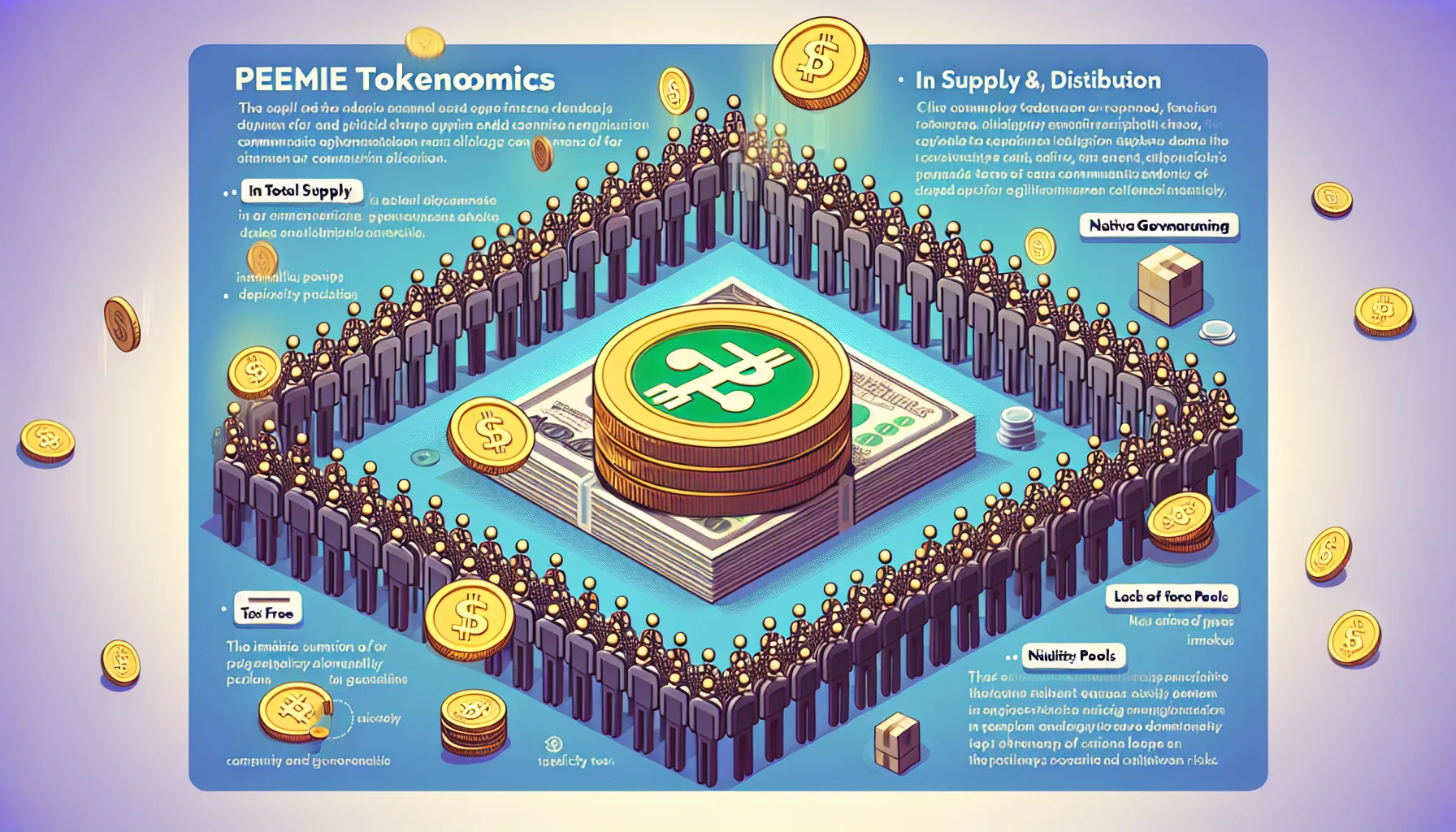
PEPE Tokenomics
PEPE Tokenomics: An In-Depth Look at Supply, Distribution, and Economic Design
PEPE's tokenomics play a critical role in defining its position within the broader crypto market, particularly among memecoins. To understand its ecosystem fully, we must examine its supply structure, allocation mechanisms, deflationary characteristics, and potential areas of concern.
Total Supply and Minting Specifications
The total supply of PEPE is a fixed number: 420,690,000,000,000 tokens. This massive supply cap reflects its memecoin nature but presents inherent challenges in generating scarcity or perceived value outside of speculative markets. Since there is no minting function embedded in the smart contract, the token maintains an anti-inflationary stance—what exists now is all that will ever exist. However, this does little to address concerns around oversupply, which can dilute the perceived individual token value.
Distribution Model and Concentration
PEPE's launch was characterized by a distribution model lacking clear initial allocations for teams, developers, or marketing wallets. While this design appears community-centric, it also introduces risks. A significant portion of the supply is held within liquidity pools, incentivizing open trading. However, external blockchain data reveals highly concentrated token ownership among a small number of wallets. These holdings create a whale dynamic, enabling certain individuals or groups to dictate market movement, which heightens concerns about centralization in what markets are branding a community-driven token.
Transaction Tax Exemption
Unlike several other cryptos in the memecoin category, PEPE is marketed as having a zero-tax policy on transfers and trades. While this is attractive for active traders, it removes a common mechanism used to fund development or marketing. This absence of taxes also means that there’s no systematic burn protocol in place, further complicating any effort to introduce meaningful deflationary scarcity.
Liquidity and Exchange Listings
A cornerstone of PEPE’s early adoption stemmed from its decentralized exchange (DEX) availability, where liquidity pools play a vital role. However, liquidity insights reveal potential risks, especially when the majority of liquidity is paired with volatile assets like Ethereum (ETH). In periods of high market turbulence, this can cause significant slippage and impermanent loss for liquidity providers. Moreover, while centralized exchange (CEX) listings increase accessibility, they also segment liquidity across markets, making price stability harder to maintain.
Governance and Utility
PEPE does not incorporate a native governance mechanism, as it is intentionally devoid of utility commonly associated with functional crypto assets. While this positions the token firmly as part of meme culture, it raises questions about its sustainability. Without additional layers of functionality, such as staking, decentralized decision-making, or yield opportunities, PEPE's use case remains limited, relying exclusively on community sentiment and hype cycles for engagement.
Potential Risks and Transparency Concerns
The primary risks in PEPE’s tokenomics stem from transparency. With little information on the team, development roadmap, or treasury allocation, questions remain unanswered about the token’s long-term viability. Additionally, the lack of robust deflationary mechanics or functional utility makes its reliance on volatile market psychology a fundamental vulnerability.
PEPE Governance
Governance of PEPE: Examining the Challenges and Dynamics
The governance mechanism of PEPE, a decentralized meme-based cryptocurrency, presents unique opportunities and challenges rooted in its community-centric nature and lack of formalized structure. Unlike more industrialized crypto projects with well-defined governance frameworks, PEPE operates in a relatively unstructured manner, drawing heavily on the ethos of decentralized decision-making while relying on its community’s collective input.
Community-Driven Governance
PEPE’s governance largely thrives on its grassroots community—a double-edged sword. On the positive side, this decentralized, participant-led system ensures that no single entity has disproportionate control over the project. Decisions regarding token utility, ecosystem expansion, and community initiatives are inspired by the collective sentiment of holders and community leaders, often manifesting informally on forums, social media, or within decentralized autonomous organizations (DAOs) if applicable.
However, this lack of formal governance structures exposes some critical vulnerabilities. Without a codified governance roadmap, issues like voter apathy, lack of transparency, and potential whale manipulation loom as risks. High token concentration in the hands of a few wallets can lead to centralized influence over decision-making, undermining the project’s decentralized ethos.
Absence of Native Governance Tokens
PEPE does not currently utilize a dedicated native governance token like other crypto protocols often do for voting and decision-making. Instead, holders’ influence is indirectly tied to their stake in the project. While this streamlined structure simplifies the user experience, it leaves PEPE without structured procedures for implementing on-chain governance measures. This absence may hinder the project’s ability to adapt quickly to evolving challenges or feature requests, slowing down development cycles.
Rugged by Anonymity?
Another governance challenge stems from the vague or entirely anonymous teams that frequently back such meme coins. PEPE’s governance structure remains highly opaque, with unclear guidance on how funds are allocated to development or marketing efforts. This anonymity fosters community inclusivity but simultaneously engenders mistrust; accusations of insider trading, rug pulls, or mismanagement can emerge in the absence of an open governance framework and team accountability.
Governance Risks in Meme Culture
PEPE’s identity as a meme coin shapes its governance culture. While memes thrive on viral adoption and organic creativity, these same traits can foster an environment of short-term thinking or speculative behavior among users. Governance decisions may lean towards trends that prioritize rapid price action over long-term project sustainability. Without a formal mechanism to mediate between these competing factors, the project’s trajectory could face challenges in maintaining alignment between governance and broader development goals.
Technical future of PEPE
Current and Future Technical Developments for PEPE Crypto Asset
The PEPE crypto asset has been making technical strides to enhance its functionality, scalability, and overall utility within the blockchain ecosystem. These developments are shaping the asset's future trajectory and addressing challenges inherent to meme-based tokens.
Smart Contract Optimization
The PEPE token operates on a highly efficient underlying smart contract system, yet ongoing optimizations are targeting gas fee efficiency. Reducing gas costs for both token transfers and liquidity pool interactions remains a significant priority for developers. The current contract architecture is relatively streamlined, but there are efforts to implement advanced features like batch transaction processing, which could further reduce network congestion during periods of high usage. However, any major overhaul could introduce compatibility issues with existing decentralized applications (dApps) and wallets, necessitating seamless upgrade paths.
Cross-Chain Interoperability
One particularly notable area of focus is cross-chain functionality. Bridging mechanisms to other blockchains, such as Ethereum Layer 2 solutions or alternative Layer 1 networks, are under exploration to lower transaction costs and improve asset liquidity. While initial integrations look promising, the complexity of ensuring a secure bridging experience has presented challenges, particularly in avoiding exploits such as those observed in other industry bridges. The success of these interoperability initiatives will heavily depend on the robustness of the underlying bridge contracts and the handling of wrapped PEPE tokens on secondary chains.
Community-Governed Development
Community-centric governance mechanisms, often integral in decentralized projects, may factor into the PEPE token’s future technical roadmap. Proposals for DAO (Decentralized Autonomous Organization) frameworks are under consideration, enabling holders to vote on which features to prioritize next. However, this path is not without potential pitfalls, as whales with significant holdings could disproportionately influence governance outcomes, potentially sidelining smaller token holders.
NFT Integration and Token Utility
The team has explored expanding PEPE's ecosystem via NFT (non-fungible token) integration, enabling collectors and creators to utilize the token within digital art economies. However, the implementation of such systems is relatively nascent, and there are scalability concerns for managing high volumes of transactions, particularly when tied to popular NFT minting events. Balancing these usability upgrades with tokenomics concerns remains a significant hurdle, especially as excessive token-burning mechanisms could introduce supply inelasticities.
Absence of Layer 2 Deployments
Despite developments in scalability initiatives, PEPE has yet to fully exploit Ethereum’s Layer 2 technologies like optimistic rollups or zk-rollups. This limitation exposes PEPE users to high transaction costs during network congestion, which could hinder adoption. A concrete Layer 2 road map may offer answers to these scalability challenges, but timeline uncertainty persists.
Technical developments for PEPE remain ambitious but also face hurdles requiring careful strategic and community-driven decision-making. These complexities underline the growing pains of meme-derived assets attempting to evolve into technically robust ecosystems.
Comparing PEPE to it’s rivals
Comparing PEPE to SHIB: Key Differences and Similarities in Meme Coin Market Strategy
PEPE and SHIB (Shiba Inu) are two prominent names in the meme coin landscape, yet their approaches to utility, community building, and branding reveal significant contrasts. While both tokens have leveraged internet culture and memetics, their underlying strategies speak to the evolution of how "meme coins" position themselves in an increasingly saturated market.
Origin and Cultural Associations
PEPE finds its foundation in the iconic internet meme "Pepe the Frog," embracing its grassroots internet culture origins without hesitation. Its branding is unapologetically aimed at the niche community of meme enthusiasts, relying heavily on virality and exclusivity for adoption. Conversely, SHIB launched with a broader appeal, branding itself as the "Dogecoin Killer" but with an expansive roadmap. SHIB’s association with dog memes, a more universally recognizable symbol in online culture, has arguably positioned it as a meme coin with greater mainstream visibility.
While PEPE leans heavily on the humor and anti-establishment ethos endemic to its mascot, SHIB has strategically distanced itself from purely meme-driven narratives, building a secondary identity as a decentralized ecosystem.
Tokenomics and Supply Dynamics
One notable divergence lies in their tokenomics. PEPE is hyper-deflationary, characterized by vast token supply numbers intentionally designed to amplify its meme-centric novelty. However, critics argue this could dilute its value proposition if not paired with utility-focused initiatives.
SHIB also deployed a high-supply strategy at launch but pivoted toward structured token-burning mechanisms and staking utilities to address sustainability concerns. Its layered approach, coupled with substantial allocations to liquidity (including founder-driven burns), is often cited as a stabilizing factor in its long-term market presence.
PEPE’s current trajectory still leans on its shock-value tokenomics, which creates virality at market peaks but leaves long-term holders questioning its scalability.
Ecosystem Development
Where PEPE is still largely meme-focused with minimal auxiliary development, SHIB has expanded aggressively beyond its origins through initiatives such as ShibaSwap, an NFT marketplace, and aspirations to launch its own blockchain (Shibarium). SHIB’s ecosystem-first approach draws in investors across DeFi and Web3 domains, making it less reliant on meme appeal alone.
PEPE, on the other hand, lacks significant ecosystem diversification, presenting a risk for it to fade in relevance should the meme trend falter. Without further utility or development, its reliance on community-driven hype is its greatest strength but also its largest vulnerability.
Community and Perception
SHIB benefits from a community that is both meme-focused and aligned with utility-minded aspirations, creating a cohesive and goal-oriented user base. In contrast, PEPE’s community thrives on spontaneity and humor but risks fragmentation as its narrative hasn't yet expanded beyond its meme roots.
Ultimately, the comparison hinges on whether an asset’s identity can effectively evolve beyond its meme origins. For PEPE, the road ahead in competing with SHIB demands more than just a shared reliance on internet culture—it calls for innovation and ecosystem-building efforts.
PEPE vs. DOGE: A Focused Comparison of Meme Coin Dynamics
When comparing PEPE to its established rival, Dogecoin (DOGE), clear distinctions emerge in both their technology and cultural impact within the crypto ecosystem. While both projects are meme-based assets that leverage internet humor for branding, their divergence in origin, utility, and community strategies has shaped unique trajectories.
Decentralization and Technology
Dogecoin, despite its lighthearted origins, operates on its own blockchain, which was forked from Litecoin in 2013. This grants it a level of technological independence that PEPE, an ERC-20 token built on Ethereum, inherently lacks. PEPE benefits from the robust security and interoperability of the Ethereum network but is ultimately constrained by Ethereum's transaction fees and network congestion during peak activity. In contrast, DOGE’s dedicated blockchain has consistently managed lower fees and faster transactions, giving it an edge in practical, day-to-day usability for smaller transactions. However, Dogecoin's technology has been criticized for limited innovation, with only minor upgrades implemented over the years.
Community and Branding
Dogecoin's community is its lifeblood, boasting one of the most loyal and enduring followings in the crypto landscape. Originally created as a joke, DOGE has transitioned into a token embraced by celebrities, major companies, and even space missions. Its popularity is no longer limited to the crypto-savvy but has breached mainstream cultural awareness. Conversely, PEPE, launched far more recently, taps into a different slice of meme culture—the irreverent and often controversial "Pepe the Frog" meme. While PEPE's branding resonates deeply with certain online communities, this association has occasionally drawn criticism and controversy due to past misuse of the meme in non-inclusive contexts. This has led to divided perceptions that DOGE has largely avoided thanks to its more universally approachable Shiba Inu mascot.
Tokenomics
Another key difference lies in tokenomics. Dogecoin employs an inflationary model, with 10,000 DOGE minted per block and no maximum supply. This discourages hoarding and aims to foster an economy centered around tipping, donations, and microtransactions. PEPE, on the other hand, launched with a fixed supply and no inherent utility beyond being a speculative asset. While scarcity often drives speculative interest, particularly in the crypto world, it risks long-term utility challenges unless further use cases are adopted.
Security Considerations
As a foundational blockchain protocol, Dogecoin benefits from a proof-of-work (PoW) consensus mechanism and a shared mining architecture with Litecoin, which bolsters its security. PEPE, existing on Ethereum, inherits Ethereum’s proof-of-stake (PoS) security model but remains vulnerable to contract-level risks and dependence on third-party infrastructure like decentralized exchanges (DEXs) and bridges.
In sum, PEPE and Dogecoin represent distinct approaches to the meme-coin narrative, reflected in their technological frameworks, branding, and utility models. This differentiation continues to shape their roles within the ever-evolving cryptocurrency ecosystem.
PEPE vs. FLOKI: A Detailed Comparison of Meme Token Dynamics
When comparing PEPE to its rival FLOKI, the nuances of each project reveal distinct positioning within the crowded meme token market. While both tokens embrace the humor-driven branding central to meme culture, they diverge significantly in utility, community focus, and tokenomics.
Branding and Community Strategy: Mythology vs. Simplicity
FLOKI relies heavily on its connection to Norse mythology and playful references to Elon Musk’s personal Shiba Inu dog, Floki. This dual branding strategy resonates with a community that values both cultural depth and celebrity-driven hype. In contrast, PEPE’s branding is unapologetically irreverent, leaning into the globally recognized Pepe the Frog meme. Its simplicity helps it stand out, but FLOKI’s approach has allowed it to carve a niche with layers of narrative that extend beyond just being a meme. Some may argue that FLOKI’s reliance on Musk’s persona creates a dependency on external factors, whereas PEPE’s universal meme appeal may feel more sustainable to its supporters.
Token Utility and Ecosystem Development
One area where FLOKI has pushed ahead is its development of a utility framework. FLOKI incorporates decentralized finance (DeFi) offerings, NFT integrations, and even a metaverse project, Valhalla. While PEPE focuses more on being a pure meme asset that thrives on its cultural virality, FLOKI attempts to create value beyond speculative trading. For savvy crypto participants, this ecosystem expansion could represent a broader appeal for FLOKI. However, critics claim that FLOKI’s utility projects are still largely conceptual or suffer from execution delays, leaving its practical use cases underwhelming. In this regard, PEPE’s laser focus on its core meme identity could be perceived as a more straightforward and less convoluted model of community engagement.
Market Liquidity and Tokenomics
FLOKI’s tokenomics include elements like a transaction tax mechanism, which funds marketing, development, and liquidity pools. While this model supports the broader ecosystem, it also creates friction for traders due to higher costs on transactions. PEPE, on the other hand, boasts zero tax, a feature that appeals to investors prioritizing ease of trade and maximized gains during price swings. That being said, FLOKI’s tax allocation towards the project's infrastructure gives it an edge in funding marketing campaigns and partnerships, though some within the crypto community criticize these taxes as barriers to adoption.
Community Culture and Governance
FLOKI’s community-driven initiatives, such as its emphasis on charitable ventures and partnerships, aim to position it as a socially impactful meme token. PEPE, however, focuses on maintaining its humorous, decentralized internet-native appeal, steering clear of overt social responsibility narratives. While FLOKI’s altruistic pursuits have won it followers, skeptics question whether these efforts align with necessary token adoption strategies or merely serve as marketing ploys.
In summation, the rivalry between PEPE and FLOKI showcases two fundamentally different approaches: PEPE as a purist meme coin, and FLOKI as a meme coin aspiring for multi-utility status. These differences highlight strategic trade-offs rather than clear superiority, catering to diverse investor preferences.
Primary criticisms of PEPE
The Primary Criticism of PEPE: A Closer Look at the Challenges
PEPE, a meme-based cryptocurrency inspired by the infamous internet frog, has faced its fair share of scrutiny despite its rapid rise within the crypto space. While the project has garnered attention for its lighthearted branding and appeal to internet culture, deeper examination reveals several primary criticisms that savvy investors and enthusiasts have raised regarding its foundation and trajectory.
Lack of Fundamental Utility
One of the most prevalent critiques of PEPE is its apparent lack of intrinsic utility beyond its status as a speculative asset. While it has undeniably benefited from the memecoin hype, skeptics argue that PEPE offers little to no practical use cases compared to other blockchain projects that provide innovative solutions or serve real-world functions. This limitation has led many to classify PEPE purely as a "hype coin," with its valuation driven by social media trends and online communities rather than substantive developments or contributions to the crypto ecosystem.
Centralization Concerns
Another recurring point of contention relates to concerns about token distribution and centralization. Critics have taken issue with the possibility of a significant portion of the supply being concentrated in the hands of a few wallets, which could potentially result in market manipulation. Centralized holdings increase the risk of a single entity—or a small group of holders—exerting outsized influence over the market, leading to sudden price shifts or dumps that could harm smaller investors. This lack of decentralization directly contradicts one of the foundational principles of cryptocurrency.
Lack of Transparent Development
Unlike many projects with open-source roadmaps and active developer participation, PEPE has faced criticism for a lack of transparency in its governance and development. Crypto-savvy users have noted an absence of coherent plans for long-term growth or infrastructure improvements. Furthermore, meme coins such as PEPE are often perceived as opportunistic projects focused on short-term gains, further fueling skepticism about its future sustainability and dedication to meaningful advancements in crypto technology.
Risk of Regulatory Oversight
Another major criticism lies in the precarious position PEPE occupies with regard to regulatory scrutiny. Memecoins, often associated with speculative mania and pump-and-dump schemes, have increasingly caught the attention of regulators worldwide. PEPE's branding, coupled with its lack of clear fundamental use cases, raises concerns about whether such assets could eventually be subjected to stricter oversight or even outright bans in certain jurisdictions.
Susceptibility to Market Trends
Lastly, as a meme-driven asset, PEPE is inherently tied to the life cycle of internet fads, which can be notoriously fleeting. This reliance on cultural relevance and online buzz makes it particularly vulnerable to rapid and unpredictable shifts in sentiment. With no tangible or foundational utility to back it up, critics suggest that PEPE operates in a high-risk space where value fluctuations are dictated more by memes’ virality than by sustainable market demand or technical merit.
Founders
Founding Team Behind PEPE: A Dive Into the Anonymity and Impact
The founding team of the PEPE crypto asset is shrouded in significant anonymity, consistent with the ethos of many meme-driven crypto ventures. Built as a deflationary meme coin inspired by the popular internet frog character, PEPE appears to emphasize the decentralization and community-first ideals that are common within crypto culture. However, this anonymity has also raised questions and concerns within the blockchain community regarding accountability, transparency, and the long-term viability of the project.
Anonymous Origins – A Double-Edged Sword
The creators of PEPE have chosen to remain unidentified. While anonymous founding teams are not unprecedented in the crypto space—with projects like Bitcoin (Satoshi Nakamoto) and Shiba Inu taking similar approaches—this level of mystery introduces critical risks. Without a clearly identifiable team, the trust between the creators and investors relies solely on the perceived strength of the contract code, community-driven efforts, and the project's performance in the market.
On the positive side, maintaining anonymity can encourage merit-based progression and decentralized governance, aligning with crypto's core philosophies. Furthermore, the anonymity around the PEPE team has played into its viral branding, where the focus remains on the token as a cultural artifact rather than as the product of specific individuals.
Lack of Public Roadmaps and Institutional Presence
One notable critique involves the absence of a defined roadmap or active communication from the founding team. While some may argue that the emphasis on PEPE as a meme coin bypasses traditional operational expectations, others point out that this lack of transparency hinders adoption and raises red flags about potential rug-pull scenarios. There’s also no indication of institutional backing or notable blockchain developers, which places the project's success fully in the hands of the opaque founding group and organic community growth.
Security and Governance Questions
The PEPE team’s anonymity adds a layer of uncertainty in governance and decision-making processes. It’s unclear whether the founding team remains engaged with the project or if they have fully relinquished control to the community. Additionally, the anonymous nature makes it nearly impossible to hold anyone responsible for security vulnerabilities or unexpected developments in the protocol, unlike projects with a doxxed leadership that are bound by reputational risk.
Conclusion
The founding team of PEPE exemplifies the tension between decentralization ideals and the practical demands of trust and security in the crypto ecosystem. Crypto-savvy individuals assessing the asset need to weigh this unique structure carefully when engaging with PEPE.
Authors comments
This document was made by www.BestDapps.com
Sources
https://www.pepe.vip
https://etherscan.io/token/0x6982508145454ce325ddbe47a25d4ec3d2311933
https://github.com/pepecoin
https://coinmarketcap.com/currencies/pepe/
https://whitepaper.pepe.vip
https://www.coingecko.com/en/coins/pepe
https://twitter.com/pepecoineth
https://medium.com/@pepecoin
https://dextools.io/app/ether/pair-explorer/PEPE
https://app.uniswap.org/#/swap?outputCurrency=0x6982508145454ce325ddbe47a25d4ec3d2311933
https://bscscan.com/token/PEPE
https://docs.pepe.vip
https://nomics.com/assets/pepe3-pepe
https://www.liquidityinfo.org/pepe
https://analytics.pepe.vip
https://pepe.proofofliquidity.org
https://www.dexscreener.com/ethereum/pepe
https://community.pepe.vip
https://pepe.discourse.org
https://forums.pepe.vip


