History of ORN
The History of ORN: Origins, Development, and Challenges
Orion Protocol’s native token, ORN, emerged from a vision to address one of the most pressing issues in the cryptocurrency ecosystem: fragmented liquidity. The project was officially introduced in 2020 with the aim of developing a decentralized gateway that aggregates liquidity from centralized and decentralized exchanges, as well as from swap pools. This innovation was rooted in the team’s ambition to create an all-in-one platform where traders and investors could seamlessly access the best prices across fragmented markets without needing multiple accounts or needing to trust centralized intermediaries.
The ORN token itself was designed to power the Orion ecosystem, offering a wide array of use cases. Early whitepaper discussions highlighted its role in staking for liquidity provision, reduced fees for integrations, and governance functionality within the protocol. By incorporating these features, the developers intended for ORN to be pivotal in building a decentralized financial product suite. Its deflationary tokenomics were also a significant aspect of its launch; mechanisms such as transaction-based token burns and dynamic supply adjustments were designed to sustain long-term scarcity.
However, the road to ORN’s adoption was not without challenges. One of the earliest issues the project encountered was skepticism regarding whether they could actually deliver on their promise of a non-custodial liquidity aggregator. Building a trustless bridge between CEXs and DEXs came with obvious technical hurdles, particularly in maintaining seamless API integrations and addressing latency issues.
Another noticeable issue in ORN's history was its reliance on partnerships with centralized exchanges early in its lifecycle. While such relationships were necessary to fulfill the protocol’s vision of aggregating liquidity across markets, it opened the platform to criticism. Detractors argued that the heavy reliance on centralized projects undermined Orion's promise of decentralization.
Security has also been a recurring discussion point in the history of ORN. An earlier contract audit flagged potential vulnerabilities, which the team had to address to mitigate the risk of exploits. Additionally, the complex on-chain mechanisms used for staking and liquidity provisioning initially required fine-tuning, delaying some deliverables to the community.
Despite these hurdles, ORN's history demonstrates the persistent effort to build a protocol tailored to the demands of seasoned traders, institutions, and decentralized finance enthusiasts.
How ORN Works
How ORN Works: The Mechanics Behind Orion Protocol's Core Asset
Orion Protocol's native token, ORN, underpins the functionality of its decentralized aggregation service, aiming to bridge fragmented crypto liquidity. At its core, ORN serves multiple purposes within the protocol, enhancing both utility and user experience for traders, stakers, and liquidity providers.
Liquidity Aggregation
ORN powers the Orion Liquidity Aggregator, a tool designed to consolidate liquidity from centralized exchanges (CEXs), decentralized exchanges (DEXs), and swap pools into a single platform. Unlike other solutions, which often require traders to maintain accounts on multiple platforms, the protocol eliminates this need. However, the backend reliance on external APIs for CEXs could pose a centralization risk, as interruptions or throttling on exchange connections may impact the aggregator’s efficiency.
Fee Discount Model and Utility
One of ORN’s primary use cases is reducing fees across the protocol. Users who hold and stake ORN can receive transaction fee discounts, creating an incentive for token adoption. Moreover, the protocol employs a dynamic fee model that adjusts depending on trading volume and network activity. While this offers scalability, the dependency on sustained ORN liquidity raises concerns during market downturns or periods of reduced user activity.
Non-Inflationary Staking Mechanism
ORN is notable for its non-inflationary staking design, avoiding the dilution of token supply. Staking rewards are derived from protocol revenue rather than additional token issuance, aligning its functionality with deflationary principles. However, this model is only sustainable with consistent protocol usage and growing trading volumes. A downturn in adoption or stagnating integration of additional liquidity sources could impair the staking rewards mechanism over time.
Decentralized Brokerage System
ORN supports Orion’s decentralized brokerage system, which enables anyone to operate as a broker by staking ORN and running nodes. Brokers fulfill trades on behalf of users by connecting to liquidity sources, earning a share of protocol fees. While this architecture decentralizes trade execution, it also introduces a barrier: operating a broker node requires significant technical expertise and resources, which may limit participation to well-funded or technologically advanced entities.
Smart Contract Security and Risks
ORN functions through smart contracts deployed on multiple blockchain networks, including Ethereum and Binance Smart Chain, broadening its access for traders. Despite audits and security measures, like most DeFi projects, Orion Protocol is not immune to vulnerabilities. A single smart contract exploit could undermine the integrity of the system, leading to potential loss of funds or trust among users. This reliance on automated, autonomous contract execution introduces risk elements inherent to decentralized services.
ORN’s success is ultimately intertwined with the adoption and growth of Orion Protocol’s ecosystem. Several operational and security concerns warrant consideration, illustrating that while ORN is integral to the platform, its efficacy depends heavily on dynamic market conditions and user engagement.
Use Cases
ORN Use Cases: Exploring the Versatility of the Orion Protocol
ORN functions as the utility token powering the Orion Protocol, a platform designed to tackle fragmentation in the crypto trading and liquidity landscape. Its primary use cases are embedded within the ecosystem, targeting traders, liquidity providers, developers, and even businesses. Here, we’ll explore ORN’s functionalities and the potential friction points surrounding its usage.
1. Unified Access to Liquidity
One of ORN's most noteworthy use cases is unlocking access to the aggregated liquidity of centralized exchanges (CEXs), decentralized exchanges (DEXs), and swap pools via the Orion Terminal. By holding and staking ORN, traders can take advantage of lower fees or, in some instances, entirely avoid fee structures tied to intermediaries. This use case appeals to advanced users but assumes seamless API integrations and exchange partnerships. A key issue is dependence on whether these partner exchanges maintain stability and collaboration, which aren’t guaranteed in a competitive market.
2. Staking and DeFi Applications
ORN enables participation in Orion's Delegated Proof of Broker (DPoB) model. Token holders can stake ORN directly or via Orion Pool, earning rewards or collateralizing decentralized brokerage services. While this incentivizes liquidity contributions and aligns stakeholder interests, the complexity of the DPoB staking mechanism limits its accessibility to non-technical users. Additionally, staking yields are influenced by underlying market activity, meaning returns can be unpredictable—a risk for those seeking consistent rewards.
3. Payment for Orion's Fee Model
ORN is the default payment method for performing actions on the Orion Protocol. Users can pay for advanced functionalities such as algorithmic trading executions, portfolio management through Orion Portfolio, and API call limits using ORN. This positions ORN as an essential asset for users engaging heavily with the ecosystem. However, having a single token dominate fee payments introduces volatility risks for users during periods where ORN's value fluctuates significantly. This might deter some from fully adopting its range of services.
4. B2B Integrations
ORN targets broader adoption through business integrations, where companies pay for Orion’s liquidity solutions. By embedding liquidity sourcing functionality into their own platforms, businesses can enhance financial operations such as cross-platform settlements or crypto-to-fiat on/off ramps. Yet, B2B adoption relies on how scalable and adaptable Orion’s API infrastructure remains as demands grow, which could become a bottleneck.
5. Governance Potentials
While not the primary focus, ORN has governance aspirations, enabling token holders to vote on protocol decisions. This could drive decentralization forward, but no clear, fully-deployed governance framework currently exists. Without robust execution, governance risks being seen as mere token utility ‘window dressing,’ reducing user engagement in decision-making.
ORN’s use cases are substantial, bridging the gaps in liquidity access while rewarding active participation within the ecosystem. However, issues such as reliance on ecosystem health, staking complexity, and adoption scalability remain pressing considerations for stakeholders.
ORN Tokenomics
ORN Tokenomics: An In-Depth Look at Supply, Utility, and Distribution
Orion Protocol’s native token, ORN, is integral to the project’s design and functionality. Its tokenomics model is structured to align network incentives while driving ecosystem engagement. However, like any crypto asset, ORN’s tokenomics presents both opportunities and challenges.
Fixed Supply and Deflationary Design
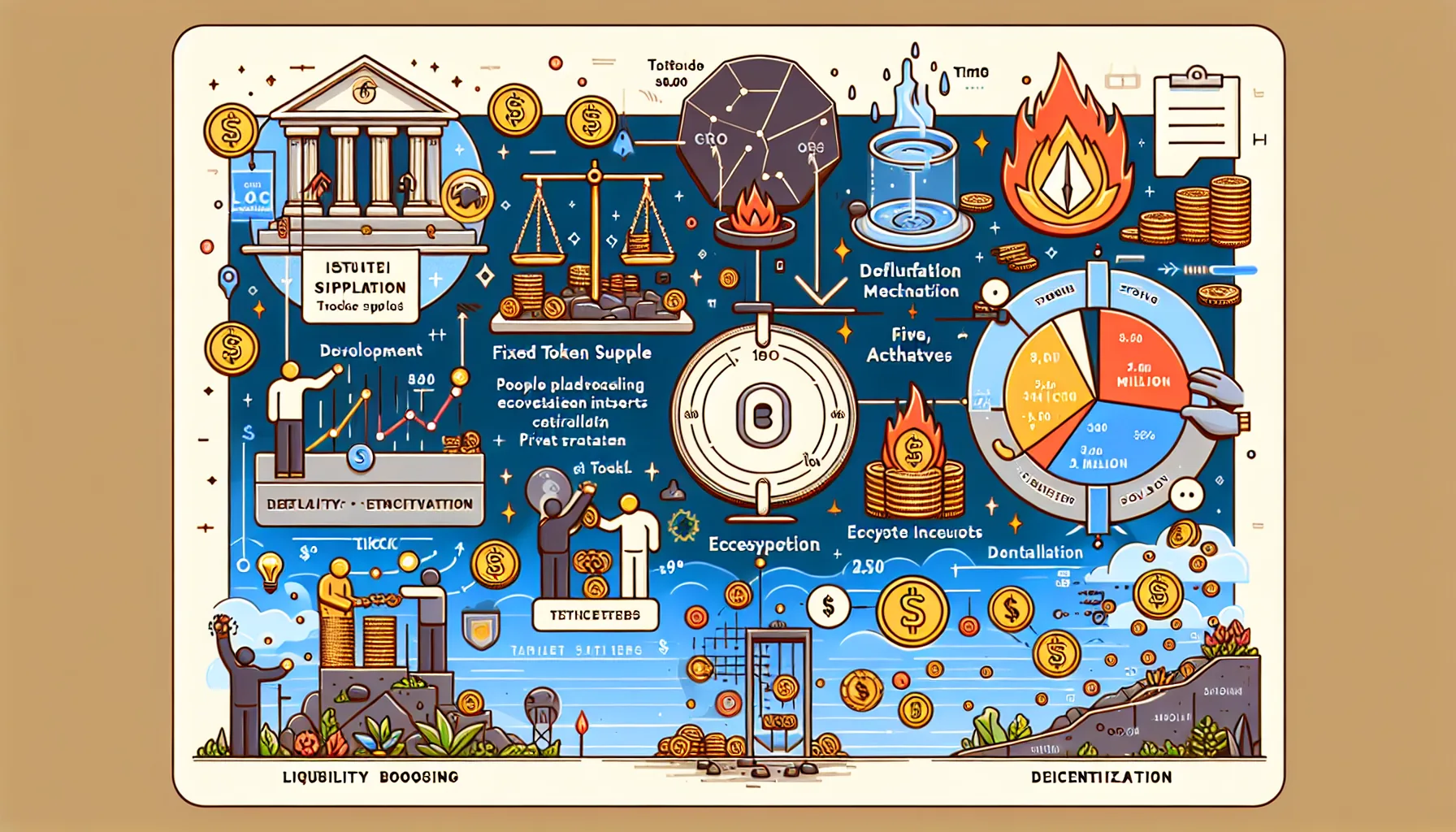
ORN operates on a fixed total supply, which is capped at 100 million tokens. The protocol employs deflationary mechanisms such as token burns, particularly through the Dynamic Token Offering (DYCO) and subsequent buybacks. During the DYCO phase, unsold and refunded tokens were burned, ensuring no inflationary dilution from unsold assets. Additionally, portions of revenue generated by Orion Protocol’s services are allocated to buying ORN off the market to further reduce circulating supply.
While these deflationary mechanisms add long-term scarcity and value accrual dynamics, token buybacks are often contingent on sustained revenue streams. Any slowdown in protocol revenue could hamper the effectiveness of these deflationary effects.
Staking Utility and Governance
ORN is heavily utilized within the protocol’s staking framework. Token holders can participate in Orion Staking to secure rewards, typically earning staking incentives from fees generated within the ecosystem. An essential component of ORN staking is its role in operationalizing the Delegated Proof of Broker (DPoB) consensus model. Brokers stake ORN tokens to gain priority in fulfilling trades routed through Orion Protocol, creating additional demand pressure for the token.
However, this staking model requires careful balancing to prevent centralization. Brokers acquiring and locking up significant amounts of ORN could pose risks to network decentralization and monopolize trading activities.
Liquidity Boosting and Fee Reduction
ORN token holders benefit from discounted fees when using the protocol’s suite of products, which includes the Orion Terminal and related DeFi solutions. ORN is also utilized through liquidity boosting pools, where users deposit the token to deepen liquidity while earning proportional rewards.
That said, high reliance on token-based incentivization raises sustainability concerns. Should the incentives falter or diminish, it may lead to outflows from liquidity pools, reducing trading depth and impacting usability.
Token Allocation and Vesting
ORN’s initial token allocation was split among development, ecosystem incentives, and private sale investors. While the private sale allocations carried strict vesting schedules, a substantial portion of the tokens were reserved for the team and long-term development. Large token holdings by insiders or certain key participants raise the specter of potential centralization risk or significant market impact if sold. Investors need to monitor wallet activity belonging to core team members and early backers.
ORN’s tokenomics framework is undeniably robust, but it is not devoid of complexities or risks. Understanding these dynamics is essential for deep evaluation of the token’s role within Orion Protocol.
ORN Governance
Governance and ORN: The Layered Decision-Making Mechanisms of Orion Protocol
Governance within the Orion Protocol (ORN) ecosystem plays a pivotal role in shaping the operation, development, and resource allocation of this dynamic DeFi platform. Unlike traditional blockchain protocols that may rely on simple token-weighted voting, ORN’s governance framework establishes a complex balancing act between decentralization and strategic oversight—though not without its challenges.
At the heart of the ORN governance model lies the Orion Voting and Staking Mechanism (OSM). Stakers who lock ORN tokens on the protocol gain governance privileges. This system empowers token holders to propose and vote on updates to the protocol's architecture, fee structures, or the prioritization of integrations. However, such voting capabilities are proportionate to each participant's holdings. This creates a familiar concern within token-governed ecosystems: namely, the concentration of influence among large stakeholders or whales. While this dynamic bolsters decisive voting outcomes, it risks sidelining smaller contributors, potentially reducing overall community diversity.
The fee redistribution model of ORN introduces another governance aspect that intertwines operational efficiency with stakeholder alignment. A portion of fees collected from trading, liquidity provision, or other platform utilities is distributed to ORN token stakers. While this incentivizes active participation, decisions concerning the percentage of redistribution and the recipients are highly sensitive to governance vote outcomes. Disputes within the community often arise around the equitable division of rewards—a symptom of diverging priorities between small and large ORN holders.
Additionally, Orion’s emphasis on off-chain and hybrid decentralized order routing necessitates a more centralized operational layer compared to purely on-chain protocols. This structural choice impacts governance discussions, as token holders frequently debate the trade-off between maintaining some degree of trusted control versus ensuring maximal decentralization. Critics argue that this centralization risk ties governance discussions to core team actions, raising concerns about undue authority resting with early protocol developers or existing centralized institutions working with Orion.
Although participation in ORN’s governance has been simplified through the use of staking-as-a-vote protocols, voter turnout remains an issue. Many token holders prefer passive rewards from staking over actively shaping the future of Orion. This voter apathy poses an existential challenge if critical proposals fail due to insufficient quorum.
In its current implementation, ORN governance must navigate inherent tensions: decentralization versus efficiency, equity versus centralization of power, and active versus passive stakeholder participation. These debates not only define the protocol today but will influence its trajectory as Orion attempts to solidify its role in the DeFi space.
Technical future of ORN
Current and Future Technical Developments of ORN: Advancing the Orion Protocol
Orion Protocol (ORN) is fundamentally underpinned by its commitment to aggregating liquidity across centralized, decentralized, and swap exchanges, a bold technical ambition that directly informs its ongoing and future developmental efforts. From an infrastructure standpoint, ORN’s core innovation lies in its proprietary liquidity aggregator, which bridges fragmented liquidity sources to create a centralized interface for users. The technical roadmap and development strategy continue to revolve around refining this aggregator while expanding its ecosystem compatibility and operational efficiency.
Enhanced Liquidity Pool Mechanics
A key focus on the ORN technical roadmap is the continual refinement of liquidity aggregation processes. The platform's ability to route transactions across numerous exchanges without requiring users to deposit funds into separate wallets adds a layer of decentralization to liquidity access. However, technical challenges persist, especially in the area of maintaining slippage optimization and further improving transaction throughput during volatile market conditions. Future efforts are expected to address increased load-handling capabilities and implement more advanced algorithms for dynamic routing that promise reduced latency and improved trade execution speeds.
Broker Network Optimization
ORN's reliance on its decentralized broker network remains central to achieving its low-latency, high-efficiency order execution. Current developments include upgrades to the protocol's staking mechanism tied to broker functionality, where participants staking ORN tokens can gain eligibility to become brokers. A recurring critique involves the complexity and barrier to entry for becoming a broker, which is currently limited to highly resource-intensive actors. On the roadmap are planned optimizations aimed at democratizing broker participation while maintaining system integrity, potentially through reduced staking requirements or alternative incentivization models.
Smart Contract Innovations and Security
ORN has been gradually shifting towards the integration of smart contract upgrades designed for higher composability with other DeFi ecosystems. However, concerns around contract security have been an ongoing point of community attention, particularly given the rising sophistication of exploits within cross-chain protocols. ORN developers have allocated resources to security audits and ongoing bounty programs to identify vulnerabilities, with promises of modular smart contract architecture changes to allow for quicker fixes and upgrades.
Multi-Chain Expansion
Another priority involves ORN's expansion across additional blockchain ecosystems. Presently functional on Ethereum and Binance Smart Chain, their roadmap includes interoperability with other major networks like Solana and Polkadot. While this could significantly improve the protocol's market presence, the technical challenges of cross-chain integrations—especially maintaining performance consistency—remain significant hurdles.
With advancements targeting core operational facets like liquidity aggregation, broker accessibility, security, and chain compatibility, ORN’s future developments are ambitious but not without their risks and challenges.
Comparing ORN to it’s rivals
ORN vs. SRM: A Detailed Comparison of Features and Use Cases
When comparing Orion Protocol (ORN) to Serum (SRM), both projects command distinct positions in the decentralized finance ecosystem but approach the market with fundamentally different ideas. While ORN focuses on delivering a decentralized gateway for liquidity aggregation, SRM positions itself as a high-performance DEX protocol with cross-chain optimizations powered by Solana's infrastructure. Their divergence in architecture and purpose underpins their respective strengths and weaknesses.
Liquidity Aggregation vs. Order Book Model
ORN’s core strength lies in its innovative liquidity aggregator, which unifies order books and liquidity pools from centralized and decentralized exchanges into one seamless platform. This universal access allows users to find optimal trading pairs without the need to silo their activity on specific exchanges. SRM, by contrast, follows a traditional central limit order book (CLOB) model that prioritizes speed and precision, leveraging Solana's sub-second transaction finality. However, SRM’s reliance on Solana introduces risks tied to network performance or potential centralization concerns within its validator network.
For traders prioritizing low slippage and diverse liquidity sources, ORN’s aggregation infrastructure provides an edge, especially in thinly traded asset pairs. On the other hand, SRM’s CLOB caters to high-frequency traders who require deterministic execution and a latency-sensitive environment.
Ecosystem Integration and Development Approach
ORN operates as a chain-agnostic protocol, connecting to several blockchains and exchanges, which positions it to capitalize on the broader DeFi ecosystem. SRM, while performant, predominantly revolves around Solana’s ecosystem, which may limit accessibility for users reliant on Ethereum or other dominant chains. This focus benefits Solana enthusiasts but may alienate others seeking cross-chain compatibility without bridging.
On development decentralization, ORN’s decision to implement proprietary liquidity solutions such as the “Brokernetwork” enables unique capabilities but raises questions around long-term decentralization and resilience. SRM, despite integrating with Solana, has faced criticism for having concentrated governance, with limited community-driven decisions early in its lifecycle.
Infrastructure Limitations
ORN’s dependence on multiple exchanges for liquidity aggregation introduces challenges. While it maximizes route efficiency, it creates dependency on the uptime and liquidity health of its integrated partners. Any issues with these exchanges, such as withdrawal freezes or reduced liquidity, could impair ORN’s usability. SRM, on the other hand, remains tightly coupled with Solana's performance, which has experienced intermittent periods of downtime and network congestion. Both protocols face substantial hurdles in ensuring trustless, uninterrupted performance.
Fee Structures and Token Utility
ORN uses a dynamic fee model, allowing platform users to pay reduced fees using its native token. Fees are auto-converted based on the asset used, which offers flexibility but complicates fee prediction. SRM’s fee discount model is more straightforward, granting holders tiered reductions based on token staked. However, SRM’s functionality is heavily tied to the Serum ecosystem, while ORN’s broader integrations make its utility more versatile across platforms.
In essence, ORN and SRM cater to vastly different audiences and trading needs, with each offering unique trade-offs in efficiency, accessibility, and network dependency.
ORN vs. FET: A Deep Dive into Ecosystem and Use Case Differences
When comparing Orion Protocol (ORN) to Fetch.ai (FET), distinct contrasts emerge in their underlying architectures, primary use cases, and target audiences, even though both tokens occupy innovative niches in the blockchain space. While both projects focus on solving inefficiencies and fostering automation, their strategies differ significantly.
Core Focus and Ecosystem Design
ORN’s main proposition lies in its ambition to aggregate liquidity across centralized and decentralized exchanges through its decentralized brokerage platform. By addressing fragmentation in trade execution and promoting interoperability across trading venues, ORN places liquidity and seamless trading experiences at the center of its value.
In contrast, Fetch.ai focuses on decentralized machine learning and artificial intelligence. The Fetch.ai network is designed to host autonomous economic agents (AEAs)—intelligent software agents capable of executing tasks such as price prediction, optimizing supply chains, or coordinating decentralized data marketplaces. While ORN seeks to dominate trading ecosystems, FET prioritizes AI-driven automation and optimization in wider application areas like transportation, energy, and the Internet of Things (IoT).
Technical Architecture Differences
ORN primarily utilizes Orion's proprietary matching engine to aggregate trading options, interact with liquidity pools, and seamlessly execute transactions. Fetch.ai, however, integrates a multi-agent framework with AI-based decision-making, supported by a unique consensus mechanism built on directed acyclic graph (DAG) technology. This approach enables highly scalable operation for its AI models and autonomous agents, but it can create usability bottlenecks for developers unfamiliar with multi-agent systems.
Utility and Adoption Challenges
ORN's utility token powers transactions on its platform via staking, governance, and access to liquidity. While the staking mechanism incentivizes long-term holding, critics point to scalability concerns when modeling broader adoption within high-frequency trading scenarios. Moreover, the reliance on external exchanges for liquidity access introduces counterparty risks, which some DeFi maximalists see as limiting its "fully decentralized" ethos.
FET's trajectory is similarly constrained by technical challenges, particularly in user accessibility and network adoption. Its high dependence on specialized AI and machine learning tools can alienate a portion of the developer community, who may perceive it as overly complex. Additionally, the platform's AI focus exposes it to criticism related to ethical concerns and uncertainty about how decentralized AI should be governed.
Market Alignment
ORN and FET ultimately appeal to distinct sectors. ORN speaks to traders and financial institutions looking for liquidity efficiency, while FET beckons developers and organizations pushing the envelope of AI and automation in blockchain. The trade-off between simplicity and complexity remains a stark point of differentiation between the two assets.
ORN vs INJ: A Deep Dive into Competitive Dynamics
When analyzing Orion Protocol's ORN in comparison to Injective Protocol's INJ, a common thread between the two lies in their focus on enhancing the efficiency and decentralization of financial markets. However, their approaches, underlying technology, and target use cases diverge significantly, exposing unique strengths and weaknesses for both assets.
Technology and Market Approach
ORN distinguishes itself through its proprietary decentralized liquidity aggregator, which seamlessly pulls order-book liquidity from both centralized and decentralized exchanges. INJ, on the other hand, utilizes a layer-2 protocol specifically designed for decentralized finance (DeFi) applications, leveraging the Cosmos SDK and Tendermint. This layer-2 approach allows INJ to offer low-latency and high-throughput trading, particularly beneficial for derivatives trading, spot markets, and other high-frequency financial instruments.
While ORN prides itself on achieving decentralized liquidity directly across platforms, INJ emphasizes customization for DeFi app developers. INJ's ability to integrate custom dApps on its ecosystem gives it an edge for projects seeking tailored solutions. ORN, in contrast, operates as a more generalized liquidity bridge, which, while broad in scope, may lack the niche utilities that INJ’s modular infrastructure offers.
Use Case Breadth
ORN’s versatility allows it to operate across multiple asset classes—cryptocurrencies, staking derivatives, NFTs—positioning itself as an all-encompassing DeFi solution. INJ, by contrast, has a narrower primary focus: redefining derivatives and synthetic asset trading with its decentralized order book model. This specificity benefits INJ within its niche, but also limits its general appeal outside derivatives-focused markets.
That said, INJ’s highly composable environment creates opportunities for interoperability across various Cosmos-based blockchains, facilitating a connected ecosystem. ORN’s cross-chain capabilities, while robust, often depend on external APIs and integrations that could introduce bottlenecks or reliability issues across certain bridge implementations.
Tokenomics and Incentives
Both projects employ deflationary mechanisms, but INJ implements a particularly aggressive token-burning model. By burning trading fees, INJ continuously reduces its circulating supply proportional to ecosystem activity. While this strategy rewards long-term holders of INJ, it risks alienating smaller participants due to comparatively higher transaction costs. Conversely, ORN’s staking and utility mechanisms, while simpler, may lack the dynamic adaptability needed to incentivize participation in a fast-evolving DeFi space.
Development Ecosystem
ORN’s roadmap highlights its ambition to create a universal hub of liquidity. But this broad ambition leads to slower, more complex development cycles as it works to support a wide variety of integrations. INJ’s modularity, while more adaptable, risks over-segmentation of its ecosystem, potentially fragmenting developer efforts amidst an already competitive DeFi development landscape.
By juxtaposing ORN’s overarching liquidity focus with INJ’s derivatives-first specialization, it becomes clear that their paths, while parallel in some respects, are shaped by fundamentally different philosophies of how DeFi should evolve.
Primary criticisms of ORN
Primary Criticism of ORN: Evaluating Orion Protocol’s Key Weaknesses
Centralization Concerns in a DEX-Oriented Ecosystem
Despite branding itself as a decentralized gateway for liquidity aggregation, ORN has drawn criticism for elements of its architecture that lean towards centralization. The Orion Protocol relies heavily on its Broker model, where Brokers execute trades on the backend using proprietary staking-based systems. Critics argue that this setup centralizes significant power into the hands of those Brokers who meet the high staking requirements, potentially creating a gatekeeping dynamic. This model has raised questions about whether the protocol can truly uphold the decentralization ethos foundational to the crypto space. Furthermore, dependency on such a model could expose the system to censorship and regulatory targeting, as Brokers essentially serve as an intermediary, blurring the lines between decentralization and centralized control.
Liquidity Fragmentation and Scaling Limitations
Ironically, while ORN seeks to solve the issue of liquidity fragmentation, the protocol itself may inadvertently exacerbate the problem, particularly when scaling across new blockchains or niche trading pools. The success of its aggregated liquidity depends on Broker participation, and if key participants opt out or lack sufficient incentives, the pooling mechanism risks inefficiency. This cascading effect could reduce the reliability of order execution and result in off-chain slippage or increased latency. In extreme cases, users needing immediate liquidity might find themselves limited by the narrow utility of certain trading pairs—or outperformed by more established, chain-specific aggregators.
Tokenomics and Inflationary Pressure Risks
ORN’s token economics have also faced scrutiny, especially surrounding the dual incentives system for staking and Broker collateralization. While token utility is designed to sustain the ecosystem, some argue that reliance on staking rewards could lead to inflationary pressure over time, diluting long-term holder value. Moreover, the token’s fixed supply has raised concerns about whether its economic model can adapt to increasing demand across multiple chains or face sustainability challenges in bear market conditions. This potential misalignment between supply mechanics and ecosystem scalability brings skepticism about the protocol’s balance of liquidity incentives versus market performance.
Security and Counterparty Risk
Another key concern is the requirement for Brokers to connect to centralized exchanges to fulfill order execution from these aggregated liquidity pools. This dependency inherently subjects Orion Protocol to counterparty risk. In the event of failures, malicious actors, or centralized exchange shutdowns, the protocol’s ability to execute trades seamlessly is jeopardized. Users, therefore, are not entirely shielded from the vulnerabilities of centralized structures, creating friction in its promise of decentralized interoperability.
Founders
The Founding Team Behind ORN: Unpacking Orion Protocol’s Origins
The creation of Orion Protocol (ORN) is attributed to a team of blockchain veterans who aimed to address inefficiencies in crypto liquidity, but the team’s structure and transparency have sparked both interest and critique within the crypto community.
The Orion Protocol was founded by Alexey Koloskov, whose resume primarily highlights his work in traditional finance and blockchain ecosystems. Koloskov served as the Chief Architect of the Waves DEX, lending credibility to his technical expertise. His background suggests a deep understanding of decentralized finance (DeFi) structures and on-chain liquidity mechanisms, which are central to ORN’s ambition of aggregating exchanges into a single platform. However, some in the industry have raised concerns about the lack of comprehensive public records detailing his tenure and specific contributions to prior projects, leaving room for debate over the complete extent of his leadership experience.
The co-founding team also includes Artem Tolkachev, a legal and regulatory expert in blockchain technology. Tolkachev has emphasized compliance and integrating real-world regulations into crypto systems, an aspect critical to Orion Protocol’s long-term viability in regulated markets. Yet, critics note that the global regulatory environment remains fragmented, and questions linger as to how effectively the team can adapt ORN to such evolving conditions across multiple jurisdictions.
Despite being composed of skilled professionals, the team’s relative lack of public-facing communication has raised questions within the crypto-savvy audience. For instance, updates about team expansions or internal restructuring have often been slow or incomplete, creating an information gap that can be unsettling for potential investors and users. Critics argue that such limited transparency could impede trust in ORN’s roadmap and governance.
Another point of contention lies in whether the founding team’s ambitions are overly ambitious for their resources and networking reach. With ORN’s core value proposition rooted in unifying fragmented trading, stakeholders have posed valid concerns about how effectively the team can manage partnerships with major centralized exchanges—entities that may view Orion’s aggregator model as competition to their proprietary systems. Balancing these strategic relationships without compromising on ORN’s decentralized ethos is a challenge that falls squarely on the shoulders of the founding team.
While the founding team has undeniably brought significant expertise to ORN, skepticism endures over their ability to execute ORN’s complex framework at scale, particularly in an industry rife with regulatory scrutiny and competitive pressures. Whether they can overcome these hurdles remains a focal point for ORN’s growing community.
Authors comments
This document was made by www.BestDapps.com
Sources
https://www.orionprotocol.io/whitepaper
https://www.orionprotocol.io
https://blog.orionprotocol.io
https://github.com/orionprotocol
https://docs.orionprotocol.io
https://coinmarketcap.com/currencies/orion-protocol
https://www.coingecko.com/en/coins/orion-protocol
https://etherscan.io/token/0x0258f474786ddfd37abce6df6bbb1dd5dfc4434a
https://bscscan.com/token/0x0258f474786ddfd37abce6df6bbb1dd5dfc4434a
https://polygonscan.com/token/0x0258f474786ddfd37abce6df6bbb1dd5dfc4434a
https://medium.com/orionprotocol
https://twitter.com/orion_protocol
https://telegram.me/orionprotocol
https://www.reddit.com/r/OrionProtocol
https://defillama.com/protocol/orion
https://debank.com/projects/orion
https://docs.orionprotocol.io/security
https://orionprotocol.io/partners
https://nftmarket.orionprotocol.io
https://dappradar.com/binance-smart-chain/defi/orion-protocol