History of ORDI
The History of ORDI: The First BRC-20 Token on Bitcoin Ordinals
ORDI holds the distinction of being the first-ever BRC-20 token introduced on the Bitcoin blockchain, a development that has significantly influenced the ecosystem surrounding Bitcoin Ordinals. The history of ORDI is rooted in experimentation, as developers sought to bring token standards akin to ERC-20 on Ethereum into Bitcoin’s traditionally conservative landscape. Created by an anonymous developer under the pseudonym "domo," ORDI was launched as a proof-of-concept to explore the feasibility of fungible tokens on Bitcoin through the Ordinals protocol.
Introduced with a clear emphasis on simplicity, ORDI was designed as a minimalistic implementation of the BRC-20 standard. The token inherited key characteristics from the limitations of the Ordinals system. Unlike Ethereum's ERC-20 tokens, BRC-20 tokens like ORDI rely entirely on Bitcoin's underlying storage and inscription methods. This means they are effectively "stored" as JSON data on individual satoshis — the smallest unit of Bitcoin — via Bitcoin Ordinals. While innovative, this approach steered ORDI toward constraints that could amplify network congestion and lead to criticisms regarding its scalability and efficiency.
ORDI’s early days were marked by rapid adoption among enthusiasts delving into the nascent BRC-20 space. However, the token also inadvertently ignited debates about Bitcoin's original ethos and technical properties. The inscription-heavy design of the BRC-20 standard, which ORDI leverages, proved controversial for those arguing that such use cases compromise Bitcoin's primary role as a decentralized reserve currency and secure payment network. These concerns were exacerbated as increased activity surrounding ORDI and similar tokens caused a noticeable uptick in Bitcoin transaction fees, sparking opposition from Bitcoin purists.
Additionally, the rudimentary nature of the BRC-20 standard has subjected ORDI to practical limitations. The lack of smart contract functionality, reliance on JSON inscriptions, and absence of formal auditing mechanisms create risks around token mismanagement or confusion. As a result, ORDI faced criticism for potentially encouraging speculative behavior or insufficiently safeguarded transfers at the expense of network efficiency.
Despite these challenges, ORDI’s creation was undeniably a pivotal moment for Bitcoin innovation, drawing attention to how Ordinals could push boundaries. The token's historical significance lies in its role as a torchbearer for experimenting with fungible token standards on Bitcoin, influencing subsequent developers who seek to build upon — or refine — its foundations.
How ORDI Works
How ORDI Works: The Technical Mechanics Behind Bitcoin Ordinals
ORDI operates as the native asset within the Bitcoin Ordinals ecosystem, leveraging the emerging paradigm of blockchain inscriptions. At its core, ORDI is built on the Bitcoin blockchain, utilizing the Ordinals protocol—a method that assigns unique identification numbers (ordinals) to satoshis, the smallest indivisible units of Bitcoin. These ordinals enable satoshis to function as a form of digital canvas for storing arbitrary data, such as text, images, or smart contract code. Here’s a breakdown of the mechanics that drive ORDI:
Inscriptions and Data on Bitcoin
Unlike fungible Bitcoin transactions, ORDI inscriptions embed non-fungible data directly onto the Bitcoin blockchain. This process involves attaching data payloads to specific satoshis using OP_RETURN scripts in Bitcoin transactions. Through the Ordinals protocol, users can inscribe data—essentially “minting” digital artifacts directly on the immutable Bitcoin ledger. ORDI tokens are often tied to such inscriptions, with their value and functionality being intertwined with the permanence and decentralization of the Bitcoin network.
Token Standard and Limitations of Bitcoin
ORDI does not follow traditional blockchain token frameworks like Ethereum’s ERC-20 or ERC-721 standards. Instead, its functionality is constrained by Bitcoin’s limited scripting language. This gives ORDI a unique advantage in terms of simplicity and low operational overhead but introduces challenges for scalability and programmability. Complex smart contract logic that is easily implemented on Ethereum, for example, cannot be replicated within ORDI’s framework, requiring developers to adopt creative, off-chain solutions or layer-2 networks for additional functionality.
Proof-of-Work Foundation and Resource Consumption
Because ORDI leverages Bitcoin directly, all its operations are strictly tied to Bitcoin’s proof-of-work (PoW) consensus mechanism. While this ensures a high degree of security and decentralization, it also brings the environmental and computational costs associated with PoW to the forefront. The embedding of arbitrary data, driven by ORDI inscriptions, has sparked concerns around blockchain bloat, as inscribing large volumes of data directly increases Bitcoin blockchain size and impacts full node storage requirements.
Transaction Efficiency Challenges
ORDI introduces friction into Bitcoin transactions due to its resource-intensive nature. Unlike pure BTC transfers, which prioritize speed and cost-efficiency, ORDI inscriptions must carry additional data, leading to higher transaction fees. Moreover, this excess data can contribute to network congestion during periods of high demand, making ORDI use cases less optimal for users seeking fast and low-cost blockchain solutions.
Synergistic Potential and Current Tradeoffs
While ORDI expands the utility of Bitcoin, its reliance on the Ordinals protocol also introduces technical inflexibility. The tradeoff between staying within Bitcoin's established framework and exploring more dynamic token standards on alternative blockchains underscores the asset's intrinsic limitations. For developers and users, ORDI's value lies in its strict alignment with Bitcoin's immutability and censorship-resistance, but this comes at the price of constrained practical capabilities.
Use Cases
Exploring the Use Cases of ORDI: Practical Applications of the Bitcoin Ordinals Token
ORDI, the native token of the Bitcoin Ordinals ecosystem, is closely tied to the emerging field of on-chain digital artifacts and the expanded functionality of the Bitcoin blockchain. Its use cases stem from its integration within the Ordinals protocol, which enables the inscription of data directly onto individual Satoshis. Below is a detailed examination of ORDI's primary use cases:
1. Digital Asset Ownership and Provenance
One of the fundamental utilities of ORDI lies in its role within the Bitcoin Ordinals ecosystem. By allowing users to associate unique data—such as texts, images, or other digital content—with individual Satoshis, ORDI can act as a medium for establishing immutable ownership records. This application is similar to NFTs on other blockchains, but it differentiates itself by leveraging Bitcoin's inherent security and decentralization. However, the limited block size of Bitcoin imposes constraints on the size of data that can be inscribed, potentially restricting broader use cases.
2. Blockchain-Based Preservation of Art and Data
ORDI supports the inscription of digital artifacts that are stored directly on-chain rather than being tethered to external storage links (such as IPFS). This guarantees the longevity of assets inscribed on Satoshis, making ORDI a critical component for creators seeking permanent archiving of art or content. This feature appeals to a niche audience, but scalability issues remain a concern due to Bitcoin's high transaction fees and network limitations.
3. Community Governance and Protocol-Level Utility
Though ORDI does not yet have a widely acknowledged governance framework, emerging discussions within the Bitcoin Ordinals community suggest it could evolve as a tool for decentralized decision-making in future iterations of the protocol. This hypothetical utility would align it with governance tokens in other ecosystems, though it's worth noting that Bitcoin culture generally resists the addition of governance layers. Without a formalized mechanism, ORDI’s use in this context is speculative and currently undeveloped.
4. Speculative and Experimental Use Cases
For developers and power users, ORDI opens up experimental opportunities. It acts as a testing ground for pushing Bitcoin's capabilities beyond currency transfer, such as exploring unique use cases for digital scarcity or programmable scripts. However, these activities exist on a spectrum of risk due to Bitcoin’s immutable nature, where mistakes or vulnerabilities can have permanent consequences.
ORDI’s utility is tightly linked to the Bitcoin blockchain's constraints, offering both strengths—such as security and permanence—and trade-offs, including scalability and cost-efficiency challenges. Its application is defined by its role in extending Bitcoin's traditional functionality, albeit with notable limitations.
ORDI Tokenomics
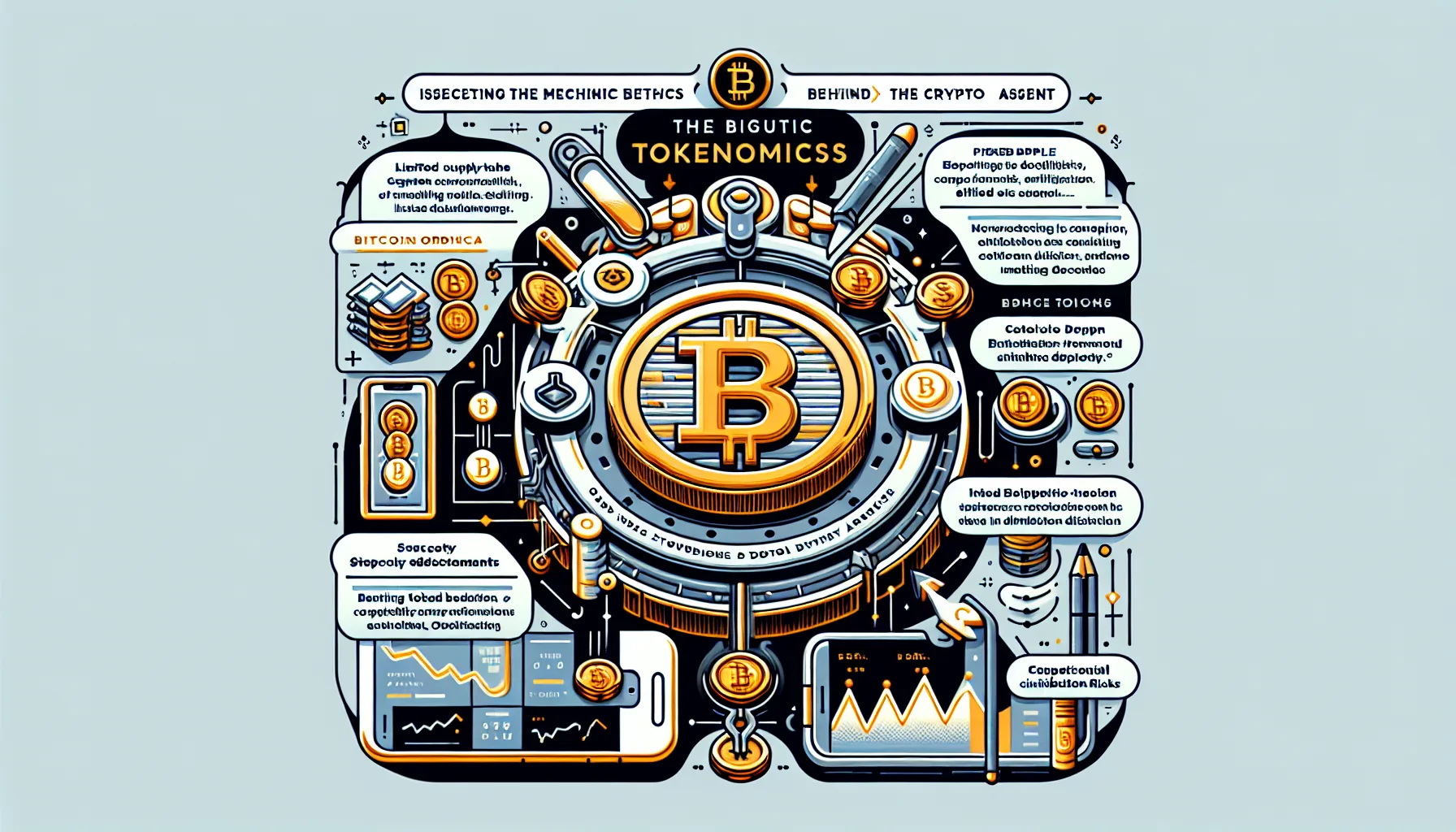
ORDI Tokenomics: Dissecting the Mechanics Behind the Crypto Asset
The tokenomics of ORDI, a prominent asset on the Bitcoin Ordinals protocol, have been crafted to align with the broader adoption of Bitcoin-native assets. At its core, ORDI’s supply dynamics and distribution mechanisms are significant influences on its ecosystem participation and value proposition, although not without their challenges.
Fixed Supply and Scarcity Design
ORDI has a capped supply, which distinguishes it within the Bitcoin Ordinals ecosystem. The total number of tokens was entirely pre-minted at genesis, meaning no additional tokens will ever be created. While scarcity is often a positive trait in crypto economics, the fixed supply has also drawn scrutiny around the initial distribution model, as no mining or staking mechanisms allow for gradual market entry. For a token deeply tied to Bitcoin’s ethos, this divergence from Proof of Work (PoW)-style issuance may not align with the principles of decentralized access.
Initial Distribution and Potential Centralization
A contentious facet of ORDI’s tokenomics is its initial distribution. The genesis mint allocated all tokens at once, and a large portion was acquired by early adopters and insiders. Such concentrated holdings raise concerns about centralization and potential manipulation by large holders. In a crypto-savvy community, issues of whale dominance and disproportionate voting power can create skepticism, particularly if governance or ecosystem decisions disproportionately benefit a few stakeholders over broader participation.
Trading Incentives Through Ordinals
ORDI benefits from being a pioneer token tied to Bitcoin’s Ordinals protocol, which gives it unique appeal. By leveraging Bitcoin’s security and notoriety, ORDI taps into a native asset layer that doesn’t require additional infrastructure or non-Bitcoin ecosystems like Ethereum. However, the trade-offs in distribution mechanisms and liquidity remain an ongoing topic in the community. Divisibility, given Bitcoin’s satoshi-based structure, is also more challenging when recalibrating micro-transactions in Bitcoin block spaces.
Liquidity Constraints and Ecosystem Development
It’s important to highlight that ORDI tokens largely rely on secondary market trades for liquidity, as there are no issuance rewards or staking mechanisms natively generating additional flows. This creates a less predictable liquidity pool, making the asset more sensitive to market-making activities and less accessible to smaller participants during times of heightened volatility. Furthermore, a lack of established DeFi infrastructure or cross-chain bridges limits broader utility for ORDI holders, especially compared to tokens within more flexible ecosystems like Ethereum or Solana.
By examining the combination of supply controls, distribution discrepancies, and liquidity constraints, users can understand the challenges and opportunities presented by ORDI’s tokenomics.
ORDI Governance
Governance Mechanisms and Challenges of the ORDI Crypto Asset
The governance framework surrounding ORDI remains a critical point of analysis for the crypto asset's community and stakeholders. As a protocol rooted in decentralized principles, ORDI relies heavily on its governance mechanisms to maintain network integrity while fostering growth. However, this decentralized model introduces a series of strengths and challenges that warrant close consideration.
At its core, ORDI's governance prioritizes the distribution of decision-making power to token holders. This aligns with broader trends in decentralized finance (DeFi), where tokenomics often create incentives for active participation. ORDI holders can use their voting power to influence key proposals relating to protocol upgrades, parameter adjustments, and potential integrations. This decentralization of authority ensures that no single entity can unilaterally overrule the direction of the ecosystem. However, this also creates a dependency on active and informed participation, which can sometimes be inconsistent or skewed by the overrepresentation of whales.
A notable feature of ORDI’s governance is its attempt to balance decentralization with efficiency. While open governance is inherently democratic, lengthy decision-making processes can be detrimental to a fast-evolving blockchain environment. ORDI partially mitigates this issue by introducing tiered voting or quorum systems that weigh votes based on token holdings or user engagement. However, this raises concerns about centralization risks, as large token holders possess disproportionately greater influence, potentially sidelining smaller contributors.
Another challenge with ORDI’s governance lies in proposal management and community coordination. The governance process can be opaque for casual participants due to complex smart contract mechanics and unclear documentation on certain governance processes. Furthermore, voter participation rates can remain low unless incentivized, which may lead to governance outcomes that do not fully represent the broader community.
Security is another critical issue in crypto asset governance, and ORDI is no exception. Exploits in voting logic — such as governance attacks where malicious actors acquire large quantities of tokens to manipulate proposals — pose legitimate risks to the ecosystem. While ORDI's governance has measures to mitigate such vectors, such as time-locked voting or phased implementation of passed proposals, these are not foolproof solutions, particularly in the face of evolving attack strategies.
Ultimately, ORDI’s governance reflects many of the broader tensions within decentralized ecosystems: the need for inclusivity versus the efficiencies of concentrated decision-making, and the trade-offs between transparency, security, and scalability. These dynamics create a constantly shifting landscape, with both opportunities to strengthen the governance model and risks that demand proactive vigilance from its community.
Technical future of ORDI
ORDI’s Technical Developments and Roadmap: An In-Depth Analysis
The ORDI cryptocurrency operates as the native asset for the Ordinals ecosystem, a protocol that leverages Bitcoin’s Taproot upgrade to enable NFT-like digital inscriptions on the Bitcoin blockchain. Technological advancements in this space revolve around ongoing improvements to scalability, interoperability, and developer tooling, but several challenges persist that could influence the trajectory of ORDI.
Current Technical Advancements
ORDI has capitalized on Bitcoin’s Taproot functionality, enabling users to inscribe data onto individual satoshis. This technical architecture is inherently distinct from typical smart contract-based systems like Ethereum’s ERC-20 or ERC-721 standards. ORDI’s structure integrates directly with Bitcoin’s immutable and highly secure base layer, which provides a unique edge in terms of decentralization and censorship resistance.
Recent developments within the protocol have focused on enhancing the efficiency of Ordinals inscriptions. Efforts are underway to compress inscription data further and reduce the load they impose on block space, a primary area of criticism from Bitcoin maximalists. Additionally, developers have proposed solutions for improving indexers — the services that track and process Ordinal inscriptions — by introducing caching layers and modular components that can more effectively parse incoming transactions. These improvements aim to simplify the participation of independent node operators and broaden the ecosystem.
Progress has also been made toward enabling interoperability via cross-chain mechanisms. While Bitcoin itself lacks native interoperability frameworks, bridge systems are being explored to enable ORDI token utilization within ecosystems like Ethereum through wrapped assets. These initiatives remain in exploratory stages, carrying risks such as the potential for centralization or exploits associated with bridged tokens.
Challenges and Technical Gaps
While ORDI has catalyzed innovation in Bitcoin’s ecosystem, it faces unresolved challenges. Chief among them is scalability. Bitcoin’s 4MB block size remains a bottleneck for inscription activity, often leading to higher fees and competition for block space. Critics argue that the intensive use of block space for Ordinals inscriptions conflicts with Bitcoin’s original purpose as a peer-to-peer monetary system.
Furthermore, the absence of native smart contract functionality poses constraints. Auxiliary scripting strategies, like Bitcoin Script, are limited in flexibility compared to Turing-complete languages like Solidity. This technical limitation has delayed development timelines for more complex applications (e.g., decentralized finance protocols) within the Ordinals ecosystem.
Technical Roadmap Highlights
The ORDI roadmap includes several planned improvements that could address these challenges. Key upgrades include the implementation of tooling to simplify inscription creation for non-technical users and the development of secondary layer solutions to alleviate scalability pressures. Emerging discussions around Bitcoin drivechains may also factor into ORDI’s long-term technical aspirations. However, these developments face stiff resistance from the Bitcoin core community and remain speculative at best.
In parallel, efforts to secure more efficient indexing systems aim to streamline transaction validation and improve network usability. Whether these advancements can address criticisms remains an open question, as no consensus exists on uniform technical solutions for all participants in the ecosystem.
Comparing ORDI to it’s rivals
ORDI vs BTC: A Niche Contender Against the Pioneer
When comparing ORDI, the pioneering BRC-20 token, to Bitcoin (BTC), the archetype and bedrock of the blockchain space, a stark dichotomy emerges between their utility, design, and roles within the broader crypto ecosystem.
BTC operates as the quintessential proof-of-work (PoW) cryptocurrency, prioritizing decentralization, security, and store-of-value functionality. ORDI, by contrast, expands on the Bitcoin network via the BRC-20 standard, bringing fungible tokenization to Bitcoin through ordinal inscriptions. This distinction highlights one major divergence: while BTC focuses exclusively on monetary sovereignty and censorship-resistant value transfer, ORDI seeks to overlay a layer of programmable assets on top of Bitcoin's base layer.
The deployment of ORDI and other ordinal-based assets has capitalized on Bitcoin's unmatched security properties, but this reliance also exposes inherent scalability constraints. Bitcoin was never designed to prioritize the high-frequency transactions or token ecosystem functionality that ORDI inherently demands. The lack of smart contract capabilities native to Bitcoin forces ORDI to operate via off-chain or secondary methods, which may lead to complexity and inefficiencies in adoption. By comparison, BTC remains streamlined, avoiding these additional layers of abstraction.
Another critical distinguishing factor between ORDI and BTC lies in transaction costs and network congestion. Ordinal inscriptions, which underpin BRC-20 token operations, have intensified network activity, leading to higher transaction fees and potential bottlenecks for Bitcoin’s base functions. ORDI, as part of this emerging asset framework, has indirectly contributed to the strain on Bitcoin’s block space, with critics arguing that such activity detracts from BTC’s primary use case as a frictionless currency and global settlement network. This raises concerns about long-term network sustainability and equitable access for Bitcoin users.
From a positioning perspective, BTC enjoys a near-impossible-to-challenge status as the original cryptocurrency and the global benchmark for digital gold. ORDI, while innovative in its attempt to retrofit token mechanics onto Bitcoin, faces substantial hurdles in convincing the broader crypto community of the necessity or superiority of BRC-20 tokens relative to the established use cases for Bitcoin itself. Furthermore, the lack of interoperability and the nascent infrastructure supporting BRC-20 tokens remain challenges when stacked against BTC’s mature and battle-tested ecosystem.
Both assets undeniably share the secure and immutable foundation provided by Bitcoin’s blockchain, but their purposes and trajectories are markedly distinct. While BTC solidifies its role as a reserve asset, ORDI's experimentation may either evolve as a complementary layer or face obsolescence due to network and technical limitations.
ORDI vs. ETH: A Deep Dive into Key Differentiators
When comparing ORDI to Ethereum (ETH), one must consider the fundamental differences in underlying architecture, token utility, and ecosystem design. Both ORDI and ETH exist within the realm of decentralized technologies, yet their approaches, strengths, and limitations diverge sharply.
Smart Contract Capabilities
Ethereum is the undisputed leader in smart contract functionality, with a fully fleshed-out Turing-complete blockchain. ETH has carved a niche as the backbone for decentralized applications (dApps) and NFTs, using its composable infrastructure and gas-driven execution model. On the other hand, ORDI, operating within the Ordinals and BRC-20 ecosystem, lacks native smart contract support. Instead, its functionality is heavily contingent on the Bitcoin blockchain's infrastructure, imposing significant limitations in terms of programmability. This creates a stark imbalance for developers who require complex scripting or access to robust DeFi ecosystems.
Scalability and Fees
Gas fees on Ethereum remain a contentious issue. ETH's recent transition to proof-of-stake with Ethereum 2.0 aims to improve layer-one efficiency, but high congestion on the network still leads to periods of exorbitant transaction fees. This remains a bottleneck for broader adoption, especially during peak usage. Meanwhile, ORDI leverages Bitcoin’s UTXO model for BRC-20 transactions, keeping its fee structure relatively straightforward. However, the tradeoff lies in ORDI's scalability bottleneck, as Bitcoin’s block size and transaction throughput do not effectively mitigate the challenges of high network activity.
Decentralization and Security
Ethereum’s shift to proof-of-stake has sparked debates over trade-offs in decentralization, given the growing consolidation of staking power among a few prominent validators. ORDI, leveraging Bitcoin’s proof-of-work security framework, benefits from the unparalleled decentralization of the Bitcoin network itself. However, this reliance also imposes limitations, as ORDI inherits the same constraints inherent to the Bitcoin blockchain, such as slower confirmation times and scalability challenges.
Ecosystem Maturity
The Ethereum ecosystem is vast and mature, with extensive developer tooling, liquidity, and institutional support. Projects built on Ethereum benefit from first-mover advantage and a highly active community, making ETH a robust choice for pioneering blockchain use cases. ORDI, in comparison, is still at an embryonic stage in its ecosystem development, with limited infrastructure and largely experimental utility under the broader BRC-20 token standard.
Conclusion
From a technical and ecosystem perspective, Ethereum’s established framework offers versatility and scale that ORDI cannot yet replicate. However, this does not come without significant hurdles, particularly around gas fees and network congestion. Each asset carries its own distinct trade-offs—reflecting fundamentally different philosophies rather than merely competitive dynamics.
ORDI vs. BRC-20: A Layered Look at Protocol-Level Dynamics
When evaluating ORDI in comparison to its primary rival within the BRC-20 standard ecosystem, it's essential to delve into the specific nuances that differentiate these two contenders in the landscape of Bitcoin Layer 1 asset infrastructure. ORDI, as the first token deployed on the BRC-20 protocol, targets early-mover advantages, but these same aspects invite scrutiny when contrasted against the broader BRC-20 token ecosystem it inadvertently helped catalyze.
Token Lifecycle Simplicity vs. Customization Constraints
One defining feature of BRC-20 tokens is their reliance on an inscription-based structure, which ties data directly to Bitcoin’s blockchain via Ordinals. ORDI exemplifies this straightforward lifecycle approach—deploy, mint, and transfer—but lacks flexibility for composability beyond its original usage cases. Other BRC-20 tokens have introduced innovations around minting conditions, dynamic supply mechanics, and expanded metadata capabilities. By keeping ORDI simpler, it maintains base reliability but potentially limits appeal for developers seeking tokens with a broader range of programmable applications, only amplifying real or perceived "functional friction."
Fee Pressure on the Network
BRC-20 tokens collectively contribute to Bitcoin network fees increasing dramatically during peak usage periods, and ORDI’s popularity has exacerbated this dynamic. While this highlights its influence, this fee-driven congestion raises long-term usability concerns as smaller participants in the ecosystem face higher economic barriers due to increased transaction costs. Competing BRC-20 tokens address this issue by experimenting with capped transfer volumes or alternative scaling frameworks that ORDI currently does not offer. The lack of mitigation mechanisms could make ORDI feel stagnant in a rivalry where adaptability remains pivotal.
Governance and Community Asymmetry
Another discrepancy between ORDI and emerging names in the BRC-20 framework arises from governance structures and community-driven innovation. ORDI’s development has been criticized for centralization issues, especially given its outsized influence in defining "default" behavior for inscriptions on the Bitcoin blockchain. Meanwhile, rival BRC-20 tokens are differentiating by implementing transparent tokenomic strategies or decentralized mechanisms to actively engage their communities. ORDI's focus on static foundations, in this regard, might alienate segments of the developer ecosystem looking for a dynamic roadmap tied to participatory governance.
Smart Contract Limitations
While the Ordinals protocol enables interesting inscription features, ORDI, reliant on BRC-20 limitations, lacks inherent programmability akin to smart contracts. This choice, inherited by the broader BRC-20 ecosystem, constrains interaction design and limits functionality to basic token tasks. Competing BRC-20 tokens exploring off-chain or federated extensions may erode ORDI’s initial brand loyalty as use cases get more specialized. For a crypto-savvy audience, this deficit underscores the tension between simplicity and utility, especially at the protocol's growth stage.
Primary criticisms of ORDI
Primary Criticism of ORDI: Overcoming Structural and Scalability Concerns
ORDI, the first fungible token built on the Ordinals protocol within the Bitcoin ecosystem, has faced a number of critiques centered around its implementation and feasibility. While the project has gained traction by leveraging Bitcoin’s unmatched security and decentralization, critics point to several key challenges that cast doubt over its long-term sustainability and technical viability.
Scalability Limitations on Bitcoin’s Layer 1
One of the most persistent criticisms of ORDI lies in its reliance on Bitcoin's Layer 1 blockchain. Bitcoin was not originally designed to host fungible token ecosystems, and the addition of ORDI has reignited debates about the scalability of the network. By embedding token data as inscriptions on satoshis, ORDI inherits the fundamental limitations of Bitcoin’s block size and transaction throughput. Critics argue that this design choice risks clogging Bitcoin's chain with non-native transaction data, causing increased network congestion and potentially driving up fees for ordinary Bitcoin users.
This brings further scrutiny to ORDI's ability to scale if widespread adoption occurs. Without a robust Layer 2 solution or alternative scaling mechanisms, skeptics question how ORDI can truly thrive in a high-demand environment without compromising Bitcoin’s primary use case as a store of value and peer-to-peer electronic cash system.
Centralization Risks and Barrier to Entry
Another notable critique is the centralization risk introduced during the initial distribution of ORDI. Its ordinal inscription minting required an advanced understanding of the Bitcoin protocol, creating a significant barrier to entry for retail users during the early stages. This has led to accusations of unfair distribution, favoring early adopters and well-connected participants who had the technical expertise to interact with the protocol before user-friendly tools became more widely available.
Furthermore, the requirement to transact directly on Bitcoin’s main chain has led to concerns about accessibility. High transaction fees during periods of network congestion may price out smaller participants, fostering a system in which only those with significant capital or resources are able to meaningfully participate in ORDI’s ecosystem.
Lack of Interoperability and Tooling Maturity
Beyond Bitcoin-related criticisms, ORDI’s ecosystem suffers from a relatively immature technical infrastructure. As of now, there are limited wallets, node software, and developer tools designed specifically for Ordinals-based tokens. This lack of robust infrastructure hampers adoption, as the user experience remains clunky and difficult, even for crypto-savvy individuals.
Moreover, ORDI does not natively interact with other blockchain ecosystems, significantly limiting its interoperability. Critics argue that this lack of cross-chain compatibility isolates ORDI from the broader Web3 landscape, where versatile token standards like ERC-20 have fostered vast ecosystems of decentralized finance (DeFi) and non-fungible tokens (NFTs). Without bridging solutions or more holistic integration, the project risks being siloed and less attractive to developers building new decentralized applications.
Environmental Concerns Related to Bitcoin Mining
Lastly, ORDI’s success is intrinsically tied to the Bitcoin network, which continues to face environmental criticisms. Bitcoin mining’s high energy consumption raises ethical concerns, and ORDI’s adoption potentially exacerbates the issue by incentivizing additional network activity purely for an ancillary use case. Critics argue that this reopens larger questions about the ecological validity of building such projects on Bitcoin and whether alternative blockchains with lower carbon footprints would be a more responsible choice.
Founders
ORDI Founding Team: Key Players Behind the First BRC-20 Token
The founding team behind ORDI, the first BRC-20 token etched into the Bitcoin blockchain, is notable for its pivotal role in pioneering the concept of fungible tokens within Bitcoin’s Ordinals ecosystem. While the anonymity and pseudonymous culture of crypto remain prevalent, a closer look at the project's origins and its creators reveals insights into their motivations, background, and potential limitations.
ORDI was conceptualized and developed by a pseudonymous developer known as "domo." Domo’s intent was experimental: to prove the feasibility of deploying fungible token standards, like ERC-20 on Ethereum, on the Bitcoin network through Ordinals inscriptions. Despite this experimental framing, the proof-of-concept swiftly gained traction, evolving into ORDI as the flagship of the BRC-20 standard. However, domo publicly emphasized their intentions not to actively promote or undertake ongoing development for ORDI itself. This has created ambiguity about long-term leadership and support for the project.
As an individual or group, domo's precise identity or credentials remain undisclosed, which is characteristic of many crypto pioneers but adds a layer of uncertainty for institutional and mainstream participants. While this pseudonymous approach encourages decentralization and egalitarian engagement, critics argue it makes it challenging to evaluate the technical expertise, trustworthiness, and accountability of the team.
In the broader scope of the BRC-20 movement, no formalized team or governance structure currently exists for ORDI. The protocol and its associated tokens are entirely community-driven, and contributions to its ecosystem development remain informal and decentralized. The lack of a structured founding entity or roadmap means ORDI operates in a highly speculative space without assurances of future upgrades or issue resolution, relying instead on open-source collaboration.
Security audits or peer reviews of ORDI's implementation have not been prominently discussed, raising technical questions about the robustness of the protocol under scrutiny. This could pose risks, such as potential exploit vectors originating from the design of the BRC-20 standard itself. Furthermore, skeptics highlight the scalability concerns of deploying application-like functionality on the Bitcoin network, which was not explicitly designed to handle such operations at scale.
Overall, the uncertainties surrounding the founding team, coupled with the broader experimental nature of BRC-20 tokens, underline both the innovation and risks inherent in ORDI’s architecture. As a thought experiment by its creator, domo, ORDI represents a leap forward in Bitcoin’s utility but also faces scrutiny for its unorthodox approach.
Authors comments
This document was made by www.BestDapps.com
Sources
- https://www.ordinals.com
- https://github.com/casey/ordinals
- https://bitcoinops.org/en/topics/ordinals/
- https://ordinals-wallet.com
- https://explorer.ordinals.com
- https://docs.ordinals.com
- https://coinsutra.com/ordinals-protocol-bitcoin-nfts
- https://medium.com/ordinals-insight
- https://github.com/ordinals/explorer
- https://ordinalsbot.com
- https://spacechain.com/ordinals-bitcoin-nft
- https://btcscan.org/ordinals
- https://techcrunch.com/ordinals-explained
- https://decrypt.co/resources/what-are-ordinals
- https://messari.io/report/ordinals-2023-analysis
- https://dune.com/ordinals-analytics
- https://stakingrewards.com/news/ordinals-btc-nft-landscape
- https://bitcointalk.org/index.php?topic=ordinals_discussion
- https://ordiscan.io
- https://zycrypto.com/ordinals-nft-ecosystem