History of OP
The History of Optimism (OP): Development and Key Milestones
Optimism (OP) emerged as a response to Ethereum’s scalability challenges, leveraging Optimistic Rollups to reduce gas fees and increase transaction throughput. The project’s development has been closely tied to the Ethereum network, with the goal of providing a Layer 2 solution that balances security, decentralization, and efficiency.
Early Development and Foundations
Optimism's origins trace back to research on rollups as a scaling mechanism for Ethereum. The team initially experimented with OVM (Optimistic Virtual Machine), a system designed to execute smart contracts with minimal changes from Ethereum’s Layer 1. However, as development progressed, Optimism shifted towards an EVM-equivalent approach, prioritizing compatibility to accelerate adoption and developer integration.
The mainnet launch was phased, beginning with limited access and whitelisted projects before opening up to a wider audience. This cautious approach was implemented to mitigate risks associated with Layer 2 security, fraud proofs, and infrastructure readiness.
Governance and Token Launch
The introduction of the OP token marked a significant milestone, transitioning Optimism from a purely technical solution to a structured governance model. The launch of the Optimism Collective formalized a dual-token governance structure, where both token holders and a council of delegates play roles in decision-making. However, governance has not been without controversy, particularly around early allocations, voting mechanisms, and concerns regarding centralization of influence among large stakeholders.
Airdrops played a key role in distributing OP tokens, incentivizing early adopters and network participants. However, some criticized the distribution model, pointing to inefficiencies in targeting engaged users and potential sell pressure from airdrop recipients.
Evolution and Technical Adjustments
Optimism has undergone multiple upgrades aimed at reducing transaction costs and increasing network efficiency. The move away from the bespoke OVM towards a standardized EVM-equivalent design improved developer experience but also raised concerns about reliance on Ethereum’s own upgrades and potential vulnerabilities inherited from the base layer.
The ecosystem has also seen growing competition from other Layer 2 solutions, particularly zk-rollups. While Optimistic Rollups remain a viable scaling method, the emergence of zero-knowledge technologies has fueled debate over the long-term viability of Optimism's approach.
Security incidents and governance debates have continued to shape the network’s trajectory, demonstrating both the strengths of its model and the challenges inherent in Layer 2 development.
How OP Works
How Optimism (OP) Works: A Deep Dive into Its Layer 2 Mechanism
Optimism (OP) is a Layer 2 scaling solution for Ethereum that utilizes Optimistic Rollups to enhance transaction throughput and reduce fees. The protocol batches multiple transactions off-chain before submitting a single compressed transaction to Ethereum, significantly lowering gas costs while leveraging Ethereum’s security.
Optimistic Rollups and Fraud Proofs
Optimism employs an Optimistic Rollup model, meaning that transactions are assumed valid by default. Instead of verifying every transaction on-chain, it posts transaction data to Ethereum with a delay period, allowing anyone to challenge fraudulent activity using fraud proofs. If a fraudulent transaction is detected, the rollup re-executes the computation to confirm its validity, slashing any dishonest participants. However, this model means withdrawals from Optimism to Ethereum require a challenge period, typically around seven days, which can be a drawback for users seeking instant liquidity.
Transaction Processing and Gas Efficiency
Transactions on Optimism are executed off-chain on the Layer 2 network but settle on Ethereum. This enables significant gas savings, as multiple transactions are bundled into a single Layer 1 transaction. While this improves cost-efficiency, Optimism's fee model still fluctuates based on Ethereum’s base fees and network congestion. Though cheaper than directly using Ethereum, the cost advantage depends on Layer 1 conditions, sometimes making fees less predictable.
OP Stack and Modular Development
Optimism's technology stack, known as the OP Stack, serves as a modular foundation for building custom Layer 2 solutions. Other projects can fork or modify it to create their rollups. While this fosters ecosystem expansion and interoperability, fragmentation risks arise if multiple chains develop diverging versions of the stack. Additionally, protocol upgrades involve governance decisions that may add complexity or delays to network improvements.
Governance and Centralization Concerns
The OP token plays a key role in governance through the Optimism Collective. While this system enables decentralized decision-making, governance participation is uneven, with whales potentially influencing proposals. Furthermore, Optimism’s ability to upgrade contracts and respond to issues raises centralization concerns, particularly regarding the role of the Optimism Foundation in overseeing security and protocol updates.
Compatibility with Ethereum
Optimism is fully compatible with Ethereum, allowing developers to seamlessly port dApps without major code modifications. However, performance improvements come at the cost of occasional delays in execution, and Optimistic Rollups still rely on Ethereum for finality, meaning transaction security ultimately depends on Ethereum’s mainnet, which can experience congestion during peak periods.
Use Cases
Optimism (OP) Use Cases: Scaling Ethereum with Layer 2 Solutions
Gas Fee Reduction and Faster Transactions
Optimism (OP) serves as a Layer 2 scaling solution for Ethereum, leveraging Optimistic Rollups to reduce gas fees and increase transaction throughput. By bundling multiple transactions off-chain before submitting a single, aggregated transaction to Ethereum, Optimism drastically lowers costs compared to transacting directly on Layer 1. This makes it an attractive option for high-frequency traders, decentralized applications (dApps), and users looking to avoid Ethereum’s congestion-related fees. However, withdrawal delays when moving assets back to Ethereum remain a drawback due to the challenge period required to verify fraud proofs.
DeFi Integration and dApp Adoption
Optimism is widely supported by decentralized finance (DeFi) applications, offering users lower-cost interactions with protocols such as decentralized exchanges (DEXs), lending platforms, and yield aggregators. Developers can migrate dApps from Ethereum without significant code changes, as Optimism is EVM-equivalent. While this ease of integration accelerates adoption, liquidity fragmentation between Layer 1 and Layer 2 can be an issue, requiring third-party bridges or native solutions to transfer assets efficiently.
Governance Through the Optimism Collective
The OP token plays a key role in governance within the Optimism Collective, a system that includes both token-based voting and a unique structure incorporating public goods funding. Holders participate in decision-making processes that influence network development and fund ecosystem initiatives. While this model aims to balance decentralization and ecosystem growth, governance engagement levels and potential centralization risks remain relevant concerns, particularly if voting power consolidates among a small number of holders.
Developer Grants and Public Goods Funding
Optimism’s revenue-sharing model allocates a portion of sequencer fees to public goods funding, supporting projects that contribute to the Ethereum ecosystem. This incentivizes long-term sustainability beyond transaction fees. However, distributing these funds effectively and avoiding governance capture by dominant participants remains an ongoing challenge.
Bridges and Cross-Layer Asset Transfers
Interoperability between Optimism and Ethereum depends on bridges, which enable asset transfers but can introduce security risks and liquidity inefficiencies. While native bridges provide a trust-minimized way to move assets, third-party bridging solutions are required for cross-chain interactions with other Layer 2 networks or non-Ethereum blockchains, leading to varying degrees of reliance on centralized infrastructure.
NFTs, Gaming, and Emerging Use Cases
Beyond DeFi, Optimism is expanding into areas such as NFT marketplaces and blockchain gaming, where low-cost transactions are crucial for user experience and scalability. However, competition from other Layer 2 solutions and alternative scaling technologies, such as zero-knowledge rollups (ZK-rollups), presents a challenge for long-term network positioning.
OP Tokenomics
OP Tokenomics: Supply, Emissions, and Incentives
Fixed Supply and Token Distribution
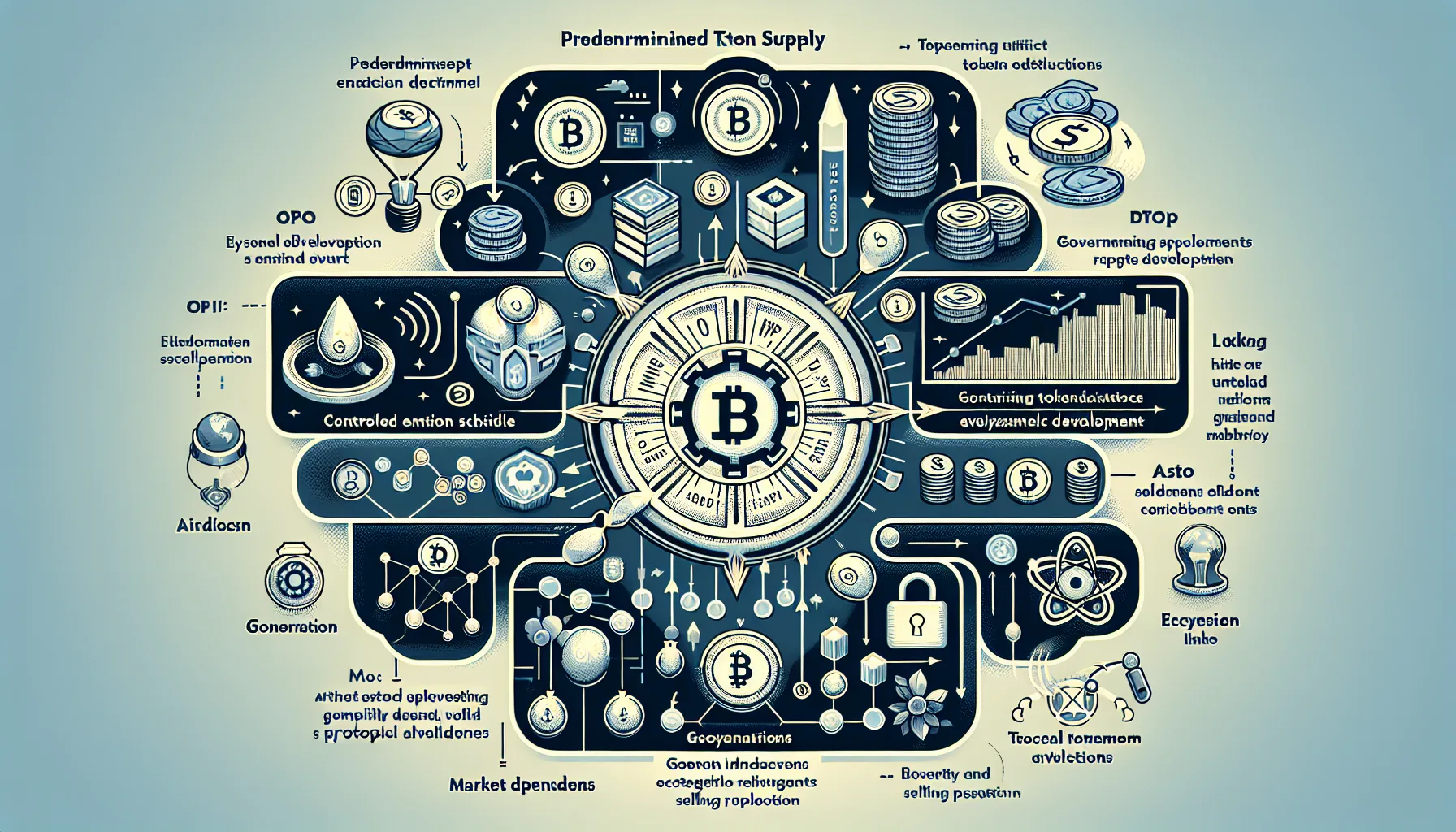
Optimism’s OP token has a predefined total supply, with issuances structured to support governance, ecosystem development, and network security. A significant portion of OP’s allocation is reserved for governance-driven incentives, reinforcing its role in decision-making within the Optimism Collective. Additionally, a substantial supply is dedicated to ecosystem growth, ensuring long-term incentives for developers and community participants.
Emission Schedule and Inflation Considerations
The OP token follows a controlled release schedule, distributing tokens gradually to mitigate excessive sell pressure while still incentivizing usage and network participation. However, the emission structure raises concerns about potential inflationary effects as new tokens continually enter circulation. While early distribution primarily targeted governance participants and ecosystem funding, ongoing emissions require careful management to avoid long-term value dilution.
Governance Utility and Value Capture
OP holders participate in the governance of the Optimism Collective, influencing protocol upgrades, treasury allocations, and incentive strategies. Unlike purely utility-driven tokens, OP’s value proposition relies heavily on governance impact. However, governance-based valuation can introduce uncertainties, as the financial benefits to token holders depend on evolving governance mechanisms rather than direct protocol revenue-sharing. This structure places long-term value accrual largely in the hands of governance participants rather than automatic economic mechanics.
Airdrops and Incentive Structures
Airdrops play a crucial role in OP token distribution, incentivizing early adoption and reinforcing community engagement. However, large-scale airdrops have historically led to speculative short-term interest, followed by waves of selling pressure as recipients cash out their tokens. While airdrop-based growth strategies drive rapid user acquisition, there are risks of temporary engagement rather than sustained network effects. Future incentive designs must carefully balance distribution strategies to avoid excessive token dilution and speculative dumping.
Liquidity and Market Considerations
OP’s liquidity depends on centralized exchange listings, decentralized liquidity pools, and staking incentives. Early liquidity strategies leaned on incentivized pools and ecosystem grants, which helped bootstrap participation. However, reliance on incentives can create artificial liquidity depth, raising concerns about long-term organic demand. Without strong fundamentals beyond governance functionality, OP’s broader market reliance remains a key factor in its tokenomics stability.
Recurring Funding and Sustainability
Optimism’s recurring funding mechanisms, including governance-backed grants, play a central role in distributing OP to builders and ecosystem projects. While this fosters growth, it also raises concerns about long-term sustainability. If grant-driven distribution outpaces organic revenue generation or user adoption, OP supply emission could potentially outstrip demand, leading to structural imbalances over time. Managing this balance remains a core challenge for maintaining healthy tokenomics.
OP Governance
Optimism (OP) Governance Mechanisms and Structure
Optimism governance is structured around the Optimism Collective, a bicameral system designed to balance decentralization with effective coordination. This system consists of the Token House and the Citizens’ House, each playing distinct roles in decision-making and resource allocation.
Token House: OP Holders' Role in Governance
The Token House is composed of OP token holders who participate in governance through on-chain voting. Holders can propose and vote on governance decisions, primarily through Optimism Governance Fund (RetroPGF) distributions, technical upgrades, and policy changes. The system follows a delegated governance model, where token holders can actively vote or delegate their voting power to representatives with domain expertise.
While this model allows for broad participation, it also introduces voter apathy risks—where a large portion of tokens remain undelegated or unutilized in voting. Additionally, whale concentration remains a factor, as large holders or entities with significant delegation power can disproportionately influence proposals.
Citizens’ House: Balancing Influence with Non-Transferable Citizenship
The Citizens’ House represents another key governance component, tasked with overseeing retroactive public goods funding. Unlike the Token House, participation is non-transferable, meaning influence isn't dictated by token holdings. Governance is based on soulbound assets, or governance rights that cannot be sold or transferred, mitigating the risk of plutocracy.
While this structure aims to safeguard Optimism’s commitment to public goods funding, challenges arise in determining the legitimacy of Citizens’ House members and ensuring a fair distribution of influence. The selection process remains an area of evolving experimentation, raising concerns around sybil resistance and centralization risks in member selection.
Governance Proposals and Execution
Governance proposals in Optimism follow a structured upgrade process, with multiple phases including community discussion, off-chain signaling, and formal on-chain voting. The process is designed to ensure transparency and dispute resolution mechanisms, but has also led to delays in executing key upgrades or funding decisions.
Smart contract-based governance also introduces inherent security risks—proposals with unintended consequences or vulnerabilities may pass due to governance attacks or insufficient review. As governance complexity increases, questions around governance scalability and user engagement remain critical.
Challenges in Governance Participation
Despite its structured framework, governance participation faces friction points, including low voter turnout and incentives misalignment. While delegation helps address this issue, it also creates dependencies on a small group of active participants, raising concerns about governance centralization.
Decentralized governance also risks off-chain coordination dominating decision-making, where discussions in governance forums, private channels, or social media have more sway than formal voting outcomes. This informal power dynamic can affect the neutrality and transparency of governance decisions over time.
Technical future of OP
Optimism (OP) Technical Developments and Roadmap
Bedrock Upgrade and Layer 2 Enhancements
Optimism’s migration to Bedrock represents a significant shift in its rollup architecture, aiming for reduced transaction costs, improved Ethereum equivalence, and faster deposits and withdrawals. This modular design lowers execution costs by minimizing gas overhead and enhances cross-chain compatibility by aligning closer with Ethereum’s consensus and execution layers. However, despite these improvements, network congestion during peak activity can still lead to higher fees compared to alternative Layer 2 solutions.
OP Stack and Superchain Vision
One of the most ambitious technical developments is the OP Stack, an open-source framework designed to facilitate the deployment of new Layer 2 chains with built-in interoperability. This infrastructure forms the backbone of the Superchain, a unified ecosystem of rollups sharing a common security model and sequencer set. While this modular approach enhances scalability, the long-term viability of a shared sequencer model raises potential concerns about centralization risks and optimal economic incentives for validators.
Fault Proofs and Decentralization Progress
Currently, Optimism remains largely dependent on a centralized sequencer and lacks permissionless fraud proofs. Plans for fault proofs are progressing, aiming to eliminate reliance on a trusted party to finalize transactions. The transition from a permissioned system toward a more decentralized fraud-proof mechanism is critical for security and censorship resistance but remains an ongoing technical challenge. Adoption of these proofs will also impact the broader Optimism ecosystem’s security guarantees relative to competitors implementing similar solutions.
MEV Mitigation and Transaction Ordering
The network’s approach to MEV extraction and transaction ordering remains an evolving area. With other Layer 2 projects exploring in-protocol MEV recapture mechanisms, the lack of publicly implemented solutions within Optimism could become a competitive disadvantage. If Optimism does not integrate better transaction sequencing methods, users may face increasing value extraction by third-party searchers, reducing capital efficiency and increasing slippage for DeFi users.
Bridging and Cross-Chain Liquidity Challenges
Despite improvements in withdrawal times post-Bedrock, liquidity fragmentation across Optimism-native dApps and Ethereum mainnet remains a usability barrier. Current bridging mechanisms still require reliance on third-party bridges or lengthy withdrawal periods via the canonical bridge. Future designs integrating native shared liquidity layers within the Superchain could address this, but implementation specifics remain uncertain.
Governance and Upgrade Coordination
With network governance transitioning under Optimism Collective, future protocol-level upgrades depend on decentralized decision-making structures. However, balancing community governance with rapid technical iteration presents trade-offs, as delays in implementing critical upgrades could put Optimism behind competitors. Ensuring protocol governance remains efficient without introducing excessive bureaucracy is a key consideration for its road ahead.
Comparing OP to it’s rivals
Optimism (OP) vs. Ethereum (ETH): Layer 2 Efficiency vs. Layer 1 Security
Ethereum (ETH) remains the dominant smart contract platform, but Optimism (OP) introduces a Layer 2 scaling solution designed to address Ethereum’s congestion and high transaction fees. While both networks are tightly connected, significant differences exist in cost, security, and ecosystem maturity.
Transaction Costs and Throughput
Ethereum’s base layer processes transactions with strong security guarantees but at a cost—network congestion leads to high gas fees, especially during peak demand. Optimism mitigates this issue through optimistic rollups, bundling transactions off-chain before settling them on Ethereum. This allows OP users to experience drastically lower fees while maintaining Ethereum’s security assumptions over time.
However, Optimism’s fee reductions are not always consistent. During periods of extreme network activity, L1 settlement costs can spike, leading to higher-than-expected Layer 2 transaction fees. While still lower than Ethereum's, this unpredictability can create friction for users and developers seeking cost-efficient execution.
Finality and Withdrawal Delays
A core tradeoff between Optimism and Ethereum lies in finality. Ethereum transactions are finalized once included in the blockchain, whereas Optimism relies on fraud proofs to ensure validity. This introduces a challenge—withdrawals from Optimism to Ethereum require a challenge period (typically seven days) to allow for fraud detection.
This delay makes Optimism less suitable for users needing real-time settlement back to Ethereum’s mainnet. Some third-party solutions, such as liquidity providers, offer faster withdrawals but at an additional cost, potentially reducing the benefits of Optimism’s lower fees.
Decentralization and Governance
Ethereum operates with a fully decentralized network of validators, enabling a high trust-minimized environment. Optimism, on the other hand, still relies on a centralized sequencer to process transactions. While there are plans to decentralize this function over time, the current model introduces centralization risks, including potential censorship or downtime.
Governance is another differentiator. Ethereum’s development is guided by a broad ecosystem of stakeholders, while Optimism employs governance through the Optimism Collective. Although this model is designed to encourage long-term sustainability, the governance structure remains in flux, with ongoing discussions about protocol upgrades and decision-making authority.
Smart Contract and Developer Experience
Optimism is fully compatible with the Ethereum Virtual Machine (EVM), meaning Ethereum-based applications can deploy on OP with minimal modifications. This is an advantage over alternative scaling solutions that introduce non-EVM execution environments. However, Optimism’s reliance on optimistic rollups means that fraud proofs need to be improved for a fully trust-minimized system, a factor developers must consider when deploying mission-critical applications.
Optimism (OP) vs Solana (SOL): A Comparison of Scaling Approaches
Optimism (OP) and Solana (SOL) take fundamentally different approaches to scaling blockchain transactions. Optimism is a Layer 2 (L2) rollup built on Ethereum, leveraging optimistic rollups to batch transactions and reduce costs. Solana, in contrast, operates as a standalone Layer 1 (L1) blockchain, focusing on high throughput and low transaction fees through a unique proof-of-history (PoH) consensus mechanism combined with proof-of-stake (PoS).
Transaction Speed and Throughput
Solana is designed for high-speed, high-throughput processing, boasting thousands of transactions per second (TPS) when the network operates under optimal conditions. Solana's monolithic architecture eliminates the need for rollups, enabling native execution without relying on Ethereum's settlement layer. However, network congestion and occasional downtimes have historically impacted Solana’s reliability.
Optimism, while benefiting from Ethereum’s security and decentralization, faces inherent limitations due to its dependency on Ethereum’s base layer. Transactions are processed off-chain before being batched and submitted to Ethereum, leading to delayed finalization. Even though Optimism significantly reduces gas fees compared to Ethereum mainnet, it typically cannot match the raw transaction speed of Solana’s on-chain execution.
Network Stability and Downtime Risks
Solana’s aggressive scaling approach has led to frequent performance challenges, including network outages and congestion when validator nodes struggle to maintain synchronization. While improvements have been made to enhance stability, concerns persist about centralization risks due to high hardware requirements for validators.
Optimism, being a rollup, does not face the same kind of network-wide halts that Solana has encountered. Since execution occurs off-chain but settlement is enforced on Ethereum, Optimism inherits Ethereum’s uptime guarantees. However, Optimism’s reliance on a centralized sequencer for transaction ordering introduces centralization concerns of its own. While efforts are underway to decentralize this component, it remains a key point of discussion within the Optimism ecosystem.
Ecosystem and Developer Experience
Solana’s smart contract environment is distinct from Ethereum's EVM, requiring developers to build using Rust or C-based languages. While this allows for optimizations tailored to Solana’s architecture, it creates a steeper learning curve for developers transitioning from Ethereum.
Optimism benefits from full EVM compatibility, meaning developers can seamlessly deploy existing Ethereum-based smart contracts without modification. This makes migration easier for projects already built on Ethereum. However, rollup-specific considerations like data availability and withdrawal times introduce technical complexity not present in Solana's execution model.
Optimism (OP) vs. Arbitrum (ARB): Key Differences in Layer 2 Scaling
Technology and Rollup Mechanism
Optimism and Arbitrum are both Layer 2 scaling solutions utilizing rollups, but their approaches differ. Optimism employs Optimistic Rollups, relying on a fraud-proof system where transactions are assumed valid unless challenged within a set window. Arbitrum also uses an Optimistic Rollup design but introduces a more complex multi-round dispute resolution process, which can, in theory, reduce on-chain verification costs compared to Optimism’s single-round fraud proof model. However, this increased complexity in Arbitrum's dispute resolution could introduce additional attack vectors or inefficiencies in certain scenarios.
Transaction Costs and Ethereum Compatibility
Both networks aim to reduce transaction fees compared to Ethereum mainnet, but the way they handle data availability results in cost differences. Optimism achieves lower fees by implementing single-slot proof aggregation, which reduces calldata overhead. Arbitrum, on the other hand, uses a unique compressed calldata technique, which can sometimes make it cheaper depending on network conditions. However, Arbitrum has been criticized at times for periods of higher fees than Optimism due to congestion or sequencing inefficiencies.
Decentralization and Governance Structure
Governance structure is a major differentiator. Optimism introduced the Optimism Collective, a governance model segregating token holders' direct influence from the protocol's funding and incentive structures. This contrasts with Arbitrum’s Arbitrum DAO, where ARB holders have full control over treasury decisions and network upgrades. However, criticisms exist for both approaches—Optimism’s two-tier structure adds complexity, while Arbitrum's full tokenholder control raised concerns during its initial governance proposal rollout.
Smart Contract Compatibility and Developer Experience
Optimism utilizes a simplified Ethereum-equivalent architecture, meaning existing Ethereum smart contracts migrate with minimal or no modifications. Arbitrum provides a more optimized VM layer (Arbitrum Virtual Machine, AVM) that introduces slight differences in execution. While Arbitrum’s AVM can enable additional optimizations, it also introduces potential incompatibilities that developers need to account for when migrating dApps.
Network Adoption and Liquidity
Adoption metrics fluctuate, but historically, Arbitrum has attracted a significant portion of Ethereum’s Layer 2 liquidity due to early airdrop incentives and a broad range of DeFi integrations. However, its reliance on centralized sequencers has been a focal point for criticism, raising concerns over censorship resistance and long-term decentralization.
Primary criticisms of OP
Primary Criticism of OP
Centralization Concerns in Governance
One of the most discussed criticisms of OP revolves around its governance structure. While the project has implemented a dual-layer governance model, concerns persist about the concentration of power among early stakeholders and core contributors. The Optimism Collective's governance relies on token voting, which can lead to governance weight being disproportionately held by large token holders or entities closely tied to the development team. This raises questions about how decentralized the decision-making process truly is and whether the system effectively mitigates plutocratic control.
Token Incentives and Sustainability
A recurring issue with OP is the long-term sustainability of its incentive mechanisms. The network has allocated large amounts of OP tokens for ecosystem funding, developer grants, and liquidity incentives. While these initiatives drive early adoption and network effects, some critics argue they create short-term reliance on subsidies rather than organic user demand. Additionally, if incentives dry up or become less attractive over time, there is a risk of capital flight, reduced participation, or diminished network growth.
Potential for Governance Capture
Due to the governance structure and token distribution, some critics express concern over potential governance capture. Large entities with significant OP holdings could exert outsized influence over key protocol decisions, shaping the network in ways that may not always align with the broader user base. This is particularly relevant in areas such as fee structures, future upgrades, and allocation of treasury funds. The extent to which governance mechanisms can resist undue influence remains a central debate within the community.
Security and Reliance on Ethereum
While OP benefits from Ethereum's security model as an optimistic rollup, the reliance on Ethereum has its own risks. The security of OP is ultimately tied to the Ethereum mainnet, meaning congestion, high fees, or potential vulnerabilities within Ethereum could impact OP’s performance. Additionally, delays in fraud-proof verification and reliance on centralized sequencers at various stages of the network raise concerns about censorship resistance and trust assumptions within the rollup architecture.
Competitive Landscape Pressure
OP operates in a highly competitive Layer 2 environment, with multiple scaling solutions vying for adoption. Competing rollup solutions, including other optimistic and zk-rollups, introduce challenges regarding liquidity fragmentation, developer mindshare, and network effects. If other Layer 2 solutions demonstrate superior technology or more attractive incentives, OP could face difficulties in maintaining its position within the ecosystem.
Founders
Optimism (OP) Founding Team: Background and Key Players
The Origins of the Optimism Team
Optimism was co-founded by Jinglan Wang, Karl Floersch, Kevin Ho, and Ben Jones—a group with deep ties to Ethereum development and Layer 2 (L2) scaling research. The project emerged from early efforts to implement Optimistic Rollups, a technology designed to enhance Ethereum’s scalability by bundling transactions and reducing mainnet congestion.
Jinglan Wang – CEO and Crypto Infrastructure Advocate
Jinglan Wang, a former blockchain product manager and Ethereum enthusiast, has played a crucial role in translating theoretical Layer 2 scaling models into real-world applications. Her experience includes time at the Ethereum Foundation, where she worked on developer outreach and ecosystem growth. Over time, Wang transitioned into more of an executive leadership role for Optimism, emphasizing governance, partnerships, and ecosystem development.
Karl Floersch – CTO and Optimistic Rollup Architect
Karl Floersch has been a key technical figure in the Ethereum ecosystem, particularly in the development of Layer 2 scaling solutions. Before co-founding Optimism, he contributed significantly to Ethereum research, focusing on rollups and fraud proofs. His deep understanding of MEV (Maximal Extractable Value) dynamics, security auditing, and smart contract execution has influenced Optimism’s technical roadmap. However, criticisms exist regarding the centralized governance mechanics that shaped Optimism’s early development—something Floersch played a role in designing.
Kevin Ho and Ben Jones – Research and Governance Contributors
Kevin Ho and Ben Jones provided technical and strategic input for Optimism, particularly in protocol design and governance structures. Jones, in particular, has been involved in the construction of the Optimism Collective, a governance framework that blends token-based voting with quadratic funding mechanisms. Critics argue that the governance distribution initially favored insiders, but their approach was a step toward a public goods-driven crypto economy.
Controversies and Criticism Surrounding the Team
Despite the team’s strong technical and research background, Optimism has faced scrutiny over its centralization concerns, particularly regarding multi-sig wallet controls, upgradeability, and governance decisions. Early network upgrades were controlled by a small inner circle, raising concerns about decentralization. Additionally, the rollout of the OP token was met with criticism over airdrops favoring insider allocations, sparking debate within the Ethereum community.
A Team Deeply Embedded in Ethereum Development
The Optimism team continues to be involved with Ethereum’s broader Layer 2 ecosystem. However, their approach to governance, token distribution, and centralized decision-making structures remain focal points of discussion within the community.
Authors comments
This document was made by www.BestDapps.com
Sources
https://optimism.io/
https://community.optimism.io/docs/
https://github.com/ethereum-optimism
https://github.com/ethereum-optimism/optimism
https://community.optimism.io/docs/protocol/
https://community.optimism.io/docs/developers/
https://community.optimism.io/docs/protocol/protocol-vision/
https://community.optimism.io/docs/protocol/bridge/
https://community.optimism.io/docs/developers/transaction-fees/
https://community.optimism.io/docs/developers/bedrock/
https://mirror.xyz/optimismpbc.eth
https://dune.com/optimism
https://gov.optimism.io/
https://forum.optimism.io/
https://twitter.com/optimismFND
https://medium.com/ethereum-optimism
https://optimistic.etherscan.io/
https://op-research.optimism.io/
https://github.com/ethereum-optimism/optimism/tree/develop/op-node
https://github.com/ethereum-optimism/optimism/tree/develop/op-geth