History of OP
The History of Optimism (OP): Decoding the Evolution of Ethereum’s Layer-2 Solution
Optimism (OP) has emerged as a pivotal Layer-2 scaling solution aimed at addressing Ethereum's high gas fees and network congestion. The project's origins trace back to the broader Ethereum scaling challenges, which became increasingly urgent as DeFi and NFT adoption surged. Developed by the nonprofit Optimism Foundation, the protocol has its roots in the pioneering efforts around Optimistic Rollups, a technology designed to enable off-chain transaction processing with the security assurances of Ethereum's mainnet.
The inception of Optimism was heavily influenced by the Ethereum community’s pursuit of scalability without compromising decentralization and security. The project began taking shape as discussions around Layer-2 solutions intensified, with Vitalik Buterin himself advocating for rollups as a key strategy for Ethereum's scalability roadmap. Early iterations of Optimism’s architecture focused on achieving compatibility with Ethereum Virtual Machine (EVM) standards, a design choice that set it apart from other Layer-2 solutions. This emphasis on EVM equivalence significantly lowered the barrier for Ethereum developers to integrate their dApps into the Optimism ecosystem.
One of the key milestones in OP's history was its phased alpha launch, during which developers targeted a gradual roll-out of features to ensure security and stability. However, this incremental approach faced criticism for its relatively centralized governance structure in the early stages, as core decision-making power remained concentrated with the Optimism Foundation. This limited decentralization, while pragmatic during the protocol's development, became a sticking point within the crypto community, especially among those advocating for more immediate on-chain governance.
Another challenge OP encountered stemmed from its security model. The protocol employs a mechanism where fraudulent transactions can be challenged by network participants. But delays in processing these fraud proofs and issues surrounding economic incentives for honest behavior have raised concerns about the system’s robustness. Moreover, the reliance on Ethereum's mainnet for finality creates a bottleneck for withdrawal times, a pain point for users accustomed to faster Layer-1 solutions.
Despite these challenges, Optimism has rapidly iterated on its design and tooling, introducing updates that aim to scale beyond Ethereum and integrate with a wider cohort of decentralized applications. While the project's adaptive approach to scaling has garnered significant attention, it has also left questions over transaction censorship resilience and the potential risks of concentrated control during its early operational phases.
How OP Works
How Optimism (OP) Works: Scaling Ethereum Through Layer 2 Rollups
Optimism (OP) operates as a Layer 2 scaling solution built on top of Ethereum, leveraging Optimistic Rollups to enhance transaction throughput and reduce gas fees—all while maintaining the security guarantees of Ethereum’s Layer 1. At its core, OP is designed to execute transactions in batches off-chain, submitting only minimal data back to the Ethereum mainnet, thereby circumventing its congestion and high costs. Below, we'll dissect how Optimism operates and highlight potential complexities within its mechanism.
Optimistic Rollups: The Backbone of OP
The primary mechanism underpinning OP is the Optimistic Rollup model. Here’s the breakdown:
-
Batch Processing Off-Chain: Transactions on Optimism are executed off-chain within the Layer 2 environment. Instead of processing each transaction on Ethereum individually, groups of transactions are bundled into a single "rollup" or batch. This rollup is then posted to the Ethereum mainnet in a compressed format, significantly reducing on-chain data requirements and transaction fees.
-
Fraud-Proof Verification: Unlike some Layer 2 solutions that require zero-knowledge proofs (ZK-rollups), Optimistic Rollups assume correctness—hence the term "optimistic." Transactions are treated as valid unless proven otherwise. Users or network participants can challenge invalid transactions within a predetermined fraud detection window (often around 7 days). If a fraud proof is submitted and verified, the invalid batch is rolled back, protecting the integrity of the system.
-
Canonical Chain: The rollups posted to Ethereum include all relevant transaction data required to rebuild the Layer 2 chain if necessary. However, this leads to a tradeoff: while storage overhead is minimized compared to full on-chain computation, the need for fraud proofing introduces latency.
Issues and Scalability Considerations
-
Challenge Period and Withdrawals: The fraud-proof mechanism inherently introduces delays. Users must often wait up to a week for withdrawals to finalize, as the system relies on the challenge window to ensure security. This latency can be a major drawback, especially when compared to faster Layer 2 solutions like ZK-rollups.
-
Centralization Concerns: Currently, much of Optimism's infrastructure (e.g., sequencers) is not fully decentralized. Sequencers are responsible for ordering transactions, and reliance on a single sequencer raises concerns about censorship resistance.
-
Data Availability: Optimism relies on Ethereum’s Layer 1 for data availability, which ensures rollups are verifiable. However, this dependency means gas costs are still influenced by mainnet activity, making "low fees" relative but not absolute.
By navigating these tradeoffs, OP has carved out a solution that maintains Ethereum compatibility but grapples with challenges in decentralization and withdrawal times.
Use Cases
Use Cases of OP: Scaling Ethereum with Optimism
The OP token is a key component of the Optimism ecosystem, a Layer 2 scaling solution built on Ethereum. Designed to reduce transaction costs and improve throughput without compromising Ethereum's security and decentralization, OP drives utility beyond simple speculation. However, its use cases are nuanced, and it is important to critically examine its roles within the ecosystem.
Governance Token and Protocol Voting
One of the central use cases of OP is governance. Token holders participate in decision-making processes that shape the development and future of the Optimism protocol. This includes voting on upgrades, network parameters, and ecosystem grant allocations from the Optimism Collective, a treasury focused on funding projects that drive network adoption. While this decentralized governance model empowers the community, concerns exist regarding low voter turnout, concentrated influence among large token holders, and potential friction in decision-making.
Incentivizing Ecosystem Development
The OP token is a critical incentive tool within the Optimism ecosystem. Grants in OP are often used to attract developers, bootstrap new projects, and encourage activity on the network. Projects building DeFi protocols, NFT marketplaces, and other dApps receive OP to subsidize user acquisition costs or provide liquidity incentives within the ecosystem. Although this mechanism accelerates adoption, it also raises sustainability questions. Heavy reliance on token incentives risks creating "mercenary" users and developers who may abandon the ecosystem once subsidies decrease or other networks offer greater rewards.
Payment of Transaction Fees
Though not instrumental at the moment, the potential for OP to play a future role in transaction fee payments has been outlined in community discussions. Currently, transaction fees are denominated in ETH, which ensures compatibility across Ethereum's infrastructure. Introducing OP-based gas payments could improve utility for token holders but might also introduce new complexities, such as volatility affecting fee predictability. This tension remains an active area of exploration and debate within the Optimism ecosystem.
Governance Layer Interoperability
A more speculative yet valid use case is the integration of OP governance with other decentralized protocols. Via cross-chain coordination, OP governance decisions could influence or standardize functions beyond Optimism, such as managing rollups or interoperability standards for Ethereum Layer 2 networks. While technically promising, the broader adoption of such governance frameworks remains uncertain and highly dependent on community buy-in and technological innovation.
As a utility token, OP addresses multiple layers of the Optimism ecosystem but is not without challenges. Its governance reliance, sustainability of incentives, and role in fee structures highlight both its versatility and its inherent complexities in scaling Ethereum effectively.
OP Tokenomics
Tokenomics of Optimism (OP): A Detailed Analysis
The tokenomics of Optimism, represented by its native token OP, is designed to incentivize participation in its Layer 2 ecosystem while aligning the interests of stakeholders. However, understanding its structure uncovers both deliberate strengths and potential areas of concern.
Allocation Breakdown
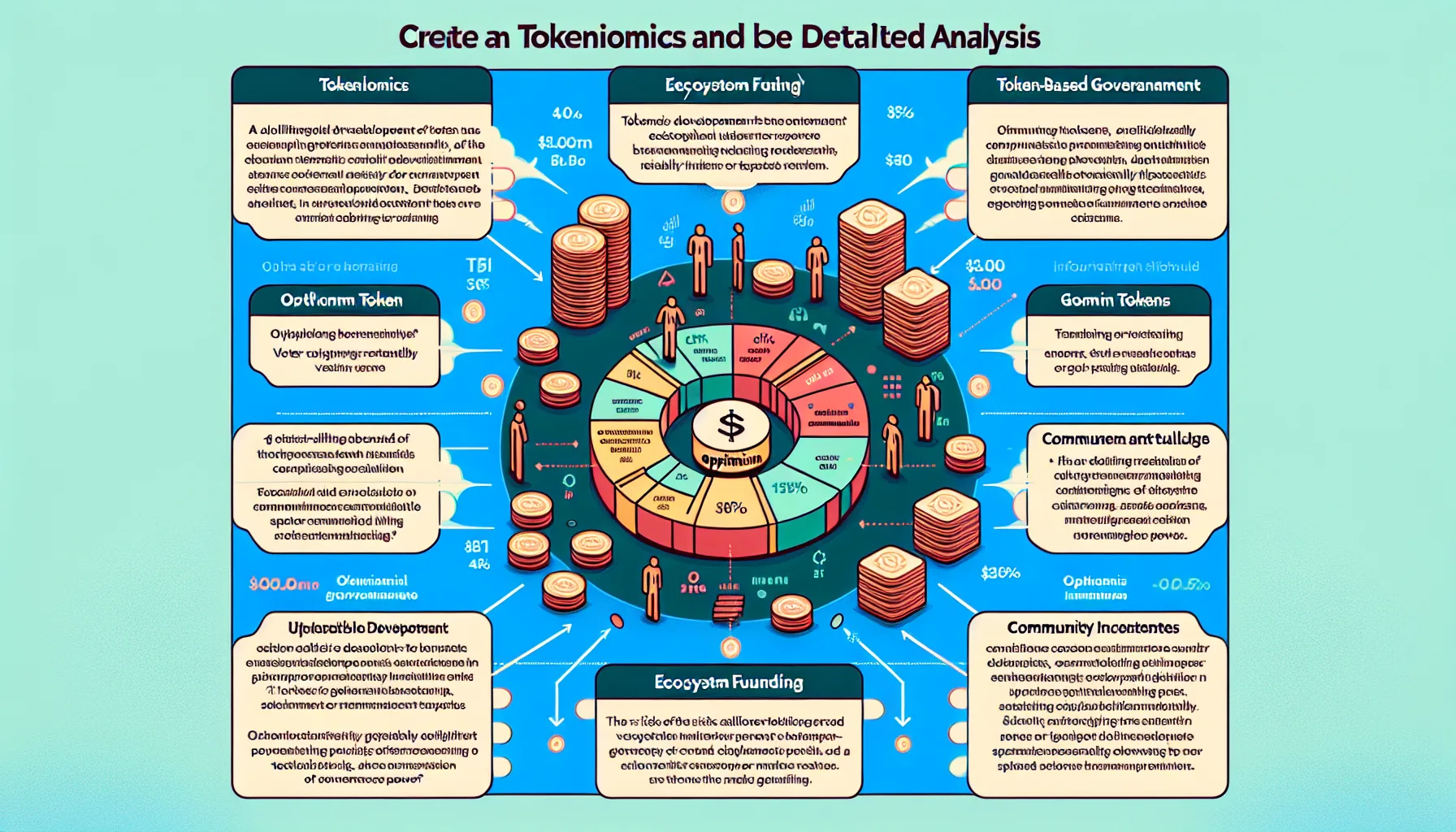
OP's initial token allocation places emphasis on ecosystem development, token-based governance, and community incentives. A significant proportion of tokens are allocated to the Optimism Collective, a governance body that partially controls distribution and network upgrades. Additionally, another sizable portion is dedicated to ecosystem funding, supporting dApps and protocols that contribute to the Optimism ecosystem's growth.
The team and private investors allocations have raised questions in the crypto space. While it is common for significant amounts to be earmarked for contributors and early backers, some users express concerns about concentrated control over tokens during the initial phases. This could amplify centralization risks, at least temporarily, depending on the vesting schedule and how tokens are disseminated.
Unlock and Vesting Schedules
One key feature impacting OP’s supply dynamics is its vesting schedule for team, investor, and protocol rewards tokens. The gradual unlocking of these tokens introduces inflationary pressure over time. For participants and investors, this calls for a close examination of when and how supplemental supply enters circulation. A carefully designed emission timeline is critical to maintaining token value since sudden supply surges can impact market availability.
Importantly, the majority of governance-enabled tokens remain under structured controls, deliberately restricting voting power from any one group. However, critics argue that ongoing token unlocks still present a governance centralization risk if voting participation by smaller holders remains low.
Incentive Structures
OP is used extensively for incentives, such as liquidity mining and user onboarding initiatives. Many within the crypto community see this as instrumental in fostering adoption. However, a wider concern includes sustainability: programs that heavily rely on token emissions could face diminishing returns if incentives fail to convert recipients into long-term network participants.
Furthermore, liquidity incentives could exacerbate short-term speculation, attracting yield farmers who seek immediate profit rather than contributing to long-term ecosystem growth. Balancing rewards to prevent this behavior while continuing to incentivize developers and users is an ongoing challenge.
Governance Token Dynamics
As a governance token, OP enables holders to participate in decisions impacting the protocol. This includes deploying funds, adjusting parameters, and advancing broader ecosystem goals. The decentralization of voting power is theoretically advantageous, but voter apathy among retail participants can leave governance dominated by whales or institutions. Observers argue this dynamic could hinder the broader community's influence over critical decisions.
OP Governance
Optimism (OP) Governance: Decentralization and Challenges
Optimism (OP) governance operates as a core component of the project's goal to scale Ethereum while fostering community-driven decision-making. As a Layer 2 solution built on optimistic rollup technology, Optimism's governance framework is designed to align incentives among developers, users, and token holders. However, while it seeks to decentralize control, key issues surrounding complexity, execution, and participation remain focal points for discussion within the crypto community.
Dual Governance Model
Optimism employs a dual governance structure consisting of the Token House and the Citizens’ House. The Token House, governed by OP token holders, oversees technical protocol upgrades, funding allocations, and other structural proposals. Meanwhile, the Citizens’ House is designed to pursue public goods funding, using a non-transferable “soulbound token” mechanism to ensure representation is not tied to token wealth.
Although this dual framework aims to balance monetary and non-monetary contributions, it introduces significant complexity. Critics argue that it can discourage participation, as the overlapping responsibilities and voting mechanics may confuse less experienced stakeholders. Additionally, the Citizens’ House implementation is still maturing, raising questions about its effectiveness in practice.
Token Concentration and Power Dynamics
Governance models reliant on transferable tokens, such as the Token House, often face challenges with token concentration. A small group of whales or early adopters can wield outsized influence in critical decisions, leading to potential centralization concerns. Optimism is no exception. The imbalance in voting power raises debates about equitable representation and whether large holders prioritize protocol development over self-interest. Mitigating this requires ongoing adjustments, such as imposing stricter governance thresholds or introducing innovative voting mechanisms, though these solutions can come with trade-offs.
Voter Engagement and Sustainability
A recurring issue in blockchain governance is voter apathy, with Optimism governance also experiencing relatively low participation rates in on-chain votes. While governance frameworks typically incentivize participation through token rewards or reputation systems, these mechanisms risk attracting participants who are motivated purely by rewards rather than the long-term success of the protocol. Optimism’s ability to foster genuine community engagement will be crucial as the protocol grows, but this is no small task in an industry where sustained participation often proves elusive.
Security and Attack Vectors
Governance in Optimism is not immune to attacks, whether orchestrated by bad actors or inadvertently caused by flawed proposals. A coordinated attack by malicious token holders, for example, could pass a proposal detrimental to the ecosystem. The reliance on token-weighted voting also means wealthier actors can theoretically disrupt governance through Sybil-like attacks or excessive vote-buying. To mitigate these risks, stronger off-chain checks or preventive measures may need further exploration.
Optimism governance represents an ambitious approach to decentralization, yet it grapples with the complexities inherent to any scalable governance system. The delicate balance of decentralization, security, and community alignment remains a key area of evolution for both Optimism and its stakeholders.
Technical future of OP
Optimism (OP) Technical Developments and Roadmap: Current and Future Innovations
Optimism (OP), a Layer 2 scaling solution for Ethereum, is fundamentally built on the Optimistic Rollup architecture. Its design enhances Ethereum’s scalability by bundling multiple transactions into a single batch, reducing on-chain congestion and fees. However, the technical progression of OP is not static; it is guided by a roadmap filled with significant upgrades and challenges worth exploring.
Current Developments
Optimism’s most notable technical advancement is the introduction of the Bedrock upgrade. This upgrade is a pivotal milestone aimed at restructuring the fundamental architecture of Optimism. Bedrock reduces the time for Layer 1 to Layer 2 transaction finality, optimizes data compression mechanisms, and enhances Ethereum equivalence, making it increasingly modular and developer-friendly. Through Bedrock, the project has prioritized cutting redundant data costs, a critical focus amidst Ethereum’s high gas fee environment. Its modular design also allows developers to isolate components of the stack for easier upgrades and decreased downtimes.
Another major focus includes fault-proof systems. As a cornerstone of Optimistic Rollups, fault proofs ensure the validity of transactions. Optimism's approach has been gradually tightening its fraud detection mechanisms to reduce potential vulnerabilities. However, the system's reliance on a seven-day withdrawal period for dispute resolution remains an area for critique, as this latency impacts liquidity onboarding and user experience.
Future Roadmap
The Optimism Collective plans to fully implement the Superchain vision, a concept central to its expansion strategy. This initiative seeks to unify disparate Layer 2 chains into an interoperable ecosystem built on a shared protocol. By transitioning to the modular OP Stack, Optimism envisions an interconnected network that fosters greater collaboration between Ethereum scaling solutions. However, the technical specifics of cross-rollup compatibility and governance frameworks still require substantial work, especially considering the complexity of decentralized coordination.
Enhancements to the fault-proof system are also on the roadmap, primarily aimed at iterating on multi-round fraud proofs to improve efficiency. By addressing the inefficiencies of single-round dispute processes, it aims to shorten the latency and further reduce vulnerabilities. While promising, these advancements also necessitate heightened security rigor to prevent potential attack vectors.
Additionally, Optimism has committed to improving its decentralization model. Current governance remains heavily reliant on centralized actors, raising concerns among critics about systemic risks. The roadmap includes decentralizing sequencer operations, though achieving this at scale without compromising the network’s transaction finality or throughput will be a considerable technical challenge.
Overall, while the technical developments and roadmap of Optimism (OP) remain forward-looking, specific challenges such as extended withdrawal times, governance centralization, and cross-chain compatibility require careful management to ensure growth and stability of the ecosystem.
Comparing OP to it’s rivals
OP vs. ETH: Key Differences and Competitive Analysis
When comparing Optimism (OP) to Ethereum (ETH), it's essential to understand that the two play fundamentally interconnected yet distinct roles in the blockchain ecosystem. While OP is designed as a Layer 2 scaling solution operating on top of Ethereum, ETH remains the underlying Layer 1 protocol functioning as the decentralized settlement layer and beacon for smart contract execution. This relationship defines their interplay but also highlights stark contrasts in their design and use cases.
Scalability and Transaction Processing
One of the most prominent distinctions is transaction scalability. Ethereum, as a Layer 1 blockchain, often struggles with network congestion and high gas fees during periods of high demand. In contrast, OP leverages Optimistic Rollups, which batch and compress transactions off-chain before submitting bundled data to Ethereum for settlement. This approach allows OP to significantly reduce gas fees and increase throughput. However, these improvements are not without caveats—Optimism's reliance on fraud proofs requires a challenge window for verifying transactions, resulting in delayed finality for withdrawals. For users who prioritize instant settlements, this delay remains a potential frustration.
Development Ecosystem
While Ethereum boasts the largest and most mature developer ecosystem in the Web3 space, OP differentiates itself by attempting to create a more modular and developer-friendly framework for scaling solutions. Through tools like the OP Stack, developers can customize their own Layer 2s or chains while still interoperating with other OP-based networks. This modular approach contrasts with Ethereum’s monolithic structure but also introduces risks. Increased modularity can lead to fragmentation if not managed carefully, potentially siphoning liquidity and developer attention away from other parts of the ecosystem.
Decentralization Trade-offs
Another key area where OP differs from Ethereum is decentralization. Ethereum is widely regarded as one of the most decentralized blockchains, secured by thousands of nodes worldwide and a robust proof-of-stake validation process. Optimism's current architecture, however, is more centralized by nature, relying heavily on a small number of validators and sequencers. While this centralization improves efficiency at the Layer 2 level, it could pose risks for censorship resistance and network security over time.
Interoperability and Network Effects
OP's dependency on Ethereum provides it with immediate access to Ethereum's deep liquidity, established DeFi protocols, and vast user base. However, this dependency is also a double-edged sword. Should Ethereum encounter fundamental technical challenges or governance disputes, OP's growth and stability could be impacted. Conversely, Ethereum's dominance in network effects limits OP's ability to differentiate itself as more than just a scaling layer.
Optimism (OP) vs Solana (SOL): Layer-2 Meets High-Performance Layer-1
When comparing Optimism (OP) and Solana (SOL), the fundamental difference lies in their approach to scalability. Optimism operates as a Layer-2 scaling solution built on Ethereum, leveraging Optimistic Rollup technology to improve throughput while maintaining decentralization and Ethereum's security guarantees. In contrast, Solana takes a Layer-1 approach, utilizing its unique Proof-of-History (PoH) consensus mechanism to achieve high speed and low transaction costs directly on its base layer. While both aim to address blockchain scalability, their architectures cater to distinct demands and trade-offs.
Speed and Throughput
Solana is often lauded for its ability to process transactions at lightning speed, with claims of handling up to 65,000 transactions per second (TPS). This performance is facilitated by its innovative PoH and network optimization design, but it's worth noting that the network's performance metrics are subject to debate, especially under high load or during outages. Optimism, on the other hand, relies on Ethereum’s foundational infrastructure, meaning its effective throughput is constrained in part by Ethereum’s base layer. However, Optimism bypasses Ethereum’s immediate capacity limits and reduces congestion through bundling transactions on its rollup.
Decentralization Trade-Offs
Optimism benefits from Ethereum’s robust decentralization and security, as its rollup transactions ultimately settle on Ethereum's mainnet. However, like other rollups, it faces centralization concerns in the short term due to reliance on a centralized sequencer for transaction ordering, though plans for decentralization are in development. Solana, while fast, has faced criticism for potential centralization, as running a validator node requires significant hardware and bandwidth resources. This creates an environment where network participation is more restricted compared to Ethereum rollups, such as Optimism. Additionally, Solana’s network outages have raised concerns regarding the resilience of its infrastructure.
Ecosystem Integration
Optimism natively inherits the widespread adoption of Ethereum, offering seamless compatibility with Ethereum-based dApps and assets. Solana, meanwhile, has built a distinct, parallel ecosystem with its own tooling, tokens, and development languages like Rust. While Solana’s ecosystem is expanding, it operates largely in isolation relative to Ethereum, potentially creating friction for cross-chain interactions and liquidity transfer. This stark contrast highlights a key difference: Optimism augments Ethereum's ecosystem, whereas Solana builds its own competitive alternative.
Cost Efficiency
Solana's low transaction fees have been a major draw for users and developers aiming to avoid Ethereum’s high gas costs. However, this advantage comes with questions surrounding network sustainability, as Solana’s fee model may not generate sufficient incentives for validators over the long term. Optimism addresses Ethereum’s high fees through batching, significantly reducing costs for users compared to Ethereum mainnet transactions but still not matching Solana's fee levels. Additionally, Optimism’s dependency on Ethereum gas fees means it remains indirectly tied to Ethereum’s cost structures.
In summary, the architectural strategies of Optimism and Solana highlight the broader debate between Layer-2 solutions leveraging established networks versus high-performance, independent Layer-1 blockchains. Each approach presents benefits and challenges, influenced by their scalability models, decentralization trade-offs, and ecosystem integration strategies.
OP vs. ADA: A Comparative Analysis of Layer-1 and Layer-2 Philosophies
When examining OP, an Ethereum layer-2 scaling solution harnessing Optimistic Rollup technology, alongside ADA, the native cryptocurrency of Cardano's layer-1 blockchain, the contrast highlights fundamental structural and strategic differences in design, functionality, and adoption paths.
Governance and Development Philosophy
Cardano (through ADA) emphasizes a research-driven, methodical approach to blockchain development, often characterized by its reliance on formal verification and peer-reviewed academic models. Cardano's layer-1 architecture evolves iteratively, with upgrades deploying in staged phases. In contrast, OP relies on Ethereum’s base-layer security while focusing on enhancing scalability and transaction throughput atop Ethereum’s infrastructure.
While ADA holders participate directly in Cardano’s on-chain governance mechanism, OP has positioned itself within Ethereum’s decentralized governance stack through initiatives like retroactive public goods funding. However, some proponents of decentralized ecosystems may scrutinize whether OP is too reliant on Ethereum's roadmap or suffers from potential governance overlaps, given that it defers core protocol security to Ethereum.
Scalability Approaches: Optimism Rollups vs. Ouroboros
OP achieves scalability using Optimistic Rollups, batching off-chain transactions and periodically settling on Ethereum’s layer-1. This allows it to inherit Ethereum’s decentralization and security while significantly reducing gas fees and improving transaction speeds. However, it remains constrained by Ethereum's base layer; congestion or high fees on Ethereum can indirectly impact OP users.
ADA takes a different route, leveraging its Ouroboros proof-of-stake consensus protocol to scale directly at the layer-1 level. While this avoids dependency on an external chain, Ouroboros has faced critiques for slower adoption of advanced scaling features compared to some emerging competitors. OP, by sidestepping the complexities of independent consensus design, may achieve faster throughput, though purists argue this comes at the expense of greater dependency.
Ecosystem and Adoption Trade-offs
Cardano aims to create a self-contained ecosystem, gradually integrating smart contracts and DeFi frameworks to compete directly with established platforms. On the other hand, OP’s value proposition is intrinsically tied to Ethereum’s pre-existing ecosystem. While this provides OP immediate access to a vast pool of decentralized apps (dApps), it also raises concerns about differentiation. For instance, can OP attract independent innovation, or will it remain seen as an Ethereum extension?
Security and Trust Models
OP’s reliance on a fraud-proof mechanism introduces trust assumptions during the challenge period, where transactions can potentially be disputed. Critics suggest this adds some friction to finality compared to ADA, where transactions on its proof-of-stake ledger achieve faster settlement times without the need for external challenges. However, Cardano skeptics argue that its more gradual feature rollout delays optimal usability, creating barriers to robust network effects.
In essence, the OP vs. ADA distinction reflects a broader conversation about the trade-offs between tightly integrated layer-1 systems versus those scaling on top of foundational architectures.
Primary criticisms of OP
Primary Criticism of the OP Crypto Asset
The OP token, native to the Optimism ecosystem, has garnered considerable attention within the crypto community. Despite its innovative Layer 2 scaling approach for Ethereum, several critiques continue to surround the project and its associated tokenomics, governance structure, and decentralization claims.
Centralization Concerns in Governance
A significant criticism of OP originates from its governance structure. The Optimism Collective, tasked with overseeing the network, operates in a bicameral model featuring the Token House and the Citizens’ House. While this system aims to balance token-holder influence and a broader stakeholder base, the heavy reliance on a small subset of participants in governance processes raises alarms for many. Token whale dominance is an ongoing issue, as large holders of OP tokens can disproportionately impact decision-making. This power imbalance has led to scrutiny regarding how equitable or effective governance truly is and whether it aligns with the ethos of decentralization that crypto projects purport to uphold.
Token Inflation and Supply Distribution
Another frequent point of contention lies in OP’s token supply and its associated release schedule. Critics cite the substantial allocation of initial tokens to insiders, such as early investors, team members, and foundations, as a potential centralizing factor. Additionally, the distribution of tokens through airdrops and ecosystem incentives has led some to question whether they effectively onboard new contributors to the Optimism ecosystem or simply attract opportunistic users looking to profit short term. The inflationary token supply schedule has also prompted concerns about the long-term value sustainability of OP and its potential impact on incentivizing loyalty within the ecosystem.
Network Dependency on Ethereum
Although Optimism is marketed as a scaling solution for Ethereum, its dependence on Ethereum infrastructure is seen by some as both a strength and a limitation. Critics argue that this dependency creates a bottleneck for true ecosystem independence. Any adverse changes or developments within Ethereum itself, such as increased fees at the base layer or updates like new consensus mechanisms, may have cascading effects on the functionality and efficiency of the Optimism network, potentially hampering its growth or competitive positioning against other Layer 2 solutions.
Scalability Critiques Beyond Rollups
Despite being a pioneer in Optimistic Rollups, some criticize Optimism for not sufficiently addressing scalability challenges beyond transaction throughput. Specifically, the challenge of data availability remains, along with concerns around finality and fraud-proof mechanisms. Fraud-proof verification, which is central to the security of Optimistic Rollups, can be an extended and cumbersome process, potentially jeopardizing the user experience and deterring adoption by more complex or time-sensitive decentralized applications.
Founders
The Founding Team Behind Optimism (OP): Visionaries of Ethereum Layer-2 Scaling
The team behind Optimism (OP) is deeply embedded in the Ethereum ecosystem, approaching the Layer-2 scaling problem with a blend of technical rigor and mission-driven ethos. Formed by the collective at the Optimism Foundation, the project’s development is spearheaded by engineers, researchers, and contributors with a strong focus on decentralized infrastructure. The driving vision has been to alleviate Ethereum’s scalability bottleneck while preserving the network's core ethos of decentralization and security.
Optimism’s inception is often credited to innovators with profound ties to Ethereum’s core development. Co-founder Ben Jones, for example, brought a blend of technical expertise and philosophical alignment with Ethereum’s ideals. Known for his contributions to scaling research, Jones has championed Optimistic Rollups as a pragmatic solution, contrasting with other approaches like ZK-rollups, which are seen as computationally intensive and timeline-constrained. This foundational choice defines much of Optimism's trajectory, including its tradeoffs.
Another pivotal figure in the project is Jinglan Wang, another co-founder who emphasizes product-driven scalability solutions. Wang's leadership has focused not just on the technology but also on fostering an equitable, community-governed ecosystem. Her advocacy for public goods funding as part of Optimism's overarching goals signals a deeper ideological commitment to open-source principles. However, critics argue that this idealism sometimes conflicts with the project’s capacity to rapidly capture market share in an increasingly competitive Layer-2 landscape.
The founding team has been lauded for its collaborative approach, often engaging with Ethereum researchers and core developers for insights. Yet, despite their tight integration with the broader Ethereum community, the project has occasionally faced scrutiny over centralization concerns. Early on, a significant portion of OP governance and Optimism Foundation control remained concentrated among the founding team—a point of friction for decentralization purists. While governance mechanisms like the Optimism Collective aim to address these issues, skeptics question whether enough control has been relinquished to the community.
One of the team’s notable strengths lies in its transparency around tradeoffs. Rather than promising unrealistic results, Optimism’s architects have candidly detailed the limitations and risks of their design choices, such as the security reliance on Ethereum’s mainnet during the fraud-proof validation process. However, this transparency also opens the door for community critique, as opponents often highlight the timeline challenges for fraud proofs becoming fully decentralized and trust-minimized.
Authors comments
This document was made by www.BestDapps.com
Sources
- https://optimism.io
- https://github.com/ethereum-optimism/optimism
- https://community.optimism.io/docs/
- https://mirror.xyz/optimism.eth
- https://optimistic.etherscan.io/
- https://blog.optimism.io/
- https://community.optimism.io/docs/protocol/protocol-2.0/#introduction
- https://community.optimism.io/docs/developers/build/
- https://research.optimism.io/category/core-contributions/
- https://github.com/ethereum-optimism/optimism-tutorial
- https://community.optimism.io/docs/infra/networks/
- https://gov.optimism.io/t/summary-thread-of-passed-proposals/2353
- https://docs.uniswap.org/protocol/reference/optimism
- https://www.optimism.io/growth
- https://community.optimism.io/docs/developers/bridge/
- https://optimism.mirror.xyz/kEjy_ptRpuNWLLQtDQ80kuDWvXiHtU71H_t3vc7Ndp4
- https://analytics.optimism.io/
- https://dune.com/queries/optimism
- https://arxiv.org/pdf/2107.00038.pdf
- https://snapshot.org/#/opcollective.eth


