History of OGN
The History of OGN: Origin Protocol's Early Development and Milestones
Origin Protocol (OGN) was conceived as part of a broader vision to enable decentralized marketplaces and e-commerce platforms on the Ethereum blockchain. Its history dates back to 2017, when Origin Protocol was founded by serial entrepreneurs Josh Fraser and Matthew Liu, both of whom brought substantial experience in the tech and startup sectors. The project aimed to disrupt traditional online commerce by leveraging smart contracts, decentralized technology, and tokenomics to foster a peer-to-peer network.
From its inception, the Origin team focused on building a transparent platform for users to transact goods and services without intermediaries. One of the foundational elements was to solve inefficiencies and high fees associated with existing centralized e-commerce systems. However, the steep learning curve for using blockchain-based systems and the early challenges of Ethereum's infrastructure, such as scalability and network congestion, quickly emerged as obstacles.
In its early days, the project garnered attention from reputable investors and venture capital groups in the blockchain space, enabling substantial funding. However, the broader crypto bear market of 2018 tested many projects, including Origin Protocol. Like many blockchain initiatives, OGN faced skepticism as market conditions battered enthusiasm for decentralized applications (dApps).
The project's mainnet was launched in mid-2019, along with the introduction of its decentralized marketplace applications. Soon after, notable products like Dshop—a decentralized e-commerce solution—emerged as flagship offerings. These initiatives showcased the real-world applications of Origin Protocol while competing with more established centralized solutions. Despite the innovation, user adoption remained a critical hurdle due to challenges such as the complexity of onboarding, low blockchain literacy among general users, and the necessity of integrating stablecoins to sidestep pricing volatility in crypto payments.
The native token, OGN, introduced as both a governance and utility token, has had its share of scrutiny. Originally designed for incentivization within the ecosystem, the token's real-world utility and demand have at times been questioned by skeptics, with some labeling its tokenomics as overly ambitious. Additionally, competition within the DeFi and NFT spaces, where Origin expanded its offerings, raised concerns about whether the project could differentiate itself sufficiently.
Despite obstacles, Origin Protocol cemented some notable partnerships and integrations across the crypto space, which helped it remain relevant. The launch of Origin Story—a platform facilitating NFT issuance for creators—signaled an expansion beyond its original focus on commerce, positioning the team to explore new use cases for blockchain technology. However, questions about the project's ability to juggle multiple verticals persist among critics, particularly given that adoption of its core marketplaces never reached mass scale.
How OGN Works
How OGN Works: Understanding the Mechanics of the Origin Protocol Token
OGN, or Origin Token, is the utility and governance token of the Origin Protocol, a blockchain project focused on decentralized commerce and NFTs. The functionality of OGN is deeply tied to the Origin ecosystem, enabling various use cases and aligning stakeholder incentives. While OGN aims to support decentralization and user empowerment, it comes with its own complexities and limitations.
Utility and Governance
At its core, OGN powers the Origin Protocol by facilitating user participation in decentralized marketplaces and NFT platforms. One of its primary functions is staking, where holders lock up their tokens to earn rewards. This staking mechanism not only incentivizes longer-term participation but also contributes to the security and stability of Origin’s operations. Additionally, OGN is integral to governance, allowing token holders to propose and vote on system upgrades, policy changes, and future developments. This aspect positions OGN as a mechanism for democratizing decision-making within the protocol. However, it's worth noting that governance participation rates in decentralized projects often vary, with some stakeholders remaining passive, which could limit its effectiveness in practice.
Reward System
OGN is also used as a rewards mechanism for users who contribute to the ecosystem. Origin incentivizes actions such as onboarding new users, completing transactions, or promoting the platform. These rewards create a feedback loop, encouraging organic growth and adoption. However, the rewards system is occasionally criticized for potential centralization risks. If large entities accumulate significant OGN holdings through rewards, they could exert undue influence over the protocol’s governance and economic policies.
Marketplace Payments
OGN can be used as a medium of exchange within the Origin ecosystem. Buyers and sellers transacting in OGN may benefit from lower fees compared to traditional payment methods. While this can reduce reliance on intermediaries, it also introduces exposure to token price volatility for users. Merchants and participants must carefully manage this risk, especially in regions where fiat currency conversion lacks seamless infrastructure.
Tokenomics and Inflation
OGN’s supply and distribution model significantly affect its utility. New tokens enter circulation through mechanisms like staking rewards and ecosystem grants. While this promotes liquidity and encourages adoption, it also raises concerns about inflation. Excessive token issuance could dilute existing holdings and impact OGN’s value as a utility token, which may hinder long-term participation. Balancing token distribution between encouraging growth and maintaining stability remains an ongoing challenge.
Ultimately, OGN’s structure attempts to balance decentralized governance, incentivization, and utility within a rapidly evolving crypto landscape, but its design and implementation continue to face scrutiny from participants and analysts.
Use Cases
Use Cases of the OGN Crypto Asset
Origin Token (OGN) is the utility and governance token powering the Origin Protocol ecosystem, designed to enable decentralized commerce and peer-to-peer interactions. Its primary use cases stem from its role within this ecosystem, where it supports decentralized marketplaces, non-fungible token (NFT) commerce, and DeFi integrations. However, OGN's functionality goes beyond just utility, showcasing both strengths and potential limitations.
Enabling Decentralized Marketplaces
OGN is pivotal in powering decentralized marketplaces on the Origin Protocol. Sellers can list goods and services directly, and buyers can acquire them without intermediaries. This allows direct peer-to-peer transactions, reducing transactional friction and fees. OGN itself can be used as a means of payment within these marketplaces, streamlining payments and maintaining the decentralized ethos. However, adoption barriers exist, as onboarding non-crypto participants remains a challenge due to the inherent complexity and fluctuating transaction costs depending on the Ethereum gas fees.
Utility in NFT Ecosystems
OGN plays a significant role in Origin’s NFT offerings. Content creators, artists, and musicians can issue NFTs on the Origin platform, with OGN often used for transactions and staking purposes. This helps users monetize digital works without intermediaries, but scalability concerns linger due to Ethereum's network limitations. High transaction costs during peak usage can deter smaller creators from utilizing the platform effectively.
Governance and Staking
OGN holders have governance rights within the ecosystem. Token holders can vote on proposals related to upgrades, fee structures, or other protocol changes, giving them a direct role in shaping the platform's future. Furthermore, OGN enables staking, providing users with rewards for participating in network consensus and incentivizing long-term token holding. However, governance participation rates tend to be low, raising concerns over the decentralization of decision-making power and whether token distributions might favor large holders.
DeFi Integrations
OGN's inclusion in various decentralized finance protocols enhances its use cases, allowing holders to lend, borrow, or provide liquidity in exchange for yield. However, the token’s reliance on volatile DeFi markets may expose it to risks, such as impermanent loss or systemic vulnerabilities within the DeFi landscape.
Potential Challenges
While OGN has multiple use cases, its broader adoption faces hurdles. Issues like wallet compatibility, user education, and layer-1 network limitations could hinder user experience. Additionally, the competitive nature of the crypto space means OGN must continually prove its utility against other multi-use tokens.
OGN Tokenomics
Understanding OGN Tokenomics: Supply, Utility, and Distribution
OGN (Origin Token) operates as the backbone of the Origin Protocol, designed to align incentives across stakeholders and drive the platform’s decentralized commerce ecosystem. Its tokenomics model is carefully constructed but not without potential challenges that crypto-savvy users should scrutinize closely.
Token Supply and Emission Models
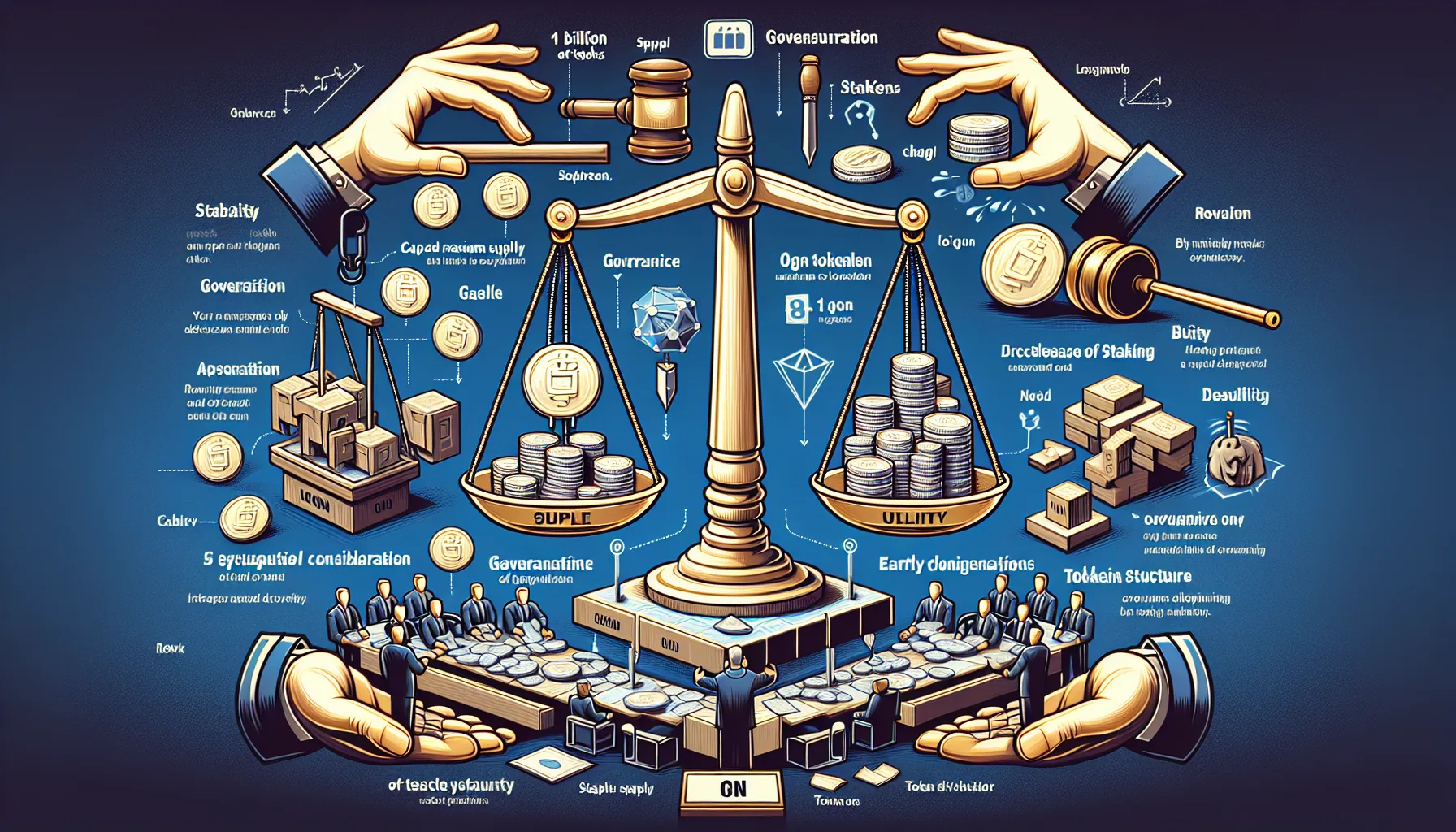
OGN was launched with a capped maximum supply of 1 billion tokens, a figure fixed to prevent runaway inflation within the ecosystem. While a capped supply model theoretically bolsters scarcity over time, a deep dive into Origin’s vesting schedules and token release mechanisms reveals a more complex dynamic. Large allocations were reserved for team members, ecosystem development, and strategic partnerships, with vesting schedules staggered over multiple years. While this helps reduce immediate supply shocks, periodic unlocks—especially from team and investor allocations—may exert sell pressure on secondary markets, a consideration for market participants monitoring liquidity impacts.
Additionally, Origin’s staking system potentially introduces what is often termed “soft inflation.” While no new tokens are minted through staking, users locking their OGN for yield can pull circulating supply temporarily off the market, leading to perceived scarcity that reverses when tokens are unstaked and liquidity floods back into circulation. This cyclical nature warrants close analysis for those interested in long-term supply dynamics.
Utility and Incentive Structures
OGN’s principal utility lies in its role as a governance token and as a reward mechanism within the Origin ecosystem. Users can stake OGN to participate in key governance decisions, ranging from protocol upgrades to ecosystem fund allocations. This utility aims to promote decentralized management, but active governance participation has often been criticized as limited to a small subset of token holders, raising concerns about concentration of decision-making power.
Additionally, OGN is frequently deployed as an incentive to attract users, merchants, and developers to Origin’s platform offerings. Token-based rewards, though effective for onboarding, may risk creating dependence on high reward issuance to sustain engagement, a common challenge in models reliant on token-powered growth loops. Over time, this could dilute perceived value if utility does not organically scale alongside adoption.
Distribution Critiques
From a distribution standpoint, early concentration of token ownership remains a polarizing topic. Initial allocations heavily favored early backers, which introduced the possibility of asymmetric sell-off scenarios. While the project has touted ecosystem fund grants and community rewards as mechanisms to redistribute tokens more evenly, measurable impact remains unclear.
For experienced market participants, OGN’s tokenomics structure presents both opportunities and potential red flags, particularly for those sensitive to dilution, governance participation, and supply-side dynamics.
OGN Governance
Exploring Governance in Origin Protocol (OGN)
Governance is a critical aspect of any decentralized ecosystem, and Origin Protocol (OGN) is no exception. The governance framework of OGN reflects its ambitions to empower its community, but it also highlights some challenges inherent to decentralized decision-making at scale.
Token Holder Voting Power
At the core of OGN’s governance lies a token-weighted system, where token holders have the power to propose, discuss, and vote on key protocol upgrades or modifications. This aligns with the broader ethos of decentralization but also raises questions about the potential for governance centralization. As with many crypto assets, a substantial portion of OGN tokens may be controlled by a small number of early investors, whales, or team members. This concentration of voting power could undermine equitable participation by smaller holders, creating a governance dynamic where the most resource-heavy participants wield disproportionate influence.
Lack of On-Chain Governance Mechanisms
While OGN acknowledges the need for community-driven input, a formalized on-chain governance structure does not yet appear to be a central feature of its protocol. This may limit transparency, as critical decisions are likely conducted off-chain. Off-chain governance often creates barriers for accountability and real-time documentation, leading to community concerns over backdoor negotiations or opaque decision-making processes.
Community Involvement and Accessibility
On the positive side, OGN governance does aim to solicit broad discussion and input from its community, typically leveraging forums, social media, and other digital platforms to encourage participation. However, participation in such discussions remains dependent on the willingness of token holders to actively engage. In decentralized systems, voter apathy is a frequent challenge, and OGN is no exception. Low participation rates can lead to governance outcomes that reflect the preferences of an active minority, rather than a true collective consensus.
Smart Contract Risks and Upgrade Power
In most governance systems where token holders can vote on upgrades, there is always the risk of a malicious or poorly designed proposal being approved. OGN must contend with such risks, ensuring that safeguards are in place to prevent unintended consequences from governance-approved smart contract changes. The lack of a robust failsafe mechanism could make the protocol vulnerable to exploitative actions or contentious decisions becoming permanent.
Technical future of OGN
OGN Technical Roadmap and Developments: Current Innovations and Future Trajectory
Origin Protocol's crypto asset, OGN, underpins a decentralized ecosystem focused on powering decentralized commerce and NFT marketplaces. The technical developments surrounding OGN aim to bolster its utility, scalability, and integration within Web3 applications. Below is a detailed examination of the ongoing developments and future roadmap.
Current Technical Developments Impacting OGN
Recent efforts from Origin Protocol have largely revolved around optimizing OGN's integration with the wider Origin ecosystem, which includes Origin Story and other DeFi and NFT-focused dApps. The protocol has recently introduced improved staking mechanics to enhance token incentives for holders and align community participation with the network’s long-term growth goals. These enhancements include smart contract optimizations, reducing gas fees from staking and enabling better yield calculations.
Interoperability has been another significant focal point. OGN is now accessible on multiple blockchain networks via cross-chain bridges, facilitating secure movements between Ethereum, Binance Smart Chain, and other EVM-compatible chains. However, these bridges still face scalability challenges, particularly when it comes to ensuring bridge security against potential attack vectors, a known issue across the DeFi ecosystem.
Another advanced technical upgrade has been OGN's involvement in developing modular NFT structuring under the Origin Story framework. These modular contracts are designed to reduce operational complexities for creators while still maintaining high levels of customization.
Planned Features in the OGN Technical Roadmap
Looking ahead, Origin Protocol has outlined its intent to make OGN more integrated into Layer 2 scaling technologies. This will involve launching native support for Optimistic Rollups and zk-Rollups, which aim to address Ethereum's scalability bottlenecks. While this could translate to lower transaction fees and faster processing times, rollups introduce their own layer of technical complexities, like delayed finality and trust reliance on sequencers, that aren't solved yet.
Decentralized governance for OGN is also slated to expand. Although some governance abilities are already available, planned advancements include migrating more protocol decisions directly into a token-holder-controlled DAO. This shift might face hurdles, particularly due to unequal token distribution and the potential for voting power centralization.
Further integration with cross-chain ecosystems beyond Ethereum and its derivatives remains a core focus. Polkadot and Cosmos compatibility are currently under exploration, though no finalized technical timeline has yet been communicated. Such expansions aim to decentralize OGN’s ecosystem but may encounter delays due to the complexities inherent in bridging disparate consensus mechanisms.
Finally, the roadmap hints at potential privacy-enhancing functionalities, such as zk-SNARK-enabled transactions. Though these developments would cater to the rising demand for anonymity in decentralized commerce, introducing such features could raise regulatory scrutiny.
OGN’s technical future promises modularity, scalability, and deeper participation in Web3 infrastructure, but the sophisticated advancements come with inherent risks, particularly around bridge security, governance participation, and execution timelines.
Comparing OGN to it’s rivals
OGN vs. FIL: A Comparative Analysis of Decentralized Use Cases
When examining Origin Protocol's OGN and Filecoin's FIL, the comparison reveals a stark divergence in their underlying purposes, architecture, and target audiences. While both are positioned within the broad scope of decentralized ecosystems, their practical applications and value propositions remain distinct, creating a natural opportunity to evaluate how the two crypto assets stack up against each other.
Core Focus and Differentiation
OGN primarily serves as the utility and rewards token within the Origin Protocol ecosystem, which aims to power decentralized e-commerce and NFT marketplaces. By focusing on peer-to-peer commerce and facilitating frictionless creator economies, OGN aligns itself with enabling decentralized ownership of digital assets and empowering creators to bypass intermediaries.
In contrast, FIL is the backbone of Filecoin, a decentralized storage network that incentivizes users to contribute unused disk space for distributed data storage. Its primary focus lies in transforming traditional cloud storage services through decentralization, displacing centralized providers like AWS and Google Cloud. Where OGN is intricately tied to economic transactions and content ownership, FIL is firmly anchored in infrastructure development and data storage.
Technical and Functional Trade-offs
From a technical standpoint, Filecoin’s infrastructure relies heavily on its robust storage-proof mechanisms: Proof-of-Replication and Proof-of-Spacetime. These innovations validate that storage providers deliver on their promises, ensuring the security and reliability of the decentralized storage network. While this system is technically sophisticated, its complexity can lead to operational inefficiencies, such as slower transaction or retrieval times compared to centralized competitors.
OGN, by comparison, doesn't face such infrastructure constraints. Instead, its focus on DeFi and NFT applications ensures a relatively lighter operational burden. However, this comes with its own limitations—OGN's success is closely tied to the growth and adoption of its DShop, NFT platforms, and staking mechanisms. If these use cases fail to attract sufficient user adoption or scalability solutions, the utility of OGN could be overshadowed by other crypto assets designed for broader application.
Economic Models and Incentives
FIL employs a tokenomic model rooted in incentivizing storage providers, ensuring long-term involvement in decentralized file storage. Nonetheless, this reliance on infrastructure-related incentives makes FIL highly sensitive to hardware costs and evolving storage requirements, which could pose barriers for new participants.
On the other hand, OGN tightly integrates rewards into its ecosystem, focusing on incentivizing marketplace users, NFT creators, and early adopters. This model fosters a more community-centric approach but may struggle to compete with projects offering higher liquidity or greater institutional appeal. Additionally, the token’s reliance on ecosystem-specific adoption could limit its appeal outside Origin Protocol’s platform.
Verdict
When narrowing the lens to the crypto-savvy segment, the comparison between OGN and FIL highlights their divergent paths within the blockchain space. Their differences lie not only in technical focus but also in their ability to adapt and scale within their respective domains. These contrasts signal that each asset serves distinct roles, which may or may not resonate depending on the investor's or user's goals.
Comparing OGN and SKL: Key Differentiators in Decentralized Ecosystems
When evaluating Origin Protocol's native crypto asset (OGN) against SKALE Network's SKL, the differences become apparent in their approach to decentralized technology and utility within the blockchain space. While both projects tackle distinct aspects of Web3 infrastructure, their unique design choices set them apart.
Focus and Use Case Divergence
OGN primarily powers the Origin Protocol, which emphasizes enabling decentralized commerce and NFT marketplaces. Its ecosystem is designed to drive adoption for peer-to-peer marketplaces and creators, with a strong emphasis on creating seamless user experiences interconnected with blockchain technology. The token plays a critical role in governance, staking, and rewarding participation within its decentralized marketplaces.
In contrast, SKALE Network's SKL token focuses on enhancing blockchain scalability by providing an elastic, decentralized infrastructure for dApps. SKL functions as the core utility layer of SKALE’s multi-chain network, offering developers a means to deploy dApps with high throughput, low latency, and minimal gas fees. It's a specialized solution catering to the scalability challenges prominent in Ethereum-based ecosystems, making it attractive to projects requiring optimized performance.
The key difference lies in their core ambition: OGN targets consumer-facing adoption of decentralized commerce, while SKL is tailored toward easing bottlenecks in blockchain scalability for developers.
Strengths and Weaknesses of SKL Compared to OGN
One of SKALE’s notable strengths lies in its technical architecture. By leveraging elastic sidechains, SKALE significantly reduces the cost barriers associated with Ethereum’s mainnet. OGN, although robust in addressing the niche of Web3 commerce, doesn’t directly tackle the infrastructure struggles developers face when scaling Ethereum-based applications. This distinction gives SKL a competitive edge within the infrastructure space, especially among developer-focused audiences.
However, SKALE is not without its challenges. Despite its innovative approach, adoption among dApps has been incremental rather than explosive. Part of this stems from its reliance on Ethereum—a network still evolving to address scalability concerns at its base layer. Moreover, the SKALE ecosystem is highly dependent on maintaining technical superiority, putting it in direct competition with other Layer-2 solutions and sidechains (e.g., Arbitrum and Optimism, though indirect to this discussion).
OGN, by comparison, enjoys a more straightforward narrative tied to decentralized marketplaces and broader consumer-oriented applications. However, its reliance on adoption by creators and retailers in the volatile NFT and e-commerce sectors exposes it to market risks different from SKALE’s infrastructure-centric hurdles.
Token Functionality and Ecosystem Design
Another layer of differentiation lies in how each project approaches token utility. SKL’s tokenomics are engineered to encourage infrastructure development, with staking mechanisms tied to validating nodes and securing the network’s scalability framework. OGN, on the other hand, leans heavily on fostering community engagement and user rewards within its NFT and commerce ecosystem.
While SKL's utility is centered on technical operations, OGN focuses on consumer and business interactions, further reflecting their distinct priorities. Both models have their merits and drawbacks depending on the audience served—developers, enterprises, or end-users.
Comparing OGN with AXS: Utility and Ecosystem Divergence
In the crowded crypto landscape, OGN (Origin Protocol) and AXS (Axie Infinity Shards) appeal to distinct user bases due to their divergent use cases and ecosystems. While both tokens are rooted in decentralized technologies, their specific applications demonstrate significant contrasts, as well as potential overlaps in the rapidly evolving blockchain space.
OGN, with its focus on enabling decentralized commerce, primarily serves as the backbone for creating NFT marketplaces, decentralized applications (dApps), and peer-to-peer trading platforms. Its utility is tied to driving adoption in the creator economy and providing tools for seamless, trustless commerce. AXS, on the other hand, anchors itself within the realm of blockchain-based gaming as the governance and reward token of Axie Infinity, one of the most prominent play-to-earn ecosystems. This foundational difference highlights how their respective ecosystems are built for entirely different types of interactions.
Where AXS surpasses OGN is in its ability to capture widespread engagement through gamified economics. Axie Infinity’s play-to-earn model has been pivotal in onboarding users into the blockchain space, offering tangible incentives for participation. The gamification strategy creates high user loyalty, which also drives demand for AXS. This model, however, comes with challenges: sustainability concerns regarding the tokenomics of play-to-earn economies, questions over long-term user retention, and criticism related to high barriers to entry for new players. These issues could impact AXS’ ecosystem growth, particularly in competitive gaming markets.
By comparison, OGN focuses less on gamification and more on real-world use cases, such as e-commerce dApps and NFT issuance platforms. This approach positions it as a more versatile utility within non-gaming industries. However, the drawback for OGN lies in the slower user adoption curve. Unlike AXS, which attracts large gaming communities due to its entertainment value, OGN’s adoption depends heavily on merchant and creator onboarding efforts—an inherently slower process.
Another key difference lies in governance and community roles within their ecosystems. AXS integrates a strong co-governance model through its DAO (Decentralized Autonomous Organization), giving token holders direct influence over ecosystem development and fostering a highly interactive community. On the other hand, OGN’s governance mechanisms, while functional, lack as much emphasis on direct community integration, which could be perceived as less engaging by token holders seeking participatory decision-making.
Ultimately, while OGN and AXS both exist within the Web3 movement, their fundamental disparities in application, adoption strategies, and ecosystem priorities create vastly different outcomes for their respective communities and market positioning.
Primary criticisms of OGN
Primary Criticism of OGN: Challenges Facing Origin Protocol's Token
The Origin Protocol’s utility token, OGN, has been a topic of scrutiny within the crypto community, with several structural and operational concerns taking center stage. While the project’s mission to decentralize commerce and NFTs is promising, critics have pointed out certain limitations and risks tied to the token itself that demand attention.
Overreliance on Speculative Appeal
A significant criticism aimed at OGN is its susceptibility to speculative trading. As a utility token, OGN's core purpose should be to power the Origin ecosystem, facilitating transactions, staking, and governance. However, many observers argue that the token's adoption has largely been driven by speculation, overshadowing its functional use cases. This creates an imbalance where short-term traders dominate the market, potentially at the expense of developers and users genuinely invested in the ecosystem.
Tokenomics Concerns: Inflationary Pressure
OGN has faced scrutiny over its tokenomics, particularly regarding emissions and inflation. With staking rewards and ecosystem incentives often requiring the issuance of new tokens, there remains a concern about inflationary pressure diluting the value of existing holdings over time. Critics warn that if demand for the token does not keep pace with these emissions, OGN holders could experience diminishing value, which introduces an element of risk, especially for long-term participants.
Limited Ecosystem Utilization
Another pointed critique is the relatively limited range of use cases for OGN within its ecosystem. While the protocol touts various applications like governance and rewards, the actual utility for token holders and developers can feel narrow, particularly in comparison to multi-use tokens like those of larger DeFi ecosystems. This restricted functionality has led to concerns about the token’s long-term relevance, especially as competition in the decentralized commerce and NFT sectors heats up.
Decentralization and Governance Questions
Though Origin Protocol promotes itself as a decentralized platform, there have been ongoing questions about the actual level of decentralization in governance mechanisms associated with OGN. Similar to other emerging projects, some critics have highlighted concerns over voting power being disproportionately concentrated among early adopters, institutional investors, or the core team. This could undermine trust in the governance framework and discourage new stakeholders from engaging meaningfully.
Regulatory Risks
Lastly, OGN is not immune to the broader regulatory uncertainties common in the crypto space. There have been concerns about the potential for OGN to be classified as a security under various jurisdictions. The implications of such a classification could hinder adoption, leading to greater scrutiny and possibly limiting the token’s accessibility on major exchanges.
Founders
The Founding Team Behind OGN: Expertise and Challenges
Origin Protocol's native token, OGN, stems from efforts led by a founding team with notable backgrounds spanning across technology giants and the crypto space. The leadership's expertise has been a critical factor in establishing OGN’s initial credibility within the blockchain community. However, challenges in execution and focus have prompted questions from industry observers.
Key Figures in the Founding Team
The Origin Protocol was co-founded by Josh Fraser and Matthew Liu, both of whom brought impressive credentials to the table. Josh Fraser, an experienced entrepreneur, focused on building scalable technology platforms, co-founded multiple start-ups before venturing into blockchain. Prior to Origin Protocol, Matthew Liu worked as a product manager at tech-heavyweights like YouTube (acquired by Google) and Bonobos, lending him significant experience in scaling user-facing platforms.
Another significant name tied to the project is Yu Pan, an early team member at PayPal and one of the co-founders of Kiwi Crate. His involvement gave Origin Protocol a veneer of veteran technical expertise. Pan is also recognized as an early employee at YouTube, underscoring the founding team's strong ties to major Silicon Valley tech ecosystems.
Strengths in Leadership
The team’s background has allowed Origin Protocol to attract strategic partnerships and investors early in its development. Their ability to leverage networks within Silicon Valley has resulted in collaborations that bolstered the protocol’s initial stages. Furthermore, the team's technical depth enabled the development of Origin-powered products like decentralized marketplaces and content platforms.
Criticisms and Focus Issues
Despite a strong founding team, community members have occasionally raised concerns over the team's execution and adaptability in the rapidly evolving blockchain sector. Critics have pointed to potential dilution of focus, citing that multiple initiatives within the Origin ecosystem, such as decentralized NFTs and e-commerce solutions, might have stretched the team's resources. This broad approach, while demonstrating innovation, has sometimes led to questions about whether the team can effectively manage competing priorities.
Another common critique revolves around communication. While transparent in some areas such as technological development, skeptics argue that the team’s roadmap shifts and progress updates can be sporadic, contributing to uncertainty within the OGN holder community.
A Team with Potential and Hurdles
While the Origin Protocol benefits from an experienced founding team, its ability to navigate internal scaling challenges and communicate a unified vision will remain critical areas for observation as the ecosystem matures.
Authors comments
This document was made by www.BestDapps.com
Sources
https://originprotocol.com/en/whitepaper
https://originprotocol.com/en/yellowpaper
https://originprotocol.com
https://docs.originprotocol.com/guides/ogn
https://github.com/OriginProtocol/origin-dollar
https://etherscan.io/token/0x8207c1ffc5b6804f6029c2da009c3e5a2a692821
https://coinmarketcap.com/currencies/origin-token/
https://www.coingecko.com/en/coins/origin-protocol
https://medium.com/originprotocol
https://blog.originprotocol.com/tagged/origin-token
https://originprotocol.com/en/ogn
https://defillama.com/protocol/origin-dollar
https://originprotocol.com/en/dapp
https://cointelegraph.com/tags/origin-protocol
https://messari.io/asset/origin-protocol
https://docs.originprotocol.com/
https://nft.originprotocol.com/
https://www.binance.com/en/trade/OGN_USDT
https://nomics.com/assets/ogn-origin-protocol
https://twitter.com/originprotocol