History of OGN
The History of Origin Protocol (OGN): Decentralized Commerce and Growing Pains
Origin Protocol (OGN) was conceived in 2017, aiming to revolutionize peer-to-peer commerce by enabling decentralized marketplaces and applications (dApps) built on the Ethereum blockchain. Co-founded by Josh Fraser and Matthew Liu, both with extensive experience in leading Silicon Valley tech firms, the project sought to address inefficiencies in traditional commerce platforms by leveraging blockchain’s transparent and trustless infrastructure. The mission was clear: to decentralize the sharing economy by reducing reliance on intermediaries like Airbnb, Uber, and Amazon.
OGN was initially launched as an ERC-20 token and tied directly to its ecosystem of decentralized marketplaces, where users could list, sell, or trade goods and services. The project raised significant funding during its early stages, leveraging both traditional venture capital backing and private token sales. Its Initial Coin Offering (ICO) was particularly notable for bypassing a public sale in favor of a more targeted approach through strategic partnerships with investors. This allowed the Origin team to build an early network of adopters and contributors.
Throughout 2018 and 2019, Origin Protocol released multiple versions of its marketplace dApp. However, the road was rocky. Scalability challenges on the Ethereum blockchain became evident, especially during periods of network congestion when transaction speeds slowed significantly. These limitations highlighted early tensions in the project's ability to deliver a seamless user experience—a problem not unique to OGN but a thorn in the side of many Ethereum-based initiatives during that time.
Beyond technical issues, Origin Protocol also faced competition from both centralized sharing economy giants and other blockchain-based marketplace projects. Additionally, regulatory scrutiny surrounding tokenized ecosystems threatened to complicate OGN's ambitions, with developers needing to stay mindful of evolving compliance pressures.
Despite these challenges, the Origin team continued to refine their solutions and expand the scope of their ecosystem. This included the introduction of Origin Rewards, a program designed to incentivize ecosystem participation through token rewards. This feature, however, was criticized for creating inflationary pressures on the token when poorly executed, sparking debate about the sustainability of OGN’s tokenomics.
Over time, Origin Protocol pivoted to focus on additional use cases for its token, including DeFi and NFTs. This broadened adoption of OGN within its ecosystem, though it also raised questions about whether the project’s original mission of disrupting traditional commerce had become diluted.
OGN’s history is a testament to the challenges of building in a rapidly developing and competitive blockchain landscape, where both opportunity and obstacles evolve in tandem.
How OGN Works
How Origin Protocol's OGN Token Works: A Deep Dive
The OGN token serves as the native utility and governance token of Origin Protocol, a platform designed to power decentralized marketplaces and commerce. At its core, OGN plays a pivotal role in enabling functionality across the ecosystem, leveraging Ethereum-based ERC-20 standards for compatibility with wallets and other DeFi protocols. Here’s how it works under the hood:
Utility of OGN in Incentives
OGN is used as an incentive mechanism to boost user engagement within the protocol. For example, buyers and sellers on marketplaces powered by Origin can earn OGN rewards by participating in actions like creating high-quality listings, leaving reviews, or referring new users to the platform. However, this utility hinges significantly on network adoption; if fewer users participate, the incentives can diminish in practical value. Additionally, questions arise around sustainability due to these rewards potentially diluting token value over time.
Governance Mechanism
OGN token holders have governance rights, enabling them to propose and vote on protocol decisions such as fee structures, feature prioritization, and treasury allocation. This governance aspect ostensibly drives decentralized decision-making but is not without limitations. Token distribution becomes a critical factor in determining who has genuine voting influence. If OGN holdings are overly concentrated in wallets controlled by the Origin development team or early investors, governance could skew towards centralized control, raising concerns about true decentralization.
Staking and Yield Potential
OGN staking provides token holders with various benefits, such as earning yield or gaining enhanced voting power. Many participants may lock up OGN in staking contracts to capitalize on these options. The mechanism offers flexibility but carries notable risks, including smart contract vulnerabilities or potential liquidity bottlenecks during high market stress periods. Additionally, gas fees on Ethereum can make staking economically inefficient for smaller participants.
Cross-Protocol Utility
OGN is designed for interoperability with other DeFi projects through liquidity pools, token swaps, and collateralized lending. Its programmability allows integration into applications outside Origin's immediate platform, bolstering broader utility. However, reliance on external protocols introduces risk, as OGN’s adoption in these systems can be influenced by competing assets, regulatory uncertainty, or technical limitations.
Token Inflation and Supply Dynamics
OGN’s tokenomics include a combination of fixed and inflationary supply dynamics, aimed at balancing rewards with network growth. However, inflation models create long-term challenges in maintaining value, especially if adoption stagnates or token distribution is poorly managed. Design missteps in token emissions could lead to depreciation or unsustainable dilution.
By carefully balancing utility, governance, and compatibility, OGN seeks to remain relevant across multiple decentralized use cases. However, scalability, user onboarding, and economic design are ongoing areas that require monitoring and refinement.
Use Cases
Use Cases of OGN: Unlocking Value in Decentralized Ecosystems
OGN, the native token of the Origin Protocol, powers a diverse range of use cases designed to address key challenges within decentralized commerce and finance. As part of a robust blockchain ecosystem, OGN serves as the utility and governance fuel across Origin’s applications, offering distinct functionalities while simultaneously highlighting certain trade-offs that users must consider.
1. Enabling Decentralized Marketplaces
One of the primary use cases for OGN lies in facilitating transactions within decentralized marketplaces. Origin Protocol allows users to bypass traditional intermediaries and conduct peer-to-peer commerce through platforms built on its framework, such as Origin Story for NFTs or Origin Marketplace. OGN is utilized to incentivize buyers and sellers, power promotional campaigns, or settle transaction fees. However, a potential challenge in this application is the dependence on network adoption. Without broad implementation or seamless user interfaces, the network effects required to maintain liquidity and sustained activity may lag.
2. Incentivizing Community Participation
OGN also has a strong role in incentivizing ecosystem participation. Token holders can earn rewards by providing liquidity in DeFi applications, staking OGN for passive returns, or participating in referral programs tied to Origin’s products. The token aligns incentives for adoption, engagement, and governance. That said, reward structures reliant on speculative DeFi ecosystems could lead to inflationary pressures if insufficient demand for the token is maintained. Additionally, such mechanics may attract short-term participants more interested in rewards than contributing to the ecosystem's health.
3. Fueling NFT Platforms
A critical use case of OGN stems from its integration with Origin Story, a platform empowering creators to launch and manage NFT sales. OGN can be used for payments, rewards, or exclusive access to events and content. While this positions the token well within the growing NFT domain, the current saturation of competing blockchain ecosystems suggests a growing need for differentiation. Additionally, high transaction fees during periods of network congestion could hinder user adoption.
4. Governance and Decision-Making
OGN enables decentralized governance within the Origin Protocol ecosystem, allowing token holders to propose and vote on protocol upgrades, fee structures, and system parameters. This ensures that key decisions are community-driven. However, as with many decentralized governance models, voter participation and the risk of governance capture by larger holders remain critical concerns. The success of OGN in this arena hinges on maintaining a well-distributed token supply and ensuring transparent decision-making frameworks.
5. Payments and Acceptance by Merchants
Some merchants within the Origin ecosystem accept OGN as a direct form of payment. This is particularly relevant for cross-border commerce, where traditional systems incur high fees or slow settlement times. However, merchant adoption remains limited, which could restrict the token's use case in broader payment solutions. Additionally, its value volatility—and reliance on stablecoins or external hedges—can make it a less attractive option for real-world payments compared to alternatives.
In sum, while OGN offers compelling utility across decentralized commerce, NFTs, DeFi, and governance, challenges related to adoption, scalability, and competing ecosystems could impact its full potential. As with any emerging blockchain use case, real-world performance and adoption will remain pivotal in defining its success.
OGN Tokenomics
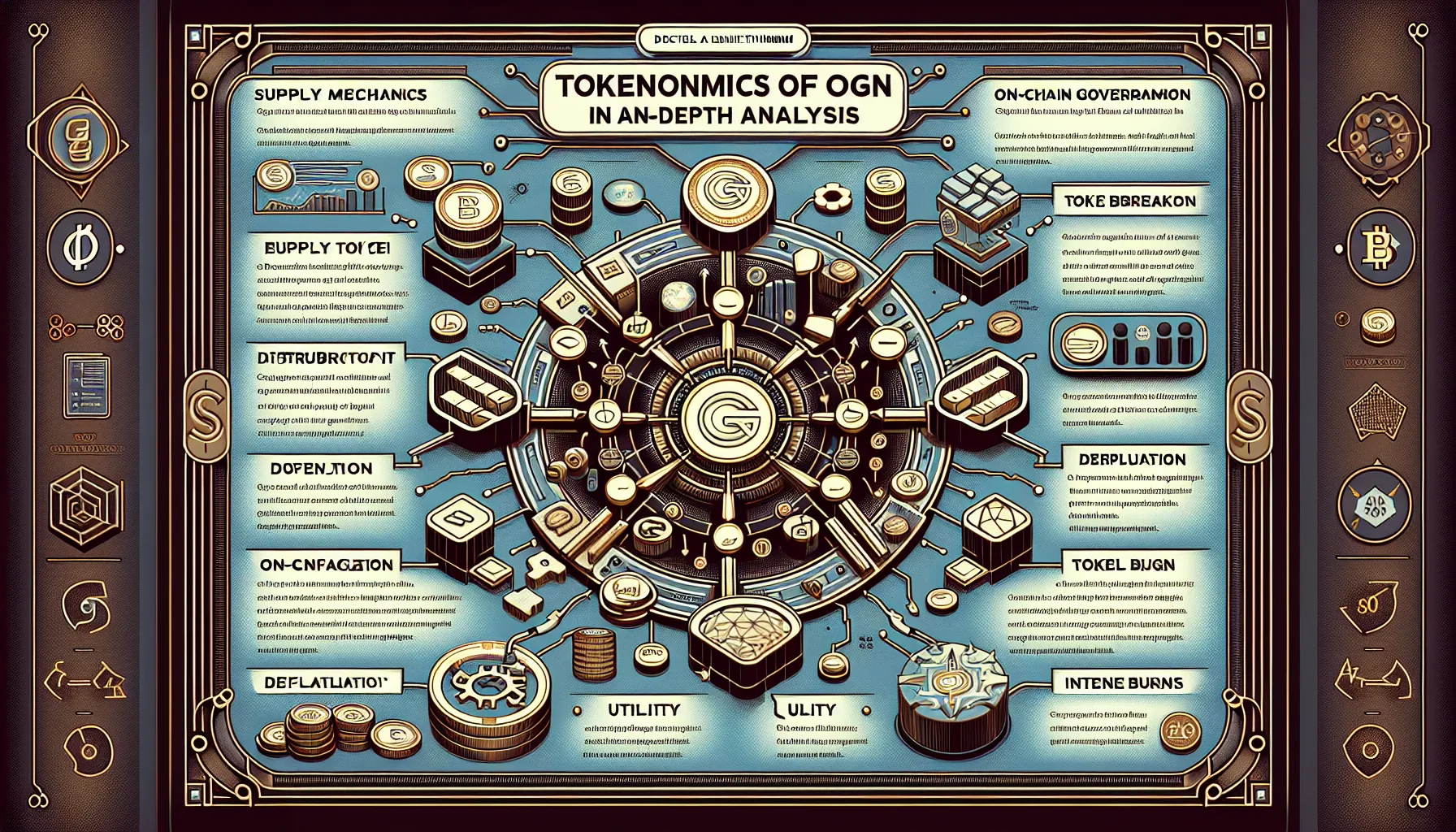
Tokenomics of OGN: An In-Depth Analysis
OGN, the native token of the Origin Protocol, underpins a wide range of economic and utility functions within its ecosystem. Its tokenomics structure has been carefully engineered, but it is not without certain challenges and limitations.
Supply Mechanics and Distribution Breakdown
OGN has a fixed total supply, a critical factor in limiting inflationary pressure over the long term. However, its allocation strategy has raised questions within certain parts of the crypto community. A significant portion of tokens was allocated toward team members, advisors, and early investors, comprising a considerable percentage of the total supply. While this allocation supports project growth and incentivizes long-term contributions, it also introduces potential centralization risks due to the concentrated token ownership.
Public token allocations were comparatively smaller, which may affect broader community participation. Vesting schedules are implemented to mitigate short-term sell pressure from insiders, but these unlock periods could still create price volatility over time, particularly if large holders decide to liquidate.
Utility and Incentive Mechanisms
OGN primarily functions as a utility token, enabling various transactions and governance activities within the Origin Protocol. These use cases include staking for passive rewards, payment facilitation within Origin's decentralized marketplace, and serving as collateral in DeFi integrations. However, the reliance on staking as a value accrual mechanism carries inherent risks. Critics argue that a sustainable staking yield depends on the growth of real economic usage in the ecosystem, not just token redistribution. Without significant adoption, staking rewards may act as a short-term patch rather than a long-term incentive model.
Additionally, OGN incentivizes users with rewards through promotional campaigns such as airdrops and liquidity mining. While these campaigns have historically succeeded in boosting engagement, they also introduce inflationary pressure, diluting token value unless offset by sufficient demand generation.
Governance Parameters
OGN holders have on-chain governance rights, granting them a say in future protocol upgrades and economic proposals. However, governance participation has been modest, reflecting a broader trend in crypto where token voting remains underutilized. This creates a risk of power consolidation among whales or developer teams.
Inflationary Pressures and Burn Mechanisms
OGN adopts a deflationary measure via periodic token burns funded by transaction fees. Although this burn mechanism aims to curb inflation and create upward price pressure, it is criticized for being closely tied to network activity levels. In less active periods, the burn rate may not adequately offset token emissions through staking rewards and ecosystem incentives.
OGN Governance
Governance Mechanics of OGN: Decentralized Decision-Making in Action
Origin Protocol's governance structure, tied to its native token OGN, reflects a growing trend within decentralized ecosystems to prioritize community-driven decision-making. The governance mechanisms of OGN are designed to allow stakeholders—primarily token holders—to influence important protocol decisions through on-chain voting. While the underlying principles align with decentralization, several nuances and challenges define its current implementation.
Empowering Token Holders
The core governance model of OGN provides utility beyond its transactional and staking functions. Token holders have the opportunity to vote on proposals that impact the protocol’s operational trajectory. These proposals often cover a range of topics, such as fee adjustments, protocol upgrades, treasury management, and partnerships. The weight of a holder’s vote is proportional to their token stake, incentivizing active participation and alignment with the long-term goals of the protocol.
Proposal Process: A Double-Edged Sword
Submitting a governance proposal is often straightforward, requiring token holders to draft clear proposals that outline their objectives, rationale, and implementation plans. However, challenges arise in the form of voter apathy and low participation rates, a commonly observed phenomenon in decentralized governance models. This leads to concerns around whether a small group of well-capitalized holders might wield disproportionate influence over outcomes. In such cases, the decentralized ethos is effectively diluted, raising questions about equitable representation among stakeholders.
Smart Contracts and On-Chain Voting
OGN-based governance is underpinned by transparent smart contracts for on-chain voting. This ensures that outcomes are immutable and publicly verifiable. However, reliance on smart contracts introduces its own risks. Governance processes are vulnerable to exploits if bugs or vulnerabilities exist in the underlying codebase. While the Origin Protocol has invested in routine audits, the ever-evolving sophistication of threats in the crypto space remains a legitimate concern.
Delegate Systems: Potential for Improvement?
Discussions surrounding delegated voting have gained traction within the OGN community. Delegation allows token holders to assign their voting power to trusted representatives, improving participation rates and ensuring better-informed decisions. However, delegation also concentrates influence in fewer hands, potentially creating governance dynamics reminiscent of centralized systems. Striking a balance between efficiency and decentralized ideals remains an ongoing challenge for OGN governance.
Governance Incentives
An area that continues to require refinement is incentive alignment. While governance participation is a critical factor for the protocol’s sustainability, OGN does not currently offer robust mechanisms to reward active involvement. This lack of direct incentives risks further exacerbating issues related to voter apathy and low engagement.
Technical future of OGN
Origin Protocol (OGN): Current and Future Technical Developments and Roadmap
Origin Protocol's technical trajectory continues to evolve, driven by its core mission to decentralize commerce and pave the way for a user-owned internet. At the heart of the project is the Origin Story NFT launchpad, which has prioritized scalability, interoperability, and user accessibility. However, as the ecosystem matures, there are both notable advancements and challenges that demand attention.
Enhanced Smart Contract Architecture
A cornerstone of Origin Protocol’s ongoing technical improvement is the continuous refinement of its smart contract architecture. The team actively works on ensuring the security and auditability of the contracts governing decentralized commerce and NFT minting. While past audits have bolstered confidence in the platform, complexity in Ethereum-based smart contracts leaves room for potential vulnerabilities. Any bugs or exploit risks in OGN's contracts could directly impact the broader ecosystem, requiring consistent and proactive security updates.
Expansion to Layer-2 Scaling Solutions
To address the limitations of Ethereum's high gas fees and transaction throughput, Origin Protocol is integrating Layer-2 solutions. By deploying key components of its infrastructure on chains such as Arbitrum or Optimism, the project aims to enhance scalability and reduce costs for its users. However, the fragmented user experience across L1 and L2 networks could create friction, especially for those interacting with multiple chains. Bridging mechanisms and user-friendly interfaces will need to become more intuitive to address this issue effectively.
Interoperability Initiatives
The push for interoperability has been marked by ongoing efforts to support cross-chain integration. Origin's native token, OGN, is increasingly being bridged across multiple blockchains to broaden its utility. Yet, without advanced cross-chain compatibility tools, there is a risk of fragmented liquidity pools and diminished utility of the native asset. Future developments may include refined support for cross-chain functionalities, particularly leveraging protocols like Cosmos's IBC or Polkadot’s parachain architecture.
Decentralized Identity and Governance
A key technical area under active development is decentralized identity (DID) solutions to power more trustless interactions in the marketplace. Additionally, governance improvements are being explored, allowing OGN token holders more effective ways to influence protocol decisions. However, the distributed nature of the community poses challenges in driving meaningful participation and avoiding governance capture by whales.
In summary, Origin Protocol is tactically focusing on scalability, cross-chain compatibility, and decentralized governance to strengthen its foundation. Yet, like many blockchain projects, these initiatives come with their own set of hurdles, particularly around user experience and decentralization trade-offs.
Comparing OGN to it’s rivals
Comparing Origin Protocol (OGN) to Filecoin (FIL): Key Differentiators and Similarities
When examining Origin Protocol (OGN) in contrast to Filecoin (FIL), both projects occupy unique niches within the broader blockchain ecosystem, yet their overlapping points provide interesting insight into how decentralized technologies evolve and approach market challenges.
Decentralized Infrastructure and Use Case Divergence
At their core, OGN and FIL address fundamentally different problems. FIL focuses on decentralized storage infrastructure, leveraging blockchain technology to create a marketplace for data storage and retrieval. Origin, on the other hand, operates within the decentralized commerce and NFT ecosystems. OGN powers Origin’s products, such as Origin Story (NFT marketplace and launchpad) and Origin Dollar (OUSD, a stablecoin focused on DeFi yield aggregation).
This divergence is crucial: FIL’s focus on storage inherently ties it to physical hardware infrastructure and long-term scalability issues related to node participation and storage demand. Conversely, OGN relies on software layers and economic incentives to foster adoption, with no direct dependence on storage networks. This makes OGN less constrained by real-world hardware limitations, yet more susceptible to competitive pressures in its software-dependent verticals.
Utility Token Complexity
FIL operates with a specialized token mechanism tightly tied to its storage ecosystem—miners must stake FIL to provide storage space, while users pay FIL for storage or retrieval. This creates a closed-loop economy directly dependent on Filecoin’s adoption for storage services. In contrast, OGN’s token economy has broader application flexibility: it’s used for governance, staking, and incentivizing usage within Origin’s ecosystem.
While FIL’s model aligns with its specific storage use case, it can limit the token's adaptability to broader applications outside that niche. OGN, by comparison, risks spreading its utility too thin across multiple verticals, making it challenging to maintain consistently high demand.
Market Entry Barriers and Adoption Challenges
Both OGN and FIL face barriers to mainstream adoption, but their challenges differ. Filecoin’s hardware requirements for storage providers present an immediate barrier to entry for decentralized participation. Hardware costs and uptime requirements limit small-scale contributors, centralizing storage provisioning among larger players—a criticism often leveled at FIL within the crypto-savvy community. OGN bypasses hardware constraints entirely but faces competitive pressure in crowded markets like NFTs, where new entrants constantly arise.
Community and Developer Ecosystem
The strength of developer ecosystems further separates these two projects. Filecoin benefits from its association with Protocol Labs, tapping into a well-established blockchain development network that includes projects like IPFS. Origin leans heavily on its user-facing products to drive engagement but risks overshadowing developer contributions to the protocol itself.
Comparing OGN to SAND: Decentralized Ecosystems and Use Cases
When analyzing OGN (Origin Protocol) in relation to SAND (The Sandbox), it’s crucial to highlight their differing core functionalities and target audiences, while also examining overlaps in their decentralized visions. Both crypto assets operate in the realm of Web3 innovation, but their contrasting approaches reveal distinct strengths and weaknesses.
Core Use Case Divergence: eCommerce vs. Metaverse
OGN distinguishes itself through its focus on decentralized eCommerce and peer-to-peer marketplaces. It enables direct transactions between producers and consumers via blockchain-based solutions, minimizing reliance on intermediaries. This mission contrasts with SAND's emphasis on the virtual metaverse economy. SAND powers The Sandbox, a virtual ecosystem where users buy, sell, and develop digital real estate, assets, and experiences. While both prioritize user interaction and ownership, OGN is firmly rooted in real-world commerce applications, whereas SAND is anchored in digital world-building.
While SAND caters largely to gamers, creators, and NFT collectors, OGN appeals to entrepreneurs and businesses seeking decentralized solutions for global trade. These divergent user bases help carve out distinct spaces for each asset but also limit their crossover potential.
Token Utility Disparities
The native token utility is another differentiating factor. OGN tokens underpin marketplaces by facilitating payments, incentivizing participation, and enabling staking mechanisms. In contrast, SAND tokens are deeply integrated into the metaverse economy, where they are used to purchase land, trade NFTs, and grant governance rights within The Sandbox ecosystem. This makes SAND highly dependent on the growth and adoption of its platform, potentially introducing scalability concerns if the virtual economy remains niche or fragmented.
Conversely, OGN's real-world use case provides a broader yet explicitly competitive market. Its utility appears more adaptable, but it also risks entering an already saturated eCommerce and payments sector dominated by Web2 giants.
Interoperability and Ecosystem Challenges
Both OGN and SAND face hurdles in cross-ecosystem adoption. SAND’s success is tightly coupled with the performance of its standalone metaverse platform, raising questions about long-term interoperability across various virtual worlds. Despite being a decentralized hub, The Sandbox operates more like a closed ecosystem, which might hinder its ability to scale across the broader metaverse landscape.
OGN, on the other hand, has to compete with established centralized alternatives while fostering adoption among businesses and consumers unfamiliar with blockchain protocols. Both projects need to address onboarding complexities to minimize friction for non-crypto-savvy users.
Summary of Key Contrasts
In essence, OGN and SAND display contrasting trajectories within the larger blockchain paradigm: the former targets decentralized commerce, while the latter builds a bridge to the virtual world. Their divergence in token utility, audience focus, and ecosystem challenges underscores the breadth of possibilities enabled by blockchain, while also laying bare potential limitations in their strategies.
OGN vs RNDR: Decentralized Ecosystem Showdown
When analyzing OGN (Origin Protocol) and RNDR (Render Token), the contrasts between their decentralized ecosystems highlight key philosophical and functional differences. Both projects utilize blockchain technology to disrupt traditional industries, but their focal points and execution methodologies vary significantly, bringing unique advantages and challenges for each.
Core Use Case Divergence
OGN is built on empowering decentralized commerce and marketplaces, addressing inefficiencies in the traditional sharing economy with blockchain-powered peer-to-peer infrastructures. In contrast, RNDR focuses on revolutionizing the 3D graphics rendering industry by connecting creators with idle GPU processing power in a decentralized network. While both projects embrace decentralization to reduce dependency on intermediaries, RNDR’s mission is highly niche, catering to a professional creator audience in fields like 3D design, virtual reality, and digital art.
This narrow focus grants RNDR a specialized following with technical prerequisites, but it also limits its scope to creative industries. OGN, on the other hand, offers broader consumer-facing applications, connecting creators, buyers, and sellers in diverse sectors such as e-commerce and NFTs. However, this broad approach may dilute OGN’s ability to achieve the deep optimization and customization that RNDR provides within its industry vertical.
Tokenomics and Participation
RNDR utilizes its token to pay GPU operators for rendering tasks, effectively bridging the computational demand of creators with the supply of underutilized hardware. This results in highly specific utility for RNDR tokens tied to measurable work outputs. For crypto-savvy participants, this contrasts with OGN's token (OGN), which serves multiple functions, including staking, governance, and rewards for participation in the Origin ecosystem.
Such multi-functionality within OGN broadens its appeal but introduces complexities in defining clear token demand drivers. RNDR's tokenomics, while streamlined, could face scalability issues depending on the growth of GPU resource availability and demand for distributed rendering services. OGN’s more diverse utility model must continually address potential inflationary pressures as its ecosystem expands.
Scalability and Adoption Challenges
One of RNDR’s potential bottlenecks lies in its dependence on GPU network contributors, where competition from centralized rendering services with established infrastructure could pose significant challenges. Additionally, maintaining decentralization while scaling globally remains a critical hurdle. OGN sees similar scalability challenges within decentralized commerce, where onboarding mainstream users requires seamless integration and user adoption, both of which are complex in a relatively nascent ecosystem.
RNDR’s niche focus carries both the strength of specialization and the risk of limited market scalability, while OGN’s broader vision aims to disrupt traditional marketplaces at scale but risks spreading itself thin to achieve all its goals effectively.
Primary criticisms of OGN
Primary Criticism of OGN: Concerns Over Tokenomics and Utility Clarity
When evaluating Origin Protocol’s native token, OGN, crypto enthusiasts often highlight concerns regarding its tokenomics and overarching utility structure. While OGN has established itself as a core component within the decentralized commerce and NFT marketplaces built by Origin Protocol, skeptics argue that significant gaps exist in how the token aligns incentives and sustains long-term value.
Inflationary Pressure and Token Supply Distribution
A key point of contention is the inflationary structure of OGN's tokenomics. Critics argue that the ongoing issuance of tokens as rewards for user participation introduces a long-term risk of inflationary pressure. Although incentivizing participation via token rewards could promote adoption in the short term, negative sentiment arises from the perception that this may dilute the value of existing tokens over time, especially if demand for OGN does not scale proportionally.
Furthermore, the distribution of the token supply has sparked debate within the community. Questions regarding the proportion of tokens allocated to insiders, private sales, and the team have led to criticisms about centralized control and potential conflicts of interest. This distribution structure has fueled skepticism regarding the protocol's commitment to genuinely decentralized governance, a principle often championed in the blockchain space.
Ambiguity in Use Case Differentiation
Another significant source of criticism centers on the clarity—or lack thereof—when it comes to OGN’s utility differentiation. While the token is marketed as a multifaceted asset with use cases ranging from staking to governance and payment, critics argue that these functions overlap with native capabilities of other major blockchain ecosystems. This lack of clear differentiation raises questions about whether OGN delivers a unique value proposition or if users could achieve the same outcomes using alternative, more established cryptocurrencies.
Specifically, the governance aspect of OGN has been targeted for its limited influence on the platform’s strategic direction to date. Critics suggest that overly top-down decision-making undermines the token’s governance utility, making it less appealing to long-term investors interested in more decentralized protocol governance models.
Challenges with Adoption and Ecosystem Reliance
OGN’s role is heavily tied to the success of applications built on Origin Protocol, like its NFT Launchpad or marketplace offerings. Critics express concerns that this reliance creates systemic risk. If Origin Protocol fails to scale its user base or maintain relevance in the increasingly competitive NFT and DeFi spaces, OGN’s utility could diminish significantly. This dependence links OGN’s fate directly to that of Origin Protocol, limiting its appeal as a standalone asset.
Conclusion Pending in Later Sections
Founders
OGN Founding Team: Expertise and Challenges in Development
The Origin Protocol (OGN) was launched by a founding team with a notable track record in the tech and blockchain industries, bringing both credibility and technical expertise to the project. Co-founders Matthew Liu and Josh Fraser are central figures in Origin’s creation and have been instrumental in its architectural design.
Matthew Liu: Product Expertise with Silicon Valley Roots
Matthew Liu, one of the co-founders, previously worked as a product manager at YouTube and helped lead early development there after its acquisition by Google. His background bridges Web2 and Web3 development, which gives him critical insight into user-centric product design. Liu’s focus on product usability has been a recurring theme in OGN’s development, which aims to make decentralized finance (DeFi) and NFTs more accessible to a non-technical audience. However, challenges remain regarding scalability and whether this usability focus sufficiently resonates with the highly technical crypto-native audience. Critics often question whether simplicity comes at the expense of robust decentralization.
Josh Fraser: Technical Leadership with Entrepreneurial Focus
Josh Fraser, the other co-founder, brings extensive entrepreneurial experience to OGN. Before Origin, he co-founded other companies like EventVue but transitioned into blockchain development to address inefficiencies in centralized marketplaces. While Fraser provides technical leadership and strategic direction, there have been critiques surrounding the speed of execution and transparency in OGN’s development roadmap. Notably, some in the crypto community believe Origin Protocol’s technical progress pales in comparison to faster-moving Layer 1 competitors.
Supporting Cast and R&D Team
Beyond the headline names of the co-founders, they’ve brought together a team of developers with varying expertise in smart contracts, decentralized systems, and frontend design. The team is distributed globally, reinforcing Origin Protocol’s commitment to a decentralized ethos. However, real challenges have arisen from this approach: coordinating across time zones and maintaining consistent communication can slow down decision-making processes. This slower pace is sometimes perceived as a stumbling block in an industry dominated by rapid iteration.
Venture Roots and Conflicting Stakeholder Priorities
Being backed by notable venture capital firms has also placed the founding team under scrutiny. While external funding has provided Origin with resources to expand, some argue it introduces conflicting priorities. Maintaining a balance between investor demands and the decentralized philosophy of Web3 has proven to be a tightrope walk for the leadership. This tension has fueled skepticism from purists in the community who view venture backing as counterintuitive to the project’s goals.
The OGN founding team operates at the intersection of legacy tech expertise and blockchain innovation, but navigating the complexity of global operations, competing stakeholder interests, and technical demands remains a persistent challenge.
Authors comments
This document was made by www.BestDapps.com
Sources
https://www.originprotocol.com/en/whitepaper
https://github.com/OriginProtocol/origin-dollar
https://coinmarketcap.com/currencies/origin-protocol/
https://www.coingecko.com/en/coins/origin-protocol
https://etherscan.io/token/0x8207c1ffc5b6804f60219f8a64c3cee5a6927aeb
https://docs.originprotocol.com/
https://app.uniswap.org/#/swap?inputCurrency=0x8207c1ffc5b6804f60219f8a64c3cee5a6927aeb
https://medium.com/originprotocol
https://messari.io/asset/origin-protocol
https://defillama.com/protocol/origin-dollar
https://twitter.com/originprotocol
https://nft.originprotocol.com/
https://www.binance.com/en/trade/OGN_USDT
https://blog.coinbase.com/earning-origin-on-coinbase-is-live-start-earning-ogn-today-cda87e418466
https://cryptoslate.com/coins/origin-protocol/
https://cmc.io/coins/origin-token
https://www.gemini.com/prices/origin-protocol
https://www.huobi.com/en-us/asset-introduction/details?currency=ogn
https://blog.originprotocol.com/
https://yieldfarming.info/yield-farming-pools/origin-dollar-ogn/


