History of MXC
The History of MXC: From Concept to Deployment
MXC (Machine eXchange Coin) was conceived as a utility token centered on the emerging Internet of Things (IoT) ecosystem. The project traces its origins to addressing inefficiencies in decentralized IoT connectivity, specifically for machine-to-machine (M2M) communication. Unlike other blockchain-based concepts at the time, the goal of MXC was clear from the beginning: to enable efficient data interactions in a world increasingly dominated by connected devices.
The groundwork for MXC’s development was laid with the deployment of the Machine eXchange Protocol, an IoT-focused standard designed to integrate blockchain technology with smart devices. This focus differentiated MXC from many blockchain initiatives stuck in abstract use cases. Notably, MXC aimed to leverage low-power wide-area networks (LPWAN), such as the widely adopted LoRaWAN, enabling large-scale, low-cost data transmission that could be supported in both urban and industrial environments.
From a technological standpoint, MXC’s initial adoption was tied closely to its role as the utility token for its own global network of LPWAN hotspots, which allowed participants to mine MXC tokens by contributing to the network. While this mining concept presented a unique decentralized model, it also faced scalability concerns. Early analyses raised questions about network throughput and congestion as small IoT devices scaled into millions, a challenge fundamental to any IoT-based blockchain solution.
Controversy also shrouded MXC's development phases, especially surrounding criticisms of its proprietary hardware tie-ins. By linking token mining to specialized hotspot devices, critics argued that MXC risked creating barriers for truly decentralized participation. Additionally, concerns were raised over centralized decision-making and governance, challenging the project’s claims of decentralization.
Another critical juncture in MXC’s history was its integration with NFT-based data representation. This move sought to tokenize and trade data streams, further emphasizing its IoT utility scope. While this innovation added functionality, some members of the crypto community questioned its practical demand, citing the relatively niche adoption of IoT blockchain projects. Skepticism lingered over the scalability of integrating non-fungible assets into IoT supply chains.
In the years since its inception, MXC has continued to push forward with its vision of a machine-to-machine economy, though its path has been anything but linear. Throughout its history, it has been shaped by its adaptations to technological limitations, criticisms about decentralization, and market challenges inherent to IoT applications using blockchain technology.
How MXC Works
How MXC Works: A Deep Dive into Its Tokenomics and Technology
MXC (Machine Exchange Coin) operates as the native utility token powering the MXC ecosystem, which focuses on IoT (Internet of Things) device connectivity and data transmission. At its core, MXC facilitates decentralized, blockchain-driven interactions between devices, users, and networks. Here’s an in-depth look at how MXC functions:
MXProtocol: The Heart of MXC’s Infrastructure
The MXProtocol is the backbone of the MXC ecosystem, enabling low-power wide-area networks (LPWAN) to efficiently connect IoT devices. The protocol optimizes data routing and resource allocation, ensuring that devices can send and receive data over long distances with minimal energy consumption. This mechanism is particularly attractive for industrial IoT applications where efficiency and scalability are paramount. However, critics have noted that the reliance on LPWAN may limit the protocol's speed and throughput compared to more advanced IoT communication methods.
Supernode Design: Decentralized Data Handling
The MXC network is governed by supernodes, which oversee data transactions, manage bandwidth, and uphold consensus. These supernodes operate under a Delegated Proof-of-Stake (DPoS) model, allowing token holders to delegate their MXC to a trusted node operator in return for staking rewards. While this approach enhances scalability and reduces energy expenditure compared to traditional Proof-of-Work models, DPoS systems are often critiqued for being less decentralized. This raises concerns about potential centralization risks, as power can consolidate around a few select supernode operators.
Token Utility: Data Transactions and Staking
MXC tokens are integral to incentivizing network participants. IoT device owners utilize MXC to pay for data transmissions, while supernode operators are rewarded in MXC for facilitating these transactions. In addition, MXC holders can stake their tokens to earn rewards or vote on network proposals. However, the token’s utility hinges heavily on adoption by IoT developers and businesses. Limited uptake in real-world applications could stifle the token's demand, questioning its long-term viability within the ecosystem.
Mix of Mining and Participation
MXC employs a novel token-mining system leveraging LPWAN-compatible mining devices. Unlike traditional mining methods, which often require vast computational and energy resources, MXC mining is designed to be eco-friendly. These devices, such as the MXC MatchX M2 Pro Miner, enable participants to support network coverage while earning rewards. However, critics point out that the upfront cost of these devices, coupled with their dependence on hardware manufacturers, might create entry barriers for smaller participants.
Interoperability Challenges
While MXC emphasizes its focus on IoT connectivity, the ecosystem’s success depends on its ability to integrate with existing blockchain solutions and IoT protocols. Interoperability with competing networks and IoT systems can be a technical challenge, and failure to address these hurdles could limit MXC’s traction in the broader market. Additionally, regulatory uncertainties surrounding IoT data usage and blockchain networks may potentially obstruct adoption and compliance efforts.
By addressing these mechanisms, MXC aims to position itself as a critical player in the IoT-blockchain convergence. Nonetheless, it faces challenges tied to adoption, technical limitations, and market competition.
Use Cases
MXC Crypto Asset: Exploring Its Use Cases
The MXC token operates at the heart of the Machine eXchange Protocol (MXProtocol), enabling a decentralized data network framework tailored to the Internet of Things (IoT) ecosystem. Below, we dive into the specific use cases of MXC, illustrating both strengths and potential challenges.
IoT Device Connectivity and Data Transmission
MXC streamlines data transmission for IoT devices across a decentralized network. By integrating long-range wireless communications such as LPWAN (Low-Power Wide-Area Network) technology, the protocol facilitates efficient, scalable, and low-cost data-sharing solutions. Industries such as smart cities, logistics, and environmental monitoring benefit directly, as MXC minimizes the reliance on centralized cloud providers. However, adoption hinges on the proliferation of compatible IoT hardware and the willingness of enterprises to shift from traditional data networks to blockchain-based systems.
Data Monetization via Participants
One of MXC’s unique use cases is its ability to empower both individuals and businesses to monetize IoT data. Participants within the MXProtocol ecosystem are incentivized to share data generated by their IoT devices in exchange for MXC tokens. This creates a decentralized marketplace for IoT data, offering real-time insights across industries. Yet, the concept of data ownership and privacy raises significant concerns. There is ambiguity over the enforcement of data rights, particularly in regions with restrictive data governance laws or conflicting regulatory frameworks.
Network Participation and Mining via Low-Power Devices
MXC embraces energy-efficient participation by enabling users to operate low-power devices, such as the MatchX M2 Pro miner, to facilitate data transmission on the network. Users earn MXC tokens for providing network coverage, reducing hardware and energy costs often associated with traditional Proof-of-Work blockchain networks. However, this use case is not without issues. Critics question the viability of sustained rewards over time as a growing number of participants dilute mining incentives, potentially impacting profitability. Additionally, reliance on proprietary hardware raises concerns around decentralization and monopolization risks.
Machine-to-Machine (M2M) Transactions
By allowing autonomous IoT devices to transact using MXC, the token facilitates machine-to-machine (M2M) payments. This has broad implications for automated industries like autonomous vehicles, logistics, and supply chain management. While this use case is promising, the utility heavily depends on global interoperability standards for IoT devices, which are still fragmented.
Smart City Infrastructure Development
MXC positions itself as a foundational layer for powering smart city infrastructure by enabling connectivity for myriad urban IoT devices. This includes traffic management systems, air quality sensors, and energy grids. However, practical implementation requires large-scale partnerships with municipal governments and significant upfront investment. Without strong stakeholder adoption, such aspirations risk remaining theoretical.
In conclusion, MXC’s use cases demonstrate robust potential while highlighting the associated technical and regulatory challenges that require resolution for broader adoption.
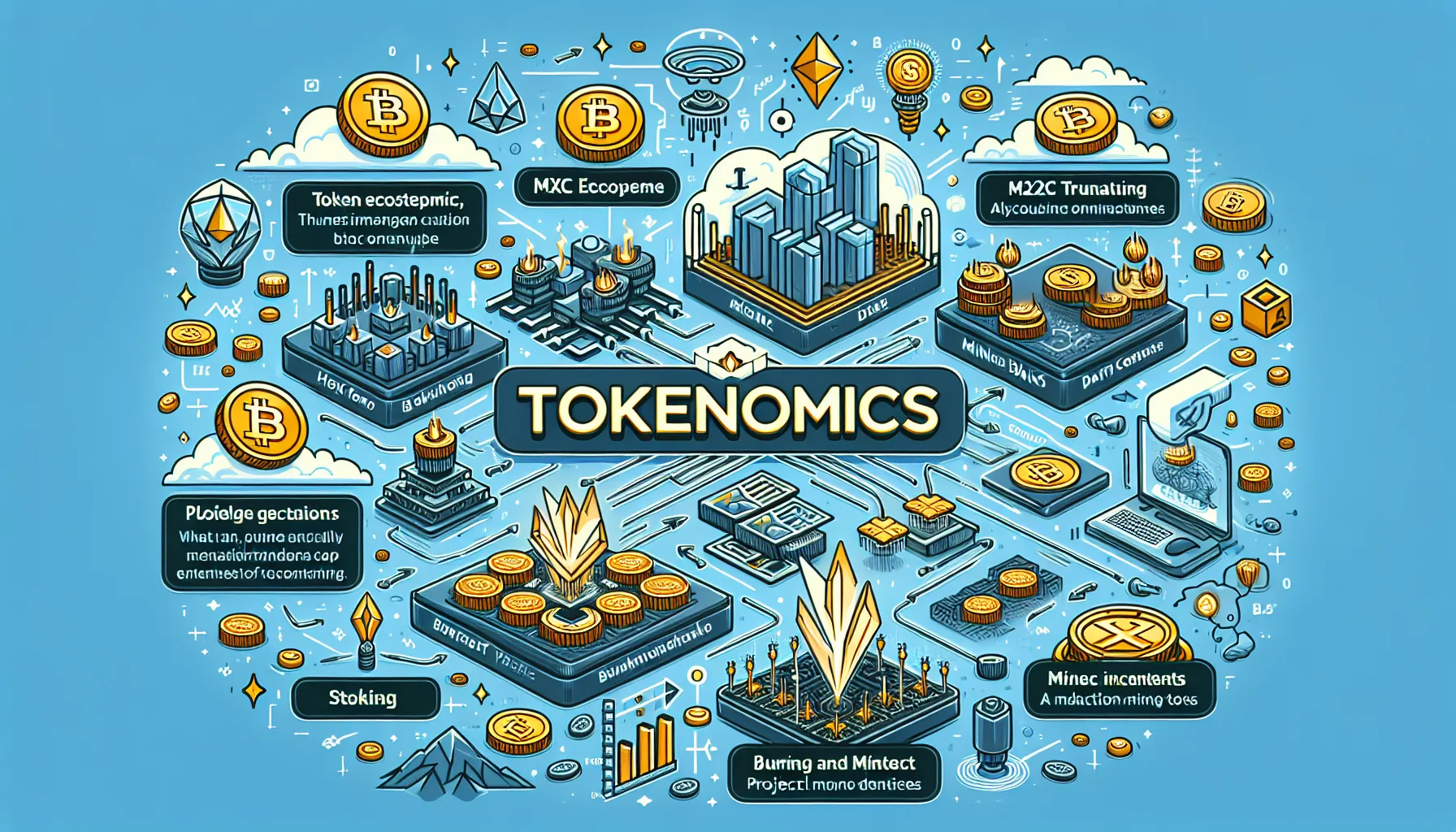
MXC Tokenomics
MXC Tokenomics: Understanding the Supply and Allocation Dynamics
MXC tokenomics is structured to support its role as a utility token within the MXC ecosystem, primarily facilitating machine-to-machine (M2M) data transactions and incentivizing participation. However, its design isn’t without challenges that should be scrutinized by crypto-savvy investors.
Supply Mechanics: Fixed, but Distributed Strategically
MXC has a max supply cap of 2.66 billion tokens, with a distribution model designed to incentivize early adoption and ecosystem growth. The majority of tokens are allocated for key purposes: mining rewards, ecosystem development, and operational needs. A notable detail here is the structured allocation to mining rewards through the Project X protocol, which governs staking and mining dynamics on the MXC Supernode network.
While the fixed supply cap is attractive under deflationary perspectives, concerns arise around the actual circulating supply versus total supply. The degree to which tokens are locked in incentives, ecosystem reserves, or emission schedules can influence market liquidity. Savvy participants often question how long these emission schedules extend, whether they risk overhang pressures, and how transparent the team’s approach to token release is. This is particularly relevant for reducing potential dumps that could destabilize MXC’s price stability.
Reward Models: Mining Incentives and Staking
MXC tokenomics relies heavily on its mining incentive model, where LPWAN (Low Power Wide Area Network) miners are rewarded for contributing network coverage and relaying data packets. This adds to the utility of the token and creates a feedback loop for adoption. However, issues like mining centralization have been raised. As LPWAN coverage expands, there is speculation on whether larger mining pools or dominant players can disproportionately benefit, potentially stifling smaller operators.
Another aspect of reward distribution is staking. Staking MXC allows participants to earn proportional rewards, yet the staking mechanics are deeply integrated into the Supernode governance structure. This raises participation barriers by prioritizing those with pre-existing large holdings, resulting in potential criticism concerning wealth centralization within the ecosystem.
Ecosystem Sustainability: Burn-and-Mint Process
The MXC protocol employs a Burn-and-Mint mechanism to regulate supply—but this carries potential intricacies. Each token burned during M2M data transactions is offset by newly minted tokens to maintain a steady reward structure for miners. While this promotes network activity and ensures miner incentives remain intact, it also introduces complexities related to inflationary pressure, which could dilute long-term stakeholders if poorly managed.
Conclusion
MXC’s tokenomics is intricate, with deliberate mechanics upholding the utility and decentralization ethos of its ecosystem. However, the interplay of its fixed supply cap, mining incentives, token distribution, and burn-and-mint process leaves critical aspects open to scrutiny. Those engaging with MXC must weigh the proportional benefits of its tokenomics against its potential risks and structural limitations.
MXC Governance
MXC Governance: Decoding the Decentralized Framework
MXC's governance model aims to align decentralized decision-making with the practical operations of its data-sharing ecosystem. The governance framework revolves around ensuring that stakeholders—MXC token holders, node operators, and ecosystem participants—maintain an active role in shaping the network's future policies. However, while MXC's governance model offers a promising attempt at decentralization, several distinct characteristics and challenges define its implementation.
Token-Based Stakeholder Influence
At its core, MXC leverages a token-weighted governance mechanism, where decision-making power is distributed based on the quantity of MXC tokens held. This model incentivizes active participation by token holders but simultaneously introduces concerns about centralization. Holders with significant token quantities possess disproportionately large governance influence. This dynamic could create scenarios where a small group of whales drives critical decisions, raising questions about equitability within the governance structure.
Delegation of Voting Power
MXC allows token holders to delegate their voting power to representatives. While delegation is intended to simplify participation for less involved stakeholders, this process concentrates decision-making in the hands of a few trusted individuals or entities. Consequently, the risk of collusion or conflicts of interest arises, especially if delegates prioritize personal or external agendas. Transparency surrounding delegate activities and motivations is paramount, yet achieving verifiable trust in decentralized systems remains an ongoing challenge.
Network Proposals and Dispute Resolution
Proposals for network upgrades, policy adjustments, or ecosystem improvements are submitted through an on-chain mechanism. While this approach ensures transparency, the execution of governance outcomes hinges on overall voter turnout. Historically, participation in crypto governance tends to be low, even in incentivized systems, which can hinder meaningful decentralization. And although disputes are addressed via community consensus, the absence of a robust mechanism for mitigating stalemates can delay critical decisions, affecting the network's growth and adaptability.
Potential Governance Risks
The evolving nature of MXC's governance introduces risks around protocol capture. Governance processes are vulnerable to Sybil attacks, where malicious actors manipulate decision-making by acquiring influence through numerous addresses. Furthermore, defining clear governance escalation paths for emergencies—such as abrupt changes to regulatory environments or technological threats—is currently a pain point for many blockchain systems, MXC included.
Ultimately, MXC’s governance structure provides the foundation for community-driven management but leaves room for refinement in ensuring inclusivity, transparency, and resilience against exploitative behaviors. Token holders must navigate both the promises and pitfalls of a model that is still maturing.
Technical future of MXC
MXC Technical Developments and Roadmap: Unpacking the Infrastructure
The MXC ecosystem stands out for its emphasis on the integration of IoT (Internet of Things) and blockchain, spearheaded by developments within its MXProtocol. Focused on optimizing LPWAN (Low Power Wide Area Network) structures, MXC allows IoT devices to efficiently exchange data within decentralized ecosystems. This section delves into the ongoing and upcoming technical advancements and objectives outlined within MXC's technical roadmap.
Current Technical Developments
MXC is advancing its operating infrastructure primarily by enhancing its Data Dash App and machine-to-machine (M2M) staking framework. A critical focus has been on refining its Proof-of-Participation (PoP) mechanism to make it even more energy-efficient and capable of scaling on large networks. PoP showcases how MXC departs from traditional Proof-of-Work (PoW) and Proof-of-Stake (PoS) systems, emphasizing the contributions of IoT gateways and devices rather than relying solely on computational resources.
The implementation of Multi-Token Mining (MTM) compatibility further bolsters MXC’s presence by enabling users of its Miner hardware—like the MatchX M2 Pro Miner—to simultaneously mine MXC and other tokens, such as DHX. However, concerns have been raised surrounding the diminishing returns for long-term MTM participants and increased hardware competition, a potential issue that MXC needs to address to maintain community trust.
Additionally, decentralized governance has seen gradual expansion through features like Supernode staking, increasing the role that global participants have in guiding technical developments. However, skepticism lingers over how decentralized the system currently is, as significant decision-making remains closely tied to core developers and participants with substantial MXC holdings.
Future Roadmap Objectives
Looking ahead, MXC aims to expand its Layer-2 network infrastructure to improve its scalability in IoT deployments while reducing the data settlement burden on its Ethereum-based Layer-1. This initiative includes upgrading its smart contract capabilities with enhanced functionalities specific to IoT data transactions, including programmable data-sharing arrangements.
Another future focus is the onboarding of enterprise-level IoT partnerships, which requires enhanced interoperability between MXC’s ecosystem and traditional IoT protocols like MQTT and CoAP. While this could potentially widen adoption, it introduces complexity in integrating legacy systems that don't yet align with blockchain standards and incentives.
Moreover, MXC has signaled its intent to prioritize the adoption of decentralized AI, allowing IoT devices to relay data for machine learning models while maintaining privacy through its network structure. Despite its ambitious vision, questions remain about whether the current infrastructure can handle the enormous bandwidth and computational needs of such models without significant bottlenecks.
Emerging threats like network centralization from major mining entities and potential saturation of IoT device adoption represent critical challenges on the horizon. How MXC balances scalability, decentralization, and real-world IoT integration will determine the feasibility of its long-term roadmap.
Comparing MXC to it’s rivals
MXC vs HNT: A Detailed Comparison
When comparing MXC to HNT, it’s critical to understand the technical and strategic distinctions that set these two blockchain-focused IoT ecosystems apart. While both projects aim to revolutionize decentralized infrastructure for IoT (Internet of Things), their approaches diverge significantly in terms of network architecture, incentivization models, and scalability.
Network Architecture and Hardware Requirements
MXC operates on the foundation of the Machine eXchange Protocol, which combines an LPWAN (Low-Power Wide-Area Network) infrastructure with a focus on multi-token mining via its proprietary DataDash application. Its emphasis lies in allowing users to participate with relatively low-cost hardware setups, such as the MatchX M2 Pro miner, which supports both mining and data packet transmission for IoT connections.
HNT (Helium), on the other hand, relies heavily on its robust peer-to-peer wireless infrastructure built around its Helium Hotspots. These devices incorporate LoRaWAN technology and enable coverage for IoT devices in exchange for mining rewards. However, the scalability and technical entry barriers posed by HNT's hardware requirements (such as ensuring optimal Hotspot placement for maximum rewards) can create friction for newcomers or those in less populated areas.
This distinction highlights a key point of divergence: MXC prioritizes simplicity and flexibility in adoption, while HNT leans towards depth of coverage at the cost of operational complexity.
Tokenomics and Mining Incentives
MXC employs a multi-token mining model that includes MXC and BTC. This flexibility allows miners to diversify their income streams, whereas HNT strictly adheres to its native token as the sole reward mechanism. While HNT’s single-token system has the benefit of straightforward valuation alignment, the rigidity may limit earning potential compared to MXC's dynamic structure.
Despite MXC’s diversification, it has also faced scrutiny regarding its reward recalibration mechanisms, as some critics argue they lack transparency. This contrasts with HNT, which uses Proof-of-Coverage (PoC)—a consensus mechanism designed specifically for verifying wireless coverage but often criticized for its high energy consumption and over-concentration in dense urban areas.
Community and Decentralization
HNT’s network size and active community have positioned it as a recognized leader in the decentralized IoT space, but centralization concerns have started to emerge given the increasing involvement of corporate entities in deploying large-scale fleets of Hotspots. Conversely, MXC emphasizes a user-focused model with mechanisms that allow individuals to control mining rewards and IoT data transactions more effectively. However, MXC’s governance model has also sparked debate, with some questioning the influence of its core team in driving ecosystem decisions.
Comparing MXC to IOTA: A Deep Dive into IoT-Focused Blockchain Ecosystems
When examining MXC against its rival IOTA, it’s clear that both aim to dominate the Internet of Things (IoT) landscape. However, critical differences emerge in their approach to scalability, usability, and underlying technology.
Consensus Models: PoP vs. Tangle
MXC leverages a Proof-of-Participation (PoP) framework, which incentivizes users to provide consistent support for the MXC global data network. This system enables miners to stake less hardware-intensive resources while contributing to the IoT ecosystem. In contrast, IOTA utilizes its novel Tangle-based Directed Acyclic Graph (DAG) approach, eliminating the need for traditional miners altogether. Unlike blockchain structures, Tangle allows IOTA transactions to have zero fees, an essential feature for microtransactions in IoT environments. However, Tangle's efficiency heavily depends on network activity, which can make performance inconsistent in low-use phases—a limitation MXC's protocol avoids due to its miner-driven architecture.
Data Infrastructure Focus
MXC positions itself as a self-sustaining IoT data marketplace. Through widespread deployment of Low Power Wide Area Network (LPWAN) technology, MXC creates decentralized data highways, emphasizing smart cities and industrial use cases. IOTA, while similar in ambition, has historically targeted machine-to-machine payments and data integrity for IoT devices. However, developers have often raised concerns regarding IOTA's technical complexity, particularly due to its unusual DAG-based structure, which can pose a steep learning curve. MXC’s integration of LPWAN provides early adoption traction that translates into real-world devices connecting more seamlessly than IOTA's theoretical but intricate solutions.
Security Challenges
IOTA has faced persistent criticism over its centralized coordination mechanism known as the "Coordinator," which functions as a temporary validator to prevent network attacks. While IOTA has pledged to fully decentralize, this intermediary role has sparked debate over its trustworthiness and susceptibility to single-point failure risks. On the other hand, MXC benefits from the broader decentralization paradigms of distributed mining hardware and token-driven incentives. However, critics argue that the MXC approach may lead to participant burden over time if excessive hardware staking demands are imposed—potentially disincentivizing smaller players.
Adoption and Ecosystem Growth
MXC has aggressively pursued partnerships with smart city initiatives, leveraging real-world LPWAN deployments to build brand visibility. IOTA, despite being established longer, often struggles to shed its experimental reputation due to prolonged delays in delivering promised updates like "Coordicide." While neither project has achieved full mainstream IoT integration, IOTA's "wait-and-see" evolution contrasts starkly with MXC's practical, implementation-first model.
In assessing MXC side-by-side with IOTA, it is apparent that while both aim to reshape IoT connectivity, the technical and operational strategies they employ diverge significantly, offering distinct advantages and limitations.
MXC vs. NKN: A Detailed Analysis of Key Differentiators
When examining MXC against NKN, both projects appear targeted toward the broader ambition of improving decentralized networks, yet their approaches diverge sharply, reflecting distinct use cases, architecture choices, and ecosystem dynamics.
Network Infrastructure and Scalability Focus
A key distinction between MXC and NKN lies in their foundational infrastructure design. MXC relies heavily on its Low Power Wide Area Network (LPWAN) technology, catering specifically to IoT (Internet of Things) devices. Its emphasis on low-energy, long-range data transfer positions MXC strongly in industrial and consumer IoT integration. NKN, in contrast, operates a peer-to-peer, software-driven network framework built upon direct contributions from internet-connected devices. This architecture harnesses edge computing and dynamic routing protocols, ultimately prioritizing throughput efficiency and generalized network functionality rather than being tailored to IoT-specific requirements. In essence, while MXC builds physical, hardware-reliant infrastructure, NKN's platform depends on leveraging existing internet resources—an approach that starkly reduces overhead costs but may encounter adoption friction in resource-constrained environments.
Token Utilization and Economic Structure
Tokenomics presents another sharp divergence. MXC Token serves a dual purpose: facilitating machine-to-machine payments and incentivizing LPWAN hardware (like MXC's proprietary MatchX hardware). Conversely, NKN's NKN cryptocurrency is prominently utilized for compensating participants who share unused bandwidth or provide data relaying services within the network. While MXC's model fosters real-world data transmission and device integration, NKN faces challenges in market penetration because its token adoption is closely tied to discretionary participation, relying heavily on user willingness to monetize spare resources. Fundamentally, NKN's economic incentives hinge on a potentially volatile user base, whereas MXC ties its token usage more firmly to physical network functionality, leading to predictably stable utility.
Decentralization and Bottlenecks
Decentralization philosophies also diverge notably. NKN's architecture heavily leans on its fully decentralized relay network, intending for end users to form the backbone of the operation. Although this approach maximizes openness, it may encounter bottlenecks in areas with lower node density, reducing both performance consistency and coverage reliability. Meanwhile, MXC's heavier reliance on centralized LPWAN gateways could be construed as less decentralized—an ideational compromise that grants MXC a more stable and predictable network performance but at the possible expense of true decentralization advocates' ideals.
Challenges in Adoption
Both projects face adoption hurdles, but for MXC, the dependency on proprietary hardware (MatchX miners) could alienate developers who prefer open-source implementations and standardized solutions. On the other hand, NKN's decentralized design carries scalability risks, particularly in regions with weaker adoption, where inactive or sparsely located nodes may dilute network performance. This creates a pronounced challenge for NKN in meeting user expectations across a global, heterogeneous network environment.
In conclusion, MXC and NKN cater to distinct niches, each exhibiting strengths and trade-offs that make them diverge in focus, execution, and decentralization compromises, emphasizing their unique paths in the Web3 space.
Primary criticisms of MXC
Primary Criticism of MXC: Potential Weaknesses in the MXC Ecosystem
The MXC token has carved out a niche in the IoT (Internet of Things) and data economy landscape, but it is not without its detractors. Critics often point to several areas of concern surrounding the project, including tokenomics, centralization risks, and potential scalability limitations.
Tokenomics and Value Proposition
One of the most notable areas of debate is the tokenomics underlying MXC. Questions have emerged about the long-term sustainability and utility of the token within its ecosystem. Critics argue that the reward system for MXC mining using devices like M2 Pro miners may lack sufficient transparency. While the concept of mining low-power-consumption devices appeals to many, the earnings distribution system has been questioned for its opacity, with some users reporting diminishing returns that are not clearly tied to measurable market metrics. This can erode trust among participants, particularly as the ecosystem grows and competition for resources increases.
Additionally, there are lingering concerns about MXC’s value proposition beyond its core IoT applications. Skeptics suggest that the token’s use case may not extend meaningfully beyond its current infrastructure, which could limit its adoption beyond niche audiences. A lack of clear expansion strategies for broader use cases raises questions about its utility in a competitive crypto market.
Centralization Concerns
Despite its claims of being a decentralized data network, some critics point to underlying features of MXC that may lean towards centralization. For instance, the governance and control mechanisms behind the protocol remain a gray area, with uncertainty about how much influence the core development team, associated companies, or mining hardware providers exert over the ecosystem. The dependency on specific mining devices, such as the proprietary M2 Pro Miner, has also led to accusations of creating barriers to entry, placing significant power in the hands of a few entities.
Scalability Challenges
Another criticism leveled against MXC pertains to its potential scalability. While the network advocates for seamless IoT integration, questions have arisen about its ability to handle exponential growth in data transmission and the onboarding of new devices. The Layer-1 approach employed by MXC may face pressure to compete with more scalable protocols or Layer-2 solutions, potentially making MXC less desirable for developers working on IoT applications.
The combination of these concerns highlights areas where improved transparency and innovation are necessary, especially if MXC aims to remain influential in the evolving IoT and blockchain sectors.
Founders
Unpacking the Founding Team Behind MXC: Driving IoT and Blockchain Integration
The team behind MXC, short for Machine eXchange Protocol, is a crucial factor in understanding the project’s focus and trajectory. Their vision is centered on driving the integration of blockchain technology with IoT (Internet of Things) applications, but the team’s structure, expertise, and execution dynamics reveal both strengths and challenges.
MXC was co-founded by Xin Hu and Sheen Xin Hu, an entrepreneur with experience in the tech and blockchain sectors, plays a central role as the CEO. He has been instrumental in defining MXC’s roadmap and adoption strategies, particularly within the IoT ecosystem. Under his leadership, MXC has positioned itself as a bridge between blockchain technology and scalable IoT device data management. However, critics within the crypto community have questioned whether Xin’s approach leans heavily on partnerships and marketing, possibly overshadowing on-ground technical breakthroughs.
Sheen Xin, a driving force in MXC's inception, contributes a complementary skillset oriented around operations and governance. This dual leadership structure allows for a blend of business strategy and practical deployment. However, organizational transparency regarding the individual contributions of founding members is notably limited, particularly for a crypto project requiring community confidence. Some argue that this lack of insight creates ambiguity about the depth of the team’s technical expertise in optimizing machine-to-machine (M2M) data exchange.
One noteworthy addition to the founding dynamics is the influence of the broader MXC Foundation team. The foundation supports the project’s decentralization objectives by expanding focus areas, like Data Republic and LPWAN (Low-Power Wide-Area Network) integration. Yet, the roles of the core contributors and how they complement the founding team are not meticulously detailed in public disclosures—something that discerning audiences might find concerning.
Another area for critical evaluation is the abject absence of blockchain-first heavyweights in the founding mix. While Xin Hu and Sheen Xin have significant experience in tech-related ventures, neither founder has a legacy background in cryptographic engineering, decentralized architecture, or distributed systems. This gap raises pertinent questions about the project’s ability to innovate beyond the surface-level crypto-and-IoT narrative and whether they are reliant on outside talent to ensure technical robustness.
In sum, while the founding team of MXC brings ambition and operational savvy to the table, gaps in transparency and blockchain-native expertise present lingering concerns. Crypto-savvy stakeholders may view these aspects as pivotal when evaluating the potential of MXC as it positions itself in the rapidly evolving IoT and blockchain fusion space.
Authors comments
This document was made by www.BestDapps.com
Sources
- https://www.mxc.org/
- https://www.mxc.org/white-paper
- https://medium.com/mxc
- https://etherscan.io/token/0x5ca381bbfb58f0092df149bd3d243b08b9a8386e
- https://github.com/mxc-foundation
- https://mxc.org/blog/
- https://coinmarketcap.com/currencies/mxc/
- https://crypto.com/price/mxc
- https://www.coingecko.com/en/coins/mxc
- https://mxc.org/technology/
- https://github.com/mxc-foundation/supernode
- https://hub.mxc.org/
- https://www.bscscan.com/token/0x5ca381bbfb58f0092df149bd3d243b08b9a8386e
- https://mxcnews.com/
- https://docs.mxc.org/
- https://mxc.foundation/ecosystem/
- https://twitter.com/mxcfoundation
- https://www.reddit.com/r/MXC_Foundation/
- https://www.linkedin.com/company/mxc-foundation/


