History of MultiversX (EGLD)
The History of MultiversX (EGLD): From Elrond to a Rebranded Vision
MultiversX, originally known as Elrond, was founded in 2017 with the goal of creating a highly scalable and efficient blockchain network. The team, led by Beniamin Mincu, built Elrond with a focus on adaptive state sharding, secure proof-of-stake (SPoS), and a high-throughput virtual machine. Early development was largely driven by solving scalability and efficiency issues seen in first-generation blockchains like Bitcoin and Ethereum.
Early Development and Initial Token Model
Elrond raised funding through private sales and an Initial Exchange Offering (IEO) on Binance Launchpad in mid-2019. The original Elrond token, ERD, was launched as an ERC-20 and BEP-2 asset, but this changed with the mainnet launch in 2020 when ERD was swapped for eGold (EGLD) at a 1,000:1 ratio. This tokenomics shift drastically reduced the circulating supply, which was controversial at the time but positioned EGLD as a more unit-economical asset.
Mainnet Launch and Technological Advancements
Elrond’s mainnet went live in July 2020, introducing a network capable of processing thousands of transactions per second through its advanced sharding mechanism. The project focused on DeFi, payments, and enterprise adoption, with the Maiar wallet playing a central role in user accessibility. The network achieved several key integrations, including interoperability bridges and smart contract enhancements via its Arwen virtual machine, which was designed for efficiency and security.
Rebranding to MultiversX and Strategic Shift
In late 2022, Elrond rebranded to MultiversX, signaling a pivot towards metaverse and Web3 applications. This transition included the introduction of new products such as xFabric (a blockchain module solution), xPortal (an evolution of the Maiar wallet), and xWorlds (a metaverse framework). The rebrand sparked mixed reactions—while some saw it as forward-thinking, others questioned whether the shift diluted the project's core identity.
Challenges and Controversies
Like many blockchain projects, MultiversX has faced hurdles. Early in its history, concerns about centralization arose due to the high proportion of nodes controlled by a small group. The tokenomics redesign also led to debates over fairness, especially for early ERD holders. Additionally, competition from other high-performance blockchains such as Solana and Avalanche has consistently pressured adoption and developer activity.
Despite challenges, the project has continued evolving its ecosystem and technology stack, adapting to the shifting landscape of blockchain scalability, security, and usability.
How MultiversX (EGLD) Works
How MultiversX (EGLD) Works: Adaptive State Sharding and Secure Proof of Stake
MultiversX (formerly Elrond) operates on a high-throughput blockchain architecture designed for scalability, security, and decentralization. The network’s core innovations are its Adaptive State Sharding mechanism and Secure Proof of Stake (SPoS) consensus, both of which aim to optimize transaction speeds while maintaining security.
Adaptive State Sharding
MultiversX employs state, transaction, and network sharding to distribute workload across multiple shards, enhancing efficiency. Unlike static sharding, Adaptive State Sharding dynamically adjusts shard distribution to balance network load.
- State Sharding: Each shard maintains only a portion of the global state, significantly reducing storage and processing requirements for validators.
- Transaction Sharding: Transactions are executed within specific shards, minimizing bottlenecks and improving parallel processing.
- Network Sharding: Each shard maintains its own subnet of validators, optimizing communication and reducing overhead.
A notable challenge with state sharding is cross-shard communication, which increases complexity. MultiversX addresses this using a meta-chain, a specialized coordination layer ensuring finality and data integrity across shards. However, inter-shard transactions may still introduce slight delays compared to single-shard environments.
Secure Proof of Stake (SPoS)
SPoS enhances traditional Proof of Stake (PoS) by incorporating fast validator selection and unbiased randomness. Key features include:
- Randomized Validator Selection: Instead of a fixed committee, validators are randomly assigned to shards, reducing collusion risks.
- 200-millisecond Block Time: Improved efficiency lowers latency, benefiting high-frequency applications.
- BLS Multi-signatures: Threshold cryptography ensures aggregate signature verification, reducing computing overhead.
Unlike traditional PoS, MultiversX’s SPoS incentivizes long-term validator participation while penalizing malicious actors through slashing. However, minimum staking requirements and hardware demands may centralize validator control among well-funded operators.
Smart Contracts and Virtual Machine
MultiversX integrates the Arwen WASM Virtual Machine, supporting smart contracts in Rust, C, and C++. This provides flexibility but demands more development expertise compared to EVM-based chains. While it enhances security, developer adoption remains lower than ecosystems like Ethereum.
Bridging mechanisms and interoperability solutions exist, but cross-chain liquidity remains a limitation, requiring third-party bridges that may introduce smart contract risks or centralization concerns.
Use Cases
MultiversX (EGLD) Use Cases: Smart Contracts, Payments, Staking & More
Smart Contracts and dApp Deployment
MultiversX (EGLD) provides a high-throughput blockchain infrastructure for executing smart contracts and deploying decentralized applications (dApps). It utilizes the Adaptive State Sharding mechanism to enhance scalability, ensuring low transaction fees and fast finality. Developers can build on MultiversX using Rust-based smart contracts, leveraging the network’s VM for efficient execution. However, the ecosystem faces challenges related to developer adoption, as Ethereum Virtual Machine (EVM) compatibility is not native, potentially slowing migration from other chains.
Payments and Cross-Border Transactions
EGLD serves as a medium of exchange within the MultiversX ecosystem, facilitating payments both on and off-chain. The network’s high transaction throughput and low latency make it suitable for real-time payments, with settlement times significantly faster than legacy financial systems. Additionally, EGLD can be integrated into DeFi protocols for payments, lending, and remittances. The primary drawback remains merchant adoption, as broader utility beyond crypto-native users is still developing.
Staking and Securing the Network
Users can stake EGLD to participate in network security and earn staking rewards. The proof-of-stake (PoS) mechanism allows validators and delegators to contribute to consensus while receiving yield in EGLD. Validator nodes must meet specific staking requirements, which can cause capital inefficiencies for smaller holders. Delegation services mitigate this barrier, but centralization risks arise as rewards concentrate among established validators.
DeFi and Liquidity Provision
MultiversX supports various decentralized finance (DeFi) applications, including decentralized exchanges (DEXs), lending platforms, and automated market makers (AMMs). EGLD holders can provide liquidity in pools, earn yield, and interact with synthetic assets. While the network’s speed enhances DeFi usability, liquidity fragmentation remains a concern, as MultiversX competes with more established ecosystems with deeper pools and higher trading volumes.
NFTs and the Metaverse Integration
MultiversX supports non-fungible tokens (NFTs) with built-in infrastructure for minting, trading, and gaming applications. The ecosystem includes NFT marketplaces and metaverse-focused projects that leverage EGLD for in-game assets and virtual land. However, competition is substantial, with other blockchains offering more extensive NFT marketplaces and higher adoption rates.
Enterprise and Government Adoption
The blockchain’s scalability and security attract potential enterprise and government use cases, particularly for supply chain tracking, digital identity, and tokenization of real-world assets. Regulatory uncertainties and integration complexities, however, pose ongoing barriers to widespread institutional adoption.
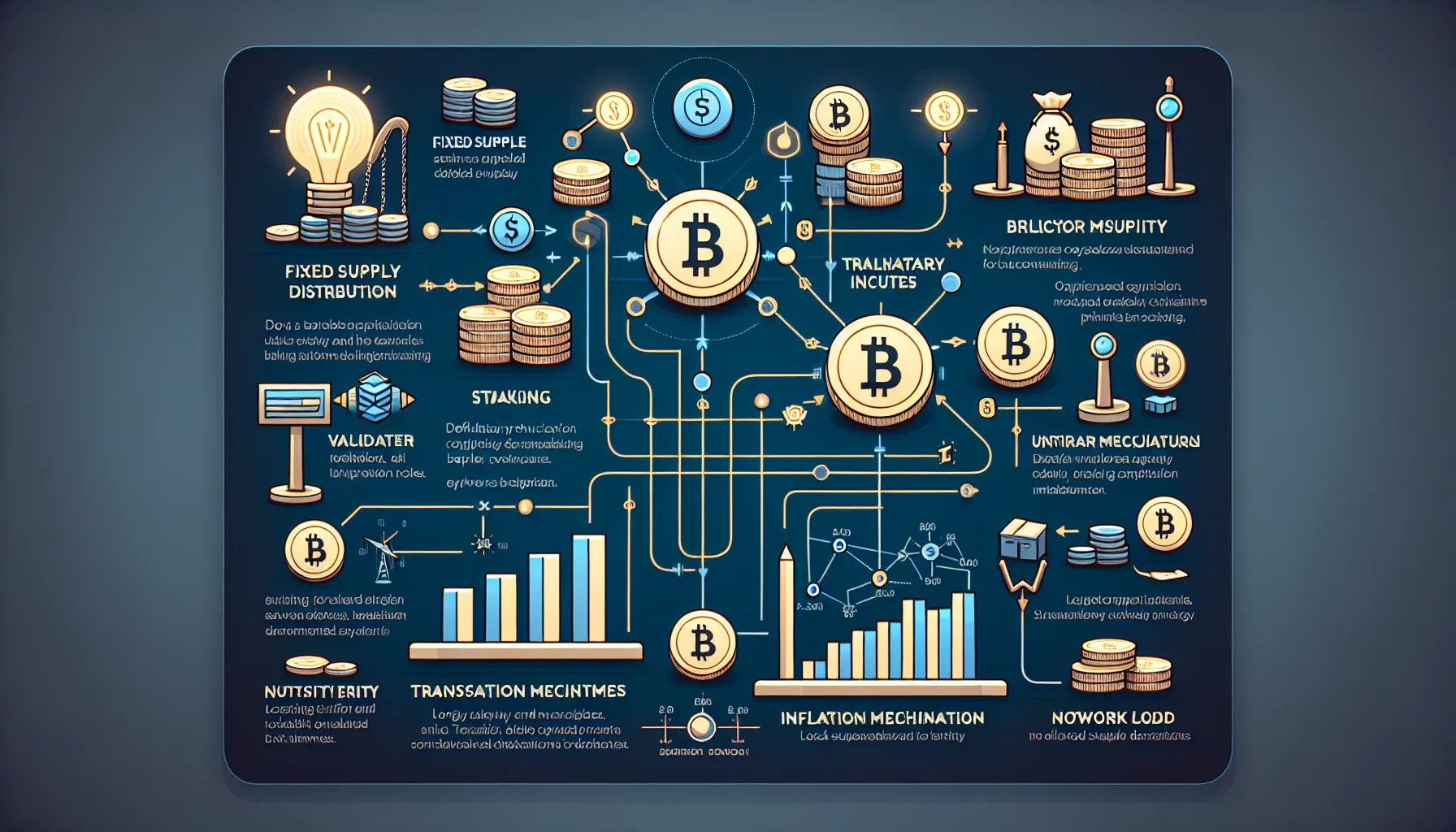
MultiversX (EGLD) Tokenomics
MultiversX (EGLD) Tokenomics Breakdown
Fixed Supply and Distribution Model
MultiversX (EGLD) operates with a fixed maximum supply of 31,415,926 EGLD, a deflationary structure designed to prevent excessive inflation. The initial token distribution was structured to support network development, with allocations for private investors, staking rewards, ecosystem growth, and the founding team. However, critics have pointed to the team and investor allocations as being relatively high compared to some other layer-1 blockchain projects, which could raise concerns about token centralization over time.
Staking and Validator Incentives
EGLD staking plays a critical role in network security and governance. Validators lock up EGLD to participate in consensus, earning rewards for securing the network. The reward rate dynamically adjusts based on network conditions and total staked supply. However, the staking minimums can be high, making it difficult for smaller holders to participate directly without joining staking providers. This dynamic centralizes staking power to larger entities, a common issue in proof-of-stake (PoS) systems.
Transaction Fees and Burning Mechanism
MultiversX employs a fee model where EGLD is used for transaction costs, smart contract execution, and other on-chain operations. A portion of these fees is burned, reducing the circulating supply over time. While this deflationary mechanism benefits long-term scarcity, congestion and fluctuating network demand can make fees unpredictable. Unlike some other blockchain ecosystems, fee structures are not dynamically adjusted based on real-time congestion, which can lead to inefficiencies under varying network loads.
Inflation and Long-Term Sustainability
Initially, EGLD had an inflationary component, used to bootstrap staking rewards. However, as emissions decrease, concerns arise about long-term validator incentives once staking rewards diminish. The network relies on transaction fees and adoption growth to sustain validator participation, but if transaction volumes do not scale as expected, staking returns could become uncompetitive, potentially impacting decentralization.
Utility and Locked Supply Dynamics
EGLD serves as the core asset for transactions, governance, and DeFi applications within the MultiversX ecosystem. However, liquidity constraints remain a consideration, as a significant portion of the supply is locked in staking or ecosystem initiatives. This can contribute to supply shocks during unlocking events or shifts in staking participation, influencing market liquidity and token availability in unpredictable ways.
MultiversX (EGLD) Governance
MultiversX (EGLD) Governance: On-Chain and Off-Chain Dynamics
On-Chain Governance Mechanisms
MultiversX (formerly Elrond) employs a hybrid governance model with elements of both on-chain and off-chain decision-making. Unlike many decentralized networks that rely on token-holder voting for governance, MultiversX’s approach is more structured around its validators and network participants. EGLD token holders delegate stake to validators, who play a central role in upholding network security and indirectly influence governance outcomes. However, direct governance participation by regular token holders is limited compared to other blockchain ecosystems with formalized DAO structures.
Smart contracts governing changes to protocol parameters, upgrades, or economic incentives are implemented through validator consensus. While this ensures security and efficiency, it also raises concerns about centralization of decision-making within validator sets. The network's Secure Proof of Stake (SPoS) mechanism helps mitigate validator dominance, but governance transparency remains a topic of discussion.
Role of Validators in Decision-Making
Validators are responsible for securing the network, processing transactions, and endorsing protocol upgrades. Since there is no direct token-holder voting mechanism for governance proposals, significant decisions are influenced by validator consensus. This means that smaller token holders have limited ability to initiate or veto protocol changes.
Proposals for major protocol upgrades are typically assessed within the validator and developer community before implementation. While validators act in their economic self-interest to maintain network integrity, this governance model relies on their alignment with network health rather than explicit token-holder voting mechanisms. Consequently, governance influence is concentrated among stakeholders with substantial EGLD staked or delegated.
Off-Chain Governance and Ecosystem Control
Beyond validator-driven governance, the MultiversX team and core developers maintain substantial influence over the protocol’s evolution. Development roadmaps, major protocol upgrades, and ecosystem funding are largely determined by the core team, with input from technical contributors and validators. While community feedback is encouraged, formal governance proposals do not operate through a purely decentralized or autonomous framework.
Compared to fully decentralized governance models seen in DAOs, MultiversX governance remains more centralized. This ensures development efficiency but also means that major decisions depend significantly on the core team and high-stake validators. The lack of an open on-chain proposal and voting system may be viewed as a drawback for those advocating for more community-driven governance models.
Decentralization in governance remains an ongoing challenge, and while MultiversX leverages SPoS to distribute influence, governance power primarily resides in validator sets and the development team rather than a fully democratized stakeholder model.
Technical future of MultiversX (EGLD)
MultiversX (EGLD) Technical Roadmap and Upcoming Developments
Sharding Enhancements for Increased Throughput
MultiversX continues to refine its Adaptive State Sharding mechanism, optimizing how transactions, smart contracts, and network state are distributed. Current efforts focus on improving shard merging and splitting efficiency, reducing cross-shard latency, and enabling more seamless scalability. However, challenges remain in fully optimizing communication between shards, particularly for high-complexity decentralized applications (dApps) that require significant cross-shard interactions.
Upgrades to Virtual Machine and Smart Contract Functionality
The transition to a more robust VM—currently built on WebAssembly (WASM)—aims to support more complex operations while maintaining low execution costs. Planned upgrades are expected to enhance interoperability with other blockchain ecosystems and refine gas fee structures. A key issue has been ensuring full developer adoption of these upgrades while maintaining backwards compatibility with existing smart contracts.
Improvements to Network Security and Validator Incentives
Ongoing work in validator consensus optimization includes introducing additional security layers to reduce potential attack vectors, particularly in multi-shard consensus verification. Adjustments to staking models and reward distribution mechanisms are proposed to increase the long-term incentive for validators without inflating token supply excessively. Some community discussions highlight concerns over balancing decentralization with ensuring a sufficient number of active, high-performance validators.
Bridging and Cross-Chain Integrations
Further integrations with external blockchains focus on expanding MultiversX’s interoperability capabilities. Official bridges are being developed to connect with Ethereum, Bitcoin, and emerging ecosystems, allowing EGLD and other ecosystem assets to flow across networks. Trust assumptions and security risks in bridging remain an area of concern, particularly given past exploits in the broader blockchain space.
Decentralized Finance (DeFi) and On-Chain Governance Evolution
On-chain governance is a focal point for future development, with enhancements designed to give EGLD holders greater influence over protocol upgrades. More refined delegation mechanisms are in discussion, aiming to increase active participation without centralizing decision-making among large stakeholders. Critics argue that existing governance structures still favor early adopters and large-scale participants, an issue that upcoming changes may or may not fully address.
Decentralized Storage and Off-Chain Data Access
An area under active research is decentralized data storage and off-chain data querying solutions—critical for handling sophisticated dApps and NFT metadata storage. While preliminary ideas include layer-2 style data availability solutions, challenges around cost efficiency and performance persist.
UX and Development Toolkit Upgrades
To drive broader adoption, ongoing front-end UX improvements and developer tooling enhancements aim to simplify onboarding. Current roadblocks include steep learning curves for new developers unfamiliar with MultiversX's specific implementation nuances, requiring continued refinement of SDKs, APIs, and documentation.
Comparing MultiversX (EGLD) to it’s rivals
MultiversX (EGLD) vs. Cosmos (ATOM): A Technical Comparison
Consensus Mechanism and Security
MultiversX (EGLD) utilizes a Secure Proof of Stake (SPoS) consensus mechanism, which enhances scalability and speeds up transaction finality through the use of randomly selected validators. In contrast, Cosmos (ATOM) employs the Tendermint BFT consensus, designed for interoperability and fault tolerance. A key difference is that Tendermint ensures strict finality, preventing chain reorganizations after block confirmation, whereas MultiversX's SPoS prioritizes fast consensus with a different validator selection process. This distinction has implications on chain security and resistance to certain attack vectors, such as long-range attacks.
Interoperability and Ecosystem Expansion
Cosmos is built around the Inter-Blockchain Communication (IBC) protocol, explicitly designed to foster interoperability among independent blockchains. This has led to the expansion of a modular ecosystem where different chains can seamlessly communicate while maintaining sovereignty. MultiversX, on the other hand, does not have a native ecosystem-wide interoperability standard like IBC. While MultiversX does feature integrations and bridges to external ecosystems, its approach to cross-chain interactions is not as fundamentally ingrained as Cosmos’ hub-and-zone model. This structural difference can impact adoption for projects that prioritize seamless cross-chain compatibility.
Scalability and Throughput
MultiversX focuses on high throughput via Adaptive State Sharding, which dynamically adjusts the number of shards based on network load. This allows the network to efficiently scale without overloading individual nodes. Cosmos, while scalable through its multi-chain architecture, does not implement native sharding at the protocol level. Instead, scalability in Cosmos is achieved by deploying new zones that operate independently under the Cosmos Hub, potentially leading to fragmentation challenges for projects seeking high throughput on a single chain. In contrast, MultiversX’s single-chain sharding approach eliminates the need for multiple chain deployments but comes with the complexity of shard coordination.
Smart Contracts and Developer Experience
Cosmos provides a flexible environment for developers, using the Cosmos SDK, which allows projects to build application-specific blockchains with custom governance and consensus rules. This modularity is a strong advantage for projects requiring extensive customization. MultiversX, however, runs smart contracts on its WASM-based VM, supporting languages like Rust, which can offer high performance but may present a steeper learning curve compared to Cosmos’ more generalized approach with the SDK. Furthermore, Cosmos’ SDK model allows for independent economic zones, while MultiversX remains anchored to its single-token ecosystem, which can create both benefits and limitations in economic design.
Comparing MultiversX (EGLD) to NEAR Protocol (NEAR)
Consensus Mechanism and Scalability
MultiversX (EGLD) and NEAR Protocol (NEAR) both focus on high-performance blockchain execution but take distinct approaches. NEAR utilizes Nightshade, a sharding-based consensus mechanism that dynamically adjusts resource allocation across shards. This allows NEAR to optimize throughput while ensuring parallel execution. Meanwhile, MultiversX employs its Adaptive State Sharding, which splits and merges shards dynamically based on network demand. A key difference is that NEAR does not require validator coordination across shards for transaction finality, whereas MultiversX enforces a consensus cycle that periodically reassigns validators among shards, potentially introducing additional latency.
Smart Contract Development
The developer experience on both networks differs significantly. NEAR employs a WebAssembly-based execution environment, supporting Rust and AssemblyScript for smart contract development. This choice enables high efficiency but adds complexity for developers not already proficient in those languages. In contrast, MultiversX supports smart contracts written in Rust, C, and C++, which could lower the entry barrier for developers coming from traditional programming backgrounds. However, NEAR’s infrastructure offers a more streamlined experience with its contract state storage model, reducing overhead in contract execution compared to the gas-based approach of MultiversX.
Transaction Costs and UX
NEAR Protocol prioritizes a user-friendly experience by abstracting many blockchain complexities. It features human-readable account names instead of cryptographic addresses, a progressive onboarding experience, and meta-transactions that let users interact with the network without holding NEAR tokens initially. MultiversX, while offering a highly efficient transaction model through its secure proof-of-stake (SPoS) consensus, lacks this kind of baked-in user experience layer, requiring additional third-party solutions for similar functionality.
Fee structures differ as well. NEAR implements a predictable fee model where a portion of transaction fees is burned, reducing overall supply. MultiversX, while efficient, has seen fluctuations in transaction costs due to network load, making cost predictions less consistent for developers deploying long-term dApps.
Network Adoption and Ecosystem
Despite both networks pushing for high-speed transactions with low latency, their ecosystems vary in terms of adoption. NEAR has gained traction via integrations with various Ethereum bridges and Layer 2 solutions, making it more immediately compatible with existing DeFi and NFT projects. MultiversX has focused on building its own native ecosystem, which, while growing, has had slower adoption outside its immediate community. Furthermore, NEAR’s grant programs and ecosystem funding have been more aggressive in attracting developers, whereas MultiversX has relied more on organic growth strategies.
MultiversX (EGLD) vs. Avalanche (AVAX): Key Differences in Architecture and Scaling
MultiversX (EGLD) and Avalanche (AVAX) are both high-performance blockchain platforms focused on scalability, but they achieve this through fundamentally different architectures. While MultiversX utilizes a unique Adaptive State Sharding model to distribute workload across multiple shards, Avalanche introduces a multi-chain framework with its Primary Network and Subnets.
Consensus Mechanism: SPoS vs. Avalanche Consensus
MultiversX employs Secure Proof of Stake (SPoS), an optimized variation of Proof of Stake that limits validator selection time to milliseconds. This ensures low latency and high security while maintaining decentralization. Conversely, Avalanche uses the Avalanche Consensus Protocol, which relies on a probabilistic mechanism where small, repeated validator sampling leads to agreement across the network. This approach allows Avalanche to process thousands of transactions per second with near-instant finality.
One key difference lies in security assumptions. While Avalanche’s protocol is designed for high throughput and decentralization, it does require a large number of validators to maintain Byzantine fault tolerance. MultiversX, on the other hand, relies on a sharded model where each shard independently processes transactions, introducing potential challenges in cross-shard communication efficiency.
Scalability: Sharding vs. Subnets
MultiversX's Adaptive State Sharding splits the blockchain into multiple smaller chains, dynamically adjusting shards based on network load. This allows for efficient parallel processing but increases complexity when coordinating transactions across shards.
Avalanche’s approach to scalability is through Subnets – independent, customizable blockchain environments validated by a subset of nodes from the Primary Network. This flexibility allows project-specific configurations, but it also introduces potential fragmentation. Not all Subnets inherit Avalanche’s security guarantees, leading to risks of isolated security concerns compared to MultiversX’s shared-state model.
Smart Contract Execution and Developer Experience
MultiversX utilizes the Arwen WASM Virtual Machine, enabling smart contracts in Rust and other WASM-compatible languages. This provides developers with a flexible and performance-focused execution environment. On the other hand, Avalanche supports Ethereum Virtual Machine (EVM) compatibility, allowing developers to deploy Solidity-based contracts seamlessly. While this makes Avalanche attractive for Ethereum-based projects, it also results in congestion risks if Subnet adoption does not scale proportionally with demand.
Finality and Transaction Costs
Both platforms offer near-instant finality, but their approaches to transaction costs differ. MultiversX’s architecture enables predictable fees due to its shard-based load balancing, whereas Avalanche’s transaction costs can vary significantly based on network congestion and the specific Subnet used.
Primary criticisms of MultiversX (EGLD)
Primary Criticism of MultiversX (EGLD)
Concerns Over Network Decentralization
One of the primary criticisms of MultiversX (formerly Elrond) is its level of network decentralization. While the platform utilizes Secure Proof of Stake (SPoS) to enhance efficiency, the validator set remains relatively limited compared to more widely distributed layer-1 chains. The protocol enforces high staking requirements, which can concentrate control within a smaller number of well-funded participants. This has led to concerns that the network’s governance and block validation may be more centralized than initially intended, potentially increasing risks related to censorship resistance and protocol manipulation.
High Entry Barriers for Validators
Running a validator node on MultiversX requires staking a significant amount of EGLD. The high capital requirement not only discourages broader network participation but also reinforces validator centralization. While delegators can stake with existing validators, this dynamic places a disproportionate amount of power in the hands of a limited number of node operators. In contrast to other proof-of-stake platforms that allow for more accessible validator participation, MultiversX's staking structure can be seen as exclusive, limiting broader decentralization and security incentives.
Smart Contract Development Complexity
MultiversX introduced a unique virtual machine and smart contract framework using Rust and WASM, deviating from the more widely adopted Ethereum-compatible environments like Solidity. While this approach provides performance benefits, it also presents compatibility and adoption hurdles. Developers experienced with Ethereum-based ecosystems must learn new tools, potentially slowing down onboarding and ecosystem expansion. The lack of direct EVM compatibility means that projects built on Ethereum cannot easily migrate to MultiversX without significant modifications, reducing overall developer accessibility.
Concerns Over Sustained Ecosystem Growth
MultiversX has focused heavily on creating high-performance blockchain infrastructure, but its ecosystem growth in terms of active decentralized applications (dApps) and total value locked (TVL) has faced challenges. The competition among layer-1 protocols is intense, with ecosystems like Ethereum, Solana, and others continuously expanding. Without strong adoption from third-party developers and DeFi protocols, concerns persist over whether MultiversX can sustain network activity beyond its native applications and staking mechanisms. Low liquidity in decentralized exchanges and fewer cross-chain integrations may hinder broader adoption.
Tokenomics and Inflation Uncertainty
While EGLD has a fixed supply cap, questions remain about long-term sustainability regarding staking rewards and network security. As staking rewards diminish over time, economic incentives for validators may need refinement. The absence of a robust fee-burning mechanism or alternative incentives raises concerns about whether future network participation will remain attractive without additional token emission or a shift in economic design.
Founders
MultiversX (EGLD) Founding Team: Key Figures and Their Backgrounds
Beniamin Mincu – Visionary Leader with Entrepreneurial Drive
Beniamin Mincu, co-founder and CEO of MultiversX, has been a central figure in the project since its inception. His prior experience includes involvement with the NEM project, where he focused on business, marketing, and community development. This early exposure to the crypto industry provided him with insights into blockchain scalability and adoption challenges, which later influenced MultiversX’s architecture. However, some critics argue that Mincu's leadership style is highly centralized, with strategic decisions remaining tightly controlled by a small group rather than being community-driven.
Lucian Todea – Seasoned Entrepreneur with a Tech Background
Lucian Todea, co-founder and COO, brings a strong entrepreneurial background to MultiversX. Before joining the project, Todea was known for launching the popular Romanian tech startup Soft32, a software distribution platform. His experience in scaling tech businesses has contributed to the operational and strategic aspects of MultiversX. However, some in the blockchain space have questioned whether Todea’s background in traditional tech adequately translates to the decentralized blockchain industry, where governance and incentivization mechanisms differ significantly.
Sergiu Mincu – Core Architect of MultiversX’s Technology
Sergiu Mincu, co-founder and CIO, has been instrumental in shaping the technical foundation of MultiversX. With experience in software development and security, he played a key role in designing the Secure Proof of Stake (SPoS) consensus mechanism and the Adaptive State Sharding model. Critics, however, have pointed out that while these innovations add efficiency, they also introduce slightly higher complexity for validator node operators compared to other Layer 1 solutions. Additionally, concerns around decentralization remain, as a significant percentage of EGLD staking power is often concentrated among a limited number of validators.
Team Background and Decentralization Concerns
While the MultiversX founding team possesses a strong mix of entrepreneurial, technical, and business expertise, some concerns persist about decision-making centralization. The project's direction has largely been driven by a core leadership group rather than a more decentralized governance structure. Compared to some other blockchain projects that integrate community-led decision-making via DAOs or on-chain governance, MultiversX remains relatively centralized in its strategic execution.
Impact of the Team’s Leadership on Ecosystem Growth
The leadership of Mincu and his co-founders has helped MultiversX secure partnerships and develop a robust infrastructure. However, their ability to fully decentralize governance and address validator concentration remains a point of discussion within the crypto community. The founding team’s technical and business expertise have undoubtedly propelled the project forward, but long-term sustainability may depend on increasing community-driven decision-making mechanisms.
Authors comments
This document was made by www.BestDapps.com
Sources
https://multiversx.com
https://docs.multiversx.com
https://github.com/multiversx
https://multiversx.com/developer
https://whitepaper.multiversx.com
https://multiversx.com/technology
https://explorer.multiversx.com
https://github.com/multiversx/mx-chain-go
https://github.com/multiversx/mx-sdk-go
https://github.com/multiversx/mx-chain-vm-go
https://github.com/multiversx/mx-chain-storage-go
https://github.com/multiversx/mx-chain-indexer-go
https://devnet-explorer.multiversx.com
https://testnet-explorer.multiversx.com
https://wallet.multiversx.com
https://bridge.multiversx.com
https://xlaunchpad.com
https://twitter.com/MultiversX


