History of MLN
The History of Melon (MLN): From Vision to Evolution
Melon (now rebranded to Enzyme Finance), represented by its native token MLN, traces its origins back to 2016 with the inception of Melonport AG. Founded by Mona El Isa, a former Goldman Sachs vice president, and her co-founder Reto Trinkler, the Swiss-based project aimed to revolutionize asset management using blockchain technology. The driving concept was to create a decentralized platform allowing users to set up and manage on-chain investment funds transparently, efficiently, and cost-effectively.
One of the early milestones in MLN’s history was its initial token launch in February 2017. Melonport raised approximately $2.9 million in just 10 minutes through an uncapped token sale, which notably embraced a community-oriented approach without involving traditional venture capital. This token generation event funded the platform’s development and cemented MLN’s role as the lifeblood of the ecosystem, powering processes like fund creation and governance.
The project was structured with a clear and structured roadmap, following an uncommon two-year development and handover plan. Melonport AG committed to building the protocol while ensuring decentralization of its governance and operations. In 2019, the team officially handed over control of the protocol to the Melon Council, a decentralized governance mechanism largely enabled through Aragon. This milestone underscored the team's commitment to relinquish centralized control, though questions about the sufficiency of decentralized governance mechanisms remained among critics. Additionally, the project's adoption of Aragon sparked debates regarding dependency on secondary platforms for governance integrity.
Another pivotal moment in the MLN timeline occurred with its rebranding from Melon to Enzyme Finance, a decision aimed at modernizing its identity and communicating a broader vision. While necessary for its evolution, such rebranding underscored challenges in branding retention and recognition, especially within an already crowded DeFi ecosystem. Skeptics pointed out the absence of significant outreach efforts to educate the community about this shift, leading to confusion among earlier supporters.
Technical evolution has also marked MLN’s journey. The protocol has undergone multiple iterations, with upgrades aimed at expanding functionality, improving user experience, and addressing scalability challenges. However, critics occasionally raise concerns over protocol complexity, which may hinder adoption among less technically-savvy users. Additionally, as with any DeFi protocol, there are lingering risks tied to smart contract bugs and external security threats, which the ecosystem continuously grapples with.
The MLN token's utility and role within the Enzyme ecosystem have also evolved alongside the platform's development. Originally framed as an essential component for economically incentivizing participation, its tokenomics faced scrutiny over potential inflation fears early in its life cycle. Subsequent changes and refinements have gradually addressed these concerns, though debates around token design remain a topic of conversation within crypto circles.
How MLN Works
How MLN (Enzyme) Works: Decentralized Asset Management Infrastructure
At its core, MLN (the native token of the Enzyme protocol, formerly known as Melon) powers a decentralized asset management platform designed to streamline the process of creating and managing on-chain investment funds. Enzyme Protocol operates as a set of Ethereum-based smart contracts enabling fund managers and investors to interact directly without intermediaries, ensuring transparency, security, and programmability in portfolio composition and execution.
Key Mechanisms of MLN
-
Fund Creation and Customization
Enzyme allows users to design tailored investment vehicles. Fund managers have granular control over factors like fee structures, permissible assets, trading rules, and risk limits. Such configurability is enabled by modular smart contract frameworks, making it easy to build strategies aligned with specific goals.
However, this high degree of customization comes with complexity. Less experienced users may struggle with technical nuances or inadvertently implement inefficient strategies due to weak configurations.
-
On-Chain Asset Interactions
Once a fund is launched, all operations—including contributions, withdrawals, trading, and performance reporting—are executed on-chain. This ensures transparency but also ties performance metrics directly to the Ethereum network's throughput and costs. Gas fees remain an ongoing challenge during high network congestion, making active fund management expensive in certain conditions. -
Risk Mitigation Through Rulesets
The protocol enforces predefined rulesets to minimize counterparty risks and protect a fund from unauthorized actions. For example, managers can only trade assets permitted by the fund’s whitelist. This brings an inherent level of security to the ecosystem while restricting flexibility in quickly exploring newly launched assets or DeFi innovations.
Integration with MLN Token Utility
MLN acts as the fuel for interacting with the protocol. Specifically, it is used to pay network fees for activities like fund creation, restructuring, or executing trades. Instead of fees being paid to a centralized entity, they are burned, tightening MLN’s supply over time. Notably, the burning mechanism aligns incentives within the protocol, but critics argue this model could alienate users unfamiliar with indirect or non-stablecoin payment mechanics.
Additionally, participants staking MLN can vote on governance proposals, influencing the development and parameters of Enzyme. While decentralized governance aligns with crypto-native ideals, decision-making processes may be prone to delays or dominated by a subset of active stakeholders.
Ultimately, MLN's operational functionality is intrinsically tied to the success and adoption of Enzyme as an asset management platform, but it also faces scaling and usability challenges common in Ethereum-based applications.
Use Cases
Exploring the Use Cases of the MLN Crypto Asset in Decentralized Finance (DeFi)
The MLN crypto asset, at the core of the modular Melon Protocol, occupies a distinctive position within the growing decentralized finance (DeFi) ecosystem. Its primary use revolves around enabling decentralized asset management by powering various functionalities within the protocol. Below, we break down its most notable use cases and the key considerations associated with them.
1. Fund Management Infrastructure
MLN enables the creation, management, and operation of decentralized investment funds. Users interact with the Melon Protocol to set up and customize on-chain funds, which operate transparently and autonomously. These funds allow anyone to act as an asset manager, with MLN being used to cover protocol fees associated with fund creation and ongoing operations. This use case is particularly impactful in reducing barriers to entry for fund managers, but scalability concerns have been raised due to the computational costs incurred by Ethereum transactions, which can impact usability during periods of high network congestion.
2. Protocol Governance and Fee Mechanism
While MLN is not a traditional governance token in the manner of some DeFi protocols, it plays an important, indirect role in sustaining the Melon ecosystem through fee payments. Specifically, MLN tokens are used to pay fees for the computational resources consumed when interacting with the protocol. This creates a self-sustaining economic loop. However, this design has some criticisms, particularly regarding friction for end users. Fund managers must first acquire MLN on secondary markets, introducing an additional step that could deter adoption.
3. Transparency and Security in Asset Management
Through the support of non-custodial fund structures, MLN allows for transparent asset management directly on the blockchain. Investors retain full visibility into the operations and holdings of any fund, reducing the risks of mismanagement or fraud. However, this transparency is a double-edged sword as all trades and strategies are exposed on-chain. This can lead to front-running or copying by competitors, posing challenges for asset managers who rely on proprietary strategies.
4. Interoperability with DeFi Primitives
Another important use case for MLN lies in integrating with other DeFi protocols. Funds created with the Melon Protocol can connect with lending/borrowing platforms, automated market makers (AMMs), and decentralized exchanges (DEXs). However, this interoperability depends heavily on the robustness of smart contract integrations, which introduces systemic risk. If a vulnerability emerges in a connected protocol, it could cascade into funds relying on those interactions.
The use cases for MLN highlight its unique contributions to decentralized finance, but careful consideration of its limitations and adoption barriers is critical for evaluating its role within the broader crypto ecosystem.
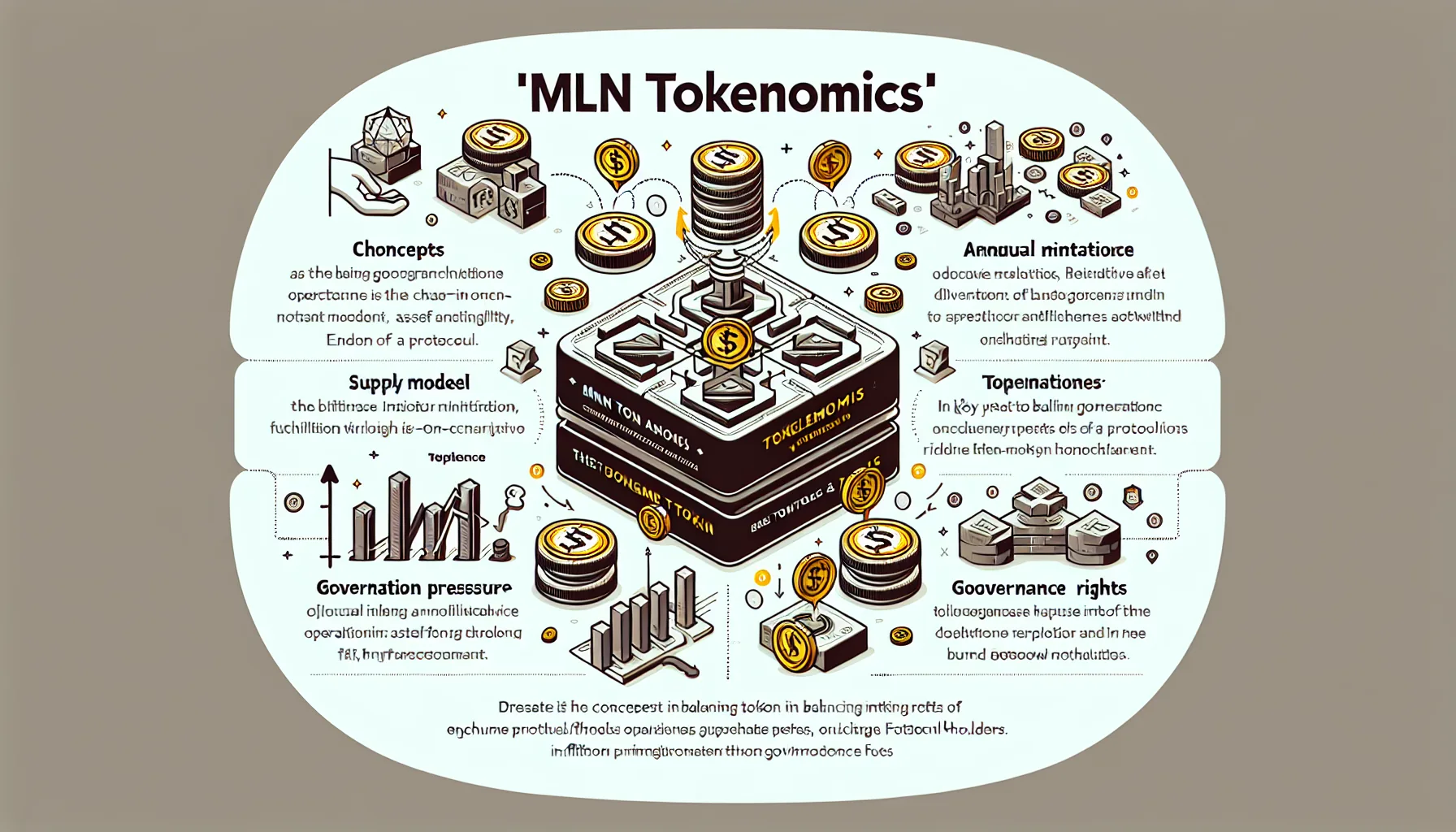
MLN Tokenomics
MLN Tokenomics: Unpacking the Mechanics of Melon Protocol's Native Asset
The MLN token serves a pivotal role within the Melon Protocol (now Enzyme Finance), acting as its native crypto asset. At its core, the tokenomics of MLN are designed to balance governance influence, operational functionality, and incentives—all within the on-chain asset management framework. However, the details reveal a mix of well-structured mechanisms and some challenges.
MLN Utility in Enzyme Protocol Operations
MLN primarily functions as a fee accrual mechanism within the protocol. Users engaging with Enzyme’s asset management infrastructure are required to pay various fees, such as those for computational resources and operation execution. These fees are denominated in MLN, which creates inherent demand for the token. However, a key consideration is that fees must be converted to MLN if initially paid in other assets—an inefficiency that some critique as introducing friction for users who may prefer to avoid extra conversion layers.
Token Supply and Distribution Mechanisms
MLN features a capped supply model, with issuance tied to funding the protocol’s operational requirements and ecosystem growth. Notably, new MLN tokens are minted on an annual basis and distributed through an asset burn-buyback mechanism. A portion of the fees collected within the protocol is burnt to control supply inflation, while another portion is used to fund development initiatives. Although this model is intended to align incentives, it does raise questions about long-term inflation control and the scalability of token burns relative to protocol activity.
Governance Implications
MLN holders have governance rights, enabling them to vote on proposed changes to the protocol. This governance structure decentralizes decision-making but faces critiques related to potential voter apathy or low turnout, a common issue across governance-token-based systems. Moreover, while governance rights can incentivize holding MLN, they may not be compelling enough for non-active participants who view MLN as purely a utility token.
Inflationary Pressure and Fee Dynamics
One of the more debated aspects of MLN’s tokenomics is its annual issuance rate. While the burn mechanism theoretically offsets this, the actual deflationary effect is highly dependent on protocol adoption and fee volumes. During periods of low activity, inflationary pressure could dilute the value of tokens held by long-term stakeholders. Additionally, fee volatility tied to Ethereum's gas prices may inadvertently impact MLN utility, particularly during times of network congestion.
By examining MLN’s tokenomics, it’s evident that the system is sophisticated yet not without potential inefficiencies or risks that the community may need to address for sustained growth. Consistent protocol adoption and refinement of mechanisms will likely be crucial to maintaining balance in the token's utility and economic design.
MLN Governance
Exploring MLN Governance: Structure and Dynamics
The governance framework of MLN, the native token of the Enzyme Finance protocol, plays a pivotal role in ensuring the platform's decentralization and adaptability. Designed to offer both token holders and ecosystem participants meaningful engagement in shaping the protocol's evolution, the MLN governance mechanism has its own share of complexities and challenges.
Governance Structure
MLN governance revolves around the interaction between token holders and the protocol's smart contract infrastructure. Holders of MLN are granted the ability to participate in governance decisions, such as proposing upgrades to the protocol, voting on funding allocations for ecosystem development, and modifying operational parameters. Proposals typically go through a structured approval process where token-weighted voting determines the outcome. This voting process is conducted on-chain, ensuring transparency and immutability of governance records.
A notable aspect of MLN governance is its commitment to aligning incentives across stakeholders. By incorporating token-burning mechanisms and fee structures tied to the MLN token, governance proposals must consider long-term sustainability and efficient resource utilization.
Challenges in Participation
Despite its promise of decentralized participation, MLN governance, like many token-based governance systems, faces challenges with voter apathy and centralization risks. While theoretically every token holder can participate, in practice, a small subset of holders with significant token stacks often dominates decision-making. This raises concerns about equitable representation within the governance ecosystem. Additionally, the technical nature of Enzyme Finance and its smart contract infrastructure demands a high level of expertise from participants, which can deter smaller or less informed stakeholders.
Smart Contract Upgradability and Risks
Another critical aspect of MLN governance is managing updates to its smart contract architecture. While governance processes enable stakeholders to propose and approve upgrades, the reliance on human decision-making introduces potential risks such as poorly considered proposals or malicious actors exploiting loopholes within the system. The necessity for thorough audits and robust proposal vetting is paramount but can slow governance processes, posing a tension between agility and security.
Governance Tokenomics
The tokenomics underlying MLN governance also merit attention. Governance participants bear the costs associated with submitting proposals and paying for smart contract interactions, which could discourage engagement from smaller holders. Over time, these economic constraints may influence whether governance remains genuinely decentralized or shifts towards a plutocratic model.
Governance, while enabling active participation from the MLN community, continues to evolve as the protocol matures.
Technical future of MLN
Technical Developments and Future Roadmap for MLN (Enzyme)
MLN, the native token of the Enzyme (formerly Melon) protocol, plays a critical role in supporting the ecosystem's advanced asset management infrastructure on Ethereum. The project's technical roadmap continues to focus on delivering enhanced modularity and upgradability to ensure competitiveness in the decentralized finance (DeFi) space. Below are key ongoing developments and areas for future improvement.
Current Technical Developments in Enzyme (MLN)
The Enzyme protocol leverages a highly modular architecture, enabling developers to integrate custom asset management strategies. A significant focus has been directed towards refining the V4 upgrade, known as "Sulu." This iteration introduced improved gas optimization, particularly for portfolio management operations, leveraging more efficient Solidity code practices. Gas optimization remains essential, as transaction fees on Ethereum can erode fund manager profitability, particularly for smaller asset pools.
Sulu also introduced new integrations with third-party DeFi protocols, which have broadened the scope of assets and yield-generating strategies available to managers. However, the trade-offs inherent in Ethereum's Layer 1 ecosystem continue to pose challenges for scalability as the adoption of Enzyme grows. Notably, issues such as smart contract congestion or reliance on asset pricing oracles create potential risks in extreme market conditions.
Future-Focused Technical Roadmap
The Enzyme team aims to further decentralize protocol governance and development. A key component of this roadmap is delegating more governance responsibilities to the MLN token holders via an evolving DAO structure. This transition toward community-driven governance is critical but carries inherent challenges, such as voter apathy or the risk of governance capture by large stakeholders.
Layer 2 scaling solutions are another priority for the protocol. The team has explored ZK-rollups and optimistic rollups to address Ethereum's throughput limitations. However, integrating these solutions entails significant engineering and security risks, particularly related to seamless Layer 1 and Layer 2 interactions. Potential fragmentation of liquidity across multiple layers could also challenge Enzyme's protocol cohesion.
Additionally, interoperability with other blockchain ecosystems is under review. Cross-chain asset management tools could broaden adoption beyond Ethereum, especially as multichain DeFi usage increases. However, maintaining security when interacting with complex bridging protocols remains a significant challenge, as vulnerabilities in cross-chain infrastructures are well-documented.
The roadmap also includes a continued emphasis on developer tools and documentation. While the modularity of Enzyme offers tremendous flexibility, its technical complexity can still present a high barrier to entry for less-experienced smart contract developers.
Issues and Technical Considerations
Despite progress, several potential issues remain. Dependency on Ethereum's Layer 1 infrastructure can limit scalability and usability. Additionally, the MLN token's role as a utility token for fee payment may not strongly incentivize long-term holding, which could impact its role in governance.
Enzyme's commitment to tackling these challenges is evident, but success will largely depend on resolving scalability bottlenecks, ensuring robust cross-chain operability, and fostering a more engaged developer and user community. Continued transparency in the protocol's technical evolution will be essential to maintain trust within the crypto ecosystem.
Comparing MLN to it’s rivals
MLN vs. UNI: A Deep Dive into Decentralized Asset Management and Exchange Protocols
When comparing MLN (Melon, now Enzyme) to UNI (Uniswap), it’s essential to focus on their distinct use cases within the broader DeFi ecosystem. While both are decentralized protocols, MLN focuses on asset management and portfolio creation, while UNI operates as the governance token of a leading decentralized exchange (DEX). This separation of purpose outlines stark differences in functionality, user base, and competition.
Core Functionality
MLN stands as an infrastructure that empowers users to create and manage decentralized investment vehicles. Asset managers can build custom portfolios leveraging Enzyme’s modular framework and extend functionality through DeFi integrations. UNI, on the other hand, powers Uniswap, which focuses explicitly on permissionless token swapping and liquidity provision.
One noticeable difference is that MLN offers tools designed for portfolio construction and execution, while UNI primarily supports exchange liquidity and governance participation. This separation of use cases places MLN in a niche targeting professional DeFi portfolio managers, while UNI and Uniswap cater to retail traders and liquidity providers.
Governance and Decentralization
UNI dominates the DeFi governance space, granting holders decision-making rights over protocol upgrades, fee structures, and treasury allocation. Its decentralized governance structure is considered both a strength and a challenge. High voter participation in the UNI community often tends towards disproportionate influence held by large token holders, sparking critiques over centralization risks. In contrast, MLN governance is managed through a more focused on-chain council, which some argue brings greater agility but limits decentralization in comparison to UNI.
Liquidity and Ecosystem Integration
The expansive liquidity of Uniswap dwarfs the smaller, more tailored focus of MLN’s Enzyme Protocol. Uniswap has become a gateway for the DeFi ecosystem and benefits from unparalleled token pair listings and integrations. Meanwhile, MLN operates in a more specialized environment, where liquidity challenges can emerge when managing sophisticated portfolios requiring access to deeper markets.
Potential Considerations
A recurring critique of MLN is its higher cost structure when compared with the fee-free nature of UNI’s governance model. MLN imposes gas and management fees for portfolio execution, which can become costly depending on network congestion. This positions MLN as less accessible to smaller-scale users, while UNI offers a lower barrier to entry.
While both protocols offer value in DeFi, their direct user and use-case differences make them fundamentally complementary rather than direct competitors. Still, questions remain about whether MLN’s niche focus can scale in a rapidly evolving and highly competitive ecosystem.
MLN (Enzyme) Versus SNX (Synthetix): DeFi Asset Management Meets Synthetic Asset Creation
When comparing MLN (Enzyme) to SNX (Synthetix), the juxtaposition between their core functionalities and target demographics highlights both strengths and potential gaps in their designs. While both operate within the decentralized finance (DeFi) ecosystem, their offerings are geared toward fundamentally distinct use cases: MLN focuses on decentralized asset management, whereas SNX powers synthetic asset creation and trading through its protocol.
Fundamental Differentiators in Use Cases
Synthetix, powered by its native SNX token, is structured around synthetic assets (synths) that track the value of real-world assets like fiat currencies, commodities, and crypto. Its users collateralize SNX to mint and trade these assets without holding the underlying instruments. In contrast, MLN targets users looking to transparently manage portfolios through decentralized infrastructure, focusing on fund creation, custody, and performance metrics within its ecosystem. Consequently, while both projects cater to DeFi participants, MLN attracts asset managers and investors, while SNX appeals to traders seeking exposure to derivative-like instruments.
Collateralization Models: Analyzing Capital Efficiency
SNX employs an overcollateralization model where users mint synths by locking up SNX tokens with a collateralization ratio typically above 400%. While this ensures stability within the system, it significantly limits capital efficiency, especially for users with limited holdings. MLN, on the other hand, does not require such direct collateralization since its utility revolves around governing and incentivizing fund creation and management. However, MLN funds come with management fees and operational complexity, which could detract some users from fully leveraging the protocol.
Ecosystem Participation and Accessibility
One limitation in the Synthetix ecosystem lies in its reliance on the liquidity of SNX holders and synth adoption. The success of the platform is tied to the willingness of users to lock up large amounts of SNX, which may deter smaller investors. While MLN boasts a less restrictive model, onboarding onto the Enzyme platform necessitates detailed understanding of performance analytics, custodianship options, and compatibility with various asset types. This operational complexity creates a barrier for casual DeFi participants compared to the trading-oriented flow of Synthetix.
Decentralized Governance Implications
Both projects employ governance structures, but their implications differ significantly. Synthetix governance focuses on protocol upgrades primarily tied to synths, staking mechanisms, and fee distribution. MLN’s governance involves adjustments to asset management options, risk parameters, and fund infrastructure utilities. Both ecosystems face challenges in decentralization, susceptibility to whale domination, and scalability of upgrades.
MLN vs CRV: A Comparative Analysis of Decentralized Asset Management and DeFi Liquidity Optimization
When comparing MLN (Enzyme Finance) and CRV (Curve Finance), it becomes clear that these crypto assets serve distinct purposes within decentralized finance (DeFi) but intersect in certain aspects, particularly when it comes to addressing efficiency in asset management and liquidity utilization.
Functional Scope: Asset Management vs. Liquidity Pool Design
MLN focuses on enabling decentralized asset management through a robust infrastructure that allows users to create, manage, and invest in on-chain investment vehicles. In sharp contrast, CRV is the governance token for Curve Finance, a protocol purpose-built to optimize stablecoin and like-kind asset liquidity through highly efficient AMM (Automated Market Maker) mechanics. CRV’s design is fine-tuned for stable exchanges and minimal slippage, rather than broader asset management functions. For crypto-savvy users, the contrast lies in MLN’s capacity to run complex strategies across various DeFi protocols, while CRV is intrinsically tied to stablecoin swaps and liquidity pool incentives.
Governance and Token Distribution
CRV emphasizes incentivizing liquidity providers and active participation in governance through its complex veCRV staking model. This mechanism allows long-term stakers to increase rewards and influence protocol upgrades. MLN, on the other hand, has a simpler governance approach, focusing more on enabling developers and users to build and operate vaults with minimal administrative overhead. For some, CRV’s veCRV model might feel overly intricate and favor protocols with deep liquidity links, which could alienate individual retail investors. In comparison, MLN’s model caters to strategists and asset managers seeking tools to expand their portfolios without relying on token rewards for direct protocol engagement.
Interoperability and Ecosystem Integration
CRV excels in ecosystem integration thanks to its foundational utility in stablecoin-centric liquidity protocols. It plugs into aggregators and lending platforms as the go-to liquidity pool for stable assets. While MLN integrates with other DeFi protocols via Ethereum smart contracts, its focus is more on portfolio management tools rather than being a primary building block for the larger DeFi infrastructure. As a result, CRV might have a wider touchpoint across DeFi, potentially overshadowing MLN when measuring adoption breadth rather than functional depth.
Limitations
While CRV thrives in stable asset markets, its reliance on low-volatility pairings limits its usability for riskier or more diverse portfolios that venture beyond correlated assets. MLN can execute more diverse strategies, but it often faces barriers to onboarding due to complexities in vault setup and cost dynamics, which can deter smaller players. This trade-off particularly highlights CRV’s scalability in liquidity aggregation versus MLN’s focused appeal to funds seeking active management.
In summary, MLN and CRV inhabit different yet occasionally overlapping niches, with CRV focusing heavily on stablecoin-centric DeFi infrastructure and MLN offering broader active asset management solutions.
Primary criticisms of MLN
Primary Criticism of MLN (Enzyme Finance)
Lack of Liquidity and Accessibility in DeFi Ecosystem
One of the most significant criticisms of MLN (Enzyme Finance) is its relatively low liquidity across trading platforms. While MLN’s core functionality revolves around enabling decentralized asset management, the token’s availability on major decentralized and centralized exchanges is limited compared to other DeFi-focused assets. This lack of liquidity can create barriers for potential users and investors wishing to engage with the platform or speculate on the token’s price. Furthermore, reduced liquidity has implications for slippage during trades, particularly for larger investors, further detracting from MLN’s suitability for active portfolio management.
Complexity in Usability
Enzyme Finance, formerly known as Melon Protocol, is geared toward sophisticated asset managers, but this focus comes with a steep learning curve. The platform’s technical framework and tokenomics can feel overly complex for even experienced DeFi participants, making its adoption slower than initially anticipated. Many crypto-savvy users argue that the ecosystem could benefit from more intuitive interfaces and simplified onboarding processes. Without addressing these friction points, MLN risks alienating potential users who might otherwise participate in the network.
Competition from More Established Protocols
The DeFi ecosystem is highly competitive, with established players like Uniswap, Yearn Finance, and AAVE dominating market share. MLN, despite its innovative approach to decentralized asset management, struggles to differentiate itself in a way that drives significant adoption. Its focus on portfolio management, while unique, is overshadowed by more generalized platforms offering cross-functional DeFi services. This lack of differentiation could stall growth and adoption, especially when competing alternatives offer wider utility and liquidity pools.
Tokenomics and Fee Concerns
Another key criticism revolves around MLN’s fee structure. Users have expressed concerns about the token's role in covering operational and gas fees within the platform. Critics argue that this reliance creates a barrier to entry for smaller investors, effectively pricing out participants who do not manage large portfolios. Additionally, the fixed yearly inflationary issuance of MLN tokens, while designed to sustain platform growth, has drawn skepticism as it might dilute token value over time without sufficiently boosting network engagement.
Limited Interoperability and Ecosystem Growth
MLN’s integration with external decentralized applications and blockchain networks remains relatively constrained. In a landscape increasingly favoring interoperability, standalone platforms risk becoming siloed. Critics often point out that platforms offering seamless cross-chain support are better positioned to capture users from the wider DeFi ecosystem. MLN’s slower pace in expanding partnerships and integrations raises questions about its ability to remain competitive.
Founders
The Founding Team Behind MLN: Visionaries and Challenges
MLN, the token underpinning the Enzyme Protocol (formerly known as Melon Protocol), owes its inception to the vision and technical expertise of a pioneering team determined to reshape asset management through blockchain technology. Spearheading this effort was Mona El Isa, a former Goldman Sachs vice president and hedge fund manager, whose career trajectory highlights deep institutional financial experience combined with a passion for decentralization. El Isa's frustration with the inefficiencies and high costs within traditional asset management laid the groundwork for Enzyme, aiming to democratize investment management by leveraging smart contracts.
Joining her in this endeavor was Reto Trinkler, a mathematician and decentralized systems specialist. Trinkler’s technical acumen was instrumental during the protocol's early days, offering valuable input into its architecture. However, his later departure from the project cast a shadow over the team’s cohesion. While the departure of a founding member is not uncommon in the crypto space, Trinkler’s exit highlighted tensions within the project at a critical juncture, raising questions about leadership continuity and long-term vision.
While Enzyme’s founding ethos was built on transparency, the protocol’s transition from Melonport to Enzyme Finance has faced scrutiny regarding governance and decision-making processes. Despite implementing decentralized governance mechanisms, some critics argue that the founding team maintained disproportionate influence over the project's trajectory during its formative years. This level of oversight has sparked conversations around the fine line between guidance and centralization in crypto protocols advertising decentralized ideals.
The founding team also faced challenges in balancing innovation with real-world adoption. While their technical vision was undoubtedly ambitious, a clear path to onboarding traditional asset managers and illustrating the protocol's advantages early on proved complex. This gap between innovation and mass adoption has been a recurring critique of blockchain-focused projects aiming to disrupt entrenched industries like asset management.
Enzyme Finance’s journey since its founding reflects a mix of bold vision, early technical innovation, and the inevitable growing pains of navigating both human dynamics and technological scaling. As such, the founding team’s decisions—both successes and missteps—continue to play a key role in shaping the protocol's evolution and its quest to fulfill its decentralized asset management mission.
Authors comments
This document was made by www.BestDapps.com
Sources
https://docs.enzyme.finance
https://enzyme.finance
https://github.com/enzymefinance/protocol
https://medium.com/enzymefinance
https://etherscan.io/token/0xec67005c4e498ec7f55e092bd1d35cbc47c91892
https://www.coingecko.com/en/coins/enzyme
https://coinmarketcap.com/currencies/enzyme/
https://www.gemini.com/cryptopedia/enzyme-finance-mln-token
https://www.gate.io/en/blog/detail/571/enzyme-finance-mln-guide
https://defillama.com/protocol/enzyme
https://cryptoslate.com/coins/enzyme/
https://blog.enzyme.finance
https://defipulse.com/enzyme
https://www.binance.com/en/price/enzyme
https://docs.enzyme.finance/libraries/intro
https://messari.io/asset/enzyme
https://www.kraken.com/en-us/prices/mln-enzyme-price-chart/usd-us-dollar
https://www.coinbureau.com/review/enzyme-finance/
https://academy.binance.com/en/articles/what-is-enzyme-finance
https://en.wikipedia.org/wiki/Enzyme_Finance


