History of MKR
The History of MKR: Origins and Evolution of MakerDAO's Governance Token
MKR, the governance token of MakerDAO, bears a history deeply intertwined with the evolution of decentralized finance (DeFi). Its origins date back to late 2014, when Rune Christensen conceptualized the idea of a decentralized credit system on Ethereum. This vision would ultimately become the Maker protocol, one of the first DeFi platforms, and MKR emerged as an essential element of its ecosystem.
MKR's initial purpose was governance. Unlike many other crypto assets that primarily serve as speculative instruments or payment tokens, MKR was designed to allow holders to vote on critical decisions about the Maker protocol. These decisions include modifications to the system's parameters, such as collateral types, risk models, and Stability Fees. This governance structure was formally established in 2017, following a series of whitepapers and development milestones.
A defining moment in MKR’s history was the launch of Single-Collateral DAI (SCD) in December 2017. Prior to this, the Maker protocol primarily existed in test environments and theoretical documentation. With SCD, MKR entered into broader usage, as the token’s governance mechanism allowed the community to adjust risk parameters for DAI’s functionality. This was a first-of-its-kind experiment in decentralized stablecoin governance.
The transition to Multi-Collateral DAI (MCD) in late 2019 marked another key milestone in MKR's history. The protocol expanded its collateral options beyond Ethereum (ETH), a move that significantly increased the complexity of governance. MKR holders now had to vote on the inclusion or rejection of new assets as collateral, introducing higher stakes and a greater demand for active participation. The transition also introduced the DAI Savings Rate (DSR), a feature that added further responsibilities for MKR governance.
Historically, MKR has faced criticism regarding its governance model. Detractors argue that decision-making can be dominated by whales, large MKR holders who effectively wield disproportionate influence over outcomes. This has led to debates about plutocracy within the MakerDAO community, with concerns centering on the potential for centralization in what is intended to be a decentralized system.
MKR’s functionality as a recapitalization tool has also been scrutinized. In the event of a severe system deficit, MKR is minted and sold to cover losses, an inherently inflationary process that could dilute token value. This mechanism, while effective for system stability, has resulted in contentious discussions among stakeholders about its long-term impact.
Throughout its history, MKR's trajectory has been shaped by both innovation and challenges, mirroring the broader dynamics of the DeFi landscape. The token’s dual role as both a governance asset and a safeguard for system stability continues to position it as a critical, if debated, component of the MakerDAO ecosystem.
How MKR Works
How MKR Works: Understanding the Mechanics Behind MakerDAO’s Governance Token
MKR (Maker) is a governance token deeply embedded within the MakerDAO ecosystem, operating on the Ethereum blockchain. It primarily functions as a pivotal tool for decentralized governance and risk management in maintaining the stability of MakerDAO’s protocol and its decentralized stablecoin, DAI. Here's a detailed breakdown of how MKR works under the hood:
Governance Participation
MKR holders play an active role in shaping the future of the MakerDAO system by participating in key governance decisions. This is achieved through an on-chain, token-weighted voting system. Each MKR token represents a vote, and holders can vote on multiple aspects, such as: - Adjusting the stability fees charged on DAI loans. - Setting debt ceilings on the collateral types within the protocol. - Adding or removing collateral asset types. - Modifying the mechanics of liquidation penalties or auction parameters.
Notably, the decentralized nature of governance relies heavily on the engagement of MKR holders, which can be both a strength and a potential bottleneck. Low voter turnout in critical decisions has been cited as a recurring issue, raising concerns about centralization risk if large holders dominate the process.
Collateralized Debt Position (CDP) Stability
While MKR is not directly used as collateral within the system, it plays an indirect role in risk management. The MakerDAO system relies on overcollateralized positions to mint DAI. If a collateral portfolio becomes undercollateralized, MKR tokens are subject to dilution through a mechanism called the "MKR minting process." Newly minted MKR is sold on the open market to recapitalize the system. This creates an incentive for MKR token holders to govern responsibly, as their stake in the system could be diluted if poor decision-making leads to insolvency events.
However, this mechanism introduces inherent risks. Sudden market downturns that impact collateral assets can lead to rapid MKR issuance, potentially destabilizing the token's valuation. Hedging against this risk remains a challenge for MKR holders.
Balancing Supply and Demand
Unlike DAI, which is soft-pegged to the US dollar, MKR has no static supply cap. Its issuance or burn is dynamically adjusted based on system health. When the protocol earns surplus stability fees, MKR tokens are burned, reducing supply. Conversely, if deficits occur, additional MKR is minted. This burn-and-mint function is central to MKR’s value proposition but has been criticized for its reliance on market assumptions and long-term sustainability under extreme economic conditions.
Security and Smart Contract Risks
Being intricately tied to MakerDAO’s smart contract ecosystem, MKR is exposed to both governance and protocol-level vulnerabilities. Exploits or failures in the underlying contracts could directly impact the value and utility of MKR. Moreover, the complexity of decision-making on-chain can lead to suboptimal outcomes if misinformation or manipulation infiltrates the community’s deliberations.
Use Cases
MKR Use Cases: Navigating Governance and Ecosystem Functionality
MKR, the governance token of the MakerDAO ecosystem, plays a pivotal role in maintaining the integrity and operational efficiency of the decentralized autonomous organization. Unlike many other crypto assets, MKR's utility is deeply intertwined with its connection to MakerDAO and the Dai stablecoin system, offering a blend of governance, economic incentives, and risk exposure. Below, we delve into MKR’s key use cases, highlighting both its capabilities and associated considerations.
1. Governance Participation in MakerDAO
At its core, MKR is a governance token, enabling holders to influence critical decisions within the MakerDAO ecosystem. Token holders actively contribute to proposals and voting on topics such as:
- Collateral onboarding: Determining which assets may serve as collateral to generate Dai.
- Stability fee adjustments: Modifying interest rates on Dai loans, which impact Dai's peg to the U.S. dollar.
- Risk parameters: Defining liquidation ratios and debt ceilings for different collateral types.
While this decentralized governance system incentivizes engaged participation, it also faces a challenge: voter apathy. A small percentage of MKR holders often dominate voting, raising questions about equitable decentralization in the decision-making process. This centralization risk can hinder broader democratic engagement and trust in the ecosystem.
2. Economic Role in Risk Mitigation
MKR functions as a backstop for bad debt in the Maker Protocol. In situations where collateral becomes insufficient to cover outstanding Dai loans, the Maker Protocol mints and sells MKR on the open market to restore balance. This mechanism ensures system solvency, but it introduces dilution risk for MKR holders. Essentially, MKR’s value is directly tied to the system's ability to maintain proper risk management—an attribute that can either bolster or undermine confidence among stakeholders.
3. Speculation and Liquidation Dynamics
Although not its primary intent, MKR is frequently traded in speculative markets, with significant price fluctuations influenced by external and protocol-specific events. Additionally, MKR holders face indirect exposure to the health and diversity of the collateral assets within MakerDAO, making its value sensitive to broader crypto market trends. This linkage might deter some participants, as potential losses can compound during systemic failures or periods of market instability.
4. Interaction with Lending Protocols
MKR is increasingly used within DeFi ecosystems, often as collateral in lending platforms or for staking incentives in liquidity pools. However, its relatively lower liquidity compared to other top crypto assets can present challenges, such as higher slippage during trades or reduced borrowing power for users leveraging MKR as collateral. Users incorporating MKR into broader DeFi strategies must navigate these limitations carefully.
In summary, while MKR provides critical functionality within the MakerDAO system, it carries inherent risks associated with participation and broader market dependencies. Understanding the token's specific roles and implications is essential for anyone engaging with it.
MKR Tokenomics
Comprehensive Breakdown of MKR Tokenomics
MKR, the governance token of the MakerDAO protocol, occupies a uniquely strategic position within the DeFi landscape due to its dual functionality as both a utility and governance token. Understanding the tokenomics of MKR requires a deep dive into its supply mechanics, value accrual strategies, and its role in sustaining the stability and growth of the Maker ecosystem.
Dynamic Supply Mechanism of MKR
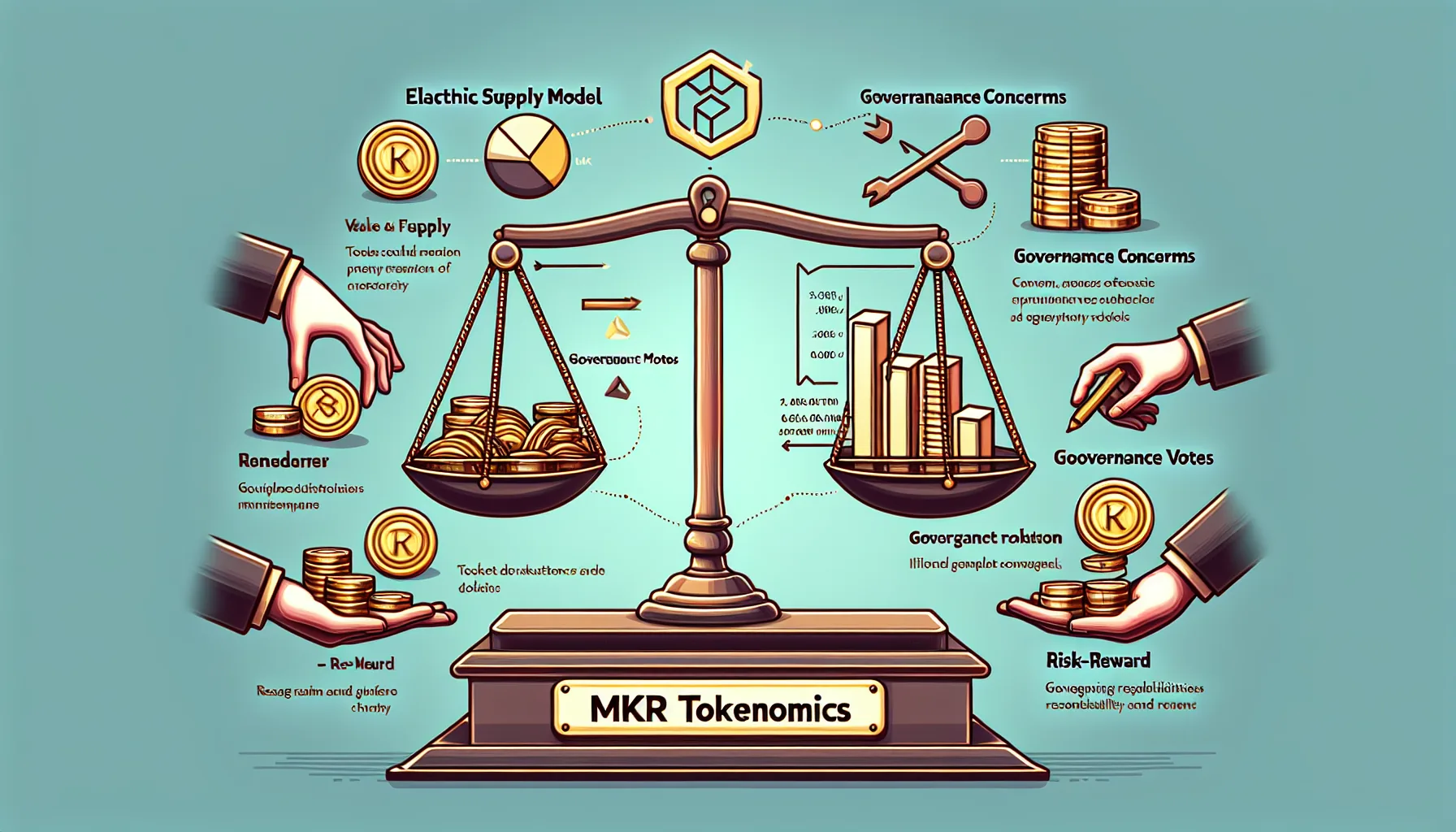
One of the defining characteristics of MKR’s tokenomics is its elastic supply model. Unlike fixed-supply tokens, MKR’s total supply is not predetermined; instead, it expands or contracts depending on the performance of the Maker Protocol’s collateralized debt positions (CDPs) and the stability of the DAI stablecoin. When the system incurs excess debt (e.g., during market downturns or insufficient collateral), new MKR is minted and sold to cover the shortfall, diluting existing holders. Conversely, when there is surplus system income, MKR is burned, reducing its circulating supply and theoretically increasing scarcity for holders. This model directly ties MKR’s supply dynamics to the overall health and efficiency of the MakerDAO ecosystem, creating both an incentive and a risk for token holders.
MKR’s Role in Governance and Risk-Reward Dynamics
MKR holders wield significant influence over the Maker ecosystem by participating in governance votes, addressing critical factors such as DAI stability fees, collateral onboarding, and risk parameters. While this governance mechanism empowers the community, it also places extensive responsibility on MKR holders, as poor governance decisions can negatively impact the protocol and, by extension, the token’s value. In particular, a major risk lies in the potential for voter apathy or centralization of voting power, as these factors could undermine the decentralized ethos the project aims to uphold. The DAO has historically taken measures to incentivize voter participation, but the balance between governance centralization and inclusivity remains an ongoing challenge.
Value Accrual Challenges
MKR lacks a direct means of value accrual compared to some other DeFi governance tokens that implement revenue-sharing models. While the token indirectly benefits from protocol growth through supply reductions via token burns, critics argue that this mechanism creates a lag in value realization compared to platforms that reward holders directly. Additionally, dependency on DAI stability fees as the primary income stream introduces risk, as fee changes based on market conditions could impact the protocol's ability to generate surplus income for MKR burns.
Token Distribution and Whales
MKR’s initial allocation and subsequent distribution have raised questions about the concentration of tokens. While the MakerDAO Foundation dissolved in favor of complete decentralization, some concerns linger over large holders potentially exerting outsized influence in governance. This concentration could lead to conflicts of interest or governance outcomes that favor institutional players over smaller community stakeholders.
MKR Governance
MKR Governance: Balancing Decentralization and Risk
MKR (MakerDAO’s native governance token) plays a critical role in shaping how the Maker Protocol functions. Its primary utility lies in governance, where holders of MKR vote on key proposals that influence the stability, security, and evolution of the system. However, the nature of this governance model introduces both strengths and vulnerabilities, making its decentralized decision-making structure a central topic for discussion.
On-Chain Governance Mechanics
Governance proposals within MakerDAO primarily revolve around risk parameters, collateral asset onboarding, and system upgrades. MKR holders interact through on-chain voting, where they lock tokens into governance contracts to influence the outcome of proposals. This ensures that votes are traceable and tamper-resistant. The governance process commonly includes the following components:
- Executive Votes: Finalize decisions such as protocol upgrades or changing system parameters.
- Governance Polls: Gauge community sentiment on specific issues before executive votes.
- Emergency Shutdowns: Enabling MKR holders to shut down the protocol under extreme conditions as a safeguard.
While these mechanisms adopt a trust-minimized approach, the system doesn’t escape challenges. A key issue lies in low voter turnout, which can concentrate power among a handful of active participants or even expose the system to governance attacks by opportunistic actors.
Governance Risks in MKR Tokenomics
One critical concern with MKR governance is the inherent financial incentive structure. While MKR holders have the responsibility to act in the protocol's best interest, they also hedge risks against personal gain. The tokenomics are deflationary, as MKR is burned during stability fee repayments, aligning holder incentives with protocol success. However, this link is imperfect. Short-term greed can incentivize decisions that optimize for short-term benefits while undermining MakerDAO's long-term stability.
Additionally, whales (entities controlling large MKR holdings) yield disproportionate influence in governance decisions. True decentralization is challenged when voting power aggregates among a few wealthy participants. This dynamic raises concerns of plutocracy and erodes equitable participation.
Governance Attack Vectors
MKR’s governance design is vulnerable to "governance capture," where an attacker acquires enough MKR to maliciously push protocol changes. This attack scenario emerged as a practical risk because MKR tokens can be borrowed through liquidity protocols. If an attacker acquires sufficient MKR temporarily, it could lead to damaging changes, such as draining MakerDAO’s collateral reserves.
Finally, MakerDAO’s reliance on an active community and ongoing development poses the risk of stalling governance due to inaction or decision apathy. For a governance system meant to secure decentralized finance at scale, this fragility merits scrutiny.
Technical future of MKR
Current and Future Technical Developments of MKR: Advancing the MakerDAO Ecosystem
MakerDAO’s MKR token plays a pivotal role in the governance and stability of the Maker Protocol, and its technical improvements have a significant impact on the ecosystem. As the ecosystem that underpin MKR evolves, several developments and challenges are shaping its roadmap.
Transition to Endgame Architecture
A major ongoing technical development is MakerDAO's shift toward the Endgame architecture. The Endgame model proposes restructuring Maker into multiple subDAOs focused on specific governance and operational functions. This decentralized governance model aims to enhance scalability and streamline protocol decision-making. From a technical perspective, this will require upgrades to Maker's smart contracts and governance infrastructure, including the introduction of new contracts for subDAO tokenization. However, this shift creates complexity, with significant engineering risks around contract interoperability, potential fragmentation of voting participation, and increased attack vectors.
Enhanced Collateralization Mechanisms
Maker Protocol is also focusing on expanding the diversity and efficiency of collateral types within its multi-collateral DAI (MCD) system. Engineers are working on integrating advanced collateral assets, including tokenized real-world assets (RWAs). These integrations involve new oracle frameworks capable of securely streaming off-chain asset data and introducing credit risk modeling within the protocol. While these features aim to solidify DAI's peg stability, they introduce concerns about centralized points of failure and regulatory scrutiny, which could hinder adoption.
Improved Liquidation Engine
Upgrades to Maker’s auction-based liquidation system are also in development. The aim is to enhance the protocol’s resilience during extreme market conditions by optimizing gas efficiency and improving the auction dynamics for liquidators. While these improvements strengthen protection against sudden DAI de-pegs, fully automating a flawless system capable of handling unforeseen market anomalies without manual intervention remains an unresolved challenge.
L2 Expansion Strategy
Scaling Maker onto Layer 2 (L2) solutions is a critical part of the technical roadmap. Integrations with platforms like Optimism and Arbitrum are currently underway, leveraging optimistic rollups to reduce transaction costs and improve user accessibility. While this L2 strategy reduces network congestion on Ethereum, it presents technical hurdles, such as bridging security risks between L2 and L1, and dependency on the maturity of L2 ecosystems.
Smart Contract Auditing and Security
Security enhancements remain an ongoing priority for MKR-related contracts. Developers are continuously refining the system's resilience to exploits, focusing on comprehensive formal verification and auditing processes. However, the complexity of Maker's smart contract stack and frequent updates create obstacles to maintaining airtight security, as vulnerabilities often emerge following upgrades.
MKR’s future developments are a balancing act between enhancing technical sophistication while managing the inherent risks associated with rapid innovation and increasing protocol complexity.
Comparing MKR to it’s rivals
MKR vs AAVE: A Deep Dive into Decentralized Lending Mechanics
When comparing Maker's MKR token to AAVE, it becomes immediately clear that, despite both operating in the decentralized finance (DeFi) space, their core mechanisms and functionalities showcase significant differences in design philosophy and implementation. Maker’s MKR is intrinsically tied to the functionality of the MakerDAO protocol, primarily facilitating the governance of the DAI stablecoin system. Conversely, AAVE focuses heavily on liquidity provision and interest-based lending and borrowing, creating significant divergence in their utility and positioning within DeFi.
Collateral Management and Risk Profiles
Maker employs an overcollateralization model, where users lock up assets in Maker Vaults to mint DAI stablecoins, collateralized at ratios ranging from 130% to above 175% based on the type of asset used. In comparison, AAVE’s system is more expansive, offering both overcollateralized and undercollateralized lending options. AAVE’s flash loans, an innovative feature unavailable on the Maker protocol, enable users to borrow uncollateralized funds provided the borrowed amount is repaid within the same block. While this flexibility attracts high-volume traders and arbitrageurs, it also exposes the protocol to risks such as flash loan exploits, which Maker mitigates by avoiding similar features outright.
MKR holders are tasked with voting on risk parameters such as debt ceilings, stability fees, and collateral types. This governance-intensive approach fosters community-driven risk management but requires active participation from token holders. AAVE’s approach to risk, by contrast, is automated through interest rate models and lending pool configurations, which can appeal to users seeking passivity.
Tokenomics and Fee Generation
The MKR token’s utility revolves around governance and acting as a backstop during systemic shortfalls in the Maker ecosystem, where additional MKR tokens may be minted and sold during periods of insolvency to recapitalize the system. This dynamic can negatively impact MKR holders during extreme market-wide DeFi stress events. AAVE, on the other hand, offers AAVE token stakers the ability to earn liquidity rewards while simultaneously serving a safety mechanism by bearing the financial burden in the event of liquidity shortfalls.
One notable distinction is the revenue model. MakerDAO’s protocol revenue primarily comes from stability fees attached to loans in the form of DAI, while AAVE collects interest paid by borrowers from its lending pools. This creates a divergence in how incentive alignment functions, with MKR’s value tied closely to governance efficacy and stability of DAI, whereas AAVE’s derives more directly from market activity and demand for liquidity.
Scaling and Growth Issues
AAVE supports a broader array of collateral types and operates across multiple chains, showcasing versatility in scaling its ecosystem. Maker, while pioneering, is constrained by its reliance on DAI and lacks extensive multi-chain footprints. Additionally, the complexity of Maker’s governance mechanism and its susceptibility to voter apathy contrast with AAVE’s more streamlined governance, which has arguably allowed it to expand with fewer bottlenecks. However, AAVE’s rapid collateral expansion has its critics, raising concerns about overexposure to volatile assets and systemic flash loan vulnerabilities, which Maker is relatively insulated from due to its restrictive collateral onboarding process.
MKR vs COMP: A Deeper Dive into DeFi Governance and Utility
In the competitive landscape of decentralized finance (DeFi), MKR and COMP serve as prime examples of governance tokens, each playing a pivotal role within its respective ecosystem. While MakerDAO's MKR governs the creation and stability of the DAI stablecoin, Compound's COMP token governs a decentralized lending protocol designed to optimize capital efficiency. Despite their shared governance utility, the distinct mechanisms and priorities of these ecosystems reveal stark contrasts in their functionality, risks, and adoption dynamics.
Governance Models: Centralization Concerns vs. Proportional Control
MKR token holders directly influence parameters such as debt ceilings, stability fees, and collateral types that guide the MakerDAO protocol. Its governance strategy aims to preserve the DAI stablecoin's peg while maintaining an overcollateralized system. However, participation in MakerDAO's governance has historically been criticized for requiring highly technical knowledge, leading to centralization concerns where voting power is concentrated among large token holders. This could, in turn, lead to decisions that prioritize whales over smaller stakeholders.
In contrast, COMP employs a delegated governance system, where smaller holders can pool voting power by delegating it to trusted individuals or entities. This model has allowed for wider participation, but it’s not without flaws. The protocol has faced criticism for low voter turnout and its susceptibility to governance attacks via COMP accumulation—a challenge shared by most governance tokens, including MKR.
Utility Beyond Governance
MKR’s core utility revolves around maintaining the DAI peg through the token's role in absorbing insolvency risk. When MakerDAO encounters bad debt, MKR is minted and sold on the open market to recapitalize the system, providing a direct link between governance participation and financial commitment. This puts MKR holders at the forefront of the protocol's financial health. While this dynamic aligns incentives, it also subjects MKR investors to amplified risks during market downturns.
On the other hand, COMP accrues its value primarily through network incentives, as the token is distributed as rewards to borrowers and lenders within the Compound ecosystem. While this mechanism has contributed to user acquisition and liquidity, it has been criticized for encouraging mercenary behavior, where participants interact with the protocol solely to farm COMP rewards without contributing to long-term growth.
Market Design and Collateralization
While Compound specializes in lending markets backed by overcollateralized loans, it lacks the native stability mechanism that defines MakerDAO and DAI. This distinction means COMP holders have less direct influence over systemic stability compared to MKR holders. However, the narrower scope of the Compound protocol allows the team to focus on optimizing capital efficiency, albeit at the cost of higher dependency on price speculation for COMP’s long-term sustainability.
Ultimately, while both MKR and COMP exemplify governance-driven DeFi models, their design philosophies and trade-offs cater to notably different use cases and risks. For developers, investors, and governance participants, these differences highlight the nuances behind choosing one ecosystem over the other.
MKR vs. CRV: Decentralized Governance and Token Utility
When comparing MakerDAO’s MKR token to Curve DAO’s CRV within the DeFi ecosystem, a clear divergence in priorities emerges, particularly in governance models and token utility. Both platforms are integral to decentralized finance but cater to distinct use cases and user demographics. This section dissects their differences without assuming one’s superiority over the other.
Governance Approaches: Weighted Voting vs. veCRV Mechanism
MKR holders wield significant power within the MakerDAO ecosystem, using their tokens to vote on changes related to the Dai stablecoin system. This includes decisions on collateral onboarding, debt ceiling adjustments, and system upgrades. MKR governance operates with a one-token-one-vote model, designed to ensure alignment between token holders and the overarching protocol health. However, this model has drawn criticism for its plutocratic tendencies, as wealthier stakeholders inherently have disproportionate sway—potentially leading to centralization concerns.
Curve DAO, in contrast, employs a veCRV (vote-escrowed CRV) model, requiring users to lock CRV for varying durations to receive veCRV, which grants governance power and fee-sharing incentives. This lock-up mechanism incentivizes long-term alignment with the protocol’s goals. While innovative, the veCRV system introduces its own complexities, such as illiquidity for locked funds and a concentration of power among entities willing to commit CRV for extended periods. Consequently, both governance structures face their respective balancing acts between decentralization and stakeholder incentive alignment.
Token Utility: Risk Management vs. Liquidity Incentives
MKR’s primary utility lies in its role as a backstop for the MakerDAO system. In cases of under-collateralization in the Dai ecosystem, MKR can be minted and sold to cover deficits, distributing risk across token holders. This “last resort” functionality adds a layer of systemic protection but presents a double-edged sword: in extreme market conditions, MKR holders could face significant dilution. The reliance on MKR’s value to ensure protocol stability becomes a vulnerability if market confidence wanes.
CRV’s utility is deeply tied to liquidity incentives. Curve’s focus on stablecoin and pegged asset swaps rewards liquidity providers primarily in CRV tokens. While this model has successfully driven liquidity to the platform, it also incentivizes sell pressure, as recipients of CRV tokens often liquidate their earnings. Attempts to mitigate this through veCRV rewards have only partially addressed the issue, as the broader volume of CRV issuance continues to dilute its value over time.
Risk Profiles and Ecosystem Roles
While both MKR and CRV play critical roles in their respective ecosystems, their fundamental differences reflect diverging risk profiles. MKR acts as a risk management token for a debt-based stablecoin protocol, inherently tying its value to system solvency. CRV, however, leans heavily on liquidity mining rewards, making its performance more reliant on sustained user activity and incentives. Both models come with trade-offs not only in their potential for growth but also in their vulnerabilities under stress conditions. Each asset's governance structure and utility naturally attract varying types of participants, further emphasizing the complementary—but distinct—roles within DeFi.
Primary criticisms of MKR
Primary Criticism of MKR: Governance Complexity and Risk Centralization
MakerDAO’s governance token, MKR, plays a pivotal role in managing and maintaining the Maker Protocol. However, the token and its governance framework are not without criticism. Key concerns revolve around governance centralization, voting participation challenges, and systemic risks that could jeopardize the protocol's decentralization ethos.
Low Voter Participation and Governance Risk
One of the most pointed criticisms of MKR is the consistently low voter turnout in governance decisions. Despite being central to the MakerDAO system, a significant portion of token holders either chooses not to vote or is unable to actively participate due to technical or time barriers. This creates a scenario where the protocol’s governance can become disproportionately influenced by a small group of highly active, and potentially self-interested, holders. Such influence undermines the decentralized ideals foundational to MakerDAO and exposes the system to risks of collusion or oligarchical control.
Whales and Power Imbalances
As with many token-based governance systems, MKR faces a recurring critique of "whale dominance." Large holders of MKR tokens possess substantial voting power, allowing them to shape the protocol's future direction in their favor. While this is a natural consequence of a token-weighted voting system, the concentration of power in the hands of a few undermines the democratic principles that DeFi protocols often claim to champion. Critics argue that this dynamic creates a governance model that, at times, leans more toward plutocracy than decentralization, leaving smaller token holders with little meaningful influence.
Complexity for Everyday Participation
The intricate governance structures and technical requirements associated with MKR voting are another key criticism. Engaging with MakerDAO governance often necessitates a deep understanding of both the protocol and broader DeFi mechanics, which can deter less experienced participants. This complexity exacerbates challenges in voter participation and increases reliance on governance delegates, further centralizing power and decision-making in the hands of specialized actors. Critics highlight this as a barrier to achieving equitable, widely distributed governance.
Centralized Risk Tied to Maker Protocol Stability
MKR’s value and utility are closely tied to the stability of the Maker Protocol. This tight coupling creates systemic risk, as adverse events affecting the protocol—such as undercollateralized debt positions, governance exploits, or regulatory crackdowns—could have an outsized impact on MKR itself. This relationship perpetuates concerns over whether MakerDAO’s financial engineering adequately accounts for worst-case scenarios, particularly in volatile or highly regulated environments.
Founders
The Founding Team Behind MKR: Visionaries and Challenges
MakerDAO’s MKR token was conceived by a pioneering team with the ambitious goal of creating a stable, decentralized financial ecosystem. The project was spearheaded by Rune Christensen, a Danish entrepreneur, who co-founded MakerDAO and served as its de facto leader during its formative years. Armed with a background in molecular biology and international business, Christensen transitioned into the blockchain space after observing the potential of Ethereum. His vision was to create a decentralized stablecoin system resistant to the pitfalls of traditional finance.
Key contributors to MKR’s development also included a diverse team of developers, risk analysts, economists, and legal advisors, many of whom were early Ethereum enthusiasts. A notable figure during the initial stages was Andy Milenius, who played a critical role as CTO in shaping MakerDAO’s technical foundation. Under his leadership, the smart contract infrastructure for the Maker Protocol—a system that governs the issuance of DAI stablecoins and risk management via MKR—began taking form.
Despite the founding team’s accomplishments, MakerDAO’s journey has not been without internal conflict. Milenius’ departure from the project in 2019 highlighted deeper tensions within the team. A lengthy open letter from Milenius revealed philosophical disagreements over governance structures and decision-making processes. These differences underscored the challenges of decentralization, particularly when aligning a rapidly growing community with a clear vision.
Another key friction point arose from balancing decentralization with operational efficiency. As MakerDAO transitioned from a startup-like culture to a mature decentralized autonomous organization (DAO), questions emerged about who should control the protocol’s direction—founders, core developers, or MKR token holders. The tension between centralized leadership and grassroots decentralization created a complex dynamic that continues to influence MakerDAO’s development to this day.
In addition, the initial founders faced scrutiny regarding diversification of the core team. As the DAO gained international prominence, critics pointed out the lack of non-Western representation in its early stages, raising concerns about the inclusiveness of its global strategy. Over time, MakerDAO has worked to address these gaps, but the early team’s composition remains a topic of discussion among crypto insiders.
The founding team’s blend of technical expertise, visionary leadership, and operational missteps paints a nuanced picture of MKR’s origin. Their decisions—both successful and contentious—form an integral part of Maker's history and its evolving governance principles.
Authors comments
This document was made by www.BestDapps.com
Sources
- https://makerdao.com/en/whitepaper/
- https://github.com/makerdao/dss
- https://community-development.makerdao.com/makerdao-youtube
- https://makerdao.world/en/
- https://github.com/makerdao/governance-manual
- https://etherscan.io/token/0x9f8f72aa9304c8b593d555f12ef6589cc3a579a2
- https://forum.makerdao.com/
- https://docs.makerdao.com/
- https://makerburn.com/
- https://daistats.com/
- https://www.notion.so/Governance-Dashboard-links-38f10541b2de46e688dbaeffec7db944
- https://defipulse.com/maker
- https://makerdao.com/en/roadmap
- https://twitter.com/MakerDAO
- https://medium.com/@MakerDAO
- https://www.coingecko.com/en/coins/maker
- https://messari.io/asset/maker/profile
- https://decrypt.co/resources/what-is-makerdao-guide-to-dai-crypto-stablecoin
- https://chain.news/learn/makerdao/
- https://docs.makerdao.com/smart-contract-modules/introduction-to-makerdao-smart-contracts


