History of MDX
The History of MDX: Origins, Development, and Key Events
Launch and Early Beginnings
MDX, the native token of the MDEX decentralized exchange, was introduced with the goal of creating a high-speed, low-cost trading environment that leveraged multiple blockchain networks. Initially built on the Huobi ECO Chain (HECO) and later expanding to Binance Smart Chain (BSC), MDX aimed to rival established DEX platforms by offering automated market-making (AMM) features with additional incentives like liquidity mining and transaction fee rebates.
At the time of its launch, MDEX positioned itself as a direct competitor to platforms like Uniswap and PancakeSwap, emphasizing dual-chain interoperability and lower transaction costs. To accelerate adoption, the team introduced aggressive yield farming incentives through a liquidity mining program that distributed MDX rewards to liquidity providers and traders.
Expansion and Multi-Chain Strategy
Following its initial success on HECO, MDEX expanded to Binance Smart Chain, enhancing accessibility and transaction efficiency. This move was pivotal, as it allowed the platform to tap into a larger user base and mitigate the risks associated with ecosystem dependency on any single blockchain.
MDEX also later integrated with the Ethereum network, broadening its reach. However, as cross-chain DEX competition intensified, maintaining market dominance became more challenging. Despite early traction, shifting DeFi trends and the rise of new incentives from rival platforms caused market share fluctuations.
Challenges and Controversies
MDX faced several hurdles throughout its history. One challenge was the dependency on HECO during its early phase. When interest in HECO declined, liquidity and user activity were impacted. The introduction of Binance Smart Chain alleviated some concerns, but reliance on incentives such as high MDX emissions raised questions about long-term sustainability.
Additionally, governance participation using MDX has been relatively low compared to competing DEXs, limiting the impact of community-driven decision-making. Liquidity mining—a key driver of early MDX adoption—eventually saw diminishing returns, as high-yield farming trends shifted, impacting user retention.
Security audits and protocol integrity have remained crucial to MDEX’s evolution, but like other DeFi projects, it has had to combat issues related to smart contract risks and impermanent loss for liquidity providers. Competitor innovations, evolving regulatory concerns, and changing DeFi market dynamics have also influenced the platform’s trajectory.
Evolution and Key Developments
Over time, MDEX introduced various features to maintain relevance, including transaction fee rebates, periodic burning mechanisms to reduce token supply, and governance-based decision-making mechanisms. However, sustaining a competitive edge required more than just incentives, leading to innovations in liquidity management, additional DeFi integrations, and expanded multi-chain support.
MDX’s journey reflects the broader DeFi landscape, where rapid evolution, competition, and user-driven protocols dictate long-term viability in the decentralized exchange space.
How MDX Works
How MDX Works – Mechanisms Behind the Asset
MDX functions as the native utility and governance token of the MDEX decentralized exchange (DEX). Built on an AMM (automated market maker) model, it facilitates trading, liquidity mining, and transaction fee incentives within the MDEX ecosystem. The asset operates across multiple blockchain networks, leveraging cross-chain interoperability to enhance functionality.
Liquidity Mining and Transaction Fee Distribution
MDX incentivizes users through liquidity mining, where participants provide liquidity to trading pools in exchange for MDX rewards. These rewards stem from transaction fees and liquidity incentives set by the protocol. MDEX adopts a dual-reward structure by combining MDX incentives with additional liquidity provider (LP) rewards, helping sustain user participation. However, centralized control over reward adjustments raises concerns about governance transparency.
Transaction fees on MDEX are redistributed, with a portion allocated to MDX buybacks and burns, an attempt to maintain token scarcity. While this mechanism theoretically supports price stability, its effectiveness depends on trading volume and consistent protocol usage. Moreover, sudden changes in fee distribution governance can impact MDX utility.
Governance and Voting Mechanisms
MDX functions as a governance token, enabling holders to vote on proposals that influence protocol decisions, such as transaction fee adjustments, new liquidity pools, and ecosystem upgrades. The governance model allows stake-weighted voting, where users with larger MDX holdings exert greater influence. While this aligns incentives with active participants, it inherently favors large stakeholders, raising concerns about centralization and governance manipulation.
Cross-Chain Functionality and Interoperability
A distinguishing factor of MDX is its cross-chain compatibility, enabling asset transfers between smart contract platforms. This reduces liquidity fragmentation and broadens the asset’s functionality. However, the reliance on cross-chain bridges presents a security challenge, as vulnerabilities in bridge contracts have historically led to exploits. Additionally, cross-chain transactions introduce latency and higher gas fees in some cases, diminishing efficiency.
Buyback and Burn Strategies
MDX incorporates a token-burning mechanism fueled by a portion of transaction fees collected. This systematic reduction in supply aims to counteract inflationary pressures. However, fluctuations in trading volume directly impact the amount of MDX burned, making this deflationary mechanism less predictable. If trading volume declines, the burn rate weakens, reducing its intended effect.
MDX’s utility depends on sustained trading activity and liquidity participation. Changes in governance structures, reward incentives, or network scalability can directly influence MDX’s functionality within the MDEX ecosystem.
Use Cases
MDX Crypto Asset: Use Cases
Liquidity Provision on Mdex
MDX is primarily used for liquidity provision on Mdex, an automated market maker (AMM) decentralized exchange (DEX). Users stake MDX in liquidity pools, enabling efficient token swaps while earning trading fees and potential MDX rewards. However, impermanent loss remains a key concern, particularly in volatile market conditions where liquidity providers can experience losses compared to simply holding assets.
Governance and Voting Power
MDX holders participate in the platform's governance by voting on proposals, including protocol upgrades, liquidity mining adjustments, and reward distributions. While decentralized governance empowers the community, issues such as governance inefficiency, voter apathy, and centralization risks—where large stakeholders have disproportionate influence—can impact decision-making.
Yield Farming and Staking
MDX is widely utilized in yield farming strategies, where users stake MDX in various pools to earn additional MDX or other rewards. Staking mechanisms provide incentives for long-term token holders but can also introduce risks, including smart contract vulnerabilities or sudden declines in staking rewards due to changing tokenomics. Additionally, the high APYs typically associated with MDX farming can fluctuate significantly, making yield farming opportunities unpredictable.
Cross-Chain Asset Transfers
MDX supports cross-chain transactions, particularly between the Binance Smart Chain (BSC) and the Huobi Eco Chain (HECO). This interoperability allows users to move assets across different blockchains efficiently. However, cross-chain bridges have historically been a target for exploits, presenting security risks. Additionally, the reliance on specific chains can limit adoption if liquidity concentration remains an issue.
Payment and Transaction Fee Reductions
Some platforms accept MDX as a payment method, and it can be used for transaction fee reductions within Mdex. While this provides utility, its actual effectiveness depends on demand and token adoption. If MDX experiences low network usage or a decline in liquidity, transaction cost reductions may become less significant compared to alternative fee structures on competing DEXs.
Incentives for Ecosystem Growth
MDX plays a central role in incentivizing activity within the Mdex ecosystem. It is used for platform promotions, user rewards, and ecosystem development grants. However, heavy reliance on incentives can lead to unsustainable token emissions, inflationary pressures, and decreasing long-term value if not managed properly. Balancing incentives with organic growth remains a challenge for sustained ecosystem expansion.
MDX Tokenomics
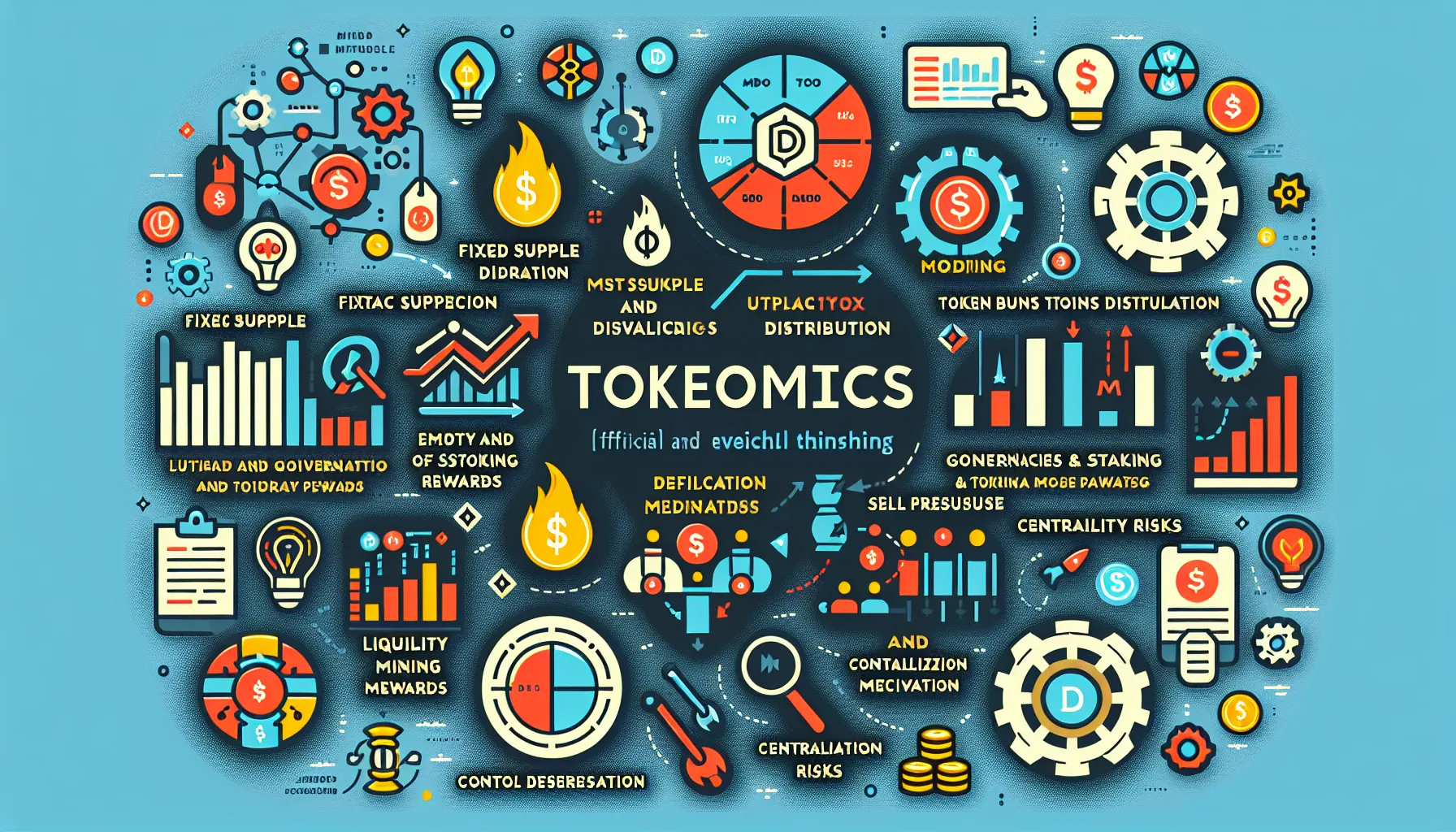
MDX Tokenomics: Supply, Emissions, and Utility
Fixed Supply and Distribution
MDX has a predefined maximum supply, with a large portion allocated to liquidity mining and ecosystem development. The token distribution model rewards early participants while reserving allocations for the team, strategic partners, and community incentives. However, concerns exist surrounding potential centralization, given that a significant percentage of tokens are held by early contributors and developers.
Emission and Inflation Dynamics
The MDX token follows a predefined emission schedule, primarily driven by liquidity mining incentives. This model rewards users providing liquidity on the MDEX platform, but it also introduces inflationary pressure, as a continuous supply of new tokens enters circulation. While periodic token burns help to mitigate this inflation, their effectiveness in maintaining long-term value retention is debated.
Utility: Governance and Staking Rewards
MDX plays a critical role in governance, allowing holders to participate in decision-making related to platform upgrades, fee adjustments, and incentive structures. However, engagement in governance remains relatively low, which raises concerns about whether voting power is meaningfully decentralized. Staking MDX also provides users with rewards generated from platform fees, incentivizing token retention. The sustainability of these staking rewards depends on consistent platform usage and trading volume.
Token Burns and Deflationary Mechanisms
MDX incorporates periodic token burns using a proportion of platform profits. These burns aim to offset inflationary pressure and enhance scarcity. However, the burn rate fluctuates based on protocol revenue, meaning that during periods of low trading activity, the impact of burns on circulating supply reduction diminishes.
Liquidity Mining and Sell Pressure
A significant portion of MDX emissions is allocated to liquidity providers, incentivizing participation in MDEX’s AMM ecosystem. While this ensures deep liquidity, it also results in constant sell pressure, as recipients frequently liquidate their rewards. This dilution effect can lead to challenges in sustaining long-term price stability unless demand consistently offsets new supply.
Centralization Risks and Control Distribution
Although MDX governance allows for decentralized participation, concerns persist regarding whale dominance and the influence of early investors. The initial token allocation and vesting schedules favor early adopters, which may lead to disproportionate sway in governance proposals. This dynamic introduces uncertainties around equitable decision-making as the ecosystem matures.
MDX Governance
MDX Governance: Decentralized Decision-Making and Challenges
MDX governance is structured to enable community participation in the decision-making process while maintaining efficiency in protocol management. Governance activities primarily revolve around the MDX token, which grants holders voting power on network proposals, protocol upgrades, and treasury allocations. However, the actual implementation of decentralization in MDX governance presents both strengths and limitations.
MDX Token Holders and Voting Power
Voting authority is directly tied to MDX token holdings, meaning that governance influence is weighted toward those who hold larger amounts. This model follows a common decentralized governance mechanism but introduces the risk of governance concentration, where a small number of large stakeholders can disproportionately shape protocol evolution. This can lead to centralization concerns, especially when liquidity providers, developers, and smaller holders have less impact on governance decisions.
Proposal Mechanism and Decision Flow
Governance proposals usually involve changes to trading fees, reward mechanisms, incentive programs, and potential protocol integrations. Community members can submit proposals, but in most cases, there is a threshold requirement—meaning proposals must gain enough initial support before being considered for a full vote.
Once a proposal reaches the necessary quorum, token holders participate in the voting process, often through on-chain or snapshot-based governance platforms. However, one challenge is the engagement rate; decentralized governance initiatives frequently suffer from voter apathy, where a significant portion of token holders do not participate, allowing a small group of active participants to dictate outcomes.
Governance Challenges and Risks
A major challenge within MDX governance is smart contract risks in executing governance decisions. Since protocol changes rely on on-chain execution, any vulnerabilities in smart contracts can be exploited, leading to governance attacks or unintended consequences.
Additionally, incentive misalignment is another issue. MDX governance rewards often prioritize short-term benefits, such as liquidity incentives or staking rewards, over long-term protocol sustainability. This can lead to governance decisions that favor short-term profitability at the expense of ecosystem resilience.
Another concern is the potential for governance forks or disagreements that fragment decision-making. Unlike some more structured governance frameworks, MDX governance lacks robust mechanisms for dispute resolution, which could lead to contentious upgrades or hard forks if community consensus is not maintained.
Given the interplay between decentralization and efficiency, MDX governance continues to evolve, balancing community participation with practical decision-making constraints.
Technical future of MDX
MDX Technical Developments and Roadmap
Layer-2 Integration and Cross-Chain Compatibility
MDX is actively working on integrating Layer-2 solutions to enhance scalability and efficiency. By leveraging optimistic rollups and zk-rollups, the platform aims to reduce gas fees and improve transaction throughput. Additionally, cross-chain interoperability remains a core focus, with ongoing developments targeting seamless asset transfers between major blockchain ecosystems, including Ethereum, BNB Chain, and emerging Layer-1 networks. However, cross-chain security remains a challenge, with past industry-wide exploits highlighting potential vulnerabilities.
Automated Market Maker (AMM) Enhancements
The MDX protocol continues to refine its AMM infrastructure, with planned upgrades expected to optimize liquidity utilization and improve depth across trading pairs. Dynamic fees based on market volatility and impermanent loss mitigation techniques are in development. However, previous liquidity shifts have demonstrated that attracting sustainable total value locked (TVL) requires more than technical improvements—it also depends on user confidence and competitive incentives.
Smart Contract Audits and Security Developments
Security remains a critical focus, with periodic smart contract audits being conducted to identify and patch vulnerabilities. The introduction of real-time monitoring tools for potential exploits and automated safeguards against flash loan attacks is under development. Despite these efforts, attack vectors remain a persistent concern, particularly as the platform expands its multi-chain capabilities. Security risks associated with bridges, oracles, and third-party integrations must be continually addressed.
Governance Model Upgrades
The MDX governance mechanism is being refined to allow for more decentralized decision-making. A proposal-based system with weighted voting based on staked assets is being enhanced to improve community participation and execution speed. However, governance centralization concerns still linger, particularly regarding the distribution of voting power among early adopters and large stakeholders. Efforts to increase transparency and decentralization are ongoing.
Future Roadmap
Key priorities on the roadmap include deeper integration with DeFi lending and borrowing protocols, algorithmic trading tools for larger market participants, and enhanced user experience improvements across decentralized exchanges (DEXs). The development of advanced trading features, such as limit orders and automated strategies, is also in progress. However, competition from other decentralized platforms remains strong, requiring ongoing innovation and adoption incentives.
Challenges and Scaling Considerations
Despite continual enhancements, scalability and network congestion remain roadblocks, particularly as MDX expands to support more complex financial instruments. The reliance on Layer-1 networks for settlement introduces inefficiencies that Layer-2 solutions aim to mitigate, but real-world adoption of these solutions still faces hurdles. Long-term sustainability will depend on maintaining developer incentives and ensuring a seamless experience for both liquidity providers and traders.
Comparing MDX to it’s rivals
MDX vs. SUSHI: A Comparative Analysis
Decentralized Exchange (DEX) Model
MDX and SUSHI both operate as decentralized exchanges (DEXs), but they differ in their strategic approaches. MDX, built on the HECO and BNB Chain ecosystems, emphasizes cross-chain compatibility and cost-efficient trading. In contrast, SUSHI, initially a Uniswap fork, has expanded its model with a broader DeFi ecosystem, including lending and staking products. MDX aims to capture users with lower transaction fees and incentives, whereas SUSHI prioritizes governance innovations and multi-chain liquidity deployment.
Fee Structures and Incentives
One of MDX’s core differentiators is its aggressive fee-reduction model, designed to attract liquidity providers. It offers automated fee rebates and mining rewards, strategically reducing friction for high-volume traders. SUSHI, on the other hand, employs a fee-sharing and revenue redistribution mechanism through xSUSHI staking, rewarding holders with a portion of the protocol’s accrued trading fees. While MDX’s approach caters to users seeking direct trading incentives, SUSHI’s model provides long-term staking benefits, giving it an edge in governance token utility.
Liquidity and Market Reach
SUSHI has established deeper liquidity and broader adoption due to its Ethereum-native origins and expansion onto multiple recognized blockchains. MDX, with its focus on HECO and BNB Chain, benefits from lower gas fees but faces challenges in penetrating Ethereum-based DeFi markets. Liquidity fragmentation remains a concern for MDX since a significant portion of DeFi volume still occurs on Ethereum-compatible chains, where SUSHI holds a more entrenched presence.
Governance and Decentralization
SUSHI’s governance model is more robust, driven by the SushiSwap DAO, which enables community-led proposals and adjustments. MDX also incorporates governance features but lacks the same level of decentralized decision-making and active community participation seen in SUSHI. With SUSHI’s governance evolving through community-driven initiatives, it strengthens its role as a user-directed protocol, while MDX’s governance structure is still refining its decentralized engagement model.
Cross-Chain Strategy
Both protocols recognize the necessity of cross-chain integrations, but their execution differs. SUSHI has prioritized expansion across major layer-1 and layer-2 networks, ensuring broader interoperability and asset exposure. MDX, while supporting multi-chain trading, has been slower to gain meaningful traction outside of its core ecosystems. SUSHI’s more aggressive cross-chain expansion enhances its resilience in a fragmented DeFi landscape, while MDX still faces adoption hurdles beyond its primary networks.
Security and Protocol Risks
Security remains a fundamental concern. SUSHI has encountered governance instability and leadership changes but continues to refine its risk management approach. MDX, while avoiding major security breaches, has faced concerns over smart contract transparency and centralization risks stemming from its HECO origins. For risk-conscious traders, SUSHI’s more established security practices and community scrutiny provide a layer of reassurance compared to MDX’s evolving security framework.
MDX vs. BAL: A Comparative Analysis
Liquidity Incentives and Yield Optimization
MDX and BAL both operate in the decentralized exchange (DEX) and automated market maker (AMM) space, but their approaches to liquidity incentives differ significantly. MDX emphasizes aggressive yield farming strategies, often offering high returns to liquidity providers (LPs) through a combination of farming rewards and transaction fee distributions. On the other hand, BAL employs a more flexible liquidity mining model, with LP rewards distributed based on pool composition and governance decisions.
BAL's unique multi-asset pool design enables users to create liquidity pools with varied asset weights, whereas MDX primarily sticks to the more conventional two-token model. This flexibility allows BAL providers to optimize impermanent loss exposure and customize pools based on risk appetite, which contrasts with MDX’s more rigid LP structure.
Governance and Decentralization
Both MDX and BAL implement governance tokens, but their approaches to decentralization vary. BAL's governance is significantly influenced by token holders, who vote on protocol changes, liquidity mining distributions, and fee adjustments. MDX also uses a governance model, but concerns have been raised about the level of centralization in decision-making, particularly regarding development roadmaps and reward distributions.
Another distinction is BAL’s use of veTokenomics, which locks BAL tokens to grant boosted rewards and voting power—an approach that aligns incentives for long-term participation. MDX, while offering governance voting, does not implement the same veToken structure, which may impact its ability to maintain sustained liquidity provider engagement over time.
Fee Structures and Cost Efficiency
BAL implements dynamic swap fees, which can be customized by liquidity pool creators to fit market conditions, giving LPs greater control over fee optimization. MDX, in contrast, primarily relies on fixed transaction fees, which may limit flexibility in volatile market conditions. For high-frequency traders or arbitrageurs, BAL's customizable fee structure can offer a more capital-efficient trading environment when compared to MDX’s standardized costs.
Additionally, BAL’s integration with external aggregators and Ethereum Layer-2 solutions helps mitigate high gas costs, whereas MDX’s focus on EVM-compatible chains provides cost savings via alternative network infrastructure. However, bridging assets between different chains on MDX can introduce friction points in liquidity migration, a challenge that BAL addresses through its more integrated multi-chain ecosystem.
Smart Contract Complexity and Security
Security remains a crucial factor in assessing DEX platforms. While both MDX and BAL conduct regular audits, BAL’s more sophisticated smart contract architecture introduces additional complexity, which has led to occasional concerns over potential vulnerabilities. MDX, while maintaining a simpler smart contract structure, faces scrutiny over potential centralization risks, particularly in liquidity management mechanisms. The tradeoff between security and flexibility remains a key distinction between the two platforms.
MDX vs. UNI: A Comparison of Features, Liquidity, and Ecosystem Differences
Decentralized Trading and Liquidity Provision
MDX and UNI both function as decentralized exchanges (DEXs), enabling users to swap assets and provide liquidity without intermediaries. However, UNI operates on Ethereum, meaning it benefits from deep liquidity and an extensive ecosystem but also faces congestion and high gas fees. In contrast, MDX runs on multiple chains, including HECO and BSC, which typically offer lower transaction costs and faster settlements. This multi-chain approach broadens user accessibility but can fragment liquidity across networks.
Fee Structures and Incentives
UNI’s fee structure is standardized at 0.3% per trade, with governance allowing for future adjustments. LPs receive a portion of these fees, but UNI itself does not engage in active fee redistribution. MDX, on the other hand, employs a different model with a portion of transaction fees allocated to buybacks and rewards for token holders. Additionally, MDX periodically burns tokens, which may appeal to users seeking deflationary mechanics. While this approach incentivizes user participation, reliance on fee redistribution can create sustainability concerns if trading volumes fluctuate.
Governance and Community Control
Both platforms utilize governance tokens for decentralized decision-making, but their models differ. UNI holders participate in protocol governance through proposals and on-chain voting, with a large token supply dispersed among investors, the team, and users. MDX governance is similarly led by token holders, but centralization concerns have emerged due to perceived influence from initial stakeholders and foundation-controlled allocations. This contrast affects how protocol upgrades and incentive programs evolve over time.
Ecosystem Expansion and Strategic Growth
UNI remains a dominant force in the DeFi landscape due to its integrations with major DeFi protocols and extensive liquidity depth. The platform's composability within the Ethereum network ensures seamless interaction with lending platforms, yield aggregators, and derivatives protocols. MDX, by contrast, has expanded aggressively across multiple blockchains, but this cross-chain strategy has led to varying degrees of adoption depending on network support. While multi-chain accessibility offers flexibility, it also introduces technical risks and liquidity dispersion across ecosystems.
Security and Smart Contract Risks
UNI’s long-term presence and code audits contribute to its security reputation, though it has faced minor governance challenges. MDX, while also undergoing audits, operates on newer and sometimes less battle-tested chains, which can introduce additional vulnerabilities. Users seeking lower transaction costs on non-Ethereum chains may weigh the risks of emerging ecosystems versus the stability of Ethereum-based infrastructure.
Primary criticisms of MDX
Primary Criticism of MDX
Centralization Concerns
One of the most persistent criticisms of MDX is its degree of centralization. While it operates as a decentralized exchange (DEX), questions remain regarding the true level of decentralization in its governance and development. A significant portion of MDX tokens is controlled by the development team and early backers, which raises concerns about the project's ability to remain truly community-driven. This high concentration of token ownership has fueled debates over governance manipulation and whether the platform operates more like a centralized entity than a decentralized one.
Token Emission and Inflation Issues
MDX has faced scrutiny over its tokenomics, particularly concerning inflation. The continuous emission of new tokens to incentivize liquidity providers can lead to significant downward pressure on the token price, diluting existing holders. While such incentives are common in DeFi, critics argue that MDX's reward structure may not be sustainable in the long run, as excessive token emissions can devalue holdings and discourage long-term participation. If staking and liquidity mining rewards outpace actual demand for the token, the ecosystem risks becoming unsustainable.
Liquidity and Volume Concerns
Although MDX operates as a DEX, its trading volume and liquidity depth have been points of concern when compared to larger platforms. Lower liquidity can lead to higher slippage for traders, making it less attractive for large trades. Some critics also argue that a significant portion of the platform’s volume is inorganic, possibly inflated by rewards-driven transactions rather than genuine trading activity. If the exchange does not achieve consistent organic trading growth, it may struggle to compete with more established players in the DEX market.
Smart Contract and Security Risks
Despite undergoing audits, MDX is not immune to smart contract vulnerabilities. The DeFi space has witnessed numerous security breaches, and given MDX’s reliance on smart contracts for critical functions, any undiscovered exploits could put user funds at risk. Additionally, concerns have been raised about how quickly the development team responds to security threats and whether the platform has adequate safeguards in place to prevent systemic failures.
Dependence on External Blockchain Ecosystems
MDX's reliance on specific blockchain ecosystems introduces potential risks related to network stability and scalability. If the underlying blockchain faces congestion, high fees, or security issues, MDX users could experience degraded performance or even temporary inaccessibility. Dependence on a limited number of chains may also hinder the platform’s flexibility in adapting to broader shifts within the DeFi sector.
Founders
MDX Founding Team: Background and Key Players
The founding team behind MDX (Mdex) is closely linked to the broader decentralized finance (DeFi) ecosystem, particularly within the Huobi Eco Chain (HECO) and Binance Smart Chain (BSC). As an Automated Market Maker (AMM) and decentralized exchange (DEX), MDX’s origins are tied to developers with experience in blockchain infrastructure and financial products.
One of the core aspects surrounding the MDX founding team is its relatively low public visibility. Unlike some DeFi projects where founders and lead developers are well-known figures within crypto, MDX’s creators have maintained a more reserved stance. This has led to some scrutiny from the wider crypto community, as anonymous or semi-anonymous teams can raise concerns around governance and long-term commitment.
Despite the lack of well-documented individual identities, the team’s technical expertise is evident in MDX’s functionality. The project was designed with features that were advanced for its time, including transaction fee mining, liquidity mining, and dual-chain interoperability. These indicate that the founding developers had experience in optimizing blockchain-based trading mechanisms.
MDX’s alignment with HECO has led to speculation that its founding team had direct or indirect ties to Huobi, one of the largest centralized exchanges. While there is no public confirmation of direct involvement, the strategic positioning of MDX as one of the primary DEXs on HECO has suggested an underlying connection. This raises questions on decentralization, as projects with potential exchange affiliations can sometimes struggle with perceptions of central oversight.
The team has also been criticized for its opacity in decision-making. Unlike community-driven DeFi protocols where core developers engage in open discussions, MDX’s roadmap and development updates have historically been less transparent. While the platform has introduced governance mechanisms, the centralization concerns remain a relevant issue for community members evaluating long-term decentralization prospects.
Security remains another point of discussion regarding the founding team’s oversight. While MDX hasn’t suffered major exploits on the scale of some other DeFi platforms, security practices and smart contract audits are crucial in determining the project’s resilience. The lack of high-profile developers or auditors publicly endorsing MDX adds a layer of uncertainty regarding the team's approach to long-term security enhancements.
Ultimately, MDX’s founding team has demonstrated the technical capacity to launch and maintain a DEX with multi-chain functionality. However, the concerns around anonymity, centralization ties, and transparency continue to shape how the broader crypto community perceives the project’s leadership and governance.
Authors comments
This document was made by www.BestDapps.com
Sources
- https://mdex.com
- https://docs.mdex.com
- https://bscscan.com/token/0x9c63e21d9a1db49b8a1e3db048ea02bef4024eba
- https://etherscan.io/token/0x5d985ccde188734d5c54fcdf12604ed91c05c9d6
- https://hecoinfo.com/token/0x25d221d3953f8f5b4fa2a05848a0ad19d3e32e9e
- https://github.com/MdexSwap
- https://medium.com/@MdexOfficial
- https://twitter.com/MdexOfficial
- https://t.me/MdexEN
- https://mdex.zendesk.com/hc/en-us
- https://defillama.com/protocol/mdex
- https://coinmarketcap.com/currencies/mdex/
- https://www.coingecko.com/en/coins/mdex
- https://research.binance.com/en/projects/mdex
- https://dappradar.com/binance-smart-chain/defi/mdex
- https://decrypt.co/resources/what-is-mdex-mdx
- https://cointelegraph.com/tags/mdex
- https://bitcoin.com/defi/mdex