History of LRC
The History of Loopring (LRC): Key Milestones and Challenges
Loopring (LRC) emerged as a pivotal innovation in the blockchain space, specifically targeting the challenges of decentralized exchanges (DEXs). Its inception traces back to 2017, when its founder, Daniel Wang, conceptualized a protocol to address the inefficiencies plaguing DEX trading, including scalability, high transaction costs, and issues surrounding order matching. Built on Ethereum, Loopring aimed to improve upon the limitations of existing protocols while leveraging Ethereum's robust smart contract infrastructure.
The Loopring project initially gained traction following its whitepaper release, which introduced a decentralized order-matching and ring-sharing mechanism. At its core, Loopring’s concept revolved around ring trades, a system capable of creating circular trading routes to enhance liquidity. Instead of relying on direct pair trades, the ring-matching approach sought to execute complex multi-token swaps efficiently. However, this mechanism was not without early critiques. Some developers questioned its feasibility in on-chain environments due to Ethereum’s high gas fees and network congestion, which hindered scalability – the very problem Loopring promised to solve.
Following a successful initial coin offering (ICO) in late 2017, which raised significant funding, the project encountered its first major challenge. Regulatory scrutiny in China, where the ICO was conducted, led to the return of a portion of the funds raised. This event pushed Loopring to reassess its approach to jurisdictional compliance, which subsequently influenced its progress and rollout timeline.
The launch of Loopring’s first protocol iteration, Loopring 1.0, highlighted its innovative potential but also exposed limitations. Despite substantial theoretical improvements, early versions of the protocol struggled to gain adoption, in part due to an immature DEX ecosystem and technological dependency on Ethereum, which was grappling with its own scalability bottlenecks.
The project pivoted its approach with the introduction of zkRollups, a Layer 2 scaling solution, marking a significant evolution in its history. zkRollups allowed Loopring to process trades off-chain, reducing gas costs and improving transaction throughput. Though widely regarded as a technological breakthrough, critics pointed out that zkRollup adoption came with downsides, including increased reliance on complex cryptographic assumptions and initial centralization during the setup phase.
Over time, the LRC token experienced instances where tokenomics and utility faced scrutiny. Although designed as an integral part of the protocol for staking and reducing fees, some users argued that its value proposition might not fully justify holding LRC relative to its broader uses within the DeFi space.
The history of Loopring reflects the iterative process of innovation in the crypto realm, characterized by both notable achievements and growing pains.
How LRC Works
How Loopring (LRC) Works: A Deep Dive into its Protocol Mechanism
Loopring (LRC) is an Ethereum-based Layer 2 scaling protocol designed to improve the efficiency of decentralized exchanges (DEXs) while reducing costs and maintaining security. At its core, Loopring utilizes zkRollup technology—zero-knowledge proofs—to aggregate multiple transactions off-chain into a single batch, which is then committed to Ethereum’s Layer 1 blockchain. This process reduces gas fees, increases throughput, and maintains the non-custodial framework that DeFi demands.
zkRollups and Transaction Aggregation
zkRollups are central to Loopring's functionality, enabling it to bundle thousands of transactions into a single proof. This cryptographic proof—specifically a zero-knowledge succinct non-interactive argument of knowledge (zk-SNARK)—is submitted to Ethereum’s mainnet for verification. By doing this, Loopring achieves significantly lower gas fees and faster transaction speeds compared to on-chain alternatives. Importantly, the zkRollup mechanism ensures the integrity and security of user assets since all data necessary to reconstruct the state of the system is recorded on-chain.
Automated Market Makers (AMMs) and Order Books
One unique aspect of Loopring is its hybrid approach to DEX architecture. The protocol supports both traditional order book-based trading and automated market makers (AMMs). While many Ethereum-based DEXs rely solely on AMMs, Loopring integrates off-chain order matching for more efficient price discovery. This feature reduces price slippage and appeals to users accustomed to centralized exchange (CEX) functionalities but within a decentralized framework.
Non-Custodial Design and Security Model
Loopring maintains a non-custodial model, meaning users retain control over their private keys and funds at all times. Transactions and trades occur through smart contracts, while zkRollup proofs ensure that any fraudulent activity can be detected and resolved without relying on a third party. However, the reliance on Ethereum for finality means that Loopring’s performance is ultimately tied to the state of the Ethereum network. Congestion on Layer 1 can still impact withdrawal times for users moving funds back to Ethereum.
Scalability vs. Decentralization: A Balancing Act
While Loopring’s zkRollup technology addresses many scalability issues, it comes with trade-offs. The ecosystem’s dependency on zk-SNARKs involves complex computation, which may act as a technical barrier for developers and validators. Additionally, centralization concerns arise from the current need for a small, trusted set of relayers to manage off-chain transaction data.
Limitations of Ecosystem Interoperability
Another aspect to consider is interoperability. Loopring functions as a specific Layer 2 solution for Ethereum, meaning it currently offers limited integration with other blockchains. Although Ethereum dominates the DeFi scene, this limitation might hinder Loopring’s adoption in multi-chain applications that are rapidly becoming more prevalent in the crypto ecosystem.
Use Cases
Use Cases of LRC: Exploring Loopring's Functional Landscape
Loopring's protocol, powered by the LRC token, is designed to address inefficiencies in decentralized exchanges (DEXs) through zkRollups—offering faster transactions and reduced costs. This section dives into the specific use cases for LRC, the potential advantages it brings, and some critical obstacles to its adoption.
1. Facilitating Layer 2 Decentralized Exchanges
Loopring enables decentralized exchanges to leverage zkRollup technology, allowing Ethereum-based trading with higher throughput and significantly lower gas fees. LRC serves as an essential utility token within this ecosystem, primarily for staking by DEX operators to ensure ecosystem security and integrity. By integrating Layer 2 solutions, the protocol reduces on-chain congestion, but the tradeoff is reliance on the robustness of zkRollup infrastructure. Bugs or weaknesses in zkRollup implementation could undermine these benefits.
2. Staking for Protocol Incentives
LRC’s staking functionality is geared toward incentivizing liquidity and discouraging malicious activities. Exchange operators are required to lock a specified amount of LRC to run a Loopring-based exchange. This mechanism aligns the interests of stakeholders while enhancing overall security. However, the high cost of staking for smaller operators could act as a barrier to entry, centralizing control among larger players.
3. Cost-Effective Payments and Transfers
LRC can also be used as a means for transferring value or making payments on Loopring’s Layer 2 without excessive gas fees. Users benefit from near-instantaneous settlement and cryptographic security. However, adoption for payment use cases is relatively limited compared to dedicated currencies like stablecoins. This constrains LRC’s broad utility in this context.
4. Governance Over Protocol Decisions
As part of Loopring’s push toward decentralization, the LRC token figures into governance, allowing token holders to vote on key updates or changes to the protocol. While governance through token holding democratizes decision-making, a concern arises over whether whales—large token holders—could dominate the process, diluting representation for smaller stakeholders.
5. Support for Non-Custodial Trading Applications
LRC’s association with Loopring Wallet—a smart contract wallet supporting Layer 2 interactions—highlights its use in enabling non-custodial trading. This pairs well with DeFi trends, but adoption remains contingent on how effectively Loopring competes with alternative Layer 2 solutions and user-friendly wallets in the market.
While LRC supports a compelling range of use cases, it faces challenges such as competition within the scalability space and hurdles in incentivizing broader adoption.
LRC Tokenomics
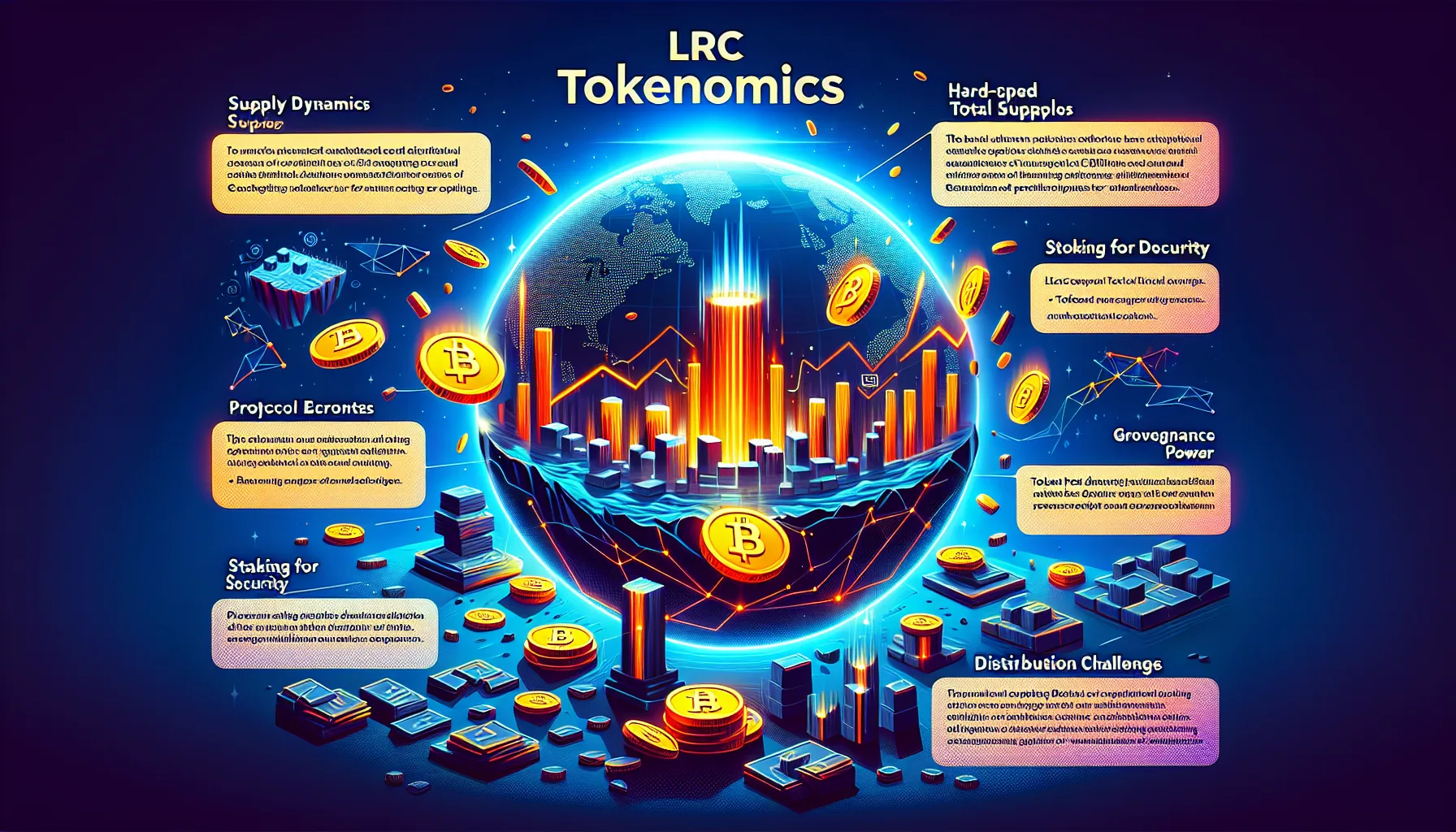
Deep Dive into LRC Tokenomics: Supply Dynamics and Utility Explained
Loopring’s native token, LRC, operates at the core of its ecosystem, serving as more than just a transactional asset. Its tokenomics deeply influence the protocol's decentralized exchange (DEX) services, layer-2 scaling, and governance structure. This section will explore the specific mechanisms underlying LRC’s supply, utility, and distribution, as well as highlight potential challenges inherent in its design.
Fixed Supply and Inflationary Considerations
LRC features a hard-capped total supply of 1.375 billion tokens. Unlike inflationary models employed by some crypto projects to incentivize early adoption, this finite supply aims to ensure scarcity, providing a deflationary tendency over time. However, achieving genuine scarcity depends on factors like adoption rates, usage in Loopring staking, and circulating supply reduction through mechanisms such as token burns.
A critical feature of Loopring’s tokenomics is its protocol fee model, where a portion of transaction fees generated on the network is burned. While this deflationary mechanism theoretically benefits holders by reducing the total supply, its impact hinges on the protocol’s adoption and transaction volume. If adoption stagnates or decentralized exchanges built on the protocol underperform, the burn rate’s effect on supply metrics might be minimal, limiting its role as a deflationary driver.
Utility Across the Ecosystem
LRC is essential within the Loopring ecosystem, providing several key utilities:
- Protocol Fee Discounts: LRC holders can use their tokens to reduce transaction fees on Loopring’s zkRollup-based DEX. This incentivizes holding, particularly among high-frequency traders.
- Staking for Security: Validators and operators are required to stake LRC as collateral to ensure compliance with protocol rules, disincentivizing malicious behaviors. However, the staking yield depends heavily on transaction volume and fee structures, which can be unpredictable.
- Governance Power: LRC is used for protocol governance, allowing holders to vote on changes. While this theoretically decentralizes decision-making, concerns persist regarding low voter participation and whale dominance.
Distribution Challenges and Early Dynamics
A significant portion of LRC’s supply was allocated during its ICO, with additional token reserves held by the Loopring Foundation. While these allocations helped finance development, they also raise questions about centralization risks, as significant quantities of LRC remain in foundations or team-controlled wallets. A sudden shift in such holdings, whether from liquidation or strategic re-distribution, could disrupt the market dynamics.
Additionally, Loopring faces scalability challenges inherent in zkRollup adoption. While the utility of LRC depends on the expansion of the ecosystem, competition from competing L2 solutions could pressure its role and, by extension, its tokenomics.
LRC Governance
Governance in Loopring (LRC): Decentralized Frameworks and Challenges
Loopring (LRC), an Ethereum Layer 2 scaling solution utilizing zk-rollups, incorporates governance mechanisms designed to empower the community while maintaining protocol efficiency. Governance in Loopring primarily revolves around the decentralized decision-making processes for protocol upgrades, fee structure adjustments, and treasury allocations. However, as with many crypto projects, governance implementation comes with unique complexities and challenges.
Foundation-Driven Governance Model
Loopring governance is influenced by the Loopring Foundation, which steers the development of the protocol and manages its ecosystem. While the Foundation establishes the technical roadmap and provides overall guidance, stakeholders holding LRC tokens play a role in certain decisions through decentralized governance mechanisms. Token holders can propose and vote on changes impacting the protocol, though the actual implementation often remains dependent on the Foundation’s team.
This semi-centralized approach enables rapid iteration and development, but it also raises concerns about the balance of power. Critics argue that a deeper level of decentralization may be required to align Loopring with the broader ethos of decentralized finance (DeFi). The dependence on a foundation-driven model could be viewed as a limitation in achieving fully trustless governance.
Fee Adjustment and Treasury Management
One key governance utility of the LRC token is its involvement in setting protocol fees, such as layer 2 transaction costs and decentralized exchange (DEX) trading fees. Staked LRC tokens are used to validate decisions around these parameters. Additionally, the Loopring treasury, funded by protocol fees and other sources, is managed via a mix of community input and Foundation oversight.
While token-holder participation fosters community involvement, issues arise with low voter turnout and potential centralization of voting power. A significant portion of the token supply is often concentrated in the hands of large holders, or "whales," potentially skewing governance outcomes and marginalizing smaller participants.
Limitations of Governance Participation
Although Loopring’s governance model invites token holders to engage in the protocol's evolution, it faces hurdles in accessibility and participation. Gas fees on the Ethereum mainnet may discourage smaller token holders from voting, particularly during on-chain governance activities. This dynamic inadvertently creates a barrier to entry for grassroots participation, undermining inclusivity and decentralization.
Efforts to address these challenges include off-chain governance dialogues and the development of lower-cost voting solutions. However, implementing truly scalable and equitable governance remains a work in progress for the Loopring protocol.
Technical future of LRC
Current and Future Technical Developments of LRC: Loopring's Evolving Layer-2 Infrastructure
Loopring (LRC) is architected as a Layer-2 protocol leveraging zkRollup technology. Its current and forthcoming technical advancements focus on scalability, gas efficiency, and user experience, while tackling challenges around zkRollup implementation and broader adoption of the protocol. This section explores these developments with detail, catering to a crypto-savvy audience.
Current Technical Features in Focus
The Loopring protocol prioritizes efficiency in Ethereum transactions through zkRollup-based scalability. zkRollups employ zero-knowledge proofs to bundle multiple transactions off-chain into a single transaction submitted to Ethereum's mainnet, minimizing gas costs while retaining Ethereum’s security guarantees. Currently, the protocol supports decentralized exchanges (DEXs), non-custodial wallets, and payment applications. These functionalities are integrated on its Layer-2 platform, streamlining operations for developers and end-users alike.
Smart contract composability remains a cornerstone of Loopring’s ecosystem. With native Layer-2 liquidity, developers can compose these contracts with reduced interaction costs. However, the challenge lies in interoperability with other rollup solutions and Ethereum’s broader DeFi ecosystem. Loopring has optimized its protocol for token swaps and liquidity provisioning, though its adoption rates have lagged compared to rival solutions, such as Optimistic Rollups or other zk-based Layer-2s.
Additionally, Loopring places a strong emphasis on self-custodial functionality within its wallet architecture. Through features like social recovery, users without private key knowledge can recover accounts seamlessly. However, while advantageous for mainstream adoption, these mechanisms have raised minor concerns regarding potential attack vectors if compromised through the associated social structures.
Future Roadmap and Anticipated Developments
In its technical roadmap, Loopring is committed to expanding the functionalities available on its zkRollup infrastructure. A key focus lies in enabling seamless Layer-2-to-Layer-2 bridging to mitigate friction in the ecosystem. This development would allow users and developers to operate across differing Layer-2 and Ethereum scaling ecosystems without incurring significant costs or operational complexity.
Another frontier is decentralizing zkRollup’s prover technology. Presently, zkRollups rely heavily on centralized infrastructure for generating validity proofs, an area where concerns over protocol centralization arise. Loopring plans to explore distributed provers to further enhance censorship resistance and trust minimization.
Loopring is also expected to continue optimizing serialization of smart contracts on its Layer-2. By addressing constraints with data availability, the protocol aims to improve user throughput and interaction efficiency. This, however, is not without challenges, as data availability bottlenecks remain a significant technical hurdle facing most zkRollup solutions.
Finally, amidst increased competition in the zkRollup space, Loopring’s continued focus on ecosystem collaborations and development tooling could influence its adoption trajectory. Its shift toward more developer-friendly Layer-2 SDKs and APIs aims to attract new applications, though success will depend on overcoming Ethereum Layer-2’s fragmented market dynamics.
Comparing LRC to it’s rivals
Loopring (LRC) vs. Polygon (MATIC): A Deep Dive into Layer 2 Strategies
When comparing Loopring (LRC) to Polygon (MATIC), it’s critical to dissect their distinct approaches to Ethereum Layer 2 scalability while understanding the technical nuances and trade-offs of each. Both aim to alleviate Ethereum’s congestion and high transaction fees, but their methodologies differ significantly, appealing to different use cases and user bases.
Core Technology: zkRollups vs. Sidechains
Loopring’s architecture is built around zkRollups, a zero-knowledge proof technology that batches transactions off-chain and verifies them on-chain using cryptographic proofs. zkRollups prioritize security by inheriting Ethereum’s base layer security, making them a strong choice for users prioritizing decentralization and trustlessness.
Polygon (MATIC), on the other hand, leverages a sidechain model alongside its growing suite of scaling solutions. The Polygon PoS chain, for example, operates with its own consensus mechanism, distinct from Ethereum’s, while intermittently committing checkpoints to the Ethereum mainnet. This design enables faster and cheaper transactions but exposes users to certain trust assumptions regarding the sidechain validators.
The trade-off is clear: Loopring’s zkRollup structure almost entirely eliminates the need for trust in third parties but has limited throughput compared to sidechain solutions. Meanwhile, Polygon offers higher transaction capacity and flexibility but at a potential compromise of decentralization.
Ecosystem and Developer Adoption
Loopring’s ecosystem is narrowly focused, excelling in building decentralized exchanges (DEXs) and payment systems. Its flagship offering, Loopring DEX, is an example where zkRollups shine, providing users with near-instant trades and minimal transaction fees, without sacrificing Ethereum-level security. However, its limited focus creates challenges in competing with more general-purpose Layer 2 solutions.
Polygon, in contrast, has aggressively positioned itself as a versatile Layer 2 platform, catering to DeFi, gaming, NFTs, and beyond. Its broader tooling, developer incentives, and integration across countless dApps demonstrate its intention to dominate all aspects of blockchain scalability, while Loopring remains laser-focused on niche performance.
Fees and Usability
In terms of cost efficiency, zkRollups like Loopring tend to achieve cheaper per-transaction fees than sidechains as user volume scales. That said, Loopring’s user-facing experience can sometimes be complex due to the cryptographic infrastructure under the hood. On the other hand, Polygon's sidechain approach is often praised for its straightforward interoperability. The trade-off here is simplicity versus security, and developer teams must weigh the importance of both for their use case.
Challenges Facing Loopring’s Specialization
While Loopring’s zkRollup model excels in certain areas, its tight niche focus also presents hurdles. The pace of zk-proof technology development can be slow relative to sidechain advancements, potentially placing Loopring at a disadvantage in terms of innovation. In contrast, Polygon’s broader horizontal scaling strategy allows it to iterate faster and enter diverse markets more effectively.
Ultimately, when comparing Loopring to Polygon, the choice often comes down to priorities: unmatched security and decentralization versus a generalist approach with higher flexibility and throughput.
LRC vs IMX: A Technical and Ecosystem Comparison
When comparing Loopring (LRC) and Immutable X (IMX), the primary point of differentiation lies in their distinct approaches to achieving scalability and their targeted use cases within the Ethereum ecosystem. Both leverage zk-rollup technology, but they do so with unique implementations and objectives that set their ecosystems apart.
zk-Rollup Implementation and Use Case Focus
Loopring (LRC) is designed as a zk-rollup protocol optimizing for decentralized exchange (DEX) functionality and payment processing. Its architecture emphasizes fast, low-cost transactions while ensuring users retain custody of their digital assets. Immutable X (IMX), on the other hand, uses zk-rollup technology with a laser focus on the NFT space, specifically optimizing for minting, trading, and scaling game-related assets. This strategic divergence helps IMX stand out in the gaming and NFT sectors but also narrows its flexibility compared to Loopring’s multipurpose transactional ecosystem.
IMX's protocol separates itself further by offering a frictionless onboarding experience for developers building Web3 applications. The platform abstracts complexities like gas fees from end users, which is highly appealing for companies creating NFT marketplaces or blockchain-powered games. However, this abstraction comes at a cost — it relies heavily on centralized elements, particularly through its partnership with StarkWare’s zk-rollup engine. For purists aiming for complete decentralization, this reliance might raise concerns about the protocol’s resilience against potential central points of failure.
Token Utility Differences
LRC and IMX approach token utility differently in ways that affect their value in their ecosystems. LRC’s primary utility resides in staking for DEX operations and governance, aimed at reducing operational costs and enabling a more community-driven infrastructure. IMX integrates its token into critical NFT lifecycle processes, like paying fees or staking to earn rewards, ensuring its use directly impacts the marketplace ecosystem. While IMX’s targeted use case is effective within its niche, its narrower token utility might limit its adoption beyond the NFT and gaming sectors, compared to LRC’s broader multipurpose appeal.
Liquidity and Ecosystem Trade-Offs
Immutable X's strengths are also tied to its weaknesses. By focusing on NFTs, IMX has attracted partnerships with gaming giants and marketplaces, giving it well-defined sectoral dominance. However, these partnerships do not necessarily translate to broader liquidity or cross-sector relevance. In contrast, Loopring’s liquidity solutions (including its order book and AMM hybrid model) facilitate smoother interaction across various market participants. Yet, Loopring also faces limitations when competing with IMX in gaming use cases where Immutable X's infrastructure is purpose-built.
Development and Ecosystem Maturity
A critical technical concern for IMX is its dependency on StarkWare—a factor that could affect its development roadmap or introduce vulnerabilities to its decentralized claims. Meanwhile, while LRC focuses on broader functionality, its ecosystem risks being stretched too thin, given the competitive landscape of general-purpose zk-rollups. Both projects manage scaling effectively via zk-rollups, but their respective trade-offs center on specialization versus adaptability.
How Does LRC Compare to Optimism (OP)?
When comparing Loopring (LRC) to Optimism (OP), the discussion often centers on their differing approaches to scaling Ethereum and the unique challenges each ecosystem faces. Both projects aim to improve Ethereum's efficiency, but their technological foundations, use cases, and ecosystem support diverge significantly, pointing to strengths and limitations for each.
Layer 2 Architecture: zkRollups vs. Optimistic Rollups
LRC employs zkRollups (zero-knowledge Rollups), a technology known for instant transaction finality and superior data compression. Optimism, on the other hand, utilizes optimistic rollups, which rely on fraud proofs and require a one-week challenge period to resolve disputes. While Optimistic Rollups improve throughput and scalability, the delayed withdrawal times create a barrier to seamless user experience compared to LRC’s near-instant withdrawals enabled by zkRollups. For developers building applications with high sensitivity to latency or gaming protocols requiring immediate asset transfer, this can make LRC the more attractive tool.
However, zkRollups come with their own challenges. zkSNARK proofs demand significantly higher computational resources, potentially limiting scalability under heavy, complex workloads. Optimism's simpler fraud-proof model avoids these computational bottlenecks, which may offer advantages in some dApp environments requiring reduced resource overhead.
Decentralized Ecosystem and Adoption
LRC has carved out a specific niche by focusing on decentralized exchange (DEX) infrastructure, such as its flagship Loopring DEX, while Optimism primarily positions itself as a general-purpose scalability solution for Ethereum dApps. This difference in focus has implications for developer adoption. Optimism, as a platform, attracts a more diverse pool of builders working on DeFi, gaming, and social dApps, while LRC is more limited to DeFi-specific applications.
That narrower use case benefits LRC by enabling specialization in a high-value area of crypto, but it also constrains its relevance to other sectors of Web3. Optimism's broader appeal could lead to higher long-term transaction volume and liquidity across its ecosystem compared to the more specialized Loopring.
Network Costs and Efficiency
Cost-effectiveness is an important competitive factor. Both zkRollups and Optimistic Rollups significantly reduce gas fees compared to Ethereum’s Layer 1. However, zkRollup solutions like LRC may require more upfront investment in hardware and infrastructure to efficiently generate zero-knowledge proofs. Conversely, Optimism’s reliance on fraud proofs, while efficient for simpler use cases, may penalize complex transactions with slightly higher costs.
Ecosystem Support Challenges
A key difference is ecosystem backing. Though LRC benefits from its strong integration with Ethereum-centric wallets like MetaMask and support for projects focusing on privacy and decentralization, Optimism enjoys more robust partnerships with protocols integrating across Ethereum’s Layer 2 environments. This ecosystem disparity indicates that builders prioritizing broad compatibility might lean toward Optimism over LRC.
Primary criticisms of LRC
Primary Criticism of LRC: Challenges Facing Loopring’s Ecosystem
Loopring (LRC) has garnered attention for its role in enabling decentralized exchanges (DEXs) and layer-2 scaling solutions on Ethereum, but it is not without its criticisms. Despite the technical achievements tied to its zkRollup infrastructure and cost efficiencies, several specific challenges have been raised by the crypto community about LRC’s ecosystem.
Centralization Concerns within the Loopring Protocol
One of the key criticisms of LRC lies in the level of centralization within its protocol’s governance and operational framework. While Loopring is designed as a decentralized protocol, certain aspects—such as the allocation of transaction fees and the operation of relayers—are heavily influenced by the foundation and select entities. This degree of reliance has sparked debates about whether it truly achieves the decentralization ideals expected by the broader DeFi community. Critics argue that this undermines the trustless ethos of blockchain, as the project's core functions might depend on entities that could act in their self-interest.
Limited Adoption Outside of Niche Use Cases
While Loopring delivers lower transaction costs and high throughput, its adoption beyond niche use cases remains a sticking point. Many argue that LRC has struggled to gain traction among mainstream decentralized exchanges and applications compared to competitors offering similar scaling solutions, such as Optimistic Rollups or other zero-knowledge protocols. This perceived lack of broader market penetration contributes to skepticism regarding its long-term utility. It raises the question of whether Loopring’s technology can differentiate itself enough to secure partnerships with major players in the space or attract a more diverse user base.
Barrier to Entry for Developers
Another critique often levied against Loopring is its steep learning curve for developers seeking to build on the platform. While zkRollup technology is technically impressive, it is also complex and can be daunting for new developers unfamiliar with zero-knowledge cryptography. This challenge could hinder broader ecosystem growth or delay innovations by dissuading smaller teams from integrating Loopring into their projects.
Token Utility Questions
Critics have also raised concerns over the utility of the LRC token itself. While it plays a role in staking and governance, its use cases outside of these functions are limited. Some crypto enthusiasts question whether the demand for LRC is substantially tied to the success of the protocol, or whether it faces the risk of becoming redundant in a rapidly evolving DeFi landscape. For instance, the protocol’s fee-distribution mechanism may be seen as insufficient to ensure sustainable demand for the token in the long term.
Competition in a Crowded Market
Finally, the broader competitive landscape presents a challenge for Loopring. The proliferation of other layer-2 scaling solutions, combined with Ethereum’s ongoing developments, places immense pressure on projects like Loopring to continually innovate. Critics highlight that while Loopring has carved out a niche, maintaining relevance amid stiff competition from protocols with wider adoption or more resources remains an ongoing concern.
Founders
The Founding Team Behind LRC: Pioneers of Loopring Protocol
Loopring (LRC) was co-founded by Chinese software engineer Daniel Wang, who plays a central role in its development and vision. A graduate of prestigious institutions, Wang holds a master’s degree in Computer Science from Arizona State University and previously worked for global technology companies such as Google and JD.com. His experience in software architecture and system building uniquely positioned him to conceptualize Loopring, aiming to address inefficiencies in centralized and decentralized cryptocurrency exchanges.
Wang’s initial ambition for the Loopring protocol was clearly outlined in the Loopring whitepaper, evolving over multiple iterations since its inception. Daniel’s ability to balance complex technical methodologies with a scalable vision for decentralized exchanges was a foundational element of Loopring’s early adoption. However, some critics within the crypto community argue that Wang’s prioritization of zkRollups and technical infrastructure—while innovative—may have come at the cost of more immediate user-focused solutions.
Joining Wang in Loopring’s founding was a compact yet highly-skilled team, comprising individuals with robust expertise in blockchain engineering and cryptography. While the exact composition of the founding team members remains somewhat opaque, early contributors have notable experience in DeFi mechanisms, ensuring the deployment of a protocol optimized for cost efficiencies and scalability. Despite the technical competence of the team, there has been scrutiny about the relative lack of transparency surrounding key contributors and decision-makers in the project’s foundational years, which raises concerns for proponents of open governance models in the blockchain space.
As the driving force behind the protocol’s development, the team has faced challenges related to resource allocation and prioritization. Critics have pointed out that earlier versions of the Loopring protocol struggled with market awareness due to a lack of emphasis on adoption strategies, potentially overshadowing the technological achievements of its zkRollup solutions. This has been a recurring theme, with the Loopring team mainly comprising engineers rather than business development leaders, which may have affected their ability to compete with more commercially aggressive Layer 2 scaling competitors.
Nonetheless, the team’s commitment to decentralization and Layer 2 scaling has secured Loopring a spot in the broader Ethereum ecosystem. It remains evident that the founding team’s focus heavily leans toward technological sophistication over widespread marketability—a strategic choice that is not without its trade-offs in an increasingly congested Layer 2 landscape.
Authors comments
This document was made by www.BestDapps.com
Sources
https://loopring.org/
https://github.com/Loopring/whitepaper/blob/master/en_whitepaper_v2.0.md
https://medium.com/loopring-protocol
https://etherscan.io/token/0xbbbbca6a901c926f240b89eacb641d8aec7aeafd
https://github.com/Loopring
https://docs.loopring.io/en/
https://blog.loopring.org/
https://dappradar.com/ethereum/defi/loopring
https://defillama.com/protocol/loopring
https://www.coingecko.com/en/coins/loopring
https://coinmarketcap.com/currencies/loopring/
https://loopringio.medium.com/
https://www.gemini.com/cryptopedia/loopring-lrc-token
https://research.binance.com/en/projects/loopring
https://messari.io/asset/loopring
https://cryptobriefing.com/ico/loopring-lrc/
https://www.theblock.co/data/decentralized-finance/stats/loopring-layer-2-dex
https://tokeninsight.com/en/coin/loopring
https://www.stakingrewards.com/earn/loopring/
https://cryptoslate.com/coins/loopring/


