History of LINA
The History of LINA: Origins and Development of Linear Finance
Linear Finance's native token, LINA, is the backbone of an innovative DeFi protocol that aims to bring decentralized synthetic asset generation to a new level. The project officially launched in late 2020 and was co-founded by Drey Ng and Kevin Tai, both of whom held prior experience in blockchain technology and traditional finance. From its inception, the mission of Linear Finance was clear: to create a faster, more efficient framework for synthetic assets compared to existing Ethereum-based solutions.
The launch of LINA coincided with the rising trend of emerging DeFi protocols addressing Ethereum’s scalability issues. To mitigate these barriers, Linear Finance adopted a multi-chain approach, deploying its protocol on Ethereum as well as Binance Smart Chain (BSC). This enabled the system to avoid prohibitive gas fees and slow transaction times prevalent on Ethereum during periods of high network congestion. Such a strategy reflected the team’s intent to make the platform widely accessible and cost-efficient for users.
The Linear Finance team also sought to address the problem of collateral efficiency, a common challenge faced by synthetic asset protocols. Unlike many competitors requiring overcollateralization, LINA allows users to stake the token with a significantly lower collateralization ratio, thanks to improved risk management mechanisms and oracles integrated into the platform. The implementation of these features established LINA as a promising contender in the DeFi space but also brought concerns over potential systemic risk in volatile market conditions. Critics have noted that the protocol's approach, while innovative, could become overly dependent on precise oracle functioning and stable liquidity to avoid accidental under-collateralization.
LINA initially garnered attention through a dual-token architecture, which aligned with the creation of synthetic assets on the platform, known as "Liquids." This architecture quickly expanded Linear Finance’s use case, but it also attracted scrutiny. The liquidity pools for Liquids occasionally faced imbalances, especially during market corrections, leaving questions about Linear Finance’s long-term ability to maintain stable synthetic asset valuations.
Despite these challenges, LINA saw several strategic integrations and upgrades, including cross-chain support and collaborations with other DeFi protocols. These moves aimed to enhance utility and solidify the token's position within the broader crypto ecosystem. However, the protocol continues to encounter competition from larger synthetic asset platforms and multi-chain DeFi solutions, presenting ongoing challenges in market penetration and adoption.
How LINA Works
How LINA Works: Exploring Its Mechanism and Utility
LINA, the utility and governance token of the Linear Finance ecosystem, operates at the core of this decentralized protocol designed for asset creation and trading. Its functionality pivots on enabling cross-chain compatibility, synthetic asset minting, and governance participation. Below is a detailed breakdown of how LINA integrates into the ecosystem and powers its mechanisms.
Synthetic Assets and Collateralization
LINA's primary role is in the minting of synthetic assets, referred to as "Liquids." Users stake LINA as collateral via Linear’s collateralized debt pool to generate these synthetic assets. The platform’s required over-collateralization ratio ensures that the system remains solvent and capable of handling market fluctuations. This is a critical mechanism to back the value of minted assets; however, one key consideration is the potential exposure of stakers to system-wide risks, particularly in cases of sharp declines in LINA’s underlying value. For highly savvy crypto users, this introduces an element of systemic fragility.
Additionally, Linear allows for injecting other supported assets (e.g., ETH or stablecoins) into the collateral pool, providing more flexibility than single-token systems. Users benefit from this multi-asset collateral mechanism, but the tradeoff remains increased protocol complexity, which can impact operational efficiency and introduce vulnerabilities in the smart contract infrastructure.
Cross-Chain Compatibility and Scalability
Linear Finance emphasizes a cross-chain framework, leveraging Ethereum for security and a high-performance blockchain (such as Binance Smart Chain) for lower transaction fees. LINA is central to this bridge mechanism. When users interact with the platform, transactions involving LINA often occur on the faster chain, enabling seamless liquidity transfers. However, while this design alleviates the congestion and cost issues of Ethereum, it also exposes users to risks associated with bridging, such as delays in transfers or potential exploits targeting the multi-chain architecture.
Governance and Ecosystem Upgrades
From a governance standpoint, LINA token holders are granted voting rights, empowering them to propose and vote on system changes, parameter adjustments, and new asset listings. This decentralized governance model incentivizes active participation, but governance concentration among large token holders could lead to centralization, raising questions about how decentralized the decision-making process truly is.
Inflation Dynamics and Long-Term Viability
LINA employs an inflationary token model to incentivize ecosystem participation, with regular token emissions for staking rewards. While this strategy is aimed at attracting and retaining stakers, high inflation rates can dilute token value over time. This creates a balancing act between incentivization and sustainability, with inflation leaving long-term holders vulnerable to value erosion.
In summary, while LINA's utility spans critical functionalities like asset collateralization, governance, and cross-chain liquidity facilitation, its mechanisms are not without challenges. Factors like systemic risks from collateral volatility, complexities of a multi-chain setup, and governance centralization require careful consideration by participants.
Use Cases
Exploring the Use Cases of LINA in Decentralized Finance
LINA (Linear Finance) serves as the utility and governance token for the Linear Finance ecosystem, an ambitious decentralized finance (DeFi) protocol designed to enhance accessibility and usability in synthetic asset trading. The protocol enables users to create and trade synthetic assets—referred to as "Liquids"—which represent a wide range of financial instruments, including cryptocurrencies, traditional asset classes, and commodities. Below, we break down the specific use cases of LINA and their implications for the ecosystem.
1. Collateral for Synthetic Asset Creation
One of the core functions of LINA is its role as collateral for minting synthetic assets on the Linear Buildr platform. Users can stake LINA tokens as collateral to create Liquids, ensuring the synthetic assets are backed by sufficient reserves. However, the over-collateralization model employed (e.g., requiring a collateral ratio above 100%) could be viewed as capital-intensive, which may limit participation for smaller investors. Another consideration is the volatility of LINA itself; dramatic token price swings can create scenarios where collateral value fluctuates significantly, increasing the risk of liquidation for users.
2. Governance and Decision-Making
LINA token holders participate in protocol governance by voting on proposals that determine fee structures, collateralization ratios, and the onboarding of new synthetic assets. This decentralized governance model aligns with the ethos of DeFi, yet it also raises concerns. Low voter turnout, coupled with the potential for governance capture by large token holders, could undermine the inclusivity and effectiveness of decision-making processes. For the mechanism to operate effectively, broad community participation is crucial, but this remains a challenge for many governance-driven ecosystems.
3. Earning Rewards via Staking
LINA incentivizes network participation through staking rewards. Users who stake LINA not only secure the protocol but also earn rewards in the form of additional LINA tokens. These rewards are distributed to encourage long-term engagement and liquidity within the ecosystem. However, critics often highlight the inflationary nature of such reward structures. While staking rewards generate value for participants in the short term, they may dilute the long-term value of the token unless offset by equivalent demand or burn mechanisms.
4. Utility in Liquidity Pools and Cross-Chain Access
LINA can also be used in liquidity pools, enhancing the trading of Liquids on Linear Exchange and potentially other platforms. Cross-chain compatibility broadens the utility of LINA by integrating it with multiple blockchain networks for seamless asset transfer. However, like most cross-chain systems, it carries inherent risks such as potential vulnerabilities in bridging mechanisms, which have historically been targets for exploits in DeFi.
The use cases for LINA demonstrate its versatility in driving the Linear Finance protocol. However, challenges tied to governance, collateral efficiency, and tokenomics warrant critical consideration by potential users and investors.
LINA Tokenomics
LINA Tokenomics: A Deep Dive into Supply, Utility, and Distribution Dynamics
LINA, the native token of the Linear Finance ecosystem, operates with a tokenomics model tailored to drive decentralized finance (DeFi) adoption and empower its synthetic asset platform. Here’s a breakdown of its key tokenomics dimensions:
Token Supply Structure
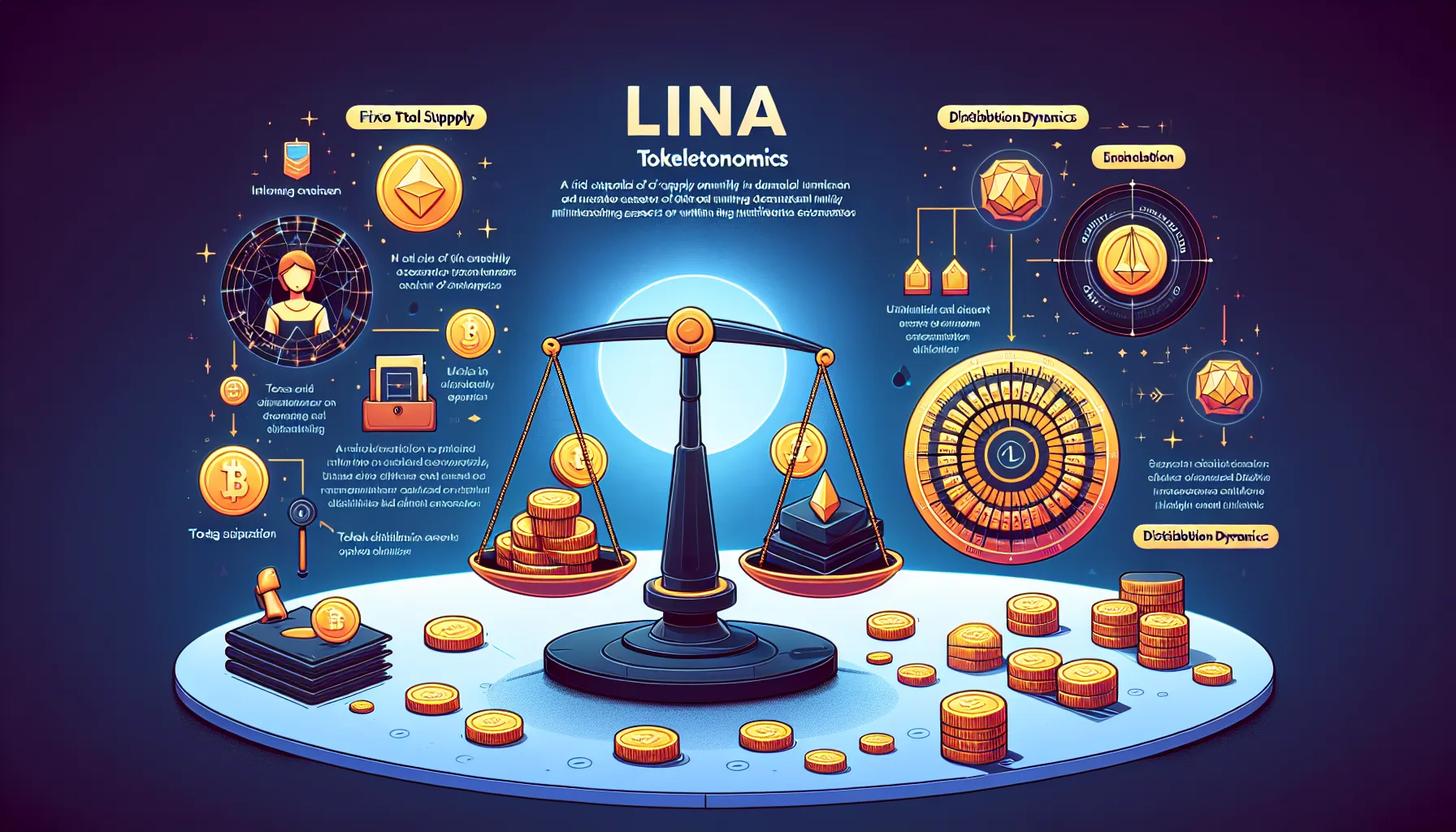
LINA has a fixed total supply of 10 billion tokens, with allocations designed to support ecosystem growth, incentivize stakeholders, and ensure liquidity. A significant portion of the supply was earmarked during the initial token distribution phases—covering community incentives, liquidity mining rewards, and token sales to early adopters. Such mechanisms empower the protocol’s value proposition by encouraging participation within its DeFi ecosystem.
However, the long-term inflation concerns linked to linear vesting schedules and consistent token unlocks have drawn scrutiny, particularly from investors wary of supply dilution. The scheduled unlocking of tokens to team members, early backers, and community reserves could exert sustained downward pressure on prices, raising questions about its balancing act between incentivization and preserving scarcity.
Utility within the Ecosystem
The primary utility of LINA is to serve as collateral for minting synthetic assets (Liquids) within the Linear ecosystem. Users must stake LINA at a collateralization ratio determined by the protocol to maintain system stability. The protocol employs an over-collateralization model, meaning users lock up significantly more value in LINA compared to the synthetic assets they mint.
While this improves the security of the platform and reduces systemic risk, it introduces a barrier to entry for participants, as the collateral requirements can become burdensome, especially during crypto market downturns when asset values fall. Critics argue this reliance on LINA for collateral, instead of more stable or diversified assets, creates a feedback loop where fluctuations in LINA's value directly impact system resilience.
Distribution Challenges
LINA’s token distribution dynamics have faced criticism as being skewed toward early investors and institutional participants, with sizable allocations given to seed investors and private sale participants. Though these allocations are subject to vesting schedules, the risk of concentrated token holdings among a few wallets raises concerns about centralization and market manipulation.
Additionally, the heavy reliance on liquidity mining incentives has sparked debates around sustainability. While this strategy was effective in driving user adoption in the early stages, as incentives diminish over time, there is uncertainty about whether the ecosystem’s user base can maintain its growth without disproportionate token issuance.
LINA Governance
Governance of LINA: Decentralized Control and Community Participation
The governance structure of LINA, the native token of the Linear Finance platform, is a pivotal element in its decentralized ecosystem. Designed to give token holders the ability to influence the platform’s trajectory, the governance model centers on a hybrid approach combining community empowerment and system safeguards. However, it is not without its limitations and challenges.
At the core of LINA’s governance is a DAO (Decentralized Autonomous Organization) framework. Token holders are granted voting rights proportional to their token holdings, allowing them to propose and vote on key protocol upgrades, parameter adjustments, or treasury allocations. This dynamic aims to ensure that decision-making is decentralized and aligned with the interests of the broader community. Issues such as inflation rate adjustments or allocation of staking rewards are examples of governance topics commonly put to vote.
While this design theoretically promotes inclusivity, there are concerns over governance centralization. In practice, concentration of token holdings among a small group of whales—or influential parties, including project developers—can disproportionately affect voting outcomes. Instances of low participation rates among smaller token holders amplify this issue, creating potential barriers to genuine decentralization. The lack of quorum requirements in certain proposals has also raised questions about the system’s robustness, as decisions could be made with minimal community input.
Another significant component is the staking mechanism tied to the governance process. Token holders who stake LINA are typically rewarded with voting power, thereby incentivizing participation in governance. However, this has introduced potential conflicts of interest, as the economic incentives for staking—yield farming, for instance—might overshadow the commitment to active governance involvement. Critics argue that such mechanisms encourage financial gains over thoughtful, long-term platform stewardship.
The proposal submission process itself also deserves scrutiny. While the lack of formal gatekeeping enables an open field for ideas, it has resulted in the submission of proposals with insufficient review or technical feasibility. Addressing these inefficiencies will likely require greater pre-vote evaluation systems or improved information dissemination mechanisms.
Another layer of governance complexity arises from cross-chain integrations and multi-asset collateral systems, which have expanded Linear’s scope. Decisions that affect interoperability with other blockchain ecosystems inherently require deeper expertise from the voting community. This intersection of technical nuance and decentralized decision-making can hinder the process, leading to either voter apathy or poorly informed outcomes.
Challenges notwithstanding, LINA’s governance offers a transparent and flexible mechanism for platform evolution while exposing structural vulnerabilities that need resolving as the ecosystem matures.
Technical future of LINA
Current and Future Technical Developments and Roadmap for LINA
Linear Finance’s LINA token operates as the backbone of a decentralized platform built for synthetic asset creation and trading. At its core, the project leverages interoperability and composability to create a seamless experience for users participating in decentralized finance (DeFi). Recent technical developments and future roadmap objectives reveal several key upgrades, optimizations, and potential challenges.
Enhanced Layer-2 Integrations
One central focus of the current technical strategy is improving scalability through layer-2 solutions. LINA has gradually migrated portions of its operations to networks that support higher transaction throughput and reduced gas fees. Optimizations utilizing rollup technologies, such as ZK-rollups, aim to improve transaction finality without compromising decentralization or security. However, transitioning a synthetic protocol's infrastructure across multiple layers introduces complexity in liquidity management across different chains, which remains a non-trivial technical barrier.
Synthetic Asset Collateral Improvements
The Linear Finance platform employs LINA as collateral for the creation of Liquids (its synthetic asset offering). The development roadmap includes steps to lower collateralization ratios via improved stability mechanisms. This involves enhancing the platform’s collateral optimization algorithm and deploying dynamic collateral management systems. While this innovation could increase capital efficiency, it also introduces risks related to under-collateralized positions in times of extreme market stress. Addressing how the protocol will handle liquidation cascades during these events remains a critical challenge.
Oracle Architecture Upgrade
Linear Finance relies heavily on external oracles to facilitate accurate and reliable pricing of synthetic assets. Upcoming upgrades plan to decentralize the oracle infrastructure further, potentially replacing or complementing centralized oracles with cutting-edge solutions like multi-party computation (MPC) or cross-chain oracle aggregators. However, the reliance on oracles inherently exposes the protocol to potential failures or manipulations, something that competing platforms face as well.
Expanding Cross-Chain Functionality
Interoperability has been listed as a critical goal in the ongoing roadmap. Native support for more blockchains and cross-chain liquidity bridges will allow LINA holders to interact with various DeFi ecosystems. The ambition here aligns with growing trends in DeFi, but complexity grows exponentially when integrating with newer chains. There are risks around bridge exploits, as poor implementations can become attack vectors.
Native Governance Enhancements
A decentralized governance mechanism for LINA is already in place, though plans for technical upgrades to streamline proposal execution and voting processes are on the horizon. These enhancements will likely include on-chain automation of governance outcomes and integration with smart contract wallets. Inefficiencies within the governance model, such as low voter turnout or concentrated voting power, still pose challenges when scaling decentralized governance systems effectively.
Comparing LINA to it’s rivals
LINA vs. INJ: Decentralized Finance Infrastructure Showdown
When examining Linear Finance (LINA) and Injective Protocol (INJ), it’s clear both crypto assets operate under the broader decentralized finance (DeFi) umbrella, yet their infrastructure and use cases diverge significantly. A core distinction lies in their technical frameworks and market objectives, which informs their positioning within the DeFi ecosystem.
LINA focuses on a synthetic asset issuance platform, enabling users to create and trade tokenized derivatives of real-world assets. Its protocol heavily leans on collateralized debt positions (CDPs) via its native LINA token. By locking LINA, users can mint various synthetic assets (“Liquids”), which track external price movements. This system aims to democratize access to global financial markets on-chain. However, LINA's reliance on collateralization raises concerns about overexposure during market downturns. Price volatility of its native token poses liquidation risks, often leading to cascading effects during sharp corrections, which can discourage adoption.
On the other hand, INJ underpins a decentralized exchange (DEX) layer with its focus on achieving maximal performance and efficiency for order book-based trading. Injective’s unique Layer-1 blockchain architecture taps into Cosmos’ Tendermint consensus alongside its Ethereum Virtual Machine (EVM) compatibility, enabling interoperability across multiple chains. This modular design allows for customizable derivatives markets, zero gas fees for specific operations, and native order book execution—features that could outpace LINA’s AMM-centric model in terms of trading speed and precision. However, a point of contention is INJ’s relatively higher technical barrier to entry, with many retail traders potentially finding its infrastructure less approachable compared to the more streamlined front end of LINA’s synthetic asset system.
From a decentralization standpoint, both platforms present unique trade-offs. INJ’s reliance on Cosmos validators enhances throughput but centralizes network control to some extent. In contrast, LINA’s synthetic ecosystem is governed through LinearDAO, promoting participatory governance. Still, questions remain about the scalability of its tokenized synthetic asset model under heavy network congestion, particularly when compared to INJ’s higher transaction capacity.
Ultimately, LINA and INJ cater to distinct niches within DeFi: LINA prioritizes accessibility to synthetic assets, while INJ concentrates on high-performance trading infrastructure. However, the overlap in their target audiences—including traders and liquidity providers—ensures ongoing comparisons. Both face challenges in expanding their ecosystems while retaining competitive advantages in an increasingly crowded DeFi landscape.
LINA vs. FET: A Comparative Analysis of Utility and Use Cases
When evaluating LINA against Fetch.ai's FET, the comparison zeroes in on their distinctive approaches to solving blockchain-related challenges and the specific utilities they bring to decentralized ecosystems. While both projects lean heavily on innovation and future-focused use cases, their differences in methodology and target applications carve out unique niches for each.
Decentralized Ecosystem Focus
LINA, with its focus on decentralized finance (DeFi), revolves around providing robust synthetic asset trading capabilities. It empowers users to mint, stake, and trade synthetic assets seamlessly on-chain. This setup caters largely to market participants seeking exposure to asset classes without owning the underlying assets. However, Fetch.ai (FET) prioritizes the integration of blockchain technology with artificial intelligence (AI) solutions. FET's infrastructure supports building AI-driven decentralized applications (dApps), particularly for agent-based models in areas such as autonomous economic transactions and data sharing.
Where LINA emphasizes liquidity efficiency and scalability in DeFi ecosystems, FET charts a different course by focusing on decentralization in industries like IoT, supply chain optimization, and predictive analytics. For blockchain users, this divergence marks a critical distinction in deciding whether to allocate resources toward financial markets (LINA) or cutting-edge AI-driven infrastructure (FET).
Technical Architecture and Scalability
FET differentiates itself with its deployment of autonomous economic agents (AEAs), which allow devices and systems to act independently and negotiate efficient outcomes on behalf of users. This technology leverages AI to automate and optimize traditionally manual workflows. In contrast, LINA's key offering centers around its synthetic asset platform, which utilizes a collateralized debt-backed mechanism to ensure asset pegs remain stable.
A noted drawback for FET is its relatively steep learning curve for developers, who need familiarity with AI and machine learning principles to effectively leverage the platform's full potential. On the other hand, LINA’s platform benefits from being laser-focused on DeFi, simplifying user engagement for traders and liquidity providers at the cost of excluding more diverse applications.
Adoption Challenges
While FET's AI-driven proposition is compelling in theory, adoption barriers loom large, particularly within sectors unfamiliar with the convergence of AI and blockchain. There is still a lack of widespread understanding regarding how autonomous agent-based models can interoperate with traditional systems. LINA, while exhibiting strong specialization in DeFi, faces its own challenges in fostering synthetic asset adoption, a niche sector that may compete with established decentralized and traditional financial markets.
This difference in adoption friction underscores a divide in market appeal: LINA serves a primarily crypto-native audience already immersed in DeFi, whereas FET grapples with convincing industries outside of crypto to embrace blockchain-powered AI solutions.
Comparing LINA to RLC: A Focus on Utility and Market Position
When it comes to decentralized platforms that emphasize utility in the cryptocurrency space, LINA and RLC (iExec RLC) often appeal to completely different but overlapping sectors. While LINA focuses on enabling synthetic asset creation and decentralized finance (DeFi) ecosystems, RLC targets the decentralized cloud computing market. The divergent nature of their use cases indicates fundamentally distinct audiences, but it's worth examining how LINA's modular synthetic asset framework compares to RLC's specialized infrastructure for off-chain computational power.
Core Infrastructure: Composability vs Enterprise Focus
LINA's synthetic asset creation leans heavily on decentralized composability, a cornerstone for unlocking the broader DeFi potential. In contrast, RLC prioritizes enterprise solutions by enabling developers to monetize unused computing resources and process off-chain workloads in a decentralized manner. While LINA's modular architecture makes it highly adaptable for on-chain financial derivatives, RLC’s offering is more tailored toward optimizing technical workloads like AI-related processes or rendering.
This fundamental difference creates a barrier for RLC in competing directly with the DeFi world where LINA thrives. However, this also means LINA does not operate in a vacuum. If RLC’s cloud solutions were to incorporate financial oracles and synthetic derivatives use cases, it may have a setting to enter LINA’s competitive field indirectly in the long term, though such cross-functional experimentation still seems speculative.
Decentralization and Adoption Explore Trade-Offs
One of RLC’s competitive strengths is that it solves real-world computational bottlenecks, an area where decentralization is typically deemed secondary to cost-efficiency. LINA, by contrast, bets on a fully decentralized ecosystem as an imperative for synthetic assets. While this endears LINA to DeFi purists, RLC’s hybrid model positions its network well with enterprise clients who may prioritize solutions over ideology.
However, this practical approach in RLC's adoption has introduced delays in certain key partnerships and integrations, presenting a bottleneck for network scaling. On the other hand, LINA faces potential centralization risks if significant portions of its liquidity pool or collateral sources consolidate excessively, exposing it to systemic inefficiencies.
Token Economics: Use Case Divergence
RLC's token design revolves solely around facilitating computational transactions, leaving little room for speculative value or broader utility outside its designated sector. In comparison, LINA's tokenomics allow for a more robust integration within the financial ecosystem, ranging from collateral assets to governance functions. However, this complexity could alienate non-DeFi-native users seeking simpler participation.
Both projects, while strong in their niches, reveal inherent trade-offs between usability, decentralization, and broader market versatility.
Primary criticisms of LINA
Primary Criticism of LINA: Key Challenges Facing the Protocol
LINA, the native token of the Linear Finance ecosystem, often garners attention within the decentralized finance (DeFi) space. However, despite its innovative ambitions, it is not without its fair share of criticism. Below are some of the major challenges and pain points frequently cited by the crypto community regarding LINA and its associated ecosystem.
Over-Reliance on Synthetics and Market Adoption
Linear Finance positions itself as a platform for synthetic assets, yet the reliance on synthetics can be a double-edged sword. Critics argue that the synthetic asset sector is inherently niche and heavily dependent on user trust, seamless price pegs, and liquidity depth. LINA's synthetic offerings lack the institutional-grade liquidity found in competing platforms, raising concerns about their viability during periods of high network activity or significant market stress. Without broader market adoption or deeper integration into larger DeFi ecosystems, Linear Finance risks relegation to the fringes of synthetic finance protocols.
Questions Around Decentralization
While Linear Finance markets itself as a decentralized protocol, skeptics have pointed to centralization risks related to governance and protocol control. Dubious transparency around the development team’s decision-making processes and the allocation of treasury funds has been noted. Some fear that larger stakeholders or insiders may wield disproportionate influence over the protocol, creating a governance structure that may deviate from the idealized decentralization inherent to many DeFi projects.
Smart Contract and Security Risks
One recurring point of concern is the potential vulnerability of Linear Finance's smart contracts. As with any DeFi protocol, hacker exploits or bugs in the code could result in devastating consequences for users. Concerns have been amplified by the broader DeFi community regarding the platform's audit history and whether its current security measures are robust enough to instill confidence. For crypto veterans, any perceived lack of a rigorous and transparent audit timeline flags a significant drawback.
Inflationary Tokenomics and Utility Debate
Another common criticism lies in LINA's tokenomics model. As a highly inflationary asset, frequent emission of new tokens has led to concerns around sell pressure and the gradual dilution of holdings for early adopters. Critics question whether LINA's utility is strong enough to justify the inflation or if it will create downward price spirals through excessive issuance. Furthermore, the distribution mechanics often appear skewed, with limited incentives to lock or stake LINA compared to competing DeFi tokens.
Limited Differentiation from Competitors
The growing competition in the synthetic asset and DeFi aggregation space places Linear Finance at a disadvantage. Critics frequently highlight that much of what the protocol offers can be found in more established networks such as Synthetix (SNX), which boasts deeper liquidity and stronger community buy-in. Without a standout feature differentiating it from its peers, LINA's ability to sustain long-term engagement and growth remains a question mark.
Geographic and Regulatory Risks
Lastly, Linear Finance’s focus on certain markets, such as its Asia-centric strategy, has been flagged as both an advantage and a vulnerability. While it positions itself to tap into a burgeoning user base, this geographic concentration exposes the ecosystem to regulatory changes that could disproportionately affect its viability. Critics argue that diversifying its geographic footprint may reduce the susceptibility to region-specific crackdowns or compliance hurdles.
Founders
Founding Team Behind LINA: Key Insights and Controversies
The Linear Finance (LINA) project was developed by a team of experienced professionals with backgrounds in blockchain, traditional finance, and technology development. The co-founders of Linear Finance are Drey Ng and Kevin Tai, both of whom have played critical roles in establishing the platform’s infrastructure and vision.
Drey Ng, formerly a co-founder of Liquefy, brought expertise in tokenization and blockchain applications to Linear Finance. His focus on decentralized, scalable solutions aimed to bridge gaps between traditional and decentralized finance. Kevin Tai, who worked at major financial institutions like Credit Suisse and Standard Chartered, injected his corporate finance experience into LINA’s framework, emphasizing the importance of risk management and capital efficiency within the decentralized synthetic asset landscape. The combination of these perspectives provided a foundation to tackle inefficiencies in the DeFi sector, particularly in synthetic assets and derivatives.
Despite the strong credentials of the founding team, some in the crypto community have critiqued the transparency of Linear Finance’s development and decision-making processes. Concerns have been raised about the centralized control over key aspects of the ecosystem, such as protocol upgrades and token distribution mechanics. Critics argue that this level of influence could contradict the decentralized ethos championed by the broader DeFi movement.
Another point of contention stems from the platform's dependence on Binance Smart Chain (BSC) during its early developmental stages. While the decision to primarily build on BSC enabled lower fees and faster transactions compared to Ethereum at the time, purists in the community have pointed out that the choice compromised decentralization in favor of scalability. This sparked discussions about the motivations of the founding team and whether pragmatic trade-offs align with the project’s long-term goals or dilute its value proposition.
Additionally, the team’s lack of publicly disclosed responses to certain technical audits and smart contract vulnerabilities has escalated concerns among analysts and critical investors. While Linear Finance has made strides in innovation and user adoption, ongoing community calls for greater transparency and decentralized governance remain a challenge for the stewardship of the founding team.
The story of LINA’s founding team reflects a mix of high-caliber expertise, calculated decisions, and areas of consistent scrutiny. These dynamics continue to shape discussions around Linear Finance’s positioning within the competitive DeFi ecosystem.
Authors comments
This document was made by www.BestDapps.com
Sources
- https://linear.finance/whitepaper
- https://linear.finance/
- https://github.com/Linear-finance/linear-protocol
- https://etherscan.io/token/0x3e9bc21c9b189c09df3ef1b824798658d5011937
- https://coinmarketcap.com/currencies/linear/
- https://www.coingecko.com/en/coins/linear
- https://docs.linear.finance/
- https://blog.linear.finance/
- https://medium.com/linear-finance
- https://defillama.com/protocol/linear
- https://twitter.com/linearfinance
- https://api.linear.finance/
- https://bscscan.com/token/0x762539b45a1dcce3d36d080f74d1aed37844b878
- https://dappradar.com/binance-smart-chain/defi/linear-finance
- https://cryptoslate.com/coins/linear/
- https://linearfinance.zendesk.com/hc/en-us
- https://www.theblock.co/search?q=Linear+Finance
- https://chain.link/use-cases/defi-building-a-cross-chain-digital-economy
- https://www.binance.com/en/price/linear-finance