History of LBR
The History of LBR: Origins, Challenges, and Evolution
The Genesis of LBR and Its Early Vision
LBR (LBRY Credits) originated as the native utility token of the LBRY protocol, a blockchain-based content-sharing network designed to decentralize digital media distribution. The project aimed to eliminate centralized control over media platforms, giving content creators full ownership and monetization capabilities without intermediaries. LBR played a critical role in the network by facilitating transactions, tipping, and content purchases.
From the outset, the LBRY protocol positioned itself as an alternative to traditional media hosting solutions, emphasizing censorship resistance and user sovereignty. The token distribution model included mining, rewards for users engaging with the platform, and an allocation for developers to ensure network sustainability.
Regulatory Scrutiny and Legal Battles
Despite its decentralized vision, LBR faced significant legal and regulatory challenges. The biggest obstacle emerged when U.S. regulators scrutinized the project, arguing that LBR might constitute an unregistered security. This legal confrontation led to uncertainty regarding LBR’s status and its compliance with securities law. The outcome of this regulatory scrutiny impacted LBR’s adoption and integration into broader cryptocurrency markets, making potential partnerships and exchange listings more complex.
The legal challenges around LBR also created precedents relevant to the broader crypto industry, especially for blockchain-based content-sharing platforms and their native tokens. As regulatory crackdowns on crypto assets became more common, LBR’s case became a focal point of debate surrounding decentralized protocols and token classification.
Network Evolution and Shifts in Strategy
Over time, the LBRY ecosystem underwent changes in response to adoption trends, legal pressures, and network participation shifts. Updates to the protocol and modifications to LBR token distribution sought to improve decentralization and incentivization structures. However, these adjustments were not without friction, as balancing user incentives while maintaining network security posed ongoing challenges.
The platform also faced competition from other decentralized content-sharing networks, limiting LBR’s widespread adoption beyond its initial user base. While committed users and content creators continued utilizing the ecosystem, the platform struggled with mainstream traction, especially amid regulatory headwinds.
As LBR’s historical trajectory demonstrates, the token’s path has been shaped by both technical innovation and legal complexities, influencing its standing within the crypto asset landscape.
How LBR Works
How LBR Works: Mechanics and Functionality
LBR operates within a decentralized content-sharing and payment infrastructure, utilizing blockchain technology and cryptographic principles to facilitate transactions and governance. The asset is primarily used within its native ecosystem for payments, tipping, and staking, while also serving as an economic incentive for network participants.
Transaction Mechanics and Utility
LBR transactions occur on a blockchain that records transfers, ensuring immutability and transparency. Users can send LBR for various purposes, including payments for digital content, peer-to-peer transfers, and staking mechanisms within the ecosystem. The transaction costs and processing speeds depend on network congestion and the underlying consensus model.
One core function of LBR is its role in content transactions. Creators can price content in LBR, and users must pay to access premium materials. Alternatively, voluntary tipping enables direct financial support for creators without intermediaries. The immutability of blockchain ensures that payments are verifiable and transparent.
Consensus and Network Security
The blockchain supporting LBR uses a consensus model designed to secure transactions and distribute rewards fairly. Depending on the implementation, network stability can be influenced by node participation, governance mechanisms, and the incentive structure for miners or validators. If network participation decreases, transaction finality and security may be impacted.
Potential attack vectors include blockchain reorganization risks, smart contract vulnerabilities (if applicable), and governance-related manipulations. If a small group gains disproportionate control over governance, it could influence decision-making, potentially affecting token utility or economic incentives.
Governance and Token Distribution
LBR often features governance elements that allow stakeholders to participate in decision-making. However, governance influence is typically proportional to token holdings, which can lead to centralization concerns. Large stakeholders may have outsized control over protocol upgrades, fee structures, and distribution mechanisms, creating potential inefficiencies or conflicts of interest.
Token distribution plays a significant role in the overall stability of LBR. A highly concentrated token supply could lead to price manipulation or limited liquidity in certain scenarios. Additionally, vesting schedules, emission rates, and burn mechanisms (if applicable) can affect overall supply dynamics, influencing how LBR is utilized in the ecosystem.
Challenges in Adoption and Scalability
While LBR facilitates decentralized content transactions, broader adoption challenges remain. Scalability limitations can affect transaction throughput, and network congestion may lead to higher fees or delayed confirmation times. Furthermore, regulatory uncertainty surrounding similar crypto assets could impact long-term viability, depending on jurisdictional interpretations of digital asset classifications.
Overall, the mechanics of LBR rely on decentralized structures for utility and governance, but network security, scalability, and governance concentration remain key challenges within its framework.
Use Cases
LBR Crypto Asset Use Cases
Content Monetization on Odysee
LBR plays a central role within the Odysee platform, where creators can earn and transact using the token. Users tip content they find valuable, and creators receive LBR for engagement. The blockchain-based model enables direct monetization without reliance on traditional ad revenue. However, the fluctuating value of LBR introduces financial uncertainty for creators relying on it as a primary income stream.
Staking for Network Functionality
LBR is used for staking within the network, which helps prevent spam and improve content discoverability. Users can stake LBR to boost the visibility of their own or others' content, influencing search rankings. While this offers a decentralized method of content promotion, it also creates a system where users with larger holdings can gain disproportionate visibility, potentially centralizing influence within the ecosystem.
Transaction Fees and Network Utility
Transactions within the LBRY network—including publishing content, tipping, and other on-chain actions—are processed using LBR. Since fees are dynamically adjusted based on network conditions, costs remain relatively low, but they are still subject to congestion and scaling constraints. Users who transact frequently may encounter fee-related inefficiencies, particularly during periods of high network activity.
Peer-to-Peer Exchange and Payments
LBR enables direct peer-to-peer payments both within and outside the Odysee ecosystem. This use extends beyond content interaction, allowing private and trustless financial exchanges. Adoption for payments remains limited, as LBR lacks the liquidity and recognition of larger cryptocurrencies, making it a niche option for transactions.
Decentralized Governance Participation
LBR token holders can influence network decisions, including protocol upgrades and policy changes. While this aligns with broader decentralized governance trends, participation rates remain variable, and larger stakeholders inherently hold more influence. This dynamic presents risks of governance centralization despite the network’s open participation model.
Incentives for Network Growth
The network distributes LBR as incentives to encourage new user participation and content creation. While these rewards promote adoption, they also raise concerns about long-term token inflation and sustainability. Over time, reward reductions may affect user engagement if alternative incentives are not introduced.
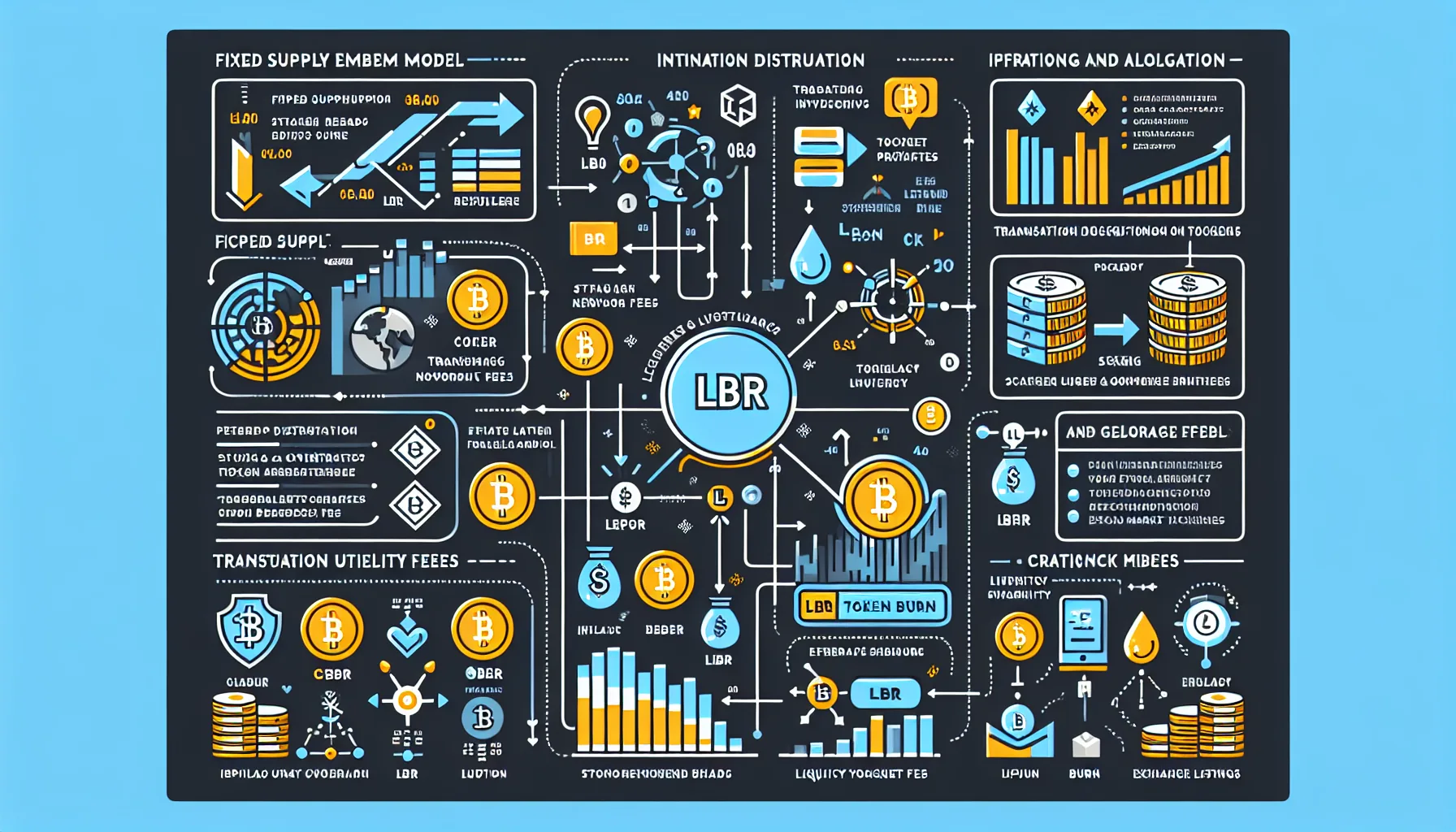
LBR Tokenomics
LBR Tokenomics: Supply, Distribution, and Utility
Fixed Supply and Emission Model
LBR operates on a capped supply model, meaning there is a finite number of tokens that will ever exist. The predetermined issuance schedule controls the flow of new tokens into circulation, with emissions reducing over time. This built-in scarcity is meant to create a deflationary pressure. However, due to vesting schedules, staking rewards, and potential token unlocks, the effective circulating supply can fluctuate, impacting liquidity and market behavior.
Distribution and Allocation Concerns
The initial token distribution included allocations for ecosystem development, early contributors, and network incentives. A significant portion of tokens is often reserved for team members and early-stage investors, raising concerns about centralization risks. If a concentrated number of entities hold a large percentage of supply, they could exert influence over governance decisions or liquidity movements. This structure requires scrutiny to determine if the vesting schedule adequately mitigates sell pressure from large holders.
Staking and Governance Incentives
LBR incorporates staking mechanics, allowing token holders to participate in network security or governance functions. Staking yields are periodically adjusted, and returns typically decrease as more tokens are staked. A potential drawback is that prolonged staking incentives can lead to supply fracturing, making the liquid market smaller relative to the total token supply. Additionally, governance participation depends on token distribution—if large stakeholders dominate governance, decentralization claims can be questioned.
Transaction Utility and Network Fees
LBR is used for network fees, payments, and potentially as collateral within DeFi applications. The extent of real utility beyond speculation is a key factor in sustaining long-term demand. A challenge arises if transaction fees are either too high, discouraging user adoption, or too low, failing to create consistent token sinks. If LBR lacks strong utility beyond staking and governance, its value proposition may be limited compared to other utility-driven assets.
Inflation vs. Token Burn Mechanisms
Some deflationary models counterbalance emissions with token burns or automated reductions in supply. If LBR integrates a burn mechanism, it can mitigate inflation but also risks reducing incentives for validators or participants relying on rewards. Observing the balance between issuance and burning is essential, as disproportionate inflation could devalue long-term holdings, while excessive burning might constrain ecosystem activity.
Liquidity and Exchange Market Dynamics
LBR’s market liquidity depends on exchange listings, trading volume, and incentives for market participants. Thin liquidity can result in price volatility and slippage issues. Additionally, if liquidity is heavily reliant on incentives, a reduction in rewards might lead to lower participation in liquidity pools or trading activity. Tokenomics must consider sustainability rather than short-term reward-driven liquidity provisioning.
LBR Governance
LBR Governance: Decentralization, Voting Mechanisms, and Challenges
Governance Structure of LBR
LBR governance is structured around a decentralized decision-making framework, allowing token holders to influence network upgrades, economic parameters, and ecosystem development. Governance proposals can be submitted through an on-chain mechanism, requiring token-weighted voting to determine outcomes. This model aims to align incentives between stakeholders, fostering transparency and community-driven evolution.
On-Chain Voting and Token Weighting
LBR utilizes an on-chain governance model where token holders stake their assets to participate in decision-making. Proposal voting is typically based on a token-weighted system, meaning users with larger holdings exert greater influence. While this aligns governance power with financial commitment, it raises concerns about plutocracy, where wealthier participants dominate governance decisions. This system can lead to centralization risks if token concentration is high.
Proposal Mechanisms and Execution
Proposals in the LBR governance framework undergo multiple stages, including submission, discussion, voting, and execution. A minimum threshold of voting participation is required for proposals to be considered valid. If passed, certain proposals may be executed automatically via smart contracts, while others require manual implementation by the development team. This hybrid execution model balances automation with flexibility but poses centralization risks if manual processes remain significant.
Governance Token Utility and Locking Mechanisms
LBR governance tokens are often subject to locking mechanisms, where users must stake their assets for a specified duration to participate in governance. This discourages short-term speculative influence but also reduces liquidity for token holders. Additionally, long lock-up periods can deter participation from users unwilling to lose access to their assets for extended durations.
Governance Risks and Challenges
One of the primary governance challenges is voter apathy, where a large portion of token holders abstain from participation. Low engagement can result in decisions being made by a small subset of active voters, leading to governance capture and limited decentralization. Additionally, governance mechanisms are susceptible to Sybil attacks if stakeholders consolidate tokens across multiple wallets to artificially inflate voting power.
Another critical issue is smart contract vulnerabilities within governance frameworks. If an exploited proposal passes, it could lead to malicious changes in protocol parameters, requiring emergency interventions from developers, contradicting decentralization principles.
Governance Evolution and Community Influence
The effectiveness of LBR’s governance model is contingent on active community involvement. While governance parameters can be adjusted via proposals, the adaptation process is slow, especially if token holders remain disengaged. Redistributions of governance power, such as through delegation or quadratic voting, could help mitigate concentration risks, but implementation remains a challenge.
Technical future of LBR
LBR Crypto Asset: Current and Future Technical Developments and Roadmap
Ongoing Protocol Enhancements
The LBR ecosystem continues to undergo significant technical refinements, focusing on improving scalability, decentralization, and transaction efficiency. Recent upgrades to its consensus mechanism aim to reduce confirmation times while maintaining network security. Developers are also addressing concerns related to smart contract execution, working on a more gas-efficient architecture to lower costs for on-chain interactions.
Layer-2 Scaling and Performance Optimization
To tackle network congestion and high transaction fees, LBR's technical roadmap includes research into Layer-2 scaling solutions. Rollups, particularly zk-Rollups, are being explored as a means to batch transactions off-chain while securing finality on LBR’s mainnet. Discussions around state channels and sidechains suggest that multiple approaches may be considered to improve performance without compromising decentralization.
Smart Contract Upgrades and Compatibility
LBR’s smart contract framework is undergoing optimizations to ensure higher compatibility with existing Ethereum-based dApps and tooling. Efforts to refine the virtual machine include improving execution efficiency and enhancing security against known attack vectors. The roadmap outlines increased compatibility with cross-chain bridges, allowing seamless value and data transfer between LBR and other major blockchains. Challenges persist in ensuring complete interoperability, particularly with contract standard differences that require additional abstraction layers.
Focus on Privacy and Security Enhancements
Ongoing development includes improved cryptographic techniques for transaction privacy. Proposals have been made to integrate zero-knowledge proofs into the protocol to facilitate confidential transactions. However, implementation remains complex, with concerns about computational overhead and network-wide compliance requirements. Additionally, security audits are scheduled to address potential vulnerabilities in recent upgrades, particularly as new functionalities introduce expanded attack surfaces.
Decentralized Governance Evolution
The future roadmap prioritizes governance upgrades to transition toward a more transparent and community-driven decision-making process. Planned improvements to the voting mechanism seek to incentivize more active participation while mitigating governance centralization risks. However, governance token dynamics remain a challenge, with discussions ongoing about potential protocol-level changes to prevent governance attacks and voting manipulation.
Cross-Chain Expansion and Ecosystem Growth
Interoperability remains a major focus area, with upcoming developments aimed at expanding LBR's integration with multi-chain ecosystems. Native bridge infrastructure is in the works to enable compatibility with networks such as Ethereum, Solana, and Cosmos. While this expansion offers new use cases, security risks with cross-chain asset transfers raise concerns, necessitating robust security mechanisms to prevent exploits.
Comparing LBR to it’s rivals
LBR vs. USD: Stability, Utility, and Decentralization
The LBR crypto asset and the USD serve vastly different roles, yet they often compete in areas linked to transactions, store of value, and financial sovereignty. While USD remains the dominant fiat currency in global trade and finance, its characteristics contrast sharply with LBR's decentralized nature.
Centralization vs. Decentralization
One of the primary distinctions between LBR and USD is the control mechanism. The USD is fully centralized, governed by the Federal Reserve and subject to monetary policies that can lead to inflation, interest rate shifts, and currency devaluation. LBR, by contrast, operates on blockchain technology, aiming for decentralization to resist direct manipulation from a single authority. However, the degree of decentralization in LBR depends on its network governance, validator distribution, and protocol decisions, which can still introduce centralization risks.
Inflation and Value Retention
USD issuance follows monetary policy objectives, which often lead to inflation, impacting long-term purchasing power. LBR, depending on its issuance model, aims to resist uncontrolled inflation by using predefined issuance rules and supply mechanisms. However, crypto assets, including LBR, may experience volatility that contrasts with fiat stability. Stability mechanisms or liquidity constraints can influence LBR’s ability to function as a reliable unit of account compared to USD.
Adoption and Liquidity
USD's liquidity is nearly unmatched, with global acceptance in trade, finance, and savings. LBR faces significant hurdles in competing with USD in terms of mainstream acceptance, as crypto assets generally require exchange conversion for real-world use. Additionally, restrictions and regulations on crypto-transactions can limit LBR’s ability to act as an efficient medium of exchange, especially when compared to the seamless integration of USD in banking and payment infrastructures.
Regulatory and Compliance Barriers
Governments enforce strict oversight on USD transactions through banking systems, AML/KYC regulations, and capital controls. LBR, operating in the crypto space, may encounter varying degrees of regulatory pressure depending on jurisdiction. If viewed as a threat to monetary policy control, regulatory bodies may impose limitations that hinder LBR's adoption in financial systems.
Transaction Efficiency and Cross-Border Use
Traditional USD transactions via banks or payment processors involve intermediaries, settlement delays, and fees. In contrast, LBR’s blockchain-based transfers aim for faster transaction finality, reduced costs, and borderless movement of funds. However, network congestion, gas fees, and blockchain limitations may pose challenges to sustaining these advantages.
LBR vs. Gold: A Comparison of Utility and Store of Value
Gold has long been regarded as the benchmark for a store of value, with physical scarcity and historical significance solidifying its role in the financial system. LBR, as a crypto asset, operates within a completely different framework but shares the same ambition of being a durable value-preserving asset. The key differences between the two lie in accessibility, divisibility, security, and market dynamics.
Accessibility and Storage
Gold is cumbersome to store and transport, requiring either physical safeguarding or reliance on third-party custodians. This introduces counterparty risk when using gold-backed financial instruments such as ETFs or bank vault services. LBR, being a purely digital asset, eliminates this constraint. It can be transferred globally in minutes without reliance on intermediaries. However, this accessibility comes with trade-offs, particularly in terms of security. If private keys are lost, LBR holdings are irreversibly gone, whereas gold, although subject to theft, cannot simply be deleted from existence.
Divisibility and Transaction Efficiency
Gold is divisible, but practically speaking, transaction sizes are often limited by physical weight constraints and the need for verification processes. The settlement of gold-based trades, particularly in large quantities, can be slow and costly due to logistics, authentication, and insurance expenses. In contrast, LBR is highly divisible and can be transferred in precise amounts without physical handling. Transactions on its blockchain settlement layer occur instantaneously or within minutes, offering a level of efficiency that gold markets cannot match.
Market Liquidity and Integration into Financial Systems
Gold enjoys deep liquidity across global markets, with trading hubs in London, New York, and Shanghai facilitating constant price discovery. It is integrated into traditional finance as both a reserve asset and a hedge against macroeconomic instability. LBR, while also aiming for liquidity, faces structural limitations. Its adoption and integration into financial institutions remain in flux, and market access is contingent on regulatory landscapes that vary across jurisdictions. Additionally, whereas gold’s liquidity is underpinned by centuries of global trust, LBR is still developing its market depth and institutional credibility.
Volatility and Perception as a Safe Asset
Gold is often seen as a hedge against inflation and systemic risk, with relatively lower volatility compared to most crypto assets. LBR, like many digital assets, experiences price swings that can impact its perception as a stable store of value. While its design may include mechanisms to dampen volatility, it does not yet share gold’s universal recognition as a safe-haven asset.
Despite these differences, both assets attract users seeking alternatives to traditional fiat currencies. However, gold’s entrenched position in global finance, combined with its physical nature, presents barriers to LBR achieving similar recognition in the near term.
LBR vs. Stocks: A Structural and Functional Comparison
Liquidity Differences Between LBR and Stocks
LBR operates within decentralized finance (DeFi) ecosystems, where liquidity tends to be fragmented across different exchanges, both centralized and decentralized. This differs from traditional equities, which benefit from deep liquidity pools in regulated stock markets. While high-frequency trading and institutional market-making enhance stock liquidity, LBR’s market depth can be inconsistent, leading to potential slippage when executing large trades.
Regulatory Landscape and Compliance Variations
Stocks function within highly structured regulatory environments, subject to oversight from financial authorities such as the SEC in the U.S. or equivalent bodies globally. In contrast, LBR, like other crypto assets, faces ambiguous and evolving regulatory treatments. The classification of LBR—whether as a currency, security, or commodity—varies across jurisdictions, influencing its market access and compliance obligations. While regulatory clarity in equity markets enhances investor confidence, the shifting nature of crypto regulations introduces an element of unpredictability to LBR’s adoption and usability.
Accessibility and Trading Hours
Traditional stock markets operate within fixed trading hours, creating predetermined windows for liquidity. LBR, on the other hand, trades 24/7 across global platforms, enabling continuous exposure and flexibility. However, the absence of designated trading pauses can exacerbate volatility, as price movements in low-volume periods may be more pronounced than in regulated stock exchanges.
Custody and Settlement Differences
Stock ownership is typically mediated by brokers, custodian banks, and clearinghouses, ensuring structured settlement processes. LBR, being a crypto asset, is self-custodied in many cases, requiring users to manage private keys or rely on third-party custodial solutions. While this enhances sovereignty over assets, mismanagement or security breaches can lead to irreversible losses—an issue less prevalent in equity markets, where holdings are often insured or reversible under legal frameworks.
Dividends vs. Yield Mechanisms
Stockholders benefit from dividends when distributed by companies, creating passive income opportunities. LBR does not generate dividends in the traditional sense but can be staked or used within DeFi protocols to earn yield. Yield farming or staking strategies carry smart contract risks and potential impermanent losses, which are absent in traditional dividend-paying stocks.
Market Maturity and Institutional Adoption
Stock markets have a historical foundation spanning centuries, with institutional participation shaping pricing efficiency and risk mitigation strategies. LBR, as a digital asset, operates within a nascent industry where institutional engagement is growing but remains significantly lower than in equities. This affects price stability, investor confidence, and overall market structure.
Primary criticisms of LBR
Primary Criticism of LBR: Concerns Around Centralization, Liquidity, and Regulatory Risk
Centralization Concerns Within the LBR Ecosystem
One of the most persistent criticisms of LBR is its perceived centralization. While the asset is often associated with a decentralized framework, skeptics argue that key components of its network infrastructure remain under the control of a limited number of entities. Governance mechanisms, validator distribution, and protocol upgrades have raised concerns that decision-making power is not sufficiently decentralized. Critics point to potential unilateral changes that could impact token holders without broad consensus, reducing the credibility of LBR's decentralization claims.
Additionally, concerns have surfaced regarding codebase contributions and development leadership. The dominance of a few core contributors means that critical updates and security patches rely heavily on a concentrated group. This level of centralization increases the risk of conflicts of interest or the prioritization of certain stakeholders over the broader community.
Liquidity Challenges and Market Dependence
LBR has faced liquidity challenges, particularly in markets with low trading volumes. Thin order books can lead to significant price slippage for large trades, deterring institutional participation. Unlike more established digital assets with deep liquidity, LBR’s market support is seen by some as insufficient for high-frequency traders or those looking to enter or exit substantial positions without affecting price stability.
Beyond exchange liquidity, concerns also extend to the asset’s utility across decentralized finance (DeFi) ecosystems. The integration of LBR within major DeFi platforms has been limited in comparison to other assets, reducing its interoperability. As a result, liquidity providers may find fewer incentives to hold or stake LBR, impacting both accessibility and market depth.
Regulatory Uncertainty and Associated Risks
LBR has also been subject to criticism regarding its exposure to regulatory scrutiny. Previous actions by financial regulators against blockchain projects with similar structures have raised concerns over LBR’s long-term compliance risks. Ambiguous classification within existing legal frameworks leaves the asset vulnerable to potential enforcement actions, which could impact exchanges, custody solutions, and overall adoption.
Another area of concern is the asset’s potential association with content distribution platforms, which have previously faced scrutiny regarding intellectual property, free speech debates, and digital censorship. Should authorities impose new regulations on platforms utilizing LBR, the token itself could face collateral effects, reducing its utility or adoption prospects.
Skeptics argue that without proactive engagement with regulators and a transparent compliance framework, LBR remains exposed to abrupt legal challenges that could impact holders and ecosystem participants.
Founders
Founding Team Behind LBR: Key Figures and Challenges
LBR was founded by a team with prior experience in blockchain development, decentralized applications, and cryptographic security. The leadership focused on creating a system emphasizing censorship resistance and peer-to-peer transactions, drawing influence from existing decentralized protocols. Despite their technical expertise, the team faced key challenges related to regulatory pressures and adoption hurdles.
Core Members and Their Roles
The project’s early development was spearheaded by individuals with backgrounds in blockchain engineering and infrastructure scaling. Some of the lead architects had prior experience working on distributed ledger technologies, which played a crucial role in shaping LBR’s protocol-level design. The founding principles revolved around user autonomy and content ownership, aligning with broader Web3 objectives.
While the team had a strong technical foundation, the organizational structure was relatively flat in its early stages. This decentralized approach allowed for rapid iteration and collaboration but also led to fragmentation in decision-making. In later phases, certain members transitioned out of the core team, leading to shifts in development priorities.
Challenges Faced by the Founding Team
-
Regulatory Scrutiny
One of the most significant obstacles encountered by the founding team was regulatory uncertainty. Authorities in multiple jurisdictions questioned aspects of the project, particularly concerning financial compliance and content distribution models. These legal pressures forced the team to make adjustments to their approach—sometimes creating friction with early adopters who valued decentralization above all. -
Technical Difficulties and Scalability
Like many blockchain-based systems, LBR encountered difficulties related to throughput and scalability. While initial designs emphasized efficiency, real-world implementation revealed bottlenecks that required continuous refinement. The founding team worked on protocol enhancements, but network performance remained a recurring topic of debate within the community. -
Shifts in Leadership and Project Direction
Over time, some founding members left the project, contributing to shifts in direction—particularly regarding governance and ecosystem expansion. Different factions within the team and the broader community had varying perspectives on how decentralized governance should function, leading to internal debates that occasionally delayed key decisions. -
Adoption vs. Idealism
The ideological foundation of LBR emphasized decentralization, but this sometimes clashed with pragmatic adoption strategies. The team had to balance between appealing to purists who demanded absolute autonomy and mainstream users who required user-friendly solutions. This tension influenced key design choices and community engagement strategies.
Despite these challenges, the founding team played a critical role in shaping LBR’s early development. Their decisions—both technical and strategic—continue to influence the project’s trajectory.
Authors comments
This document was made by www.BestDapps.com
Sources
- https://lbry.com/faq/what-is-lbry
- https://lbry.com/get
- https://lbry.com/chain
- https://lbry.com/faq/token-rewards
- https://lbry.com/news
- https://github.com/lbryio/lbry-sdk
- https://github.com/lbryio/lbrycrd
- https://github.com/lbryio/lbry-spec
- https://explorer.lbry.com
- https://chainquery.lbry.com
- https://lbry.tech/spec
- https://lbry.tech/resources/blockchain
- https://lbry.tech/resources/protocol
- https://lbry.tech/resources/lbrycrd
- https://lbry.tech/contributing
- https://odysee.com/@lbry:3f
- https://discourse.lbry.com
- https://medium.com/@LBRY
- https://twitter.com/lbrycom
- https://lbry.org


