History of KNC
History of Kyber Network Crystal (KNC)
Kyber Network Crystal (KNC) was introduced as the native token of Kyber Network, a decentralized liquidity protocol designed to facilitate seamless token swaps. The project was initially developed to address issues related to on-chain liquidity and decentralized trading, launching after a successful ICO that raised significant funding.
Early Development and Token Model
At launch, KNC functioned as a utility token for the network, primarily used to pay transaction fees and incentivize reserve managers who contributed liquidity. However, the original model had limitations: centralized reserve managers introduced an element of trust, and the fee-burning mechanism reduced token supply without directly benefiting network participants.
Token Upgrades and Migration
Kyber Network has undergone multiple upgrades, leading to significant changes in KNC’s token mechanics. One of the most notable events was the migration from the original KNC token to a new, more flexible version. This transition aimed to improve governance, fee distribution, and token utility. While the migration allowed for greater adaptability, it also introduced friction for users needing to swap old tokens for the upgraded version.
A later governance vote enabled KNC holders to participate in protocol decisions, moving towards a more DAO-like structure. Despite this, the governance model has faced criticism for centralization concerns, with a concentration of voting power among a small group of stakeholders.
Network Expansions and Competitive Challenges
Over time, Kyber Network expanded its offerings, integrating features such as KyberDAO and multiple liquidity protocols to remain competitive. However, the rise of automated market makers (AMMs) and other liquidity aggregation models introduced challenges. Protocols like Uniswap and Curve, which rely on passive liquidity provisioning, gained significant market share, pressuring Kyber to adapt its approach.
Kyber’s liquidity model has evolved, but competing decentralized exchanges (DEXs) often offer lower fees and deeper liquidity. Despite efforts to innovate, user adoption and liquidity depth remain ongoing concerns.
Security Incidents and Protocol Adjustments
Kyber Network has faced security incidents, including a vulnerability that temporarily affected its operations. While the issue was addressed, it highlighted the risks associated with smart contract-based systems. The project responded with additional security audits and adjustments to its liquidity management strategies, but trust erosion among some users remains a factor.
KNC’s history reflects an evolving protocol that has adapted to industry shifts while facing structural and competitive challenges. The token continues to play a role in Kyber Network’s ecosystem, constantly adjusting to changing DeFi dynamics.
How KNC Works
How Kyber Network Crystal (KNC) Works
Role of KNC in the Kyber Network
KNC is the utility and governance token for the Kyber Network, a decentralized liquidity protocol. It plays a central role in facilitating token swaps, routing liquidity, and enabling governance decisions. The primary function of KNC is to align incentives between liquidity providers, traders, and developers using Kyber's infrastructure.
Fee Mechanism and Token Burn
One of the key mechanisms within the Kyber ecosystem is the way KNC is used for network fees. A portion of these fees is either redistributed or burned, reducing the total supply of KNC over time. This deflationary model is designed to increase scarcity, but it also makes fee structures unpredictable, particularly during periods of high network activity.
Staking and Governance
KNC holders can stake their tokens in the KyberDAO to participate in governance decisions, such as protocol upgrades and fee adjustments. In return, stakers receive a portion of network fees as rewards. However, the governance model depends on active community participation, which can sometimes lead to slow decision-making, especially during contentious proposals.
Liquidity and Integration
KNC is used to pay for network transactions within Kyber’s liquidity pools and aggregator services. Developers integrating KyberSwap or Kyber-powered liquidity sources must engage with KNC’s fee mechanics, which can add complexity. Additionally, competition from other DEX aggregators means KNC faces challenges in maintaining its role as a preferred utility token.
Network Reliance on Ethereum and Other Chains
While Kyber Network operates across multiple blockchains, Ethereum remains a primary hub. This makes KNC susceptible to network congestion and high gas fees, potentially limiting accessibility. Although Kyber has expanded to layer-2 solutions and alternative chains, fragmentation across ecosystems can pose additional hurdles.
Security and Smart Contract Risks
Like any DeFi-focused asset, KNC is exposed to smart contract vulnerabilities. While Kyber Network has undergone audits and security reviews, risks still exist, especially with evolving contract upgrades and third-party integrations. Exploits or inefficiencies in liquidity routing mechanisms could impact KNC’s utility.
Challenges in Adoption
Widespread adoption of KNC relies on continued DEX growth and integration with DeFi protocols. However, regulatory uncertainty and competition from other decentralized trading solutions can influence its utility and demand. Additionally, fluctuations in liquidity provider incentives could impact the sustainability of Kyber’s ecosystem.
Use Cases
Kyber Network Crystal (KNC) Use Cases
1. On-Chain Liquidity and Token Swaps
KNC powers the Kyber Network, a decentralized liquidity protocol that enables token swaps directly on-chain. Traders and DeFi users can access liquidity from various sources without relying on centralized exchanges, reducing custodial risks and improving transparency. However, liquidity fragmentation and slippage can still be concerns, depending on network usage and available reserves.
2. Fee Payment and Incentives
KNC is utilized to pay transaction fees within the Kyber ecosystem. A portion of these fees is burned or redistributed, contributing to token scarcity. Additionally, liquidity providers and reserve managers may be incentivized with KNC rewards. While these mechanisms create potential value accrual, the sustainability of these incentives depends on ongoing network adoption and integration.
3. Governance and Network Upgrades
KNC holders participate in protocol governance through KyberDAO, where they vote on key parameters, including fee structures, reward distribution, and strategic upgrades. Staking KNC provides governance power and allows participants to earn staking rewards. However, governance centralization risks exist if voting participation remains low or if large stakeholders disproportionately influence decisions.
4. DeFi Integrations and Yield Opportunities
KNC is integrated into various DeFi protocols for lending, borrowing, and liquidity mining. Users can provide KNC liquidity in decentralized exchanges or use it as collateral in lending platforms. The ability to generate yield makes KNC attractive for DeFi participants, but impermanent loss, market fluctuations, and smart contract risks remain challenges.
5. Cross-Chain and Layer 2 Expansions
Kyber Network is expanding across different blockchains and Layer 2 solutions, aiming to optimize scalability and transaction efficiency. KNC plays a role in maintaining liquidity across these networks. While multi-chain interoperability enhances utility, bridging assets across chains introduces additional risks, including smart contract exploits and bridge security vulnerabilities.
6. Payments and Merchant Adoption
Some merchants and payment gateways accept KNC for transactions, enabling direct crypto payments without intermediaries. While this expands KNC’s usability, broader adoption remains limited due to volatility and the dominance of stablecoins for payments.
7. Institutional and Market Making Use Cases
Market makers and institutional liquidity providers leverage KNC for automated trading strategies and liquidity provisioning. However, competition with other liquidity protocols can impact Kyber Network’s relative adoption within the institutional DeFi sector.
KNC Tokenomics
KNC Tokenomics: Supply Mechanics, Utility, and Incentives
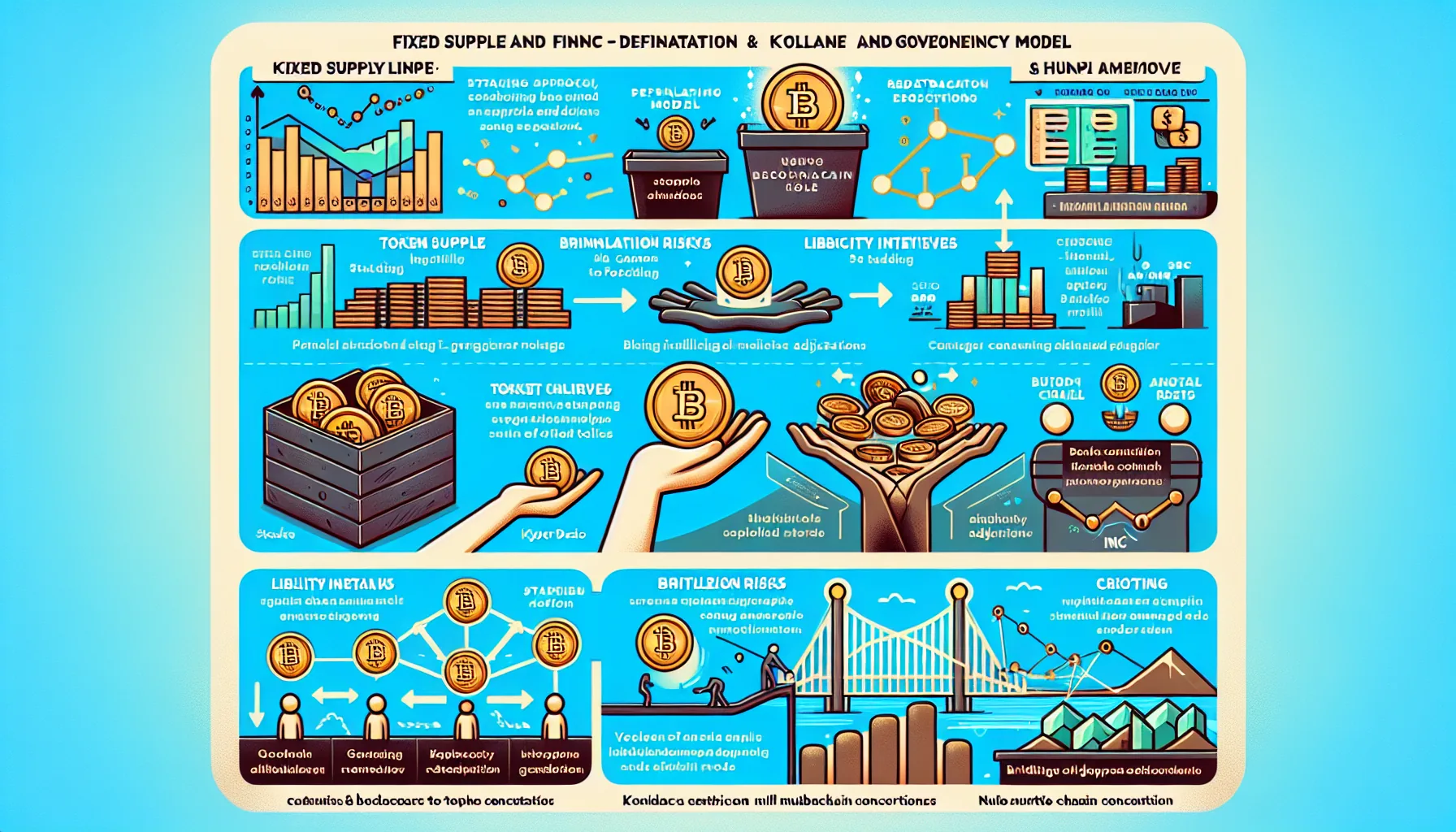
Fixed Supply and Deflationary Model
Kyber Network Crystal (KNC) has a fixed maximum supply, which contrasts with inflationary token models seen in some decentralized finance (DeFi) projects. The fixed cap introduces a scarcity mechanism, potentially increasing value retention over time. However, this also creates limitations when it comes to governance incentives and network participation growth since there is no built-in token issuance to reward new participants.
Staking and Governance Role
KNC holders can stake their tokens to participate in KyberDAO, the project’s decentralized governance system. Stakers receive a share of network fees generated from token swaps on the Kyber Network. One notable factor that differentiates KNC from other governance tokens is that staking rewards are not automatically inflationary; instead, they come from real transaction fees. While this structure avoids dilution of existing holders, it makes long-term sustainability dependent on consistent network trading volume. If adoption stagnates, staking incentives may become insufficient to maintain active participation.
Token Burns and Economic Adjustment
KNC incorporates a burn mechanism where a portion of network fees is periodically removed from circulation. This deflationary pressure can theoretically support price appreciation, assuming demand remains stable or increases. However, the rate of token burns highly depends on network usage. If trading volume on Kyber Network declines, the impact of the burn mechanism diminishes considerably, reducing its effectiveness as a deflationary force.
Liquidity Incentives and Redistribution
To encourage liquidity provision, KNC is used for incentives in liquidity mining programs and partnerships. However, the effectiveness of these incentives varies over time, especially in a competitive DeFi landscape where yield-seeking participants frequently shift capital to higher-reward protocols. If incentive structures are not continually optimized, there is a risk of capital flight, weakening overall network liquidity.
Bridging and Multi-Chain Considerations
KNC has expanded across multiple blockchain networks, including Ethereum and Layer 2 solutions. This cross-chain availability increases utility but also introduces fragmentation concerns. While bridging mechanisms are in place, the existence of KNC on several chains requires users to manage assets across different ecosystems, potentially affecting liquidity concentration and governance voting efficiency.
Centralization Risks and Supply Control
A significant portion of KNC supply is controlled by early investors, team allocations, and the KyberDAO treasury. While this centralization can streamline decision-making, it also raises concerns around governance influence and token distribution fairness. If large holders decide to offload their tokens or dominate voting processes, smaller participants may face governance imbalances limited by their stake size.
KNC Governance
Kyber Network Crystal (KNC) Governance: Mechanisms, Challenges, and Control
On-Chain Governance Structure
Kyber Network Crystal (KNC) governance is primarily structured around KyberDAO, an on-chain decentralized autonomous organization that allows KNC holders to participate in governance decisions. Token holders stake their KNC to vote on proposals related to protocol upgrades, fee distribution, and reserve system adjustments. Governance is structured in voting epochs, during which stakers lock their tokens to be eligible for rewards.
Voting Power and Influence
Voting power is determined by the amount of KNC staked, meaning large holders or entities with significant tokens can wield outsized influence. While this ensures that those financially committed to the ecosystem have a say in governance, it also raises concerns about centralization of decision-making. Staking rewards create financial incentives to participate, but passive holders who do not stake have no direct governance influence, limiting broader decentralization.
Protocol Upgrade Governance
Decisions around protocol upgrades, including alterations to liquidity mechanisms, network fees, and staking parameters, are proposed and then subjected to a governance vote. Successful proposals typically require majority approval, but the thresholds and voter turnout needed for implementation can vary. This model ensures adaptability but can lead to governance inertia if participation is low.
Fee Model and KNC Burn Rate Adjustments
A key governance function is determining how network fees are distributed between staking rewards, ecosystem growth, and token burns. Adjusting the KNC burn rate or rewards ratio can impact supply dynamics and overall token incentives. Decisions in this realm are often contentious, as stakeholders may have conflicting interests based on whether they benefit more from staking yield or long-term token scarcity.
Risks and Governance Attack Vectors
Despite its decentralized voting system, KyberDAO is not immune to governance attacks. A well-capitalized entity could accumulate enough KNC to push through proposals favoring their own interests, a scenario commonly referred to as a "governance capture." Additionally, low voter participation increases the risk that governance decisions do not reflect the broader community's interest, leading to suboptimal or controversial outcomes.
Smart Contract and Proposal Execution Security
All governance functions rely on KyberDAO’s smart contracts, which execute decisions automatically once a proposal passes. While this reduces the need for manual intervention, it introduces risks associated with potential smart contract vulnerabilities. Any flaw in governance contract design could be exploited, resulting in unintended changes to staking rewards or protocol parameters.
Community Participation Challenges
Despite the existence of governance participation incentives via staking rewards, ensuring continuous and informed participation remains a challenge. Many stakeholders either delegate their votes or abstain, leading to governance power accumulating around a subset of highly engaged voters. This dynamic can create a pseudo-centralized power structure within what is intended to be a decentralized protocol.
Technical future of KNC
Kyber Network (KNC) Technical Developments and Roadmap
KyberSwap Elastic and Aggregator Enhancements
Kyber Network has been expanding the capabilities of KyberSwap Elastic, which incorporates concentrated liquidity mechanisms to improve capital efficiency for liquidity providers. The system allows LPs to set custom price ranges, optimizing returns while reducing exposure outside selected boundaries. However, this model introduces potential risks related to impermanent loss when prices fall outside the set range, requiring active position management.
The KyberSwap Aggregator continues to integrate more liquidity sources across multiple chains to enhance execution efficiency. Routing improvements aim to minimize slippage, but gas costs remain a concern, especially on Ethereum L1. To counteract this, the development team is focusing on layer-2 scaling solutions and leveraging zk-rollups and optimistic rollups for faster, lower-cost swaps.
Cross-Chain and Layer-2 Expansion
Kyber has been actively building cross-chain liquidity infrastructure. The goal is to enable seamless asset transfers between blockchains without reliance on centralized bridges, which have historically been points of failure. The introduction of cross-chain swaps using advanced smart order routing is a key focus, leveraging interoperability protocols such as LayerZero and Axelar.
While the benefits of cross-chain functionality are clear, challenges persist around fragmented liquidity and potential security risks. Bridged assets are often vulnerable to exploits, and maintaining accurate price feeds across different chains requires a robust oracle system.
Smart Contract Upgrades and Security Considerations
Recent smart contract upgrades have introduced features such as dynamic fee optimization and automated rebalancing for liquidity pools. These updates aim to give LPs better yields while ensuring sustainable fee structures for traders. However, smart contract complexity continues to grow, increasing the attack surface for potential exploits. The team has conducted multiple audits, but smart contract risk remains an inherent concern in DeFi.
Ongoing security initiatives include expanding bug bounty programs and integrating stricter real-time monitoring for anomalies. However, the evolving nature of attack vectors in DeFi means that zero-day vulnerabilities could still emerge, requiring rapid-response security patches.
Roadmap Focus and Challenges
The roadmap prioritizes deeper integration into DeFi ecosystems through DAO partnerships, NFT-based liquidity incentives, and gamified liquidity mining mechanisms. There is also a shift toward governance decentralization, enabling token holders to exert more control over protocol upgrades.
However, governance participation rates remain a challenge, and low voter turnout could centralize decision-making among a small subset of KNC holders. Addressing governance apathy and ensuring broad community participation in key protocol decisions remains an ongoing issue.
Comparing KNC to it’s rivals
KNC vs. ETH: How Kyber Network Competes with Ethereum
When comparing Kyber Network Crystal (KNC) to Ethereum (ETH), the distinction lies in their core functionality and role within the blockchain ecosystem. Ethereum operates as a smart contract platform, enabling the development of decentralized applications (dApps) and supporting a wide range of ERC-20 tokens, including KNC itself. In contrast, KNC is central to Kyber Network, a decentralized liquidity protocol designed to facilitate token swaps and enhance on-chain liquidity.
Smart Contract Execution vs. Liquidity Aggregation
Ethereum's primary utility revolves around executing decentralized smart contracts, providing the foundation for DeFi protocols, NFTs, and various blockchain applications. This makes ETH indispensable for network interactions, as gas fees are required for every transaction and contract execution. KNC, however, is primarily used for governance and transaction fee optimization within Kyber Network, which aggregates liquidity from multiple sources to provide seamless token swaps.
Unlike ETH, which is required to pay for gas costs across all Ethereum-based transactions, KNC’s value depends on its role in liquidity incentives and governance decisions. Since Kyber Network aims to optimize trade execution and offer competitive token rates, KNC's adoption is closely tied to how effectively Kyber competes with other decentralized exchanges and automated market makers.
Scalability and Gas Fees
One of the ongoing challenges for Ethereum is network congestion, leading to high gas fees during peak usage. Despite Ethereum’s scalability upgrades, transaction costs can still be unpredictable. This creates an opportunity for liquidity solutions like Kyber Network, which enables users to swap assets efficiently without relying on centralized intermediaries. However, since Kyber operates on Ethereum, it still struggles with congestion-related issues whenever Ethereum's demand spikes.
Kyber has addressed some of these concerns by integrating Layer 2 scaling solutions and multi-chain expansion. Still, KNC remains inherently linked to Ethereum’s broader ecosystem, which means any inefficiencies in Ethereum also indirectly impact Kyber’s usability.
Ecosystem Dependency and Competition
KNC’s reliance on Ethereum is both an advantage and a limitation. As an ERC-20 token, KNC benefits from Ethereum’s security, decentralization, and developer adoption. However, this also means Kyber Network is competing with Ethereum-native decentralized exchanges and liquidity protocols that leverage ETH for liquidity incentives. Unlike ETH, which has intrinsic value through its role as the network’s base asset, KNC’s demand is determined by how much trading volume and governance participation the Kyber platform can sustain.
While Kyber offers functionality beyond Ethereum, its main operations remain deeply embedded within the network's ecosystem. As a result, competition with Ethereum-based decentralized platforms and reliance on Ethereum’s blockchain dynamics creates both opportunities and constraints for KNC holders.
Comparing KNC to UNI: Liquidity and Decentralized Exchange Utility
Kyber Network Crystal (KNC) and Uniswap's UNI token both play essential roles in decentralized finance (DeFi), but they differ fundamentally in their approach to liquidity, governance, and ecosystem utility. While both are tied to decentralized exchange (DEX) functionality, their mechanisms and stakeholder incentives create distinct advantages and challenges.
Liquidity Model: Aggregation vs. AMM
Uniswap (UNI) relies entirely on an automated market maker (AMM) model, where liquidity providers (LPs) deposit assets into pools to facilitate swaps. This model has been highly successful, leading to deep liquidity across numerous token pairs. However, impermanent loss remains a significant issue for LPs, and less liquid token pairs can experience high slippage.
KNC, on the other hand, powers the Kyber Network, which operates as a liquidity aggregator. Instead of solely relying on AMM pools, Kyber sources liquidity from multiple providers, including professional market makers and on-chain reserves. This can reduce slippage for traders while offering more dynamic pricing mechanisms. However, Kyber's reliance on external liquidity sources means its effectiveness is partly dependent on third-party participation.
Governance: UNI's Large-Scale DAO vs. KNC’s Adaptive Model
Both UNI and KNC serve governance functions, allowing token holders to influence protocol decisions. UNI governance is structured as a well-known DAO, where holders can vote on proposals directly related to fee structures, liquidity incentives, and protocol upgrades. However, with Uniswap’s vast token supply and heavy whale presence, decision-making tends to favor the largest stakeholders, occasionally leading to governance stagnation.
Kyber’s governance model is more adaptive, with KNC holders staking tokens to participate in decision-making, but it does not follow the same broad DAO structure as Uniswap. While this may reduce governance inefficiencies, it can also mean less decentralization in the decision-making process when compared directly to UNI’s open DAO model.
Trading Fees and Rewards: Differences in Stakeholder Incentives
Uniswap generates revenue through trading fees distributed to LPs, but UNI itself does not capture these fees directly—this has led to debates around its long-term token utility beyond governance. The lack of built-in value accrual for UNI holders remains a contentious issue in the community.
In contrast, KNC allows holders to stake and earn rewards from network fees, embedding a more direct value-capture mechanism. However, Kyber's trading volumes are significantly lower than Uniswap’s, making the potential rewards for participants smaller in absolute terms.
These differing mechanics define how each token fits within the broader DeFi landscape, influencing adoption, liquidity participation, and governance dynamics.
KNC vs. LINK: A Comparative Analysis
Core Functionality Differences
Kyber Network Crystal (KNC) and Chainlink (LINK) serve distinct roles within the broader crypto ecosystem. KNC is integral to Kyber Network’s on-chain liquidity aggregation, enabling seamless token swaps and liquidity provision across various protocols. In contrast, LINK powers Chainlink's decentralized oracle network, which provides external data to smart contracts. While both are essential infrastructure components, their primary utilities do not overlap directly.
Use Case Intersections
Despite their different primary functions, KNC and LINK intersect in DeFi applications. Many DeFi platforms require both efficient liquidity aggregation (benefiting KNC) and reliable off-chain data (where LINK becomes critical). Protocols utilizing Chainlink’s price oracles may also integrate Kyber’s liquidity solutions for order execution, making them complementary in certain scenarios. However, competition arises as some liquidity protocols integrate their own oracle mechanisms, reducing reliance on Chainlink.
Token Utility and Incentives
KNC and LINK employ distinct incentive mechanisms. KNC is used for governance, staking incentives, and network fees within Kyber’s ecosystem. LINK, on the other hand, is primarily used to pay node operators for oracle services, securing data accuracy for smart contracts. While both tokens are critical to their respective networks, LINK’s model ties its demand closely to oracle service usage, whereas KNC’s demand fluctuates based on decentralized trading activity.
Decentralization and Governance
Governance structures differ significantly between the two. KNC holders participate in KyberDAO, voting on protocol upgrades and fee distribution decisions. In contrast, Chainlink’s governance framework remains more centralized, with most critical updates managed by the Chainlink team rather than token-based governance. This difference impacts community involvement: KNC holders can directly influence network parameters, whereas LINK holders have limited direct control over core protocol decisions.
Competitive Challenges and Weaknesses
One challenge for KNC in relation to LINK is its dependency on transaction volume within Kyber Network. If trading activity wanes, demand for KNC decreases. Conversely, LINK benefits from broader oracle adoption across multiple blockchains, giving it a more diversified utility base. However, LINK faces its own competition from alternative oracle solutions, while KNC must compete in the increasingly crowded decentralized liquidity space, where automated market makers and cross-chain liquidity protocols offer alternative solutions.
Primary criticisms of KNC
Primary Criticism of KNC
Liquidity Concerns and Centralization Risks
One primary criticism of KNC revolves around liquidity fragmentation within the Kyber Network ecosystem. While Kyber operates as a decentralized liquidity protocol, the efficiency of its liquidity pools has been questioned, particularly in times of market stress. Low liquidity can lead to increased slippage and higher transaction costs, which undermine the protocol's utility for traders and liquidity providers. Additionally, concerns have been raised about the actual decentralization of Kyber’s liquidity management, as certain design choices, such as whitelisted reserves, may introduce forms of centralization that contradict the ethos of permissionless finance.
Tokenomics and Inflationary Pressure
KNC’s tokenomics have undergone multiple iterations, leading to criticism about its long-term sustainability. The transition to KNC’s current model introduced governance mechanisms but also raised concerns about potential inflationary pressure. While token burns and staking rewards aim to incentivize holders, there remains uncertainty over whether the balance between rewards and token demand can be maintained. Frequent tokenomic adjustments have also contributed to skepticism, as some argue that inconsistency in economic design makes it difficult for investors and users to build confidence in KNC’s value proposition.
Governance Control and Whale Influence
While KNC has implemented governance features allowing token holders to vote on network decisions, the distribution of voting power has been criticized. As with many governance-focused tokens, large holders (or "whales") exert disproportionate influence over protocol upgrades and fee distribution. This concentration of voting power has led to debates about whether governance decisions truly reflect the broader KNC community’s interests. Additionally, governance participation remains relatively low, raising concerns about whether proposed changes genuinely incorporate the perspectives of smaller stakeholders.
Competitive Pressure from Other DEX Aggregators
Kyber's role as a DEX liquidity aggregator has been challenged by increasing competition from other decentralized trading solutions, including broader multi-chain DEX aggregators that offer lower fees and deeper liquidity. Rivals with innovative routing algorithms, cross-chain compatibility, and superior incentive structures have captured market share, making it difficult for Kyber to maintain a dominant position. The evolving DeFi landscape means that Kyber must continuously adapt to remain competitive, yet its ability to do so effectively has been questioned by critics who highlight its reliance on legacy mechanisms.
Security and Smart Contract Risks
As with any DeFi protocol, smart contract vulnerabilities remain a persistent concern. While Kyber has undergone audits and implemented security measures, the risk of exploits and protocol-level attacks cannot be entirely eliminated. DeFi exploits have demonstrated that even well-audited protocols can suffer losses due to unforeseen vulnerabilities. Additionally, given that Kyber operates on multiple chains and integrates with various liquidity sources, the complexity increases potential attack vectors, intensifying concerns about the overall security of the network.
Founders
Kyber Network (KNC) Founding Team: Origins and Key Players
Kyber Network was co-founded by Loi Luu, Victor Tran, and Yaron Velner, three individuals with strong technical backgrounds in blockchain development and security. The project emerged with the goal of creating a decentralized liquidity protocol, enabling seamless token swaps without intermediaries.
Loi Luu: Blockchain Security and Research Focus
Loi Luu, a blockchain researcher with expertise in smart contract security, played a major role in shaping Kyber Network’s protocol. He was previously known for his work on Oyente, one of the first open-source Ethereum smart contract security analyzers. His transition into Kyber Network allowed him to apply his research focus on on-chain liquidity mechanisms, but his departure from an active leadership role in the project created concerns about long-term strategic direction.
Victor Tran: Engineering and Core Development
As the lead engineer and co-founder, Victor Tran was responsible for much of Kyber’s initial smart contract and infrastructure development. His background as a full-stack engineer and blockchain developer contributed heavily to Kyber’s early technical execution. However, like Luu, Tran eventually took a step back from core leadership, raising questions about continuity in the development team.
Yaron Velner: Smart Contract Expertise and Departure
Yaron Velner, an experienced researcher in game theory and Ethereum smart contracts, brought deep technical insights into Kyber’s design. He was instrumental in optimizing reserves-based liquidity models and ensuring security in the protocol's smart contracts. His later departure from the project left a gap in expertise, particularly related to Ethereum’s evolving technical challenges.
Challenges Stemming from Leadership Changes
One of the key concerns surrounding Kyber Network's founding team has been the transition of leadership and decentralization of decision-making. With founding members stepping away from active roles, questions have arisen about the project’s ability to execute long-term roadmap objectives effectively. The shifting leadership structure led to some uncertainties regarding the protocol’s governance and ongoing innovation.
While Kyber Network continues evolving with contributors beyond the original founders, the early departure of key figures has been a point of critique within the crypto community. The extent to which Kyber maintains its original vision without its core founding team remains an open discussion in the space.
Authors comments
This document was made by www.BestDapps.com
Sources
- https://kyberswap.com/
- https://blog.kyber.network/
- https://docs.kyberswap.com/
- https://github.com/KyberNetwork/
- https://etherscan.io/token/0xdd974d5c2e2928dea5f71b9825b8b646686bd200
- https://coinmarketcap.com/currencies/kyber-network-crystal/
- https://defillama.com/protocol/kyberswap
- https://academy.binance.com/en/articles/what-is-kyber-network-knc
- https://www.coingecko.com/en/coins/kyber-network-crystal
- https://deepdao.io/#/protocol/kyber
- https://defipulse.com/defi-list/kyber-network
- https://cryptobriefing.com/kyber-network-defi-liquidity-protocol-beginners-guide/
- https://medium.com/@kybernetwork
- https://support.kyberswap.com/hc/en-us
- https://dune.com/kyber/analytics
- https://rekt.news/tag/kyber/
- https://debank.com/projects/kybernetwork
- https://tokeninsight.com/en/coin/kyber-network-crystal
- https://nansen.ai/dashboard/kyber-network
- https://app.kyberswap.com/liquidity


