History of HYDRA
The History of HYDRA: From Proto-Banking to Layer-1 Evolution
HYDRA's origins can be traced back to the stakeholders and developers behind the LockTrip ecosystem, a blockchain-based travel marketplace. The project's evolution was driven by the need for an efficient, low-cost, and decentralized infrastructure. Initially, HYDRA was conceptualized as a hybrid blockchain, leveraging Bitcoin's security model and the staking mechanics of an inflation-controlled Proof-of-Stake (PoS) economy.
One of HYDRA’s defining moments was its hard fork from the Qtum blockchain. Qtum’s unspent transaction output (UTXO) model provided a strong foundation, but HYDRA developers designed enhancements to improve scalability and incentivization structures. The fork resulted in a distinct Layer-1 network, with block rewards tied to transaction fees rather than solely inflationary emissions—a move aimed at long-term sustainability while minimizing hyperinflationary risks.
A key aspect of HYDRA’s historical development was its dual-focus on both enterprise adoption and on-chain decentralized applications (dApps). Early proponents envisioned HYDRA as a smart contract-compatible chain with low-cost, high-throughput functionality, positioning it as an alternative to Ethereum's gas-heavy model. However, the ecosystem's growth faced challenges due to competition from more established smart contract platforms, as well as fluctuating adoption rates.
Security and network decentralization have been recurring concerns in HYDRA’s history. While PoS provides efficiency and low-energy consensus, initial concentration of staking power raised concerns about centralization risks. Over time, governance adjustments were introduced to widen participation, though the degree of true decentralization remains a debated topic among the HYDRA community.
Another historical point of friction has been HYDRA’s integration with decentralized finance (DeFi). While the blockchain’s low-cost transactions make it appealing for DeFi applications, adoption has been slower than anticipated. This is partly due to the dominance of other smart contract chains and the challenges of fostering liquidity within the HYDRA ecosystem. Development teams have explored cross-chain compatibility and wrapped assets to bridge this gap, but traction remains a work in progress.
HYDRA’s tokenomics have also shaped the project’s trajectory. Its unique economic model, which rewards network validators from transaction fees rather than continuous inflation, was designed to create a self-sustaining staking environment. However, transaction volumes have directly impacted staking returns, making network activity a critical factor in long-term sustainability.
From its Qtum fork origins to its experimentation with alternative incentive mechanisms, HYDRA's history has been a mix of innovation, structural recalibrations, and adoption challenges. Its evolution continues to be marked by efforts to balance decentralization, economic sustainability, and competitive positioning within the broader blockchain landscape.
How HYDRA Works
How HYDRA Works: UTXO Staking, Inflation Mechanism & Hybrid Governance
HYDRA operates on a UTXO-based blockchain, combining both staking rewards and gas fee redistribution to incentivize network participation. This hybrid approach is designed to balance security, decentralization, and economic sustainability, but also introduces complexities in token emission and governance.
UTXO-Based Staking Model
Unlike account-based staking models, HYDRA’s staking mechanism is built on the UTXO model, similar to Bitcoin’s structure. Users stake their HYDRA by locking UTXOs in a wallet, effectively securing the network while earning rewards. Since this is a cold-staking mechanism, private keys never leave the staking node, adding an extra layer of security. The downside, however, is that managing UTXO fragmentation becomes critical, as staking efficiency depends on the structure of available outputs. Improper management can lead to wallet bloat and increased transaction complexity.
Inflation and Reward Distribution
HYDRA employs a structured block emission schedule, where staking rewards come from newly minted coins. However, what differentiates HYDRA from many other staking networks is its fee redistribution model. A portion of the transaction fees collected from smart contract execution and on-chain activities is redistributed back to stakers, aiming to mitigate inflationary pressure. This introduces an interesting dynamic: the sustainability of staking rewards is tied to on-chain activity. If transaction volume declines, inflationary rewards can outpace organic demand, leading to long-term token supply concerns.
Smart Contracts and dApp Execution
Smart contracts on HYDRA run with reduced fees compared to Ethereum’s gas model, using an independent execution layer compatible with the Ethereum Virtual Machine (EVM). This allows developers to deploy Solidity-based contracts without significant modifications. However, given HYDRA’s smaller network size compared to larger EVM-compatible blockchains, overall developer adoption and liquidity fragmentation remain potential concerns.
Governance and Decentralization Challenges
While HYDRA claims to be decentralized, its governance system is still evolving. Decision-making processes depend on network validators and economic stakeholders, but voter participation levels and the influence of large stakeholders can impact governance fairness. This can create potential bottlenecks in implementing protocol upgrades or changes if incentives are misaligned among participants.
HYDRA’s hybrid model presents a unique economic structure, but its long-term efficiency is tied to active on-chain participation and governance improvements. The interplay between staking, inflation, and transaction volume remains a critical factor in assessing its sustainability.
Use Cases
HYDRA Use Cases: Staking, Smart Contracts, and dApp Development
Staking and Delegation for Passive Yield
HYDRA operates on a Proof-of-Stake (PoS) consensus mechanism, allowing holders to stake their tokens in return for network rewards. HYDRA’s staking model balances network security with economic incentives, but actual yields fluctuate based on network parameters. While staking eliminates the risks of impermanent loss compared to liquidity provision, locked tokens reduce liquidity flexibility, making participants vulnerable to market downturns.
Smart Contract Execution on HYDRA Chain
HYDRA supports Ethereum-compatible smart contracts, allowing developers to port existing Solidity-based applications without major changes. This interoperability increases adoption but also means that smart contract vulnerabilities from Ethereum-based projects can carry over. Developers must account for potential attack vectors, especially given that HYDRA is not as battle-tested as Ethereum.
Decentralized Applications (dApps) and DeFi Integrations
HYDRA's infrastructure supports decentralized applications (dApps) across various sectors, including decentralized finance (DeFi), gaming, and non-fungible tokens (NFTs). Given its EVM compatibility, dApps can leverage existing Ethereum tooling, lowering the barrier for developers. However, HYDRA’s adoption rate influences liquidity depth, which affects the viability of DeFi applications. Lower network usage can result in fragmented liquidity and reduced protocol stability.
Low-Cost Transactions for Scalable Deployments
HYDRA aims to provide low transaction fees while maintaining security. This makes it an attractive option for high-frequency transactions and microtransactions. However, cheap fees alone don’t guarantee adoption. Without a high degree of network usage, decentralization concerns emerge, as validators may become overly concentrated due to limited incentives for independent node operators.
Bridging and Cross-Chain Interoperability
HYDRA has implemented cross-chain interoperability features, enabling asset transfers between HYDRA and other blockchain networks. While this expands use cases, bridging mechanisms introduce security risks. Cross-chain messaging protocols remain a frequent target for exploits, and compromised bridges can result in significant asset losses. Users must assess counterparty risks before transferring assets.
On-Chain Governance and Network Upgrades
HYDRA employs a governance model that allows token holders to participate in decision-making processes, such as protocol upgrades and parameter adjustments. While this decentralization approach provides user influence, governance participation rates directly impact system effectiveness. Low voter engagement can lead to governance capture by large stakeholders, minimizing true decentralization.
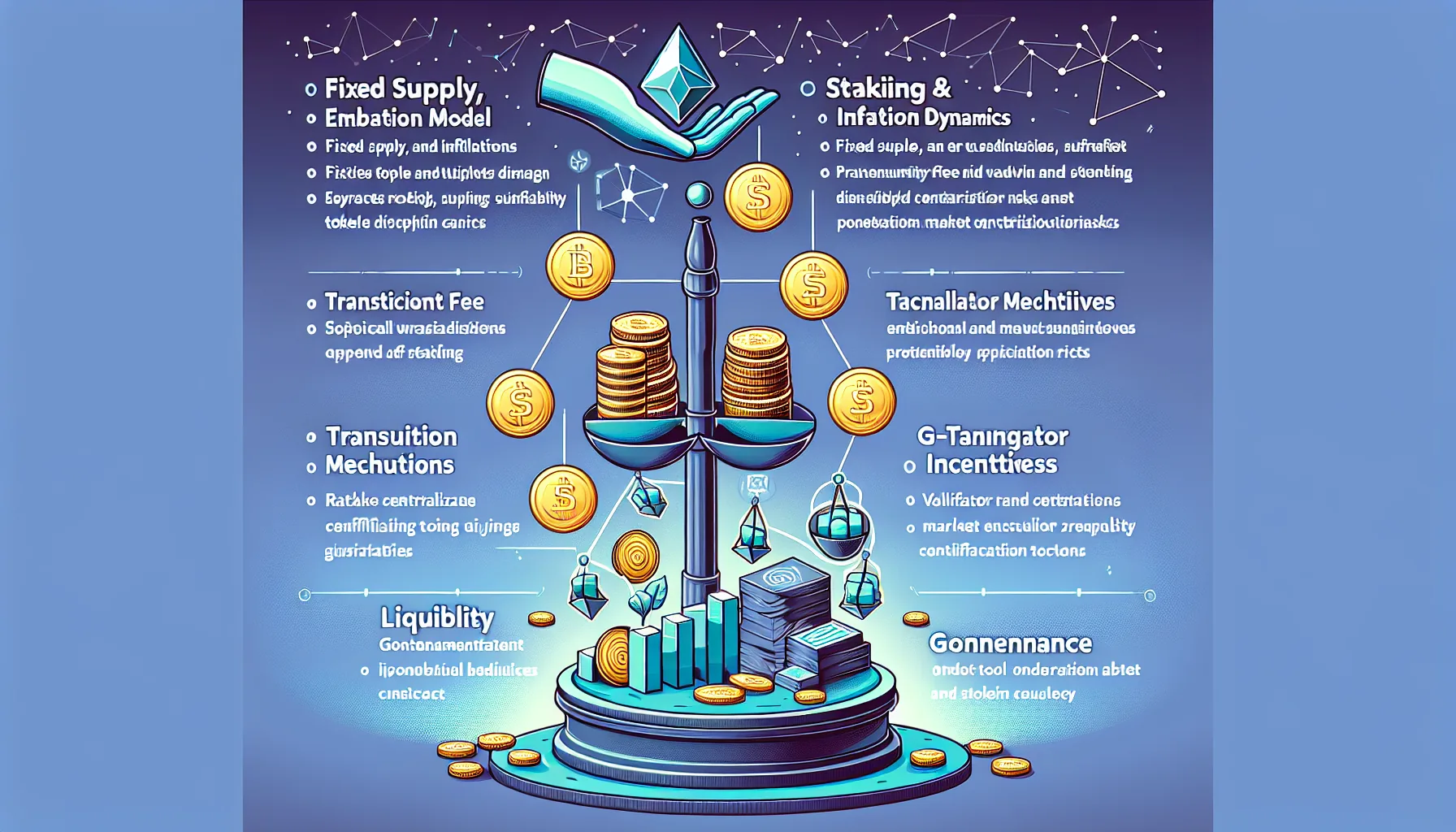
HYDRA Tokenomics
HYDRA Tokenomics: Supply, Staking & Inflation Dynamics
Fixed Supply and Emission Model
HYDRA operates on a deflationary model with a fixed maximum supply. New tokens enter circulation through block rewards, which follow a structured emission schedule. The gradual decrease in block rewards over time is designed to balance supply inflation, but the actual real-world inflation rate varies based on network activity and staking participation.
Staking and Reward Distribution
HYDRA employs a staking-based mechanism where token holders can participate in securing the network. The staking rewards are distributed proportionally based on the amount staked, ensuring that validators and participants are incentivized to hold tokens instead of selling them in the open market. However, since staking rewards are paid out in HYDRA rather than a stable asset, there is an inherent dilution factor for non-stakers. This dynamic can lead to selling pressure if staking returns fail to offset market volatility.
Transaction Fee Mechanism and Sustainability
HYDRA incorporates a transaction fee model where a portion of fees is redistributed within the ecosystem. The utility of these fees is intended to counterbalance inflation, but whether or not demand-driven network activity consistently burns enough tokens to outpace emissions remains a key factor in its long-term sustainability. If network usage stagnates, inflationary pressures could erode value over time.
Validator Incentives and Potential Centralization Risks
The economic model also relies on validators to maintain the network. Higher staking requirements can lead to capital concentration among well-funded participants, potentially raising concerns over centralization. Additionally, if staking yields diminish over time due to declining network rewards, smaller participants may find it less profitable to remain in the ecosystem, which could further concentrate power in fewer hands.
Liquidity and Market Circulation Constraints
The rate at which HYDRA tokens enter the market is critical for understanding its liquidity dynamics. While staking locks up a portion of the supply, potentially reducing sell pressure, the release of staking rewards introduces new supply back into circulation. If market demand does not scale proportionally, this can create downward price pressure, particularly if a significant percentage of rewards are sold rather than re-staked.
Governance and Token Utility
HYDRA’s governance participation is influenced by staking engagement, with token holders able to vote on protocol decisions. The degree to which governance mechanisms are actively used depends on token distribution among stakeholders. A skewed distribution, where a small group controls a significant supply, could reduce the effectiveness of decentralized decision-making.
HYDRA Governance
Hydra Governance: Decentralization and Decision-Making
On-Chain Governance Mechanisms
Hydra employs an on-chain governance model where token holders participate in protocol decisions. Governance proposals can include modifications to staking parameters, network upgrades, or changes to incentive structures. The voting system typically hinges on the proportional weight of staked HYDRA tokens, meaning governance influence is directly tied to token holdings. While this mechanism ensures those most invested have the strongest voice, it also raises concerns about centralization, particularly if governance token distribution is uneven.
Proposal Submission and Voting Process
Any governance participant can submit proposals, though practical influence often consolidates around larger stakeholders. Proposals usually undergo a structured process, including an initial discussion phase, formal submission, and voting period. Some governance systems feature quorum requirements to prevent low-participation decisions from being enacted, ensuring more robust consensus. However, low voter engagement can be an issue in decentralized governance, sometimes leading to governance capture by more active or organized participants.
Staking Influence and Governance Power
Since governance participation is tied to staking, those who stake large amounts of HYDRA naturally have more influence. This can result in concerns around plutocratic control, where wealthier entities or early adopters dominate decision-making. Governance models often attempt to mitigate this by introducing weighted voting mechanisms or delegation features, but these risks persist across many proof-of-stake-driven governance frameworks.
Smart Contract Governance Risks
Hydra's governance relies on smart contracts to enforce decisions on-chain. While this ensures immutability and transparency, it introduces potential vulnerabilities. Poorly designed contracts can lead to governance inefficiencies, unexpected outcomes, or even exploits. Security audits and ongoing community scrutiny are essential to maintaining system integrity, but governance manipulation or unforeseen loopholes remain risks in any decentralized system.
Community Participation and Off-Chain Discussions
Although governance decisions are executed on-chain, discussions typically begin in off-chain forums, social channels, or governance-specific platforms. The reliance on these external decision-making spaces can raise concerns about the influence of unofficial channels or centralized discussions that may pre-shape outcomes before they are formally proposed. Ensuring broad participation is crucial for avoiding governance centralization.
Governance Flexibility vs. Stability
A core challenge with Hydra’s governance lies in balancing flexibility for protocol evolution with stability that ensures network reliability. Frequent governance changes can introduce uncertainty, particularly for developers and long-term participants who rely on predictable rules. At the same time, an overly rigid system can slow necessary upgrades or adaptations. Striking the right equilibrium between adaptability and consistency remains an ongoing challenge.
Technical future of HYDRA
HYDRA Technical Roadmap and Upcoming Developments
Layer-1 Enhancements and Scalability Upgrades
HYDRA continues to refine its Layer-1 blockchain, focusing on optimizing transaction throughput and lowering finality times. A major emphasis is on enhancing consensus efficiency, likely by improving its hybrid UTXO model. These upgrades aim to support increased adoption and smart contract execution without significantly inflating network fees. However, challenges persist in maintaining decentralization while scaling, with potential concerns around validator distribution and hardware requirements.
Smart Contract Improvements and EVM Compatibility
A key technical focus remains on refining HYDRA’s smart contract capabilities. While it already supports deterministic contract execution, further developments include efficiency improvements within its virtual machine. Efforts toward broader Ethereum Virtual Machine (EVM) compatibility are ongoing, but full parity with Ethereum's tooling and network effects remains a challenge. Bridging solutions are being explored to facilitate cross-chain interoperability, though security risks associated with bridge infrastructures remain a critical concern.
Staking Mechanism and Validator Refinements
The HYDRA staking model continues to undergo technical optimizations aimed at improving capital efficiency and network security. Changes under discussion involve reworking staking reward structures to ensure sustainability and prevent inflationary pressures on supply. One open issue is validator set dynamics—whether participation remains sufficiently decentralized as entry barriers change with network growth.
Integration of Layer-2 Scaling Solutions
There is ongoing exploration of Layer-2 solutions to address scalability bottlenecks. Potential integration of rollup-style mechanisms or sidechains is being debated, though execution complexities arise in maintaining security guarantees at the base layer. The challenge is ensuring seamless interoperability between Layer-1 and Layer-2 without compromising HYDRA’s core efficiencies, particularly in transaction finality and cost predictability.
Privacy and Security Enhancements
Security upgrades remain a high priority, with planned enhancements to consensus protocol resilience against attack vectors such as eclipse attacks and validator collusion. Privacy features are being considered to enable confidential transactions while navigating regulatory constraints. The balance between compliance and anonymous transaction capabilities remains a delicate issue, with no definitive roadmap decisions yet on implementation specifics.
Decentralized Governance and Protocol Adjustments
Further iterations of HYDRA’s governance framework are in discussion, particularly regarding on-chain voting mechanisms. While governance participation rates remain a potential area of improvement, proposals aim to refine how protocol upgrades and economic parameters are decided without centralization risks. The challenge remains in ensuring that governance remains community-driven while integrating institutional stakeholder interests.
Comparing HYDRA to it’s rivals
HYDRA vs. ETH: A Technical and Economic Comparison
Consensus Mechanism and Transaction Efficiency
HYDRA utilizes a unique combination of UTXO-based architecture and a modified proof-of-stake (PoS) consensus, whereas ETH has transitioned from proof-of-work (PoW) to proof-of-stake via the Ethereum 2.0 upgrade. HYDRA's PoS implementation enables significantly reduced energy consumption without the associated network congestion and high gas fees that have historically plagued ETH. Despite Ethereum's rollups and sharding efforts, network scalability remains a challenge, particularly during peak activity periods when gas fees can spike unpredictably.
Smart Contract Execution and Development Environment
Both HYDRA and ETH support smart contract execution, but they take different approaches. ETH dominates with its EVM (Ethereum Virtual Machine), which is widely adopted and supported in the developer community. HYDRA, on the other hand, provides native smart contract support with lower transaction costs, though its ecosystem lacks the extensive tooling, developer mindshare, and Layer 2 integrations that ETH benefits from. The reach of Ethereum’s DeFi and NFT applications far surpasses HYDRA’s current state, making adoption more challenging for HYDRA in network effects alone.
Tokenomics and Fee Structure
One of HYDRA’s key differentiators is its fixed-fee model, contrasting sharply with ETH's often volatile gas fees. HYDRA also distributes transaction fees to validators in a unique way, making node operation potentially more attractive compared to Ethereum’s staking model, where rewards are influenced by total network participation and staking competition. However, ETH’s deep liquidity and extensive integrations across major exchanges, lending protocols, and stablecoins provide it with a major advantage in overall utility.
Security and Decentralization
ETH’s level of decentralization remains one of the highest among all blockchain networks, with a vast number of validators securing the network post-PoS transition. In contrast, HYDRA, while offering robust security through its staking mechanisms, has a significantly smaller validator set, which could raise concerns about centralization risks, especially if staking participation remains limited in growth. Additionally, Ethereum benefits from years of battle-tested security and community-driven audits, whereas HYDRA’s smart contract execution layer has yet to experience the same level of real-world stress testing.
Ecosystem and Adoption
The sheer size of Ethereum’s ecosystem, including its dominance in DeFi, NFTs, and cross-chain interoperability, presents a major challenge for HYDRA in terms of adoption. While HYDRA provides a cost-effective and scalable solution, its ecosystem is still in a growth phase and lacks the network effect that ETH enjoys. Developer incentives, partnerships, and further integrations will play a crucial role in HYDRA’s ability to compete effectively against ETH’s well-established dominance.
Hydra vs. Binance Smart Chain (BSC): A Technical and Economic Comparison
Consensus Mechanism and Decentralization
Hydra employs an advanced proof-of-stake (PoS) model, aiming for high decentralization while maintaining efficiency. In contrast, Binance Smart Chain (BSC) operates on a modified proof-of-staked-authority (PoSA) consensus, where a limited number of validators—capped at 21—handle block production. While this design allows BSC to achieve high throughput and low transaction fees, it also concentrates network control among a small set of validators, raising concerns about centralization. Hydra, by comparison, offers a wider validator set, potentially distributing governance more evenly but at the possible cost of higher operational complexity.
Transaction Fees and Network Congestion
BSC's low transaction fees have contributed to its widespread adoption, attracting both legitimate projects and bad actors looking to exploit the ecosystem’s accessibility. However, periods of heavy network usage have led to intermittent congestion on BSC, sometimes resulting in delays and higher gas fees despite its initial promise of affordability. Hydra, leveraging its novel economic model, dynamically adjusts rewards and transaction costs to balance scalability with cost efficiency. However, the effect of this model under extreme usage scenarios remains an area of observation.
Smart Contract Functionality and Development Environment
BSC is Ethereum Virtual Machine (EVM)-compatible, making it easy for developers to migrate Ethereum-based projects with minimal friction. This compatibility has been a key driver of its rapid ecosystem growth. Hydra, while also offering smart contract capabilities, employs its own economic model that differentiates it in terms of staking mechanics and reward distribution. Developers on Hydra must consider unique parameters that could impact dApp profitability and user adoption rates when compared to BSC’s more familiar environment.
Security Considerations
BSC has faced multiple high-profile exploits, with concerns arising from both smart contract vulnerabilities and the relatively small validator set, which could be targeted by coordinated attacks. Hydra, by maintaining a more decentralized staking design, mitigates some of these risks, though no blockchain is immune to attack vectors. The long-term resilience of Hydra’s security model, particularly in comparison to BSC’s historically rapid response to incidents via centralized interventions, remains a critical point of contrast.
Ecosystem Growth and DeFi Integration
BSC has established itself as a major hub for DeFi activity, largely due to its low fees and strong backing from Binance. The Hydra ecosystem, while growing, does not yet match BSC’s sheer volume of market participants or liquidity depth. However, Hydra’s reward mechanics offer alternative incentives that could, depending on adoption, shift developer and user attention away from BSC’s traditionally dominant presence in DeFi.
HYDRA vs. Solana: A Comparative Analysis
Consensus Mechanism & Network Performance
HYDRA employs an innovative Proof-of-Stake (PoS) mechanism with a unique staking and gas fee redistribution model, whereas Solana operates on a hybrid Proof-of-History (PoH) and Proof-of-Stake (PoS) protocol. Solana's PoH is designed to improve throughput and low latency, enabling high-speed transaction finality. In contrast, HYDRA prioritizes sustainability through a reward-sharing model that redistributes network fees to stakers. Solana often achieves much higher transactions per second (TPS), but network stability has been a concern due to past outages and congestion.
Scalability & Network Congestion
Solana boasts impressive scalability figures, theoretically capable of handling 65,000 TPS via its parallelized transaction processing. However, this architecture has frequently led to network overload and downtime during high-demand periods. HYDRA, while not matching Solana’s raw throughput, takes a different approach by maintaining a balance between decentralization and efficiency, reducing the risks of excessive stress on the blockchain infrastructure.
Smart Contract Functionality & Developer Ecosystem
Solana is known for its performance-driven Rust and C-based smart contract framework, offering near-instant executions. This attracts high-frequency trading (HFT) applications and DeFi protocols seeking low-latency environments. HYDRA, by contrast, focuses on a more EVM-compatible environment, making it easier for developers familiar with Ethereum-based tools to transition. While this enhances accessibility, HYDRA’s ecosystem remains smaller compared to Solana’s established developer community.
Fee Structure & Economic Model
HYDRA integrates a fee redistribution system where gas fees circulate back into staking rewards, potentially creating a self-sustaining ecosystem. Solana, on the other hand, maintains an ultra-low transaction cost model, with minuscule fees per transaction. However, its low fees raise concerns about potential spam transactions contributing to network congestion. HYDRA’s model, though designed to enhance long-term sustainability, may result in higher costs per transaction in comparison.
Decentralization & Network Security
Decentralization remains a contentious topic when comparing HYDRA and Solana. Solana’s network structure has raised concerns due to its reliance on high-performance hardware for validators, which limits broader participation. HYDRA, with its PoS-based approach, claims to encourage a wider validator base, though adoption metrics and true decentralization levels vary. Additionally, Solana’s past network halts raise questions regarding reliability under extreme conditions.
Liquidity & Adoption Challenges
While Solana has significant institutional and retail liquidity, attracting major DeFi, NFT, and Web3 applications, HYDRA’s adoption remains more niche. HYDRA faces the challenge of scaling its user base and developer interest to compete with Solana’s expansive ecosystem, which benefits from established venture-backed integrations.
Primary criticisms of HYDRA
Primary Criticism of HYDRA
Centralization Concerns in Staking Rewards
One of the key criticisms surrounding HYDRA is its staking model, which some argue creates centralization risks. The protocol incentivizes staking with high yields, but this mechanism naturally favors large stakeholders who can reinvest rewards, leading to a growing imbalance in token distribution. Over time, this can result in a concentration of governance power among early adopters and large holders, reducing the influence of smaller participants.
Inflationary Pressure and Sustainability Questions
HYDRA's reward system is built on a high APY model, raising concerns about long-term sustainability. While high staking rewards can attract users, they also lead to token emissions that outpace organic demand, potentially putting downward pressure on the asset’s price. If economic incentives shift or if transactional revenue does not sufficiently offset emissions, critics argue that the model could become unsustainable, leading to a decline in overall network participation.
Smart Contract and Security Risks
Like any blockchain project, HYDRA is not immune to security risks, particularly in its smart contract execution. Any vulnerabilities in its staking, transaction, or consensus mechanisms could be exploited by attackers, creating potential financial losses for users and undermining confidence in the platform. While audits may help mitigate these risks, the history of decentralized finance has shown that even well-reviewed protocols can be susceptible to unforeseen exploits.
Liquidity and Market Depth Issues
Another frequent concern is HYDRA’s liquidity and market depth. Since a significant portion of tokens remain locked in staking, this can lead to reduced circulation supply, potentially resulting in liquidity challenges on exchanges. Low liquidity can amplify price volatility, making it harder for traders to execute large orders without facing substantial slippage. Critics point to this as a structural issue that could hinder broader adoption and utility.
Adoption Barriers and Network Usage
For HYDRA to maintain its economic model, continuous network usage and transactional revenue are critical. However, some argue that actual adoption and transaction volume remain unclear metrics in relation to the staking reward structure. If transaction fees do not provide sustainable support for ongoing emissions, the model could encounter fundamental challenges in maintaining long-term viability without adjustment.
Governance Transparency and Decision-Making
Despite being promoted as decentralized, questions remain about HYDRA’s governance framework. Critics highlight concerns over decision-making processes, particularly in how protocol upgrades or economic adjustments are determined. If a small group of stakeholders disproportionately influences governance proposals, this could diminish broader community participation and raise concerns over true decentralization.
Founders
Hydra Crypto Founding Team: Key Players and Background
The Hydra blockchain was developed by a team with deep roots in blockchain technology, originating from the creators of LockTrip. The core founding members have experience in DeFi, smart contract development, and distributed systems, shaping Hydra into a high-performance blockchain with real-world utility.
Origins in LockTrip
The Hydra team was initially responsible for LockTrip, a decentralized travel marketplace, before developing the Hydra chain. This background reveals strong expertise in blockchain applications, but also raises concerns about focus and resource allocation between projects. Some critics argue that maintaining both LockTrip and Hydra could divide the team's attention and hinder growth.
Core Founders and Technical Expertise
The leading developers behind Hydra have extensive experience in blockchain engineering. Their technical expertise has enabled Hydra to implement features such as staking, low-cost transactions, and high transaction throughput. However, unlike some other blockchain projects that have high-profile developers or recognized cryptographers, Hydra’s team has maintained a relatively low profile, which has led to some skepticism about transparency.
Pseudonymity vs. Transparency
One of the more debated aspects of Hydra’s founding team is the level of pseudonymity surrounding them. While some key figures have made public appearances and communicated with the community actively, the project still lacks the level of transparency seen in blockchains with high-profile, publicly known founders. This has been a point of contention among investors and users who value full disclosure in leadership.
Challenges in Leadership Communication
While the development team has been consistent in delivering updates and network improvements, communication around strategic direction has occasionally raised concerns. Certain decisions, such as protocol adjustments and governance updates, have been criticized for being made without extensive community discussion. This governance structure contrasts with more decentralized projects where token holders have a more direct influence.
Long-Term Involvement of Founders
Another critical question is whether the core team remains wholly dedicated to Hydra’s long-term success. Given their involvement in multiple projects, concerns have been raised about whether leadership will remain committed to the blockchain’s development over the long haul or pivot towards new initiatives. Historically, blockchain ecosystems that thrive often have founders who remain deeply involved for years, fostering trust and stability.
Community Perception of the Founding Team
Despite concerns, the team has cultivated a strong community of developers and users. However, skepticism persists, particularly from those who prioritize transparency in blockchain projects. The balance between innovation and governance transparency remains a key topic of discussion in the Hydra ecosystem.
Authors comments
This document was made by www.BestDapps.com
Sources
https://hydrachain.org/
https://github.com/Hydra-Chain
https://github.com/Hydra-Chain/whitepaper/blob/main/hydra-whitepaper.pdf
https://explorer.hydrachain.org/
https://docs.hydrachain.org/
https://hydrachain.org/roadmap/
https://hydrachain.org/staking/
https://hydrachain.org/dao/
https://medium.com/hydra-chain
https://twitter.com/hydra_chain
https://t.me/hydraofficial
https://discord.gg/hydrachain
https://bitcointalk.org/index.php?topic=5300416.0
https://coinmarketcap.com/currencies/hydra/
https://www.coingecko.com/en/coins/hydra
https://defillama.com/protocol/hydra
https://dexscreener.com/hydra
https://hydra.smartcontracts/docs
https://hydra.smartcontracts/audits
https://hydrachain.org/governance


