History of HNT
The History of Helium (HNT): From IoT Focus to Tokenized Connectivity
Helium (HNT) emerged in 2013 with an ambitious vision: to build a decentralized, secure, and scalable network for the Internet of Things (IoT). Founded by Shawn Fanning, Amir Haleem, and Sean Carey, the Helium team sought to disrupt traditional telecommunications by creating a peer-to-peer infrastructure that incentivized users to host wireless network coverage. This vision, despite its appeal, faced numerous technical and operational hurdles in its early years.
Initially focusing on IoT, Helium's concept relied on "Hotspots," hardware devices that would act as both mining units and network validators. Users who operated these hotspots would earn HNT in exchange for providing wireless network coverage. However, the team faced significant barriers to entry, particularly around the hardware itself. Designing, manufacturing, and distributing Hotspot devices proved logistically challenging, slowing adoption in its early developmental stages.
When the Helium blockchain launched in 2019, it introduced a dual-token economic model: HNT and Data Credits (DC). HNT served as the reward for network participation, while DCs, pegged to a fixed dollar value, were consumed for utilizing the network's services. This model brought innovation to tokenomics but also garnered criticism for its potential dependency on speculative miners versus actual network utility.
One of the project’s most pivotal—and controversial—decisions was embracing a novel consensus mechanism called Proof-of-Coverage (PoC). PoC uniquely verifies Hotspot locations and their contribution to network coverage. While this was groundbreaking compared to traditional Proof-of-Work or Proof-of-Stake models, skeptics questioned its scalability and security implications, particularly in urban regions with dense Hotspot installations. Flaws in PoC’s design led to occasional reports of hotspot spoofing and reward gaming, casting doubts on the integrity of the network.
The network expanded significantly when Helium opened its ecosystem to third-party manufacturers in 2021. This decision reduced supply bottlenecks but also introduced hardware inconsistencies that frustrated users. Additionally, the rise in popularity of HNT mining led to a rapid surge in demand for Hotspot devices. Ironically, supply chain constraints during this growth phase left the most enthusiastic participants waiting months for hardware deliveries, which angered the community.
Helium’s history is filled with both innovation and turbulence, including debates over governance, token distribution fairness, and long-term IoT adoption. Despite its technical achievements, the project’s reliance on community-driven adoption has showcased both the strengths and vulnerabilities of decentralized infrastructure.
How HNT Works
How HNT Works: The Mechanics Behind Helium’s Network
The Helium Network Token (HNT) operates as the native cryptocurrency powering the Helium blockchain, a decentralized wireless infrastructure designed to support the Internet of Things (IoT). Unlike traditional blockchain networks focused on financial transactions or smart contracts, Helium aims to create a robust, people-powered wireless network that rewards participants for extending network coverage. Below is a precise breakdown of how HNT functions within this ecosystem.
Proof-of-Coverage (PoC)
At the core of HNT’s functionality lies its novel consensus mechanism, Proof-of-Coverage (PoC). Designed specifically for validating the reliability of wireless coverage, PoC leverages the physical location and communication capabilities of network participants, called Hotspots. These Hotspots verify network activity using radio frequency (RF) signals rather than high-energy-consuming computational work. The result is a low-energy, cost-efficient alternative to Proof-of-Work (PoW).
HNT Mining and Hotspot Nodes
Helium's peer-to-peer network relies on distributed Hotspot devices, which perform dual roles: building and maintaining network coverage while mining HNT. When a Hotspot device contributes to the network by validating coverage or transferring IoT device data, its operator earns HNT as a reward. However, an important consideration is that rewards are distributed algorithmically based on the quality of contributions, such as the consistency of coverage and the number of devices serviced. This incentivizes not just participation but also optimization of network performance.
Decentralized Data Transfer
HNT is also integral to the process of transferring small, encrypted packets of IoT data across the Helium network. IoT devices pay transaction fees in a separate token, Data Credits (DCs), which are non-tradable and tied to HNT. This model isolates data usage costs from market-driven token price volatility but introduces usability complexities. Users must burn HNT to mint DCs, a manual process that can deter non-technical participants.
Token Supply Dynamics
HNT operates on a deflationary reward model, introducing complexities for long-term token economics. The network implements a bi-annual halving process, reducing Hotspot mining rewards over time. While this scarcity mechanism incentivizes early adoption, it raises questions about participation sustainability as mining rewards decrease. Furthermore, the split between HNT rewards for network operators and the Helium developers may also be seen as controversial, introducing governance and transparency concerns.
Potential Limitations and Risks
Despite its promise, Helium’s reliance on physical hardware (Hotspots) creates potential scalability and adoption hurdles. Regulatory issues surrounding the use of specific RF frequencies in different jurisdictions could also impede global adoption. Additionally, the complexity of configuring and maintaining Hotspot devices might limit participation to technically skilled individuals, undermining the network's inclusivity.
Use Cases
Exploring HNT's Use Cases: Powering the Decentralized Wireless Network
The primary use case of HNT (Helium Network Token) is to serve as the economic backbone of the Helium Network, a decentralized wireless infrastructure designed to provide low-power connectivity for Internet of Things (IoT) devices. Through its innovative Proof-of-Coverage mechanism, HNT incentivizes users to deploy and maintain Hotspots, which form the building blocks of this network.
Enabling IoT Device Connectivity at Scale
HNT is predominantly utilized within Helium's LongFi architecture, which combines LoRaWAN protocol with blockchain to achieve cost-effective, low-bandwidth communication for IoT devices. Use cases range from smart agriculture—such as soil moisture sensors—to urban infrastructure, like air quality monitors or vehicle tracking systems. By leveraging HNT as an incentive mechanism, individuals and organizations can profit from contributing to the network’s growth while enabling IoT deployment that would typically require expensive cellular networks.
Fuel for Network Operations: Data Credits
A central use case for HNT is its conversion into Data Credits (DCs), a non-tradable token pegged to USD, which is required for transferring IoT data across the network. DCs are burned during usage, creating a deflationary pressure on the HNT supply. This burn-and-mint equilibrium is intended to stabilize the utility token's operational framework. However, critics argue that the reliance on IoT data limits scalability beyond its specific niche, which may restrict long-term adoption.
Tokenized Incentives for Hotspot Deployment
HNT rewards are distributed to Hotspot owners for providing network coverage, verifying Proof-of-Coverage, and facilitating data transfer. While this creates a strong incentive mechanism, there are concerns about the barrier to entry. Hotspot availability and costs have varied significantly, making it harder for small-scale operators to maintain profitability or compete with large-scale deployments.
Governance and Decentralized Infrastructure Funding
HNT also functions as a governance token within the Helium ecosystem, allowing stakeholders to vote on network proposals or changes. Additionally, HNT holders can participate indirectly in funding future network infrastructure upgrades or expansions. Yet, some have debated whether governance participation is adequately decentralized, as larger stakeholders often wield disproportionate influence in voting outcomes.
Challenges in Sustainability and Network Utility
Critics have pointed out that while the network demonstrates promise for decentralized connectivity, its reliance on IoT use cases has yet to achieve the mass adoption needed to justify the scale of its token model. Furthermore, disruptions like Hotspot saturation in highly populated areas or regulatory hurdles in certain jurisdictions may limit its utility and growth potential.
HNT Tokenomics
HNT Tokenomics: Exploring the Economic Framework of Helium
The tokenomics of HNT, the native cryptocurrency of the Helium network, centers around incentivizing the decentralized deployment and maintenance of a wireless infrastructure while balancing supply dynamics through careful design. Below, we delve into the key elements shaping HNT's economic model.
Supply and Emission Dynamics
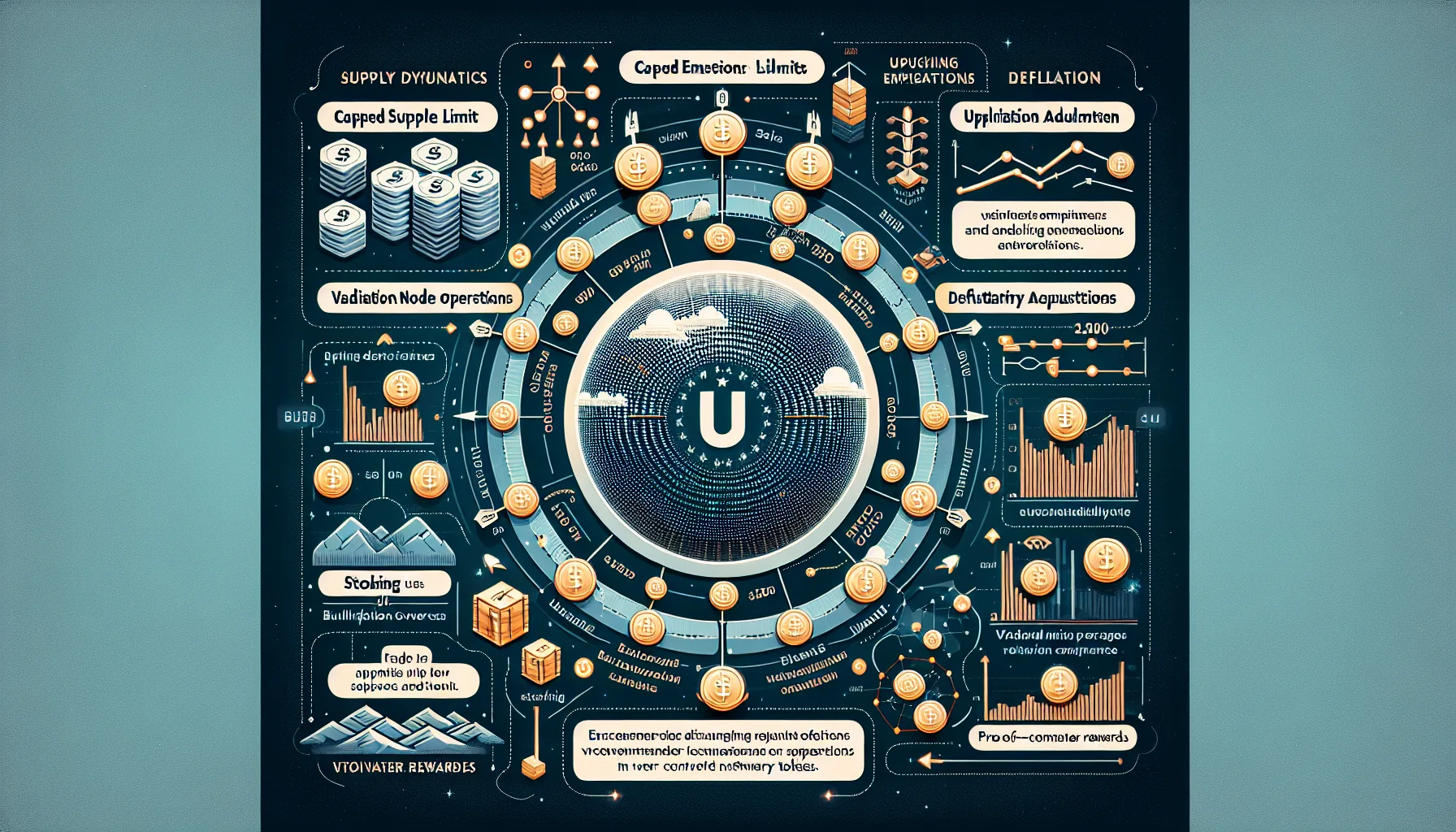
At its core, HNT operates on a capped supply model with a maximum limit of 223 million tokens. A recurring adjustment mechanism ensures a predictable and halving-based emission schedule over a 50-year period. Token emissions are distributed each epoch (approximately every 30 minutes), providing rewards to participants who contribute to maintaining the Helium network.
The token reward allocation is segmented among Proof-of-Coverage (PoC) participants, data transfers performed on the network, and infrastructure-related incentives such as validator node operations. As network functionality shifts and scales, emissions may undergo rebalancing to prioritize network sustainability and utility adoption.
Proof-of-Coverage and Reward Distribution
One of the standout features of HNT tokenomics is its reliance on Proof-of-Coverage (PoC), which incentivizes node operators (Hotspots) to verify wireless coverage contributed to the network. However, centralization concerns have emerged within the PoC framework, as hardware accessibility and geographical network density disparities give some operators disproportionate earning potential. Network clustering in urban areas has further compounded resource imbalances, leaving rural contributors less incentivized due to reduced PoC opportunities.
In addition, the dynamic reward structure creates variability in HNT earnings. Changes in token allocation percentages over time may reshape ecosystem incentives—both positively and negatively—affecting long-term participant engagement.
Deflationary Mechanics and Burn-and-Mint Equilibrium
To complement network utility, Helium employs a "burn-and-mint equilibrium" model. A portion of HNT is burned when converting tokens into Data Credits (DCs), a non-tradable utility token used for on-network transactions such as handling IoT device data packages. This mechanism establishes a deflationary pressure on HNT, aligning token demand with network activity levels.
However, the system's sustainability hinges on consistently growing network usage and demand for DCs. Critics argue that subdued adoption or reduced activity could result in reduced burning effects, undermining the equilibrium that supports tokenomics.
Staking and Validator Incentives
With the migration of network consensus to a Proof-of-Stake model, validators now play a crucial role in securing the Helium blockchain. Staking HNT entitles participants to a portion of network rewards. Nonetheless, concerns about validator-related centralization have surfaced, as increasing technical and financial barriers could exclude smaller participants from fully benefiting from the staking process.
HNT Governance
Governance of HNT: Decentralized Decision-Making and Challenges
HNT, the native cryptocurrency of the Helium Network, operates within a framework of decentralized governance aimed at aligning participant incentives and ensuring the growth of the network. This governance structure empowers the community to collectively decide on critical upgrades, modifications, and resource allocations vital to the ecosystem's development. However, the model is not without its complexities and challenges.
Helium Improvement Proposals (HIPs) as the Governance Backbone
The governance process for HNT relies heavily on Helium Improvement Proposals (HIPs). These proposals are a formal mechanism through which contributors can suggest changes to the protocol, network parameters, or operational strategies. HIPs are typically submitted by community members, discussed publicly, and put to a vote for implementation. This system provides a transparent and inclusive approach to shaping the network's future while mitigating risks of central authority.
However, there is an inherent challenge in ensuring equitable participation in this process. While HIP discussions occur on open platforms, technical jargon and the expertise required to understand the proposals may unintentionally exclude less technically proficient stakeholders. This poses a risk of decision-making being dominated by a small subset of participants, potentially undermining the broader decentralization goals.
Voting Mechanisms and Token Concentration Concerns
Voting in Helium governance is generally conducted on-chain, with proposals often requiring votes associated with HNT holdings. This token-weighted voting model creates concerns about governance power being concentrated in the hands of large token holders, such as institutional investors or early adopters. Such a structure can lead to disproportionate influence over key decisions, potentially prioritizing their interests over those of smaller participants.
While efforts have been made to encourage broader participation through community outreach and education, this systemic issue persists. Critics argue that without additional checks and balances, Helium’s governance system risks replicating centralized power structures within a supposedly decentralized framework.
Impact of Network Growth on Governance Dynamics
The rapid expansion of the Helium Network poses additional governance challenges. With the introduction of new use cases like LoRaWAN and 5G, the ecosystem must adapt its governance model to include a growing and increasingly diverse range of contributors. It raises questions about how effectively the system can scale to accommodate diverse interests while ensuring governance remains efficient and aligned with the network’s long-term objectives.
At the same time, growing network complexity might result in governance becoming slower or less adaptable, with key initiatives delayed due to endless debates or fragmented decision-making among stakeholders. This could impact HNT’s ability to remain agile in an increasingly competitive Web3 environment.
Technical future of HNT
HNT: Current and Future Technical Developments and Technical Roadmap
The Evolution of Helium Network Protocols
The Helium Network (HNT) continues to evolve, with technical developments aimed at enhancing scalability, decentralization, and usability. Initially built on a proprietary blockchain, Helium has transitioned to the Solana blockchain to address specific challenges such as limited transaction throughput and high operational costs. This migration enables the offloading of core network processing to a more performant Layer 1 protocol, with Solana's ecosystem offering enhanced programmability and faster smart contract execution. However, this move presents potential risks, including over-reliance on a third-party ecosystem and Solana's recent history of intermittent outages, which could propagate disruptions into the Helium Network.
Proof-of-Coverage Advancements: Addressing Protocol Efficiency
Helium’s unique Proof-of-Coverage (PoC) mechanism has undergone iterative improvements to optimize resource utilization and incentivize robust network participation. Recent updates have aimed to improve algorithms governing hotspot validation, reducing instances of spoofing and fraudulent activity within the network. The introduction of "Light Hotspots" has also streamlined the functionality of devices by shifting more computational workload to consensus groups. While necessary for scalability, these changes have generated concern among some community members about centralization risks introduced by more powerful validator nodes taking on significant network responsibilities.
Increased Focus on Data-Only Payloads
Helium's technical roadmap emphasizes prioritization of data transmission over traditional Hotspot mining rewards, aligning incentives more closely with actual network utility. This means reducing inaccurate PoC rewards while emphasizing "Data Credits," the network currency tied to IoT device interaction. Although this shift enhances the functional value of Helium, some miners have expressed dissatisfaction due to the reduction in earning potential, potentially impacting adoption rates.
Expanding Protocol Compatibility
A major focus of Helium's future technical roadmap includes expanding compatibility with other IoT network standards, such as LoRaWAN and 5G. By integrating more diverse types of networked devices, Helium seeks to position itself as an all-encompassing IoT connectivity platform. These initiatives, while ambitious, require resolving interoperability challenges and maintaining performance consistency across varied network protocols.
Decentralized Governance via HIPs
Helium Network Improvement Proposals (HIPs) remain a critical mechanism for community-driven governance. However, the increasing complexity of technical updates and the divergent interests within the ecosystem sometimes lead to delays in consensus. This friction could slow the deployment of critical upgrades unless mitigated by improved governance structures and clearer coordination among stakeholders.
Comparing HNT to it’s rivals
How Does HNT Compare to IoTeX in the Decentralized IoT Space?
The Helium Network Token (HNT) and IoTeX both aim to revolutionize the Internet of Things (IoT) landscape through blockchain technology, but their approaches to decentralization and infrastructure adoption set them apart in notable ways. While both projects emphasize building scalable ecosystems for IoT devices, the differences in architecture, consensus mechanisms, hardware dependencies, and community engagement define their respective competitive edges and challenges.
Network Architecture and Scalability
HNT operates on the Helium blockchain with its unique Proof-of-Coverage (PoC) consensus mechanism, which incentivizes hotspot operators for providing wireless network coverage. Helium’s focus is city-wide network deployment, primarily targeting LoRaWAN and 5G rollouts. In contrast, IoTeX employs a Delegated Proof-of-Stake (DPoS) consensus model, which is designed to ensure higher transaction throughput and lower network latency. While Helium’s architecture relies heavily on physical hardware for its deployment, IoTeX is more software-first, offering a decentralized infrastructure layer specifically for IoT developers.
This heavy reliance on physical deployment can limit HNT’s scalability in regions where adoption of its hotspot hardware is low or where regulatory barriers complicate rollouts. IoTeX’s solution, by comparison, is more agile, as its focus on software allows for creating and integrating IoT devices without requiring significant local infrastructure investment. However, this agility comes at the potential cost of sacrificing truly decentralized geographic coverage, which Helium’s model directly prioritizes.
Hardware Ecosystem and Market Reach
A key point of divergence lies in IoTeX’s emphasis on native IoT devices like its Ucam and Pebble Tracker. These devices are fully compatible with its blockchain, showcasing practical and immediate utility for its ecosystem. Helium, on the other hand, outsources much of its ecosystem to third-party manufacturers to build decentralized hotspot hardware, which has led to wider but less consistent coverage quality. Some operators in the Helium network have voiced concerns over supply chain bottlenecks for new hotspots or the maintenance requirements of existing units, which IoTeX bypasses due to its minimal reliance on hardware partners.
Developer and Community Engagement
IoTeX adopts a developer-centric approach by offering tools like MachineFi, which bridges IoT and decentralized finance (DeFi). This strategy directly appeals to dApp developers looking for IoT-compatible blockchain infrastructure with clear monetization pathways. Helium’s developer incentives are less emphasized and primarily focused on enlarging network coverage rather than creating dApps or additional functionalities within its blockchain ecosystem. This difference could hinder HNT's progress in attracting developers to expand its use cases beyond wireless coverage.
Final Thoughts on Architectural Trade-offs
While HNT has successfully demonstrated the viability of decentralized wireless networks, its reliance on extensive community hardware participation introduces scale and maintenance challenges. IoTeX, with its focus on IoT application development rather than physical network expansions, offers a potentially more developer-friendly alternative but sacrifices decentralized network coverage. These fundamental differences highlight the contrasting priorities of the two ecosystems, as well as critical areas where HNT might face competition or stagnation when measured against IoTeX's agility-focused model.
HNT vs MXC: A Focused Comparison of Decentralized IoT Networks
When comparing Helium (HNT) to MXC, one can identify overlapping ambitions in the realm of decentralized IoT and wireless infrastructure, but also distinct technological and operational differences. Both projects target IoT (Internet of Things) connectivity, yet their execution strategies and network architectures diverge significantly, offering unique strengths and challenges for each ecosystem.
Network Architecture: LoRaWAN Meets LPWAN
HNT’s network is primarily built on the LoRaWAN protocol, offering long-range wireless coverage and targeting low-power IoT devices. MXC, on the other hand, operates on LPWAN (Low-Power Wide-Area Networks) with a focus on their innovative “MXProtocol.” While both protocols serve a similar purpose of enabling efficient IoT connectivity, MXC’s MXProtocol introduces an enhanced layer of resource optimization. This ensures devices in the MXC ecosystem share bandwidth more efficiently, potentially leading to lower energy consumption and better network utilization. However, the centralized curation and implementation of MXProtocol rules have raised questions about the actual degree of decentralization in MXC’s ecosystem.
Token Utility and Governance
The HNT token is deeply intertwined with Helium’s Proof-of-Coverage (PoC) mechanism, rewarding operators of Hotspots for providing verifiable wireless coverage and encouraging organic network expansion. In comparison, the MXC ecosystem uses MXC tokens primarily to provide LPWAN miner payouts, stake for Supernode participation, and trade data credits. While MXC emphasizes its “Data Republic” concept—an open marketplace for IoT data trading—concerns have arisen around the network's reliance on major partnerships to drive adoption. This contrasts with Helium’s broader grassroots approach to deploying network infrastructure.
Hardware Accessibility and Mining Incentives
HNT mining via Helium Hotspots has garnered attention for its relatively low-cost barrier to entry and passive income generation model, making it highly accessible to individual participants. MXC’s reliance on proprietary hardware, particularly the M2 Pro Miner, introduces a point of friction. The initial investment required for an M2 Pro Miner is higher than most Helium hotspots, which can deter smaller participants. Additionally, MXC’s automated mining rewards dynamically adjust based on collected device fees, creating uncertainty regarding potential earnings.
Community and Ecosystem Growth
Helium's community-driven approach, bolstered by open-source development and a strong focus on decentralization, contrasts with MXC’s more centrally managed network growth strategies. Critics of MXC often point out the project’s dependency on corporate partnerships and vertically integrated hardware sales. These factors may limit the pace of decentralization and raise concerns about long-term scalability.
The architectural and operational differences between MXC and Helium serve as a reminder that decentralized IoT solutions are far from standardized, each presenting unique trade-offs for participants and developers alike.
Comparing HNT to NKN: Decentralized Connectivity in Focus
In the niche of decentralized wireless communication networks, both HNT (Helium) and NKN (New Kind of Network) present intriguing yet distinct approaches to connectivity infrastructure. While HNT focuses on building a distributed IoT (Internet of Things) network using LoRaWAN technology supported by physical hotspots, NKN aims to decentralize internet transmission altogether through its peer-to-peer networking protocol. Understanding the technical contrasts between these two projects shines a light on their respective strengths, as well as areas where HNT and NKN may encounter challenges.
Network Architecture: Specialized vs. Versatile
HNT’s Helium network is built upon a specific use case: IoT connectivity via compatible devices. Its blockchain incentivizes operators of physical hotspots to expand coverage for low-powered sensors and devices, which excel in industrial and environmental monitoring. NKN, on the other hand, has a broader target: replacing traditional internet infrastructure by creating a decentralized data transmission layer. Instead of hardware-based incentives, NKN nodes leverage idle internet bandwidth and computational resources to route data.
This difference highlights potential scalability concerns. Helium requires sustained growth in hotspot deployment to meet its infrastructure goals, whereas NKN’s software-driven solution can scale faster because it is not bound by physical hardware. However, NKN’s approach might struggle with adoption if bandwidth resellers or ISPs interfere with—or do not adopt—this decentralized model.
Token Utility and Incentive Structures
The usage of HNT centers on incentivizing hotspot operators and IoT-specific services like device connectivity via Data Credits (DCs). NKN’s token economics, in contrast, revolve around relaying data on its secure, private, and censorship-resistant network. Operators earn NKN tokens as rewards for maintaining transmission routes voluntarily. For HNT, the heavy dependency on compatible devices for demand may limit token circulation, while NKN’s dynamic use case of general data transmission routes is more adaptive but possibly competitive with current VPN and enterprise CDNs (Content Delivery Networks).
Challenges in Adoption and Integration
HNT has achieved substantial adoption within the IoT sector but faces hurdles in aligning hotspot rewards with actual network usage, especially in regions with over-saturated hotspot density. NKN, while conceptually groundbreaking, confronts challenges in gaining users and developers who prioritize ease-of-integration with existing internet-dependent technologies. Compared to the clear IoT focus of Helium, NKN must overcome a steeper perception barrier in its efforts to carve out relevance in mainstream internet infrastructure.
Ultimately, both ecosystems thrive on decentralization but differ fundamentally in scope and scalability, creating unique opportunities—and obstacles—when directly compared.
Primary criticisms of HNT
Key Criticisms of HNT: Challenges Facing Helium’s Crypto Ecosystem
Centralization Concerns in a "Decentralized" Network
One of the primary criticisms of HNT lies in the centralization concerns surrounding the Helium ecosystem. Despite being marketed as a decentralized wireless network, critics argue that the deployment and reward mechanisms disproportionately favor a small subset of stakeholders. Specifically, "early adopters" and insiders, such as Helium Inc. (now Nova Labs) and their investors, are seen to have received outsized rewards due to strategic hotspot placements during the project's infancy. This has sparked accusations that the network's design was skewed to benefit insiders at the expense of later participants and smaller-scale users who invested heavily in hardware.
Flaws in Proof-of-Coverage Mechanism
HNT's Proof-of-Coverage (PoC) consensus mechanism, which validates the usefulness of network participants, represents another significant point of criticism. While innovative, PoC has reportedly been exploited by certain actors engaging in "gaming" practices to maximize rewards without contributing genuine network value. For instance, the placement of spoofed or ineffective hotspots has allowed some entities to earn HNT rewards without enhancing network coverage or utility. These issues raise questions about the robustness of PoC in preventing dishonest behaviors and maintaining the integrity of the network.
Hardware Costs and ROI Challenges for Participants
The network’s heavy reliance on community-purchased hotspots has drawn criticism regarding hardware cost and return on investment (ROI). As the network has expanded and more hotspots have come online, rewards for individual participants have diminished significantly, with a growing number of operators failing to recoup their initial investments. This dynamic has fueled dissatisfaction among smaller-scale participants, raising concerns about the economic sustainability of the ecosystem for grassroots contributors.
Limited Network Utilization and Adoption Critiques
Another common critique of HNT arises from the perceived lack of substantial real-world uptake of the Helium network. Although Helium purports to provide a decentralized infrastructure for Internet of Things (IoT) devices, skeptics point to limited evidence that the network is widely used for meaningful applications. Without substantial usage from actual businesses or IoT device operators, the network risks being reduced to a speculative venture, with little tangible utility to justify its existence in the long term.
Governance Issues and Decision Transparency
Finally, questions have been raised about governance practices and the transparency of critical decisions within the Helium ecosystem. For example, decisions around tokenomics adjustments and network expansions have sometimes appeared to lack sufficient community input or clarity. This lack of inclusivity in governance has contributed to skepticism about whether Helium can credibly claim to be a fully decentralized project.
Founders
The Founding Team Behind HNT: Origins and Key Contributors
The Helium Network Token (HNT), the native cryptocurrency powering the Helium blockchain, traces its roots back to the innovative vision of Helium Inc., now known as Nova Labs. Founded in 2013, the original team was composed of Silicon Valley veterans with strong backgrounds in wireless technologies, hardware development, and software engineering. The primary founders were Shawn Fanning, Amir Haleem, and Sean Carey, each bringing a distinct skill set to the table that shaped the project from inception.
Shawn Fanning: Visionary With a Track Record in Disruption
Shawn Fanning, best known as the creator of Napster, came into the Helium project with a reputation for disrupting legacy industries. His experience in peer-to-peer systems likely influenced the decentralized architecture of the Helium Network. While Fanning’s involvement in Helium’s day-to-day operations diminished over time, his early contributions set the tone for its ambitious goal to decentralize wireless communication infrastructure.
Amir Haleem: Bridging Gaming and IoT
Amir Haleem brought a mix of gaming design expertise and a deep understanding of wireless technologies to the table. Previously involved in the pro-gaming scene and game development, Haleem injected a unique approach to Helium’s problem-solving framework, blending technical rigor with creative thinking. As CEO, Haleem played a pivotal role in steering the network toward targeting the IoT (Internet of Things) industry. However, critics argue that focusing on IoT in its early stages limited adoption, as IoT device proliferation has historically lagged behind more general-purpose connectivity use cases.
Sean Carey: Engineering Excellence
Sean Carey, the third co-founder, contributed heavily to the software and technical architecture of the Helium Network. His background in scalable systems and API development was critical in creating the infrastructure needed to support Helium’s decentralized wireless network. Carey’s departure from the company has raised questions in some circles about the long-term resiliency of the founding team’s vision. Nonetheless, his contributions remain foundational.
Challenges of a Founder-Led Model
Though the founding team brought considerable expertise and credibility, some critics have suggested that the Helium project has at times struggled with the typical pitfalls of founder-led models. Questions have arisen about centralized decision-making early in the project’s life cycle and whether the founders’ choices oriented too heavily around specific use cases rather than broader, potentially more profitable applications.
This nuanced background underscores the complexity of building HNT’s ecosystem, laying the foundation for both the successes and growing pains it would experience as the network expanded.
Authors comments
This document was made by www.BestDapps.com
Sources
- https://whitepaper.helium.com
- https://docs.helium.com/
- https://explorer.helium.com
- https://github.com/helium/
- https://app.hotspotrf.com/
- https://staking.helium.com/
- https://www.helium.com/
- https://developer.helium.com/
- https://lightpaper.helium.com/
- https://www.helium-foundation.org/
- https://status.helium.com/
- https://discord.gg/helium
- https://coinmarketcap.com/currencies/helium/
- https://blog.helium.com
- https://medium.com/helium-foundation
- https://www.reddit.com/r/helium/
- https://forum.helium.com/
- https://heliumip.com/
- https://www.heliumboard.com
- https://docs.heliumtracker.io/


