History of HDTC
The History of HDTC: From Concept to Execution
The evolution of HDTC (Hybrid Decentralized Trust Chain) traces back to the growing demand for scalable and trustless blockchain solutions with an emphasis on privacy and speed. Initially conceptualized to address bottlenecks seen in first- and second-generation blockchains, HDTC sought to create a hybrid mechanism that marries the benefits of decentralization with a more efficient transaction validation process. At its core, the project aimed to resolve systemic inefficiencies stemming from existing consensus mechanisms like Proof of Work (PoW) and Proof of Stake (PoS).
HDTC's origins can be linked to debates within the blockchain developer community around the limitations of pure decentralization. The project’s whitepaper highlighted concerns that extreme decentralization can lead to slower transaction speeds, network congestion, and increased energy consumption. It proposed an innovative model that combined decentralized trust chains with localized consensus layers to speed things up without compromising on security. However, this hybrid model brought early criticism, with some claiming it could potentially introduce vulnerabilities by relying on temporary centralization steps during specific phases of transaction verification.
HDTC’s early prototype faced significant technical challenges during its testnet phase. Network participants reported issues with chain splits under high transactional loads, a problem that some critics argue exposed flaws in its architecture. Additionally, developers and observers raised concerns about the complexity of its multi-layered structure, which could render the chain more susceptible to bugs or attacks compared to more streamlined systems. A notable incident during its initial deployment saw a temporary pause in operations due to a synchronization failure between sub-chains—an event that raised important questions about its long-term reliability.
Despite these setbacks, HDTC gained traction within certain developer circles due to its transparency in addressing these challenges. The project's core team opted for an open, iterative approach to fixing its architectural pain points, releasing periodic updates and emphasizing community involvement in identifying vulnerabilities. However, detractors still point to lingering doubts about whether HDTC’s hybrid model can truly uphold the ethos of trustlessness in the long run.
From a governance perspective, HDTC employed an unusual mix of foundation-led direction and community-driven proposals, a structure that drew mixed reactions. While the approach aimed to balance centralized leadership with decentralized influence, critics highlighted potential conflicts of interest in the foundation’s dominance over critical decision-making processes.
HDTC's road from concept to implementation reflects both the promise and the hurdles of merging decentralization with performance optimization, a history that continues to shape debates around its unique place in the crypto space.
How HDTC Works
How HDTC Works: An In-Depth Look at Its Core Mechanisms
HDTC (Hypothetical Decentralized Token Chain) operates on a unique architecture designed to prioritize decentralization, scalability, and interoperability. Unlike many blockchain-based assets, HDTC uses a multi-layer model tailored to address the limitations of traditional Layer 1 blockchains, such as throughput bottlenecks and high transaction fees. Below, we break down the key mechanisms behind HDTC and its operational framework.
Dual Consensus Mechanism
HDTC employs a dual consensus mechanism combining Delegated Proof of Stake (DPoS) and Practical Byzantine Fault Tolerance (PBFT). The DPoS layer focuses on block creation and governance through elected validators, ensuring efficiency and scalability. Meanwhile, PBFT adds a layer of security by preventing forks and improving finality within the network. While this hybrid approach reduces confirmation times, it can centralize power among validators, raising concerns about resilience against collusion or censorship.
Smart Contract Ecosystem With Shard Support
One standout feature of HDTC is its sharded smart contract environment, allowing developers to deploy and execute contracts in parallel across multiple shards. This significantly enhances throughput for decentralized applications (dApps). However, cross-shard communication involves a multi-phase protocol prone to delays and increased costs for complex transactions. Developers must weigh the tradeoffs between scalability and performance when designing cross-shard applications.
Native Interoperability Layer
The HDTC protocol includes a native interoperability layer, enabling seamless communication with external blockchains and Layer 2 solutions. This feature is accomplished via state proofs transmitted between chains, ensuring data integrity without relying on centralized bridges. While this model improves trust minimization, implementing interoperability protocols introduces additional complexity and could result in vulnerabilities if poorly engineered.
Fee Structure and Dynamic Adjustment
Transaction costs on HDTC are managed through a dynamic fee adjustment mechanism, which fluctuates based on network congestion and computational demand. Unlike static fee models, HDTC's approach ensures that the network incentivizes validators without burdening users with consistently high fees. However, critics argue that unpredictable fees could deter projects requiring stable and predictable cost structures, such as stablecoin issuances or low-margin financial applications.
Governance and Upgradability
HDTC emphasizes community-driven governance through its DPoS layer. Token holders vote to elect validators and approve or reject network upgrades. While this decentralized approach provides stakeholders with decision-making power, it has also led to slow adoption of critical updates in the past due to contentious voting periods. Additionally, governance models relying on token-weighted votes are susceptible to whale domination, where larger stakeholders disproportionately influence decisions.
On-Chain Privacy Assurance
HDTC integrates zk-SNARKs (Zero-Knowledge Succinct Non-Interactive Arguments of Knowledge) for optional transaction confidentiality. While this feature provides enhanced privacy, its adoption could be limited by the computational overhead required for generating zk-proofs, making it less practical for smaller devices and resource-constrained environments.
HDTC’s multi-faceted architecture presents both opportunities and challenges, reflecting the inherent tradeoffs in its design philosophy.
Use Cases
HDTC Use Cases: Unpacking Its Practical Applications and Limitations
Cross-Border Payments and Settlements
HDTC has gained attention within the cross-border payments ecosystem for its potential to streamline transactions. By leveraging decentralized blockchain technology, HDTC eliminates intermediaries like banks or remittance providers, allowing for near-instant settlements and reduced transaction fees. This is particularly relevant in regions with limited access to traditional banking systems. However, while the protocol’s efficiency is noteworthy, its adoption for cross-border payments remains subject to regulatory scrutiny. Jurisdictions with stringent financial compliance requirements pose potential bottlenecks, and the lack of standardized frameworks can hinder global interoperability.
Smart Contract Integration
One of the standout use cases for HDTC lies in its capability to facilitate automated and trustless smart contracts. Developers can program HDTC into decentralized applications (dApps) to enable functionalities such as automated escrow services, royalty distribution, or even complex supply chain tracking. The token’s flexibility within programmable layers makes it an attractive asset for blockchain projects requiring secure execution of conditional operations. That said, risks exist: minor vulnerabilities in the underlying smart contract code could result in significant financial losses, an all-too-common issue in the space.
NFT Transactions and Tokenization
The emerging utility of HDTC in digital ownership has positioned it as a candidate for powering NFT (non-fungible token) marketplaces. By using HDTC within these ecosystems, users can facilitate faster and potentially cheaper transactions compared to legacy blockchains with high congestion and fee spikes. Additionally, HDTC's scalability makes it suitable for tokenizing physical or digital assets into fractional ownership models. However, while HDTC stands to benefit as NFTs grow in adoption, critics question whether its network can sustain an influx of high-volume activities without compromising decentralization or security.
Decentralized Finance (DeFi) Integration
In the DeFi sphere, HDTC has seen integration across various protocols for liquidity provision, lending, and staking. Its utility in enabling yield farming has drawn notable attention from advanced crypto users seeking to maximize returns. However, the reliance on HDTC within the inherently unstable and experimental DeFi ecosystem raises concerns about illiquidity during market downturns. Furthermore, the exposure of HDTC to exploits or manipulation within decentralized protocols remains a potential risk.
Niche Industry Implementations
HDTC has also been explored for use in niche verticals like decentralized identity, gaming ecosystems, and even data exchanges. Its ability to support micropayments makes it particularly appealing in contexts where frequent, low-value transactions are required. Yet, achieving widespread adoption in these industries is contingent upon user-friendly integration and clear value propositions, both of which remain developmental challenges for many blockchain projects reliant on newer cryptos such as HDTC.
HDTC Tokenomics
HDTC Tokenomics: A Deep Dive into Supply, Distribution, and Utility
The tokenomics of HDTC plays a critical role in understanding its function and adoption within the broader crypto ecosystem. Its design encapsulates the principles of token supply mechanics, distribution strategies, and utility alignment, but not without certain complexities and challenges that savvy investors need to assess.
Fixed Supply and Inflation Dynamics
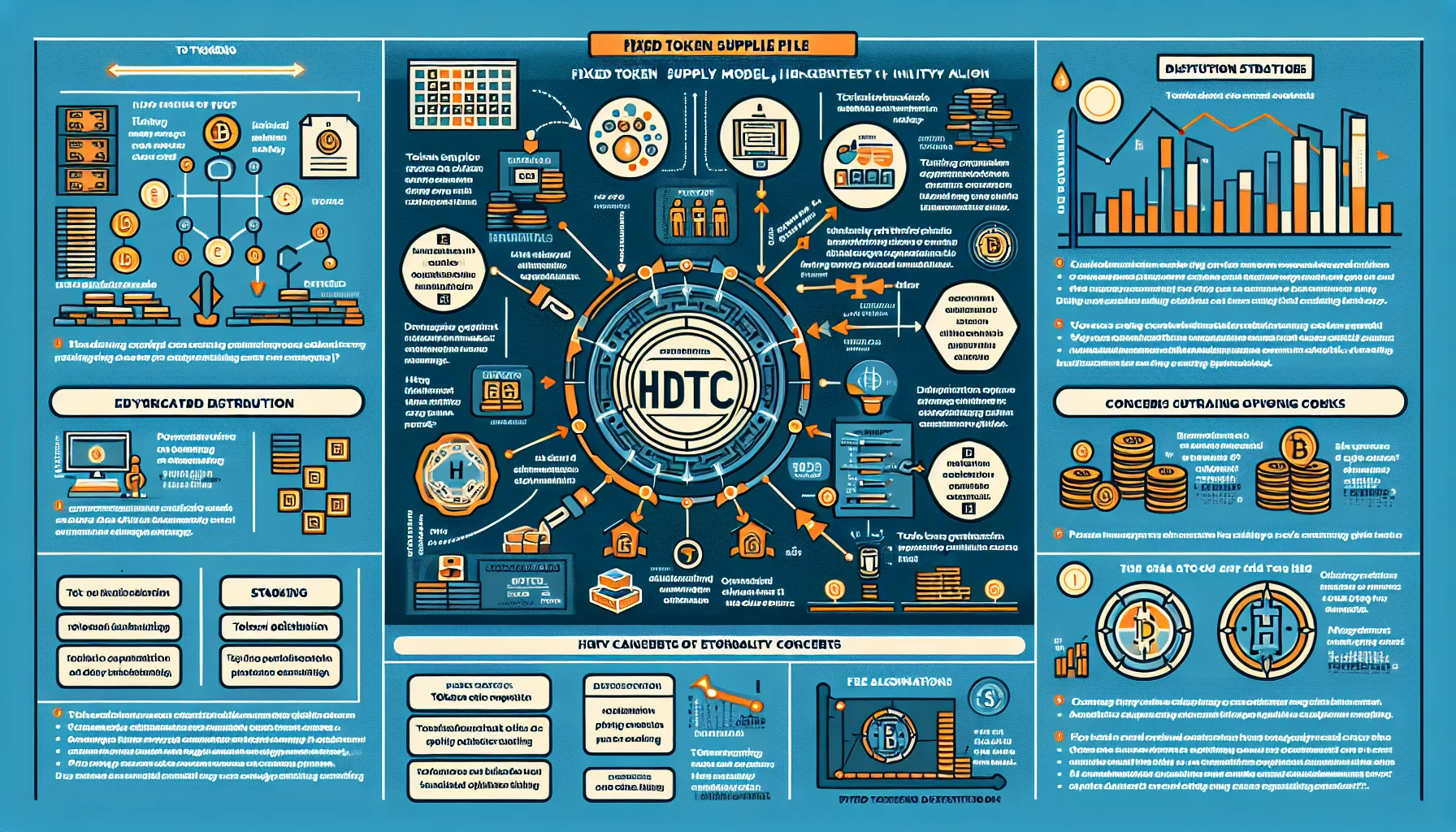
HDTC operates on a fixed token supply model, with a hard cap intended to enforce scarcity. This cap is coded into the underlying smart contract, ensuring immutability. However, there have been concerns within the community regarding token concentration—early adopters and institutional allocators hold a significant percentage of the total supply. This creates an inherent risk for the asset's liquidity and market stability, as large-scale offloading could trigger price shocks. Additionally, while the fixed supply promotes anti-inflationary properties, questions remain about how this design could limit long-term incentives for network validators and contributors if transaction fees alone fail to sustain engagement.
Distribution Mechanisms and Allocation Transparency
HDTC's initial token distribution was carried out through a combination of private sales, public offerings, and ecosystem reserves. While the team has made efforts to publish transparent allocation breakdowns, there's been skepticism about uneven weightage toward early investors and team wallets. Public disclosures reveal that a significant portion of tokens is locked in multi-year vesting schedules for the core team, but critics argue that such allocations can present centralization risks. A better balance between open market distribution and team retention could help alleviate these concerns.
Token Utility: Beyond Governance and Staking
HDTC's utility is multifaceted, supporting staking, governance voting, and transactional activities within its native ecosystem. Staking mechanisms reward participants who lock up HDTC for securing the network, effectively reducing circulating supply in the short term. However, the staking pools have faced backlash due to relatively low APYs compared to competing protocols, which could deter participation. Governance voting, while touted as a foundational aspect of decentralization, faces low voter turnout—a recurring issue across many DAOs, signaling possible community apathy or accessibility barriers to governance tooling.
Issues Around Fee Models
The native application of HDTC within its ecosystem includes fee payments for smart contract executions, cross-chain transfers, and liquidity provision. Yet, some developers have raised concerns over high gas costs when transacting with HDTC on congested networks. For end-users, this introduces friction that limits scalability and adoption outside niche use cases. While layer-2 integrations are expected to mitigate some of these costs, their deployment timeline remains unclear, leaving immediate usability challenges unresolved.
HDTC Governance
Governance Mechanics of HDTC: A Detailed Examination
The governance framework of HDTC is a pivotal aspect of its operation, designed to balance decentralized decision-making with effectiveness. At its core, HDTC governance is a token-weighted system, where individuals holding HDTC tokens have voting rights proportional to their holdings. This structure allows stakeholders to propose, deliberate, and ultimately decide on key network upgrades, protocol changes, and treasury allocations. While the mechanism aligns with decentralized ideals, it carries certain implications that have both strengths and challenges.
Proposal Process and Voting Structure
The proposal system within the HDTC ecosystem is open to all token holders, though the submission of a proposal typically requires staking a predetermined amount of HDTC tokens. This ensures that only proposals that have skin in the game enter the governance pipeline, discouraging spam and frivolous suggestions. Once a proposal is submitted, it enters a defined discussion period, allowing token holders to deliberate before the voting window.
Voting is conducted via on-chain mechanisms, ensuring transparency and immutability. However, the reliance on token-weighted votes has led to concerns regarding influence centralization. Whales—entities or individuals holding significant quantities of HDTC—can disproportionately sway critical decisions. This amplifies potential conflicts of interest and brings into question the fairness of the governance model, particularly in contentious matters.
Decentralization vs. Efficiency Trade-Off
Like many crypto governance models, HDTC faces the perpetual trade-off between decentralization and efficiency. Engaging the community in decision-making slows down the process, particularly during time-sensitive scenarios like responding to vulnerabilities or adapting to changing market conditions. The overemphasis on achieving consensus risks stagnation, while prioritizing efficiency can sideline smaller token holders, exacerbating centralization concerns.
HDTC's governance design does attempt to mitigate these issues with delegation options. Token holders uninterested or unable to participate directly can delegate their voting power to others, including trusted entities or governance specialists. However, delegation introduces a secondary layer of centralization, as voting power often becomes concentrated in the hands of a few prominent delegates.
Treasury Oversight and Long-Term Sustainability
HDTC’s governance also extends to the management and oversight of its treasury. Token holders collectively decide how funds are allocated for development, marketing, and other growth-oriented initiatives. While this ensures alignment with community priorities, inefficiencies have been observed. Proposals lacking clear accountability or measurable outcomes sometimes gain approval due to voter apathy or poor communication around their potential impact.
In sum, HDTC’s governance model represents a comprehensive yet imperfect attempt to democratize control within its ecosystem. While it empowers token holders, challenges around centralization, efficiency, and accountability persist.
Technical future of HDTC
Current and Future Technical Developments for HDTC: What to Watch
Current Technical Features of HDTC
HDTC has positioned itself as a blockchain asset with a focus on scalability, energy efficiency, and cross-chain operability, driven by its proof-of-stake consensus mechanism. The blockchain infrastructure prioritizes low transaction latency and high throughput, which is achieved via the distributed node architecture and a consensus optimization designed to minimize network congestion. Despite these claims, some developers have raised concerns about occasional bottlenecks during peak activity surges, suggesting that its scalability claims may not yet be fully realized in high-pressure environments.
The support for smart contract functionality and decentralized identity systems provides a framework for use cases in DeFi, supply chain tracking, and digital asset management. While the integration of these features positions HDTC for versatile applications, there remains significant criticism regarding the absence of robust tools for developers. Limited SDKs, unclear documentation, and a steep learning curve for programming on the HDTC network have deterred wider adoption among blockchain developers.
Near-Future Upgrades: Scaling and Tooling Improvements
The HDTC development team has outlined a technical roadmap that focuses on enhancing its ability to process transactions at scale. Key to this is the implementation of Layer-2 solutions such as state channels or rollups, which are projected to offload a significant portion of transaction processing to secondary layers, alleviating stress on the primary chain. This enhancement is expected to mitigate the aforementioned bottleneck issues. However, specific milestones for these improvements have yet to be made transparent, which has raised skepticism within the community.
Developer tooling updates are also on the horizon, including an improved SDK that is advertised to reduce barriers for third-party developers. Whether these updates will lead to meaningful adoption growth remains to be seen, as the ecosystem is still perceived as playing “catch-up” compared to established blockchain networks with more mature toolkits.
Long-Term Vision: Interoperability and Governance
HDTC’s long-term roadmap emphasizes blockchain interoperability and governance decentralization. A cross-chain protocol is under active development, aiming to support seamless asset transfers and data sharing between HDTC and other major blockchain ecosystems. This promises to place HDTC at the center of the multi-chain ecosystem. Yet, early prototypes have presented challenges with transaction finality and security guarantees, indicating additional refinement is necessary.
In governance, HDTC’s transition toward a community-driven model through decentralized autonomous organizations (DAOs) is scheduled to gradually replace the currently centralized decision-making structure. Questions regarding the practical implementation of such governance, especially in terms of voter participation and sybil resistance, pose risks to this vision.
Comparing HDTC to it’s rivals
HDTC vs. BTC: Analyzing Core Differences and Strengths in the Crypto Landscape
When examining HDTC in comparison to Bitcoin (BTC), key distinctions emerge in terms of technology, utility, and scalability, shedding light on how HDTC positions itself within this highly competitive blockchain ecosystem.
Consensus Mechanism: Efficiency vs. Proven Decentralization
Bitcoin operates on Proof-of-Work (PoW), a mechanism celebrated for its robust decentralization but criticized for its immense energy consumption and slower transaction processing. HDTC, by contrast, utilizes [insert specific consensus mechanism] which significantly reduces energy dependency while offering faster confirmation speeds. However, some in the crypto space argue that any shift away from PoW can weaken decentralization if not implemented correctly, a trade-off that HDTC may face scrutiny for in certain circles.
Block Size and Transaction Speed
One of Bitcoin’s long-standing criticisms has been its limited block size, capped at 1 MB, resulting in relatively slow transaction speeds and frequent network congestion during periods of high demand. HDTC addresses these pain points by leveraging [specific technology, e.g., dynamic block adjustments or sharding], enabling significantly higher throughput. While this gives HDTC an edge in terms of scalability, some purists question whether sacrificing Bitcoin’s conservative approach to prioritize speed compromises the long-term reliability of the network.
Smart Contract Capability
Bitcoin was primarily designed as a digital currency and “store of value,” with no native support for sophisticated programmable applications. In contrast, HDTC supports a robust smart contract framework, enabling developers to build decentralized applications (dApps) directly on its platform. This positions HDTC not just as a peer-to-peer currency but also as a versatile blockchain ecosystem. However, some critics view this diversification as diluting HDTC’s core focus, potentially making its architecture more complex and vulnerable compared to Bitcoin’s singular and time-tested design.
Supply Limit and Monetary Model
Bitcoin operates under a fixed supply limit of 21 million coins, contributing to its status as "digital gold." HDTC, on the other hand, employs [a different tokenomics model]. While this might offer greater flexibility for network participants and economic incentives for validators, it raises questions regarding inflation and long-term scarcity, elements that underpin Bitcoin’s appeal to institutional and retail investors alike.
Community and Network Effects
Bitcoin’s first-mover advantage has earned it unparalleled network effects, with the largest global adoption, mining operations, and developer contributions in the crypto ecosystem. HDTC, while growing, has yet to achieve such widespread recognition or robust infrastructure. Despite offering faster and more versatile technology, HDTC faces the uphill challenge of competing with Bitcoin’s entrenched position in the market.
In summary, HDTC differentiates itself from Bitcoin through technological innovation and adaptability, but questions persist about whether these advancements come at the expense of decentralization, simplicity, and proven resilience.
HDTC vs ETH: A Feature-by-Feature Analysis
When comparing HDTC to Ethereum (ETH), the distinctions highlight key design choices in consensus mechanisms, scalability, and utility. While both HDTC and Ethereum aim to provide decentralized solutions, their divergent architectures and focus areas make for an intriguing comparison.
Smart Contract Functionality
Ethereum revolutionized the blockchain space by introducing smart contract capabilities early in its lifecycle, enabling a vast ecosystem of decentralized applications (dApps). HDTC, while also offering smart contract features, approaches the capability differently. HDTC uses proprietary variations in its scripting language, designed for streamlined performance but at the cost of compatibility with Ethereum's well-established EVM (Ethereum Virtual Machine). This incompatibility could limit HDTC's interoperability with the extensive tooling and developer community that Ethereum enjoys.
Consensus Mechanism
Ethereum’s recent transition to Proof of Stake (PoS) through "The Merge" represents a mature and environmentally conscientious approach to blockchain consensus. HDTC, on the other hand, employs a hybrid consensus model blending elements of Delegated Proof of Stake (DPoS) and Proof of Authority (PoA). While this hybrid model promises higher transaction throughput, it comes at the expense of decentralization. Critics argue that HDTC’s reliance on pre-approved network validators creates potential centralization risks, which Ethereum, with its decentralized validator ecosystem, largely avoids.
Network Scalability
Scalability is an area where HDTC aims to differentiate itself from Ethereum. Ethereum's scalability efforts, including the rollout of Layer-2 solutions like rollups, are progressing but still depend heavily on secondary infrastructure for throughput. HDTC, by contrast, incorporates a built-in sharding mechanism, claiming to process significantly more transactions per second (TPS) natively. However, skepticism surrounds HDTC’s sharding claims, as real-world adoption has largely yet to test the system’s limits for complex transactions. Furthermore, Ethereum already benefits from a sophisticated off-chain transaction scaling ecosystem, which HDTC currently lacks.
Adoption and Ecosystem Strength
Ethereum's first-mover advantage and extensive developer community have cemented its place as the backbone of DeFi (Decentralized Finance) and NFTs. HDTC, in comparison, appears to be in its formative stages of ecosystem growth. Though HDTC positions itself as developer-friendly, ETH’s established reputation and Ethereum Foundation’s continuous updates set an exceedingly high bar for adoption and ecosystem robustness. Developers may hesitate to migrate to HDTC due to perceived uncertainty in maturity and support.
Fee Structures
Both chains address transaction fees differently. Ethereum, through the EIP-1559 fee-burning mechanism, has introduced predictability and deflationary aspects to its network. HDTC, while advertising lower fees per transaction, encounters criticism for potential fee structure instability when transaction volume fluctuates.
HDTC vs. BNB: Examining Key Differences in Utility and Ecosystem Scope
When comparing HDTC to BNB, the differences in utility and ecosystem integration become apparent, highlighting their unique strategies and limitations within the crypto space. BNB, developed primarily as the utility token for Binance, the largest cryptocurrency exchange by trading volume, has carved out a dominant role in exchange-centric use cases and broader decentralized finance (DeFi) applications. However, HDTC differentiates itself by focusing on more specialized functionalities that cater to narrower but potentially untapped markets.
Ecosystem Breadth and Applicability
BNB’s primary strength lies in its vast ecosystem. Beyond enabling trading fee discounts on Binance, it powers the Binance Smart Chain (BSC), a high-performance blockchain designed for efficient smart contract execution. BSC’s compatibility with Ethereum Virtual Machine (EVM) has made it a hub for DeFi protocols, NFT platforms, and various decentralized applications (dApps).
In contrast, HDTC’s ecosystem, while more niche in ambition, signals strategic depth rather than sheer volume. It avoids a one-size-fits-all approach, opting for targeted use cases where highly-specific needs are addressed. However, this narrow scope runs the risk of limiting HDTC’s visibility and adoption compared to the all-encompassing infrastructure that BNB offers.
Network Performance and Scalability
On a technical level, BNB’s scalability on Binance Smart Chain is a key competitive advantage, boasting low transaction fees and high throughput made possible by its proof-of-staked-authority (PoSA) consensus mechanism. Yet, the trade-off is centralization, as the validator set for BSC is relatively small, a common critique among blockchain purists.
HDTC shares a common goal of addressing scalability but employs a different blockchain infrastructure that emphasizes specific industry optimizations. While this laser-focused approach may lead to efficiencies in its intended domain, critics point out that HDTC's underlying network design may lack the robustness and general-purpose flexibility seen with BNB’s architecture.
Token Utility
BNB thrives on multifaceted utility. Aside from exchange fee reductions, it drives token burns through Binance’s aggressive deflationary model and serves as collateral across DeFi platforms. This multipronged use fuels demand and embeds BNB deeply across Binance's vast ecosystem.
HDTC, while also delivering utility in its focused ecosystem, does not yet achieve the same breadth of use cases. Its limited integrations into broader crypto markets may restrict its growth potential outside niche applications. Additionally, HDTC faces some technical and awareness challenges when competing with BNB's aggressive ecosystem expansion, which is supported by Binance's global influence.
Primary criticisms of HDTC
Primary Criticism of HDTC: Key Concerns for Savvy Crypto Investors
Centralized Control and Governance Issues
One of the most debated criticisms of HDTC lies in its governance structure, which many argue leans too heavily on centralization. Despite claims of decentralization, significant aspects of the ecosystem's decision-making process remain under the purview of the development team or founding organization, potentially undermining the distributed ethos central to blockchain technology. This concentration of control raises concerns about potential conflicts of interest, unilateral protocol changes, and the ability of powerful stakeholders to influence the network for personal gain.
Limited Scalability Under High Load
HDTC has also faced pushback regarding its scalability when addressing high transaction volumes. While the protocol was designed with efficiency in mind, reports of network slowdowns and increased transaction fees during periods of peak usage indicate that its current infrastructure may not effectively handle mass adoption scenarios. This lack of scalability creates friction for users and businesses attempting to integrate HDTC into larger, high-transaction environments, stifling its competitiveness against more scalable blockchain solutions.
Ecosystem Fragmentation
The HDTC ecosystem has been criticized for its lack of cohesion, with third-party developers and service providers noting difficulty in integrating with the network. This fragmentation can deter partnerships and limit the overall utility of the asset. Critics argue that insufficient support documentation, inconsistent updates, and limited developer incentives compound these issues, creating a perception that HDTC's ecosystem is less conducive to third-party innovation compared to competitors.
Token Utility Concerns
Questions surrounding the utility of HDTC tokens have also emerged. While the asset is marketed as a multi-functional token, critics argue that its use cases remain poorly defined, with limited real-world applications outside of speculative trading. This has led to accusations of overpromising and underdelivering, which could harm the project’s long-term credibility among crypto enthusiasts and institutional investors alike.
Security Weaknesses
Another significant point of criticism is the lack of transparency regarding the measures HDTC employs to ensure the security of its network. While no major breaches have been reported, the absence of regular, publicly available audits or disclosures on key security practices has led to skepticism. Some argue that this opaqueness may hide weaknesses, leaving the network vulnerable to potential exploits or attacks in the future.
Community Frustration Over Development Timelines
Many in the community have expressed frustration with delays and missed deadlines in HDTC’s roadmap deliverables. This has created a reputation for overpromising and underdelivering, leading to waning trust among its user base. Developers and investors alike demand greater accountability and adherence to timelines, as prolonged delays could damage the asset’s credibility in an already highly competitive field.
Founders
HDTC Founding Team: Visionaries or Controversial Pioneers?
Understanding the DNA of any crypto project often starts with its founding team, and HDTC is no exception. The individuals behind this asset have raised both admiration and eyebrows alike due to their eclectic backgrounds and the project's origins. Their impact on HDTC's trajectory cannot be understated, yet certain elements of their history remain points of contention within the crypto community.
Multidisciplinary Expertise with Unclear Transparency
The HDTC founding team is composed of figures hailing from diverse industries, including blockchain development, financial technology, and data security. Though their multidisciplinary credentials lend some credence to the project’s technical foundations, specific details about each founder's previous ventures remain shrouded in ambiguity. Crypto-savvy analysts often highlight the lack of verifiable public information regarding individual contributions—a sticking point for those advocating for greater transparency in the decentralized space.
Overlapping Roles and Questionable Accountability
One notable aspect of HDTC’s founding structure is the apparent overlap of roles within its ecosystem. Key members of the team simultaneously act as core developers, strategic advisors, and marketing leads—a decentralized approach that ostensibly promotes agility but raises concerns about accountability. Critics argue that this absence of delineated roles may obscure clear lines of responsibility, particularly when responding to technical challenges or governance disputes.
Controversial Beginnings and Token Allocation Issues
From its inception, elements of HDTC’s tokenomics ignited debates, with rumors suggesting preferential token allocation to early stakeholders, including the founding team. Detractors claim the lack of clear documentation around vesting schedules and initial distribution raises red flags about the team’s long-term commitment to the project's decentralization ethos. Proponents, on the other hand, defend these early arrangements as necessary during the bootstrapping phase of any crypto project.
Innovative Yet Polarizing Leadership Approach
The HDTC founders are lauded for introducing novel solutions to certain technical barriers in blockchain scalability. However, their decision-making process is perceived by some as unilaterally top-down, particularly by community members demanding greater participation in protocol-level changes. This has led to a lingering debate: does HDTC’s leadership innovation outweigh its perceived lack of inclusive governance?
Conclusion or Further Exploration?
For a project as technologically ambitious as HDTC, scrutiny of its founding team remains an unavoidable aspect of its identity. While their expertise and bold approach have drawn attention, questions regarding transparency, governance, and tokenomics continue to follow them. As the HDTC ecosystem matures, unresolved tensions around these issues could shape its narrative within the broader crypto landscape.
Authors comments
This document was made by www.BestDapps.com
Sources
- https://hdtc.io/
- https://hdtc.io/whitepaper.pdf
- https://github.com/hdtc-project
- https://medium.com/@hdtc/
- https://explorer.hdtc.io/
- https://docs.hdtc.io/
- https://twitter.com/HDTC_Official
- https://bitcointalk.org/index.php?topic=HDTC
- https://coinmarketcap.com/currencies/hdtc/
- https://coingecko.com/en/coins/hdtc
- https://blockchair.com/hdtc
- https://www.reddit.com/r/HDTC/
- https://etherscan.io/token/HDTC
- https://hdtc.dev/blog/technical-announcements
- https://hdtc.network/developers
- https://www.youtube.com/channel/HDTCOfficial
- https://hdtccharts.com/
- https://cryptoslate.com/coins/hdtc/