History of HDRN
HDRN Crypto Asset: Tracing Its History and Development
HDRN, an ERC-20 token designed to operate alongside the HEX ecosystem, has its origins rooted in an effort to create added utility for HEX users through staking dynamics. The development of HDRN was spearheaded by a founder (or team) who saw an opportunity to allow users to extract liquidity without compromising their HEX stakes. This ability to borrow and tokenize future yield struck a chord with a segment of the HEX community, further intertwining the assets while also introducing distinct operational challenges.
HDRN's introduction was notably unorthodox, bypassing the typical ICO or private funding routes. Instead, HDRN was distributed via a minting system that rewarded HEX stakers proportionally based on their existing stakes and behavior, incentivizing long-term HEX participation. This approach aligned well with HEX's ethos but also triggered skepticism among some in the broader crypto community who viewed HDRN’s distribution mechanism as favoring existing HEX whales, further entrenching power and liquidity in the hands of a few.
The protocol’s design presented an innovative but controversial feature: leveraging HEX stakes as collateral to generate HDRN liquidity. While this theoretically added flexibility for participants, detractors were quick to identify risks. Some argued that the introduction of HDRN complicated HEX’s simple staking model, adding layers of complexity and exposing users to higher risks of over-leverage. Additionally, its unique tokenomics and interaction with HEX raised questions about the long-term sustainability of such a tightly interlinked ecosystem.
Moreover, HDRN’s early development saw its fair share of growing pains. Security audits and smart contract risks became a focal point of concern in its initial phases, raising red flags among some crypto-savvy users about potential vulnerabilities in its novel staking and borrowing mechanics. Another issue revolved around the lack of clarity around regulatory pressures—specifically whether HDRN’s tokenized stakes and borrow/lend architecture could attract scrutiny from financial regulators.
HDRN’s history is also inseparable from its community. From the start, it garnered a niche but loyal following within the HEX ecosystem, but its relationship with the broader crypto world has often been contentious. Critics label HDRN as an over-extension of the HEX ecosystem, while proponents praise its ingenuity. This dichotomy has sparked debates about its place in the DeFi space and its role as a complementary or competing element to HEX’s original vision.
How HDRN Works
How HDRN Works: Unlocking Functionality and Utilization
HDRN (Hedron) is a protocol built on top of the HEX ecosystem, explicitly designed to provide enhanced utility to HEX stakers while integrating novel tokenomics. At its core, HDRN allows HEX stakers to mint HDRN tokens based on their HEX stakes, enabling features like liquidity extraction, encapsulated stakes, and a secondary market for HEX-based assets. Here's a detailed breakdown of how HDRN functions:
1. Minting HDRN Tokens
HDRN’s most fundamental mechanism is its ability to mint tokens tied to HEX stakes. When a user creates a HEX stake, it generates a unique HEX Stake Instance (HSI), which acts as the foundation for HDRN. The protocol calculates a user’s minting capacity based on their HEX stake’s length and size in T-Shares. For every day a HEX stake exists, a proportional amount of HDRN tokens becomes available for minting. However, users must explicitly claim their HDRN before the stake ends; otherwise, they forfeit unclaimed tokens.
2. Encapsulation of HEX Stakes
HDRN introduces the concept of encapsulated stakes via the HSI contract. Instead of creating a direct HEX stake, a user’s HEX is locked into a smart contract, which tokenizes the stake as an HSI NFT (non-fungible token). This encapsulation allows stakers to transfer, trade, or sell their stakes on secondary markets, providing an unprecedented layer of liquidity and flexibility that native HEX stakes lack. Encapsulation, however, introduces added complexity and reliance on external contracts, which may increase risk if the contracts are exploited or malfunction.
3. Borrowing Mechanism
The protocol enables users to borrow against their HSI stakes by using the future minting capacity of HDRN as collateral. Stakers can take out a loan in HDRN, which must be repaid (with interest) to avoid liquidation. If a loan defaults, the HSI becomes liquidated, and other users can bid on it through a native auction mechanism. While this borrowing feature adds utility, it also introduces potential risks for stakers, including over-leveraging and potential loss of their HSI to opportunistic auction participants.
4. Deflationary Components
HDRN incorporates a deflationary mechanism through the liquidation auctions. When a user bids for a liquidated HSI, they must pay in HDRN, which is subsequently burned, removing it from the token supply. This burn mechanism theoretically helps offset inflationary pressure from token minting. However, adoption of the auction function significantly impacts the deflationary potential—if auctions are underutilized, it could result in unchecked inflation.
5. Trust Assumptions and Smart Contract Risks
While HDRN operates on immutable smart contracts, the added complexity of HSI encapsulation and borrowing mechanisms presents layers of risk. Users must trust the integrity of these supplementary contracts and be aware of possible vulnerabilities or bugs. Additionally, since the protocol is tightly intertwined with HEX, HDRN faces systemic risks tied to HEX’s smart contract and its ecosystem dependencies.
6. Economic Implications of Unlimited Minting
One of HDRN’s more contentious design choices is the lack of a hard cap on token supply. Since minting is proportional to HEX staking behavior, large or long-term HEX stakes could mint outsized amounts of HDRN over time, potentially undermining token value if demand fails to match supply. This inflationary feature may incentivize short-term trading over long-term holding.
HDRN’s utility ultimately hinges on HEX staker adoption, its encapsulated stakes becoming a viable secondary market instrument, and the effective balancing of its inflationary and deflationary tokenomics. The nuances of minting, encapsulation, and liquidation all contribute to HDRN’s unique value proposition, while also introducing distinct trade-offs in terms of complexity and risk.
Use Cases
Use Cases of HDRN: Unlocking Functionality in the HEX Ecosystem
HDRN (Hedron) is a crypto asset designed to expand the utility and functionality of HEX stakes through decentralized finance (DeFi) mechanisms. Its primary use cases revolve around enabling greater liquidity, flexibility, and utility for HEX stakeholders, though it also raises certain considerations regarding long-term sustainability and complexity for users.
Tokenized HEX Stakes Through NFT Minting
One of the foundational use cases of HDRN is the ability to tokenize HEX stakes by converting them into on-chain Non-Fungible Tokens (NFTs). This process, available through the integration of HEX and Hedron, allows users to encapsulate their HEX stakes into transferable, tradeable assets. For stakeholders, this means instant access to liquidity that would otherwise be locked for the entire duration of the HEX commitment. These tokenized stakes can be sold on secondary markets, opening opportunities for users who need flexibility or wish to exit their position early. However, this mechanism could dilute the "time-locking" principle fundamental to HEX, which may have implications for the behavioral economics built into the HEX ecosystem.
Borrowing Against HEX Stakes
HDRN introduces staking-backed borrowing, where users can borrow HDRN tokens by advancing their stakes' mintable supply. This functionality enables users to unlock liquidity without ending their HEX stakes prematurely. Borrowed HDRN can be used in various ways, such as reinvestment or liquidity provision, but it does come with risks. The borrowing process is subject to liquidation if certain conditions, like not covering repayment or exceeding the stake value, are met. For users lacking a clear strategy for debt management, this can lead to loss of funds or reduced stake ownership, complicating the otherwise straightforward staking process of HEX.
Advanced Staking Incentives With HDRN
HDRN staking offers additional rewards to users, although this introduces complexities to the staking landscape. Users can stake HDRN directly to earn additional tokens while participating in auctions for tokenized stakes from liquidated positions. This incentivized system may appeal to advanced DeFi users but can alienate less-experienced participants due to its intricate mechanics and potential for misuse. Additionally, the interplay between HDRN and HEX staking ecosystems could lead to unintended market dynamics, such as oversaturation or reduced staking participation in HEX itself.
A Tool for Market Speculation
Finally, HDRN also serves as a speculative instrument within the broader crypto market. Its integration into DeFi protocols and secondary markets enables trading, arbitrage, and liquidity provision. However, this speculative activity can lead to volatility and misalignment between HDRN’s market value and its intended functional role, potentially undermining its reliability for HEX participants using it as a utility token.
By blending HEX-specific functionality with broader DeFi mechanisms, HDRN expands the ecosystem's possibilities, but users must weigh its complexities and risks carefully.
HDRN Tokenomics
HDRN Tokenomics: A Detailed Breakdown for Crypto Enthusiasts
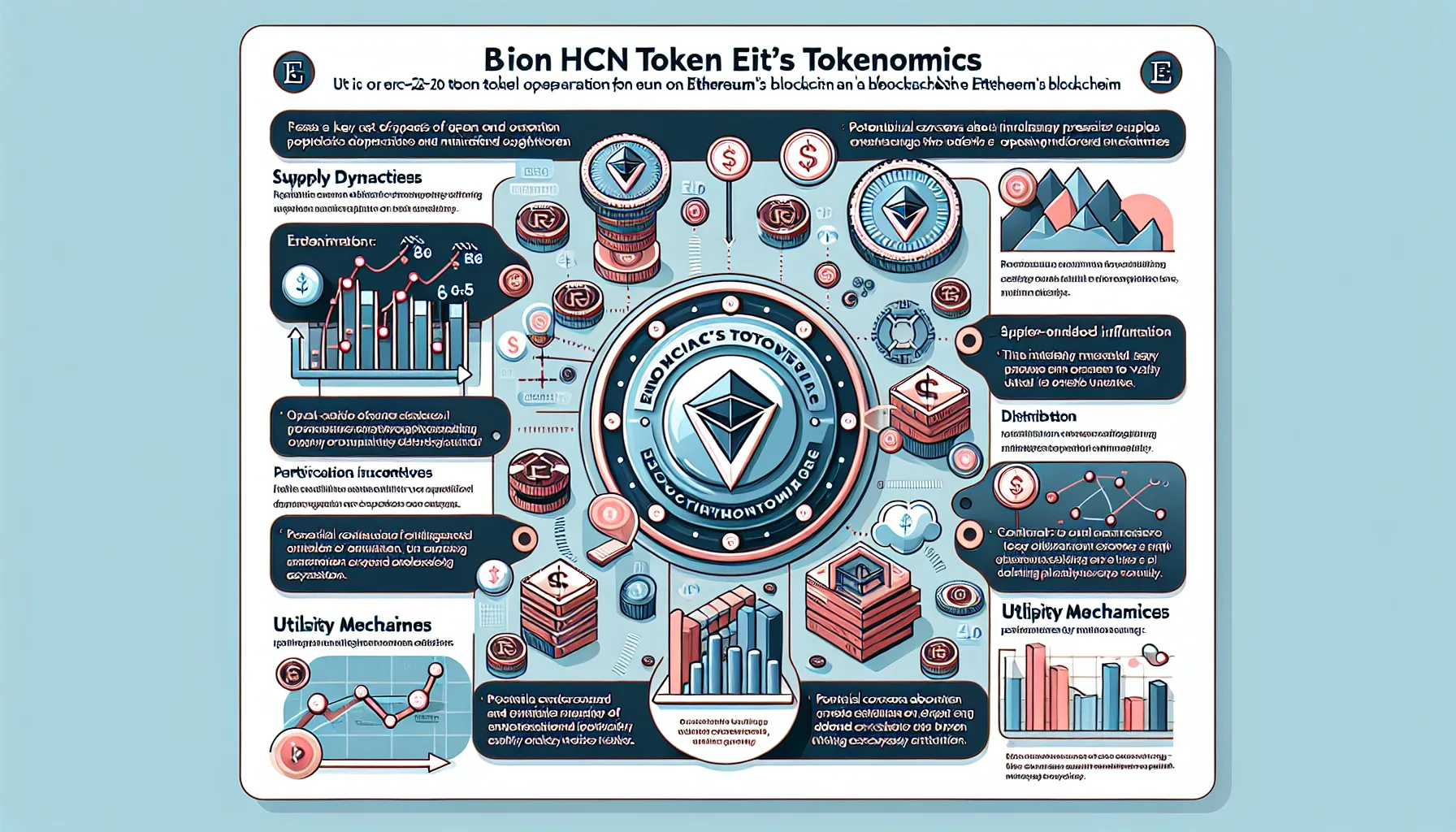
HDRN’s tokenomics structure presents a meticulously crafted framework that directly integrates with its underlying smart contract mechanics. As an ERC-20 token, HDRN operates on Ethereum’s blockchain, leveraging its smart contract functionality to execute its unique distribution and utility models. Below, we investigate the key aspects of its tokenomics.
Supply Dynamics and Minting Mechanism
HDRN employs an entirely mintable supply model, meaning the token is not pre-minted but created dynamically based on user interaction with associated smart contracts. Specifically, token minting is rooted in user participation within the ecosystem, which includes staking mechanics. However, this approach inherently creates an open-ended supply structure, which raises potential concerns about inflationary pressures. Without an absolute cap, critics argue that HDRN might face challenges in achieving long-term scarcity, a feature often viewed as essential to a token’s value preservation.
Distribution Model and Participation Incentives
The protocol incentivizes participants through its claimable minting mechanisms tied to time-locked staking assets. This ensures a meritocratic distribution of HDRN to those actively engaging with its ecosystem rather than speculative participants. However, due to its relativity-based minting tied to locked stakes, larger stakeholders often see disproportionately higher benefits compared to smaller ones, which has sparked some debate in the community about wealth centralization.
Utility Mechanics and Value Driver Integration
HDRN’s primary utility revolves around facilitating certain staking-related functionalities. For example, HDRN can be utilized to enhance liquidity within the ecosystem or to unlock additional benefits for stakers. However, one notable risk is its dependency on the health and participation level of its associated staking protocol. A decline in ecosystem activity could result in diminishing demand for HDRN, posing risks of devaluation due to oversupply relative to its real-world usage.
Potential Inflation Concerns
Given that HDRN’s minting model lacks a hard cap and is linked to time-locked parameters, inflation could theoretically spiral if a surge in staking emerges in tandem with aggressive minting activity. This inflationary potential, while mitigated by the time-locked mechanics and distribution pace, is an area of concern for those prioritizing a deflationary token model.
HDRN’s tokenomics invite significant discussion regarding its long-term sustainability, particularly in maintaining balance between incentivizing participation and avoiding an oversaturation of supply. Understanding these dynamics is essential before engaging with the token.
HDRN Governance
Governance in HDRN: Framework, Decentralization, and Challenges
Governance is a pivotal aspect of any crypto asset, and HDRN presents an intricate framework aimed at balancing decentralization, community input, and operational efficiency. While not conventionally structured like some DAOs (Decentralized Autonomous Organizations), HDRN employs mechanisms that emphasize community alignment and developer oversight, though not without its trade-offs.
At its core, HDRN’s governance leans on smart contract logic to handle key operational processes. This reliance ensures tamper-proof execution but also limits adaptability. Once deployed, certain governance-related parameters are locked in perpetuity, leaving no room for real-time adjustments to unforeseen situations. In highly volatile crypto ecosystems, this rigidity could hinder HDRN’s ability to evolve in response to emerging challenges or opportunities.
Unlike assets governed exclusively by token-based voting, HDRN does not currently implement systems for direct token holder participation in decision-making processes. While this avoids governance attacks like Sybil attacks—where bad actors accumulate large voting power—it also raises concerns about the distribution of power. Critics argue the lack of direct voting mechanisms leaves governance primarily in the hands of core developers or trusted third parties, creating a potential bottleneck for the democratization of control.
Another notable consideration is whether HDRN’s governance is sufficiently transparent. Changes or updates to the ecosystem are often communicated via announcements, but the decision-making process behind them isn't always open for scrutiny. Crypto-savvy stakeholders may find the lack of granular governance documentation or open forums for debate an oversight, as it diminishes trust even among a technically adept audience.
Decentralization, a cornerstone of most blockchain ecosystems, also sees mixed implementation in HDRN’s governance. While certain operational components are decentralized via immutable smart contracts, broader ecosystem choices may reflect centralized leanings. This hybrid approach aims to strike a balance but is likely to polarize opinions within the crypto-savvy community.
Lastly, governance in HDRN must grapple with scalability. As the ecosystem grows, maintaining stakeholder alignment will increasingly challenge existing frameworks. The absence of quadratic voting or other advanced governance mechanisms may limit inclusivity in larger communities, leaving smaller participants potentially sidelined.
In summary, HDRN’s governance framework prioritizes operational security and functionality but does so at the cost of adaptability, transparency, and inclusivity. While these trade-offs may suit its niche goals, they reveal critical challenges when viewed through the lens of community-driven governance principles.
Technical future of HDRN
HDRN: Current and Future Technical Developments and Roadmap
Smart Contract Enhancements for Scalability
HDRN has continuously focused on optimizing its smart contract architecture to enhance scalability and minimize gas fees. By integrating advanced contract modularity, HDRN has worked towards reducing computational overhead, which benefits users operating in high-traffic blockchain environments. However, a current limitation is its reliance on the Ethereum network, where congestion can still result in elevated transaction costs. Future plans include exploring cross-chain interoperability to potentially distribute activity across additional networks.
Persistent Staking Mechanics Optimization
HDRN’s staking mechanics remain a pivotal feature of its ecosystem. The project has been incrementally improving how stake terms are managed on-chain, ensuring less bloat in the contract state while still maintaining transparency and accountability. Nevertheless, complexity in understanding stake management for new users has posed adoption challenges. There are discussions in the development community about deploying a UX-focused update to address these pain points while preserving the robustness of HDRN’s staking model.
Layer 2 Integration Plans
The HDRN roadmap hints strongly at potential integration with Layer 2 solutions such as zk-Rollups or Optimistic Rollups. These technologies could alleviate Ethereum’s scalability constraints and offer HDRN users faster transactions at lower costs. However, implementation details are still sparse, and certain risks, such as reliance on off-chain data validity, may pose new challenges for ensuring decentralization and trustlessness.
Onboarding Developer Toolsets
Developers working with HDRN currently face hurdles due to limited documentation and insufficient SDKs. Addressing this gap appears to be part of the broader roadmap, with plans to release more streamlined, modular libraries to accelerate DApp development around the HDRN token. The lack of clear APIs and testing frameworks has held back third-party innovation, signaling an area of significant improvement for the project.
Quantum-Resistant Layer Discussions
Given increasing global discourse around the implications of quantum computing on cryptography, HDRN developers have shown interest in implementing quantum-resistant cryptographic schemes. While this would be a forward-thinking move, such upgrades can add scalability and performance tradeoffs, and the roadmap does not yet provide specifics on timelines or proposals for integrating these solutions.
Governance Mechanisms: A Work in Progress
Another area with room for development is decentralized governance. Current governance mechanisms in the HDRN ecosystem are relatively centralized, which has led to concerns about decision-making transparency. The roadmap includes a shift towards on-chain governance, but questions remain about balancing security, speed of updates, and the inclusion of smaller stakeholders in voting processes.
Comparing HDRN to it’s rivals
How HDRN Stacks Up Against HSI: A Rival Comparison
When analyzing HDRN in comparison to HSI, it's critical to understand how these crypto assets approach their respective niches within the decentralized finance (DeFi) ecosystem. While both operate within the HEX ecosystem and target users seeking profitability through tokenized HEX stakes, their mechanisms, utilities, and community implications differ considerably.
Core Functionalities and Smart Contract Design
HDRN's primary utility revolves around providing instant liquidity for HEX stakeholders through tokenized HEX stake copies that facilitate borrowing and lending. In contrast, HSI (HEX Stake Instances) operates not as a standalone token but as a smart contract that tokenizes HEX stakes into individual NFTs. The HSI mechanism allows HEX stakers to encapsulate and transfer their stakes, effectively providing an additional layer of flexibility within HEX staking without introducing a separate liquidity token.
This difference in design impacts user preference. HDRN offers a liquid, tradeable token tied to HEX stakes, appealing to those seeking active trading opportunities or fast liquidity. On the other hand, HSI's NFT architecture caters more to participants who value longer-term stake management with a focus on stake transferability rather than financial leveraging.
Community Adoption and Use Cases
HDRN's appeal comes primarily from its integration with HEX stakers who wish to unlock value through its borrowing market. However, some users have expressed concerns over HDRN's growing complexity due to its multi-layered approach involving token issuance, debt mechanisms, and liquidation auctions. This complexity could deter more casual or risk-averse users within the HEX ecosystem.
Conversely, HSI provides simplicity in terms of utility. By tokenizing HEX stakes as NFTs, it presents a clear and straightforward approach to stake flexibility. For this reason, users who prioritize the ability to "wrap and transfer" stakes without becoming involved in lending or borrowing often favor HSI contracts.
Potential Drawbacks and Risks
HDRN’s reliance on collateralized borrowing introduces systemic risks that may affect the token’s ecosystem over time. For example, any market instability could lead to large-scale liquidations in HDRN, introducing selling pressure and potential imbalances within the system. On the other hand, HSI’s non-tokenized approach eliminates liquidations entirely but relies on interaction with HEX natively, limiting its potential for expanded use cases.
This contrast underscores HDRN’s focus on liquidity-oriented trader incentives versus HSI's simplicity for staking purists. Both approaches cater to distinct user demands, but their respective design choices introduce trade-offs in terms of risk, usability, and ecosystem alignment.
HDRN vs. ICSA: A Comprehensive Comparison for Savvy Crypto Enthusiasts
When evaluating HDRN in comparison to ICSA, the distinctions between these two crypto assets become apparent in their design philosophy and utility scope. HDRN leverages its association with HEX staking ladders to facilitate the tokenization and management of HEX-backed stakes, while ICSA places a unique focus on staking mechanics designed to generate sustainable yields tied to HEX derivatives. Each asset, however, comes with advantages and limitations that merit closer scrutiny.
Utility Differences in Ecosystem Value
ICSA’s primary use case revolves around bolstering opportunities for HEX ecosystem participants through its integration with tokenized stakes and perpetual income streams. This offers niche functionality that appeals to experienced HEX users looking to diversify their earning potential without the need for excessive complexity. On the other hand, HDRN expands HEX’s flexibility by enabling users to interact with their stakes in a liquid and tokenized format, unlocking a new layer of portfolio mobility. However, there’s clear overlap in how both assets cater almost exclusively to HEX adopters, limiting their appeal to crypto users outside the ecosystem.
Staking Mechanics: Risk-Reward Tradeoffs
ICSA introduces staking mechanisms centered on maintaining an inflationary reward model incentivized through its liquidation auction process. This approach aligns strongly with users driven by speculative interest in HEX derivatives, yet it could be seen as both a strength and a weakness. On the positive end, staking ICSA creates compounding returns over time, but it necessitates ongoing commitment and reliance on the broader HEX ecosystem's health. HDRN, while benefitting from similar ecosystem dependencies, does not function as a staking-driven asset natively but still indirectly interacts with HEX staking models through encapsulated tokens (HSIs). For users prioritizing direct yield-generating options, this distinction could place ICSA as slightly more attractive, but with the tradeoff of increased dependency on inflationary tokenomics.
Technical Challenges and Limitations
A significant challenge for ICSA lies in its long-term sustainability. With its rewards structure closely tied to HEX-adjacent activities like HSI liquidations, future market behavior and participation become critical variables. Low activity within the HEX ecosystem could dampen ICSA’s utility and ROI potential, potentially exposing holders to declining interest. HDRN, while less affected by these specific dependencies, faces its challenges in maintaining adoption momentum and maintaining interoperability with a fluctuating HEX-centric community.
Overall, ICSA offers a more targeted use case steeped in rewarding HEX ecosystem participants directly but at the cost of limiting its broader scalability and independence.
HDRN vs. MAXI: Key Differences in Functionality and Utility
When analyzing HDRN, a central player within the HEX ecosystem, it’s essential to evaluate its standing against rivals like MAXI, a token focused on efficient staking and yield optimization. While both assets operate within the broader HEX-centric space, their functionality, tokenomics, and community utilities diverge significantly, creating distinct niches for adoption and growth while also highlighting certain areas of friction and competition.
Tokenomics and Design Philosophy
MAXI is structured around a pooled staking concept, where users collectively maximize HEX staking rewards through larger stake sizes and longer terms. This approach contrasts with HDRN's emphasis on tokenized HEX stake borrowing and liquidity creation. While HDRN enables the creation of HEX stake instances that can be encapsulated and later traded as NFTs, MAXI’s focus remains on streamlining the economic efficiency of HEX staking. The more consolidated nature of MAXI pools may appear attractive to those seeking simplicity in staking management, but it limits individualized strategies, a core feature HDRN offers.
HDRN’s design encourages a decentralized user approach to staking management by allowing participants to extract liquidity and manage HEX stakes via tokenized assets. However, this complexity might deter users who prefer MAXI's hands-off system, favoring communal staking metrics over personal stake manipulability.
Liquidity and Market Dynamics
One area where MAXI leverages an advantage is in its direct alignment with HEX's price trajectory, which can simplify valuation for participants focused solely on HEX yield metrics. Conversely, HDRN introduces new variables with its borrowing features and secondary NFT market, potentially complicating its adoption by those unacquainted with such mechanics. However, HDRN’s liquidity options provide flexibility for users seeking to access funds without ending their HEX stakes, a feature notably absent in MAXI.
While MAXI offers simplicity, it lacks HDRN's adaptability and liquidity innovations. This divergence has led to differentiation in user communities; MAXI appeals to those favoring predictability, while HDRN attracts participants seeking robust tools for HEX stake management.
Challenges and Critiques
HDRN's complexity presents both an opportunity and a challenge in its rivalry with MAXI. While MAXI’s all-or-nothing pool staking model has its limits, it avoids the nuanced risks and potential pitfalls of HDRN’s tokenized borrowing system. HDRN users must navigate concerns around overcollateralization, market liquidity for stake-backed NFTs, and the potential for misuse when participants over-leverage their HEX positions. Critics of HDRN argue that MAXI's streamlined model minimizes these risks for average users.
Primary criticisms of HDRN
Primary Criticism of HDRN: Key Issues Facing This Crypto Asset
Centralization Concerns
One of the primary criticisms of HDRN centers on the issue of centralization. Despite being marketed as a decentralized crypto asset, skeptics question whether the project’s ecosystem is genuinely distributed. A significant portion of the token supply is often allocated to founding entities, developers, or early adopters. This distribution model can raise valid concerns about the potential for central actors to exert outsized influence on governance, supply manipulation, or market dynamics. Critics argue that such centralization undermines the principles of decentralization and transparency that cryptocurrency projects aspire to uphold.
Lack of Broad Use Case Adoption
Another recurring critique is the absence of widespread adoption for HDRN’s use cases beyond its speculative value. While the asset may serve specific functions within its defined ecosystem, critics question whether its utility extends meaningfully beyond these boundaries. For many projects, broader adoption is key to ensuring long-term viability and trust within the crypto community. For HDRN, limited applicability outside niche use cases leads to suggestions that its value may remain isolated to a small cohort of users and fail to resonate with mainstream adoption efforts.
Dependence on Parent Ecosystem
HDRN’s tight linkage to its parent ecosystem has been a double-edged sword. On one hand, this dependence provides consistency and a clearer framework for HDRN’s role. On the other, critics point out that its reliance makes it vulnerable to the broader challenges, potential controversies, or technical vulnerabilities of the parent project. If users in the parent ecosystem lose confidence or migrate away, HDRN could face a cascading loss of relevance and utility.
Complexity for New Participants
HDRN’s technical design, particularly its interaction model within decentralized systems, has drawn fire for being overly complex and challenging for newcomers to understand. This perceived complexity can create barriers for onboarding, especially for users unfamiliar with advanced DeFi frameworks or staking mechanisms. Critical voices suggest that simpler design principles or enhanced educational resources could help the project foster greater inclusivity and adoption among less technical audiences.
Inflationary Concerns
Some detractors highlight HDRN’s inflationary mechanics as a cause for concern. While such models are often built to encourage participation and growth, they can also lead to questions about the long-term sustainability of the asset’s value. Continuous token minting, if poorly managed, might dilute the value of existing holdings and risk creating downward pressure on the market.
Security Risks in Smart Contract Infrastructure
Lastly, skeptics raise alarms about potential vulnerabilities in HDRN’s smart contract infrastructure. Like any blockchain-based asset, HDRN is exposed to the possibility of exploits or bugs in its code. Past incidents in the broader crypto landscape have underscored how devastating such vulnerabilities can be, leading to loss of funds or the erosion of community trust. For HDRN specifically, concerns linger over the thoroughness of its audit processes and ongoing security monitoring.
Founders
The Founding Team Behind HDRN: Key Insights for the Crypto-Savvy
When examining the crypto asset HDRN, understanding the origin and structure of its founding team provides critical context for its development and trajectory. HDRN (Hedron) emerged with the intent to complement and integrate with the HEX ecosystem, and its creation is closely associated with developers and figures already active in the decentralized finance (DeFi) space. However, as is common in crypto, significant anonymity surrounds pivotal team members, which some view as a double-edged sword in gauging transparency and accountability.
Anonymous Founders: A Common Crypto Theme
HDRN’s founding team, similar to HEX, maintains a degree of anonymity, which poses both advantages and challenges. Proponents of anonymity argue that detaching the project from specific individuals ensures decentralization and shifts focus toward the code and protocols themselves. In crypto, where trust is often centered around blockchain immutability rather than personal identities, anonymity is not uncommon. Yet, critics highlight several issues that accompany this approach. For instance, a lack of identifiable leadership may hinder mainstream adoption, or worse, limit accountability in the event of unforeseen problems or disputes.
Development and Deployment: Expertise in Smart Contracts
The team’s technical expertise is evident in HDRN’s architecture. Built to layer utility onto HEX stakes through features like tokenized debt-based instruments and NFT integration, HDRN required an intricate understanding of Ethereum’s smart contract ecosystem. This sophistication signals that HDRN’s developers weren’t novices and had a clear, focused understanding of market gaps within HEX staking. However, it remains unclear whether additional contributors were sourced beyond the core anonymous team or if any formal structure underpins the ongoing technical support for HDRN.
Community-Driven or Centralized Leadership?
With the team choosing not to reveal their identities, the reliance on community engagement becomes paramount. Open-ended questions arise regarding the centralization of decision-making, especially for upgrades or feature additions to the protocol. The code’s immutability may prevent concrete meddling in HDRN’s foundational mechanics, but changes that require community consensus could face friction without identifiable leadership driving direction.
Overall, HDRN’s founding team represents the familiar tension between crypto’s ethos of decentralization and the practical demands for trust and accountability. Whether the decision to remain behind the curtain enables the project’s independence or leaves users in the dark is a point frequently debated among the asset’s closest observers.
Authors comments
This document was made by www.BestDapps.com
Sources
- https://hdrn.dev/
- https://github.com/Hedroncrypto
- https://etherscan.io/token/0x3819f64f282bf135d62168c1e513280daf905e06
- https://medium.com/@hederaprotocol
- https://docs.hedron.network/
- https://coinmarketcap.com/currencies/hedron-hdrn/
- https://nomics.com/assets/hdrn-hedron
- https://defillama.com/protocol/hedron
- https://dappradar.com/ethereum/defi/hedron
- https://www.hex.com/resources/hedron/
- https://twitter.com/HedronCrypto
- https://www.coingecko.com/en/coins/hedron
- https://www.youtube.com/channel/UCmEZI9q3fNVnYlKCsG-zR1A
- https://t.me/HedronCrypto
- https://github.com/Hedroncrypto/Hedron/blob/main/whitepaper.md
- https://stakechecker.io/hedron
- https://app.hedron.network/
- https://rugdoc.io/project/hedron-hdrn/
- https://www.youtube.com/watch?v=SomeVideoLink
- https://www.reddit.com/r/HEXcrypto/comments/SomeDiscussion


