History of GRIN
The History of GRIN: Building Privacy with Mimblewimble
GRIN emerged as one of the first implementations of the Mimblewimble protocol, a blockchain design proposed in 2016 by an anonymous person under the pseudonym “Tom Elvis Jedusor.” The protocol introduced revolutionary privacy and scalability features, with GRIN’s development being driven by a group of pseudonymous contributors embracing the same ethos of anonymity as the protocol’s creator. From its inception, GRIN has centered on minimalism, privacy, and decentralization, avoiding hype-driven fundraising mechanisms like ICOs or pre-mines.
The GRIN blockchain officially launched its genesis block in early 2019 after an extended period of community-driven development and open discussion. Crucially, no official team, foundation, or centralized entity took control of GRIN; this was achieved to reflect its ideology of permissionless, decentralized participation. The project was funded through voluntary developer donations and community crowdfunds, reinforcing its neutral stance within the broader cryptocurrency ecosystem.
From the beginning, GRIN differentiated itself by adopting a deflationary monetary policy centered around a linear emission model with a permanent one GRIN per second issuance rate. This infinite emission schedule was designed to prioritize use as a medium of exchange rather than a store of value, explicitly rejecting deflationary pressures common in most other cryptocurrencies. The design decision polarized opinions in crypto circles, with some seeing it as a sustainable mechanism to facilitate constant usage, while others criticized it for failing to create digital scarcity.
The project faced substantial engineering challenges due to the nascent state of the Mimblewimble protocol at the time of launch. GRIN relies on a novel cryptographic structure called “Confidential Transactions,” which obscures the amounts involved in transactions while still enabling full validation. It also incorporates cryptographic “cut-through” techniques that prune historical transaction data, reducing the blockchain’s size and bolstering scalability. However, these same features have drawn criticism, particularly around GRIN's vulnerability to certain attack vectors, such as the lack of native shielding for transaction graph linkability.
Throughout its timeline, GRIN has been overshadowed by other privacy-focused coins like Monero and Zcash. Despite advanced cryptographic solutions, it has struggled with adoption and usability due to its relatively immature ecosystem, lack of mainstream wallets, and user-access challenges created by its reliance on interactive transactions. These challenges have sparked constant debate within the community regarding the trade-offs between privacy, efficiency, and accessibility in GRIN’s architecture.
How GRIN Works
How GRIN Works: Understanding its Mimblewimble Protocol
GRIN’s core mechanics revolve around its implementation of the Mimblewimble protocol, a revolutionary design that prioritizes scalability, privacy, and decentralization. At its foundation, Mimblewimble modifies how transactions are structured and processed, entirely different from traditional blockchain designs like Bitcoin or Ethereum.
Transaction Construction: Confidentiality Through Pedersen Commitments
GRIN utilizes Pedersen Commitments to obfuscate transaction details, including sender, recipient, and amounts transacted. Instead of broadcasting specific details on the blockchain, GRIN transactions are constructed as weighted “commitments,” ensuring inputs and outputs balance in a cryptographic manner. This approach ensures that value is preserved across all transactions without revealing sensitive data to third parties. Additionally, the use of one-time address keys for transactions further strengthens privacy by eliminating the reuse of static addresses.
Elimination of Explicit Addresses and Scripts
Unlike other blockchains, GRIN does not employ traditional addresses or script-based functionalities, such as smart contracts. Transactions are directly created between users through an interactive process. While this guarantees greater privacy and reduces functional complexity, it introduces usability challenges, mainly requiring both parties to coordinate, which can pose friction in certain scenarios.
Efficiency Through Cut-Through Technology
One of GRIN’s defining innovations is its implementation of a "cut-through" feature. This process removes intermediary transaction data while preserving essential cryptographic proofs. For example, in a standard blockchain system, the entire transaction history is stored to maintain validity. With GRIN’s cut-through mechanism, redundant transaction information is pruned from the ledger, leaving only the final balances. This drastically reduces the blockchain’s size, making it more scalable and storage-efficient compared to legacy systems.
Challenges With Scalability Trade-offs
Despite GRIN’s cut-through mechanism, scalability concerns persist. The blockchain size may grow slower than conventional models, but verifying the full chain still requires nodes to process all historic transactions. This means every node must perform the same intensive computations, which can be a limiting factor for resource-constrained participants.
No Supply Cap: Inflation as a Policy
GRIN has no hard supply cap, unlike Bitcoin, which implements a deflationary model. Instead, GRIN introduced a consistent emission rate of one GRIN per second. While this ensures miners continue to earn rewards over time, it also creates ongoing inflation. In contrast to capped cryptos where scarcity dominates value, GRIN’s supply model has sparked concerns among users who fear its inflationary nature may limit long-term price stability or speculative interest.
By focusing on privacy and minimalism, GRIN’s architecture offers unique advantages but also comes with notable usability complexities and economic considerations.
Use Cases
Exploring GRIN's Use Cases: Privacy, Scalability, and Lightweight Transactions
GRIN, a privacy-focused cryptocurrency based on the Mimblewimble protocol, presents several distinct use cases that cater to blockchain users seeking confidentiality, scalability, and efficiency. The transparent yet private nature of GRIN’s design positions it as a niche option within the cryptocurrency ecosystem.
1. Private Peer-to-Peer Transactions
One of GRIN’s primary use cases is facilitating private peer-to-peer transactions. By leveraging the Mimblewimble protocol, GRIN obscures transaction details such as amounts and addresses while verifying transactions using its unique cryptographic approach. This characteristic appeals to users who prioritize confidentiality in their digital financial interactions but seek transparency at the protocol level. However, it's worth noting that this strong emphasis on privacy has led to concerns about regulatory scrutiny and the perception that it might foster illicit activities.
2. Scalability for Decentralized Payments
GRIN’s lightweight blockchain structure provides a compelling value proposition for scalability. Unlike traditional blockchain ledgers, which grow linearly with every transaction, GRIN’s implementation utilizes cryptographic pruning and compact proofs, allowing historical data to be compressed. This feature enables the blockchain to remain relatively small, making it more viable for decentralized payments and long-term use without requiring excessive storage or computational resources. Critics, however, argue that GRIN’s adoption has been slower than other scalability-focused cryptocurrencies, which limits its visibility and utility in real-world payment scenarios.
3. Open-Source Experimentation
The ethos of GRIN as a community-driven, open-source project allows developers and researchers to experiment with its technology for various applications. For instance, GRIN's implementation of Mimblewimble can be explored for building privacy-preserving sidechains or creating secure messaging protocols. Nonetheless, developers may face challenges due to GRIN’s relatively niche adoption and lack of financial incentives for miners, which could affect the ecosystem’s overall growth.
4. Lightweight Store of Value
GRIN’s deflationary emission model, which avoids a capped supply, gives it potential utility as a lightweight store of value. The continuous coin issuance incentivizes long-term participation while minimizing wealth concentration among early adopters. That said, this model may deter individuals who are accustomed to cryptocurrencies with fixed supplies, raising concerns about GRIN’s ability to maintain scarcity-driven value over time.
In conclusion, GRIN’s use cases revolve around its privacy-first design, scalability innovations, and developer-centric ethos. While these features address specific pain points in the crypto space, limited adoption, regulatory uncertainties, and miner economics highlight areas of concern that could impact its broader usage.
GRIN Tokenomics
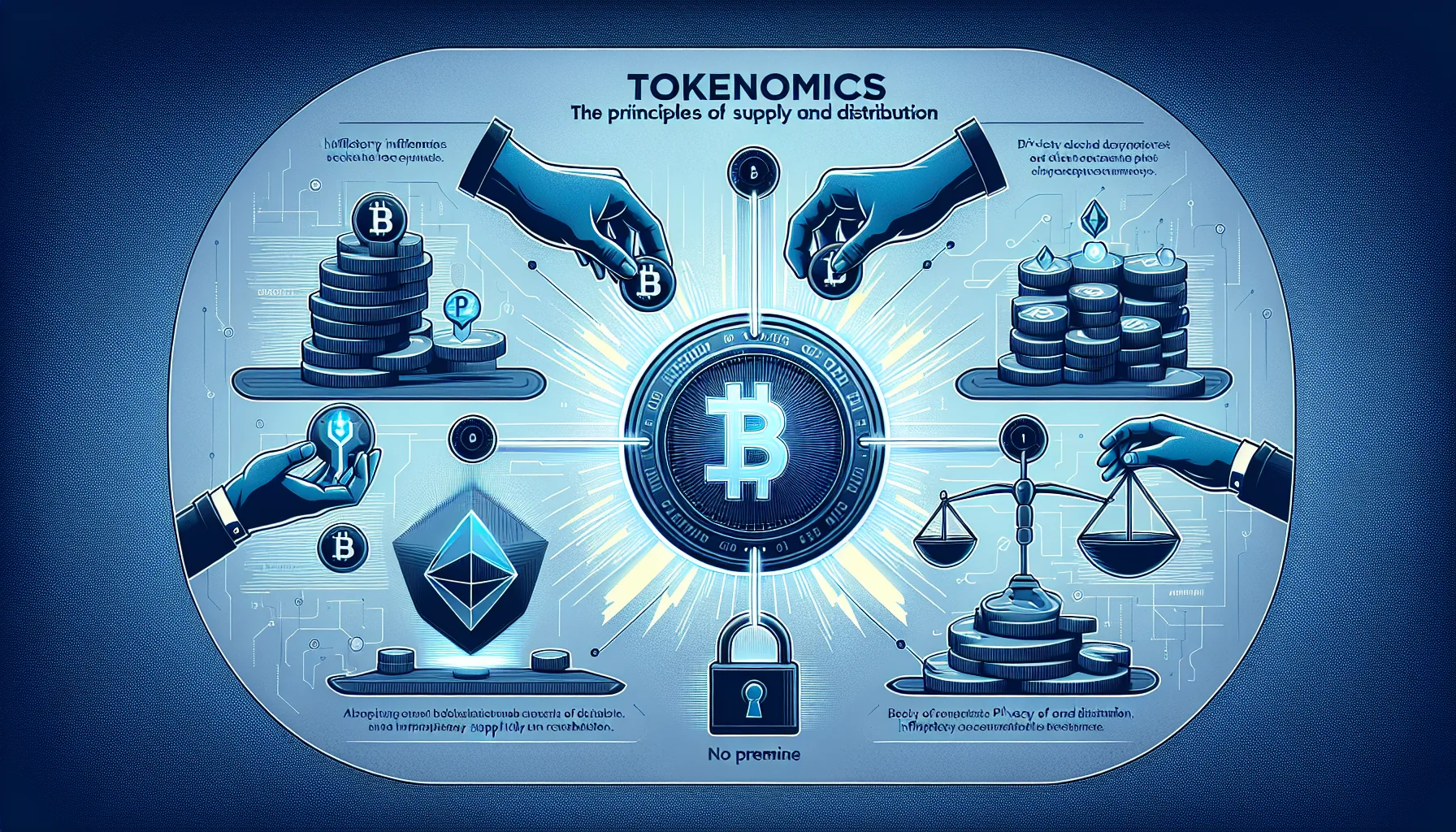
GRIN Tokenomics: A Deep Dive into the Principles of Supply and Distribution
GRIN operates with a foundational approach that prioritizes simplicity and fairness in its tokenomics. At its core, GRIN employs an inflationary supply model, which diverges from the capped-supply paradigm seen in many other cryptocurrencies. This design decision is rooted in Grin's ideological alignment with the MimbleWimble protocol, emphasizing privacy, decentralization, and long-term sustainability over speculative scarcity.
Emission Rate and Supply
The protocol issues new GRIN tokens at a fixed rate of one coin per second, equating to roughly 60 GRIN per minute. Unlike Bitcoin's halving mechanism or Ethereum’s transitioning monetary policy, GRIN's issuance schedule is linear and perpetual. This design creates an uncapped total supply, which leads to predictable yet diminishing inflation over time as a percentage of the circulating supply. While this provides resistance to an early wealth concentration effect commonly found in premined or capped-supply models, critics argue that the lack of a finite cap could limit its attractiveness as a store of value for certain investors.
Fair Launch and Absence of Premine
GRIN’s launch avoided any form of premine, ICO, or developer tax structure. All GRIN in circulation have been issued through proof-of-work mining rewards since the genesis block. This approach underscores the project's dedication to equal access and decentralization, avoiding centralized token allocation mechanisms that could disproportionately benefit founders or early investors. However, this egalitarian design has also led to some critique, as the reliance solely on mining rewards may place constraints on development funding compared to projects with built-in ecosystem treasuries.
Mining and Distribution
GRIN employs the Cuckatoo and Cuckaroo Proof-of-Work (PoW) algorithms, aimed at optimizing performance across both ASIC and GPU mining platforms. This approach seeks to ensure broader accessibility to the mining process. However, the transition over time from Cuckaroo (GPU-friendly) to Cuckatoo (ASIC-friendly) has sparked debates about the decentralization and accessibility of mining. ASIC miners often dominate mature PoW systems, and GRIN’s long-term mining centralization risk remains a topic of discussion within its community.
Inflation and Economic Complexity
The perpetual linear emission model introduces unique economic considerations. For one, GRIN avoids the abrupt deflationary pressures associated with halving events, offering steadier incentive structures for miners. On the other hand, this model may dampen speculative demand by discouraging the popular narrative of scarcity. Sustained demand relies more heavily on the network's utility and the broader adoption of MimbleWimble’s privacy features. Inflation may also dissuade participants from long-term holding, further emphasizing its use case as a transactional currency rather than an investment vehicle.
Challenges in Funding Mechanisms
A notable omission in GRIN's tokenomics is the lack of a formal developer funding mechanism. Without a premine or built-in reward for maintainers, the project relies on donations and community support to sustain ongoing development. While this aligns with its ethos of decentralization, it has also raised concerns regarding the sustainability of development efforts over time, especially as the competitive landscape for privacy-focused cryptocurrencies grows.
GRIN Governance
Governance Structure of GRIN: A Minimalist Model
GRIN, a privacy-focused cryptocurrency built on the Mimblewimble protocol, employs a governance approach that sets it apart from many other blockchain projects. It is defined by its deliberate simplicity, eschewing common governance structures like formalized DAOs, on-chain voting, or foundation-led oversight. Instead, GRIN operates under a community-driven model that prioritizes decentralization and grassroots involvement—but this approach comes with its own unique set of challenges.
No Premine, No ICO, No Foundation
One of GRIN’s defining governance traits is its lack of any centralized financial backing or entity. There was no premine, ICO, or development tax associated with the coin, nor is there a legally registered foundation steering its development. This means the governance of GRIN is entirely reliant on contributions from its open-source community. While this aligns with the ethos of decentralization, the absence of a dedicated funding mechanism has led to sporadic and uneven progress at times, as the project relies solely on grants, donations, and volunteers.
Community Meetings and Decision-Making
Key decisions on GRIN are made through community discussion, typically in public forums and bi-weekly governance meetings conducted on platforms like Gitter or via mailing lists. Decisions are reached via rough consensus rather than formal votes—a design that emphasizes inclusivity but can introduce ambiguities. This informal decision-making process has the benefit of flexibility but has also sparked debate around the efficiency and transparency of governance actions. Critics argue that relying too heavily on volunteer contributions and informal agreement risks fostering imbalances in influence, where louder or more technically experienced participants can dominate conversations.
Developer-Led Influence
GRIN's maintainers and lead developers occupy a central role in the project’s governance due to the technical nature of its upkeep and enhancement. While this is arguably inevitable in any open-source project, the level of responsibility concentrated in the hands of a few individuals has been questioned. Without a larger pool of active contributors, there’s the potential for bottlenecks in decision-making and limited perspectives shaping the development roadmap.
Sustainability Concerns
The lack of a built-in financial mechanism raises ongoing concerns about the long-term sustainability of GRIN’s governance model and development. While the community has successfully sought external funding through grants from organizations aligned with GRIN’s principles, this approach is not guaranteed to provide stability. As the crypto space evolves, GRIN must continue to navigate the challenge of maintaining its independence while ensuring adequate resources for governance and development.
Technical future of GRIN
GRIN's Technical Developments and Future Roadmap: Privacy and Scalability Challenges Ahead
GRIN, a blockchain built on the Mimblewimble protocol, continues to drive technical innovation, but also faces complex developmental hurdles. Below is a closer look at GRIN’s ongoing and future technical ambitions, including both their potential and their limitations.
Current Technical Initiatives: Advancing Mimblewimble Cryptography
GRIN’s foundation remains rooted in privacy and scalability. The protocol achieves this by leveraging advanced cryptographic primitives such as confidential transactions (CTs) and one-way aggregate signatures (OWAS). By default, all GRIN transactions operate without storing addresses or amounts on-chain. Recent technical developments have honed these cryptographic mechanisms to enhance privacy guarantees, while improving computational efficiency during transaction aggregation — a core feature in GRIN's stateless design.
Another ongoing development centers around building tools for non-interactive transaction creation, a significant usability challenge currently tied to GRIN’s reliance on interaction between sender and receiver to finalize transactions. While progress has been made, there remains a demand for seamless wallet interoperability that better aligns with user expectations in the modern crypto ecosystem.
Scaling Improvements: Compact Blockchain but Costly Validation Process
GRIN's commitment to a small blockchain size via Mimblewimble’s cut-through mechanism has always been one of its standout features. However, challenges persist. While GRIN’s chain size is relatively minimal compared to other blockchains, the trade-off comes during validation. Full nodes need to verify the entirety of kernel signatures and range proofs, resulting in resource-intensive validation overhead for new node deployment. Developers are exploring optimization methods that may address these bottlenecks, but sustainable solutions remain elusive. This could hinder accessibility for operators in bandwidth- or hardware-constrained environments.
Future Roadmap: Longevity Hinges on Developer Sustainability
GRIN’s future roadmap emphasizes decentralization through ongoing improvements to its proof-of-work algorithm, Cuckoo Cycle. Periodic hard forks are planned to maintain ASIC-resistance, ensuring broader mining participation. However, the long-term effectiveness and community adoption of frequent algorithm tweaks remain uncertain. Repeated changes may split miner resources or alienate participants seeking more stability.
A significant challenge facing GRIN’s roadmap is developer funding. GRIN has eschewed pre-mines or ICO funding, relying solely on community donations. While this reinforces its ethos of decentralization, it also limits resource allocation for vital research and development. Sustaining a robust development culture without predictable funding streams could impact GRIN’s ability to innovate and iterate.
Challenges in Ecosystem Growth and Standardization
Interoperability and third-party integrations have been slower compared to similar privacy-focused projects. Wallet and exchange support for GRIN lags due to the unique properties of Mimblewimble and the absence of standardization in implementation practices. Expedited adoption may require further refinements to transaction formatting protocols and integration-friendly developer tools, yet these remain in formative stages.
Comparing GRIN to it’s rivals
GRIN vs. BEAM: Privacy-Focused Protocols at Odds
Grin and Beam are frequently compared due to their shared foundation in the Mimblewimble protocol, a cryptographic innovation celebrated for its ability to combine scalability with robust privacy. While both leverage the protocol’s inherent strengths, their philosophical and technical differences set them on sharply divergent paths.
Governance and Philosophy
The most noticeable contrast between Grin and Beam lies in their approach to governance and decentralization. Grin operates as a community-driven, open-source project with no premine, no ICO, and no formal corporate structure. This commitment to decentralization mirrors Bitcoin’s ethos but comes with funding challenges, as Grin relies on donations and volunteer contributions—a factor that has occasionally slowed development.
In contrast, Beam takes a more corporate-oriented approach. The project was bootstrapped with a premine and a governance structure centered around a Beam Foundation. A treasury mechanism funds its development, offering reliable financial support but also drawing skepticism from some purists who see it as a potential point of centralization. This division underscores the tension between ideological purity and practical funding in the privacy coin ecosystem.
Privacy Implementation
Grin and Beam both utilize Mimblewimble’s privacy features, such as confidential transactions and the absence of identifiable addresses in the blockchain. However, Beam goes further by offering opt-in privacy layers, such as the Lelantus-MW protocol and support for private asset creation. This layered privacy model caters to users who demand more versatility in their use cases.
Grin, on the other hand, maintains a minimalist approach. It focuses strictly on the core Mimblewimble protocol without additional privacy features. While this keeps Grin lightweight and less complex, some observers argue that it may lack the adaptability required to meet the needs of users in scenarios demanding customizable privacy options.
Scalability Differences
Both Grin and Beam benefit from Mimblewimble’s natural scalability advantages, like compact blockchain size and efficient transaction validation. However, Grin’s focus on simplicity extends to its proof-of-work mechanism. Grin employs an evolving dual-PoW system but doesn’t incentivize ASIC mining as aggressively as Beam does. Beam’s stronger embrace of ASIC mining raises centralization concerns while offering higher efficiency and security to miners.
Adoption and Ease of Use
Beam takes a user-friendly approach with a polished wallet experience that integrates privacy features into intuitive interfaces. Grin, by contrast, has been criticized for its austere wallet design and usability hurdles, which may alienate less technical users. While this simplicity aligns with Grin’s commitment to minimalism, it arguably hampers mainstream adoption.
Conclusion
The comparison between Grin and Beam serves as an intriguing case of philosophical and technical divergence within the same privacy coin niche. Both projects highlight different trade-offs, leaving users to decide based on their ideological priorities and practical needs.
GRIN vs BEAM: A Technical Comparison of Privacy-Centric Cryptocurrencies
When analyzing GRIN alongside its rival BEAM, both emerging from the Mimblewimble protocol, distinct design philosophies and implementations reveal significant contrasts in their approaches to privacy, scalability, and governance structures. While both projects aim to solve scalability and privacy challenges endemic to traditional blockchain systems, BEAM takes a markedly different route in certain key areas.
Privacy Approach: Opt-In Vs Always-On
One of the most critical differences lies in their privacy implementations. BEAM offers an opt-in privacy model. While its transactions default to confidential, additional features, such as the ability to generate auditability keys for regulatory compliance, introduce a trade-off between privacy and pragmatism. This "compliance-friendly" adjustment may alienate purists who prefer uncompromising anonymity. GRIN, by contrast, pursues privacy as a non-negotiable baseline; all transactions are inherently private. However, while GRIN’s approach aligns with ideals of censorship resistance, it limits usability for enterprises or regulated entities that require the option for transparency.
Governance and Funding Models
The divergence in governance between the two also proves notable. BEAM operates under a formalized corporate structure and is partially funded through the BEAM Foundation, which receives a portion of miners’ rewards during the first five years of its existence. This model promotes resource stability but raises concerns over centralization risks and long-term financial self-sufficiency once the foundation ceases to receive funds. GRIN, on the other hand, employs a community-funded and developer-driven approach with no pre-mine, founders’ rewards, or institutional backing. While this preserves decentralization ideals, it can also hinder sustainable development due to reliance on voluntary contributions, a factor that could limit the pace and breadth of project innovation.
Cryptoeconomics and Chain Bloat
From a supply dynamics perspective, BEAM enforces a hard cap on the total supply of its tokens, promoting scarcity. This controlled emission model contrasts sharply with GRIN’s infinite supply and linear emission schedule, which favors the network’s long-term usability as a medium of exchange but dampens its appeal to holders seeking scarcity-driven value appreciation. Furthermore, BEAM's blockchain employs compact block storage to mitigate chain bloat risks, a challenge that both projects endeavor to address due to the Mimblewimble protocol's reliance on cryptography-heavy transaction structures. However, BEAM's metadata requirements inject additional data overhead, which could be perceived as a compromise on the ultra-slim chain ethos shared by both projects.
Mining and Ecosystem Diversity
Mining algorithms also reveal differences in philosophy. BEAM employs a BeamHash III PoW algorithm, designed for GPU mining, with periodic updates to maintain ASIC resistance. GRIN, meanwhile, temporarily maintained dual PoW algorithms but now focuses on ASIC-friendly Cuckatoo31. While BEAM's strong GPU orientation fosters broader participation, GRIN's ASIC adaptation has drawn criticism for potentially consolidating mining power.
These contrasts show that while GRIN and BEAM share common ancestry in Mimblewimble, their divergent choices target different user bases, raising open-ended questions about design trade-offs faced by privacy-first crypto protocols.
GRIN vs ZEC: A Critical Comparison of Privacy Models and Scaling
When comparing GRIN to Zcash (ZEC), the divergence in privacy approaches and scalability solutions stands out. ZEC utilizes zk-SNARKs (Zero-Knowledge Succinct Non-Interactive Arguments of Knowledge) to offer users an optional shielded transaction system, preserving privacy while maintaining compatibility with transparent transactions. In contrast, GRIN implements the Mimblewimble protocol, which natively enforces privacy by default and eliminates identifiable transaction details. This fundamental difference in design philosophy defines much of the contrast between the two projects.
Privacy Mechanisms: Default vs Optional
ZEC’s reliance on zk-SNARKs introduces a dual-transactional paradigm: shielded (private) and transparent (public). While this model provides users with a choice, it has consistently presented challenges for widespread adoption of privacy features. The transparent address option remains the most commonly used, potentially undermining ZEC's vision as a truly privacy-first cryptocurrency. GRIN, on the other hand, enforces privacy uniformly due to its Mimblewimble framework, ensuring all transactions obscure sender, receiver, and amounts by default. However, GRIN’s mandatory privacy can restrict flexibility for users in regulatory environments where transparency is required.
Blockchain Bloat and Scaling
Zcash faces scalability pressures due to its chain design. Transparent transactions directly add to blockchain bloat by storing complete addresses and other metadata, while shielded transactions, though private, are computationally heavier and introduce verification delays. GRIN tackles scalability with its compact blockchain achieved through transaction aggregation and the "cut-through" feature inherent to Mimblewimble. This allows the GRIN blockchain to grow at a significantly slower pace than traditional blockchains, including Zcash’s, which remains an ongoing concern for long-term performance.
Governance and Distribution
Another point of differentiation lies in governance and token distribution. Zcash employs a halving mechanism and initially allocated a Founders’ Reward, which diverted a portion of mining rewards to the development team. While this enabled consistent funding for the project, it has also raised centralization and fairness concerns. GRIN adopts a simpler emission scheme with no maximum supply, aiming for a more organic and egalitarian distribution. However, this introduces its own challenges, such as reliance on community-funded development and lack of financial incentive for mining over the long term.
Usability and Adoption
Zcash initially gained attention for its optional privacy and institutional alliances, but usability hurdles remain. The process of implementing shielded transactions can be resource-intensive and is still not fully supported by all major wallets. GRIN, while efficient and consistent in terms of privacy, suffers from a lack of broad adoption due to its nascent ecosystem and minimalistic ethos, which limits user-friendly wallet options and infrastructure.
Primary criticisms of GRIN
Primary Criticism of GRIN: Challenges Undermining its Adoption and Utility
The privacy-centric cryptocurrency GRIN has attracted significant attention for its implementation of the Mimblewimble protocol. However, despite its innovative approach, GRIN faces several notable criticisms that continue to hinder its broader adoption and functionality.
Lack of Economic Incentives for Miners
GRIN's monetary policy, centered on its linear emission rate, has drawn criticism for offering minimal incentives to miners. Unlike capped-supply cryptocurrencies like Bitcoin, GRIN produces a continuous, predictable stream of new coins with no hard limit. While this policy aims to promote fairness and reduce early-adopter advantages, it also diminishes scarcity over time and creates perpetual inflation. Many argue that this undermines the long-term profitability for miners, disincentivizing them from maintaining the network’s security.
Limited Adoption for Real-World Use Cases
Another significant criticism of GRIN is its near absence of adoption for practical, real-world use cases. While the project excels in delivering privacy and scalability, its focus on being a minimalist currency removes features that might appeal to users seeking broader functionality. For instance, GRIN lacks robust compatibility with smart contracts, DeFi platforms, and tokenization, areas that other privacy coins or blockchains have started to integrate effectively. This narrow utility limits GRIN’s relevance beyond niche privacy-oriented transactions.
Privacy Trade-Offs in Mimblewimble
Although GRIN is celebrated for its privacy properties, certain trade-offs inherent in the Mimblewimble protocol have led to criticism. Metadata privacy issues have been highlighted, as transaction origins can potentially be identified when nodes fail to limit log retention. This makes GRIN more susceptible to surveillance attacks compared to other privacy coins such as Monero, which use ring signatures or stealth addresses to obfuscate transaction data more comprehensively.
High Entry Barriers for End Users
The user experience of GRIN remains suboptimal for many outside the tech-savvy community. From setting up wallets to transacting, users often encounter hurdles involving complicated key exchange mechanisms and a lack of wallet GUI support. For typical end users, who might be accustomed to simpler interfaces offered by other projects, GRIN's more complex approach presents a notable drawback that likely contributes to its limited base of active participants.
Without addressing these fundamental criticisms, GRIN continues to face challenges in achieving widespread adoption, despite its technologically advanced foundations. Its minimalist philosophy and focus on privacy above all else may appeal to purists, but they simultaneously restrict its competitive edge in the broader crypto ecosystem.
Founders
GRIN Founding Team: Visionaries Behind the Privacy-Centric Blockchain
Grin, an open-source cryptocurrency rooted in the Mimblewimble protocol, represents a community-driven project with a deliberate focus on privacy, minimalism, and scalability. Unlike many blockchain projects that boast a high-profile founding team or a centralized core leadership structure, Grin takes a distinctly decentralized and pseudonymous approach to its origins.
Anonymous Founding Figure: Ignotus Peverell
The foundational work behind Grin was initiated by a pseudonymous developer known as "Ignotus Peverell" (a nod to a character from the Harry Potter series associated with invisibility). Ignotus first appeared on crypto forums in March 2017, contributing to discussions about the Mimblewimble protocol and advocating for its application in building a functional privacy-centric blockchain. This anonymity parallels the ethos of privacy ingrained in Mimblewimble itself, emphasizing user confidentiality and decentralization by design.
While Ignotus was instrumental in shaping the project's fundamental principles and bootstrapping development, their active participation faded significantly after the initial launch of the mainnet in early 2019. Ignotus’ withdrawal, alongside their decision to remain pseudonymous, often sparks debates in the crypto space regarding accountability and long-term stewardship for projects initiated under anonymous leadership. For some, this departure aligns with Grin’s commitment to principles of decentralization. For others, it has raised challenges around operational direction and maintaining consistent development momentum.
Core Development Team and Grassroots Contributions
Rather than relying on a single, visible figurehead, Grin thrives as a collaborative project maintained by a dispersed network of contributors. Its core developers include names like “Yeastplume,” “Antioch,” and “David Burkett,” who have contributed significantly to the technical development of the protocol. Their efforts often emphasize transparency in progress and design choices, with all development activity shared openly on forums, GitHub, and dedicated community channels. However, the pseudonymous or partially pseudonymous nature of even active contributors creates uncertainty for some investors and users who prefer projects with identified and accountable leadership teams.
Grin also stands apart due to the lack of an Initial Coin Offering (ICO), pre-mining, or venture capital funding—a testament to its community-driven ethos. This model, however, places heavy reliance on voluntary donations, end-user engagement, and the willingness of developers to build without fixed or significant financial incentives. Such a structure has drawn criticism from some who argue it makes the project vulnerable to funding inefficiencies or slower feature rollouts compared to commercialized crypto ventures.
Navigating the Challenges of Decentralized Leadership
The absence of a centralized founding figure or organization behind Grin can lead to ambiguities in decision-making. Governance relies on rough consensus within the community, but this model inherently lacks the agility or clarity seen in projects with formalized leadership structures. This has made Grin notably resistant to external influence, yet vulnerable to stagnation, particularly in moments requiring unified action or decisive conflict resolution.
Authors comments
This document was made by www.BestDapps.com
Sources
- https://github.com/mimblewimble/grin/blob/master/doc/whitepaper.md
- https://github.com/mimblewimble/grin/blob/master/doc/intro.md
- https://grin.mw/
- https://github.com/mimblewimble/grin/wiki
- https://github.com/mimblewimble/grin
- https://github.com/mimblewimble/grin/blob/master/Cargo.toml
- https://forum.grin.mw/
- https://coinmarketcap.com/currencies/grin/
- https://github.com/mimblewimble/docs/wiki/Grin-and-Mimblewimble
- https://tromp.github.io/grin.pdf
- https://mimblewimble.org/
- https://github.com/mimblewimble/grin-miner
- https://grinnews.substack.com/
- https://github.com/mimblewimble/grin-wallet
- https://medium.com/grin-mimblewimble
- https://mining.grin.mw/
- https://github.com/mimblewimble/rust-secp256k1-zkp
- https://github.com/tromp/cuckoo


