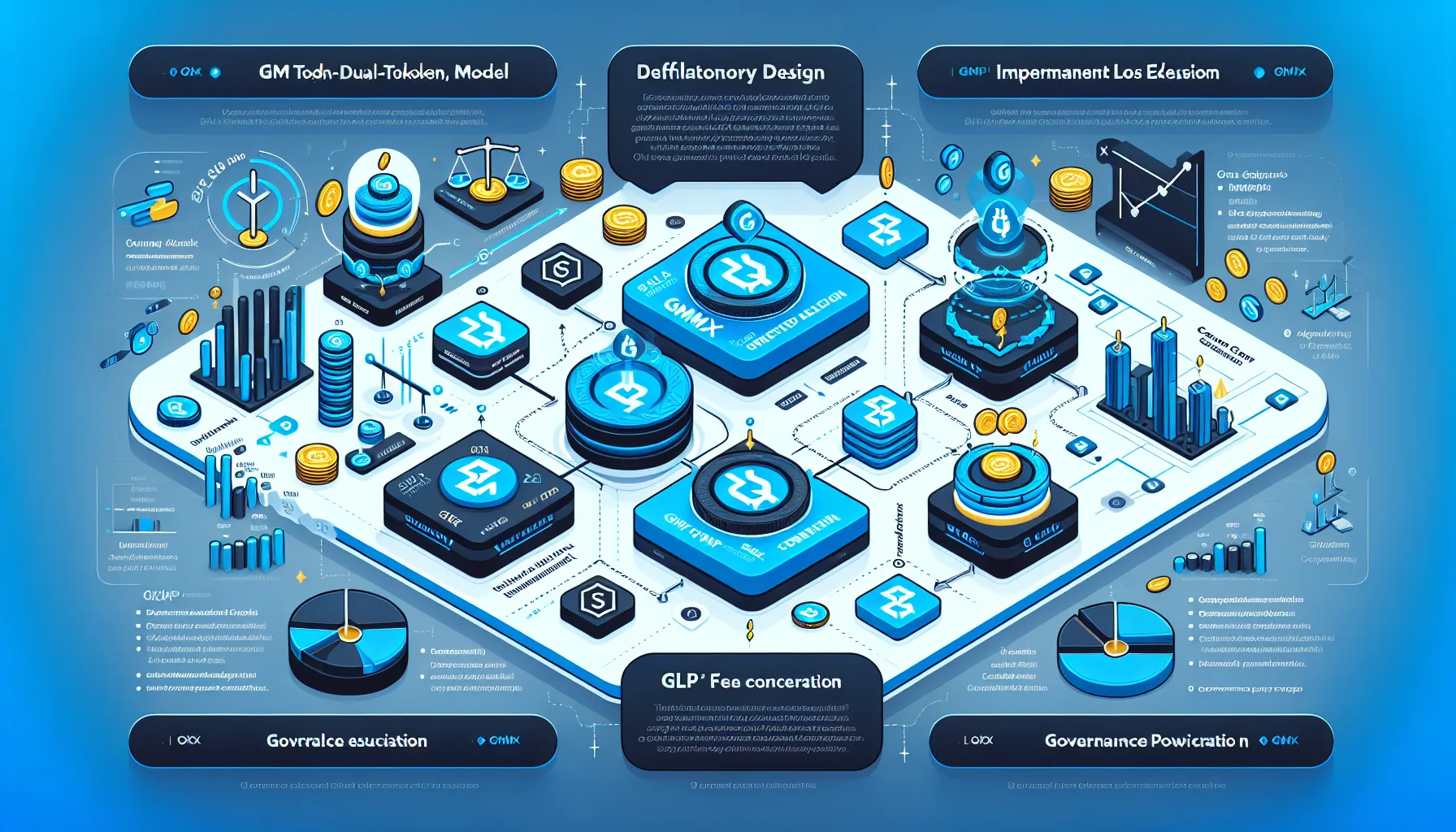
History of GMX
The History of GMX: Origins and Evolution
GMX, a decentralized perpetual exchange platform, entered the crypto ecosystem with a vision to redefine the trading experience through decentralized, on-chain solutions. Originally launched in 2021, GMX was a rebranding and evolution of Gambit, a prior DeFi project that primarily catered to stablecoin yield farming. This departure from Gambit’s initial focus showcased the team's ambition to target a niche yet growing market: perpetual trading with leverage on-chain.
One of the foundational moments in GMX's development was the launch of its protocol on the Arbitrum network, chosen for its scalability and lower transaction costs. By tapping into Arbitrum’s optimistic rollup technology, GMX sought to address the transactional bottlenecks that had plagued other on-chain derivatives protocols on Ethereum’s base layer. Shortly thereafter, the protocol expanded to Avalanche, giving traders a multi-chain option and broadening its appeal.
A distinguishing feature of GMX’s system has been its innovative GLP token, which serves as a pool of liquidity used by traders in perpetual swaps. Rather than relying on external liquidity providers or traditional market makers, GMX's decentralized liquidity structure allows users to mint GLP by depositing a mix of supported assets. However, this model hasn’t been without scrutiny. Critics have noted that GLP holders bear the systemic risk of defaulted trades, especially during periods of heightened volatility when traders’ leveraged positions may swing against the pool. This risk exposure has sparked debate about long-term sustainability and the proper incentivization of liquidity providers.
Another key historical milestone for GMX was the introduction of its dual-token model. The protocol employs the GMX token for governance and staking rewards, while GLP acts as a liquidity provision tool. While this separation helps delineate functions, some in the community have argued that introducing a dynamic fee model to reward liquidity providers could enhance the compensatory structure. Early adopters note concerns that GLP rewards can be inconsistent, especially during periods of low trading activity.
Throughout its history, GMX experienced significant community-driven growth, enabled by the protocol’s commitment to decentralization. However, GMX also faced challenges. It has been criticized for a lack of transparency in some governance decisions and for the complexities introduced with managing GLP exposure. These issues highlight the balancing act between protocol growth and risk management, a dynamic that continues to define GMX's historical trajectory.
How GMX Works
How GMX Works: Decentralized Perpetual Swaps and Spot Trading
GMX is a decentralized exchange (DEX) designed for perpetual swaps and spot trading, operating across Ethereum Layer-2 Arbitrum and Avalanche networks. Its design emphasizes minimal price impact through aggregated liquidity pools and a unique pricing model based on Chainlink oracles and median value feeds pulled from top exchanges. Here's a detailed breakdown of how GMX functions:
Core Mechanics: The GLP Liquidity Pool
At the heart of GMX's ecosystem lies its "General Liquidity Pool" (GLP). This multi-asset pool serves as the platform's liquidity backbone. Users mint GLP tokens by depositing supported assets such as ETH, BTC, USDC, and others, which then become available for leveraged trading and spot swaps.
In return, GLP holders earn a portion of the trading fees accrued on the platform. However, participants share the downside risk when traders profit using leverage, as the liquidity pool effectively serves as the counterparty to leveraged positions. This creates an incentive-aligned yet risk-tolerant model to support perpetual trading, but volatility in trader profitability can impact GLP yield dynamics.
Trading with Low Slippage
Unlike traditional automated market makers (AMMs) that rely on constant formula pricing mechanisms, GMX relies on an oracle-based approach. With Chainlink providing real-time price feeds, GMX minimizes slippage even on large trades by closely tracking external market prices. While this design reduces obvious arbitrage opportunities, it also mitigates manipulation risks seen in thin liquidity environments.
However, traders seeking high-frequency strategies may find GMX less suitable due to potential delays in oracle pricing updates versus centralized exchange order books. A stark tradeoff exists between decentralized execution guarantees and speed.
Leveraged Trading without Liquidation Wrecks
Another significant feature of GMX is its cross-margin perpetual trading. Traders can open leveraged positions (up to 50x on some assets) directly on-chain, supported by variable margin requirements. Unlike some platforms that use fixed liquidation thresholds, GMX employs decentralized smart contracts to trigger liquidation dynamically based on real-time data.
This benefits smaller traders by providing clearer liquidation risk management. However, the absence of guaranteed liquidation avoidance in extreme conditions means traders must carefully maintain their collateral ratios when borrowing funds.
Fee Distribution Model
GMX’s fee structure is tightly integrated with its dual-token system: GMX governance tokens and GLP tokens. While GLP token stakers earn 70% of collected fees (from trading spreads, borrowing costs, and liquidations), GMX token stakers primarily gain from protocol revenue in the form of escrowed GMX and ETH/AVAX rewards.
That said, relative returns for both groups rely heavily on trading volume and the profitability of leveraged traders, introducing variability in staking value.
Use Cases
GMX Use Cases: Empowering Decentralized Trading and Earning Mechanisms
GMX is a decentralized exchange (DEX) and liquidity platform designed to cater to users seeking trustless trading, yield generation, and portfolio diversification. In this section, we delve into the core use cases of GMX, highlighting its functional offerings while also exploring its potential challenges.
1. Decentralized Perpetual and Spot Trading
One of GMX's flagship use cases is facilitating perpetual futures and spot trading directly on-chain. Users can trade a variety of crypto assets with leverage, ranging from 1x to 50x, without relying on centralized intermediaries. This appeals to traders seeking greater privacy, control, and security over their funds. However, it's important to note that high-leverage trading amplifies risk for participants, and unlike centralized platforms, decentralized solutions like GMX may experience heightened slippage or liquidity constraints during abnormal market conditions.
Additionally, the protocol operates without traditional order books, relying on an automated market maker (AMM) model. While this approach enhances decentralization, it may not cater effectively to advanced traders accustomed to more granular trading tools, such as limit orders or conditional stop-loss mechanisms.
2. Yield Generation Through Liquidity Provision
For liquidity providers (LPs), GMX offers the opportunity to deposit assets (e.g., ETH, BTC, USDC) into its liquidity pool, known as the GLP pool. In return, LPs earn a portion of trading fees collected by the platform. This incentivized model enables passive income opportunities for those willing to invest their assets into the ecosystem.
However, like other DeFi protocols, this opportunity is not without risk. Liquidity providers are exposed to impermanent loss and inherent vulnerabilities in smart contract architecture. Additionally, the GLP token itself represents a composite basket of assets, exposing LPs to an asset weighting system determined by trading activity and user demand, which may not align with their strategic interests.
3. Staking for Token Holders
GMX token holders can stake their tokens to earn rewards, including a share of platform fees denominated in ETH, AVAX, or GMX, depending on the chain they participate in. This utility positions GMX as both a governance token and a revenue-sharing asset, which can enhance long-term loyalty for holders.
However, staking GMX does lock up capital for specified periods, reducing liquidity and flexibility for participants. Furthermore, while reward distributions in ETH or AVAX may be attractive, they also highlight a dependency on market activity for sustainability—reduced trading volume could directly impact staking incentives.
While GMX’s permissionless design is innovative and empowers decentralized trading, users and contributors must weigh these functionalities against potential risks inherent in DeFi protocols. Understanding these use cases is crucial for participants navigating this evolving ecosystem.
GMX Tokenomics
GMX Tokenomics: An In-Depth Exploration of Governance and Incentives
The tokenomics of GMX are structured around a dual-token model comprising the GMX and GLP tokens, each playing distinct roles within the ecosystem. GMX operates as the governance and utility token, while GLP functions as a liquidity provider and rewards token. This bifurcation aims to align incentives for different participants in its decentralized perpetual exchange protocol, but it also introduces unique complexities for investors and participants.
Deflationary Design and GMX Supply Dynamics
The GMX token has a capped supply, which distinguishes it from inflationary models often seen in many DeFi projects. This capped supply is intended to create scarcity over time, particularly as protocol revenues contribute to GMX token staking rewards. However, critics often note that the success of this mechanism hinges heavily on sustained trading activity and platform adoption. Should volume decline, the incentive structure faces potential imbalances, risking reduced participation from both traders and stakers.
GLP’s Role and Impermanent Loss Exposure
The GLP token represents the liquidity provider pool, comprising multiple assets such as stablecoins and other cryptocurrencies. When users supply liquidity to the GMX platform, they mint GLP tokens in exchange. This dual utility as both liquidity provision and a yield-generation asset creates a cohesive mechanism for platform sustainability. However, GLP holders take on market risk—including price volatility and impermanent loss exposure—since trading activity directly impacts their rewards and token value. Unlike GMX, which benefits from price-implied scarcity, GLP carries a riskier financial profile dependent on market conditions and asset utilization.
Fee Distribution and Protocol Revenue
A core aspect of GMX tokenomics is its reliance on real-yield principles. Generated fees—primarily through trading activity—are split between GMX and GLP stakers, creating a circular flow of incentives. GMX stakers receive rewards in the form of ETH or AVAX (depending on the blockchain), while GLP stakers are similarly compensated. While this theoretically aligns incentives across the ecosystem, critics have raised concerns about potential economic centralization. High staking returns could lead to wealth concentrating among early adopters, reducing accessibility for new participants. Moreover, dependency on sustained fee generation to maintain rewards could stress long-term viability as competitive pressures grow.
Governance Power Concentration
GMX token holders are provided governance power over the protocol, including fee structures, treasury utilization, and parameter adjustments. While this decentralized approach bolsters community-driven decision-making, the relatively uneven token distribution may lead to power imbalances. Large holders could exert disproportionate influence, undermining smaller stakeholders’ voices, a challenge faced by many governance-token models.
GMX Governance
Decentralized Governance in GMX: Balancing Power and Decision-Making
GMX’s governance mechanism plays a pivotal role in determining the direction of this decentralized perpetual and spot trading platform. With its dual-token model involving GMX and esGMX, the protocol has adopted a structure that extends governance capabilities to its most vested participants. However, as innovative as it may be, GMX's governance framework comes with its own set of challenges and intricacies.
Voting Power and GMX Token Holders
At its core, GMX governance operates on a token-weighted voting system, where GMX token holders have proportional voting rights on governance proposals. As is common with decentralized systems, voting influence scales with token holdings, which centralizes significant decision-making power among whales or large stakeholders. While this aligns with the broader DeFi ethos of "skin in the game," it raises concerns about the concentration of authority in a supposedly decentralized framework.
To address these centralization risks, GMX introduces the esGMX token. esGMX acts as a vested token reward and can be converted into GMX over time, providing an incentive for long-term participation. esGMX holders also contribute to governance, though their influence is ultimately tied to the vesting period and mechanisms to prevent short-term speculative governance participation.
Proposal System and Community Input
GMX governance proposals can range from protocol upgrades to tweaks in tokenomics and fee structures. However, the absence of an on-chain governance interface means the community primarily uses off-chain discussion forums and platforms such as Snapshot to initiate and vote on proposals. This off-chain reliance introduces challenges, such as limited transparency for casual users and potential biases stemming from lower participation rates.
Moreover, the lack of a structured quorum system for certain decisions occasionally leaves smaller stakeholders feeling disenfranchised. This issue is compounded by the influence of liquidity providers and token stakers, whose economic incentives may not always align perfectly with the protocol’s broader goals or the interests of smaller users.
Risks of Governance Exploits
While GMX has not been a victim of governance-based exploits, its framework is not entirely immune to risks. Token-weighted governance systems are often susceptible to attacks where malicious actors accumulate enough tokens to manipulate proposals. The reliance on off-chain voting systems also leaves a potential vulnerability to external censorship or collusion.
In conclusion, GMX presents an innovative but imperfect model for governance, blending incentives for long-term participant engagement with the challenges of balancing decentralization and control in a rapidly evolving DeFi landscape.
Technical future of GMX
GMX's Current and Future Technical Developments: A Deep Dive into Innovation and Challenges
Leveraging Core Architecture for Scalability
GMX operates on a dual-chain ecosystem, utilizing both Arbitrum and Avalanche networks to provide a foundation for its decentralized perpetual exchange. While this dual-chain approach offers flexibility and lower transaction costs, maintaining compatibility across two ecosystems presents technical challenges. The team continues to optimize the GMX protocol's scalability by enhancing its oracles for more efficient price feeds and implementing gas-efficient designs to keep operations smooth during periods of high network congestion. However, scaling solutions like potentially migrating to additional Layer 2 networks pose complexities around liquidity fragmentation and cross-chain transaction security.
Enhancements to GMX’s On-Chain Oracles
A key focus for GMX's technical roadmap is improving the robustness and accuracy of its price oracles. Currently leveraging Chainlink oracles and custom price feeders, GMX aims to reduce latency in price updates to guard against manipulation in volatile market conditions. While the use of customized oracles provides GMX with an edge, it also adds the risk of reduced decentralization, especially if the oracle infrastructure becomes over-reliant on fewer data providers. Further decentralization efforts in oracle design remain a crucial technical hurdle the team must address.
Advanced Risk Management Features in Development
To bolster the exchange’s appeal to liquidity providers, GMX is actively developing automated tools for risk management. These tools include real-time analytics for impermanent loss exposure and frameworks to better balance protocol-wide open interest between long and short positions. However, the introduction of complex risk-management algorithms brings its own set of challenges, including the potential for unintentional biases, bugs, or exploitable vulnerabilities, which could undermine user trust and protocol stability.
GMX V2 and Ecosystem Expansion
The GMX team is working on the next iteration of its protocol, provisionally dubbed GMX V2. Expected updates include support for more trading pairs, improved leverage offerings, and more refined user interfaces with advanced technical charting tools. Another significant update involves optimizing smart contract efficiencies to reduce gas costs further. Despite the ambitious scope of these upgrades, technical risks persist, particularly surrounding robust testing of the new smart contracts to eliminate vulnerabilities before deployment. The potential complexity inherent in the V2 development may also slow its rollout or lead to temporary fragmentation of the user base.
Exploring Composability and DeFi Integrations
Future roadmaps hint at GMX prioritizing interoperability within the broader DeFi ecosystem. Cross-protocol integrations with yield aggregators, derivative service providers, and lending protocols aim to expand GMX’s utility. While this interoperability could enhance liquidity and user adoption, it also exposes GMX to systemic risks within DeFi. Smart contract dependencies may introduce cascading failures if partner protocols experience exploits or insolvencies. Balancing innovation with security remains paramount.
Comparing GMX to it’s rivals
GMX vs. dYdX: A Detailed Comparison in Decentralized Perpetuals
When comparing GMX to dYdX, two platforms operating in the decentralized perpetual swaps space, key differences emerge in their core design philosophies, revenue-sharing mechanisms, and risk dynamics. Both platforms cater to advanced crypto traders seeking perpetual futures, but their approaches and trade-offs differ significantly.
On-Chain vs. Hybrid Models
GMX is natively built on-chain, currently operating on Arbitrum and Avalanche, providing users with decentralized execution and non-custodial infrastructure. By contrast, dYdX has, until now, operated using a hybrid infrastructure model, relying on an off-chain order book paired with StarkWare’s layer-2 solution to optimize scalability. This key structural difference impacts decentralization: GMX aligns more closely with crypto’s ethos of trustless trading, while dYdX’s off-chain order books introduce a semi-centralized element. For users prioritizing censorship resistance, this distinction may weigh heavily. However, the off-chain order books on dYdX allow for higher throughput and reduced latency, which is particularly appealing for high-frequency traders.
Fee Structures and Revenue Models
GMX employs a simple fee structure, where users pay a swap or trading fee, and the revenue is distributed among GMX token stakers and liquidity providers in the GLP pool. This aligns incentives across participants, but there’s an inherent dependence on active stakers and liquidity supply to maintain its ecosystem stability. On dYdX, fees are split between liquidity mining rewards and token buybacks, a strategy that prioritizes market maker retention. While dYdX can lean on professionalized liquidity provision, GMX’s shared-revenue model puts more financial incentives directly in the hands of its community, though some critics argue that its dependency on trader losses to fund rewards could create sustainability concerns.
Risk Management and User Dynamics
A standout feature of GMX is its GLP model, where liquidity providers take on the role of counterparty to traders. This unique approach exposes liquidity providers to market risks since profits and losses are directly tied to trader activity. In periods of high trader success, GLP holders may face losses, introducing volatility to their holdings. Conversely, dYdX isolates liquidity providers from counterparty risk by utilizing a professionalized liquidity layer and insurance fund. However, GMX’s structure amplifies potential rewards during times of active and unprofitable trading, which appeals to a particular segment of the crypto market with a higher risk tolerance.
Token Emissions and Sustainability
Both GMX and dYdX leverage token emissions, but with differing outcomes. GMX’s emissions are largely tied to stakers, with a fixed supply that emphasizes long-term distribution stability. dYdX, on the other hand, uses significantly higher token emissions in its liquidity mining programs, which can raise questions about inflationary pressures. For GMX, a smaller ecosystem poses scalability challenges but helps avoid over-reliance on inflation-fueled incentives.
In summary, GMX’s decentralization-first ethos and innovative liquidity mechanisms contrast with dYdX’s high-performance hybrid infrastructure. However, the differences reveal trade-offs that traders and liquidity providers must assess based on their priorities in security, returns, and participation style.
GMX vs PERP: A Detailed Comparison of Crypto Perpetual Protocols
When comparing GMX and PERP, two standout players in the decentralized perpetual trading space, their differences stem not just from operational mechanics but also from the user experience and ecosystem incentives they offer. These distinctions can significantly impact trader and liquidity provider (LP) preferences, making it a hot topic among DeFi enthusiasts.
Core Mechanism: Order Book vs. AMM Hybrid
PERP operates on a Virtual Automated Market Maker (vAMM) infrastructure, a unique adaptation of traditional AMMs. This system enables traders to open long or short leveraged perpetual positions without requiring a counterparty for each trade. However, while vAMMs reduce dependency on external liquidity, they carry the inherent risk of impermanent loss and slippage during high volatility or low liquidity periods.
In contrast, GMX opts for a completely different architecture, utilizing a multi-asset pool model called the GLP (GMX Liquidity Pool). This creates a more capital-efficient and less volatile trading environment through its cross-asset collateralized system, but it reduces the flexibility found in vAMM-based protocols like PERP.
Leverage and User Base
PERP offers leverage up to 10x, catering to traders seeking substantial risk exposure in highly liquid markets. The limitation for PERP, however, is its liquidity depth in niche markets, which may not match the aggregated liquidity GMX achieves through GLP.
For GMX, leveraged trading is available up to 50x, but its mechanisms rely heavily on its GLP stakers. This creates a dynamic where LP providers assume direct PnL risks from traders, adding a layer of complexity for those looking to assess long-term profitability when staking.
Tokenomics and Incentives
The PERP token adopts a staking model with staking rewards distributed to ecosystem participants in exchange for holding and locking tokens. It also intertwines the incentives of stakers with those of traders via fee-sharing mechanisms—although the broader liquidity generation model depends heavily on external optimism regarding the ecosystem.
GMX’s dual-token model (GMX for governance and GLP as the liquidity token) is comparatively robust in aligning incentives between traders, stakers, and liquidity providers. However, GMX's cross-settlement reliance can expose LP stakeholders to unexpected losses when large trades default or poorly hedge against market behaviors.
Key Considerations
PERP's heavy reliance on its vAMM and its relatively shallow liquidity for emerging pairs leave it vulnerable in less-tested scenarios. Poor outcomes from extreme market conditions could disrupt perpetual traders attempting larger trades, especially in markets with limited volume. On the flip side, GMX's dependence on a concentrated GLP liquidity pool introduces its own risk-reward paradigm, begging the question of whether higher leverage flexibility is worth the inherent exposure for stakers.
GMX vs. SNX: A Comparative Analysis of Decentralized Derivatives Protocols
When comparing GMX and SNX (Synthetix), it becomes clear that while both are positioned as leaders in decentralized finance (DeFi), they embrace fundamentally different designs and focus areas within the derivatives trading ecosystem. These differences directly influence their use cases, liquidity dynamics, and user experiences, offering distinct trade-offs that savvy DeFi users and investors should consider.
Liquidity Architecture
GMX employs a liquidity pool model called the GLP, which aggregates multiple assets, including stablecoins and blue-chip cryptocurrencies, to back leveraged trading activities. This setup allows GMX to tap into deep, protocol-level liquidity while enabling users to earn fees by providing liquidity.
On the other hand, SNX operates via a collateralized debt pool model where users stake SNX tokens to mint synthetic assets (synths). Every synth—whether it tracks fiat currencies, stocks, or commodities—is over-collateralized by staked SNX. This design offers expansive market pair possibilities, but it also comes with systemic risks tied to SNX volatility, over-collateralization requirements, and the free-floating debt of participants. If market volatility sharply impacts the staked collateral, the debt can spiral uncontrollably, adding risk to the system.
Trading Mechanisms
GMX stands out for enabling perpetual futures trading with a focus on minimal slippage, leveraging a price feed oracle system. This appeals to a target demographic of traders seeking precision pricing and low trading fees.
Meanwhile, Synthetix does not directly support perpetual swapping in its base architecture but instead acts as a hub for minting and trading synthetic assets (like sUSD, sBTC). It relies on external platforms to facilitate advanced trading mechanisms. This dependency, while offering modularity, can dilute user experience compared to GMX’s vertically integrated product offering.
Tokenomics and Incentive Disparities
GMX tokenomics revolve around real-yield distribution to stakers. Token holders enjoy direct rewards derived from trading fees, distributed in ETH or AVAX (depending on chain deployment). This incentivizes long-term holding with tangible rewards.
SNX employs an inflationary rewards model for staking to bootstrap liquidity and secure synth issuance. While SNX stakers benefit from shared fees, part of the yield depends on synthetic transaction volumes and overall system stability. The inflationary nature of SNX causes recurring dilution, which remains a point of contention among long-term holders.
Security and Protocol Risks
SNX’s reliance on oracle feeds and the system’s susceptibility to cascading liquidations during high-volatility periods pose significant risks. Additionally, maintaining the appropriate over-collateralization ratio for staked SNX adds ongoing operational challenges for stakers.
In contrast, GMX mitigates some of these risks by using aggregated price oracles for high-frequency updates, reducing manipulation opportunities. However, GMX’s design concentrates risk within the GLP pool, meaning liquidity providers bear counterparty risk during extreme market conditions.
Ultimately, these architectural differences between GMX and SNX illustrate the trade-offs between precision, liquidity management, and systemic risk tolerance. Both platforms offer compelling features but serve distinct user preferences and strategies.
Primary criticisms of GMX
Primary Criticism of GMX: Challenges in Decentralized Perpetual Trading
GMX, a decentralized perpetual exchange protocol, has gained notable traction within the DeFi ecosystem due to its innovative approach to trading and liquidity provision. However, several key criticisms continue to shape discussions around the platform, particularly within the context of its mechanics, long-term sustainability, and user experience.
Impermanent Loss Risks for Liquidity Providers
One of the most debated aspects of GMX is the impact on liquidity providers (LPs) participating in the platform's GLP token system. While the GLP token aggregates liquidity for trading purposes and offers rewards in the form of transaction fees and token incentives, it exposes LPs to potential impermanent loss. This risk stems from the unpredictable nature of trader performance on the platform. Since GLP holders effectively act as counterparty to every trade, significant gains by successful traders can translate to losses for LPs. For individuals providing liquidity, this unique dynamic deviates from traditional AMMs, introducing a layer of financial uncertainty that makes participation less appealing to risk-averse users.
Scalability Concerns and Network Dependence
GMX operates on networks such as Arbitrum and Avalanche, which offer lower fees and faster transaction times compared to Ethereum’s mainnet. However, this dependence can also be viewed as a bottleneck. Scalability concerns emerge if these networks experience congestion, downtime, or unforeseen vulnerabilities, impacting the protocol’s functionality and trading efficiency. Additionally, GMX’s reliance on particular blockchains may hinder broader adoption or cross-chain interoperability, restricting its capacity to cater to a more diverse range of users across different ecosystems.
Limited Asset Selection and Market Appeal
Another recurring critique of GMX is the relatively narrow range of assets available for trading. Unlike some centralized or even decentralized platforms boasting expansive token offerings, GMX focuses on a small set of highly liquid cryptocurrencies. While this approach minimizes risk and ensures operational stability, it limits the platform’s appeal to traders looking for access to more niche or speculative assets. For users accustomed to the variety provided by other exchanges, this narrower scope can be seen as a significant drawback.
Questionable Long-Term Sustainability of Rewards
GMX has drawn users by heavily incentivizing both traders and liquidity providers through token emissions. However, some critics question the long-term sustainability of this rewards structure. Token inflation as a means to attract participants may prove damaging to overall tokenomics if not carefully managed. Over time, reliance on token incentives risks diminishing the value of GMX tokens, potentially undermining user confidence and discouraging ecosystem growth.
Lack of Advanced Trading Features
Despite its focus on perpetual swaps, GMX falls short in providing more sophisticated trading functionalities. Features such as advanced charting tools, a wider variety of order types, and native integration with other DeFi products are relatively limited compared to centralized exchanges and even some decentralized competitors. For institutional or highly experienced traders, this lack of technical depth can make the platform less appealing, relegating it to a retail-driven use case.
Founders
GMX Founding Team: Visionaries Behind the Protocol
GMX was devised by an anonymous founding team, a characteristic that aligns it with many other prominent decentralized finance (DeFi) projects. This anonymity is a double-edged sword in the crypto ecosystem. On one hand, it allows the project’s success to be measured purely by its protocol and community, avoiding the cult of personality that can sometimes dominate projects centered around high-profile founders. On the other hand, it raises questions about the accountability and transparency of decision-making processes, which remains a concern for potential long-term investors and contributors.
The founders originally launched GMX as a pivot and evolution of Gambit, a platform that was designed for yield optimization strategies. This foundational layer highlights the team’s deep technical expertise and strategic thinking in the DeFi space. Despite rebranding and transitioning to GMX, the team has retained a commitment to developing products that prioritize on-chain functionality, user sovereignty, and trustless mechanics.
One of the most notable aspects of GMX’s founding team is their focus on building the protocol’s core periphery infrastructure, such as the decentralized perpetual exchange. The technical architecture of GMX reflects this commitment, utilizing a combination of on-chain oracles like Chainlink and custom aggregation mechanisms for price feeds. However, the anonymity of the founding team limits the ability of the community to directly evaluate the credibility of key design decisions, an ongoing discussion point in the governance forums.
The team's ability to build and sustain GMX, especially as a cross-chain protocol functioning on networks like Arbitrum and Avalanche, demonstrates advanced technological foresight. However, some critics question whether the team’s anonymous nature could deter institutional adoption or partnership opportunities, given the lack of identifiable faces behind the project. Furthermore, limited insight into their long-term roadmap or internal processes has occasionally frustrated community members seeking greater transparency.
Despite their anonymity, the founding team has shown a track record of consistent protocol updates and active communication through public announcements, which has helped maintain trust with the GMX community. Still, questions remain about what mechanisms would ensure the continued evolution of the platform should the original anonymous developers exit or become inactive—a common challenge among decentralized projects founded by anonymous teams.
Understanding the trade-offs of builder anonymity and its implications for governance and scalability is central to grasping GMX's long-term viability and community dynamics.
Authors comments
This document was made by www.BestDapps.com
Sources
- https://gmx.io/
- https://gmxio.gitbook.io/gmx/
- https://docs.gmx.io/
- https://forum.gmx.io/
- https://github.com/gmx-io
- https://etherscan.io/token/0x489BfDFade8788026B1F0f293E6C335649c7b473
- https://arbitrum.foundation/applications/gmx
- https://coinmarketcap.com/currencies/gmx/
- https://coingecko.com/en/coins/gmx
- https://medium.com/@GMX_IO
- https://thegraph.com/explorer/subgraph/gmx-io/gmx-stats
- https://dune.com/gmx/GMC-Dashboard
- https://rekt.news/gmx-rekt/
- https://twitter.com/GMX_IO
- https://mirror.xyz/gmx.eth
- https://nansen.ai/research/gmx-deep-dive
- https://docs.chain.link/docs/arbitrum-price-feeds/
- https://blog.banklesshq.com/gmx-decentralized-perps/
- https://cryptobriefing.com/gmx-review-decentralized-perpetuals/
- https://tokensniffer.com/token/erc-20/0x489bfbfade8788026b1f0f293e6c335649c7b473


