History of GM
The History of GM: A Crypto Asset with Cultural Origins and Rapid Adoption
GM, a token born out of the pervasive “Good Morning” greeting popularized in crypto communities, started as more than just a meme. Its genesis reflects the broader crypto ethos of community-first innovation and meme culture as a binding force. Emerging during a phase where crypto-centric social platforms like Twitter and Discord were thriving, GM was conceived as an experiment to imbue a symbolic aspect of daily interactions with tangible utility in the digital asset space.
The token's early momentum stemmed largely from its relatable narrative and the sense of inclusivity it fostered among early adopters. Rather than being built around a utility-heavy roadmap or enterprise-focused use cases, GM grew from grassroots enthusiasm, further propelled by its intrinsic alignment with a central crypto value: fostering global community. This organic growth gave GM an edge in garnering initial attention but also made it vulnerable to sustainability challenges as the hype cycle around it fluctuated.
Despite its community-driven nature, GM's history isn’t without controversies. Critics have pointed out the lack of clear utility or long-term vision in its early days, which raised concerns around its longevity as a meaningful asset. Furthermore, as with many meme tokens, GM encountered liquidity and whale concentration issues during its initial distribution phases, creating volatility that fueled skepticism. Some early investors viewed GM as a speculative play rather than a legitimate asset, a narrative that potentially undermined its broader adoption in the long run.
However, GM's history also serves as a case study for the virality of cultural assets in Web3. The value proposition of GM was never just about its functionality; it was a digital representation of a specific ethos, centered on connecting users through shared, everyday rituals. This made it particularly appealing to crypto natives, who viewed the token as a cultural signifier as much as a financial asset.
GM’s launch also highlighted the shifting dynamics of token distribution in decentralized finance (DeFi). Several iterations of GM-focused initiatives experimented with staking, farming, and even governance adaptations, though many of these efforts met with limited success due to a lack of cohesion or lasting engagement from participants. A lack of clarity around the token's development priorities further fragmented its community, sparking debates about whether GM was destined to be a cultural relic rather than a thriving utility-driven protocol.
How GM Works
Understanding How GM Crypto Asset Works: Technical and Functional Insights
The GM crypto asset operates on a decentralized blockchain protocol, leveraging smart contract functionality to enable automated, trustless interactions. Specifically, GM is built upon a high-throughput, Layer-1 blockchain designed to balance scalability and decentralization. The asset functions as both a native utility token and a governance token within its ecosystem, serving multiple purposes tied to the platform's operations and decision-making processes.
Core Mechanics of GM Token Utility
At its core, GM’s utility is tied to interactions within its ecosystem. Key use cases include staking for network security and earning rewards, paying transaction fees, and facilitating ecosystem-specific functionalities like DeFi applications or on-chain governance. The platform may utilize a Proof of Stake (PoS) consensus mechanism, where token holders delegate GM tokens to validators to secure the network and participate in block validation. This delegation process directly incentivizes participation, as stakers often earn a share of transaction fees or newly minted GM tokens.
Smart contracts play a critical role in ensuring automation and transparency. These self-executing contracts are responsible for operations such as staking fund management, reward distribution, and fee deductions. However, their immutability introduces a potential risk: if a vulnerability exists within the smart contract code, it could be exploited without the possibility of reversal.
Token Supply and Network Dynamics
The GM token supply is typically governed by a pre-defined issuance schedule coded into the protocol. Some systems implement token burns — permanently removing tokens from circulation — to offset inflationary pressures or align supply with user demand. On the flip side, complexities in tokenomics, such as uneven token distribution to early investors or whales, can raise concerns about centralization and governance biases.
Challenges in Scalability and Fees
While the protocol emphasizes scalability, potential congestion during peak network activity could result in higher transaction fees or slower processing times. This scalability challenge is a persistent issue across many blockchain ecosystems and can impact user experience, particularly as adoption grows.
Governance and Decentralization Trade-Offs
As a governance token, GM empowers holders to influence protocol upgrades, feature implementations, or economic adjustments. However, governance participation can be skewed toward large holders, introducing a power dynamic that could undermine the intent of decentralization. Additionally, low voter turnout is a common issue, reducing the effectiveness of decisions made by the community.
The balance between decentralization, usability, and governance fairness is a core consideration in how GM operates, which can result in trade-offs that businesses and users alike should carefully evaluate.
Use Cases
GM Crypto Asset Use Cases
1. Community Engagement and Social Identity
One of the primary use cases for GM revolves around its adoption as a social token within online communities. GM has gained traction as a token symbolizing positivity, inclusivity, and daily engagement, especially in crypto-savvy spaces such as decentralized social platforms and blockchain-based forums. It serves as a digital badge of participation, allowing token holders to signal affiliation with like-minded groups and contribute to fostering a sense of belonging. However, challenges arise when considering the longevity and scalability of such a use case. Tokens centered purely on cultural identity are vulnerable to fading relevance as trends shift or the community's attention disperses.
2. Microtransactions and Tip Economies
GM is increasingly used in microtransaction ecosystems, especially for tipping content creators or rewarding valuable contributions on decentralized platforms. Its relatively low transaction fees and ease of transfer make it appealing for small-scale exchanges that traditional fiat systems cannot efficiently accommodate. Still, there are potential limitations. Adoption and success depend heavily on widespread acceptance by platforms and users, which can stall in the face of competing assets with similar functionality, or if GM liquidity and utility fail to keep up with demand.
3. Governance and DAO Participation
Some implementations of GM provide token holders with governance rights within decentralized autonomous organizations (DAOs). This use case aligns with the token’s ethos of community collaboration, enabling holders to vote on key proposals or direct resource allocation within specific projects. However, governance effectiveness can be hampered if token distribution becomes overly centralized. A small number of whales holding a significant percentage of GM supply can disproportionately influence decisions, undermining the democratic ideals of DAO structures.
4. Gaming Integration and NFTs
GM has also entered the blockchain gaming sector, often acting as a utility token for purchasing in-game assets or interacting with NFT-based ecosystems. In some cases, GM is used to reward players who complete challenges or contribute to player-led economies. While this fosters engagement, integration can face barriers if games fail to achieve the user base necessary to sustain token demand. Additionally, reliance on the broader NFT market introduces exposure to fluctuations in interest and value within that sector.
5. Experimental Mechanisms
Some developers leverage GM in experimental financial mechanisms, such as yield farming or liquidity mining, often as part of DeFi protocols. While this innovation can push boundaries, it frequently brings risks such as impermanent loss, smart contract vulnerabilities, or token inflation eroding long-term value.
GM Tokenomics
GM Tokenomics: Analyzing Supply, Distribution, and Utility
Supply Mechanics and Emission Schedule
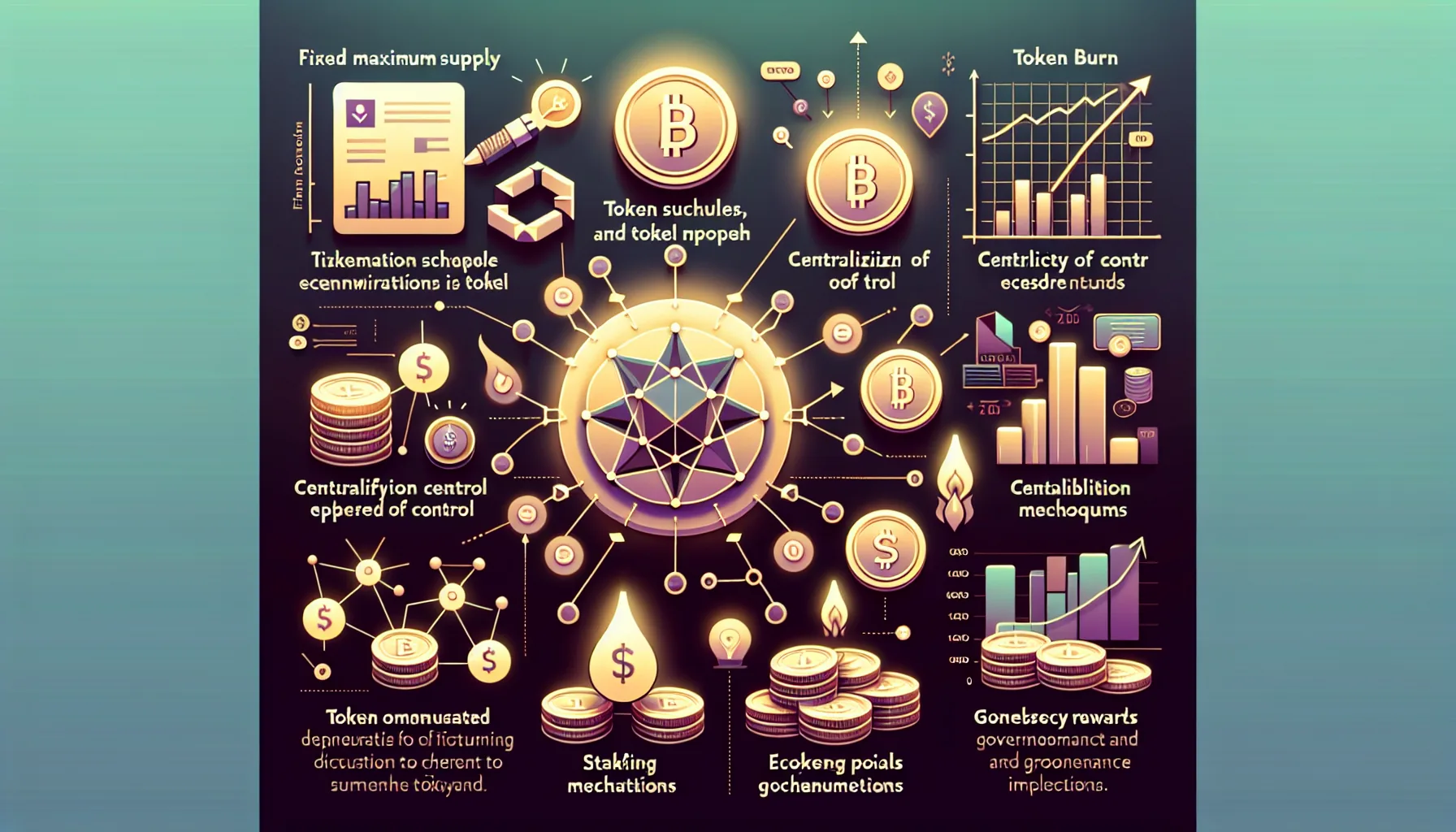
The GM crypto asset operates with a fixed maximum supply of tokens, a design choice aimed at creating scarcity and incentivizing long-term holding. However, the total circulating supply can vary significantly due to the vesting schedule and emissions strategy. Early contributors, developers, and ecosystem participants are often allocated a substantial percentage of tokens, subject to gradual release to prevent market flooding. For crypto users wary of token dilution, GM's vesting periods merit attention, as misaligned unlocking schedules can lead to abrupt increases in market liquidity.
Deflationary mechanisms, such as token burns, are also incorporated into GM's tokenomics. While these burns help decrease supply over time, they raise questions about whether the reduction meaningfully offsets inflation caused by staking or ecosystem rewards. For users, it’s important to closely monitor how these forces balance to avoid potential devaluation risks.
Initial Allocation Concerns
The GM token saw significant allocations directed toward private investors and early backers, which can lead to concerns regarding centralization. If a small number of entities control a disproportionate share of the token supply, this could introduce governance risks or challenges in liquidity management. Additionally, such centralized control may raise concerns for those seeking decentralization aligned with broader blockchain ethos. Assessing GM's on-chain metrics, such as whale activity and wallet distribution, becomes critical to understanding the potential for market manipulation.
Utility and Incentive Structures
The utility of the GM token extends beyond simple transaction functionality. Users often extract value from participation in staking mechanisms, liquidity pools, or ecosystem rewards, enhancing GM's role within its ecosystem. However, these mechanisms may also contribute to over-reliance on speculative use cases rather than fostering sustainable, real-world applications. This lack of organic demand outside the ecosystem could become problematic in the long run.
Additionally, protocols that incorporate GM tend to incentivize staking, locking up large amounts of tokens in the process. While beneficial for stabilizing the circulating supply, this can inadvertently concentrate risks if liquidity suddenly exits the market. Similarly, inflated reward rates from staking may lead to unsustainable token issuance, undermining GM's scarcity narrative over time.
Governance Implications
Holders of GM tokens often have the ability to participate in governance processes, such as proposing or voting on updates to the network. Yet, questions linger about the inclusivity of this model. If token distribution skews toward large holders, smaller participants may feel disenfranchised. For governance to function effectively, the tokenomics must incentivize active and equitable participation.
GM Governance
Governance Mechanisms in GM Crypto Asset: Decentralization and Decision-Making Challenges
When analyzing GM's governance structure, it's critical to assess how decision-making power is distributed within the ecosystem. Like many decentralized crypto assets, GM employs a governance framework designed to grant token holders influence over critical decisions. However, specific nuances in its implementation present both opportunities and challenges for participation, transparency, and scalability.
Token Holder Participation and Voting Power
GM governance relies heavily on a token-weighted voting system, which is standard across decentralized protocols. Token holders, proportional to their asset holdings, vote on proposals that determine protocol upgrades, parameter changes, or treasury allocations. While this approach incentivizes active participation, it inadvertently centralizes power in the hands of large stakeholders. The risk of governance capture—where a small group of whales wields disproportionate influence—remains a critical consideration. This dynamic can create conflicts between long-term protocol goals and the short-term interests of dominant actors.
Proposal Process and Accessibility
Submitting a governance proposal in the GM ecosystem requires an initial threshold of tokens or staking commitment, narrowing the pool of contributors. While this measure helps screen out spam proposals, it potentially alienates smaller holders or underrepresented groups with innovative ideas but insufficient capital to meet submission requirements. Additionally, depending on the community's proposal discussion norms, off-chain debate processes could lead to reduced transparency regarding how consensus is reached before on-chain voting even begins.
Governance Token Utility Beyond Voting
Beyond voting rights, GM’s governance token may also serve auxiliary functions, such as staking rewards or access privileges within the ecosystem. However, the overlap between governance utility and economic incentives can create complications. For instance, when governance tokens are locked for staking rewards, it reduces their availability for immediate participation in governance decisions, which affects voter turnout rates. Additionally, speculative trading of governance tokens risks distorting their primary purpose, introducing volatility into decision-making processes.
Practical Limitations of On-Chain Governance
Another critical governance consideration for GM is the inherent challenge of on-chain coordination at scale. High voter participation is often hindered by voter apathy or complexities in understanding technical proposals. Moreover, decentralized decision-making sometimes exacerbates delays in executing pivotal upgrades, as prolonged deliberation times clash with the fast-paced innovation demands of crypto ecosystems. These drawbacks necessitate robust off-chain communication and educational initiatives, but such hybrid models may undermine the purity of a fully decentralized framework.
By balancing transparency, equitable participation, and scalability, GM governance continues to confront the broader philosophical and technical tensions intrinsic to decentralized decision-making systems.
Technical future of GM
Current and Future Technical Developments for GM: Unpacking the Roadmap
Layer 2 Integrations and Scaling Initiatives
The GM crypto asset has prioritized scalability as a core component of its technical roadmap. Work is underway to expand Layer 2 integrations, specifically focusing on rollup compatibility and bridging mechanisms that aim to reduce gas fees and transaction latency. These developments are driven by the need to ensure the asset remains efficient for high-throughput applications. However, challenges persist in achieving seamless interoperability with major rollups without compromising security or decentralization. Criticisms have also emerged around the lack of transparency regarding the timelines for these integrations, raising questions within the community about project execution.
Smart Contract Upgrades and Enhanced Composability
For networks leveraging GM, smart contract updates have been positioned as a major focal point to improve composability. The planned adoption of modular contract frameworks intends to streamline integration with DeFi primitives and other decentralized applications. This effort is expected to address some of the inefficiencies seen in prior iterations where gas-heavy functions slowed performance. However, existing technical documentation has been sparse, leading some to speculate that the update timelines could face repeated delays. Furthermore, observers have noted the potential risks associated with introducing modularity, which could inadvertently open up vectors for bugs or exploits during implementation.
Governance Mechanism Safeguards
A significant technical update in exploration is the introduction of autonomous governance mechanisms, designed to minimize the risks of centralization and enhance protocol resilience. Smart contract-based voting mechanisms and on-chain proposal execution are slated for near-term implementation, reinforcing the GM asset's dedication to decentralized governance. Nevertheless, this shift entails its own set of issues, particularly the vulnerability of governance contracts to malicious proposals or voter apathy. Current test environments have reportedly flagged concerns about scalability in the governance participation process, signaling that additional optimization may be required prior to production deployment.
Cross-Chain Functionality and Interoperability
Another key development in the works for GM is cross-chain operability, particularly through the adoption of advanced bridging infrastructures. These improvements are expected to enhance GM's utility across multiple blockchain ecosystems, broadening its potential use cases. However, the reliance on bridging protocols introduces additional security concerns, as cross-chain bridge implementations remain a consistent target for exploits. The absence of robust auditing procedures in this area has been flagged as a potential vulnerability by third-party analysts.
Developer Tooling and Ecosystem Support
GM's plans also include advancements in developer tooling and ecosystem support frameworks to encourage broader participation in its technical build-out. Efforts to provide comprehensive SDKs and API documentation are underway, although feedback from early developers indicates gaps in accessibility and support responsiveness. A lack of detailed public-facing resources could hinder onboarding efforts and delay ecosystem expansion.
Comparing GM to it’s rivals
Comparing GM Crypto Asset to GM Legacy Automaker’s Ecosystem: Key Differences
Within the crypto ecosystem, the GM crypto asset brings an intriguing contrast when compared to the longstanding legacy automaker, GM. While both entities share a ticker, their underlying value propositions, ecosystems, and operational frameworks remain fundamentally distinct. This section dissects these disparities with a focus on how one challenges the status quo in contrast to the other’s entrenched industrial blueprint.
Decentralization vs. Centralized Enterprise Structure
The GM crypto asset operates on principles of decentralization, empowering its community through protocol governance and blockchain transparency. Any major decision—ranging from staking incentives, asset emissions, or ecosystem upgrades—is driven by a democratized consensus model. In comparison, the traditional automaker GM epitomizes corporate centralization. Decision-making flows vertically through executives and board members, with limited room for bottom-up governance. This contrast underscores the philosophical divide between emerging blockchain systems and legacy corporate structures.
However, decentralization is not without challenges. Governance of the GM token can be inefficient during periods of community gridlock, particularly when parties clash on core proposals. Legacy GM avoids this problem by relying on hierarchical, streamlined decision-making processes, though at the cost of user inclusion.
Utility vs. Tangible Production
The GM crypto asset derives much of its value from its role within its native blockchain ecosystem. Its utility often hinges on staking, swapping liquidity, and earning potential in decentralized finance (DeFi) protocols. Unlike digital-native tokens, legacy GM produces tangible assets: vehicles, energy systems, and sustainable mobility solutions. These products have inherent usability, making them less reliant on speculative demand for value retention.
However, the contrast highlights a vulnerability of the GM crypto asset—it lacks the intrinsic stability provided by physical asset production. This makes its valuation inherently more speculative, as its utility and adoption rest entirely on ecosystem participation and trends within digital markets.
Network Growth vs. Manufacturing Scale
Blockchains underpinning GM crypto rely on user base expansion and transaction volume to sustain scalability and relevance. The focus is on cultivating a thriving digital economy. On the other hand, legacy GM leverages physical manufacturing prowess, infrastructure investments, and logistics. Although operating in different domains, this makes legacy GM more defensible in terms of resource-intensive scalability—something blockchain-native tokens often lack, especially when network congestion issues arise.
Security Trade-Offs
The GM crypto asset is subject to smart contract vulnerabilities, which could potentially expose users to hacks or exploitation. By contrast, traditional GM operates in regulated, tangible sectors where asset security involves less systemic risk for end-users but higher regulatory hurdles.
Each framework carries inherent complexities, offering a fascinating juxtaposition between blockchain innovation and industrial legacy.
Comparing GM Crypto Asset with Its Rival: TSLA
When analyzing GM’s crypto asset in comparison to TSLA’s blockchain-based initiatives, it’s essential to focus on the technological and strategic disparities that differentiate these two rivals. TSLA’s involvement in the crypto and blockchain space has been dynamic, leveraging its position as a technology-forward entity to engage with decentralized systems in ways that extend its narrative far beyond its core business.
A key differentiator lies in TSLA’s often-publicized use of cryptocurrencies as part of its financial strategies. TSLA has historically experimented with integrating crypto directly into its payment systems, signaling an early push toward bridging virtual currencies with real-world commerce. In contrast, GM’s crypto asset has approached the space with a distinct emphasis on logistic efficiencies and resource tokenization. This means TSLA may have gained more traction with broader crypto users due to its higher visibility among non-specialized audiences.
However, TSLA’s foray into crypto isn’t without its challenges. Critics in the blockchain ecosystem often argue that its initiatives lean heavily on hype cycles without demonstrating sustained decentralization or utility-based adoption. While TSLA positions itself as a disruptor in embracing crypto trends, skeptics question whether its protocol-orientated decisions align with the ethos of blockchain: trustlessness, transparency, and decentralization. If these doubts persist, they risk undermining faith in TSLA-backed projects within the savvy crypto-native community.
On a technical level, TSLA’s focus seems to lean toward leveraging either well-established public chains or relatively low-complexity integrations, as opposed to developing entirely proprietary blockchain solutions. To contrast, GM's strategy within the blockchain ecosystem has taken a more infrastructure-focused path. This divergence could lead to a perception among developers and stakeholders that TSLA’s contributions to the ecosystem lack the innovation or depth that some rivals pursue.
Finally, TSLA’s approach to governance structures and decentralized operations has raised eyebrows. Some argue the initiatives lean toward centralization or corporate overreach, compromising the independence that cryptocurrencies strive to achieve. For Web3 enthusiasts, this may spark concerns about long-term integrity in TSLA-backed projects.
While TSLA’s popularity and brand power afford considerable leverage in advancing its blockchain ambitions, it’s vital for crypto insiders to assess whether these are holistic, substantive contributions — or merely a series of symbolic experiments that appeal more to retail investors than to long-term participants of the decentralized economy.
Comparing GM Crypto Asset to Rival F: A Technical Analysis
When evaluating the GM crypto asset against its competitor, F, a deeper dive into their respective ecosystems reveals distinct approaches to utility, scalability, and governance within the blockchain sector. F, leveraging its ties to industrial roots, has carved out a unique position in the tokenized economy, but this comes with both advantages and inherent limitations when compared to GM.
Token Utility & Ecosystem Integration
One distinguishing feature of F's crypto initiative is its focus on vertical integration with its core legacy operations. Unlike GM, which has leaned toward broader multi-sector collaborations, F embeds its token into a tightly knit ecosystem aligned with its operational supply chain. For example, F’s use cases heavily revolve around tokenized incentives and streamlined logistics in physical industries, which may restrict its appeal to audiences outside its core user base. By focusing so intensely on niche use cases, F has, to some extent, introduced friction in attracting cross-industry partnerships or decentralized finance protocols. GM's broader integration approach, in comparison, positions it more favorably among developers and third-party platforms.
Consensus Mechanism & Scalability
F's blockchain infrastructure operates on a proprietary chain, employing a hybrid consensus mechanism. While this model provides enhanced security and transparency for specific enterprise applications, it struggles with scalability in high-volume decentralized ecosystems. Users have reported delays during peak network times, an issue compounded by F's decision to centralize certain node operations for enterprise efficiency. GM, while not immune to its own scalability challenges, benefits from a more adaptable and decentralized node architecture. This distinction gives GM a slight edge in meeting the demands of crypto-savvy developers seeking decentralized applications.
Governance & Decentralization
F’s governance model focuses on streamlined decision-making. While this allows for quicker implementation of updates and ecosystem changes, it significantly compromises decentralization. Voting mechanisms are weighted heavily toward institutional stakeholders and primary ecosystem partners, which alienates independent token holders and raises concerns about centralization risks. GM, in contrast, employs a more community-driven governance system, aligning better with the ideals of blockchain decentralization.
Adoption Barriers
One of the primary barriers for F lies in the complexity of its platform for retail users. The onboarding process involves multiple intermediary steps, which present challenges to widespread adoption. GM’s ecosystem, however, has prioritized user-friendly interfaces and broader accessibility, which enhances its appeal to less technologically proficient users.
Though F’s crypto asset has made strides in sector-specific applications, its tokenomics, decentralization, and scalability constraints create challenges when directly compared to GM.
Primary criticisms of GM
Primary Criticism of GM Token: A Deep Dive into Its Weaknesses
Centralization Concerns
One of the most recurring criticisms leveled against GM token revolves around its level of centralization. While the asset positions itself as community-driven, skeptics argue that substantial token allocation to the development team or early investors suggests centralized control. This uneven distribution of tokens not only raises questions about whether GM is truly decentralized but also fuels concerns about potential price manipulation by a concentrated group of holders. For an audience prioritizing decentralization—the ethos of crypto—this perceived discrepancy is often seen as a red flag.
Undefined Use Cases
Another contentious issue with GM lies in its unclear or underdeveloped utility. Critics point out that aside from the meme or cultural aspect that sparked initial hype, the project seems to lack a clearly defined roadmap for practical use cases. Crypto-savvy users understand the importance of strong fundamentals to ensure long-term value. Without meaningful utility or innovation beyond the hype cycle, GM risks being dismissed as just another short-lived trend in the meme-token space.
Vulnerability to Speculative Hype
Like many other meme coins, GM remains heavily reliant on speculative market activity. Its branding as a meme-driven asset predicates its value largely on social sentiment and viral adoption. However, the highly speculative nature of this dependence creates inherent instability. Critics argue that when speculative interest wanes—which it inevitably does—there is little structural or utility-based foundation to maintain the token's relevance or price.
Security and Contract Transparency
Concerns regarding the GM token’s smart contract architecture have occasionally arisen within the community. While it may pass initial audits or promote a sense of security, skeptics note that a lack of ongoing transparency regarding updates, vulnerabilities, or governance raises potential risks. A lack of detailed documentation or ambiguity in ownership and upgrade privileges of the smart contract only compounds these doubts, as users are left questioning whether sufficient safeguards are in place to protect their assets from exploits.
Over-Reliance on Social Dynamics
Finally, GM's core criticism lies in its over-reliance on social dynamics to drive adoption. Although a centralized meme narrative can rapidly bolster community engagement, it remains a fragile mechanism for ongoing sustainability. Critics note that once the sentiment-driven momentum falters, a token like GM may struggle to find its footing against more utility-oriented competitors.
Founders
The Founding Team Behind GM: Visionaries or Anonymous Architects?
The founding team of any crypto project plays a pivotal role in driving its development, adoption, and trust within the decentralized ecosystem. GM, like many other crypto assets, has a notable story when it comes to its creators, their vision, and the nuances of their operational structure. For a crypto-savvy audience deeply familiar with the importance of leadership in this space, understanding the intricacies of GM's founding team offers critical insights into its ethos, challenges, and potential pitfalls.
One potential critique of the GM project lies in its leadership anonymity. While some blockchain communities thrive under the stewardship of concealed founders — leveraging the ethos of decentralization — this approach can simultaneously create a trust gap. Investors and potential stakeholders frequently criticize projects led by pseudonymous or unknown teams for lack of accountability and transparency. If the GM founding team leans toward anonymous leadership, it may raise concerns for those who prioritize identifiable, experienced leaders to anchor their trust in a venture.
On the other hand, if the founding team is comprised of well-known figures with established track records in blockchain development or DeFi ecosystems, GM's credibility may be bolstered. In this case, assessing the team's contributions to Web3 technologies, previous project launches, and reputation within the crypto community becomes paramount. However, the involvement of high-profile founders is not without challenges. Their visibility may unintentionally overshadow the project, create unrealistic expectations, or lead to public scrutiny that could hinder open collaboration.
A key consideration for GM’s founding team also lies in the allocation of initial tokens and funding control. Whether the team holds a disproportionately large share of tokens or exercises outsized influence on governance decisions can affect decentralization claims. The crypto-savvy audience knows well that such practices can detract from the principles of trustless systems, often resulting in allegations of being overly centralized or even exploitative.
Finally, the team's vision becomes a central topic: whether they are building GM as a utility-driven digital asset or a speculative vehicle will largely influence how they are perceived. Misaligned priorities — such as focusing exclusively on token price or short-term gains — could alienate parts of a discerning crypto community. In this space, actions and transparency often outweigh claims and roadmaps, placing the founding team under constant scrutiny.
Understanding the dynamics of GM’s founding team lends a critical lens to evaluating the project’s structure and long-term viability. Whether praised or criticized, their decisions will undeniably shape GM's trajectory within an increasingly competitive crypto landscape.
Authors comments
This document was made by www.BestDapps.com
Sources
https://gmcoin.io/
https://gmcoin.io/whitepaper.pdf
https://github.com/gmcoin-official
https://twitter.com/GMcoin_io
https://gmcoinscan.io/
https://docs.gmcoin.io/
https://medium.com/gm-coin
https://etherscan.io/token/0xXXXX
https://forum.gmcoin.community/
https://blog.gmcoin.io/
https://gmcoin.io/yellowpaper.pdf
https://gmcoin.substack.com/
https://coingecko.com/en/coins/gm-coin
https://coinmarketcap.com/currencies/gm-coin/
https://defillama.com/protocol/gm-coin
https://dappradar.com/token/gm
https://messari.io/asset/gm-coin
https://www.reddit.com/r/GMcoin/
https://cryptoslate.com/coins/gm-coin/
https://tokenomics.network/token/GM-Coin