History of GLT
The History of GLT: Origins, Development, and Key Milestones
GLT emerged as a response to scalability and decentralization concerns in early blockchain ecosystems. Initially conceptualized by a group of developers focused on optimizing transaction speed and network efficiency, the project gained traction within niche crypto circles before expanding to a broader audience.
Early Development and Launch
The inception of GLT can be traced back to discussions in developer forums, where blockchain engineers debated solutions to network congestion and the limitations of early smart contract platforms. The team behind GLT sought to address these issues through a unique consensus mechanism, which distinguished it from more traditional blockchain models.
The launch of GLT was not without controversy. During its early distribution phase, questions arose regarding the fairness of token allocations and the level of decentralization at inception. Some critics argued that a portion of the initial supply was concentrated among insiders, which led to concerns over governance control. Despite this, GLT’s technical innovations gained attention, fostering a strong developer community.
Network Upgrades and Adoption
As the project matured, several significant upgrades were introduced to enhance scalability and security. One of the most notable developments was a major protocol revision that improved transaction throughput and reduced fees, positioning GLT as a potential alternative to competing Layer-1 solutions.
Adoption grew as developers integrated GLT into decentralized applications, and key infrastructure projects began supporting its ecosystem. However, challenges persisted. At various points, network congestion exposed inefficiencies in the protocol’s architecture, prompting additional updates to address bottlenecks. These iterative improvements helped sustain momentum but also sparked debates about the protocol’s long-term viability.
Governance Shifts and Challenges
Over time, governance processes evolved, with community-driven proposals shaping the direction of GLT’s development. While touted as decentralized, governance participation remained skewed toward larger stakeholders, raising concerns about decision-making power and the resilience of the protocol against centralization risks.
Additionally, security incidents and smart contract vulnerabilities presented hurdles for GLT. While core developers acted quickly to mitigate risks, these events underscored the ongoing challenges of maintaining a secure and robust network.
Forks, Controversies, and Future Developments
Disagreements over protocol decisions and scaling strategies led to forks, resulting in alternative versions of GLT with differing visions. Some of these gained traction within segments of the community, while others faded due to lack of adoption or developer support.
Despite these disputes, GLT continues to evolve, with ongoing development focused on refining its underlying architecture and addressing historical pain points within its ecosystem.
How GLT Works
How GLT Works: Consensus, Mechanics, and Utility
Consensus Mechanism and Security Model
GLT operates on a unique consensus mechanism that blends elements of Proof-of-Stake (PoS) with an additional validation layer designed to enhance security and scalability. This hybrid model minimizes energy consumption compared to Proof-of-Work (PoW) chains while maintaining strong security guarantees. Stakers validate transactions and secure the network, but unlike traditional PoS models, GLT incorporates a reputation-based slashing protocol that penalizes malicious or negligent behavior. This system helps to mitigate centralization risks often associated with PoS, though concerns remain about validator dynamics and the long-term impact on network decentralization.
Smart Contracts and Execution Layer
GLT supports a fully programmable execution layer that enables developers to deploy smart contracts. The network is EVM-compatible, which allows for easy migration of Ethereum-based dApps. However, it also introduces potential attack surfaces if not properly managed, such as exploits from improperly ported Solidity-based contracts. Transaction fees are structured using a dynamic gas model, avoiding extreme spikes in network costs but sometimes leading to unpredictable gas pricing during periods of high congestion.
Transaction Finality and Scaling Solutions
GLT achieves near-instant finality through its optimized block propagation and parallel transaction execution. This allows for high throughput without sacrificing security guarantees. Additionally, scaling is managed via a combination of layer-2 rollups and a sharded infrastructure that spreads transaction load across multiple chains. While these solutions enhance performance, they also introduce challenges, such as cross-shard communication complexities and potential MEV extraction vulnerabilities.
Token Utility and Governance
The GLT token serves multiple roles within the ecosystem. It is used for transaction fees, staking, and participating in on-chain governance. The governance model follows a delegated voting system where token holders can either vote directly or delegate their voting power to representatives. This structure incentivizes engagement but also concentrates influence among large stakeholders, raising concerns about governance centralization. Additionally, staking yields fluctuate based on network activity, which can impact long-term validator incentives.
Network Interoperability and Cross-Chain Functionality
GLT integrates with multiple blockchain ecosystems through native bridges and wrapped assets. This interoperability facilitates liquidity movement and enables cross-chain composability. However, reliance on bridges introduces additional security risks, as past exploits in the blockchain industry have demonstrated potential vulnerabilities in bridge mechanisms. The GLT development team has implemented security safeguards, but the risk remains a notable consideration for users interacting across chains.
Use Cases
GLT Use Cases: Real-World Applications and Limitations
Payment Settlement in Decentralized Ecosystems
GLT is widely utilized as a settlement layer for transactions within decentralized systems. Its blockchain infrastructure enables merchants and service providers to accept payments without reliance on centralized processors. However, network congestion and transaction finality speeds can fluctuate, impacting its efficiency in high-frequency transaction environments.
Smart Contract Integration and dApp Utility
Developers leverage GLT for executing smart contracts and facilitating dApp functionality. Its scripting capabilities allow for programmable transactions and automation of complex financial interactions. Yet, contract execution fees may vary, making cost predictability a challenge for enterprises deploying large-scale solutions.
Cross-Border Transfers and Remittances
GLT’s decentralized nature enables borderless value transfers, reducing reliance on traditional banking intermediaries. Users benefit from lower fees compared to centralized remittance services, though adoption hurdles include regulatory scrutiny and fiat on/off-ramp availability in certain jurisdictions.
Staking and Network Participation
Holders of GLT can participate in staking mechanisms to support network security and consensus processes. Stakers receive rewards for contributing to blockchain validation, but factors such as staking lock-up periods and potential slashing risks introduce liquidity constraints for participants.
Governance and Voting Systems
GLT serves a role in decentralized governance models, granting token holders influence over protocol upgrades and ecosystem developments. However, governance participation is often skewed towards those with significant holdings, raising concerns about centralization within decision-making structures.
Collateral in DeFi Lending Protocols
DeFi platforms accept GLT as collateral for lending and borrowing applications, enabling liquidity generation without asset liquidation. Yet, volatility in collateral valuations may trigger margin calls, posing liquidation risks for users engaged in leveraged strategies.
NFT and Digital Asset Transactions
GLT facilitates NFT purchases and other digital asset exchanges within blockchain-based marketplaces. Transaction fees and network limitations may impact usability for high-volume trading and microtransactions, affecting accessibility in creator-driven economies.
Interoperability with Layer 2 Solutions
To address scalability concerns, GLT is increasingly integrated with Layer 2 solutions that enhance transaction throughput and reduce costs. However, interoperability challenges between different scaling solutions can result in fragmentation, limiting seamless asset transfers across ecosystems.
Privacy and Anonymity Features
While GLT transactions benefit from blockchain transparency, privacy-enhancing tools can be layered on for increased anonymity. Nonetheless, regulatory pressures and compliance requirements may restrict the widespread adoption of privacy-focused applications within certain markets.
GLT Tokenomics
GLT Tokenomics: Supply, Emissions, and Distribution
Fixed Supply and Distribution Model
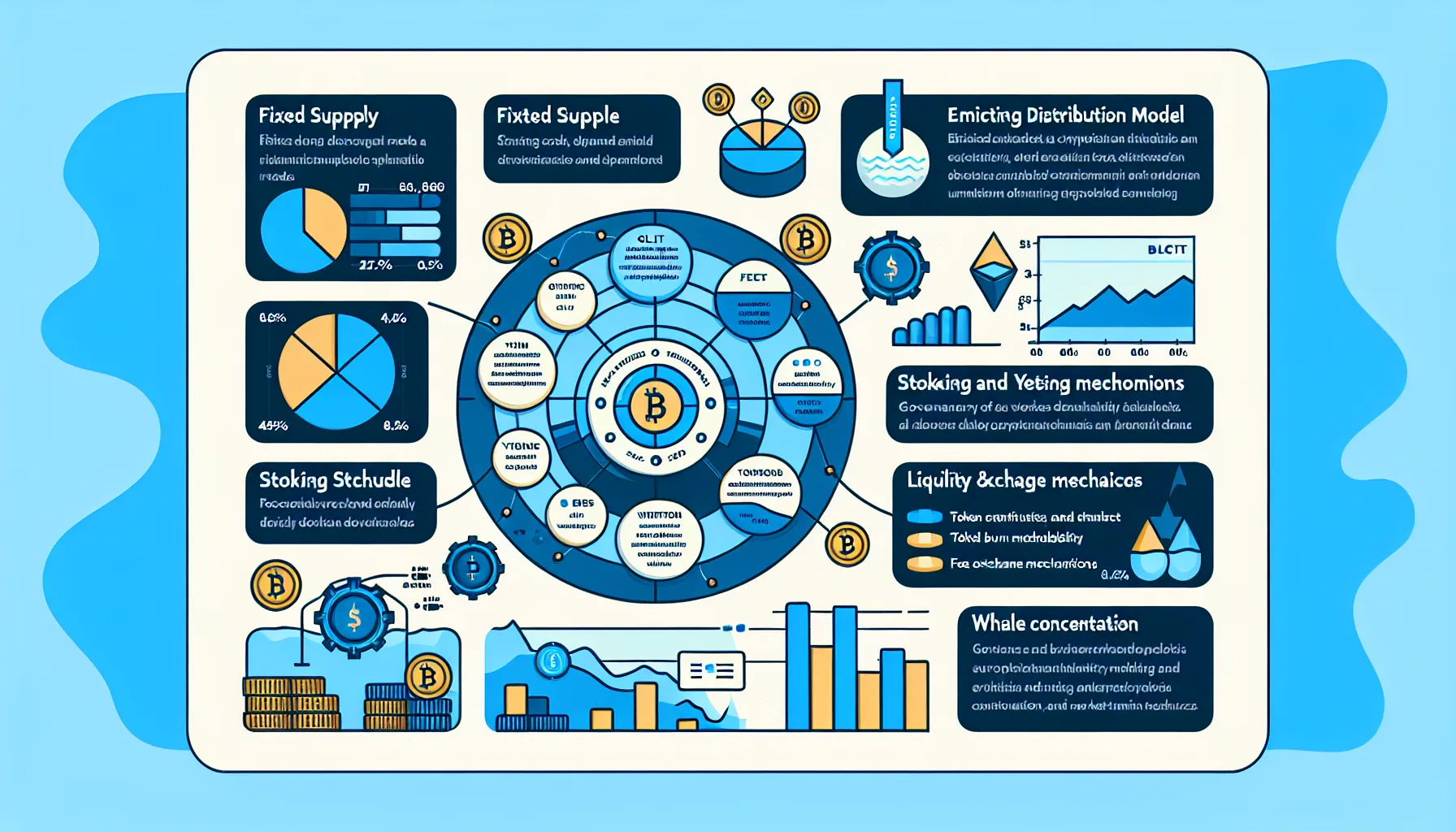
GLT operates on a fixed supply model, ensuring that no additional tokens will be minted beyond the initial issuance. The total supply was predefined at network launch, eliminating inflationary concerns commonly associated with proof-of-stake or governance-driven issuance models. However, this rigid cap presents liquidity challenges, as token supply remains static regardless of network activity fluctuations.
Emission Schedule and Vesting Mechanisms
GLT's distribution was structured through a combination of initial allocations and vesting schedules. A significant portion was allocated to early contributors, developers, and ecosystem incentives. Token unlock periods were implemented for some allocations, mitigating immediate sell pressure while ensuring gradual redistribution. However, vesting delays often create supply overhangs, where large token unlock events introduce sudden volatility risks.
Staking and Yield Dynamics
GLT incorporates staking mechanisms that allow participants to secure the network or access governance rights. Unlike hyperinflationary staking models, GLT yield structures are designed to be sustainable, derived from transaction fees rather than token emissions. While this mitigates dilution for long-term holders, lower staking rewards can deter participation compared to higher-yield alternatives in the broader crypto ecosystem. Additionally, variations in network fee collection impact staking APYs, leading to unpredictable returns for delegators.
Governance and Token Utility
GLT serves as the principal governance token within its ecosystem, granting holders voting power on protocol upgrades and certain treasury allocations. However, governance participation is often limited, as token concentration among early stakeholders raises concerns about decentralization. A high percentage of the supply remains in the hands of early backers, leading to governance centralization risks that can hinder community-driven decision-making.
Liquidity and Exchange Availability
GLT's liquidity distribution is highly concentrated, with market depth varying significantly across exchanges. Larger order books exist on select platforms, while smaller exchanges experience lower liquidity, elevating slippage risks. This fragmentation can impact trading efficiency and increase arbitrage opportunities, leading to price discrepancies across markets.
Fee Structures and Token Burn Mechanics
Transaction fees on the GLT network contribute to both validator incentives and periodic token burns. While token burns introduce a deflationary aspect to the ecosystem, the overall impact depends on network usage levels. Low transaction volumes reduce the burn effect, leaving token velocity largely unaffected. This contrasts with actively deflationary models where continuous burns exert upward price pressure over time.
Whale Concentration and Market Impact
A meaningful share of GLT’s supply is held by a small number of wallets, leading to potential liquidity risks. Large-scale movements from these holders can trigger substantial price swings and impact broader market sentiment. Additionally, centralized holdings raise concerns regarding coordinated governance actions or selling pressure during key events such as vesting unlocks.
GLT Governance
GLT Governance: On-Chain Mechanics and Decentralized Decision-Making
GLT governance is structured around an on-chain voting system, allowing token holders to participate in protocol decisions. This governance mechanism is designed to be trustless, eliminating the need for intermediaries, but its effectiveness depends on voter participation and the distribution of tokens among stakeholders.
Governance Token Utility and Voting Power
GLT relies on governance tokens to determine voting weight, meaning influence over decisions is proportional to token holdings. This can create centralization risks if a small number of holders control a disproportionate share of tokens. Proposals can be submitted by governance participants, and the execution of accepted proposals is typically automated through smart contracts. However, voter apathy remains a challenge, as lower participation rates can allow well-coordinated minority groups to dictate outcomes.
Proposal Mechanisms and Smart Contract Execution
Proposals within the GLT governance framework follow a structured process. Initially, governance participants submit proposals for protocol upgrades, parameter adjustments, or treasury usage. These proposals then enter a voting phase, where token holders can signal support or opposition. If a proposal meets the required quorum and approval threshold, it moves to execution. Smart contracts handle this execution, ensuring that successful proposals are implemented without manual intervention. However, delays and bottlenecks in execution can arise, particularly if dependencies on external oracles and multi-step governance procedures exist.
Governance Centralization Risks and Voter Incentives
One of the core concerns in GLT governance is the potential for centralization. If a small number of governance participants control a significant percentage of tokens, they can determine proposal outcomes with little opposition. To mitigate this, governance frameworks often introduce delegation systems, allowing smaller holders to pool voting power behind trusted representatives. However, delegation itself introduces risks, as it may reinforce power structures and lead to the formation of governance oligopolies.
Additionally, voter incentives can impact the effectiveness of governance participation. If voting does not offer tangible benefits beyond governance influence, turnout may remain low. Some governance models attempt to counteract this by introducing staking rewards or participation incentives, but these mechanisms must be carefully balanced to avoid governance manipulation.
Forking Considerations and Governance Controversies
Governance disputes within GLT can lead to contentious decisions, particularly if token holders are divided on the direction of the protocol. In extreme cases, disagreements may result in protocol forks, where different factions implement separate versions of GLT with distinct governance rules. Forking events introduce uncertainty, as user and developer adoption determines the success of each chain. While governance models aim to prevent such divisions, they remain a fundamental risk in decentralized decision-making systems.
Technical future of GLT
GLT Technical Roadmap and Developments
Ongoing Protocol Improvements
GLT's development team is actively working on protocol optimizations aimed at improving transaction throughput and network efficiency. A primary focus is the refinement of its consensus mechanism to address existing latency concerns. Developers are testing a hybrid consensus update, leveraging off-chain validation to improve finality without compromising decentralization. However, concerns remain about potential centralization risks if too much validation shifts off-chain.
Scalability remains a challenge, with congestion observed during high-demand periods. The deployment of Layer 2 scaling solutions is under discussion, though no finalized integration has been announced. Sidechains are currently being explored as a potential solution, but security trade-offs are still being analyzed.
Smart Contract Enhancements
The smart contract framework for GLT is undergoing modifications to improve efficiency and reduce execution costs. A planned upgrade will introduce more gas-efficient opcodes and improved fee structures. However, backward compatibility issues with certain deployed contracts remain a concern, requiring developers to implement cautious migration strategies.
Security audits have identified recurring vulnerabilities in several third-party dApps built on GLT's network. While patches have been deployed, the efficacy of these changes in preventing future exploits is yet to be determined.
Cross-Chain Compatibility and Interoperability Initiatives
GLT's roadmap includes expanding interoperability with major blockchain ecosystems, enabling seamless cross-chain transactions. Integration with widely used cross-chain communication protocols is underway, though early tests have exposed synchronization issues when bridging assets. Resolving these inconsistencies remains a top priority before further integrations move forward.
Developers are also considering native support for zero-knowledge (ZK) proofs as part of the roadmap, which would enhance privacy and reduce computational requirements for verifying transactions. However, implementation complexities and the resource-intensive nature of ZK proofs have led to delays in deployment.
Long-Term Development Goals
Future updates aim to introduce governance enhancements, allowing deeper community participation in protocol adjustments. Current governance mechanisms have been criticized for inefficiencies, particularly in decision-making procedures requiring high voter participation. Efforts to streamline governance remain in preliminary discussion stages.
Additionally, advancements in validator incentivization structures are planned to improve network security while maintaining decentralization. Concerns over staking centralization risks persist, as higher capital requirements for validators may lead to an uneven distribution of network control.
While technical development on GLT continues, overcoming existing bottlenecks in scalability, security, and interoperability remains critical for the long-term viability of the network.
Comparing GLT to it’s rivals
GLT vs BTC: A Technical and Functional Comparison
Consensus Mechanism and Security
GLT and Bitcoin (BTC) operate on fundamentally different consensus mechanisms. While BTC employs Proof-of-Work (PoW), relying on computational power and energy-intensive mining, GLT utilizes a more lightweight approach designed to optimize efficiency and scalability. This key distinction allows GLT to process transactions with lower energy consumption and reduced hardware requirements, addressing concerns over BTC’s power-intensive model. However, BTC’s PoW system has a proven track record of security against 51% attacks, whereas GLT’s model has not been tested at the same level of global adversarial resistance.
Transaction Efficiency and Fees
BTC’s transaction speed and cost have long been points of contention. Average block times and congestion on the Bitcoin network can lead to higher fees and slower settlements, particularly during periods of high demand. GLT, in contrast, benefits from a faster transaction confirmation process and typically lower fees due to its underlying architecture. This makes GLT more suitable for microtransactions and high-frequency transfers. However, BTC’s Lightning Network addresses some of these issues by enabling off-chain transactions, though adoption is still evolving.
Supply and Tokenomics
One of BTC’s core strengths lies in its strict 21 million token cap, driving its scarcity narrative and positioning it as "digital gold." While GLT also incorporates controlled issuance, its total supply mechanics differ, raising questions about long-term inflationary effects or economic sustainability within its ecosystem. The fixed supply of BTC contributes significantly to its store-of-value proposition, while GLT's model is designed with more flexibility, which could either be beneficial for adaptability or problematic for long-term valuation stability.
Network Effect and Adoption
BTC holds an unparalleled first-mover advantage, with widespread recognition, institutional adoption, and deep liquidity across global exchanges. GLT, despite its technical advantages in efficiency and cost, faces the challenge of building a comparable level of adoption. Merchant acceptance, integration with financial services, and developer activity all heavily favor BTC, making it difficult for newer assets like GLT to compete on pure network effect alone.
Smart Contract Capabilities
Unlike BTC, which focuses primarily on secure, decentralized value transfer, GLT incorporates more advanced programmability features. While Bitcoin’s scripting language is intentionally restricted for security reasons, GLT enables more complex transactions and automation. However, this expanded functionality introduces additional attack vectors, making security audits and best practices critical for ensuring robustness.
GLT vs ETH: A Technical and Functional Comparison
When comparing GLT to Ethereum (ETH), several crucial distinctions emerge in areas such as consensus mechanisms, smart contract functionality, transaction cost efficiency, and scalability solutions. While both projects aim to support decentralized applications (dApps), the underlying infrastructure and trade-offs differ significantly.
Consensus Mechanism and Network Security
Ethereum has transitioned to a Proof-of-Stake (PoS) consensus mechanism, reducing its energy consumption and allowing validators to secure the network without intensive computational work. This shift has improved Ethereum’s sustainability but has also sparked debates regarding centralization risks due to the influence of large staking pools.
GLT employs a distinct consensus model, which has different implications for decentralization, security, and transaction validation finality. Unlike Ethereum’s PoS, which relies on validators with a financial stake in the network, GLT’s design prioritizes alternate validation methods that affect how consensus is reached and how resistant it is to various attacks.
Smart Contract Functionality and Development Environment
Ethereum’s smart contract execution is powered by the Ethereum Virtual Machine (EVM), which has become the industry standard for decentralized applications. EVM compatibility enables a massive developer ecosystem, tooling support, and interoperability with a broad range of DeFi protocols and NFT applications.
GLT, however, employs its own execution environment, which introduces advantages and limitations. Developers benefit from optimizations specific to GLT’s architecture, but they may face a steeper learning curve if they come from an EVM ecosystem. The lack of direct compatibility with Ethereum-based tools and frameworks could limit adoption unless robust cross-chain solutions or developer incentives are introduced.
Transaction Costs and Throughput
Ethereum consistently faces challenges related to transaction costs. While upgrades and Layer 2 scaling solutions help mitigate gas fees, congestion remains an issue during periods of high demand. Gas fees fluctuate based on network activity, often making smaller transactions economically unfeasible.
GLT’s transaction cost structure operates differently, offering a pricing model that can be more predictable or cost-effective, depending on network conditions. However, the trade-off may come in the form of lower overall network adoption or liquidity when compared to Ethereum’s widely recognized and utilized ecosystem.
Scalability and Network Growth
Ethereum’s scaling roadmap includes Layer 2 rollups and sharding to enhance throughput and lower congestion. These solutions improve Ethereum’s performance, but they introduce additional complexity and reliance on external scaling providers.
GLT approaches scalability using its native architecture, which may offer efficiency advantages but could also face bottlenecks as adoption grows. Without extensive Layer 2 infrastructure or widespread developer adoption, GLT’s ability to support high transaction volumes long-term remains a critical factor in its competition with Ethereum.
GLT vs. Solana (SOL): A Technical and Functional Comparison
Network Performance and Scalability
Solana (SOL) is widely recognized for its high-speed transactions and low fees, enabled by its unique Proof of History (PoH) consensus mechanism combined with Proof of Stake (PoS). This allows Solana to handle thousands of transactions per second (TPS) with minimal latency. GLT, in contrast, utilizes a different consensus model that prioritizes decentralization over sheer speed. While this provides enhanced security in certain aspects, it generally results in lower TPS compared to Solana, making it less suited for applications requiring ultra-fast finality.
Smart Contract Capabilities
GLT and Solana both support smart contract execution, but their implementations vary significantly. Solana’s smart contracts, known as “programs,” are written in Rust, a language known for safety and performance. This architecture eliminates the concept of gas fees in the traditional sense, making execution costs more predictable. GLT, however, operates on a VM structure that may be more familiar to developers from other ecosystems, though it can sometimes struggle with execution efficiency under heavy network load.
Ecosystem and Developer Adoption
Solana has a rapidly growing developer base, supported by extensive tooling, grants, and an established DeFi and NFT ecosystem. The network's ability to process complex transactions at low cost makes it attractive for high-frequency trading applications and gaming use cases. GLT, while having a strong community, has faced challenges in onboarding developers due to differences in programming infrastructure and a less mature developer ecosystem. However, GLT's architecture provides other advantages, such as modularity, which appeals to certain niche projects.
Decentralization and Security Considerations
A common criticism of Solana is its level of decentralization. While technically permissionless, Solana's validator requirements are resource-intensive, leading to concerns about node centralization and potential reliance on specific entities. GLT, on the other hand, aims for a balance between security and decentralization, allowing a larger number of participants to operate validators with lower hardware requirements. However, this trade-off can sometimes result in slower block processing times or congestion during high-demand periods.
Network Stability and Downtime
Solana has encountered network stability issues, including multiple historical outages due to congestion, chain halts, or software bugs. GLT, while not immune to technical challenges, operates on a network design that mitigates these types of full-scale outages, though it may sacrifice some efficiency in doing so. This makes GLT more resilient in certain failure scenarios, albeit at the cost of raw transaction throughput.
Primary criticisms of GLT
Primary Criticism of GLT
Centralization Concerns in Governance
One of the most persistent criticisms of GLT is its governance structure, which some argue lacks true decentralization. Despite claims of community-led decision-making, a significant portion of voting power is concentrated among early stakeholders and a few dominant entities. This has led to concerns that protocol updates and major changes can be swayed by a small group rather than reflecting the broader community’s interests.
Scalability and Network Congestion
While GLT initially positioned itself as a high-performance blockchain, real-world usage has exposed limitations in its scalability. Under heavy load, transactions can experience significant delays, and gas fees—while not as notoriously high as some competitors—spike unpredictably. Critics argue that GLT's underlying consensus mechanism struggles to efficiently scale without compromising either security or decentralization, making it less competitive under real-world conditions.
Security Vulnerabilities and Past Exploits
Several security issues have been identified in both the smart contract layer and core protocol of GLT. While patches were deployed for previous vulnerabilities, concerns persist regarding the overall robustness of its security architecture. Audits have flagged potential weaknesses in some of GLT’s unique consensus optimizations, raising questions about whether security has been sacrificed for performance. Additionally, past network disruptions and contract exploits have fueled skepticism about its long-term reliability.
Tokenomics and Inflationary Pressure
GLT’s token emission model has been another major point of contention. The network’s reward distribution mechanism results in a steady flow of new tokens into circulation, leading to concerns about inflationary pressure over time. While proponents argue this incentivizes network participation, critics point out that it dilutes existing holders—especially in situations where demand fails to keep pace with supply. Some also take issue with GLT’s staking model, which concentrates rewards among whales, disproportionately benefiting those with large initial allocations.
Lack of Ecosystem Growth
Despite its technical promises, GLT has struggled to establish itself as a go-to platform for developers and users. Adoption among dApp projects remains relatively low, limiting network effects that drive organic demand. Competing chains have successfully attracted a broader range of DeFi, NFT, and enterprise applications, leaving GLT playing catch-up in terms of real-world utility. Some attribute this stagnation to the lack of strong developer incentives, while others argue that the technology stack lacks critical differentiators needed to attract sustained interest from major projects.
Founders
The Founding Team Behind GLT: Key Figures and Their Impact
The founding team of GLT consists of a group of developers and cryptographers with deep roots in blockchain infrastructure. While some team members maintain a level of anonymity, a few key figures have emerged as public proponents of the project, contributing to both its technical foundations and its broader adoption.
Core Developers and Their Blockchain Background
Several of the original developers behind GLT previously contributed to other major blockchain networks, particularly those focused on scalability and decentralization. Their experience in Layer 1 and Layer 2 protocols shaped the design choices of GLT, emphasizing modular architecture and enhanced transaction efficiency.
However, the team's decision-making process has faced criticism from segments of the community, especially regarding governance and protocol upgrades. Some developers initially proposed changes that were viewed as beneficial for scalability but were later abandoned due to internal conflicts and external pressures from miners and validators.
Anonymity vs. Transparency in Leadership
A point of contention within the community is the balance between anonymity and transparency among GLT’s leadership. While some of the early contributors have remained entirely anonymous, others have taken a more public-facing role at conferences, in developer forums, and through technical AMAs (Ask Me Anything sessions).
This mix of exposure has led to debates on accountability, particularly regarding major protocol decisions. Certain governance proposals have been pushed forward with minimal transparency around team voting weight, raising concerns about centralization within the decision-making process.
Early Investor Influence and Strategic Partnerships
Beyond the technical founders, GLT’s early development was supported by a group of investors with significant influence in the crypto space. Some of these backers had strong ties to large-scale mining operations, which initially shaped network incentives in a way that benefited miners more than smaller participants.
This influence was particularly evident in the project's early staking model, which some argued disproportionately favored entities with large token reserves. Subsequent adjustments attempted to rebalance incentives, but friction between different network stakeholders remains a recurring issue.
Ongoing Development and Team Expansion
GLT’s core development team has expanded over time, integrating contributors from other blockchain ecosystems. This has led to an influx of new ideas but has also caused ideological clashes between original developers and newer contributors regarding protocol direction.
While the team continues to refine GLT’s architecture, concerns over long-term decentralization and governance transparency persist within the community.
Authors comments
This document was made by www.BestDapps.com
Sources
- https://glt.org/whitepaper
- https://glt.org/yellowpaper
- https://glt.org/developers
- https://glt.org/roadmap
- https://glt.org/blog/protocol-update
- https://gltscan.com/
- https://github.com/gltproject/glt-core
- https://github.com/gltproject/glt-improvement-proposals
- https://forum.glt.org/
- https://glt.org/staking-guide
- https://glt.org/governance
- https://research.glt.org/consensus-mechanism
- https://explorer.glt.org/
- https://docs.glt.org/
- https://glt.org/security-audit
- https://glt.org/tokenomics
- https://glt.org/exchange-listings
- https://blog.glt.org/liquidity-analysis
- https://glt.org/partnerships


