History of GLMR
A Detailed Look at GLMR’s History: From Concept to Deployment
Moonbeam’s native token, GLMR, is inextricably tied to the development and evolution of the Moonbeam Network, a project designed to deliver Ethereum-compatible smart contract functionality to the Polkadot ecosystem. Its origins stem from the growing demand for interoperability between blockchains, which had long been fragmented by differing architectures and frameworks. The team behind Moonbeam, helmed by PureStake, set out in early talks to solve the glaring need for a specialized parachain that brought Ethereum Virtual Machine (EVM) capabilities to Polkadot, and this vision served as the foundation for GLMR’s inception.
GLMR’s journey began with its association to the broader Polkadot parachain ecosystem. As Polkadot's ecosystem matured with the introduction of parachain slot auctions, competition became fierce. Moonbeam’s team recognized early on that securing a slot would involve considerable effort. GLMR was intricately tied to this process, as its eventual launch on the live network would only follow Moonbeam’s success in securing a parachain. To fund this, Moonbeam initiated a community-led crowdloan, incentivizing DOT holders with GLMR tokens as rewards in exchange for staking support. This campaign became one of the most notable crowdloans in the Polkadot ecosystem, underscoring the high community interest in Moonbeam’s interoperable vision.
From a technical standpoint, GLMR’s deployment coincided with the Moonbeam Network’s phased rollout. First came Moonbase Alpha, a testnet designed to fine-tune the technical underpinnings of Moonbeam’s compatibility with existing Ethereum tools like Solidity, Truffle, and MetaMask. This stage showcased significant potential, but it also revealed weaknesses, such as initial consensus challenges related to Polkadot’s relay chain architecture. Teams diligently worked to address these flaws as development continued.
After Moonbeam secured its parachain slot, January marked the transition from being a test network to a fully operational mainnet project under Polkadot. At this stage, GLMR became central to the network's operations, employed for transaction fees, governance voting, and staking mechanisms. However, criticisms have emerged over GLMR’s inflationary tokenomics, which some argue could dilute long-term holder value. Additionally, early users faced concerns about high gas fees when network activity spiked above expected thresholds, a somewhat ironic issue for a project focused on scalability.
Despite these hurdles, GLMR’s early history illustrates the challenges and innovations inherent to building within a multi-chain future. Moonbeam’s efforts to integrate Ethereum-centric tools into Polkadot lay the groundwork for GLMR’s evolution, even as technical and economic challenges persist.
How GLMR Works
How GLMR Works: Unpacking the Technology Behind Moonbeam's Native Token
GLMR is the utility and governance token for the Moonbeam network, a prominent smart contract platform built on Polkadot. Designed to facilitate interoperability, scalability, and decentralized application (dApp) deployment, GLMR plays a pivotal role in powering Moonbeam's ecosystem. This section delves into the mechanics that drive GLMR’s functionality and its intricate role in Moonbeam’s architecture.
Core Functionality of GLMR in the Moonbeam Ecosystem
At its core, GLMR is a multifunctional crypto asset that underpins Moonbeam’s operations. As the native token, GLMR is used to pay transaction fees within the network. This functionality extends to every interaction on Moonbeam, from deploying smart contracts to simple token transfers. The gas fee mechanism is modeled similarly to Ethereum; however, fees are denominated in GLMR rather than ETH, aligning with Moonbeam's Ethereum-compatible design.
GLMR also serves as the utility token for staking within Moonbeam's nominated proof-of-stake (NPoS) consensus mechanism. In this setup, network participants nominate collators by delegating GLMR, ensuring the network remains decentralized while achieving high transaction throughput. Nominators are incentivized for their contributions to the network’s security through staking rewards, paid out in GLMR. However, one critical limitation lies in the centralization risks tied to staking; as larger token holders often dominate nomination processes, it challenges Moonbeam’s goal of equitable governance.
Governance Mechanisms and GLMR’s Role
GLMR holders are integral to Moonbeam’s decentralized governance model. Token holders can vote on network upgrades, parameters, and proposals through the on-chain governance system. Proposals are initiated through a public referendum process, where GLMR is locked as a form of collateral to support the proposal. However, criticisms exist about the barrier to entry for smaller GLMR holders. Since voting power is proportional to the amount of GLMR held, whales or large stakeholders often wield disproportionate influence. This has led to debates within the community about the fairness and inclusivity of governance.
Developer and Cross-Chain Integration Fees
Moonbeam’s compatibility with existing tools like Ethereum’s Web3 API allows developers leveraging the platform to write and execute Solidity smart contracts with minimal migration effort. To interact with Moonbeam’s EVM-compatible layer, developers pay computational fees in GLMR. Additionally, GLMR plays a role in cross-chain integrations, such as transactions bridged from Polkadot’s relay chain and external parachains.
While GLMR’s architecture enables Moonbeam to function as a decentralized and developer-friendly platform, the token’s practical utility is closely tied to adoption challenges and potential network congestion. Over time, increasing the focus on equitable staking and governance models could shape its long-term sustainability.
Use Cases
Use Cases of GLMR Token: A Deep Dive into Moonbeam’s Ecosystem
The GLMR token, native to the Moonbeam network, serves as the cornerstone for enabling functionality across its Ethereum-compatible smart contract platform. Moonbeam is built on Polkadot, leveraging its shared security model and interoperability. However, GLMR’s utility extends far beyond network participation, encompassing a range of decentralized finance (DeFi), staking, governance, and infrastructure use cases that are critical yet nuanced.
1. Gas Fees and Execution Costs
GLMR's primary function is gas fee payment for executing smart contracts and transactions on Moonbeam. This utility mirrors Ethereum’s approach using ETH for gas, maintaining compatibility with Ethereum tools and frameworks. One of the main challenges in this area is tied to scalability constraints during periods of network congestion. While Moonbeam boasts fast finality times supported by Polkadot’s relay chain, bottlenecks in execution, coupled with fluctuating transaction costs, could pose a friction point for developers and users alike.
2. Cross-Chain Asset Transfers
GLMR plays a critical role in facilitating cross-chain interactions and asset transfers within the Polkadot ecosystem and beyond. Moonbeam’s support for cross-chain messaging ensures that GLMR can act as a transactional "bridging" asset when interacting with other parachains or external blockchains via ecosystem integrations. However, critics often cite the complexity of cross-chain operability and the risks of smart contract vulnerabilities involved in this process. These issues remain areas under scrutiny, especially given the nascent nature of multi-chain frameworks.
3. Network Staking for Collators
Holders of GLMR tokens can stake their assets in support of Moonbeam’s collators—nodes responsible for producing blocks and transferring data to the Polkadot relay chain. This staking mechanism helps secure the network and improve overall efficiency. Despite the merits of this decentralized model, the downside lies in potentially uneven reward distributions that can disincentivize small-stake participants. Additionally, the evolving competition among Polkadot parachains could dilute incentives for strictly staking GLMR if other networks offer higher yields.
4. Decentralized Governance
GLMR empowers token holders to participate in Moonbeam’s on-chain governance. From protocol upgrades to funding ecosystem projects, this governance model exemplifies decentralized coordination. However, a key concern is the concentration of voting power among whale accounts, resulting in potential centralization risks within the governance system. This has been an ongoing critique for many blockchain networks, and Moonbeam is no exception.
5. dApp Ecosystem and Utility
Developers use GLMR within decentralized applications (dApps) built on Moonbeam for native tokenomics, such as liquidity provisioning, staking rewards, or in-app transactions. While this enhances GLMR's utility, its adoption is closely tied to the growth of Moonbeam’s ecosystem—a dependency that could limit value capture if the network struggles to sustain or attract diverse dApps compared to larger platforms like Ethereum.
GLMR Tokenomics
GLMR Tokenomics: A Deep Dive into Supply, Distribution, and Utility
The tokenomics of GLMR, the native token of Moonbeam, is a critical component of its ecosystem and functionality. Designed with a focus on balancing decentralized network participation and incentivizing developers, GLMR operates within a structured emission and distribution model. However, like any crypto asset, its design has both strengths and potential challenges.
Token Supply and Emission Model
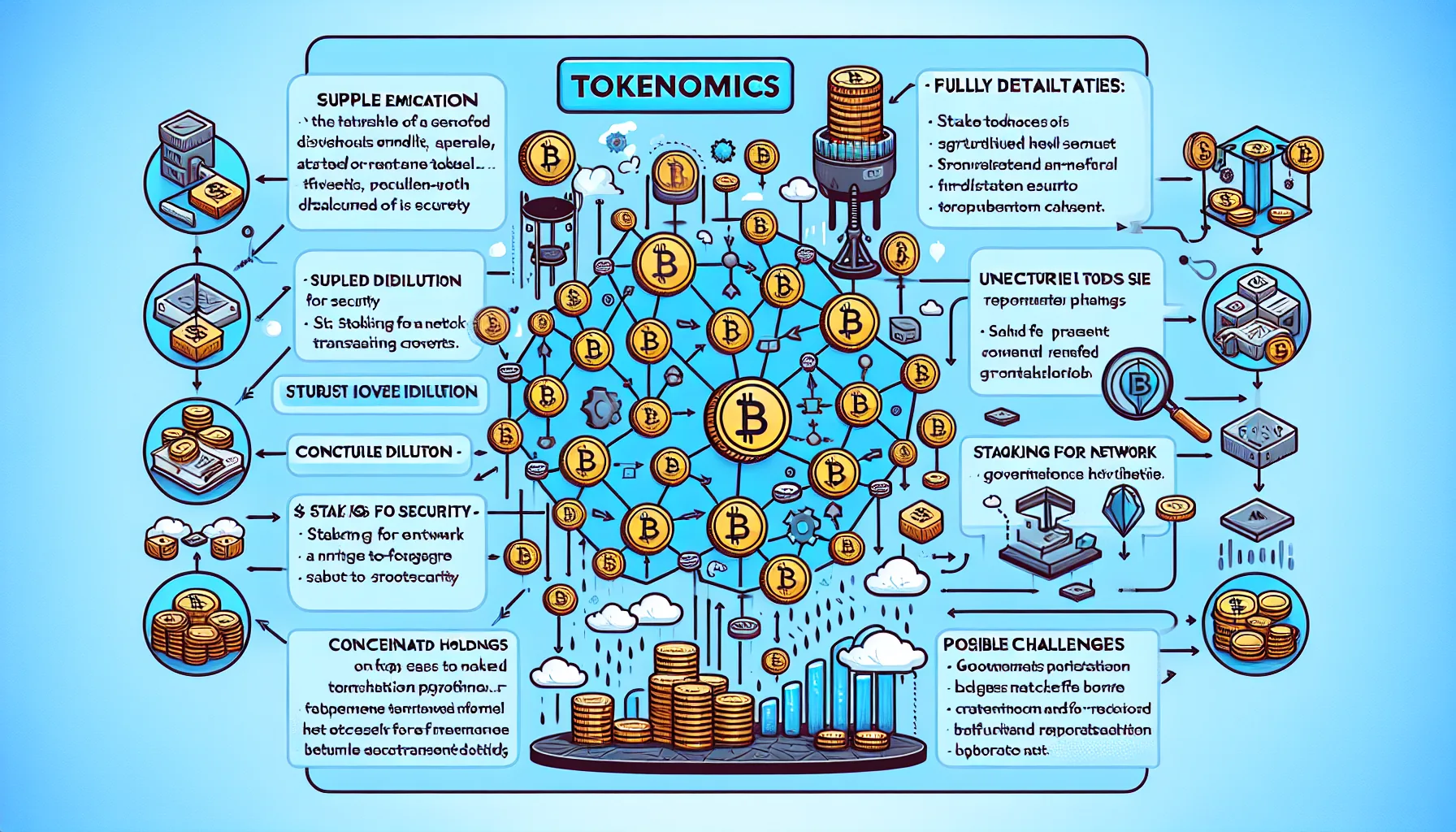
GLMR features an uncapped token supply with a pre-defined annual inflation rate. The annual inflation parameter, set at 5%, is aimed at achieving multiple objectives, including incentivizing network participants and maintaining a sustainable economic model for the ecosystem. The inflationary structure allocates newly minted tokens to stakers (collators and delegators) for securing the network and to the treasury, ensuring a constant flow of funds for ecosystem development.
While the inflationary mechanism ensures a steady flow of rewards, the absence of a hard cap introduces concerns about potential long-term dilution. For token holders not actively staking, their proportional stake of the network can diminish over time as additional tokens are minted. This may discourage some passive holders who prioritize deflationary or capped-supply models.
Distribution and Allocation
The initial GLMR distribution was structured to support the long-term decentralization of the network. Tokens were allocated across several categories, including crowdloan participants, seed and private investors, the founding team, and a community-focused ecosystem fund. While this model encourages robust initial adoption and ecosystem growth, the sizable allocations to private investors and the core team may raise questions about concentrated holdings and the lock-up period timelines.
For transparency, these allocations often include vesting schedules. However, the gradual unlocking of tokens into circulation over time can create sell pressure, particularly during periods of broader market downturns or bearish cycles. For participants tracking supply distribution, monitoring these unlock events is a critical practice to anticipate potential fluctuations in circulating supply.
Utility Within the Ecosystem
GLMR serves as a multi-functional token within Moonbeam, underpinning its operational economics. Its primary utilities include gas fee payments, staking to empower network security, and governance participation. This utility-centric model ensures that GLMR maintains its relevance and demand in the ecosystem. However, gas fee payments are denominated in GLMR, and fluctuating token prices may lead to unpredictable transaction costs, an issue common across tokenized ecosystems.
Furthermore, while the staking mechanism secures the decentralized network, the limited number of active collators and delegators may pose centralization risks if participation does not scale alongside network growth. Addressing this scaling issue will be critical to maintaining a robust level of decentralization for Moonbeam’s consensus protocol.
GLMR Governance
Governance Structure of GLMR: Decentralized Decision-Making on Moonbeam
The governance of GLMR, the native token of the Moonbeam network, is a foundational component of its decentralized infrastructure. Moonbeam operates as a Polkadot parachain, and its governance framework is designed to align both technical upgrades and community-driven proposals with the ethos of collective decision-making. However, like any decentralized governance system, it presents unique challenges alongside its strengths.
On-Chain Governance Mechanisms
GLMR governance is managed through on-chain processes, leveraging Polkadot’s Substrate framework for seamless proposal creation, voting, and implementation. Token holders play an operational role in decision-making, with voting weights proportional to the amount of GLMR staked. This direct, transparent mechanism ensures that upgrades, financial allocations, and strategic changes reflect the preferences of those financially invested in the network.
A key highlight of Moonbeam’s governance structure is its adaptability via runtime upgrades. These upgrades, implemented entirely through democracy rather than hard forks, make the system relatively seamless for change management. However, reliance on token-weighted voting has risk implications. Large token holders, such as whales or custodial exchanges, may dominate critical votes, creating a potential misalignment of incentives between institutional players and the broader Moonbeam ecosystem.
Council and Technical Committee
In addition to token holder voting, Moonbeam employs a Council and Technical Committee to enhance operational efficiency. The Council consists of elected members tasked with fast-tracking time-sensitive proposals and vetoing malicious or poorly-constructed initiatives. The Technical Committee provides expertise on code-level changes and can prioritize critical fixes.
While these bodies add agility to governance, they centralize certain powers among a smaller cohort and may lack full transparency regarding deliberation processes. This centralized counterbalance to decentralized governance raises questions about accountability and whether the delegation of authority inadvertently undermines the community's ability to self-manage.
Governance Challenges and Risks
One of the most debated issues in GLMR governance is voter apathy. A common challenge across DAO-style mechanisms, low participation rates among small-scale holders reduce decentralization and amplify the influence of large players. Moreover, the complexities of understanding governance proposals can disenfranchise non-technical participants, unintentionally excluding significant portions of the community from meaningful engagement.
Finally, the cross-chain nature of Moonbeam as a Polkadot parachain introduces an added layer of complexity. Changes to the broader Polkadot governance model could cascade into the Moonbeam ecosystem, complicating self-sovereignty. Striking a balance between maintaining interoperability and asserting governance independence remains a pivotal challenge.
Technical future of GLMR
Exploring Current and Upcoming Technical Developments for GLMR
Moonbeam (GLMR) stands out within the Polkadot ecosystem due to its focus on interoperability and Ethereum compatibility. The technical roadmap of GLMR reflects its ambition to advance cross-chain functionality while addressing scalability and security challenges. Below is a detailed exploration of its current technical progress and future development objectives.
Smart Contract Enhancements and EVM Compatibility
GLMR's foundational design prioritizes Ethereum Virtual Machine (EVM) compatibility, enabling developers to deploy Solidity-based smart contracts without modification. Recent upgrades have focused on optimizing gas fee calculations, improving the transaction throughput to accommodate higher usage within decentralized applications (dApps). However, despite these efforts, scalability concerns remain. Under heavy network load, latency in block finalization has been reported, highlighting the necessity for further optimization on relay chain integrations.
To address these limitations, upcoming updates are expected to refine the hybrid execution model that supports both Substrate-based native modules and Ethereum-compatible frameworks. The roadmap indicates potential implementations of layer-2 solutions, although clear technical specifics, such as zk-rollup or optimistic rollup deployment, have yet to be shared publicly.
XCM Advancements for Cross-Chain Communication
Moonbeam leverages Polkadot's Cross-Consensus Messaging (XCM) protocol to ensure interoperability between various parachains. Currently, GLMR supports token transfers and staking operations across the Polkadot ecosystem, but the roadmap includes expanding XCM functionality to encompass more complex data types and multi-asset transactions. This technical evolution could position Moonbeam as a crucial routing layer for DeFi and NFT use cases.
That said, XCM itself is still an evolving standard within Polkadot, and developers face hurdles such as handling consensus failures and prolonged runtime upgrades. The need for more developer-friendly tooling and documentation remains a challenge for achieving widespread adoption. These obstacles are critical areas of focus in GLMR’s technical trajectory.
Decentralization and Validator Set Improvements
Efforts to decentralize Moonbeam’s relay and parachain network infrastructure have progressed, including updates on optimizing the validator election process. The goal is to onboard a more geographically diverse set of validators, increasing censorship resistance. However, the relatively small number of active validators on the Moonbeam parachain compared to Polkadot’s relay chain continues to be a concern. Addressing this bottleneck by introducing novel staking incentives or exploring decentralized autonomous validator selection mechanisms has been alluded to but not formally outlined in the technical roadmap.
Integration of WASM-based Smart Contracts
Another major future-oriented development includes integrating WebAssembly (WASM) as a parallel smart contract environment alongside EVM. WASM offers advantages like lower execution costs and the ability to directly execute Substrate-native logic. While promising, integrating WASM introduces complexity in maintaining seamless backward compatibility with Ethereum tooling. This remains a significant upcoming technical challenge for GLMR as it seeks to bridge the future of smart contract development across ecosystems.
Comparing GLMR to it’s rivals
GLMR vs DOT: A Technical and Ecosystem Comparison
Moonbeam (GLMR) and Polkadot (DOT) both occupy critical positions in the broader Polkadot ecosystem, but they address distinct use cases. GLMR is Moonbeam's native utility token, focused on providing smart contract functionality with Ethereum compatibility within the Polkadot ecosystem. In contrast, DOT holds the role of Polkadot's governance token, staking asset, and network-wide utility currency, which situates it at a broader ecosystem level.
Technological Architecture
One of the pivotal differences lies in their architecture and operational roles. DOT operates as the cornerstone of Polkadot’s relay chain, ensuring cross-chain interoperability and security through shared validation. GLMR, on the other hand, powers Moonbeam, a smart contract parachain that emphasizes compatibility with Ethereum’s tools and protocols, such as EVM (Ethereum Virtual Machine) and Solidity-based contracts.
While both networks leverage Polkadot’s Substrate framework, GLMR provides an Ethereum-like developer environment that eliminates the need for major modifications when deploying existing Ethereum dApps (decentralized applications). However, this reliance on being Ethereum-compatible requires Moonbeam to continuously address updates and integrations to keep pace with Ethereum's improvements—introducing a layer of operational complexity. DOT, conversely, avoids such integration burdens as its focus is more infrastructure-centric rather than application-specific.
Developer and Ecosystem Adoption
When considering developer adoption, DOT’s role as the backbone of the Polkadot ecosystem grants it a broader scope for utility across parachains. DOT is used to bond parachains, participate in governance referenda, and stake for network security. In contrast, GLMR is specifically designed to facilitate transactions, execute smart contracts, and incentivize decentralized projects built on the Moonbeam network. This narrower range of utility can limit the appeal of GLMR in cases where developers or participants require broader ecosystem interaction.
Controversies Around Gas Fees
While one of GLMR’s highlights is its affordable gas fees compared to Ethereum, its differentiation weakens when compared to DOT itself, which inherently avoids gas fees for core staking or governance tasks. Additionally, due to the token being tightly linked to Moonbeam-specific activities, questions around long-term token demand remain a topic of concern among seasoned users.
Security Considerations
Security and decentralization differ as well. DOT benefits from Polkadot’s robust relay chain and its shared security model, which gives it an edge in terms of scalability and protection across interconnected parachains. GLMR, while leveraging these shared security elements, relies heavily on Moonbeam-specific metrics for its success. This nested dependency presents a potential risk during high-demand scenarios or in the event of network contention.
GLMR vs. MOVR: Key Differences in Technology and Utility
When comparing GLMR (Moonbeam) to MOVR (Moonriver), it’s essential to recognize their shared Polkadot lineage while highlighting the differences that set them apart in terms of use case, architecture, and ecosystem development. GLMR and MOVR are both part of the Moonbeam ecosystem, but their intended purposes and technological nuances serve distinct demographics within the blockchain industry.
Layer Base and Mainnet Role
GLMR operates as the Polkadot-based smart contract platform within the ecosystem, designed to bring Ethereum-compatible dApp development to the broader Polkadot network. MOVR, however, runs on Kusama, Polkadot's canary network, making it more experimental by nature. The distinction lies in the deployment environment: Kusama prioritizes agility and risk-heavy iterations, whereas Polkadot focuses on production-grade stability. MOVR often acts as a testing ground for GLMR, with many of the key features deployed first on Moonriver before moving over to Moonbeam.
This relationship provides benefits, but it introduces an inherent challenge for MOVR: its use case is directly tied to GLMR's roadmap. Changes or upgrades that succeed in GLMR's ecosystem could render MOVR's unique value proposition less sustainable or purely transitory.
Tokenomics and Network Participation
MOVR’s tokenomics reflect Kusama’s dynamics, offering higher staking rewards and incentivizing validator participation. However, this comes at the cost of increased inflationary pressure, especially compared to GLMR, which has adopted a more controlled inflation model. This inflation model has caused concerns for MOVR holders regarding long-term value retention, especially as developments and user adoption shift towards Polkadot and Moonbeam when applications stabilize.
On the other hand, GLMR enjoys access to Polkadot's robust relay chain, benefiting from improved scalability and more cross-chain integrations than MOVR. This stronger infrastructure support might appeal to developers who seek a less volatile and more sustainable ecosystem, potentially impacting MOVR’s ability to attract dApps that could otherwise deploy natively to GLMR.
Ecosystem Fragmentation Challenge
One of MOVR's ongoing hurdles is the perception of ecosystem fragmentation. While Moonriver's experimental nature encourages rapid prototyping, it can dilute developer and community focus between Kusama and Polkadot. For sophisticated dApp ecosystems, this division may become a liability, especially when resources like liquidity and governance mechanisms are split. Developers must decide whether the advantages of launching on MOVR-first outweigh the potential need to eventually migrate to GLMR.
Final Thoughts (no conclusions)
Understanding these technical and economic contrasts provides clarity on how developers and users might allocate resources between GLMR and MOVR.
GLMR vs ASTR: A Detailed Comparison of Key Features and Ecosystem Dynamics
When comparing GLMR (Moonbeam) to ASTR (Astar), both projects emerge as critical players in the Polkadot ecosystem, yet they exhibit divergent focuses and approaches tailored to their unique value propositions. While GLMR emphasizes its role as an Ethereum-compatible smart contract platform within the Polkadot network, ASTR positions itself as a multichain decentralized application (dApp) hub, delving deeply into incentives for developer adoption and multichain connectivity.
Smart Contract Integration and Cross-Chain Interoperability
GLMR leverages its fully Ethereum Virtual Machine (EVM)-compatible architecture, allowing developers to deploy existing Ethereum-native dApps with minimal modification to Polkadot. ASTR, on the other hand, extends beyond just EVM compatibility by supporting multiple virtual machines concurrently, including WASM (WebAssembly). This broader scope enables developers to experiment with cutting-edge smart contract frameworks, but also introduces additional complexity when compared to GLMR's more streamlined, Ethereum-centric approach.
ASTR's multichain functionality is natively integrated through Layer 2 scaling solutions, providing compatibility with various L2 infrastructures. In contrast, GLMR's approach to interoperability is strongly anchored in its seamless Ethereum interaction. While GLMR's focus narrows the interoperability scope to Ethereum-based ecosystems, ASTR's multichain strategy caters to developers seeking broader blockchain compatibility.
Developer Ecosystem and Incentive Models
The developer incentives offered by the two platforms also vary significantly. GLMR benefits from Moonbeam's grant programs but lacks a deeply structured on-chain staking incentive for application builders. ASTR, however, introduces "dApp staking," a distinctive mechanism that enables developers to directly earn rewards for bringing growth to its ecosystem. This feature potentially attracts a more diverse range of development teams but may also lead to higher complexities around stake distributions and the usability of their network.
Token Utility and Network Usage
GLMR's native token is designed primarily to pay for gas on the Moonbeam network and participate in governance. While useful, this single-dimensional utility is often seen as less innovative in comparison. ASTR, through its dual token economy (ASTR for governance and Shiden within its sister chain), diversifies its token utility, albeit at the cost of potentially confusing usability for end-users and inexperienced participants in the ecosystem.
Scalability Challenges
While GLMR focuses strongly on scalability through Polkadot’s shared security and its parachain architecture, ASTR faces its share of bottlenecks in balancing multichain operations. These challenges stem from ASTR's ambitious aim to manage well-performing cross-chain integrations while maintaining a robust Layer 1 structure. GLMR, though simpler in scope, relies heavily on Ethereum-centric activity, which might restrict adoption in non-EVM-compatible ecosystems.
This nuanced dynamic between GLMR and ASTR underscores the tradeoffs between Ethereum compatibility and broader multichain aspirations, illustrating how each project navigates the challenges of building within Polkadot’s ecosystem.
Primary criticisms of GLMR
Primary Criticism of GLMR: Identifying Key Challenges and Limitations
Moonbeam’s native token, GLMR, while often praised for its role in enabling decentralized applications on the Polkadot network, is not without its criticisms. Despite its technical innovation and utility within the ecosystem, several recurring concerns have emerged among the crypto community. These criticisms revolve around centralization risks, tokenomics, development pace, and interoperability complexities.
Centralization Concerns Within Network Operations
One of the most debated criticisms of GLMR centers on the perceived centralization of Moonbeam’s governance and development processes. While the platform advertises itself as decentralized, power remains concentrated among a relatively small number of validators and early stakeholders, creating a potential single point of failure. This has sparked discussions about whether the control structure truly embodies the ideals of decentralization or if it largely benefits a select group of early adopters, developers, and investors.
Tokenomics and Inflation Rate Challenges
GLMR’s tokenomics have also drawn mixed reactions, particularly regarding emission rates and inflation. Critics argue that the token’s annual inflation, designed to incentivize network participation and maintain sufficient staking rewards, may dilute long-term holder value. Additionally, some perceive that the allocation of tokens—especially those distributed during early fundraising rounds—prioritizes speculative interest over genuine ecosystem growth. This perceived imbalance may disincentivize active participation from smaller, newer stakeholders.
Barriers in Interoperability and Cross-Chain Use Cases
Moonbeam touts itself as a leader in enabling cross-chain functionality via Polkadot’s parachain architecture. However, real-world implementations of cross-chain use cases leveraging GLMR have seen slower-than-expected adoption. Critics highlight the technical complexity involved in creating cross-chain dApps and integrating existing protocols, which may limit broader developer adoption. Furthermore, skeptics question whether the reliance on Polkadot's relay chain introduces an additional layer of dependency that could expose Moonbeam to ecosystem-wide vulnerabilities.
Slow Development Progress Relative to Expectations
Some community members and developers have expressed frustration at the perceived slow pace of development compared to other competing parachains and interoperability-focused platforms. While Moonbeam began with substantial promise, others in the space have quickly rolled out more robust tooling, integrations, and partnerships. This lag, according to critics, creates the risk of Moonbeam falling behind in relevance within the Polkadot ecosystem.
These areas of concern underscore the importance of continued dialogue and transparency from the Moonbeam Foundation and broader GLMR community. As the decentralized finance and Web3 spaces evolve, GLMR must address these challenges to sustain user confidence and broader adoption.
Founders
The Founding Team Behind GLMR: A Detailed Look
GLMR, the native token of Moonbeam, owes much of its design, execution, and operational framework to a founding team deeply embedded in the blockchain ecosystem. At the forefront of this initiative is Derek Yoo, who serves as one of the most publicly recognizable figures within the team. Yoo, drawing from a background in cloud computing and SaaS development, has played a pivotal role in shaping Moonbeam’s architecture to prioritize cross-chain compatibility and developer usability. However, questions have occasionally been raised about whether this technical background translates seamlessly into tackling the complexities of decentralized governance and scaling token ecosystems like GLMR.
The broader Moonbeam Foundation, positioned as the supporting body for GLMR, consists of a group of developers and blockchain specialists tasked with guiding the project’s evolution and long-term strategy. While the foundation emphasizes transparency and decentralization, critics have argued that decision-making centralization—both in the direct influence of the foundation and the technical control around updates—remains an issue. This criticism is especially relevant to the GLMR community, which often champions ideals of fully decentralized governance.
The technical development of Moonbeam and GLMR is powered by PureStake, a developer-focused blockchain infrastructure provider. Under Yoo’s leadership, PureStake has been instrumental in building tools and infrastructure that enhance Moonbeam’s capabilities, particularly in its positioning as a Polkadot parachain built for multi-chain integration. However, the dual-role influence of PureStake, both as a service provider and a core contributor, has sparked discussions around potential conflicts of interest, especially when it comes to protocol upgrades and resource allocation.
Another figure to note is Katie Butler, who oversees marketing and community development. Market observers highlight her efforts in creating educational initiatives that engage developers and end-users within the broader Polkadot ecosystem. However, despite visible community outreach, critics point out that the GLMR ecosystem still struggles with liquidity constraints and user retention compared to larger, more established projects. This leaves some questioning the effectiveness of outreach strategies led by the founding team.
While expertise is evident within the founding team, the dual challenges of maintaining decentralization while navigating a highly competitive crypto market create ongoing friction for the team responsible for GLMR’s trajectory. The team remains highly active, but systemic and structural concerns linger as topics of debate within the community.
Authors comments
This document was made by www.BestDapps.com
Sources
- https://moonbeam.network/
- https://moonbeam.network/network/whitepaper/
- https://github.com/PureStake/moonbeam
- https://docs.moonbeam.network/
- https://medium.com/moonbeam-network
- https://explorer.moonbeam.network/
- https://polkadot.js.org/apps/#/explorer
- https://wiki.polkadot.network/docs/build-ecosystem
- https://blog.moonbeam.network/moonbeam-tokenomics-overview/
- https://github.com/PureStake/moonbeam/blob/master/yellowpaper.md
- https://forum.moonbeam.network/
- https://wiki.polkadot.network/docs/build-smart-contracts
- https://staking.polkadot.network/
- https://etherscan.io/
- https://www.coingecko.com/en/coins/moonbeam
- https://coinmarketcap.com/currencies/moonbeam/
- https://twitter.com/moonbeamnetwork
- https://docs.substrate.io/tutorials/v3/
- https://github.com/paritytech/substrate
- https://github.com/w3f/research


