History of GLM
The History of GLM: From Pioneering Idea to Token Transition
GLM, the native token of the Golem Network, has undergone a notable evolution since its inception. Originally launched as GNT (Golem Network Token) in November 2016 through a highly successful Ethereum-based ICO, Golem aimed to revolutionize decentralized computing. The project's goal was to create a marketplace for idle computational power, harnessing resources from a global pool of contributors to power diverse tasks such as rendering, AI training, and scientific calculations. The early support for GNT highlighted the community's enthusiasm for decentralized solutions in cloud computing.
However, GNT’s design was rooted in Ethereum's ERC-20 standard, a decision that initially brought flexibility and compatibility but later posed challenges. As Ethereum grew and evolved, newer token standards, such as ERC-677 and ERC-721, demonstrated significant advancements in terms of functionality and scalability. GNT holders increasingly voiced concerns about the token's limitations, including its lack of support for certain efficiencies in Ethereum's ecosystem and reduced developer tooling compatibility compared to newer token counterparts.
In a move to address these issues, the Golem team initiated the GNT-to-GLM token migration process starting in November 2020. The migration transitioned GNT into an ERC-20 compatible token with updated features, improving integration across decentralized finance (DeFi) platforms and wider Ethereum ecosystem tools. This migration was significant for maintaining the token's relevance in an ever-evolving blockchain landscape. However, it faced some criticism due to its opt-in nature, requiring holders to manually exchange their GNT for GLM using smart contracts. While the migration was generally smooth, a portion of tokens remained unexchanged due to lost private keys or inactive holders, contributing to reduced circulation and liquidity concerns.
Another pivotal point in GLM's history is its relationship with Ethereum’s scalability bottlenecks. As usability increased, transaction costs on Ethereum’s base layer skyrocketed, making microtransactions for computing tasks economically unfeasible. This highlighted a core challenge for GLM as a utility-centric token, dependent on a wider adoption of Layer 2 solutions or Ethereum upgrades like sharding.
GLM’s historical trajectory is one marked by adaptability and community engagement but also by hurdles related to evolving blockchain infrastructure. Its history underscores ongoing technological and usability considerations for tokens trying to remain functional and relevant in the rapidly changing crypto environment.
How GLM Works
How GLM Works: Decentralized Computing Power on the Blockchain
GLM, the native token of the Golem Network, is fundamental to enabling a decentralized marketplace for computing power. By utilizing blockchain technology, Golem connects requestors—individuals or businesses needing computational resources—with providers who rent out idle processing power. This peer-to-peer model eliminates reliance on centralized intermediaries, focusing on cost efficiency, scalability, and privacy.
At its core, GLM acts as the medium of exchange in this marketplace. Providers earn GLM tokens for allocating unused computational resources, while requestors spend GLM to access on-demand computing power for tasks like rendering, machine learning workloads, or data analysis. The system is facilitated through smart contracts, ensuring transparency, automation, and secure settlement.
One of the standout features of GLM is its role in enabling granular microtransactions. Because computational jobs can vary in complexity and duration, the network uses Ethereum’s layer to create precise, trustless payments. However, this system isn’t without challenges. Gas fees on the Ethereum blockchain can, at times, make the microtransaction model less viable for smaller tasks, potentially limiting adoption for low-resource requestors. This has spurred discussions about integrating layer-2 solutions or exploring additional scaling mechanisms, though such efforts remain a work in progress.
The technical architecture involves requestors submitting task definitions, which are processed off-chain by providers who meet specific requirements. This design is conducive to tasks that can be parallelized, but it’s less ideal for workloads that rely on high levels of synchronization or real-time computation. As a result, while GLM is well-suited to certain use cases, it is not a universal solution for all distributed computing needs.
Decentralization adds a layer of complexity to task verification, a cornerstone for ensuring reliable work output. The Golem Network’s system employs redundant computations and reputation scoring to mitigate the risk of tampering or fraudulent activity. However, this increases the overall cost of some tasks and could impact provider incentives over time.
Finally, GLM’s reliance on blockchain technology offers notable privacy benefits. Requestors can encrypt their data and enforce computational integrity without exposing sensitive information. That said, the extent of privacy depends on implementation and the specific practices of participants, with potential vulnerabilities if security measures aren’t rigorously followed.
GLM’s design plays an integral role in defining how decentralized compute marketplaces function, while also exposing several trade-offs that stem from operating in an evolving blockchain ecosystem.
Use Cases
GLM Use Cases: Exploring the Utility of Golem Network Tokens
The GLM token powers the Golem Network, a decentralized marketplace for computing resources. Its core utility revolves around facilitating peer-to-peer transactions within the network, enabling users to tap into idle computational power for diverse use cases. Below, we delve into some of the most prominent applications and associated challenges.
Distributed Computing for Rendering and Modeling
One of the standout use cases for GLM is its support for rendering and 3D modeling tasks. By leveraging the Golem Network, professionals and hobbyists in industries such as CGI or architecture can distribute intensive workloads across multiple machines. This can be cost-effective compared to traditional cloud providers. However, adoption in this niche depends heavily on compatibility with widely used rendering software and consistent performance benchmarks across distributed nodes, which remain areas for potential refinement.
Machine Learning and AI Training
The Golem Network can also cater to developers specializing in machine learning and AI. By renting processing power via GLM, users can conduct data training without the need to invest in expensive local hardware. While promising, issues like latency, dataset privacy, and lack of pre-built frameworks tailored to AI workflows present barriers that could slow broader adoption in this segment.
Decentralized Application Testing
Developers working on decentralized applications (dApps) can use GLM to simulate their apps in various network environments. This use case is particularly relevant as traditional testing environments may not replicate the nuances of web3 infrastructure. That said, the on-demand nature of the network may lead to inconsistent availability of computational resources, presenting a risk when conducting high-stakes testing.
Cost-Sensitive Scientific Research
Golem has the potential to democratize access to computation-heavy research in fields such as bioinformatics, physics simulations, and climate modeling. Independent researchers and institutions with constrained budgets could theoretically benefit from GLM-facilitated computation. Yet, concerns around the reliability and verification of results remain, as potential network participants may not always conform to the rigor required for such fields.
Challenges with Network Maturity
Despite these intriguing use cases, the success of each depends on the maturity and reliability of the underlying network. The distributed nature of workload execution introduces difficulties in quality assurance and requires robust safeguards against malicious actors. Additionally, the usability of the system for non-technical participants remains an open question, as onboarding complexities could limit the pool of contributors and customers alike.
GLM Tokenomics
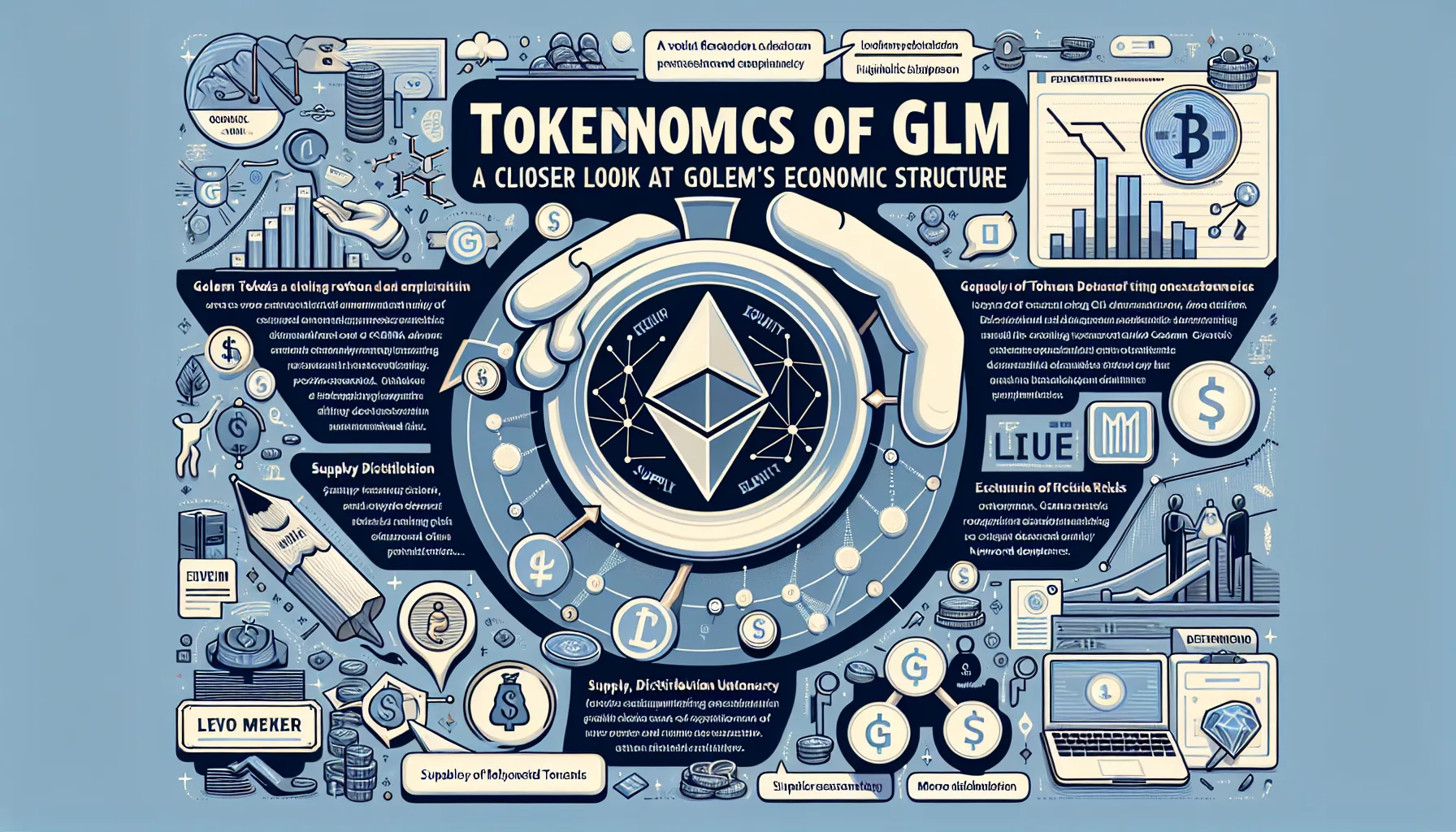
Tokenomics of GLM: A Closer Look at Golem's Economic Structure
The GLM (Golem) token operates as a key component within the Golem Network, an open-source platform aimed at decentralized computational resource sharing. From a tokenomics standpoint, GLM’s design is structured to ensure it facilitates decentralized coordination while preserving long-term sustainability. However, the tokenomics framework also brings up several considerations that should not be overlooked.
Supply and Distribution Mechanisms
GLM’s total supply is capped at 1 billion tokens, a quantity that was entirely minted during its initial GNT launch (GNT was later migrated to GLM 1:1). This means there is no ongoing minting or inflationary pressures to dilute token holders. However, the fixed supply also places the burden of all economic decisions on the original allocation, which brings into question whether the initial distribution was equitable enough to support widespread adoption.
A centralized concentration of significant holdings among early investors and team members could pose risks, as it increases the potential for coordinated dumping or governance domination. For a network striving to evoke trust in decentralization, this aspect remains a potential friction point for adoption.
Utility and Incentives
The primary utility of GLM revolves around its role as a medium of exchange within the Golem Network. GLM is used to compensate resource providers in the ecosystem, such as those renting out computing power. By enabling micropayments, it allows for granular pricing, benefiting both buyers and sellers of computational tasks.
However, this reliance on network participation for utility means GLM has minimal value outside its native ecosystem. Without widespread adoption of the Golem Network itself, there may be limited demand for the token. The network’s ability to drive activity and incentivize stakeholders is, therefore, critical for the token’s long-term functionality.
Burning, Staking, or Governance
Unlike some Web3 protocols, there is currently no token-burning mechanism, staking, or direct governance utility for GLM. This limits engagement opportunities for holders who might otherwise seek passive earning models, such as staking rewards or participation in governance frameworks. While this design choice simplifies GLM’s function, it also reduces its attractiveness for holders looking for additional modes of utility.
Network Dependency and Liquidity
Finally, GLM’s liquidity is tightly linked to the health of the Golem Network ecosystem. Its demand is directly proportional to the growth of distributed computation use cases and the network’s broader adoption. This creates a cyclical dependency: without significant traction, GLM risks languishing in low-activity scenarios. Furthermore, liquidity could become a concern during periods of increased demand or volatility if the token’s utility remains confined to a niche ecosystem.
GLM Governance
Governance Mechanisms of GLM: A Closer Look at Decentralized Decision-Making
The governance of GLM (Golem Network Token) is intricately tied to its function as the native asset within the Golem ecosystem, a decentralized marketplace for computing resources. GLM stakeholders play a critical role in shaping the network’s direction through its governance framework, which strives for decentralization but presents some unique challenges.
Token Holder Participation in Governance
GLM governance is designed to empower token holders, allowing them to participate in the decision-making process for network upgrades, protocol adjustments, and broader ecosystem developments. This is generally facilitated through mechanisms such as off-chain signaling platforms and decentralized voting systems. However, the efficacy of token holder participation depends highly on the level of engagement within the community. Low voter turnout or disproportionate influence of large stakeholders can skew the decision-making process, raising concerns about the actual decentralization of governance.
Smart Contracts as Governance Enablers
Smart contracts play a central role in executing governance decisions on the Golem Network. These contracts ensure that once consensus is achieved, changes are implemented in an immutable and trustless manner. While this enforces transparency and reduces the risk of tampering, the reliance on smart contracts introduces a layer of complexity. Errors in contract code or the inability to respond quickly to unforeseen network issues can hinder governance operations and affect the network’s responsiveness.
Challenges of Decentralized Governance in GLM
One significant challenge in GLM governance is achieving consensus across a distributed, global community. Diverging interests between stakeholders—such as node operators, developers, and token holders—can lead to prolonged debates or stalemates, slowing down progress. Another issue is the potential centralization of voting power, as governance systems often reward participants based on their token holdings. This raises concerns about equality, as smaller holders may feel their influence is diluted.
Auditing and Proposal Transparency
The Golem Network governance model emphasizes transparency in proposals, which are typically subject to community review before votes are cast. However, proposal auditing and evaluation processes are resource-intensive. Without active participation from technical experts and developers, there’s a risk that poorly designed proposals could make their way to voting stages, leading to undesirable outcomes if approved.
The Role of Third-Party Governance Tools
GLM governance benefits from integration with third-party tools that enhance decision-making and security. These tools allow for more detailed proposal vetting and voting analytics. However, dependence on external systems introduces potential vulnerabilities, including risks stemming from third-party inefficiencies or security breaches.
Technical future of GLM
Current and Future Technical Developments for GLM (Golem Network)
The GLM token powers Golem, a decentralized computing platform focused on harnessing idle CPU/GPU power for distributed processing. Technical advancements and anticipated updates to its infrastructure reflect the project’s unique position within the blockchain ecosystem, but challenges remain.
Transition to Layer 2 Scaling Solutions
One major technical development is Golem’s exploration of layer 2 scaling solutions. Due to the high fees and congestion on Ethereum’s mainnet, integrating with layer 2 technologies like zk-rollups or optimistic rollups has become a strategic necessity. This transition aims to enhance transaction throughput and reduce costs for participants in the Golem ecosystem. However, such integrations bring added complexity, including the challenge of maintaining a seamless user experience when bridging assets and interfacing with layer 1.
WASM and Broader Runtime Support
The introduction of WebAssembly (WASM) task execution has expanded Golem’s flexibility as a compute marketplace. By adding support for WASM, Golem enables developers to leverage a wider range of programming languages and execute tasks with enhanced speed and portability. While this enhances Golem's appeal to developers, competing services offering similar runtime support could dilute the network's competitive advantage if differentiation isn’t further articulated.
Distributed Task Management
Golem continues refining its distributed task execution protocols to improve efficiency and fault tolerance in job scheduling and verification. A significant challenge here lies in the inherent latency and unpredictability of decentralized networks compared to centralized cloud providers. Improvement in multi-peer verification to prevent data manipulation or fraudulent task validation continues to be a priority, though scaling such mechanisms without compromising decentralization is an unresolved issue.
Identity and Reputation Mechanisms
Progress on introducing a decentralized identity and reputation system remains under development. This feature is expected to improve security and create accountability between requestors and providers. Yet, the decentralized nature of Golem means implementing such systems without sacrificing privacy is technically intricate. Improper implementation risks alienating users who prioritize anonymity, which has historically been a cornerstone of decentralized platforms.
Expansion to GPU Support
Another future milestone includes expanded GPU task support beyond current CPU-focused operations. With the rise of GPU-heavy applications, particularly in areas such as deep learning and high-performance rendering, this capability could heighten Golem’s utility. However, effective GPU resource utilization poses challenges such as resolving driver compatibility issues and managing the additional network traffic it may generate.
Addressing Developer Adoption and Tooling
Lastly, the team is advancing developer API and SDK improvements to lower the barrier to entry for integrating Golem’s infrastructure. While this is a crucial step forward, developer adoption of such tools has been slower than anticipated, partly due to high competition from alternative platforms offering easier onboarding or pre-built solutions.
These technical updates and future developments shape the trajectory of GLM within the distributed computing space, though scalability, adoption, and differentiation remain key long-term hurdles.
Comparing GLM to it’s rivals
GLM vs. FIL: A Head-to-Head Comparison in Decentralized Compute Markets
When comparing GLM (Golem Network) to FIL (Filecoin), both crypto assets operate in decentralized ecosystems, yet their focus areas and technological approaches set them apart. GLM is built as a decentralized compute platform, allowing users to buy and sell computational power. FIL, by contrast, focuses on decentralized storage, providing a blockchain-based system for file storage and retrieval. However, these distinct offerings share overlapping use cases, particularly in industries requiring a combination of compute and storage resources, making them indirect competitors in certain workflows.
Infrastructure Design
GLM relies on a peer-to-peer network where tasks are split into subtasks and distributed to nodes for processing. This design allows users to maximize efficiency by scaling computational resources to match their specific needs. FIL operates on a decentralized storage architecture where users pay to store their data on miners' hard drives using verifiable mechanisms like Proof of Space-Time and Proof of Replication. While FIL’s system is optimized for storage integrity and retrievability, it doesn’t supply the computational layer natively, often requiring interfacing with external solutions or additional custom setups to process stored data. This separation can be seen as both a strength and a limitation depending on use case requirements.
Network Utilization
GLM’s utility is tied closely to those seeking an easily accessible marketplace for compute, particularly in rendering, AI model training, and scientific simulations. FIL, on the other hand, targets industries with massive data storage needs, such as media archiving or large-scale enterprise records. Despite its storage focus, FIL processes require sustained compute resources for use cases like video encoding or real-time data analysis, potentially giving GLM an advantage when both storage and computation are required simultaneously.
Ecosystem and Usability
FIL’s broader adoption benefits from its synergy with IPFS (InterPlanetary File System), which is natively integrated into its stack. This integration positions FIL as a go-to solution for decentralized storage. However, reliance on the IPFS ecosystem could introduce barriers when shifting to compute-heavy workloads, as interoperability isn’t always seamless. GLM’s compute-focused ecosystem simplifies access to raw computing resources but often struggles with long-term storage-related workflows, a gap FIL natively fills. This divergence underscores a tradeoff between specialist functionalities for compute (GLM) and data durability (FIL).
Challenges in Overlapping Markets
For users needing both decentralized compute and storage, FIL’s limited compute capabilities can create inefficiencies, especially for time-sensitive tasks requiring low-latency compute processes. Conversely, GLM has faced challenges in onboarding non-developer users due to issues with user experience design and a lack of polished interfaces compared to ecosystems built around FIL. This gap potentially restricts its addressable market, as FIL’s robust integrations with developer tools give it a slight edge for hybrid workflows.
GLM vs. RLC: A Detailed Comparison of Decentralized Cloud Computing Solutions
When comparing GLM, the Golem Network's utility token, to RLC, the native asset of iExec, it’s evident that both projects aim to decentralize cloud computing but take distinct technical and operational approaches. These differences play a crucial role when evaluating their efficiency, scalability, and use-case adaptability.
Core Architecture and Network Design
GLM underpins the Golem Network, a decentralized market for on-demand computation. It employs an open-source platform where providers and requestors interact without intermediaries. This peer-to-peer framework emphasizes task distribution for use cases such as CGI rendering and machine learning model training. RLC, on the other hand, powers the iExec ecosystem, which focuses more on providing a decentralized infrastructure for high-performance computing by leveraging blockchain-based APIs and off-chain secure enclaves. The inclusion of Trusted Execution Environments (TEEs) in RLC's architecture gives it an edge in handling sensitive or enterprise-level data, which is not as prominently addressed in the GLM ecosystem.
Flexibility in Use Cases
While GLM’s network largely revolves around generic computing tasks, the use cases supported by RLC extend deeper into enterprise-grade applications like decentralized finance (DeFi) and artificial intelligence (AI). This could be attributed to iExec's focus on developing custom dApps (decentralized applications) that are readily deployable. In contrast, GLM’s ecosystem prioritizes a more open-ended approach, leaving many integrations to be achieved through third-party developers. This disparity makes RLC more appealing to industries seeking out-of-the-box solutions, whereas GLM appeals to a broader but less specialized market.
Consensus Models and Decentralization
Comparing their governance and security models, GLM relies heavily on Ethereum's smart contract backbone for transaction legality and network trust. Conversely, RLC employs its Proof-of-Contribution mechanism alongside Ethereum to ensure fair computation power exchanges and data integrity. While both systems are Ethereum-compatible, RLC’s additional layer of security may address higher enterprise standards, giving it an advantage in corporate environments where compliance is critical.
Challenges and Limitations
RLC's reliance on TEEs introduces potential centralization concerns. Critics argue that these enclaves, built on proprietary hardware from companies like Intel, could negate the trustless nature of decentralization if compromised or exploited. GLM, while sidestepping this issue due to its strictly peer-to-peer model, faces scalability concerns as network demand grows. Without additional layers to manage congestion, GLM tasks may experience latency under high usage, limiting its appeal for resource-intensive applications.
In conclusion, whether prioritizing flexibility or advanced enterprise tools could influence users’ decisions heavily between GLM and RLC. Each platform tailors its offering uniquely, reflecting distinct trade-offs that cater to different segments within the decentralized computing space.
Comparing GLM vs RNDR: Decentralized Compute Power Showdown
When it comes to the competition between GLM (Golem Network) and RNDR (Render Network), both projects focus on decentralized computation, but they serve distinct use cases and excel in different areas of the ecosystem. A closer look at GLM and RNDR reveals a fascinating comparison in their architecture, utility, and scalability challenges.
Core Focus: General Purpose vs. Niche Rendering
GLM positions itself as a general-purpose decentralized computing platform, aiming to support virtually any task that requires computation—from machine learning to CGI rendering. On the other hand, RNDR is laser-focused on rendering GPU-intensive workloads, specifically tailored for 3D rendering and related creative industries. This specialization allows RNDR to carve out a strong niche, particularly for professionals using platforms like Blender or OctaneRender.
However, GLM’s broader range can also be seen as an advantage: its flexibility in supporting non-rendering tasks like data analytics or AI model training could appeal to developers looking for multipurpose solutions. Still, RNDR’s specialized rendering pipeline has earned it higher traction in industries where high-quality visual output is essential.
Mechanisms of Operation: CPU vs. GPU Power
GLM predominantly relies on idle CPU resources from its participants, making it accessible to a wider hardware pool. In contrast, RNDR exclusively depends on GPU computation, which offers significant advantages in tasks requiring parallelization, such as rendering or training neural networks. While this gives RNDR unparalleled speed and efficiency for its target use case, it also makes its network more hardware-restrictive; a large proportion of users cannot participate without access to high-performance graphics cards.
Tokenomics and Payment Structures
A notable difference lies in how payments and incentives work. RNDR’s model is tightly integrated with its ecosystem to ensure efficient payments in render credits, whereas GLM has a more open-ended payment system based on task negotiation between requestors and providers. While RNDR’s system simplifies rendering-specific workflows, GLM's flexibility can create friction in pricing transparency and negotiation across more diverse applications.
Scalability Concerns
Both networks face unique scalability challenges. RNDR, reliant on high-spec GPU nodes, may struggle as demand for rendering tasks increases faster than supply. On the flip side, GLM’s broader use case poses issues with task prioritization, resource allocation, and maintaining consistent quality across a variety of workloads.
This divergence highlights how GLM serves as a versatile platform, while RNDR thrives in its optimization for a specialized sector, making the rivalry one of differing strengths rather than direct competition.
Primary criticisms of GLM
Criticisms and Challenges Facing GLM (Golem Network)
GLM, the native token of the Golem Network, has been the subject of scrutiny within the crypto community due to several systemic and functional issues tied to its ecosystem. While the concept of a decentralized marketplace for computing power is revolutionary, critics argue that GLM has faced significant hurdles in execution that undermine its utility and adoption.
Limited Adoption and Network Utilization
One of the most significant criticisms of GLM is the limited real-world adoption of its platform. While Golem has long promised a decentralized solution for unused computing resources, its network activity does not reflect widespread appeal or active participation. Critics often highlight the niche nature of its current use cases, which remain largely focused on tasks like rendering CGI or performing basic computational workloads. This narrow functional scope raises questions about whether GLM is solving a pervasive problem or targeting a constrained segment of the market. Additionally, the learning curve and technical know-how required to participate as a provider or client may deter mainstream adoption.
Competition in Decentralized Cloud Computing
The decentralized cloud computing space is becoming increasingly crowded, with blockchain-based competitors like Render, Akash Network, and even traditional giants like AWS and Azure broadening their offerings. Golem's competitive edge is frequently called into question, as some argue that its technological framework lacks the robust scalability or comprehensive feature set necessary to stand out in this competitive market. Furthermore, interoperability challenges and lack of seamless integration with other blockchain ecosystems have also been criticized, potentially reducing its appeal in a market that increasingly values cross-chain functionality.
Token Economics and Incentivization Issues
GLM's tokenomics have also come under fire, particularly surrounding the incentives it provides for network participants. On the supply side, some argue that the financial rewards for contributing computing resources are not lucrative enough, especially when compared to traditional cloud providers or staking on other blockchain projects. On the demand side, businesses that require heavy computational power may struggle with the cost predictability of using GLM in an often-fluctuating crypto landscape, which may deter otherwise interested parties from exploring the platform further.
Usability and Developer Ecosystem Weaknesses
Another criticism centers on the usability of the Golem Network for developers and end-users. Despite years of development, the onboarding process for new users—whether as requesters or providers—still involves considerable friction. Developers looking to deploy custom workflows or integrate Golem into larger infrastructures often encounter a lack of comprehensive tooling, documentation, and developer-friendly SDKs. This hinders developers' ability to experiment, deploy, or scale projects, potentially limiting the ecosystem’s growth.
These challenges collectively paint a picture of a project that, despite its noteworthy goals, faces substantial obstacles in achieving widespread relevance and ecosystem sustainability.
Founders
GLM Founding Team: Pioneers Behind the Golem Network
At the core of the GLM (Golem) project is its founding team, whose vision and technical expertise have been instrumental in shaping one of the early decentralized computation platforms in the blockchain space. Founded in 2016 by a group of Polish developers, including Julian Zawistowski, Piotr Janiuk, and Andrzej Regulski, the team sought to address inefficiencies in compute resource distribution through blockchain technology.
Julian Zawistowski, the former CEO and one of the key architects of Golem, brought a combination of economics and blockchain strategy to the project. His background in consulting and economic research was a central force in positioning Golem within the distributed computing space. Although Zawistowski stepped down as CEO in 2019, his earlier leadership significantly shaped Golem’s decentralized ethos. Notably, some critics in the crypto community have highlighted concerns about his departure as one of several points of uncertainty over the team’s long-term vision.
Piotr Janiuk, who has served as CTO and continues to lead the technical development of the project, brings a highly technical skill set, with a focus on low-level programming and distributed systems. His expertise in engineering has been pivotal in creating the infrastructure that powers GLM. However, some developers have pointed out that the project’s pacing, particularly in delivering its roadmap, may have occasionally lagged with relatively little communication compared to other high-profile blockchain teams, raising issues of transparency.
Andrzej Regulski, involved in the operational and strategic aspects, has a background in political science and development strategy. His skills in bridging interdisciplinary gaps have helped the project approach broader, non-technical use cases. While this diversity of experience in the leadership team brings value, critics have sometimes commented that the lack of consistent high-level public interaction from Regulski made it harder to form a firm grasp of his impact compared to his co-founders.
Beyond the founders, Golem Factory, the team’s core organization, is known for fostering open-source collaboration. While the founding trio laid the groundwork, subsequent contributions have come from a decentralized group of developers. That said, some in the crypto space argue that the decentralization of contributors makes it less clear who directly maintains accountability for long-term project success.
In summary, the GLM founding team represents a blend of economic, technical, and strategic expertise, but its challenges—such as leadership transitions and comparatively slow-paced execution—highlight the complexity of building a truly decentralized computation network.
Authors comments
This document was made by www.BestDapps.com
Sources
- https://whitepaper.golem.network/
- https://golem.network/
- https://etherscan.io/token/0x7dd9c5cba05e151c895fde1cf355c9a1d5da6429
- https://github.com/golemfactory/golem
- https://blog.golemproject.net/
- https://docs.golem.network/
- https://token.golem.network/
- https://community.golem.network/
- https://defillama.com/protocol/golem
- https://coinmarketcap.com/currencies/golem/
- https://www.coingecko.com/en/coins/golem
- https://golem.foundation/
- https://discord.gg/golem
- https://twitter.com/golemproject
- https://medium.com/golem-project
- https://academy.binance.com/en/articles/what-is-golem-network-glm
- https://cryptobriefing.com/golem-network-token-glm/
- https://www.gemini.com/cryptopedia/golem-glm-token
- https://www.research.binance.com/en/projects/golem


