History of GLCH
The History of GLCH: From Inception to Present Development
GLCH, the native token of the Glitch Protocol, has carved a unique path since its introduction to the cryptocurrency ecosystem. Designed as a blockchain optimized for decentralized finance (DeFi) applications, its origins are rooted in addressing existing inefficiencies within financial systems. However, like many emerging technologies, GLCH's journey has been marked by both innovative progress and notable hurdles.
The project was initially conceptualized to solve scalability bottlenecks faced by traditional blockchain networks. Unlike general-purpose blockchains, the Glitch Protocol aimed to focus exclusively on DeFi, promising high throughput, low transaction fees, and economic incentives tied to network use. Upon launch, GLCH gained traction among early adopters who were increasingly drawn to blockchain solutions that catered specifically to the growing demand for DeFi platforms.
A significant turning point in GLCH's history was its migration from Ethereum’s blockchain to its own proprietary network. This move was driven by the desire to sidestep Ethereum's escalating gas fees and network congestion, factors that were becoming problematic for GLCH users. The migration was lauded for reducing dependency on Ethereum, but it also introduced challenges. Transitioning to a standalone network required significant developer resources, and critics voiced concerns about the project's ability to maintain security and network stability during and after the migration. These concerns underscored the high stakes of becoming a self-sufficient blockchain protocol.
Building a robust developer community has been another critical milestone in GLCH’s development. The launch of its ecosystem grants program aimed to incentivize developers to build decentralized applications (dApps) on the Glitch Protocol, but adoption was slower than anticipated. While some promising integrations were announced, skepticism arose about whether GLCH's focus on DeFi might limit its appeal to a wider audience. Additionally, competition from other layer-one blockchains, each offering their own DeFi-optimized solutions, created pressure for GLCH to consistently innovate.
Another area of contention has been governance. Though the project emphasized decentralized decision-making, critics have raised questions about the actual distribution of power within the network. Concerns about token concentration among early investors, as well as the lack of transparency in governance processes, continue to generate discussion within the community.
From its beginnings as a DeFi-focused blockchain to its efforts to establish a separate identity, GLCH's history highlights both its potential and the hurdles it faces as it seeks to solidify its position in the crypto space.
How GLCH Works
Understanding How GLCH Works: A Deep Dive into the Technology Behind the Asset
The GLCH crypto asset serves as the backbone of its ecosystem, leveraging a hybrid architecture that combines on-chain and off-chain mechanisms to optimize performance, scalability, and cost-efficiency. At its core, the network operates via a graph-based computational model designed to handle complex, multi-step workflows.
The Role of Graph Logic
GLCH uses a directed acyclic graph (DAG) structure instead of a traditional blockchain ledger. This sets it apart by allowing transactions to occur in a more parallelized manner, reducing bottlenecks as network activity increases. The computational model assigns nodes to represent individual processes or data points, while edges define the connections between them. This setup enables programmatic automation, facilitating the execution of intricate workflows in real-time.
However, while this model enables increased versatility and efficiency compared to blockchain-exclusive designs, it introduces its own drawbacks. DAG-based systems can lack inherent consensus finality, requiring supplementary measures to secure their state. Critics have pointed out that this reliance can introduce additional vulnerabilities, especially if trust in the validation layer falters.
Critical Components of the GLCH Framework
-
Token Utility: The GLCH token fuels transactions, resource allocation, and access to specific network functionalities. Within workflows, GLCH tokens are used for functions such as node operations, data interactions, and payment for off-chain execution — all of which are key to the ecosystem's value proposition.
-
Smart Workflow Automation: A primary innovation of the GLCH ecosystem is its ability to combine decentralized computation with stateful workflows. These workflows utilize both on-chain orchestration and off-chain execution, effectively distributing computational tasks to reduce congestion. Off-chain execution, though cost-efficient, introduces opacity in verification — an open concern for transparency advocates in the crypto community.
-
Consensus Mechanism: Unlike proof-of-stake or proof-of-work systems, GLCH employs a hybrid consensus model. The DAG layer enables fast, lightweight processing, while a secondary overlay network ensures validation consistency. This dual structure aims to balance speed and security, but synchronization challenges between the layers can lead to latency-related issues under heavy computational load.
Potential Weaknesses
The GLCH ecosystem’s reliance on off-chain infrastructures and hybrid consensus means its success hinges on maintaining trust in the integrity of external validators and other supplementary services. Additionally, the complexity of its architecture may act as a barrier to entry for developers, hindering broader adoption and creating a centralization risk in terms of expertise. Users handling on-chain GLCH tasks could also encounter challenges with gas fees during network spikes, as the pricing mechanism isn’t entirely shielded from governance shifts.
Use Cases
Exploring the Use Cases of GLCH: A Utility-Driven Crypto Asset
GLCH, short for Glitch, positions itself as a blockchain platform aimed at addressing the inefficiencies pervasive in decentralized finance (DeFi) ecosystems. At its core, GLCH serves as the native token of the Glitch protocol, designed to power various functionalities within its ecosystem. Let’s dive into its specific use cases and the implications they bring for developers, businesses, and end users.
1. Gas Fees and Transaction Costs
One of the most prominent use cases for GLCH is its role in fueling transactions and covering network fees on the Glitch blockchain. Unlike networks where gas fees can be exorbitant due to congestion or fluctuating demand, Glitch claims to have constructed its fee structures to remain predictable and low-cost. Nevertheless, whether these claims hold up under higher scalability demands remains an open question. If the network sees mainstream adoption, fee dynamics could become more complex, especially if token supply management fails to address potential spikes in demand.
2. Staking Mechanisms and Network Security
GLCH holders can participate in network staking, an integral mechanism for securing the platform through Proof of Stake authority. By locking up their tokens, participants validate transactions and contribute to maintaining the blockchain. This staking mechanism offers rewards in the form of additional GLCH while strengthening network security through decentralized contributions. A potential concern here is related to centralization risks; if large token holders dominate staking, it could impact the fairness of governance and decision-making.
3. Governance Participation
GLCH serves as a governance token, giving holders the ability to vote on proposals related to the development and future direction of the protocol. This includes decisions surrounding upgrades, fee adjustments, and ecosystem partnerships. While this mechanism seeks to empower the community, the actual level of decentralization in governance can vary depending on the distribution of tokens. Concentrated holdings might leave smaller stakeholders with minimal say in key decisions.
4. DeFi Compatibility and Ecosystem Integration
Glitch markets itself as a blockchain optimized specifically for DeFi applications. GLCH, as the ecosystem’s utility token, integrates into the development of decentralized exchanges, lending platforms, and liquidity pools. However, despite focusing on interoperability, competition from well-established blockchains like Ethereum and alternative DeFi-focused platforms poses a challenge. Bridging gaps for broader adoption could require substantial development resources.
5. Incentivizing dApp Growth
To further the adoption of decentralized applications, GLCH is used as part of developer incentive programs. By rewarding dApp creators who build on the Glitch protocol, the platform aims to foster ecosystem expansion. However, the success of such initiatives depends heavily on whether the protocol can attract developers away from more well-supported ecosystems. Without a large user base and robust infrastructure, long-term growth could face considerable hurdles.
In summary, GLCH’s utility spans network operations, staking, governance, and ecosystem incentives, aligning it closely with its goal of enabling a DeFi-centric blockchain. Yet, as with any crypto asset, its real-world impact will depend on adoption, scalability, and how well it addresses the challenges of competition and centralization.
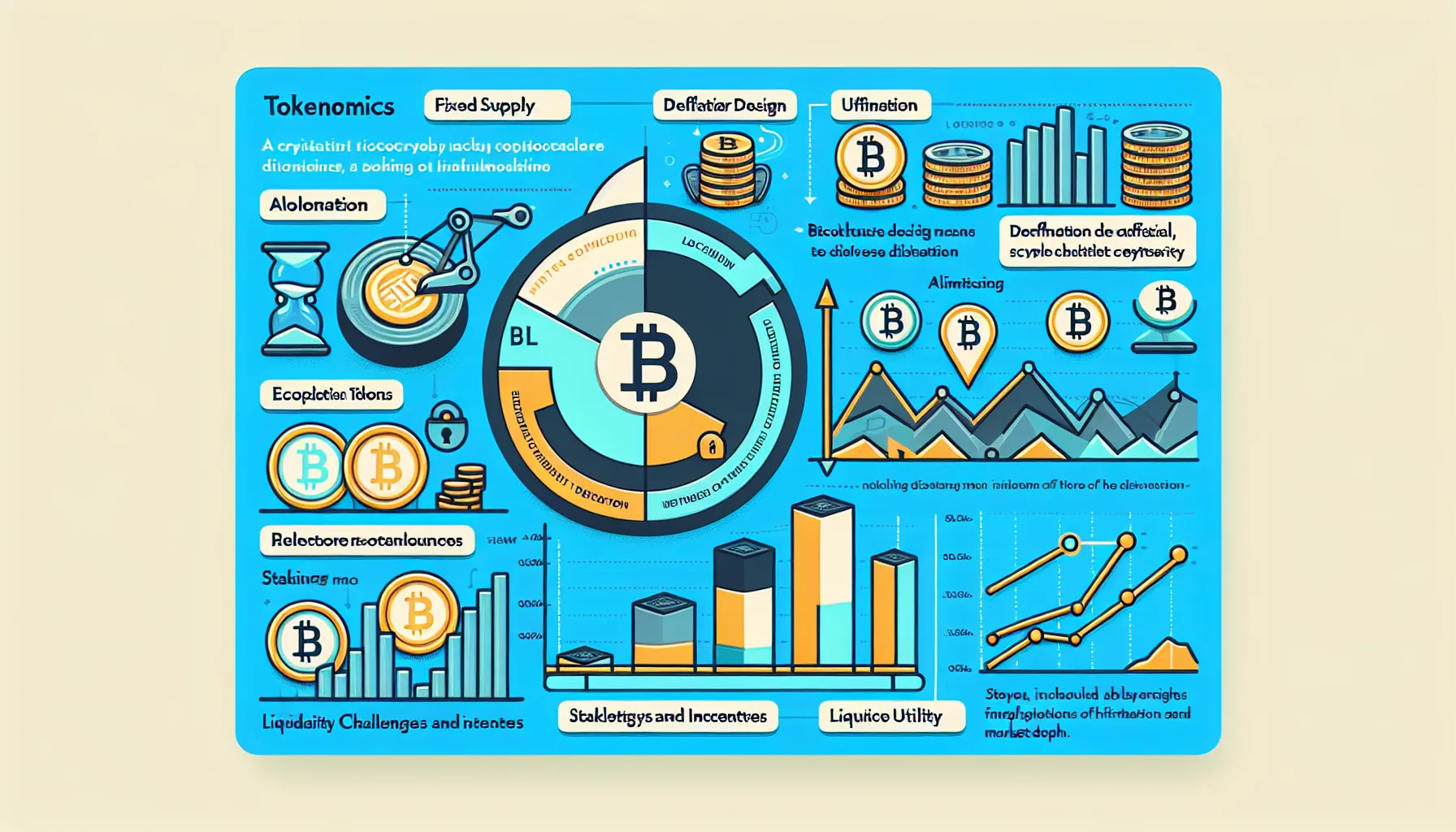
GLCH Tokenomics
Tokenomics of GLCH: A Deep Dive into Supply, Utility, and Distribution
The tokenomics behind GLCH is a key element shaping its appeal to developers and users while raising pertinent questions about its long-term sustainability. At its core, GLCH operates as the native utility token within its ecosystem, driving interactions, access, and rewards. However, dissecting the supply, distribution mechanisms, and use-case specifics reveals both strengths and areas of concern.
Fixed Supply and Deflationary Design
GLCH features a fixed maximum supply, which has been hailed as a means of ensuring scarcity. This aspect aligns with the broader deflationary tokenomics model seen in many blockchain ecosystems. The fixed cap limits dilution risk, which could otherwise erode value for long-term holders. Still, questions remain around the equitable distribution of that supply, especially given the challenges many capped-supply tokens face in preventing monopolization by early investors or centralized parties.
Allocation and Initial Distribution
A key issue in GLCH's tokenomics stems from its initial token allocation. A significant percentage of tokens were allocated during pre-sales and reserved for the team, raising concerns about potential centralization and "whale" dominance in governance when applicable. While a vesting schedule was implemented to limit immediate sell-offs, there is a perpetual tension between incentivizing innovation and maintaining fair market dynamics. Critics argue that disproportionate allocations to insiders can undermine trust, particularly in scenarios where a high percentage remains locked in wallets tied to the founding team.
Ecosystem Utility and Incentives
The utility of GLCH centers around being an integral part of its ecosystem, including its use in transaction fees, staking, and governance. These features provide tangible value, effectively intertwining the token’s usage with the network's growth. For staking, token holders are incentivized to lock their holdings into the network, often receiving rewards. However, concerns over sustainability arise when staking yields are funded disproportionately from inflationary mechanisms or ecosystems that lack sufficient organic activity to sustain such incentives.
Liquidity Challenges and Market Depth
Another frequently debated topic in GLCH's tokenomics is liquidity. While the ecosystem is designed to encourage utility-driven token activity, thin liquidity in secondary markets has been observed in certain environments, potentially leading to price manipulation risks and inefficiencies for traders. Low liquidity could pose a challenge to scalability as adoption increases, underscoring the importance of strategically allocating liquidity incentives without triggering speculative dumping.
By focusing on its tokenomics, GLCH offers both significant potential and accompanying challenges. Recognizing the balancing act between incentives, equitable token distribution, and liquidity management remains key to understanding this crypto asset's long-term viability.
GLCH Governance
Governance Model of GLCH: Decentralization and Stakeholder Participation
GLCH operates under a governance framework that leverages decentralization to empower its community while maintaining operational efficiency. Governance mechanisms for GLCH have been designed to involve both token holders and active contributors, ensuring an inclusive ecosystem that reflects stakeholder interests. However, like any governance system in the blockchain space, it presents unique benefits and challenges.
At its core, GLCH governance revolves around a token-weighted voting mechanism. Holders of the native $GLCH token play a pivotal role in decision-making processes. Proposals related to network upgrades, parameter adjustments, and protocol modifications are typically submitted through a formal proposal system, allowing stakeholders to voice their preferences. This system helps align incentives with the long-term vision of GLCH, as token holders are incentivized to prioritize sustainable development. However, this governance model relies heavily on voter participation—which can sometimes be disproportionate, as stakeholders with larger holdings naturally wield greater influence.
The governance process is facilitated through a combination of on-chain and off-chain mechanisms. On-chain governance provides immutability and transparency, enabling all transactions and decisions to be publicly verifiable. Meanwhile, off-chain discussions and deliberations often occur in forums, community chats, or through dedicated governance platforms. While this dual-layered approach ensures greater inclusivity, it also adds an inherent risk of fragmentation. Diverse opinions and time-zone disparities can create bottlenecks in decision-making or cause prolonged delays in implementing changes.
Another critical consideration is the balance between decentralization and efficiency. While GLCH aspires to decentralize its governance fully, certain functions still require centralized oversight or core development teams to execute complex upgrades or address security vulnerabilities swiftly. This temporary reliance on centralization might be perceived as a weakness, as it exposes the network to trust issues. However, most in the GLCH ecosystem acknowledge that this stepwise approach toward decentralization is necessary for gradual and secure evolution.
The question of how to incentivize active participation is another dilemma. Staking rewards and governance-based yield mechanisms for $GLCH holders aim to encourage voter engagement. However, this approach has sometimes led to criticism around whether it effectively locks up tokens, reducing liquidity on secondary markets and potentially distorting ecosystem dynamics.
Ultimately, the governance model of GLCH exemplifies the complexities of managing decentralized systems. The balance between community inclusiveness and operational efficiency remains an ongoing challenge, raising important discussions about the future of decentralized governance.
Technical future of GLCH
Current and Future Technical Developments of GLCH: A Deep Dive into the Technical Roadmap
The technical evolution of GLCH (Glitch Protocol) is centered on addressing persistent scalability challenges, improving the interoperability of its blockchain, and refining its governance model. Built on a foundation of maximizing efficiency for decentralized applications (dApps) and financial protocols, GLCH's roadmap aims to expand both its technical infrastructure and its developer ecosystem. Below, we examine the key technical advancements currently underway, as well as the anticipated future developments outlined in its roadmap.
Enhanced FBA Consensus Algorithm
GLCH employs a Federated Byzantine Agreement (FBA) consensus mechanism, intended to achieve faster transaction throughput while maintaining decentralization. Although this system has proven capable of scaling better than many traditional proof-of-work (PoW) or pure proof-of-stake (PoS) systems, there have been ongoing challenges related to validator selection and network robustness under stress. Technical efforts are currently being directed at expanding its validator pool while minimizing the risk of centralization among node operators. The team is reportedly exploring dynamic quorum management to improve consensus efficiency and better adapt to varying network activity levels.
Cross-Chain Interoperability
Interoperability remains a primary focus for GLCH, as its ecosystem relies heavily on seamless interaction with other blockchains to support multi-chain dApps. Efforts are being made to optimize its cross-chain bridges, which currently lack the flexibility and security standards observed in some competing platforms. The technical roadmap outlines the development of a second-generation interoperability layer designed to reduce bridge latency while fortifying protections against malicious contract interactions. However, this process has been met with delays due to the complexities of ensuring compatibility across diverse blockchain architectures.
Modular Smart Contract Deployment
One standout element of GLCH is its commitment to modular smart contract standards. Present developments are focused on enabling composable modules that allow developers to integrate plug-and-play features into existing contracts. While this approach promises to reduce deployment times and coding overhead, there are lingering issues with compatibility between modules built by different development teams. Addressing these inconsistencies—possibly through a standardized testing framework—is considered a high-priority technical initiative.
Integration of Layer-2 Scaling Solutions
Scaling remains a consistent hurdle for GLCH, especially as the network grows in transaction volume. Although the protocol boasts a low fee structure, congestion during periods of high activity has revealed bottlenecks in its transaction finality times. Upcoming releases on the roadmap hint at collaboration with external Layer-2 scaling solutions, alongside the internal optimization of the block propagation algorithm. This dual strategy could mitigate scalability challenges, but concerns about additional complexity with Layer-2 integration may introduce new attack vectors or usability issues.
Governance Protocol Upgrade
The governance model, based on decentralized voting mechanisms, is undergoing a major overhaul. Proposed upgrades include more granular voting weight allocations tied to specific network behaviors, such as staking activity or dApp utilization. However, the community has raised concerns about potential centralization risks if larger stakeholders gain disproportionate influence. The roadmap indicates plans to integrate quadratic voting as a mitigative measure, but the technical implications of implementation still require further clarification.
Conclusion: Challenges and Open Questions
While the outlined developments have the potential to reinforce GLCH’s technical foundations, challenges such as delayed interoperability improvements, governance complexities, and scalability hurdles must not be overlooked. The upcoming phases in the roadmap will test the protocol’s ability to balance innovation with resilience.
Comparing GLCH to it’s rivals
GLCH vs SOL: A Technical and Ecosystem Comparison
When comparing GLCH to Solana (SOL), the contrasts in architecture, transaction processing, and ecosystem priorities highlight a distinct divide in how each project addresses blockchain scalability and usability challenges.
Consensus Mechanism and Speed
GLCH employs a hybrid proof-of-stake (PoS) approach designed to balance decentralization with scalability. This contrasts with Solana’s unique Proof of History (PoH) mechanism, which optimizes timestamping and enables extremely fast transaction processing layered onto a delegated proof-of-stake (dPoS) framework. While Solana boasts significantly higher throughput—capable of processing tens of thousands of transactions per second (TPS)—this comes at a cost. The reliance on high-performance hardware increases centralization risks, as smaller-scale validators may find it prohibitively expensive to participate. GLCH’s model, in contrast, favors greater accessibility for node operators but sacrifices some raw transaction speed. For developers and users, this difference boils down to a tradeoff: faster execution versus a more decentralized network structure.
Ecosystem Development
Solana's developer ecosystem is extensive, heavily emphasized through a mix of venture capital funding and partnerships. Its ecosystem spans DeFi, NFTs, and gaming at a broad scale, making Solana a popular choice for projects seeking rapid time to market. GLCH, on the other hand, focuses on creating a modular development environment, championing interoperability protocols over an all-in-one ecosystem approach. This interoperability-first vision allows GLCH to bridge different blockchain networks but leaves it trailing in terms of native ecosystem depth. While this strategy resonates with teams building cross-chain solutions, GLCH has not achieved the same breadth of developer loyalty or user adoption seen on Solana’s network.
Security Concerns and Network Uptime
Operational security reveals another clear difference. Although Solana prioritizes speed, its network has faced repeated outages caused by capacity overloads and spam attacks, creating concerns about stability for high-stakes use cases. GLCH, while featuring fewer throughput demands, has yet to experience downtime of comparable scale, which positions it favorably for projects that cannot tolerate extended interruptions. That said, GLCH’s lower adoption can partially be attributed to its relative obscurity and smaller-scale stress testing of its network capacity.
Community Centralization
Finally, decentralization across the two chains is a notable differentiating factor. Solana’s validator distribution is often criticized for being concentrated, especially in regions with high data-center density. GLCH’s network, while smaller, spreads validation more evenly among its participants, providing a hedge against location-based centralization attacks. However, the size difference in validator pools reduces the overall geographic footprint of both networks, making neither entirely immune to centralization risks.
GLCH vs. AVAX: A Detailed Comparison
Glitch Protocol (GLCH) has carved out a niche as a blockchain protocol dedicated to decentralized financial applications. When compared to Avalanche (AVAX), another prominent player in the blockchain space, specific contrasts emerge that are critical for developers, users, and investors to understand.
Consensus Mechanisms: Delegated Staking vs. Avalanche Consensus
One of the most significant differentiators between GLCH and AVAX lies in their consensus mechanisms. GLCH employs a delegated Proof-of-Stake (dPoS) mechanism, which emphasizes high transaction throughput and efficiency by allowing token holders to delegate validation responsibilities to a select group of nodes. While this enhances speed, it arguably centralizes some aspects of governance, as it concentrates authority within the hands of a smaller set of participants. For participants deeply concerned about decentralization, this could present a compromise.
In contrast, Avalanche operates using its Avalanche Consensus protocol, a unique approach that scales with subnets and validators while maintaining critical levels of decentralization. The system is designed to achieve near-instant finality without sacrificing security. While innovative, the consensus mechanism requires more resources to operate when compared to dPoS. Developers targeting lightweight or lean architectures might find AVAX's requirements burdensome, particularly for lower-tier nodes or users with minimal hardware resources.
Focus on DeFi Use Cases
Both protocols cater to decentralized finance (DeFi), but their approaches vary significantly. GLCH is hyper-focused on financial transactions, emphasizing low fees and speed while heavily optimizing for decentralized application development within the financial ecosystem. Its "narrow and deep" approach is appealing for builders who want full-stack support in financial dApps.
On the other hand, AVAX provides a broader spectrum for use cases beyond just DeFi. Avalanche’s subnet functionality enables the creation of customized blockchains, making it attractive for enterprises or projects that benefit from bespoke infrastructure. However, this versatility adds complexity for developers concentrating solely on DeFi, as they must navigate a larger, more generalized ecosystem.
Scalability and Bottlenecks
While both platforms prioritize scalability, their paths differ. GLCH's singular focus on DeFi means network congestion primarily concerns financial-related activity, which can simplify scaling adjustments. However, this limited scope doesn't inherently protect GLCH from congestion during times of unexpectedly high traffic.
AVAX, by contrast, achieves scalability through its subnet architecture and parallelized execution. The ability for separate subnets to operate independently alleviates main-chain congestion for Avalanche. That said, deploying new subnets requires significant technical expertise, potentially creating barriers to entry for less-experienced projects.
Tokenomics and Governance Challenges
Lastly, the governance structures of both protocols show clear contrasts. GLCH’s governance model, tied tightly to its dPoS system, can lead to potential voter apathy or concentration of power among larger holders. In contrast, AVAX employs a more distributed governance framework across its validators, but this could result in slower decision-making processes for protocol updates.
While both systems have their merits, users must carefully assess these trade-offs depending on their specific needs and priorities.
GLCH vs. MATIC: A Detailed Comparison of Layer-2 Efficiency and Scalability
When comparing GLCH to MATIC, it’s essential to consider their approaches to scalability, user adoption, and ecosystem development. Both assets position themselves as critical players for blockchain scalability, but the technological underpinnings and execution strategies reveal stark differences.
Technical Architecture
GLCH operates on a unique Layer-1 framework with a focus on lightweight, modular development, enabling developers to create hyper-specific decentralized applications (dApps) without extraneous overhead. In contrast, MATIC primarily functions as a Layer-2 scaling solution for Ethereum, leveraging sidechain technology (Polygon PoS) to reduce transaction congestion and fees on the Ethereum mainnet.
While GLCH’s architecture may offer easier adaptability for dApps requiring a high degree of customization, MATIC benefits from Ethereum's vast established ecosystem. However, MATIC's reliance on Ethereum does present risks, particularly when network upgrades or congestion issues on Ethereum arise. Conversely, GLCH’s design avoids direct dependence on another protocol, providing a more self-contained infrastructure.
Transaction Costs and Finality
MATIC's claim to fame is ultra-low transaction costs and near-instant finality when compared with Ethereum. However, this efficiency comes with some trade-offs. MATIC's Proof-of-Stake mechanism and reliance on periodically checkpointing transactions to Ethereum raises concerns about true decentralization and security under extreme stress scenarios.
GLCH, designed with modularity and efficiency in mind, hasn’t yet been tested at the extreme levels of adoption MATIC has seen. However, it offers developers flexibility to build without the restrictions imposed by MATIC’s Ethereum-tethered architecture. For power users and institutions, this distinction may determine which platform is appropriate depending on the level of control or predictability required.
Ecosystem and Adoption
MATIC has spent significant resources integrating with Ethereum-native projects, amassing a robust and growing network of dApps, DeFi platforms, and NFT marketplaces. This head start has given MATIC a considerable edge in network effects and liquidity for users seeking Ethereum-compatible solutions.
GLCH, as a newer player, still trails MATIC in terms of developer adoption and partnerships. However, it provides compelling features for those seeking a tightly-knit, tailored environment. The tradeoff lies in ecosystem maturity—MATIC’s ecosystem is vast but increasingly competitive, while GLCH’s ecosystem growth is less saturated but underdeveloped.
Potential Weaknesses
MATIC’s focus on sidechains has, at times, been criticized for potential security risks, such as validator centralization and dependence on Ethereum checkpoints for transaction finality. Additionally, rapid adoption has strained its scalability roadmap, leading to questions about its ability to handle exponential growth sustainably.
GLCH, while addressing some of these issues through its lightweight framework, struggles with visibility and liquidity in a crowded market dominated by Layer-2 giants. Its lack of widespread adoption creates hurdles for users seeking extensive integration options or liquidity pools. For now, GLCH remains a niche alternative rather than a direct heavyweight competitor.
Primary criticisms of GLCH
Primary Criticisms of GLCH: An In-Depth Look at Challenges
Centralization Concerns
One of the most prominent criticisms surrounding GLCH is its perceived centralization within its ecosystem. While the project emphasizes decentralization as a core principle, some critics argue that substantial control over developmental decisions, staking mechanisms, or network upgrades lies in the hands of the founding team or a small group of early adopters. This level of influence raises questions about the true level of decentralization and how governance is handled within the network. For a crypto-savvy audience focused on decentralization as a pillar of blockchain innovation, this poses a significant concern regarding trust and long-term validity.
Scalability Versus Efficiency Trade-Offs
Another key issue raised against GLCH is the trade-off observed between scalability and efficiency. Critics often point out that while the network strives to process higher transaction volumes, such ambitions can sometimes result in compromises to operational efficiency. This is especially relevant when running decentralized applications (dApps) on the platform, as bottlenecks and fee spikes during periods of heavy usage could undermine the platform’s usability. This scalability challenge becomes more glaring when compared to competitors offering more seamless throughput.
Lack of Transparent Roadmap Development
GLCH has also faced backlash for inconsistent or opaque roadmaps, which make it difficult for both developers and token holders to anticipate the project’s forward trajectory. The absence of clear communication regarding upcoming updates or revisions can erode trust, particularly among institutional investors and builders evaluating GLCH for ecosystem growth. Speculation often arises in these cases, causing uncertainty that may discourage both adoption and investment in collaborative projects.
Token Distribution Discrepancies
Complaints about token distribution have also surfaced as a primary point of contention. Some critics highlight imbalances in token allocation, where a significant portion of circulating supply is concentrated in the hands of a limited number of wallets. This concentration not only raises potential security vulnerabilities but also risks the perception of price manipulation, particularly during periods of heightened market activity. For a community that values financial fairness, this concentration has sparked ongoing debates.
Security Audit Gaps
One lesser-discussed but equally relevant criticism has been the inconsistency in timely third-party security audits. The absence of regular transparency regarding audit completion or the addressing of identified vulnerabilities is cited as a notable risk factor, especially for developers looking to deploy high-value applications. Several crypto projects have made auditing a routine part of ecosystem credibility, leaving some to question whether GLCH adequately responds to similar expectations.
Founders
Deep Dive into the Founding Team Behind GLCH
The founding team of Glitch Finance (GLCH) is composed of blockchain enthusiasts and experts with a vision to create a decentralized financial ecosystem optimized for scalability and efficiency. While the project has maintained transparency regarding its technical ambitions, the founders' individual profiles reveal both strengths and potential areas of concern that the community should be aware of.
The core founding members of GLCH include Sean Ryan, who is often positioned as the face of the project. Ryan has a background that blends technology and business strategy, with an emphasis on blockchain-specific innovation. However, his prior experience in the crypto space has not been entirely without scrutiny. Some community members have raised questions regarding the lack of publicly verifiable achievements in similar roles before GLCH, suggesting that trust in his leadership comes more from the project's early execution than any pre-existing track record.
Complementing Ryan is a team of tech developers and advisors who exhibit notable strengths in software engineering and blockchain infrastructure. For instance, the technical leads have academic qualifications in computer science and expertise in distributed ledger technologies. However, as is the case with many nascent blockchain ventures, specific details about the core developers often remain sparse, fueling occasional speculation about their credentials and long-term commitment to the ecosystem. While the team has contributed to frequent project updates and technical roadmap development, critics argue that clearer visibility into individual contributions could lend additional credibility and confidence to stakeholders.
A point of contention observed among some crypto veterans is the relatively lean structure of the founding team. While this streamlined approach can foster agility in decision-making, it has also raised concerns regarding resource constraints, particularly around scaling operations and tackling unforeseen technical challenges. Furthermore, Glitch Finance has not been immune to the broader questions of centralization of decision-making within blockchain protocols. Certain detractors have pointed out that the degree of influence the founding team holds could potentially lead to power imbalances as the ecosystem evolves.
On the communication front, the Glitch team's dedication to engaging with their community through social media and developer updates has been a strong point. Despite this, occasional lapses in clarity or delays in delivering critical information have led to episodes of frustration within the project's community. This issue remains an ongoing consideration for those assessing the longevity and resilience of GLCH’s leadership.
In summary, the founding team of Glitch Finance reflects both promise and areas worth monitoring closely, especially for those who critically evaluate team dynamics as a core investment consideration.
Authors comments
This document was made by www.BestDapps.com
Sources
- https://glitch.finance/
- https://github.com/GlitchProtocol/glitch
- https://docs.glitch.finance/
- https://whitepaper.io/document/634/glitch-finance-whitepaper
- https://medium.com/glitchfinance
- https://explorer.glitch.finance/
- https://coinmarketcap.com/currencies/glitch/
- https://www.coingecko.com/en/coins/glitch
- https://twitter.com/GlitchProtocol
- https://t.me/glitchprotocol
- https://finance.yahoo.com/news/glitch-gateway-next-generation-defi-153015271.html
- https://cryptoslate.com/coins/glitch/
- https://research.binance.com/en/projects/glitch
- https://www.reddit.com/r/GlitchProtocol/
- https://www.youtube.com/c/GlitchProtocol
- https://blog.crypto.com/token-insight-glitch
- https://cryptobriefing.com/glitch-mainnet-launch-defi/
- https://dappradar.com/protocols/glitch
- https://tokenomics.dev/glch


