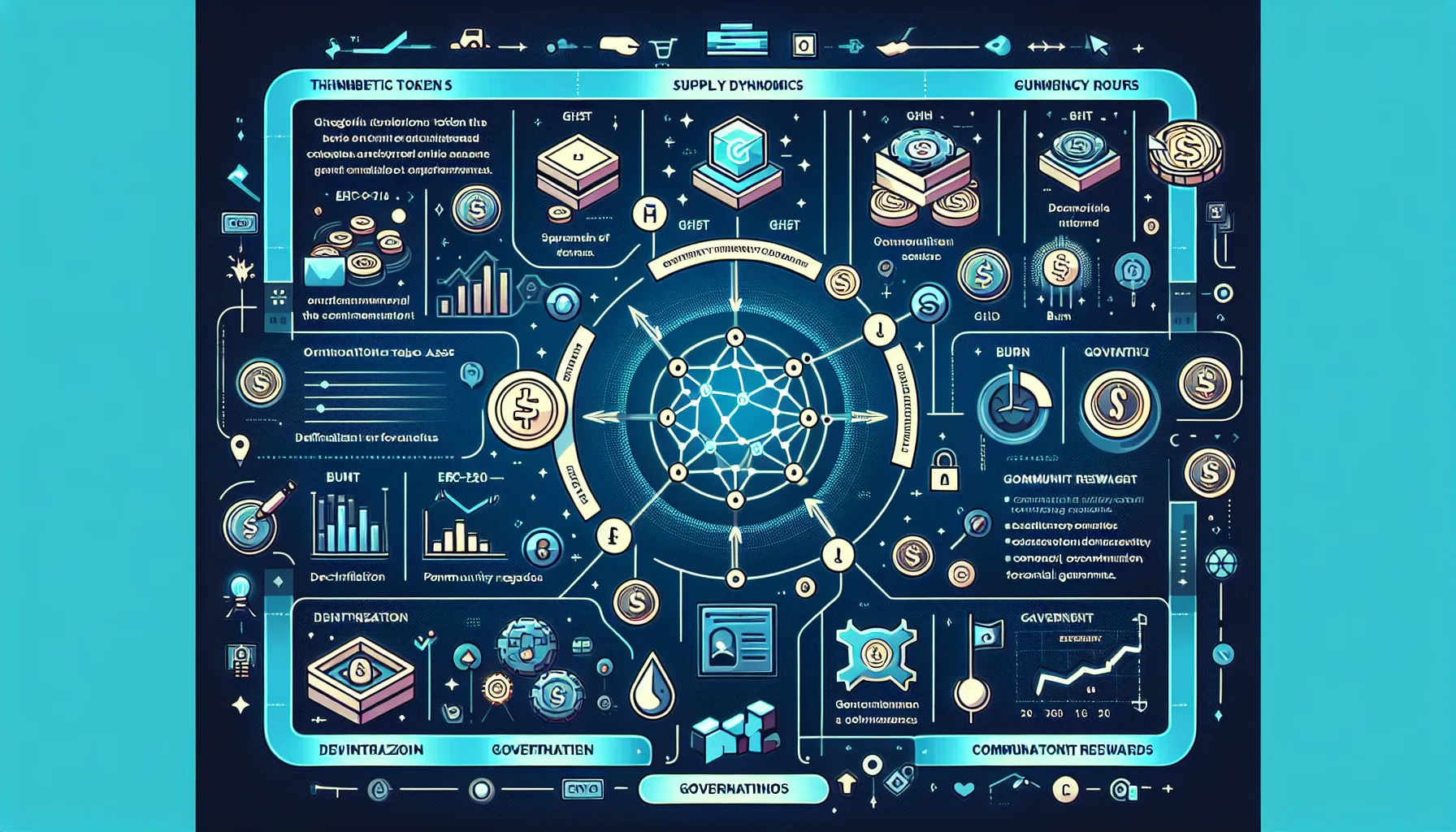
History of GHST
The History of GHST: Origins and Development of Aavegotchi's Governance Token
The history of GHST is intrinsically tied to the creation and evolution of Aavegotchi, a blockchain-based NFT gaming ecosystem. Launched by Pixelcraft Studios, Aavegotchi was envisioned as an innovative fusion of decentralized finance (DeFi) and non-fungible tokens (NFTs), with GHST emerging as the platform's core utility and governance token.
Conception and Initial Token Launch
GHST's journey began with its early conceptualization as part of the Aavegotchi protocol. Built on the Ethereum blockchain and later expanding to Polygon for lower gas fees and scalability, GHST was introduced as a utility token designed to enable player participation in the Aavegotchi ecosystem. Its initial distribution was conducted via a Bonding Curve, a decentralized fundraising and liquidity mechanism. This design choice enabled a transparent and automated price discovery process based on supply and demand, attracting attention from DeFi enthusiasts intrigued by its untraditional launch model.
However, this innovative approach was not without challenges. Though the bonding curve eliminated the need for private funding rounds and early-stage investor advantages, critics argued that it introduced complexities for casual users. The mechanics of interacting directly with the curve and understanding its implications for token valuation required a steep learning curve, potentially alienating some individuals with limited technical expertise.
Transition to a Multi-Chain Future
To address escalating transaction fees on Ethereum, the Aavegotchi team elected to migrate its ecosystem to the Polygon network, prioritizing user accessibility and affordability. This transition marked a key milestone in GHST's history. While the move was celebrated for significantly reducing costs for users, it also highlighted the ongoing difficulties in balancing technical migration with the need to maintain user confidence. Cross-chain compatibility issues and onboarding challenges occasionally led to friction among community members.
Community Governance and DAO Evolution
Since its inception, GHST has served not only as a utility token but also as a governance token for the AavegotchiDAO. Token holders gained the ability to vote on ecosystem updates, feature implementations, and protocol changes. While this decentralized governance model empowered the community, it did not come without controversies. Disputes over proposal structures, voter turnout, and the concentration of decision-making power among large GHST holders underscored the complexities of creating equitable decentralized governance systems.
In retrospect, the history of GHST is emblematic of both the potential and the pitfalls of combining DeFi, NFTs, and community-led governance in the rapidly evolving crypto space.
How GHST Works
How GHST Works: Diving Into the Mechanics of Aavegotchi's Utility Token
GHST operates as the native utility token within the Aavegotchi ecosystem, designed to power both governance and in-game interactions. At its core, GHST leverages a modular framework that blends tokenomics with decentralized finance (DeFi) principles, placing it distinctively between playable NFTs and community-driven protocols.
GHST's Role in the Aavegotchi Ecosystem
GHST primarily acts as the utility layer underpinning the Aavegotchi metaverse. It is used to purchase Aavegotchi Portals, wearables, and consumables within the game. Portals serve as the key mechanism for minting Aavegotchis—NFT avatars that are imbued with interest-earning aTokens from the Aave DeFi protocol. Wearables and consumables, meanwhile, allow users to customize and upgrade their Aavegotchis, directly impacting their rarity scores and functionality in mini-games or staking competitions.
Beyond asset acquisition, GHST also plays a governance role in the ecosystem through the AavegotchiDAO. GHST holders can stake their tokens to earn voting power, allowing them to participate in protocol decision-making, such as proposing changes to the asset's supply mechanics, reward structures, or game features.
The Bond Curve Mechanism
GHST's issuance is facilitated through a bond curve mechanism, a unique design choice that deviates from the traditional fixed-supply or halving models. The bond curve ensures that GHST tokens are minted according to user demand, with the price increasing as more tokens are minted. While this structure promotes capital efficiency and transparency, critics argue that it can make GHST inaccessible during cycles of high demand, as entry costs become inflated.
This mechanism also strengthens the protocol's treasury since a percentage of the funds entering the bond curve are retained within the ecosystem. However, the reliance on this structure ties GHST's pricing model tightly to speculative demand, leaving concerns about volatility and sustainable user growth in periods of market downturns.
Staking and Rewards
Users can stake their GHST in “Friends” pools—a no-loss staking feature where participants earn non-fungible tickets redeemable for raffles. These tickets can either be used to win limited-edition wearables or traded on secondary markets. While an innovative gamification layer, some argue it risks favoring whales who can stake larger amounts of GHST to accrue disproportionately higher rewards, limiting the accessibility of rare in-game assets for smaller holders.
Smart Contract and Network Interactions
GHST is an ERC-20 token, offering seamless compatibility with Ethereum’s decentralized infrastructure. It is also bridged to other blockchains, enabling cross-chain liquidity and accessibility for users operating outside of Ethereum's ecosystem. However, multi-chain deployment also introduces risks related to bridging vulnerabilities, including potential exploits tied to smart contract failures during cross-chain transactions.
In sum, GHST's combination of in-game utility, governance, and DeFi mechanics creates a resilient framework, albeit one with potential friction points such as barrier-to-entry costs, whale centralization, and technical risks associated with cross-chain functionalities.
Use Cases
Use Cases of GHST Token: Powering the Aavegotchi Ecosystem
The GHST token plays a critical role within the Aavegotchi protocol, serving as much more than a simple medium of exchange. It's a functional utility token integrated into key aspects of the platform, primarily revolving around NFT interactions, governance, and staking mechanisms. However, while its utility ensures a high degree of engagement for specific communities, the token's broader use cases outside its ecosystem remain limited, raising questions about its long-term relevance.
In-game Currency for Aavegotchi NFTs
GHST is used extensively within the Aavegotchi metaverse as the native currency for trading, upgrading, and interacting with NFT "gotchis." Users require GHST to purchase Aavegotchis themselves, as well as consumables like wearables, potions, and accessories from the Aavegotchi Baazaar marketplace. This gives the token robust utility within the ecosystem, directly tying player engagement to the token's value. However, this dependency on a niche NFT ecosystem could limit its appeal to wider audiences, particularly if demand for Aavegotchis wanes or gameplay incentives become less compelling.
Decentralized Governance Through DAO Participation
Another significant use case for GHST is to enable holders to participate in governance via the AavegotchiDAO. Proposals, such as changing specific game mechanics or treasury allocations, are voted on using GHST as the governing token. This structure empowers community members to influence the platform's direction directly. However, critics argue that the large holders of GHST tokens disproportionately influence decisions, which can lead to centralized power dynamics within the DAO. This may alienate smaller participants or reduce their incentive to actively engage in governance.
Staking and Interest-Bearing Mechanisms
GHST offers staking options tied to its ecosystem. Users can stake GHST itself or in combination with other tokens (e.g., via pairs like GHST-QUICK) to earn FRENS points. FRENS can then be redeemed for tickets to enter lotteries for NFT rewards. While this gamified staking strategy enhances engagement, it may not appeal to users uninterested in NFTs, which limits onboarding from non-NFT savvy crypto enthusiasts. Furthermore, the rewards structure, reliant on lottery-based outcomes, introduces an element of unpredictability that could discourage more risk-averse participants.
Cross-chain Interactions and Limitations
Aavegotchi has worked on making GHST compatible with Polygon, enhancing transaction efficiency with lower fees compared to Ethereum. Despite this benefit, the token's adoption outside of the Aavegotchi ecosystem has been relatively modest. This reliance on a single ecosystem raises concerns about GHST's long-term liquidity and the robustness of its real-world use cases in DeFi or other sectors.
Ultimately, GHST's utility hinges heavily on the success and sustained popularity of Aavegotchi's NFT ecosystem, which may polarize crypto enthusiasts who prioritize broader multi-application tokens over niche, ecosystem-focused assets.
GHST Tokenomics
GHST Tokenomics: A Deep Dive into Supply Dynamics and Utility
The GHST token, native to the Aavegotchi ecosystem, is an ERC-20 asset designed to act as the backbone for interactions within the platform. GHST's tokenomics are structured to support both utility and governance, but like many crypto assets, its design comes with unique strengths and potential challenges.
Fixed Max Supply via Bond Curve Mechanics
Unlike traditional cryptocurrencies with either an unlimited supply or programmatic halvings, GHST employs a bonding curve mechanism to manage its supply. Early adopters could mint GHST directly through this curve by exchanging DAI, with the price increasing logarithmically as more GHST were minted. This self-regulating model ensures price discovery is tied to real demand but also inherently limits speculative minting. However, as the primary minting window has passed, additional tokens are largely dependent on secondary market availability, leading to potential liquidity concentration concerns.
One notable advantage of the bonding curve model is its resistance to uncontrolled inflation. However, critics argue that its steep price increases over time discourage broader participation, especially for late adopters. This model also creates a situation where whales who minted massive quantities early on could disproportionately benefit, raising questions about fair token distribution.
Utility-Centric Allocation
GHST boasts a multifaceted utility within Aavegotchi’s ecosystem. Primarily, it is required for purchasing in-game assets such as wearables, REALM parcels, and other NFT-based items. Beyond this, GHST is also used to participate in staking mechanisms and governance through the AavegotchiDAO. While this reinforces the token’s utility across the ecosystem, reliance on a niche gaming platform can limit GHST’s appeal outside of its native use case.
Stakeholders may also note that a significant portion of GHST is funneled into community rewards and staking incentives. While this fosters engagement, it could eventually create sell pressure if users choose to liquidate their earned tokens instead of reinvesting them.
Deflationary Effects Through Burn Mechanisms
GHST incorporates deflationary mechanics, with a portion of the ecosystem’s spent tokens being burned. For instance, GHST used in bonding wearable NFTs or other items is permanently removed from circulation. This deflationary pressure is designed to stabilize token value over time. However, for these burns to have meaningful impact, sustained and high platform activity is required—something that is inherently reliant on Aavegotchi’s success.
Governance Integration via AavegotchiDAO
Holding GHST enables users to participate in the AavegotchiDAO, lending the token significant governance weight. While this aligns with the principles of decentralization, governance is only as effective as the level of community participation. Concentrated holdings among whales could dilute the voting power of smaller stakeholders, challenging the democratic ideals of the system.
GHST Governance
GHST Governance: Decentralization and Community Control
GHST, the native utility token for the Aavegotchi ecosystem, plays a notable role in governance mechanisms designed to prioritize decentralization and community engagement. Token holders have direct influence over key decisions, including protocol upgrades, treasury management, and the introduction of new features within the ecosystem. However, like other decentralized autonomous organizations (DAOs), GHST’s governance framework carries unique challenges and complexities that merit critical examination.
Snapshot Voting and GHST Staking
GHST governance operates primarily through snapshot-based off-chain voting, which ensures gasless participation for token holders. Votes are weighted based on the amount of staked GHST, incentivizing deeper stakeholder involvement. However, this mechanism introduces certain limitations, such as the reliance on token staking, which may centralize voting power among wallets with large GHST holdings. For smaller participants, their influence may feel disproportionately limited despite being part of the voting process.
This raises concerns over governance centralization, as larger whales with significant staked holdings can dominate outcomes. Although this issue is not unique to GHST, it remains a pertinent topic for DAOs attempting to balance efficient decision-making with equitable representation.
Community-Led Governance Challenges
The Aavegotchi DAO governs the GHST token ecosystem, embodying a fully community-driven approach. While this structure aligns with the ethos of decentralization, logistical hurdles often emerge. Participation rates in governance proposals can vary widely, with many token holders remaining passive unless proposals directly impact their interests. This apathy can create bottlenecks for critical decisions or lead to outcomes shaped by highly active but numerically smaller factions of the community.
Moreover, like many crypto projects, coordinating discussions and reaching consensus across a global, incentivized user base can be difficult. The distributed nature of GHST holders leads to time zone misalignments, language barriers, and diverging priorities, all of which can complicate governance initiatives.
Treasury Management Oversight
The GHST governance also oversees the AavegotchiDAO treasury, which funds ecosystem development, user rewards, and community initiatives. While this demonstrates impressive user control, the transparency of treasury allocation can sometimes raise questions. Without universal standards for evaluating proposal outcomes, it’s challenging to measure the long-term effectiveness of treasury expenditures. Misallocation of funds or lackluster returns on investments could create friction among stakeholders who feel their token value isn’t being optimized.
Additionally, ensuring security and proper tracking of assets in the treasury is another paramount concern. If vulnerabilities are exposed, this could undermine trust in governance processes and affect overall community morale.
Room for Improvement
Although GHST governance offers a compelling example of decentralized decision-making, certain aspects remain works in progress. The potential for voter apathy, power concentration among large stakeholders, and the complexities tied to efficient treasury management highlight the ongoing balancing act between decentralization and effective governance.
Technical future of GHST
Current and Future Technical Developments and Technical Roadmap of GHST
GHST, the utility token behind the Aavegotchi ecosystem, is deeply rooted in Ethereum and Polygon for scalability and efficient transactions. The development team has been actively enhancing the protocol through a combination of smart contract upgrades and cross-chain interoperability.
Layer-2 Development and Contract Optimization
One of the most critical areas of focus for GHST is its ongoing optimization for Layer-2 (L2) networks. The project continues to refine its Polygon deployment, aiming to ensure faster and more cost-efficient transaction validations. However, this reliance on L2 comes with challenges, including maintaining synchronization between assets on the L1 Ethereum chain and the L2 Polygon network. Current limitations in bridging technology sometimes create delays or inconsistencies, which could affect usability and overall adoption by DeFi platforms.
DAO Mechanism Iterations
GHST plays a direct role in governance through the AavegotchiDAO, but the governance mechanisms are under active refinement. The DAO process has faced criticism for being centralized among token whales, which raises questions about decentralized decision-making. To address this, the development team is working on implementing quadratic voting mechanics and exploring hybrid governance models that could better align incentives amongst smaller token holders.
Upgrades to Aavegotchi Ecosystem Extensibility
The GHST token is aligned with the growth of the Aavegotchi metaverse, including NFT interoperability standards (ERC-998). A significant portion of the roadmap includes integrating more complex programming layers to enhance customizable interactions with wearables, assets, and game dynamics. Still, implementation complexity and reliance on Ethereum Virtual Machine (EVM) execution introduce scalability hurdles, particularly as the user base grows.
Cross-Chain Functionality
Future developments aggressively target expanding into other chains beyond Polygon. Interoperability frameworks with chains like Arbitrum and Optimism are actively being investigated to expand GHST's liquidity pools and use cases. This comes with risks such as fragmentation of liquidity and governance complications, as ensuring seamless cross-chain functionality remains highly complex across entirely different protocol rules.
Scalability Concerns
Lastly, while GHST's current architecture benefits from Ethereum's security and Polygon’s low-cost transactions, the expanding demand for on-chain gaming introduces challenges. The ecosystem may need to explore additional rollup solutions or sidechains to prevent future bottlenecks. Some users have raised concerns over escalating gas fees during peak activity periods, which could deter broader engagement unless scaling solutions are expedited.
GHST’s roadmap demonstrates both ambitious innovation and pointed technical challenges that will need to be carefully navigated to sustain growth within DeFi and NFT ecosystems.
Comparing GHST to it’s rivals
GHST vs. ILV: A Comparative Analysis of Core Mechanics and Ecosystem Dynamics
When examining GHST and its first major rival, ILV, differences in ecosystem design, user engagement, and core mechanics emerge as key areas of differentiation. While both aim to unify the worlds of gaming and decentralized finance (DeFi), their methodologies and user targeting diverge significantly.
Gameplay Philosophies: Accessibility vs. Immersion
GHST, the native token of the Aavegotchi ecosystem, leans heavily into accessibility and low-barrier mechanics. Its playable NFTs, or "Gotchis," focus on lightweight engagement through staking activities, mini-games, and customizable traits. By integrating DeFi principles like collateralized NFTs, GHST fosters an ecosystem where users can actively generate returns with minimal gaming complexity.
ILV’s philosophy, on the other hand, pivots toward high-fidelity immersion. The Illuvium ecosystem revolves around complex gameplay, AAA-quality graphics, and strategic encounters in its open-world RPG experience. Unlike GHST, which melds gaming directly with financial outputs, ILV emphasizes traditional gaming paradigms, centering on exploration, battles, and scarce collector items called Illuvials. This depth comes with a tradeoff for casual players, as the high degree of intricacy and hardware demands could be a barrier compared to GHST’s browser-friendly, pixelated environment.
Tokenomics: Yield Mechanics and Fragmentation
GHST operates as a single, transparent utility token that wraps gaming, governance, and in-game asset management into one seamless asset. Its deflationary mechanism, primarily tied to NFT purchases and in-game expenditures, creates direct alignment between ecosystem growth and token scarcity.
ILV splits utility through tokens like $ILV and sILV, creating a bifurcated system. While this design allows for direct liquidity access in-game (via sILV) while preserving staking incentives for $ILV, critics often note its complexity. GHST’s single-token approach offers an intuitive framework, whereas ILV’s multi-token model introduces potential friction for newer entrants unfamiliar with decentralized mechanisms.
Community & Ecosystem Growth
From a community perspective, GHST emphasizes gamification through governance and its DAO-driven initiatives. The AavegotchiDAO plays an active role in ecosystem development, giving token holders a clear path to shape game dynamics and treasury deployment.
ILV also employs decentralized governance, though its emphasis skews toward heavyweight investors and larger ecosystem decisions tied to its fully-fledged RPG. For smaller participants, this top-heavy model can overshadow individual voices compared to GHST’s grassroots approach.
Ultimately, GHST and ILV provide distinct offerings. Those drawn to DeFi-inspired casual gaming may lean toward GHST, while those pursuing blockbuster gaming experiences may favor the intricate design of ILV’s offering. However, diverging approaches to accessibility, tokenomics, and community engagement highlight fundamental contrasts between these rivals.
GHST vs. SAND: A Detailed Comparison
When comparing GHST, the native token of Aavegotchi, to SAND, the utility token of The Sandbox, noteworthy distinctions emerge in their approach to decentralized ecosystems, utility structures, and community engagement.
Core Utility and Ecosystem Purpose
SAND operates as the cornerstone of The Sandbox’s virtual gaming world, aiming to empower creators and players to build, own, and monetize gaming experiences. The token’s utility is multifaceted, being used for governance, staking, asset purchases, and marketplace transactions. In contrast, GHST focuses on its role within the Aavegotchi metaverse, entwining DeFi mechanics with gamified NFT experiences enriched by rarity farming and staking opportunities. While both tokens revolve around gaming ecosystems, GHST takes a hybrid DeFi-gaming approach, while SAND places greater emphasis on content creation and user-generated virtual assets.
Decentralization and Governance
One of SAND’s major selling points is its community-first approach to governance through the Sandbox DAO. Token holders vote on key decisions that shape the platform’s development trajectory. Although GHST also features a governance role via the AavegotchiDAO, some enthusiasts argue that its governance structure is tightly linked to preceding Aave frameworks. SAND’s governance process benefits from a broader developer ecosystem, while GHST’s community is more niche, consisting predominantly of NFT and DeFi enthusiasts. This distinction impacts the breadth and diversity of ideas influencing platform development.
Integration and Interoperability
The Sandbox has garnered significant attention for its expansive partnerships with major brands, entertainment companies, and high-profile influencers. These partnerships drive adoption, create cross-promotional opportunities, and establish SAND as a well-integrated token within the Web3 gaming ecosystem. While GHST offers smooth interoperability within its own ecosystem of Aavegotchi-related NFTs and software, its integration outside this scope is more limited when compared to SAND. This narrower focus might appeal to die-hard community members but could present scalability challenges when the market becomes more competitive.
Issues of Accessibility
SAND benefits from a user-friendly onboarding experience that stems from its partnerships and mainstream branding. This accessibility has positioned it as a go-to choice for newcomers to blockchain gaming. GHST, on the other hand, caters heavily to a crypto-native audience, relying on users to understand DeFi, Aave protocol concepts, and advanced NFT mechanisms. This expertise barrier may inadvertently limit GHST’s appeal beyond its hardcore base, especially when compared to competitors like SAND that leverage intuitive tech stacks and onboarding mechanisms.
Tokenomics Critiques
Tokenomics often become the backbone of user retention in crypto ecosystems. While SAND has a carefully curated token emission schedule, its critics have highlighted instances of token supply inflation as a potential concern for long-term value. Similarly, GHST features a capped supply model designed to reduce inflationary tendencies, yet some argue its bonding curve mechanics for initial token sales created disparities in how early adopters gained access. Both tokens face scrutiny in this arena, though SAND’s larger circulating supply raises questions about future price sustainability under conditions of heightened demand.
In summary, while GHST emphasizes gamified DeFi utility and community engagement within its niche ecosystem, SAND secures dominance via a broader, brand-inclusive virtual world strategy. These differences inform each token's adoption trajectory and audience loyalty.
GHST vs. MANA: A Focused Comparison of Play-to-Earn and User Experience
The crypto asset GHST, native to Aavegotchi, finds itself often compared to MANA, the token powering Decentraland, due to their mutual positioning within the metaverse and NFT gaming space. Despite shared categories, these projects exhibit pronounced differences in their approach to user engagement, digital asset utility, and ecosystem scalability.
Asset Utility and Gameplay Dynamics
MANA relies heavily on its use as a transactional token within Decentraland's virtual world. It facilitates land purchases, marketplace transactions, and in-game upgrades. In comparison, GHST takes a more gamified approach by emphasizing its utility in the Aavegotchi ecosystem. GHST is used to summon Aavegotchi NFTs, purchase wearables, and interact with decentralized auctions. While MANA focuses on enabling real estate ownership and open-world design, GHST ties user activity directly to gameplay mechanics with RPG-like features. This distinct emphasis positions GHST as more niche, catering to players seeking deeper engagement beyond simple asset acquisition.
However, this granularity also poses challenges. For users interested in straightforward virtual asset investment, GHST’s intricate mechanics, such as Spirit Force bonding, may appear overly complex. By contrast, MANA's utility is more accessible to casual participants, which contributes to its wider reach.
Decentralization and Ecosystem Development
Both tokens lean into decentralization, yet their governance models differ. MANA integrates its community through DAO proposals that govern the direction of Decentraland as a virtual world. GHST’s DAO model revolves around core game elements, with token holders voting on upgrades, asset deployments, and resource allocation. While this alignment ensures Aavegotchi remains player-driven, it may lack the broader appeal of MANA’s metaverse ecosystem that caters to a variety of use cases, including business applications and virtual events.
Furthermore, scalability issues persist. GHST, operating on Polygon, benefits from lower transaction costs and faster settlements than MANA’s Ethereum-first model, which has faced congestion. Yet, this reliance on Polygon might alienate Ethereum-native users who consider bridging costly or technically challenging.
Visual and Open-World Experience
One of the most striking differences lies in user experience. Decentraland, powered by MANA, provides a 3D open-world platform where individuals explore, socialize, and create in a visually immersive environment. In contrast, Aavegotchi's pixelated, retro-inspired graphics appeal to a different demographic, one nostalgic for early gaming aesthetics. While GHST’s retro design is a point of charm, it might feel underwhelming for users expecting cutting-edge visuals to align with the current metaverse trend.
This distinction underscores the contrast in their appeal: GHST thrives on gamification and niche engagement, whereas MANA commands broader adoption through its open-world flexibility. These diverging philosophies highlight the unique identities of both tokens, as well as the differing demands of their respective communities.
Primary criticisms of GHST
Primary Criticism of GHST: Governance, Liquidity, and Ecosystem Centralization
GHST, the native token of the Aavegotchi ecosystem, has garnered attention for its innovative mechanics and integration into the NFT metaverse. However, the token is not without its criticisms. This section delves into the most prominent concerns surrounding GHST, focusing on governance issues, liquidity concerns, and centralization within the ecosystem.
Governance Limitations and Centralized Influence
One of the major criticisms of GHST revolves around the nature of its governance mechanism. While the AavegotchiDAO framework allows holders to participate in decision-making, skeptics argue that governance remains susceptible to influence from large stakeholders. This centralization of voting power can potentially skew decisions to benefit a small subset of users rather than the broader community. Additionally, the process of earning voting power is tied directly to GHST holdings and staked assets within the ecosystem, further narrowing control to those with significant financial investment. Critics often highlight this as a barrier to equitable participation, especially for newer or smaller holders.
Liquidity Challenges and Market Maturity
Another challenge for GHST lies in its liquidity and overall market accessibility. Although GHST trades on multiple decentralized exchanges (DEXs) and decentralized finance (DeFi) platforms, its trading volume and liquidity pools are often deemed relatively constrained compared to other high-profile assets. This limitation can result in higher slippage for larger trades and reduced efficiency for users transacting with the asset. It also raises concerns among liquidity providers, who may hesitate to commit capital in ecosystems that lack robust rewards or assured volume. Furthermore, these liquidity concerns can hinder institutional interest, which relies heavily on stable trading environments for risk management.
Dependence on the Aavegotchi Ecosystem
GHST’s reliance on the Aavegotchi ecosystem itself is a double-edged sword. Critics point out that the token’s utility remains fundamentally tied to its use cases within Aavegotchi’s gaming and NFT economy, limiting its broader adoption or appeal outside the ecosystem. This dependence raises questions about long-term sustainability and resilience, particularly if the ecosystem's user base fails to scale or remains niche. Additionally, with much of GHST's value proposition tied to Aavegotchi’s success, the token’s growth could stagnate in scenarios where user engagement or development activity slows down. For some, this ecosystem lock-in represents a lack of diversification that is critical for a crypto asset's survival in an unpredictable market.
While GHST caters to an enthusiastic niche of users, these concerns highlight underlying issues that may need to be addressed for broader adoption and acceptance across the crypto community.
Founders
GHST Founding Team: The Brains Behind the Blockchain Gaming Asset
The creation of GHST, the native token of Aavegotchi, is rooted in the innovation and vision of Pixelcraft Studios. Co-founded by Jesse Johnson, also known in the crypto space for his involvement in other blockchain projects, the team behind GHST boasts a blend of expertise spanning blockchain development, game design, and decentralized finance (DeFi).
Visionary Roots
Jesse Johnson’s leadership in conceptualizing Aavegotchi, the NFT-meets-DeFi ecosystem, reflects his long-standing advocacy for blockchain’s role in reshaping gaming and digital asset ownership. Before GHST, Johnson gained recognition with Bullionix, a project integrating tokenized virtual gold with 3D non-fungible token (NFT) art. This experience shaped his understanding of how utility and creativity could intersect in the crypto space, an ethos carried into GHST and Aavegotchi. However, while Johnson often appears as the face of the project, Aavegotchi’s success is not solely tied to one individual. Pixelcraft Studios’ cohesive team plays a critical role in advancing the ecosystem.
The Pixelcraft Studios Team
Pixelcraft Studios operates primarily as a decentralized organization focused on Aavegotchi's growth and development. In terms of sheer design and engineering power, the team comprises specialists in smart contract development, scalable gaming systems, and pixel art aesthetics—all pivotal in creating Aavegotchi’s distinct identity as blockchain-based, pixelated ghost avatars. However, beyond these strengths, some critics have questioned the team’s ability to deliver on its long-term roadmap. These concerns, while speculative, have sparked debates within the project’s community, especially around timelines and feature rollouts.
Community-Driven Development Philosophy
A key aspect of GHST’s founding ethos lies in its commitment to decentralization and community engagement. The team designed the AavegotchiDAO to enable token holders to influence the project’s governance. While this approach decentralizes decision-making, challenges emerge as the DAO grows in size and diverging stakeholder interests become harder to reconcile. Balancing community-driven input with executing a focused vision remains a complexity for the founding team.
Strengths and Weaknesses
The GHST founding team’s interdisciplinary approach is a strong point, integrating design, technology, and DeFi expertise to form the foundation for a unique blockchain gaming experience. However, as with many ambitious crypto projects, execution risks remain a concern. Critics have pointed out that while the team excels at generating excitement through innovative ideas, scalability and meeting roadmap deadlines are hurdles they must continually overcome. The reliance on synergy between the DAO and Pixelcraft Studios also poses questions about how cohesive decision-making will remain over time.
Authors comments
This document was made by www.BestDapps.com
Sources
https://aavegotchi.com/whitepaper
https://aavegotchi.com/
https://github.com/aavegotchi/aavegotchi-contracts
https://wiki.aavegotchi.com/en/home
https://snapshot.org/#/aavegotchi.eth
https://medium.com/aavegotchi
https://f8n-production.s3.us-east-2.amazonaws.com/media/lists/f8n-desktop/5800967d1854b4621c5a785f69335a05/Aavegotchi-Ecosystem-Reproduction-October-2022.pdf
https://polygonscan.com/address/0x3f382dbd960e3a9bbcb00df8ccc373428ddf5e5e
https://aavegotchi.gitbook.io/
https://dao.aavegotchi.com/
https://opensea.io/collection/aavegotchis
https://www.coingecko.com/en/coins/aavegotchi
https://www.defipulse.com/lending/aavegotchi
https://dune.com/aavegotchi
https://aavegotchi.substack.com/
https://docs.aavegotchi.com/
https://discord.com/invite/aavegotchi
https://analytics.aavegotchi.com/
https://twitter.com/aavegotchi


