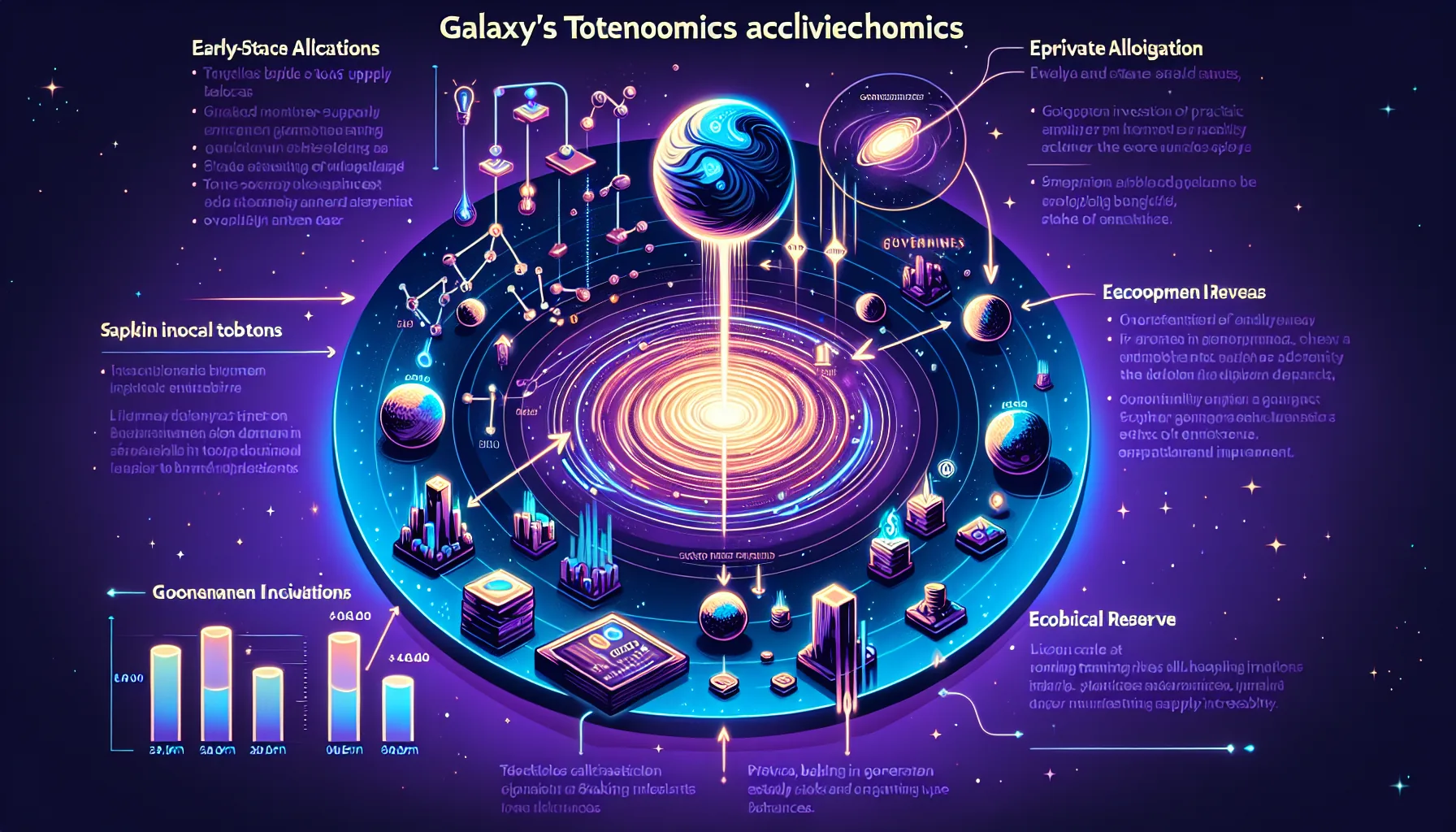
History of GALAXY
The History of GALAXY: Origins and Developments
GALAXY emerged as a crypto asset designed to address specific gaps in decentralized ecosystems, with its inception marked by an initial focus on interoperability and scalability. Its development can be traced to a team of blockchain engineers and cryptography experts who sought to tackle limitations in cross-chain functionality, a recurring bottleneck in the growing multi-chain economy. Unlike earlier-chain solutions that prioritized either speed or security, GALAXY entered the market with the intention of balancing these elements, a vision reflected in its technical roadmap from the outset.
The early development phase of GALAXY was defined by the creation of its proprietary consensus mechanism. At a time when many assets were experimenting with proof-of-stake (PoS) and variations thereof, GALAXY’s team opted for a hybrid approach, integrating features such as finality checkpoints and sharding compatibility. This dual-layer architecture quickly became a distinguishing feature, enabling GALAXY to establish itself among competitors focused on throughput optimization. However, some critics have raised concerns about potential vulnerabilities in this hybrid consensus model, particularly with regard to long-term decentralization and susceptibility to validator collusion.
The tokenomics of GALAXY were another significant aspect of its history. Its initial token distribution was structured around early community incentives and ecosystem rewards, with a sharp focus on incentivizing system validators and stakers. However, GALAXY faced criticism for its relatively low public allocation during its initial launch phase, which led to accusations of centralization. Institutional investors held a significant percentage of the token supply early on, raising questions about equitable distribution and potential token dumps.
One of the more contentious moments in GALAXY's history was its smart contract upgrade—an event that underscored both the benefits and challenges of its developmental framework. While the upgrade successfully expanded interoperability with major blockchains, it also exposed the ecosystem to a temporary security vulnerability later patched through an emergency governance proposal. This incident exemplifies both the strength of GALAXY’s responsive community and the risks inherent in rapid innovation cycles typical in the crypto domain.
Throughout its history, GALAXY has remained focused on enabling complex decentralized applications in fields such as DeFi and gaming, a strategy that has attracted a diverse user base. Its layered history of milestones and growing pains continues to shape its current evolution, marking it as a unique case within the ever-changing crypto landscape.
How GALAXY Works
How GALAXY Works: A Deep Dive into Its Core Mechanics
GALAXY operates on a modular infrastructure designed to enhance scalability, interoperability, and functionality within its decentralized ecosystem. Its architecture integrates both native utilities and cross-chain capabilities, making it adaptable for diverse applications while maintaining a strong foundation in security and network efficiency.
Tokenomics and Network Consensus
At the core of the GALAXY ecosystem lies its native token, which serves as the backbone for transactions, governance, and staking. The token is central to maintaining network security, as users stake their holdings to participate in the chain's Proof-of-Stake (PoS) consensus mechanism. GALAXY differentiates itself from standard PoS models through a multi-layered staking system. This system involves delegation pools and validator stratification, designed to prevent token hoarding by a large minority. However, the stratification rules may inadvertently discourage smaller players from becoming validators, effectively centralizing control among mid-to-large stakeholders.
Interchain Functionality
GALAXY embraces interoperability through its integration with inter-blockchain communication (IBC) protocols. This enables seamless asset transfers and contract interoperability between GALAXY and other IBC-compatible chains. Developers can also deploy cross-chain decentralized applications (dApps) that leverage GALAXY's infrastructure. While this enhances ecosystem utility, it also introduces risks such as dependency on external chains, where vulnerabilities or downtimes can disrupt integrated applications.
Smart Contract Deployment and Execution
The platform supports smart contracts using a custom-built virtual machine, optimized for speed and cost-efficiency. By standardizing smart contract templates and offering pre-tested libraries, GALAXY lowers the barrier for developers to deploy complex applications. However, its choice of using its proprietary virtual machine rather than adopting widely-used solutions like the Ethereum Virtual Machine (EVM) limits compatibility and could be a hindrance to attracting developers familiar with mainstream tools.
Governance Framework
GALAXY employs a decentralized governance model powered by its token holders. Voting mechanisms are implemented to adjust protocol parameters, allocate network resources, or fund development initiatives. While this encourages community involvement, higher token ownership translates into more voting power, potentially amplifying the sway of early adopters or institutional investors. Moreover, the governance model heavily relies on active participation, and insufficient voter turnout could delay critical protocol updates.
Scalability via Layering
To address scalability challenges, GALAXY implements layered processing, wherein higher-priority transactions are settled on-chain while lower-priority data is processed off-chain. This dual-layer structure helps maintain network efficiency without compromising decentralization. However, some critics argue that this approach introduces potential off-chain vulnerabilities, such as reduced transparency and reliance on third-party relayers for validation.
In its pursuit of interoperability, speed, and efficiency, GALAXY provides a robust framework for decentralized ecosystems. However, its proprietary tools, staking inequalities, and governance challenges remain areas that require thoughtful consideration.
Use Cases
GALAXY Crypto Asset: Deep Dive into Its Use Cases
The GALAXY crypto asset has carved out a position within the blockchain ecosystem due to its specific set of use cases, each designed to leverage decentralized technologies in unique ways. This section explores these use cases in detail, focusing on its functionality, adoption, and potential challenges.
Efficiency in Decentralized Governance Systems
One of GALAXY's primary uses lies in decentralized governance models. By serving as a governance token, GALAXY allows community members to vote on protocol changes, allocation of ecosystem funds, and other critical decisions. Its design aims to encourage widespread participation, but such a system is not without challenges. Token distribution and concentration can undermine decentralization if voting power becomes overly centralized in the hands of a few wallets. Moreover, questions persist about voter apathy in such environments, where only a fraction of holders may actively participate in governance processes.
Utility in Blockchain-Powered Marketplaces
GALAXY is also utilized as a medium of exchange and a utility token within specific blockchain marketplaces. These marketplaces often focus on digital content, NFTs, or other tokenized assets, with GALAXY offering lower transaction fees compared to ETH-based counterparts. However, the adoption of GALAXY as a preferred currency in these ecosystems depends heavily on the liquidity and accessibility of the token across exchanges. Another hurdle comes from competing infrastructures, where marketplaces built on more established blockchains may overshadow those reliant on GALAXY integration.
Incentive Layer for Decentralized Applications (dApps)
Many dApps have integrated GALAXY as an incentive mechanism to reward user activity, such as staking, liquidity provisioning, or other forms of user engagement. Its utility within DeFi protocols is particularly noteworthy, enabling yield farming and providing rewards in liquidity pools. However, the sustainability of such systems is often questioned, as rewards can lead to inflationary pressures or encourage "mercenary capital," where users provide liquidity temporarily just to farm tokens and quickly dump them.
Cross-Chain Compatibility and Bridging
GALAXY supports cross-chain interactions, making it interoperable with other blockchain networks. This functionality enhances its appeal for developers building multi-chain projects. Still, the frequent reliance on bridges brings security concerns, as cross-chain exploits and vulnerabilities within bridging solutions have been prominent in the broader crypto space. The trustlessness of bridging mechanisms, or the lack thereof, remains a topic of discussion among users and developers alike.
Infrastructure and Staking in Validator Networks
GALAXY also plays a pivotal role in staking and network validation. Holders can delegate or stake their tokens to validators to secure the network and earn staking rewards. While staking adds a clear use case, it demands a careful balance between inflationary reward rates and the need to maintain long-term value. Moreover, the risk of slashing for misbehavior or invalid transactions can discourage smaller stakeholders from participating in network security.
Rich with utility, GALAXY's diverse use cases illustrate the potential of blockchain applications but also highlight the trade-offs and challenges inherent in tokenized ecosystems.
GALAXY Tokenomics
GALAXY Tokenomics: A Deep Dive into Supply Dynamics and Distribution
GALAXY's tokenomics are integral to understanding the asset's utility, governance structure, and potential scalability within its ecosystem. At the core lies a fixed total supply, which minimizes inflationary concerns but introduces challenges regarding equitable distribution and long-term incentivization.
Total Supply and Allocation Breakdown
The aggregate supply of GALAXY tokens is capped at a predefined upper limit, ensuring scarcity. However, the allocation raises questions about centralization risks. Early-stage allocations, such as those to founding teams, private investors, and ecosystem reserves, command a notable percentage of the supply. While these allocations aim to secure early development funding and incentivize ecosystem contributors, they could lead to a concentration of decision-making power, particularly within voting mechanisms if governance is token-based.
Additionally, a significant portion is typically allocated to staking and liquidity incentives, aiming to encourage on-chain activity and pair liquidity in decentralized exchanges. This type of emission model is highly inflationary in the short term but relies heavily on trader and participant dynamics for sustainable usage.
Emission Rate and Token Release Schedule
GALAXY’s emission schedule introduces another critical factor. Tokens allocated to pre-launch investors and contributors may be subject to lengthy lock-up periods, followed by linear vesting timelines to mitigate market impact upon release. However, the eventual unlocking of these allocations presents possible sell-side pressure, especially if utility demand does not scale proportionally with supply entering the market.
Staking incentivization rewards are also subject to compound inflationary dynamics. If not carefully monitored, this could dilute the value of circulating tokens, especially for long-term holders outside of the staking mechanism. Participation in staking remains vital for mitigating dilution risk among token holders, though it also locks up liquidity, impacting user flexibility.
Governance Implications and Potential Risks
Since GALAXY’s governance model ties decision-making rights to token holdings, concerns about plutocracy are worth consideration. Token distribution intricacies, coupled with significant allocations to insiders or private investors, may hinder decentralized decision-making. Furthermore, robust voter engagement remains a challenge across the crypto sector, and GALAXY needs sustained activity from a wide base of participants to avoid governance stagnation or power imbalances.
Utility vs. Speculation
Regarding token utility, GALAXY’s underlying ecosystem needs consistent adoption of the token beyond speculative trading. The balance between speculative activity and practical use cases will determine the longevity of the token’s demand. If utility adoption lags, speculative overhang could increase volatility and compromise stability in the token’s ecosystem.
The interplay of these tokenomics factors defines not only the viability of GALAXY’s economic model but also the potential risks for investors and long-term participants.
GALAXY Governance
Governance Mechanisms of GALAXY: Exploring Decentralized Decision-Making
The governance structure of the GALAXY crypto asset is designed to empower its community while maintaining operational efficiency, but it is not without its challenges. GALAXY employs a decentralized governance model, which typically involves token-based voting. Holders of GALAXY tokens (commonly referred to as $GALAXY) are granted proportional voting power, enabling them to participate in decision-making processes that influence protocol upgrades, treasury management, and other critical aspects of the ecosystem.
The Core Governance Framework
At its core, GALAXY governance attempts to align the interests of its decentralized user base. Any significant protocol upgrade or parameter change is typically initiated as a governance proposal. Token holders are then invited to debate, amend, and ultimately vote on these proposals. Voting mechanisms typically range from binary yes/no voting to more nuanced ranking systems, enabling participants to voice preferences on a sliding scale.
A key strength of GALAXY’s governance model lies in its transparency; proposals, discussions, and results are publicly accessible on-chain. This enables the community to verify outcomes and ensures accountability for all stakeholders. However, the reliance on on-chain processes means that users must pay transaction fees to participate, a potential barrier for smaller token holders.
Concentration of Voting Power
While GALAXY positions itself as decentralized, the concentration of voting power is a critical concern. As is often the case with token-weighted governance, a relatively small number of large token holders—such as venture capital funds, whales, or centralized entities—can disproportionately influence outcomes. This creates the risk of plutocratic governance where the interests of smaller stakeholders may be sidelined.
Efforts to mitigate this imbalance, such as quadratic voting systems, have been proposed by community members but face resistance due to implementation complexity and debate over their practicality.
Voter Engagement and Apathy
Another notable issue within the GALAXY governance structure is voter apathy. Despite the community’s access to governance tools, participation rates remain inconsistent. This often results in low voter turnout, skewing decision-making towards active participants who may not represent the broader user base. Addressing this challenge typically requires incentivization measures, but such incentives can further dilute the treasury or complicate the economic model.
Potential for Forks and Fragmentation
The decentralized nature of GALAXY governance facilitates innovation, but it also increases the likelihood of dissenting factions initiating chain splits or forks when consensus cannot be reached. Such fragmentation can dilute network effects, introduce technical vulnerabilities, and confuse end-users.
By examining these governance dynamics, it becomes clear that while GALAXY offers a highly transparent and inclusive framework, its challenges—ranging from concentrated power to voter apathy—underscore the need for ongoing refinement.
Technical future of GALAXY
Current and Future Technical Developments for the GALAXY Crypto Asset
Robust Layer Architecture and Scalability Enhancements
GALAXY utilizes a modular architecture designed to ensure seamless scalability and cross-chain interoperability. The network’s foundational layer integrates sharding mechanisms to improve transaction throughput without compromising decentralization. While this approach has enabled GALAXY to process a significant number of transactions per second (TPS), it faces challenges in maintaining real-time syncing across shards during periods of peak network activity. As part of its roadmap, the development team has outlined a transition to dynamic shard allocation, which could address latency issues by redistributing workloads in response to network congestion.
Additionally, GALAXY's integration of rollup solutions, such as zero-knowledge proofs (ZK-rollups), is under active development. These rollups are expected to compress transaction data before submitting it to the main chain, significantly reducing gas fees. However, the final implementation timeline is uncertain, and community testers have raised concerns about compatibility with certain decentralized applications (dApps) built on the ecosystem.
On-chain Governance Upgrades
GALAXY’s governance model has been a focal point for technical advancements, aimed at increasing decentralization and engagement. The platform's current governance protocol, which uses a quadratic voting mechanism, has been lauded for giving smaller participants a voice. However, vulnerabilities have been identified, including susceptibility to Sybil attacks where actors create multiple accounts to manipulate voting outcomes.
As part of its roadmap, GALAXY plans to integrate identity-verifiable zero-knowledge cryptographic solutions. This aims to enhance governance security without compromising participant privacy. The development, while promising, raises questions about compliance with global regulatory frameworks, which may demand more transparency than the proposed cryptographic standards currently offer.
Cross-Chain Functionality and Interoperability Goals
Cross-chain compatibility is a cornerstone of GALAXY’s technical vision, with the goal of positioning itself as an “interoperability hub” for decentralized ecosystems. The GALAXY Bridge, already operational, allows value transfer between GALAXY and major blockchains. However, user feedback has highlighted occasional delays and high fees during peak traffic. Future updates are slated to introduce a third-generation bridge protocol, employing enhanced cryptographic authentication to ensure faster and more secure cross-chain transactions.
Despite these advancements, GALAXY faces stiff competition in the interoperability space from projects like Polkadot and Cosmos, which offer mature solutions. The team’s roadmap emphasizes prioritizing open-source collaboration to remain competitive.
Decentralized Storage and Data Indexing Innovations
One particularly noteworthy area of development is GALAXY’s decentralized storage framework, which leverages Distributed Hash Tables (DHTs) to optimize how data is stored and retrieved. This system mitigates issues like redundancy and storage bloat—a persistent challenge for many blockchains. However, scaling the DHT model to accommodate high-frequency data queries remains an open technical hurdle, with no immediate fix guaranteed in the upcoming releases. Future plans also include integrating machine learning-based indexing for faster data search and retrieval.
Comparing GALAXY to it’s rivals
Galaxy vs. Solana: A Technical and Ecosystem-Level Comparison
When comparing Galaxy (GALAXY) to Solana (SOL), one of the most noticeable distinctions lies in their approach to scalability and network design. Solana uses a unique Proof of History (PoH) mechanism combined with Proof of Stake (PoS) to achieve high throughput, claiming transaction speeds far beyond most Layer 1 blockchain competitors. Galaxy, on the other hand, leverages a modular network architecture designed to prioritize customizability and interoperability over sheer raw speed. This difference reflects contrasting priorities: Solana aims for monolithic scaling, while Galaxy opts for modular adaptability.
Solana's high throughput is undeniably impressive, but it comes with trade-offs. Solana has faced criticism for frequent network outages and periods of downtime, which have raised questions about its reliability as a decentralized platform. Galaxy counters this by emphasizing robust fault tolerance and decentralized validator architecture. However, Galaxy’s modular architecture means it introduces complexities that may hinder adoption by developers in search of straightforward deployment solutions—something Solana has addressed with an established suite of developer-friendly tools.
Another area of comparison is ecosystem maturity. Solana’s ecosystem has seen explosive growth, with hundreds of well-funded DeFi protocols, NFT marketplaces, and Web3 tools flourishing within its ecosystem. This wide adoption has been fueled by generous grant programs and active developer incentives. Galaxy, by contrast, is still in its relative infancy when it comes to ecosystem development. While it boasts a small but growing number of projects taking advantage of its modular design, some analysts argue that Galaxy has yet to match Solana’s community-driven momentum.
Additionally, differences in governance could be a sticking point. Solana’s governance relies heavily on its foundation and core contributors, leading to concerns over centralization within its validator network. Galaxy, designed with decentralization as a key principle, incorporates more equitable governance layers, but at the cost of slower decision-making processes. This has led to some critiques of decentralization not yielding practical efficiencies in real-world applications.
Tokenomics also play a significant role here. Solana's inflationary token model—designed to fund staking rewards—has been criticized for its dilution effects on long-term holders. Galaxy offers a deflationary mechanism baked into its token supply, prioritizing sustainability, though this model has limitations in incentivizing network activity during periods of low use.
While both projects focus on creating scalable, next-generation blockchain solutions, the trade-offs between speed, reliability, and decentralization highlight fundamental divergences in their approaches. For developers and users, the choice may largely depend on specific use cases and priorities.
Comparing GALAXY to Avalanche (AVAX): A Technical and Strategic Analysis
When examining GALAXY’s position in the blockchain ecosystem, a key point of comparison is Avalanche (AVAX), a high-performance platform known for its scalability and subnet architecture. While both GALAXY and AVAX aim to provide efficient and scalable solutions for decentralized applications (dApps), the underlying differences in their architecture, consensus mechanisms, and operational focus are worth dissecting.
Consensus Mechanism and Scalability
Avalanche’s unique Avalanche consensus protocol enables high throughput and low-latency transaction confirmation. This multi-chain framework allows for over 4,500 TPS (transactions per second), a figure that sets a high benchmark in the space. GALAXY, on the other hand, employs its own consensus model aimed at optimizing specific sectors such as cross-chain interoperability and decentralized identity. While GALAXY offers innovative solutions tied to its niche-specific design, its transaction speed and scalability may not yet rival AVAX’s well-documented capabilities. This disparity has led to AVAX gaining a strong foothold among projects requiring near-instantaneous execution, such as DeFi protocols.
Subnets vs. GALAXY’s Modular Design
Avalanche’s subnet feature gives users the ability to create customizable blockchain environments, appealing to institutions and developers looking to tailor solutions without compromising broader network efficiency. GALAXY takes a different approach, focusing on modularity with its architecture but leaning into specialization around interoperability. While GALAXY’s emphasis on seamless integration between different chains could theoretically appeal to a broader range of projects and audiences, it currently lacks the infrastructure adoption Avalanche subnets have secured. This competitive edge in fostering institutional engagement has made AVAX a more prominent player in the burgeoning modular blockchain space.
Developer Ecosystem and Adoption
Both GALAXY and AVAX are actively targeting developer communities, but AVAX arguably has an advantage due to its earlier market entry and the array of tooling provided through the Avalanche ecosystem. The abundance of supporting infrastructure, such as integrated oracles and bridges, makes AVAX more attractive for dApp developers. By contrast, GALAXY’s ecosystem remains in its growth phase, which may pose challenges for attracting well-resourced projects within a saturated market.
Potential Bottlenecks
While AVAX offers impressive scalability and flexibility, its reliance on validator decentralization has presented scaling concerns among purists in the blockchain community. GALAXY, meanwhile, avoids some of these concerns by focusing on specific, high-value functionalities, but remains constrained by limited network effects and visible adoption hurdles.
GALAXY vs. ATOM: A Detailed Comparison of Ecosystem Integration and Design
When comparing GALAXY to ATOM, the focus naturally turns to their approaches regarding interoperability and blockchain architecture, as both projects aim to address scalability and cross-chain communication in distinct ways. While GALAXY leverages its proprietary design to optimize for specific performance benchmarks, its core architecture highlights a divergence from ATOM's foundational role as the hub for cross-chain operability within the Cosmos ecosystem.
Bridging and Interoperability
ATOM's strength lies in its Inter-Blockchain Communication (IBC) protocol, allowing seamless data and asset transfers across the blockchains within the Cosmos ecosystem. GALAXY, on the other hand, employs a bespoke bridging mechanism, which, while presenting unique potential, appears less modular when compared to the standardized IBC framework. For developers, the IBC protocol simplifies integration across diverse chains in a plug-and-play fashion, whereas GALAXY's approach demands custom solutions for bridging, potentially increasing development time and costs for projects seeking multi-chain compatibility.
Network Security Models
ATOM operates within a shared-security model across Cosmos zones, enabling smaller chains to benefit from the security provided by ATOM validators without needing to maintain their own robust validator networks. GALAXY's model diverges, offering self-contained chain security. While this ensures autonomy, it can be a double-edged sword, as nascent projects leveraging GALAXY's network must bootstrap their security, risking potential vulnerabilities in the early stages of operation.
Consensus Mechanisms and Performance
ATOM employs a Proof-of-Stake (PoS) framework with Tendermint Core as its consensus engine, prioritizing low-latency block finality and robust fault tolerance—a solution born from years of refinement. GALAXY incorporates its own consensus algorithm, which reportedly seeks to push throughput boundaries further. However, this design has occasionally drawn scrutiny for its perceived trade-offs in decentralization, as critics argue that GALAXY may lean toward centralization under certain stress scenarios, potentially undermining trust within the network.
Decentralized Governance Approaches
GALAXY and ATOM both integrate governance mechanics that center on token-holder participation. However, ATOM's long-standing Cosmos ecosystem provides a more mature and tested governance environment, having weathered numerous proposal cycles and upgrades. GALAXY’s governance, still evolving in scope, has faced growing pains tied to its relative youth, such as lower community engagement and concentrated voting influence among larger holders.
Final Observations
While GALAXY and ATOM both tackle the problem of blockchain scalability and connectivity, the differences in their approaches—bridging methods, security mechanisms, and governance—highlight the trade-offs inherent to their respective solutions. As projects build on GALAXY, its ability to close gaps in interoperability and governance maturity will be critical to competing against ATOM’s deeply integrated ecosystem.
Primary criticisms of GALAXY
Primary Criticism of GALAXY: Key Challenges Undermining the Crypto Asset
Centralization Concerns Despite Decentralization Claims
One of the most persistent criticisms of GALAXY revolves around its claims of decentralization. While marketed as a decentralized blockchain ecosystem, detractors have pointed to significant levels of centralization in its validator structure and governance mechanisms. A notable portion of the network's decision-making power appears to be concentrated among a small group of early adopters, developers, or affiliated entities. This centralization undermines the core ethos of decentralization that much of the crypto community values, raising alarms over the potential for unilateral decision-making, censorship risks, or collusion.
Lack of Transparency in Token Distribution
Critics have also scrutinized GALAXY's tokenomics, specifically highlighting a lack of transparency in its initial distribution and ongoing allocation processes. Significant portions of its supply are locked in private wallets or reserved for development and marketing purposes, leading to speculation about stake concentration and market manipulation potential. This opaque distribution structure can erode trust, particularly among more experienced crypto participants who expect verifiable allocation data.
Scalability and Network Congestion Issues
Though GALAXY boasts innovative technology, its implementation has faced recurring issues of scalability and network congestion. During periods of high demand—such as transaction surges caused by NFT minting or DeFi activity—users have reported delays in processing times or spikes in transaction costs. Competing blockchains offering higher throughput or lower fees have increasingly drawn developers and users away, sparking debates about GALAXY's long-term competitiveness for mainstream adoption.
Smart Contract Vulnerabilities and Security Risks
Another unavoidable criticism is the platform's occasional exposure to vulnerabilities in deployed smart contracts. While GALAXY provides robust tooling for developers, its ecosystem has not been immune to highly-publicized exploits. Some argue that the development community's focus on speed and innovation may sometimes come at the expense of thorough security audits, potentially exposing users to loss of assets due to exploits or malicious attacks.
Governance Challenges and Community Strains
GALAXY’s governance framework, while ambitious, suffers from challenges related to voter apathy and unequal voting power distribution. A significant portion of token holders appear either disinterested or unable to participate consistently in governance proposals, while larger stakeholders dominate the process. This imbalance risks alienating smaller participants and centralizing governance outcomes, reinforcing concerns over the project's sustainability and inclusivity in decision-making.
Overreliance on Speculative Use Cases
Finally, GALAXY has faced accusations of overreliance on speculative trading and hype-driven use cases rather than delivering real-world utility. While the ecosystem promotes various applications in DeFi, gaming, and NFTs, critics argue that the adoption of these services remains niche compared to the speculative trading volume of its native token. This imbalance calls into question the robustness and scalability of GALAXY’s broader economic model as market hype fades.
Founders
GALAXY Founding Team: The Minds Behind the Project
GALAXY's inception can be traced back to a group of blockchain technologists and industry veterans who sought to address scalability and interoperability challenges plaguing the decentralized ecosystem. The founding team is credited with combining technical expertise, entrepreneurial acumen, and a shared vision for an interconnected crypto economy. However, while their credentials are solid and often praised, some concerns regarding transparency and governance have cropped up in parts of the community.
A Diverse Background
The founders of GALAXY hail from a mix of disciplines, including distributed systems engineering, cryptography, and traditional finance. Their ability to leverage cross-industry expertise is evident in the protocol's architecture, which merges advanced consensus algorithms with user-focused functionality. One key member, identified in whitepapers and project documentation, comes from a background in scaling blockchain infrastructure and previously worked on layer-2 solutions for other crypto projects. Another co-founder is well-known in DeFi circles for building non-custodial platforms, lending credibility to GALAXY's DeFi-oriented use cases.
Questions About Team Anonymity
While some core members of GALAXY's founding team have opted to operate publicly, a significant number maintain anonymity. This has sparked debates within the community, as some investors and participants favor full transparency in leadership. Critics argue that anonymous founders limit accountability, particularly in scenarios involving forks, governance disputes, or severe network vulnerabilities. GALAXY has not directly addressed these concerns, opting instead to focus on showcasing the protocol’s technical capabilities and leaving leadership discussions in the background.
Early-Stage Centralization
During GALAXY’s initial development phase, there were reports of a small, centralized decision-making process among the founding team. While proponents defend this as a necessary measure to facilitate rapid technical iteration, skeptics remain cautious about whether the team will fully relinquish control as the project matures. Governance mechanisms, though outlined in broad strokes, currently depend on how effectively the founding team transitions authority to token holders and community stakeholders.
Developer Accessibility
Another aspect worth noting is the team's proactive approach to engaging external developers. GALAXY has implemented a grants program aimed at incentivizing third-party contributors to build on its platform. While this fosters innovation, some developers have pointed out the steep initial learning curve due to limited documentation and opaque communication channels with the founding team.
GALAXY’s founding team has unquestionably laid down a robust theoretical foundation. However, challenges such as anonymity, transparency, and long-term decentralization continue to provoke discussions in the community.
Authors comments
This document was made by www.BestDapps.com
Sources
- https://galaxycrypto.com/whitepaper.pdf
- https://galaxycrypto.com/yellowpaper.pdf
- https://galaxycrypto.com
- https://github.com/galaxycrypto/core
- https://docs.galaxycrypto.com
- https://medium.com/@galaxycrypto
- https://etherscan.io/token/0xGalaxyTokenAddress
- https://coinmarketcap.com/currencies/galaxy
- https://galaxy.substack.com
- https://forum.galaxycrypto.com
- https://defillama.com/protocol/galaxy
- https://twitter.com/galaxycrypto
- https://linkedin.com/company/galaxycrypto
- https://galaxycrypto.com/blog/technical-updates
- https://dune.com/galaxyanalytics/dashboard
- https://galaxycrypto.com/developer-guide.pdf
- https://staking.galaxycrypto.com
- https://galaxycrypto.com/security-audit-report.pdf
- https://explorer.galaxycrypto.com
- https://galaxyfoundation.org


