History of FXS
The History of FXS: Unpacking Frax Share’s Evolution
Frax Share (FXS) is a key component of the Frax Finance ecosystem, which introduced a novel approach to stablecoins by combining algorithmic mechanisms with collateral backing. The history of FXS is deeply tied to the emergence of Frax Finance and its stablecoin, FRAX, designed as the first fractional-algorithmic stablecoin protocol.
FXS debuted in late 2020 with the launch of the Frax Protocol, co-founded by Sam Kazemian, Travis Moore, and Stephen Moore. The protocol’s unique value proposition stemmed from its hybrid model. Unlike fully-collateralized or fully-algorithmic stablecoins, FRAX maintains partial collateral while algorithmically adjusting supply and demand dynamics. FXS acts as the governance and utility token, absorbing volatility and enabling value accrual through increased adoption of FRAX.
In its early stages, FXS issuance was capped at 100 million tokens, with a portion distributed to early adopters, liquidity providers, and contributors through liquidity mining programs. The mining incentives were structured to bootstrap liquidity and adoption, rewarding participants with FXS for contributing to the protocol’s stability and utility. However, this also created challenges, as the emission of FXS in the early growth phase raised concerns regarding potential inflationary pressure and its long-term impact on token value.
The protocol’s early adoption and growth were fueled partly by the DeFi boom of 2020–2021. FXS gained traction as FRAX established itself as a reliable decentralized stablecoin, and the mechanism’s ability to dynamically adjust the collateral ratio played a key role in expanding its user base. Nevertheless, Frax’s hybrid approach also attracted scrutiny. Critics argued that relying on algorithmic stabilization created systemic risk, particularly in scenarios of extreme market volatility, where maintaining FRAX’s peg to the U.S. dollar could be challenging.
One of the notable milestones in the history of FXS was Frax Finance’s continuous focus on decentralization. Decision-making regarding collateral parameters, collateral types, and protocol upgrades heavily relied on decentralized governance, with FXS holders playing a pivotal role in shaping the protocol’s evolution. However, this governance system also introduced risks. Questions regarding voter participation and governance centralization emerged as concerns, as voter apathy could concentrate power among a small subset of FXS token holders.
Over time, FXS has remained integral to the protocol’s design, serving both as an incentive mechanism and a governance tool. Its intricate role within the Frax ecosystem has made it a standout within the world of stablecoin protocols, while also exposing it to challenges unique to hybrid models and decentralized governance systems.
How FXS Works
How FXS Works: Mechanisms Behind Frax Share
Frax Share (FXS) is the governance and utility token that underpins the Frax Protocol, a unique hybrid stablecoin system combining algorithmic mechanisms with collateralized stability. The design of FXS is tightly woven into the protocol’s operations, making it central to Frax’s functionality and its dynamic monetary structure.
Dual-Token Model: FXS and FRAX
The Frax Protocol operates on a dual-token system: FRAX, the protocol’s stablecoin, and FXS, its governance and value accrual token. FXS does not serve as a stable asset itself; instead, it represents ownership and control of the Protocol. Key to FXS is its algorithmic design, which plays a role in stabilizing FRAX and absorbing the system’s volatility.
FRAX is designed to maintain its peg to USD through a fractional-algorithmic model. A portion of its value is backed by collateral, with the remainder relying on algorithmic minting and burning of FXS. This fractional-reserve approach enables FRAX’s dynamic collateralization ratio (CR), which fluctuates based on market demand, ensuring that the system remains adaptive and capital-efficient.
Minting and Burning: How FXS Interacts with FRAX
When FRAX demand rises, users mint FRAX by depositing collateral (e.g., stablecoins) and FXS. The specific collateralization ratio dictates the proportion of collateral versus FXS required for minting—higher demand can decrease the CR, reducing the amount of collateral necessary. The minting process increases the circulating supply of FRAX while simultaneously creating upward pressure on FXS, as excess FXS is burned to meet algorithmic stability needs.
Conversely, if FRAX supply exceeds demand and the peg deviates downward, users can redeem FRAX for collateral and burn FXS. In this scenario, FXS absorbs the system's economic contraction, concentrating long-term risk and reward on FXS holders.
Token Utility and Governance
Beyond serving as a stabilizing mechanism, FXS also provides governance rights within the Frax ecosystem, allowing holders to vote on key parameters, such as collateral types, CR adjustments, and protocol upgrades. This decentralized governance process, however, raises a potential vulnerability—low voter participation or concentration of governance power could lead to suboptimal decision-making.
Challenges of FXS Mechanisms
While FXS’s design offers innovative scalability and capital efficiency, it’s not without risks. As a volatile, non-stable token, it carries systemic risk if the trust in FRAX’s peg erodes. A rapid decline in FXS value could destabilize the entire protocol, particularly during periods of market stress where redemption demand spikes. The hybrid model also introduces complexity, which may limit its ease of comprehension compared to fully collateralized systems.
Further, reliance on FXS tokenomics to absorb volatility makes the system dependent on market perception and confidence—not just in FRAX, but in the broader Frax ecosystem. This reflexivity can amplify challenges during bearish market cycles.
Use Cases
Exploring the Use Cases of FXS: Utility within the Frax Ecosystem
The FXS token is central to the Frax Finance ecosystem, a unique decentralized stablecoin protocol striving to revolutionize how algorithmic and partially collateralized stablecoins operate. Its primary use cases are intrinsically linked to governance, value accrual, and incentivization mechanisms within the network. However, these use cases come with both potential strengths and considerations that savvy crypto users should be aware of.
Governance Utility
FXS is the governance token of the Frax protocol, enabling holders to influence key decisions that shape the future of the ecosystem. This includes voting on adjustments to collateral ratios, protocol upgrades, whitelisting new assets for collateral, and modifying yield farming incentives. The decentralized governance model grants FXS holders significant control, but it also introduces challenges such as voter apathy, the risk of governance capture by whales, and potential misaligned incentives between stakeholders. Moreover, the technical know-how required to participate meaningfully in these votes can present a barrier to entry, limiting true decentralization.
Collateral Ratio Adjustment Mechanism
A key component of Frax’s partially algorithmic nature is its dynamic collateral ratio, which adjusts based on market demand for the FRAX stablecoin. FXS plays a critical role here, as it absorbs the volatility and economic risks associated with maintaining the peg. When the collateral ratio decreases, more FXS is used to back FRAX, exposing it to dilution if demand wanes. This mechanism is a double-edged sword: it enables capital efficiency and scalability but makes FXS highly sensitive to market conditions and systemic risks within the DeFi space.
Yield Farming and Incentives
FXS is also used to reward liquidity providers and participants in the Frax ecosystem. By staking or providing liquidity to pools such as FRAX/USDC or FXS/ETH, users earn FXS rewards, incentivizing ecosystem growth and stability. However, this inflationary reward model can dilute value for long-term FXS holders if not carefully managed. Additionally, liquidity mining programs are susceptible to capital migration, where participants chase short-term gains across DeFi protocols, leaving Frax dependent on ongoing incentivization to maintain liquidity.
Value Accrual
A unique feature of FXS is its ability to capture value through fees, seigniorage, and excess collateral in the protocol. As the adoption of FRAX grows, these mechanisms should theoretically benefit FXS holders. However, this value proposition relies heavily on the sustained demand for FRAX, making it contingent on the protocol’s ability to defend its stablecoin peg and attract long-term users in a hyper-competitive DeFi landscape.
FXS’s use cases, while innovative, are tightly intertwined with various risks and challenges. Its utility within Frax reflects a complex interplay of governance power, economic design, and ecosystem incentives, all of which demand close scrutiny from crypto-savvy participants.
FXS Tokenomics
FXS Tokenomics: Supply Dynamics, Allocation, and Incentive Structures
Fraxis (FXS) is the governance and utility token in the Frax ecosystem, designed with a dual-token framework that integrates FXS and FRAX, its algorithmic stablecoin. The tokenomics underpinning FXS provide a unique mechanism for incentivization, but they also introduce notable complexities and risks specific to its structure.
Supply Cap and Initial Distribution
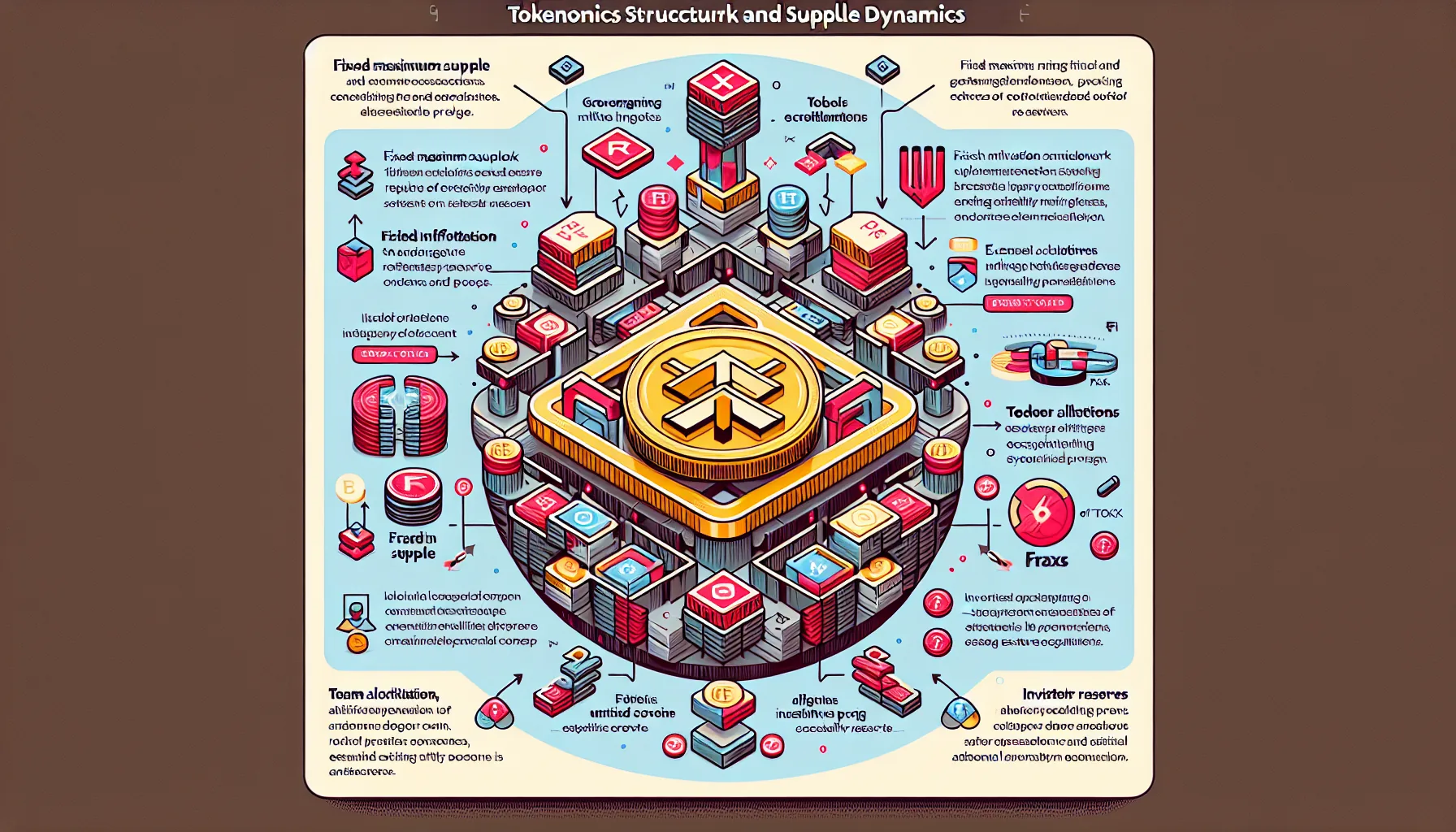
FXS features a fixed maximum supply of 100 million tokens, which introduces a hard ceiling on inflationary dynamics. However, this limited supply contrasts with the existence of the elastic FRAX stablecoin supply, leading to asymmetric scaling pressures. FXS was distributed via various mechanisms during its launch, including liquidity mining incentives, team allocations, investor allocations, and ecosystem reserves. While the initial vesting schedules and distribution aimed to foster decentralization, a notable portion was allocated to insiders. This raises concerns regarding potential centralization risks in governance decisions, as significant voting power remains concentrated among early stakeholders.
Bonding Curve and Utility Dynamics
At the core of FXS tokenomics is its function as a value-capture mechanism within the Frax protocol. When new FRAX stablecoins are minted, FXS may experience buyback pressure, as demand for FRAX indirectly impacts FXS through the protocol's economic design. Importantly, the protocol relies on partial collateralization backed by reserves, with the remainder determined algorithmically. This introduces a systematic need for FXS to absorb volatility and stabilize FRAX whenever undercollateralization scenarios arise, which inherently increases its risk profile for investors compared to the stable asset it supports.
Incentive Programs and Token Locking
FXS also plays a critical role in incentivizing protocol participants, particularly through liquidity mining rewards, staking mechanisms, and fee-sharing models. While these distributed rewards actively encourage adoption and liquidity provision, they contribute to ongoing sell pressure as tokens enter circulation. Furthermore, the protocol's use of veFXS (vote-escrowed FXS) allows holders to lock their tokens for governance power and enhanced rewards. While this creates alignment with long-term ecosystem goals, it also concentrates influence among long-term stakers, potentially disincentivizing shorter-term participants from engaging in governance.
Risks of Algorithmic Dependency
FXS tokenomics largely depend on the health of its stablecoin counterpart, FRAX. A significant downside risk arises from extreme market events or depegging crises, where FXS would need to work as a backstop mechanism. Because the success of FXS is tightly interwoven with the algorithmic portion of FRAX collateralization, systemic risks within the design may lead to cascading effects that diminish FXS value during extreme volatility periods. Critics have highlighted that such dual-token systems face inherent challenges in sustaining long-term market confidence, particularly under stress scenarios.
FXS Governance
Governance of FXS: Decentralized Dynamics and Challenges
The governance of Frax Share (FXS), the utility and governance token of the Frax Protocol, embodies a decentralized framework designed to align the interests of stakeholders while maintaining the protocol's stability and growth. However, like many governance tokens within the DeFi ecosystem, FXS’s governance structure presents both opportunities and challenges that merit closer examination.
At its core, FXS holders govern crucial aspects of the Frax ecosystem, including adjustments to system parameters such as the collateral ratio, algorithmic settings, and fee structures. This decentralized decision-making mechanism ensures that no single party has overarching power but instead relies on the distributed voting power of token holders. Proposals, submitted by the community or core team, are typically voted on through FXS staking or delegation, following the principle of governance token-weighted voting.
One strength of the governance system is its flexibility. Stakeholders are empowered to collectively steer the protocol in response to changes in market conditions, regulatory developments, or technological advancements. This adaptability can be essential in DeFi markets, where rapid evolution is the norm. Additionally, FXS’s governance incentivizes participation by aligning voting rights with token holdings, rewarding active stakeholders who are vested in the protocol's health.
However, criticisms and limitations have emerged. One primary issue is governance centralization risk. Despite the theoretical decentralization, a significant concentration of FXS tokens in the hands of a few whales, early investors, or the core team could lead to disproportionate influence over key decisions. This power imbalance risks undermining the democratic ethos of decentralized governance and exposes the protocol to coordinated actions that may not align with the interests of smaller stakeholders.
Another challenge revolves around voter apathy. While FXS holders possess on-chain voting rights, governance participation rates in DeFi systems often remain low due to complex proposals, lack of awareness, or insufficient incentives. This can lead to critical decisions being disproportionately influenced by a small subset of active participants, leaving other stakeholders effectively disenfranchised.
Additionally, the reliance on token-weighted governance introduces vulnerabilities to governance attacks. Bad actors could accumulate a substantial amount of FXS to push self-serving proposals or exploit treasury funds. Although safeguards like quorum thresholds or time-lock mechanisms can mitigate these risks, they cannot eliminate them entirely.
In conclusion, while FXS governance offers powerful tools for decentralized control and participation, it is not without its challenges. Balancing decentralization with effective decision-making and addressing token distribution imbalances remain critical hurdles for long-term sustainability.
Technical future of FXS
Exploring Technical Developments and Roadmap for Frax Share (FXS)
The Frax ecosystem, underpinned by the Frax Share (FXS) token, has positioned itself as a pioneer in the category of algorithmic stablecoins. This section delves into the current and anticipated technical developments that shape the project's trajectory, focusing on Frax's core infrastructure, innovations, and potential challenges.
Current Technical Innovations
At the heart of Frax lies its hybrid algorithmic-stablecoin model, which combines fractional collateralization with algorithm-driven stability mechanisms. This dual-layered architecture allows Frax's protocol to dynamically adjust the collateral ratio (CR) based on market conditions and demand for the FRAX stablecoin. The system relies on FXS staking mechanics, incentivizing ecosystem participants and redistributing protocol fees directly to stakers via mechanisms like buybacks and burns, utilizing excess revenue.
In terms of governance, Frax employs a veFXS model (vote-escrowed FXS), which locks user tokens for governance participation, promoting a long-term alignment of interests and granting influence over decisions such as collateral whitelist approvals and yield strategy optimization. However, scalability concerns have occasionally surfaced regarding the sustainability of veFXS participation, as some community critics point to governance voter fatigue or disproportionate influence from large stakeholders.
Future Developments on the Roadmap
The Frax protocol is in the process of transitioning toward decentralized collateralization sources to bolster its censorship resistance. While current integrations lean heavily on stablecoins like USDC, the team has indicated plans to diversify collateral assets—including real-world assets (RWAs) such as tokenized treasuries or lending derivatives. This transition could create friction due to regulatory complexities or on-chain liquidity fragmentation.
Additionally, Frax is doubling down on liquidity provision innovations. The protocol’s Fraxlend lending mechanism aims to expand the utility of FXS and FRAX by enabling decentralized long-tail lending markets governed by programmatic interest curves. Future plans suggest cross-chain compatibility through Layer-2 integrations and trustless bridge ecosystems, posing added security risks that come with cross-chain architecture.
Challenges and Trade-Offs
Frax’s heavy reliance on stablecoin-based collateral (e.g., USDC) has drawn criticism for hindering its decentralization goals. To mitigate these risks, the introduction of RWAs and diversified on-chain assets is anticipated, though this shift presents trade-offs between efficiency and protocol complexity. Another pressing issue is maintaining peg stability as FRAX scales; while the fractional model is innovative, it remains vulnerable to adverse market conditions, particularly during liquidity shocks or sudden risk-off events affecting collateral backing.
Finally, FXS token utility could be diluted if over-relying on governance-token incentives without ensuring intrinsic demand for FXS beyond staking or farming programs. Long-term adoption of the protocol may depend on crafting compelling use cases beyond governance utilities and yield farming.
Comparing FXS to it’s rivals
FXS vs LQTY: A Comparative Analysis of Decentralized Stability Mechanisms
When comparing Frax Share (FXS) and its primary rival Liquity (LQTY), both projects rely on innovative mechanisms to address stablecoin issuance and decentralization but employ distinctly different approaches. While FXS underpins the partially algorithmic Frax stablecoin (FRAX), Liquity focuses on ETH-backed collateralization through the issuance of its native stablecoin, LUSD. These differences shape their technical design, use cases, and challenges.
Collateralization: Algorithmic Flexibility vs. ETH Exclusivity
FXS integrates a unique fractional-algorithmic model that combines crypto-collateral with an algorithmic mechanism for maintaining stability. This hybrid approach offers flexibility, allowing FRAX to adapt to market conditions by dynamically adjusting the ratio of crypto-backed collateral to algorithmic backing. However, critics have pointed to the potential fragility of this partially algorithmic design under extreme market volatility or liquidity crises, particularly during “de-pegging” risks.
In contrast, LQTY operates under a purely collateralized model, with every LUSD stablecoin exclusively backed by ETH at a minimum of 110% collateralization. While this ensures greater transparency and resilience in scenarios of market stress—given ETH's status as a top-tier crypto asset—it also constrains scalability. LQTY’s reliance on ETH places limits on supply elasticity, particularly during periods of high ETH volatility or when demand for LUSD significantly outpaces available ETH collateral.
Decentralization and Governance
FXS emphasizes a semi-decentralized approach, relying on its community for governance decisions. However, this hybrid model has drawn questions about whether its structure fully aligns with the ethos of decentralization, as key decisions are historically influenced by a concentrated subset of stakeholders.
Liquity, on the other hand, has taken a governance-minimized stance, hardcoding many of its operational rules into smart contracts. While this eliminates centralized intervention risks, critics argue that the protocol lacks agility to evolve or adapt to unforeseen challenges, like competitive threats or regulatory changes.
Adoption and Integration
Both projects have seen notable adoption, but the design differences also reflect their market appeal. FXS, with the expanded Frax ecosystem, attracts users seeking DeFi primitives like staking, lending, and yield generation. However, this interconnectedness makes Frax prone to systemic risks in broader DeFi. Liquity’s single-purpose focus on ETH-backed stablecoin minting arguably limits its versatility but provides clarity and security for users prioritizing capital efficiency through ETH leverage.
Risks for FXS Highlight Divergence
FXS distinguishes itself through its innovation, but the complexity of its architecture introduces systemic risks, such as dependency on external stablecoins and continual balance of collateral ratios. LQTY’s minimalist design avoids these pitfalls but at a cost: its narrowly defined scope may hinder competitive positioning in a rapidly evolving DeFi landscape.
Comparing FXS to CVX: Key Differences and Competitive Considerations
The rivalry between Frax Share (FXS) and Convex Finance (CVX) is largely centered on their roles within the broader DeFi ecosystem, specifically in governance optimization and liquidity incentives. While both projects operate around enhancing utility in decentralized finance, their approaches, underlying mechanisms, and use cases diverge significantly, leading to notable competitive dynamics.
Role and Functionality
One of the most apparent distinctions lies in the scope of their respective ecosystems. CVX primarily focuses on amplifying governance power and yield opportunities within Curve Finance’s liquidity pools. It leverages accrued $veCRV to influence Curve emissions, attracting liquidity providers seeking boosted rewards. In contrast, FXS operates within the Frax ecosystem, aiming to incentivize stablecoin usage and liquidity while driving adoption of algorithmically managed monetary instruments.
From a user perspective, CVX presents a more targeted utility: multiplying Curve yields and securing governance influence for $CRV token holders. This specialization has carved a strong niche for Convex within the Curve ecosystem but limits its broader applicability beyond Curve's infrastructure. Conversely, FXS's utility is more versatile, aligning with Frax’s goals of decentralization, collateral stabilization, and expanding stablecoin reserves.
Governance Models: Centralization Risks
Convex’s governance structure has been widely scrutinized by the crypto community for fostering centralization within the Curve ecosystem. CVX holders wield outsized influence over Curve’s gauge weight voting system, meaning a small subset of stakeholders can significantly sway liquidity pool rewards. This has raised concerns over power consolidation, particularly in an industry that prizes decentralization.
FXS’s governance, while not immune to critique, offers a more balanced approach. Frax is rooted in a partially algorithmic stablecoin model, giving FXS holders influence beyond just emissions or reward allocations. However, Frax’s reliance on governance decisions in managing its partially collateralized reserves still invites scrutiny for potential inefficiencies in times of market imbalance—an issue CVX avoids due to its more singular focus.
Liquidity Incentives and Capital Efficiency
Another area of fundamental difference lies in capital efficiency. CVX excels at providing liquidity incentives for Curve pools, as its aggregated $veCRV voting power is unmatched in the space. However, this power centralization often requires ongoing emissions to retain dominance, creating sell pressure on CVX tokens as users realize their boosted earnings.
Meanwhile, FXS emphasizes flexibility and synergies across multiple facets of the Frax ecosystem, such as reducing dependency on external liquidity mining programs. Yet, Frax's hybrid design introduces its own risks, like dependency on market sentiment toward partially algorithmic stablecoins—a model historically subject to de-pegging and trust erosion in volatile conditions.
In practice, these differences reflect their respective priorities: CVX maximizes influence within the Curve ecosystem, while FXS prioritizes sustainable growth via diverse mechanisms.
FXS vs. CRV: A Deep Dive into Key Differences and Overlaps
When comparing Frax Share (FXS) to Curve (CRV), the two projects exhibit unique design philosophies but operate within overlapping sectors of the decentralized finance (DeFi) ecosystem. While both focus on critical infrastructural components of DeFi—liquidity provisioning and stablecoins—FXS and CRV diverge significantly in their methods and long-term implications for users and governance participants.
Design Goals: Stability vs. Liquidity Optimization
CRV's ecosystem is fundamentally tied to its role as the go-to decentralized exchange for stablecoins, with its unique automated market maker (AMM) tailored to achieve minimal slippage and low fees for stablecoin swaps. On the other hand, FXS focuses on managing and stabilizing the Frax Protocol’s fractional-algorithmic stablecoin, Frax (FRAX). While CRV's focus is liquidity optimization, FXS prioritizes systems for maintaining stability and trust in its native stablecoin mechanism. For users, this distinction means that CRV is a natural choice for optimizing large stablecoin trades, while FXS operates more as the backbone of its own monetary system.
Tokenomics and Governance Dynamics
The governance structure surrounding CRV is heavily influenced by the “veCRV” system, where token holders lock CRV to gain voting rights and a share of protocol revenue. This has, over time, led to what critics describe as a governance oligopoly, as large holders exert substantial influence over Curve’s decisions. FXS, by contrast, is more tightly integrated into the Frax Protocol and directly affects various parameters like collateral ratios and platform upgrades. While both enable governance-driven ecosystems, CRV’s system has seen challenges with decentralization due to the influence of large players, whereas FXS governance may be criticized for being more narrowly focused on its own protocol as opposed to ecosystem-wide initiatives.
FXS Utility vs. CRV Rewards
A critical difference lies in how the tokens benefit their holders. CRV has labeled itself primarily as an incentive mechanism, rewarding liquidity providers with high emissions of CRV tokens. This dilutionary model, however, has raised concerns about long-term sustainability if utility demand for CRV cannot outpace the volume of newly minted tokens. FXS, in comparison, functions as a utility token to absorb volatility in Frax's partially-collateralized stablecoin system. While this model creates deeper token dependency, it also means FXS gains utility directly tied to Frax’s usage, avoiding reliance on high inflation.
Liquidity Wars and Protocol Synergy
CRV has been at the center of "liquidity wars," where competing protocols bribe veCRV holders to direct liquidity incentives toward their preferred pools. While this ensures Curve remains at the core of DeFi liquidity provision, it also fragments governance attention and amplifies the role of external actors. FXS operates differently, prioritizing internal stability mechanisms rather than getting heavily involved in external liquidity incentives, although Frax has notably engaged with Curve pools. Despite synergies between the two ecosystems, the complexity of CRV’s reward cycles may alienate smaller participants compared to FXS’s more vertically integrated approach.
Ultimately, while FXS and CRV share common ground in shaping the stablecoin and liquidity space, they reflect contrasting philosophies, operational frameworks, and incentives that highlight the diversity in DeFi’s growing landscape.
Primary criticisms of FXS
Primary Criticism of FXS: Key Concerns Surrounding Frax Shares
The Frax Shares (FXS) ecosystem, while innovative, is not without its share of criticisms. Despite its reputation as a prominent decentralized stablecoin protocol, there are several concerns that stakeholders and analysts in the crypto community have raised about FXS.
Centralization Risks and Governance Challenges
One of the primary critiques of FXS revolves around decentralization—or the lack thereof. While Frax Protocol promotes itself as a partially algorithmic stablecoin system, aspects of its governance structure have led to apprehensions. A significant concentration of voting power within the hands of early contributors, large holders, or founding entities creates potential risks of centralization. Critics argue that such governance structures might lead to decisions being made that favor a select few, rather than the broader community.
Additionally, the governance model, while robust in theory, may suffer from low voter participation. This is not uncommon in other crypto projects, but it raises questions about whether meaningful decisions are being made by a representative section of the FXS holder base.
Capital Efficiency and Collateralization Concerns
Frax’s hybrid design—a combination of algorithmic stabilization and collateral backing—has drawn scrutiny for its capital efficiency. While the partially collateralized model appears to strike a balance between over-collateralization and pure algorithmic reliance, some argue that it opens the door to potential vulnerabilities. Specifically, during periods of market stress, the system's reliance on collateralized reserves could be challenged, potentially destabilizing the peg of the Frax stablecoin (FRAX). Skeptics have highlighted that this hybrid approach may inherit the weaknesses of both fully collateralized and algorithmic designs without fully mitigating their risks.
Sustainability of Tokenomics
The dual-token model of FXS and FRAX raises concerns about the long-term sustainability of the tokenomics. The dependency on FXS for value accrual—through buybacks, staking rewards, and governance utility—hinges on the consistent demand and adoption of FRAX itself. In a scenario where demand for FRAX diminishes or competition escalates within the stablecoin market, the utility and value of FXS could come under pressure. Critics caution that this interconnected relationship poses systemic risk and may undermine incentives for FXS holders.
Regulatory Overhang
FXS, like many other crypto assets, faces significant scrutiny regarding regulatory compliance. Given its stablecoin element, concerns have been raised about whether Frax Protocol might attract increased attention from regulators. If specific legal frameworks or compliance mandates disrupt the operational model, the broader ecosystem and FXS holders could be adversely affected. The lack of clarity and proactive measures to mitigate these risks is an ongoing concern for critics.
Adoption Barriers and Complexity
Another layer of criticism lies in the inherent complexity of the Frax system. For the uninitiated, understanding the mechanics of the partially algorithmic, partially collateralized model, as well as the use cases of FXS, can be a major entry barrier. This complexity also extends to developers and integrators, where hesitation could deter broader ecosystem growth and adoption. Critics contend that the design, while innovative, might unintentionally alienate potential users and stifle mainstream appeal.
In summary, while FXS represents a bold step in the evolution of decentralized stablecoins, these concerns highlight critical areas of vulnerability and contention within the ecosystem.
Founders
Founding Team of Frax Share (FXS): Behind the Algorithmic Stablecoin Vision
The Frax Protocol and its native token, Frax Share (FXS), were developed by a team deeply rooted in crypto innovation, with a strong emphasis on decentralization and algorithmic monetary stability. Led by Sam Kazemian, the founding team has played a pivotal role in shaping the concept of the first fractional-algorithmic stablecoin in the decentralized finance (DeFi) ecosystem. This section delves into the context and backgrounds of the individuals who brought the Frax Protocol to life, while also exploring potential criticisms and challenges faced by the team.
Founders’ Background
Sam Kazemian, the main architect and visionary behind Frax, began his foray into blockchain and cryptocurrency during the early days of the industry. Before founding Frax, Kazemian co-founded Everipedia, a blockchain-based encyclopedia aiming to disrupt traditional information curation models. His experience in decentralized projects equipped him with the knowledge and technical acumen to develop novel crypto-economic models. However, Kazemian’s leap from content-focused startups to complex algorithmic monetary solutions has raised questions among critics about a potential lack of directly relevant prior expertise in advanced finance or algorithmic game theory.
Sam Kazemian was joined by Travis Moore, another co-founder with a background in software engineering. Moore has worked on various tech startups, bringing extensive programming expertise to the Frax project. This technical proficiency has been instrumental in implementing the protocol’s complex smart contracts. Despite his technical strengths, Moore’s limited public presence in the crypto community has drawn scrutiny about the team’s ability to consistently engage with a decentralized user base—a key element for long-term success in DeFi.
The third core team member, Jason Huan, provides additional backend engineering support, but like Moore, his presence in public forums and community discussions has been minimal. This observed lack of direct communication from some team members has occasionally led to user concerns regarding governance transparency and responsiveness.
Challenges with Team Transparency and Decentralization
Although the Frax team has developed one of the most innovative stablecoin frameworks, the degree to which decision-making power is decentralized remains a point of contention. Critics argue that due to centralized elements in early governance and development phases, the team’s dominance in shaping the protocol’s direction undermines the ethos of decentralization that Frax advocates. Additionally, skeptics point to rare but notable delays in roadmap execution, questioning whether the team’s relatively small size limits its ability to scale solutions or integrate with new ecosystems effectively.
While the founders of Frax have achieved significant milestones in creating a hybrid model of algorithmic stability, their backgrounds, transparency, and responses to critical feedback continue to be areas for ongoing monitoring within the crypto space.
Authors comments
This document was made by www.BestDapps.com
Sources
- https://frax.finance/
- https://docs.frax.finance/
- https://github.com/FraxFinance/frax-solidity
- https://etherscan.io/token/0x853d955acef822db058eb8505911ed77f175b99e
- https://medium.com/frax-finance
- https://blog.frax.finance/
- https://coinmarketcap.com/currencies/frax-share/
- https://messari.io/asset/frax-share
- https://defillama.com/protocol/frax
- https://tokeninsight.com/en/coin/frax-share
- https://www.coingecko.com/en/coins/frax-share
- https://research.binance.com/en/projects/frax
- https://docs.frax.finance/smart-contracts/frax-share
- https://www.panews.io/post/2360156
- https://cryptoslate.com/coins/frax-share/
- https://nansen.ai/token/frax-share
- https://defipulse.com/frax
- https://dappradar.com/hub/frax
- https://cryptobriefing.com/frax-share-everything-you-need-to-know/
- https://academy.shrimpy.io/post/what-is-frax-finance