History of FTM
The History of Fantom (FTM): From Ambitious Beginnings to Key Milestones
Fantom (FTM) is deeply intertwined with the mission of addressing blockchain scalability through Directed Acyclic Graph (DAG) technology. The project's inception traces back to early 2018, when South Korea-based computer scientist Dr. Ahn Byung Ik founded Fantom with the vision of creating a high-performance distributed ledger. Fantom’s open-source design was conceived as a way to solve blockchain inefficiencies, specifically throughput and confirmation times, which were bottlenecks for leading Layer-1 networks. However, amid the promise, there were notable hurdles that shaped its trajectory.
Fantom launched its Initial Coin Offering (ICO) in mid-2018, raising nearly $40 million—an impressive feat during a bear market. This funding laid the groundwork for the development of the Fantom Opera mainnet. Unlike earlier blockchain projects reliant on traditional consensus mechanisms like Proof of Work (PoW) or Proof of Stake (PoS), Fantom employed Lachesis, an aBFT (asynchronous Byzantine Fault Tolerant) consensus protocol. The team claimed this innovation would enable unparalleled scalability and near-instant finality, differentiating it from competitors with claims of greater decentralization and security. However, early critics raised concerns about the theoretical complexity of Lachesis and its practical implementation under real-world stress.
Fantom’s Opera mainnet was officially launched in December 2019, but the rollout was not without challenges. Critics highlighted gaps in ecosystem maturity, such as a lack of robust decentralized applications (dApps) and toolsets during its initial phases. While the platform boasted high transaction speeds (up to thousands of transactions per second claimed), adoption stagnated due to its relatively insular developer environment compared to Ethereum or Binance Smart Chain ecosystems. This raised doubts about whether Fantom could sustain its operational promises and compete with entrenched networks.
Throughout 2020 and 2021, Fantom received increased attention as it began to flesh out its decentralized finance (DeFi) ecosystem. Integration with Ethereum Virtual Machine (EVM) compatibility was a turning point, allowing developers to migrate existing smart contracts more easily to the platform. However, congestion and increasing costs on Ethereum led to suggestions that Fantom might merely be profiting from temporary frustrations rather than offering genuine differentiation.
The project also faced governance challenges. Efforts to implement decentralized governance mechanisms received mixed responses, with some users critiquing decision-making transparency and the incentive structures for FTM token holders. These growing pains illustrated the trade-offs between community participation and swift protocol evolution.
Fantom’s historical journey reflects innovation tempered by growing pains, marked by both conceptual breakthroughs and real-world challenges in competing within an increasingly crowded blockchain landscape. The combination of a unique consensus mechanism, funding from its ICO, and gradual ecosystem development has positioned the network as a focal point for discussions surrounding next-generation blockchain scalability solutions.
How FTM Works
How Fantom (FTM) Works: A Deep Dive into its Technical Architecture
Fantom (FTM) operates as a high-performance, scalable blockchain platform built to address issues common in legacy systems, including slow transaction speeds and high costs. Its defining feature lies in its utilization of the Lachesis consensus mechanism, a customized implementation of Directed Acyclic Graph (DAG) technology, which enables asynchronous Byzantine Fault Tolerance (aBFT). This approach allows FTM to achieve high throughput while maintaining decentralization and security—core facets of a functional blockchain ecosystem.
Lachesis Consensus Mechanism
The Lachesis protocol operates independently from the main blockchain layer, meaning it can interface seamlessly with different chains. In practice, this means Fantom isn’t confined to a policy of “one-chain-fits-all.” Lachesis operates via a leaderless proof-of-stake (PoS) model, wherein validators stake FTM tokens to secure the network. The aBFT design ensures transactions are confirmed in roughly one to two seconds without relying on a global consensus, significantly reducing latency.
Unlike traditional blockchains that require sequential block production, the DAG structure allows multiple nodes to process transactions simultaneously. This results in finality and irreversibility of transactions once confirmed. However, DAG systems, including Fantom, can face challenges in widespread adoption due to their increased complexity, especially in ensuring consensus consistency when the network significantly scales.
Smart Contract Capabilities and the Opera Chain
Fantom’s Opera Chain is an integral layer purpose-built for smart contract execution and decentralized application (dApp) deployment. It's Ethereum Virtual Machine (EVM)-compatible, granting developers familiar tooling and the ability to migrate projects or codebases from Ethereum. This compatibility has led to a steady trickle of Ethereum-native projects finding their way to the Fantom ecosystem. However, critics argue that relying on EVM compatibility inherently ties Fantom’s innovation to Ethereum's limitations, such as gas inefficiencies in Solidity-based contracts.
Token Utility and Network Economics
FTM is the utility token that powers the Fantom ecosystem. It serves several purposes: staking, governance, payments, and transaction fees. Staking via Lachesis addresses network security, offering validator rewards and network decentralization. The staking ecosystem also features liquid staking options, enabling users to lock FTM while continuing to utilize the resultant synthetic assets for DeFi activities within the Fantom ecosystem.
However, Fantom’s reliance on its staking mechanism poses a consideration: it demands a robust number of participants to maintain true decentralization. Low participation or heavy concentration of coins in whale addresses could undermine the protocol's security and decentralization goals.
Challenges in Interoperability
While Fantom positions itself as highly interoperable, efforts to link with external chains (e.g., Ethereum bridges) introduce risks, especially given the history of vulnerabilities in multi-chain bridging protocols. Security breaches or inefficiencies in bridges can severely impact user confidence and draw attention to systemic weaknesses.
Use Cases
Use Cases of FTM: Exploring Real-World Applications of Fantom’s Ecosystem
The Fantom (FTM) platform has garnered attention for its high-performance blockchain infrastructure, which seeks to address scalability challenges through its Directed Acyclic Graph (DAG)-based consensus protocol, Lachesis. This architecture underpins the specific use cases of FTM, designed to optimize decentralized applications (dApps), DeFi, and enterprise solutions. However, its use cases are not without limitations, which merit discussion.
Enhanced dApp Development and Ecosystem Growth
FTM is widely recognized as a blockchain solution that accommodates high-throughput dApps. Unlike traditional blockchain networks that often buckle under the weight of transaction congestion, FTM employs an asynchronous, leaderless consensus mechanism. This design enables low transaction times (near instant finality) and fees that support real-world applications in gaming, supply chain tracking, and payment gateways. Developers benefit from Fantom’s Ethereum Virtual Machine (EVM) compatibility, allowing migration of Ethereum-based dApps to the Fantom network.
Yet, while Fantom’s infrastructure theoretically supports a high volume of transactions, the need for greater adoption to validate this scalability under stress remains a concern. Without sustained user growth and developer investment, the use case risks being unrealized potential rather than an actual advantage.
DeFi Integration and Asset Interoperability
FTM has achieved notable traction in the DeFi space due to its swift settlement times and cheap gas fees, making it an attractive alternative to competing networks. DeFi protocols on Fantom include lending, borrowing, and staking, supported by FTM as collateral. Liquid staking options further allow users to contribute to network security without completely locking up funds. FTM’s cross-chain bridge functionality has also been pivotal, enabling seamless interoperability between Fantom and other blockchains.
However, Fantom’s focus on cross-chain interoperability introduces inherent risks, such as vulnerabilities in bridge systems, which have been notable attack vectors in the crypto space. Additionally, the competition with established DeFi ecosystems could inhibit Fantom’s ability to achieve dominance outside of specific niches.
Smart City Applications
One of Fantom’s unique ambitions is its focus on providing blockchain solutions tailored to smart city infrastructure. Governments and enterprises in emerging markets have explored Fantom’s consensus technology as a means to modernize public services like identity verification, resource allocation, and supply chain management. FTM facilitates microtransactions within these frameworks, leveraging its low-cost, high-speed transaction capabilities.
Despite its impressive architecture, enterprise adoption remains relatively niche compared to more established platforms. A lack of widespread deployment raises questions about Fantom’s ability to secure its place in these large-scale, real-world applications, where competition from private blockchain consortia is fierce. Additionally, the reliance on long-term partnerships introduces risks related to implementation delays or project mismanagement.
Conclusion Placeholder for Series Continuation
FTM Tokenomics
FTM Tokenomics: A Deep Dive into Supply Dynamics and Distribution
Understanding the tokenomics of FTM, Fantom's native utility token, is essential for evaluating its role within the broader blockchain ecosystem. Fantom employs a proof-of-stake (PoS) consensus mechanism, and its tokenomics are crafted to prioritize scalability, decentralization, and incentivization. However, like any crypto asset, FTM's structure has both strengths and challenges.
Fixed Total Supply with Vesting Mechanisms
FTM has a capped total supply of 3.175 billion tokens. This finite supply creates a deflationary token model, a characteristic meant to appeal to long-term holders. However, this design can also present liquidity concerns if a disproportionate share of tokens are locked up in staking or held by "whale" accounts, reducing the circulating supply in the market.
A significant portion of the supply was pre-allocated during Fantom's fundraising stages, including a private sale, which distributed tokens to early investors, the team, and strategic partners. These allocations were subject to vesting schedules that have mostly concluded, meaning many of these previously locked tokens are now in circulation. This can reduce concerns about sudden dilution from upcoming unlocks, but it also necessitates scrutiny of how these tokens have been distributed and utilized post-vesting.
Incentives and Staking Rewards
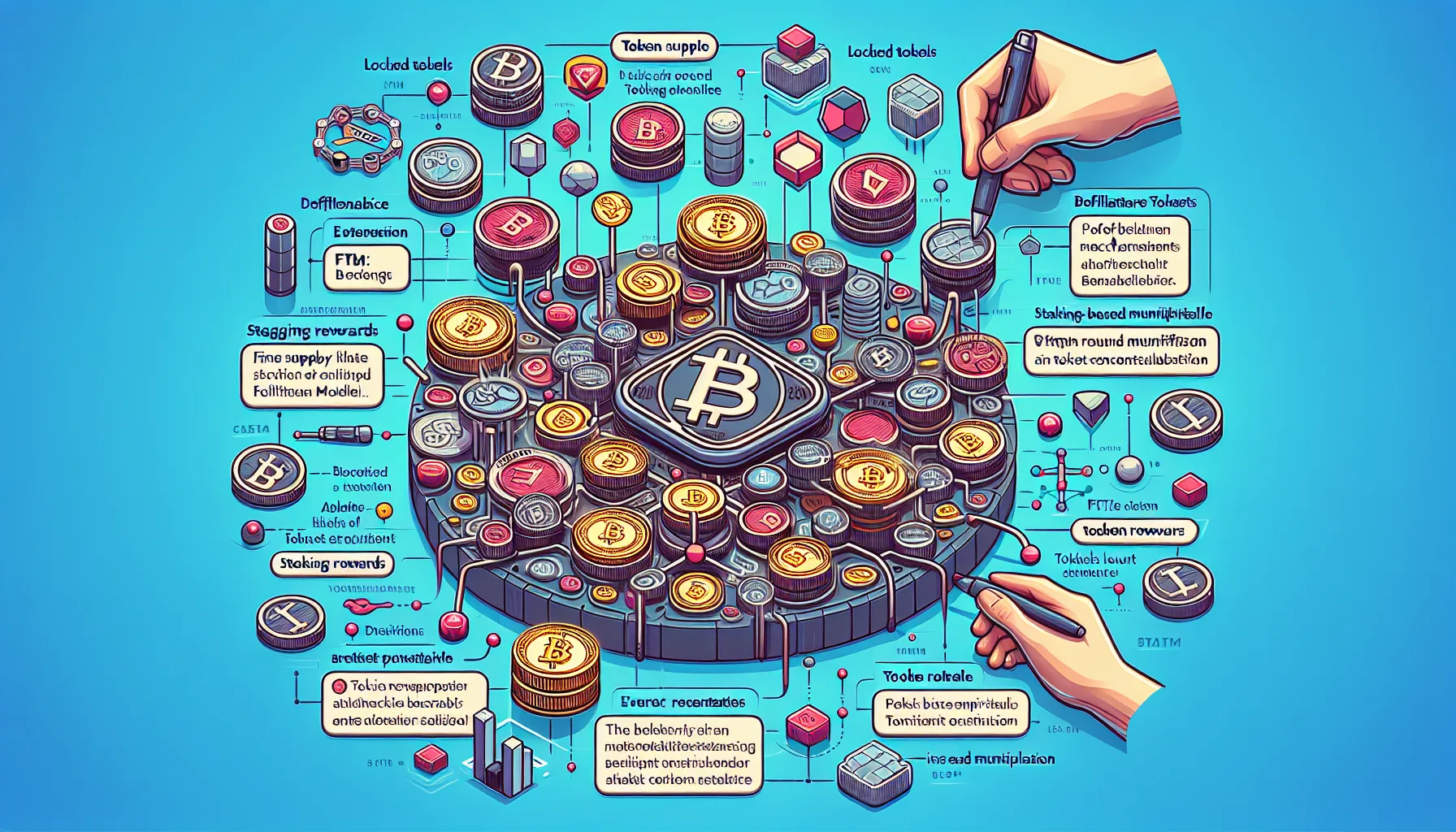
FTM’s staking model is critical to its ecosystem. Token holders can lock up their FTM to secure the network in exchange for staking rewards. Stakers are incentivized to commit their tokens for longer durations through a system of time-based reward multipliers. While this encourages network stability and reward distribution fairness, it may temporarily remove FTM from circulation, creating artificial scarcity but potentially increasing volatility due to sudden unlock events.
The staking rewards are drawn from a long-term pool designed to gradually diminish over time. This tapering system could lead to diminishing incentives for validators and delegators in the future, potentially posing a challenge for maintaining network security and engagement.
Risks Around Token Concentration
One issue in FTM's tokenomics is the concentration of token ownership. Like many blockchain projects, Fantom faces questions about whether its token distribution aligns with its decentralization goals. A small number of large holders can influence governance votes and market dynamics, potentially undermining the network’s resilience.
Additionally, as FTM is an EVM-compatible token, its use as collateral across decentralized finance (DeFi) ecosystems has grown. While this enhances utility, it could also increase systemic risks if over-leveraging or cascading liquidations occur in times of market stress.
FTM Governance
Governance in Fantom (FTM): Decentralization and Decision-Making Dynamics
Governance within the Fantom (FTM) blockchain ecosystem revolves around its decentralized structure, where decisions regarding network upgrades, protocol changes, and funding allocations are community-driven. However, like many decentralized finance (DeFi) projects, Fantom faces unique challenges and trade-offs in balancing inclusivity, efficiency, and security.
On-Chain Governance Mechanics
Fantom leverages its Proof-of-Stake (PoS) consensus mechanism to facilitate governance participation. Token holders stake their FTM to secure the network and, in doing so, gain the ability to vote on proposals. Governance propositions often include protocol improvements, adjustments to staking parameters (such as minimum staking thresholds or validator rewards), and treasury-related decisions. This on-chain governance model ensures active stakeholders have a voice in Fantom’s evolution, particularly those with a vested interest in maintaining network integrity.
A critical consideration is the weighting of votes, which is directly tied to the amount of FTM staked. While this incentivizes economic participation, it may also centralize influence, as large-scale token holders or validators (also known as Delegation Nodes) naturally wield disproportionate authority. This dynamic can raise questions about whether Fantom’s governance is genuinely decentralized in practice or predisposed to oligarchic tendencies.
The Role of Validators in Decision-Making
Validators operate as a critical backbone within Fantom's architecture, participating not only in consensus but also in governance deliberations. While smaller stakeholders can delegate their stakes to validators to indirectly partake in voting, there’s concern that the validator ecosystem could lead to concentration risks. Should a handful of validators dominate governance due to substantial FTM holdings or delegated funds, decision-making could become skewed, undermining the democratic ethos of the platform.
Challenges in Community-Driven Governance
Though underlying mechanisms promote community involvement, participation rates in governance voting have historically been a challenge across DeFi projects, and Fantom is no exception. Limited voter turnout can result in critical network decisions being determined by a small fraction of stakeholders. This creates vulnerabilities, where key proposals may pass with limited scrutiny from the broader FTM community. Additionally, unclear or confusing proposal frameworks could discourage engagement from less experienced participants, despite their stake in the network.
Treasury and Funding Dynamics
A contentious aspect of governance in Fantom lies in treasury allocation. Governance decisions often dictate how funds—whether for ecosystem development or marketing efforts—are distributed. Transparency here is paramount to preventing disputes or allegations of misused resources. It is essential that stakeholders demand accountability and improved oversight mechanisms to avoid fostering mistrust within the ecosystem.
Technical future of FTM
Current and Future Technical Developments in FTM: Understanding the Technical Roadmap
Fantom (FTM) is recognized for its Directed Acyclic Graph (DAG) architecture, which sets it apart from traditional blockchain structures and underpins its Lachesis consensus mechanism. This section dives into FTM's ongoing and upcoming developments, providing a candid technical analysis of its roadmap.
Current Developments in Network Performance and Scaling
One of the key current focal points in FTM's development is optimizing throughput and reducing finality times in its Lachesis protocol. Lachesis is an aBFT (Asynchronous Byzantine Fault Tolerant) consensus mechanism designed to finalize transactions in under two seconds, but the network has faced occasional delays during peak usage, particularly during high-demand periods triggered by DeFi activity. Enhancements to Lachesis are being implemented to improve its ability to handle massive concurrency without experiencing bottlenecks. This includes refining event propagation algorithms and adjusting validator node parameters.
Additionally, gas fee optimization has emerged as a critical area of ongoing work. While gas fees on Fantom are lower than Ethereum’s due to its DAG design, fluctuations in transaction costs driven by intense DeFi activity or NFT launches have exposed inefficiencies. Development on dynamic fee adjustment mechanisms and long-term solutions like incentivized fee-burning integrations are underway, though their management and long-term sustainability have sparked concerns in the community.
Cross-Chain Interoperability Expansions
Cross-chain interoperability is another pivotal aspect of FTM’s roadmap. The existing support for bridges through middleware such as Anyswap and Multichain has been effective but is not without risks. Users have raised issues around bridge security, following broader concerns across the industry regarding vulnerabilities in inter-chain liquidity protocols. Fantom's developers have hinted at native interoperability solutions, which could significantly reduce dependency on third-party services. However, critics point to the lag in implementing these systems as a potential barrier to Fantom’s competitive positioning.
Focus on Ecosystem and Developer Tooling
Support for developers remains one of the critical aspects of Fantom’s roadmap, with initiatives to expand Fantom’s suite of application development tools. This includes upscaling its Solidity and Vyper compatibility for Ethereum Virtual Machine (EVM) developers while also exploring alternatives such as integrating support for other languages like Rust or Move. However, the community has raised questions about whether a multi-language strategy might stretch resources too thin, especially in the competitive race to attract developers.
Future Challenges: Storage Layer and Node Decentralization
One under-discussed but critical issue lies in storage scalability. The rapid growth in on-chain data has led to concerns about increasing operational costs for validators. Proposed future developments include an introduction of a decentralized storage layer to address data handling, and while promising on paper, no concrete implementation or timelines have been defined.
Node decentralization is another ongoing challenge. Despite Fantom’s efforts to encourage a broader distribution of validator nodes, the network continues to face challenges in reducing dominance by large staking pools. This centralization could potentially affect the network’s security and decentralization credentials, raising flags within sectors of the community.
The roadmap underscores Fantom's ambitions, but it also showcases areas of friction within its technical development, indicating a complex balance between advancing innovation and addressing persistent issues.
Comparing FTM to it’s rivals
Fantom (FTM) vs. Avalanche (AVAX): A Technical and Ecosystem Comparison
Fantom (FTM) and Avalanche (AVAX) are often compared due to their shared focus on scalability, low transaction costs, and high throughput. While both target decentralized application (dApp) developers and DeFi projects, their underlying technologies and ecosystem dynamics diverge significantly.
Consensus Mechanism: Lachesis vs. Avalanche Protocol
Fantom relies on its DAG-based consensus mechanism called Lachesis, which operates as an asynchronous, byzantine fault-tolerant protocol. This unique structure enables high throughput and near-instant finality, critical for DeFi use cases and real-time applications. Avalanche, on the other hand, uses the Avalanche protocol, which combines classical consensus methodologies with randomness to achieve scalability without compromising decentralization. While both consensus mechanisms are innovative, Lachesis is more latency-focused, emphasizing minimal transaction times. However, this approach leans toward sacrificing some decentralization in favor of raw performance, something AVAX is designed to balance more deliberately.
Ecosystem and Developer Adoption
A comparison of the developer ecosystems reveals notable differences in adoption. Avalanche has managed to attract a broad swathe of projects through its Subnets, enabling developers to create customizable blockchain environments within the overall network. Fantom lacks an equivalent feature, which may be considered a drawback for developers seeking network-specific customization.
However, Fantom compensates with strong Ethereum Virtual Machine (EVM) compatibility and its Opera Chain, often praised for its lightweight infrastructure. Despite this, Avalanche’s Subnet functionality has allowed it to secure a more diverse range of ecosystem participants, particularly in gaming and enterprise applications. Fantom, by contrast, remains heavily DeFi-centric, potentially limiting its appeal beyond this niche.
Tokenomics and Staking
Tokenomics between Fantom and Avalanche also present a study in contrasts. FTM offers staking rewards and a governance model, but concerns have been raised about the inflationary nature of its token distribution model. AVAX uses a capped supply model with burning mechanisms, which some perceive as offering better long-term value retention. This divergence impacts community incentives and, in turn, network security.
Transaction Costs and Speed
While both platforms demonstrate low transaction fees and high speeds, Fantom’s ultra-low fees sometimes raise sustainability concerns, especially with respect to validator incentives. Avalanche’s fee structure is dynamically adjusted, with portions of fees burned, providing a built-in mechanism to manage economic balance within its ecosystem.
In summary, while both networks excel at addressing scalability and cost challenges, the differences in consensus models, ecosystem breadth, and tokenomics make them appealing to distinct subsets of the crypto community.
Fantom (FTM) vs Solana (SOL): A Detailed Comparison
When analyzing Fantom (FTM) in comparison to Solana (SOL), it's evident that both networks aim to tackle scalability, but they do so through fundamentally different approaches and architectures. These divergences in design lead to distinct advantages and challenges for each protocol, particularly when applied to decentralized finance (DeFi), NFTs, and other use cases.
Transaction Speed and Scalability
Solana's primary claim to fame is its high throughput, achieved through its unique Proof-of-History (PoH) mechanism paired with Proof-of-Stake (PoS). By pre-ordering transactions, Solana minimizes latency and allows for processing up to thousands of transactions per second. Fantom, on the other hand, employs the Lachesis protocol, a Directed Acyclic Graph (DAG)-based aBFT consensus mechanism. While this approach also emphasizes speed and finality, its performance tends to favor deterministic transaction throughput rather than aiming for the extreme volume Solana boasts.
However, one drawback of Solana's unparalleled transaction speed is the increased complexity in validator requirements. Running a Solana validator requires high-end hardware and network bandwidth, which limits decentralization by raising barriers to entry. Fantom's validator requirements, though still stringent, are comparatively more accessible for certain network participants.
Network Downtime and Stability
A recurring criticism of Solana has been its network stability. The chain has experienced multiple instances of network outages due to increased demand or vulnerabilities in its architecture, which can be particularly detrimental for time-sensitive DeFi applications. In contrast, Fantom benefits from its more modular structure, which offers enhanced resilience against single points of failure. That said, as Fantom scales further, it may face its own challenges in maintaining network availability without compromising speed.
Smart Contract Functionality and Ecosystem
Both Fantom and Solana support smart contract deployment, yet their environments differ. Solana uses Rust for smart contract execution, providing high efficiency but also posing a steeper learning curve for developers. By contrast, Fantom is EVM-compatible, meaning developers can deploy Solidity-based contracts directly, leveraging the vast existing Ethereum infrastructure. This has resulted in a faster adoption curve for Fantom when attracting dApps from Ethereum and other EVM-based solutions.
Tokenomics and Decentralization
Solana's tokenomics have often been criticized for their initial distribution, with concerns about centralization due to significant allocations to insiders and venture capital investors. While Fantom has faced some of these criticisms, its distribution sits in a more balanced range, giving it an edge in decentralization perception.
Nonetheless, both protocols are dealing with centralization trade-offs inherent in their consensus mechanisms. Solana’s high hardware demands significantly reduce the number of practical validators, while Fantom’s low staking incentives may disincentivize broader participation over time.
Developer Activity and Ecosystem Growth
While Solana has captured attention for its high-profile partnerships and expansive developer grants, this rapid growth comes with sustainability concerns. A focus on subsidizing usage through incentives has led some critics to question long-term organic activity on the network. Fantom, with a leaner ecosystem development strategy, fosters steady yet less headline-worthy adoption.
In conclusion, a direct comparison highlights the trade-offs between Solana’s high-speed, high-performance design and Fantom’s focus on modularity, accessibility, and EVM compatibility. Both networks cater to distinct developer and user needs, underscoring their contrasting approaches to solving blockchain’s big three issues: scalability, security, and decentralization.
FTM vs. MATIC: Comparing Layer-1 and Layer-2 Scalability Approaches
When evaluating Fantom (FTM) against Polygon (MATIC), the key distinction lies in their fundamental approach to scalability. FTM operates as a Layer-1 blockchain built on its Directed Acyclic Graph (DAG) structure, while MATIC primarily functions as a Layer-2 scaling solution for Ethereum. This divergence sets the stage for differences in transaction performance, use cases, and architectural trade-offs.
Scalability and Performance
FTM's Lachesis consensus mechanism provides asynchronous Byzantine Fault Tolerance (aBFT), which enables near-instant finality and high throughput. Its DAG structure processes transactions in parallel rather than in a linear sequence, reducing bottlenecks common in traditional blockchain models. By contrast, MATIC enhances scalability for Ethereum through sidechains and rollup technology. While effective, the reliance on Ethereum's underlying network occasionally ties MATIC's performance to Ethereum's congestion issues, especially during times of high activity on the mainnet.
Ecosystem and Compatibility
MATIC’s strength lies in its tight integration with Ethereum, offering compatibility with Ethereum Virtual Machine (EVM) applications alongside low fees and faster transaction confirmation. This connection has generated a high adoption rate among DeFi projects and NFT platforms that seek to leverage Ethereum’s liquidity without bearing its native scalability challenges. FTM, however, also supports EVM compatibility, making it a viable choice for similar projects. Yet, Fantom differentiates itself with its high speed, which is particularly attractive for applications requiring real-time processing, such as payment platforms or IoT.
One edge MATIC has over FTM is its vast developer community and ecosystem size, fueled by Ethereum's dominance. FTM, though growing, has faced criticism for a less robust ecosystem in relative terms, which could impact developer interest and user adoption.
Cross-Chain Interoperability and Decentralization
Both FTM and MATIC have made strides in enabling interoperability. MATIC supports Ethereum-native dApps, making migrations seamless, while FTM has launched initiatives to connect with other blockchains through its Anyswap-based Fantom Bridge. However, MATIC’s security model largely depends on Ethereum’s decentralization, as its validators operate within the sidechain framework. FTM, being Layer-1, carries full responsibility for its own security but has encountered concerns over validator centralization, given its relatively lower number of validators compared to some rivals.
Token Utility and Staking
The utility of MATIC and FTM tokens offers both parallels and contrasts. MATIC’s token underpins transaction fees on its network, acts as a staking mechanism for validators, and aligns incentivization with Ethereum ecosystem growth. Meanwhile, FTM powers the Fantom ecosystem by handling transaction fees, staking rewards, and governance voting. Staking participation on Fantom requires a minimum lock-up, which some users find restrictive compared to the more flexible staking options on MATIC.
FTM and MATIC each bring unique strengths to the table, driven by their different approaches to solving blockchain scalability challenges. However, their fundamental architectural differences highlight trade-offs between standalone sovereignty and reliance on Ethereum as a base layer.
Primary criticisms of FTM
Primary Criticism of FTM: Challenges Facing Fantom’s Ecosystem
Fantom (FTM) has gained considerable traction in the crypto space due to its focus on scalability, high transaction throughput, and low fees. However, despite its technical innovations, the project is not immune to criticism. Below are some of the major points of concern raised by the crypto community that impact FTM's long-term sustainability and usability.
Centralization Concerns with Validator Nodes
One of the recurring criticisms of Fantom is its perceived centralization of validator nodes. Fantom operates on a Proof-of-Stake (PoS) model, but the network has relatively high staking requirements (currently 500,000 FTM to run a validator node). This high barrier effectively limits node participation to whales, institutional investors, or well-funded entities, potentially jeopardizing the decentralization ethos of blockchain. Critics argue this restricted access could make the network more susceptible to coercion or centralized decision-making, undermining its trustless design.
Lack of Developer Diversity in dApp Ecosystem
While Fantom promotes its ecosystem as a DeFi and smart contract hub, some within the crypto community argue the platform's dApp ecosystem lacks developer diversity. A significant portion of Fantom’s activity is concentrated among a handful of major protocols, which creates dependency and raises concerns about ecosystem resilience. If one or more of these dominant applications were to fail or migrate to another chain, network activity and adoption rates could plummet. Furthermore, slower onboarding of new developers compared to competing Layer-1s, like Ethereum or Solana, poses additional challenges to Fantom's competitive positioning.
Tokenomics Criticism: High Inflation and Emission Schedule
FTM's inflationary tokenomics model has been another contentious topic. Critics point to its emission schedule, which releases tokens as validator rewards and staking incentives. While this mechanism is common in PoS networks, concerns stem from the dilution effect of emissions on existing holders. Some allege that, absent meaningful increases in adoption or transaction fees, this could lead to a downward pressure on token value over time. Additionally, the heavy reliance on staking rewards to attract participants might not be sustainable in the long term as the ecosystem matures.
Security Trade-Offs in a Directed Acyclic Graph (DAG) Model
Fantom’s use of a Directed Acyclic Graph (DAG)-based consensus mechanism offers advantages in speed and scalability, but it has its own trade-offs. Critics often highlight the potential security risks related to DAGs under certain stress conditions, such as network splits or malicious actors exploiting its topology. Though DAG architectures are less frequently targeted than traditional blockchain models, skeptics argue that this technology has not yet been as thoroughly battle-tested at scale.
Conclusion: Lingering Questions Over Sustained Growth
From node centralization to token economics, Fantom's design—while innovative—is not without flaws. These criticisms serve as important considerations for developers and investors evaluating the project's viability, particularly in the highly competitive Layer-1 landscape.
Founders
The Founding Team Behind Fantom (FTM): Driving Innovation and Facing Challenges
The core vision behind Fantom (FTM) can be traced back to its founding team, spearheaded by Dr. Ahn Byung Ik, a South Korean computer scientist with a Ph.D. in computer engineering. Dr. Ahn initially conceptualized Fantom to tackle the scalability and speed issues faced by existing blockchain networks. However, he is no longer actively involved with the project, leaving the operational responsibilities to a global, diversified team. This leadership shift has been a point of contention within the crypto community, as the lack of the original founder's continued involvement has raised questions about cohesion and long-term direction.
Post Dr. Ahn’s departure, Michael Kong emerged as a leading figure in the project. With a background in computer science and expertise in smart contracts, Kong has played a pivotal role in developing Fantom's underlying consensus algorithm, Lachesis, and its broader application focus on decentralized finance (DeFi). While his technical contributions to the protocol are widely acknowledged, community discussions often highlight concerns about whether his leadership alone can inspire the same level of trust and innovation as when Dr. Ahn was at the helm.
Andre Cronje, well-known in crypto circles as the creator of Yearn Finance, has also been closely associated with Fantom's ecosystem. Cronje has acted as an unofficial advisor and has a record of designing tools that integrate with Fantom, lending the project significant credibility. However, his involvement has been sporadic and unclear at times, leading to speculation about the extent of his ongoing commitment. This dynamic has occasionally caused uncertainty for developers and investors who consider Cronje's influence a significant asset.
The broader Fantom team is geographically decentralized, including engineers, researchers, and business developers. While this structure aligns with the ethos of blockchain, it has also led to critiques about potential inefficiencies in decision-making and alignment between departments. Moreover, the team's opacity with certain organizational details—such as the specific role breakdowns or unexplained departures of former contributors—has sometimes fueled skepticism in forums and developer channels.
In sum, Fantom’s founding and leadership structure showcases a highly skilled and inventive team but highlights governance and clarity challenges. This duality plays an ongoing role in shaping perceptions of the project within the crypto-savvy community.
Authors comments
This document was made by www.BestDapps.com
Sources
https://fantom.foundation/
https://fantom.foundation/whitepaper/
https://docs.fantom.foundation/
https://github.com/Fantom-foundation
https://fantom.foundation/what-is-fantom/
https://medium.com/fantomfoundation
https://explorer.fantom.network/
https://fantom.foundation/staking/
https://research.binance.com/en/projects/fantom
https://etherscan.io/token/0x4e15361fd6b4bb609fa63c81a2be19d873717870
https://www.coingecko.com/en/coins/fantom
https://coinmarketcap.com/currencies/fantom/
https://defillama.com/chain/Fantom
https://rekt.news/fantom-summary/
https://cryptoquant.com/asset/ftm
https://messari.io/asset/fantom
https://l2beat.com/projects/fantom/
https://blog.fantom.foundation/category/development-updates/
https://cryptoslate.com/coins/fantom/
https://www.stakingrewards.com/earn/fantom/


