History of FRONT
The History of FRONT: Navigating Early Beginnings and Milestones
Frontier (commonly referred to by its ticker, FRONT) emerged as a key player in the decentralized finance (DeFi) ecosystem, with a vision to create an all-encompassing interface for interacting with DeFi platforms. Initially unveiled as a project focused on DeFi aggregation, Frontier sought to create a unified user experience that could bridge fragmented DeFi services across multiple blockchains. This mission positioned FRONT as a utility token at the heart of its ecosystem, designed to incentivize participation, unlock ecosystem features, and facilitate governance-related activities.
The early phase of Frontier’s development was defined by its emphasis on multi-chain operability. Unlike many projects limited to a single blockchain, Frontier’s development team chose to prioritize interoperability from the outset, incorporating support for Ethereum, Binance Smart Chain (BSC), and later expanding to additional blockchains such as Solana, Cosmos, and Avalanche. This approach addressed a critical pain point within the DeFi space: the lack of a seamless solution for users managing assets across chains. Consequently, Frontier’s cross-chain strategy became one of its most notable differentiators during its formative years.
Despite these promising undertakings, the project’s early development faced challenges common in the crypto space. Regulatory uncertainty surrounding DeFi applications, coupled with the fast-evolving nature of the sector, created friction in defining and refining FRONT’s token utility. This was compounded by delays in implementing certain features within the Frontier app, which at times led to frustrations from community members and a perception of slow-paced development in competitive DeFi environments. Additionally, the explosion of DeFi protocols in 2020 and 2021 created an increasingly crowded market, with Frontier needing to compete against a wave of established and emerging platforms offering overlapping functionality.
Furthermore, FRONT’s tokenomics were closely scrutinized. Early participants of its token sale highlighted concerns over token distribution and supply dynamics, particularly regarding allocation percentages to early investors, the team, and the community. Critics argued that these allocations could lead to centralization issues or create sell pressure during bearish market conditions. While the project addressed these by deploying a fixed supply model and introducing token vesting schedules for team allocations, skepticism remained among segments of the broader crypto community.
Overall, FRONT’s history lays the groundwork for understanding the intricacies of how its ecosystem operates—and the challenges it has faced in balancing user expectations, multi-chain utility, and token design in an ever-shifting DeFi landscape.
How FRONT Works
How FRONT Works: Decoding the Architecture Behind Frontier
Frontier (FRONT) operates as a non-custodial DeFi aggregator, aiming to streamline user interaction with decentralized finance protocols across multiple blockchain networks. At its core, FRONT facilitates seamless access to DeFi services without requiring users to interact directly with multiple platforms and wallets. Here's how it works in practical terms:
Cross-Chain Interaction Framework
FRONT's primary value proposition lies in its cross-chain compatibility. Instead of being confined to a single blockchain, Frontier supports multiple networks such as Ethereum, Binance Smart Chain, Solana, and others. This interoperability is achieved through the protocol’s ability to integrate APIs from various blockchains. However, this introduces operational complexity, as the project must maintain synchronization with rapidly evolving blockchain updates, which can sometimes lead to temporary disruptions or unsupported features on newer chains.
Unified Non-Custodial Access
Frontier's infrastructure enables users to engage with decentralized finance directly from their wallets without surrendering control of their private keys. The platform does not require users to migrate funds into its ecosystem; instead, it provides a bridge that connects existing wallets like MetaMask, Trust Wallet, and others. While this design enhances security and retains the ethos of decentralization, it also places the onus of private key management and wallet security entirely on the user, increasing the risk of loss due to user error.
Token Utilization Model
FRONT, the native token, has several use cases within the ecosystem, such as governance, staking rewards, and fee reduction for certain in-app services. However, one critique lies in the low adoption rate of governance functionality—despite having a token-based voting mechanism, the extent to which FRONT holders actively participate in decision-making has been questioned. Additionally, staking FRONT can expose users to impermanent loss risks during periods of high price divergence between FRONT and other paired tokens.
Modular Interface Design
The Frontier platform simplifies complex DeFi protocols through a modular and intuitive user interface. It aggregates services like yield farming, liquidity provision, lending/borrowing, and NFT management into a single dashboard. Despite its user-friendly design, advanced crypto users have sometimes reported limitations in functionality compared to direct interaction with certain DeFi protocols. These gaps often stem from the need to standardize interfaces for diverse platforms, sacrificing bespoke features in the process.
By bridging ecosystems without custody, Frontier offers convenience for experienced DeFi participants, but its dependence on third-party integrations and reliance on user-led security measures introduces friction points that may affect its widespread utility.
Use Cases
Use Cases of FRONT: Exploring the Functional Landscape
FRONT as a DeFi Aggregator Interface
One of the most compelling use cases for FRONT is its application as an aggregator interface within the decentralized finance (DeFi) ecosystem. By offering cross-chain portfolio management, FRONT allows users to interact with diverse DeFi protocols from a single, consolidated platform. This streamlining of DeFi interactions saves users time and reduces the complexity of operating across multiple blockchains. However, interoperability can introduce vulnerabilities, such as increased attack surfaces for exploits during cross-chain transactions, which should not be overlooked.
Governance Participation Through FRONT
FRONT serves as a governance token, enabling token holders to participate in decision-making processes related to the development and evolution of the Frontier ecosystem. This use case empowers the community, but comes with its challenges. Governance power is often concentrated among token whales, potentially sidelining smaller stakeholders and raising questions about decentralization in practice.
Staking Incentives and Yield Optimization
FRONT provides staking opportunities that reward users for locking up tokens to help secure the network or earn protocol fees. Additionally, its integration with several yield aggregators enables users to optimize returns across DeFi protocols. While these features make FRONT appealing for passive income generation, the inherent risks associated with staking and yield farming—such as impermanent loss, liquidity risks, or rug pulls—demand due diligence and risk management.
Mobile Accessibility for Crypto Wallets
Frontier’s native focus on mobile-first crypto wallet functionalities enhances asset management convenience. FRONT plays a critical role in unlocking certain features within the mobile app, such as advanced analytics or access to premium tools. However, reliance on a mobile-first strategy could alienate institutional users, who may prefer desktop-centric solutions for enhanced usability and security.
Multi-Asset Support and Cross-Chain Functionality
Another key use case is FRONT's role in enabling seamless interaction with multiple assets across various chains, supporting a wide range of tokens, NFTs, and DeFi primitives. This cross-chain functionality places FRONT at the heart of a multi-blockchain strategy. Nonetheless, network congestion in supported chains or fragmentation across ecosystems can hinder performance and user experience.
Potential for Community-Driven Innovation
FRONT's involvement in incentivizing developer and community contributions fosters innovation within the ecosystem. Hackathons, dApp integrations, and third-party tool development are often catalyzed by FRONT rewards. That said, sustainable contributions rely heavily on token valuation and long-term project viability, which remains a natural point of concern for contributors.
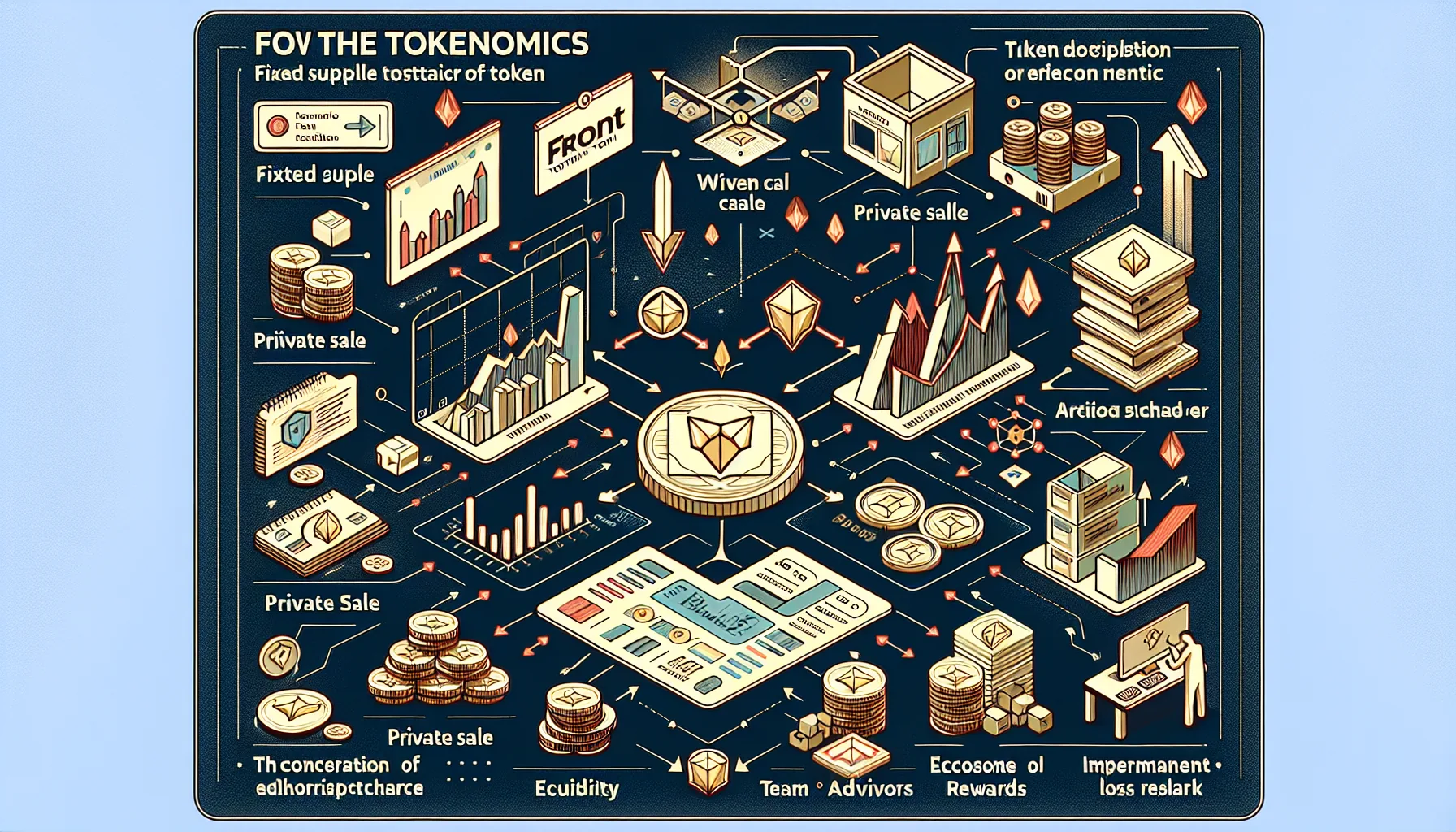
FRONT Tokenomics
FRONT Tokenomics: Dissecting Supply Dynamics and Distribution
FRONT, the native utility token of the Frontier ecosystem, operates with a well-defined tokenomics structure aimed at incentivizing user adoption and ecosystem development. However, its mechanics and distribution strategies introduce both strengths and challenges.
Total Supply and Emission Schedule
The total fixed supply of FRONT is capped at 100 million tokens. This scarcity-driven model aligns with the deflationary characteristic favored by many crypto enthusiasts and market participants. However, like many capped-supply assets, it raises questions about long-term utility in the face of potential demand outpacing availability.
The emission schedule is front-loaded, with a significant portion allocated during the early phases of the project's development. Such a strategy promotes rapid ecosystem growth but can result in heightened sell pressure from early participants, such as private investors and team-allotted tokens, once lockups begin to expire. Transparency about release schedules is critical to maintaining market confidence.
Allocation Breakdown
FRONT’s token allocation embraces a traditional framework, distributing tokens across various stakeholders:
-
Private Sale: A considerable chunk of tokens was allocated to private investors, often at a discounted price. This incentivized early support but also centralizes a significant portion of supply in the hands of private entities, exposing it to potential sell-offs that could destabilize the market.
-
Team and Advisors: Allocating a portion of supply to the team highlights their alignment with the project's success. However, any perceived imbalance in distribution toward insiders can raise concerns about centralization, especially in an ecosystem advocating decentralization.
-
Ecosystem and Rewards: A significant share is reserved for ecosystem development, staking rewards, and liquidity mining incentives. While this encourages user participation, unsustainable high yields in staking rewards risk creating inflationary pressures, reducing the value of existing holdings over time.
Utility and Burn Mechanism
FRONT serves multiple utilities within Frontier, including governance rights, staking for network validation, and fee payments. However, the token’s success hinges on consistent and growing usage of the Frontier ecosystem. Any stagnation in ecosystem utilization could diminish the token's intrinsic value and reduce its appeal beyond speculative trading.
The burn mechanism, if implemented, introduces deflationary pressure by permanently removing tokens from circulation. While this can bolster scarcity, the actual impact remains contingent on the volume of tokens burned relative to circulating supply.
Liquidity Distribution Challenges
Another important consideration is the concentration of FRONT liquidity on certain decentralized exchanges. This dependency introduces risks of impermanent loss and vulnerabilities to shallow order books, particularly during periods of heightened volatility. Broader exchange partnerships or liquidity-pairing strategies might mitigate these concerns but would require community confidence and strategic execution.
FRONT Governance
FRONT Governance: A Deep Dive into Decentralized Decision-Making
FRONT, a governance-driven crypto asset, stands out for its decentralized approach to project management and decision-making. Token holders play a direct role in influencing the trajectory of the ecosystem by participating in various governance initiatives. However, while the promise of democratized decision-making is core to its appeal, several nuances and challenges shape the governance landscape of FRONT.
On-Chain Governance Mechanisms
FRONT leverages on-chain governance to involve stakeholders in critical decision-making processes. This methodology allows token holders to vote on proposals related to protocol upgrades, treasury allocations, and ecosystem partnerships. The governance model ensures transparency since voting outcomes are immutably recorded on the blockchain. However, high participation in on-chain voting doesn’t always translate to equitable representation. Power dynamics, like the outsized influence of whales (holders of significant token quantities), can skew governance outcomes, potentially centralizing decision-making in an otherwise decentralized paradigm.
Governance Token Utility
FRONT's governance model emphasizes the dual utility of its native token: participation and incentivization. Token holders can submit proposals, vote, and engage in governance, aligning their interests with the protocol's development. Beyond voting rights, FRONT tokens may grant access to early releases or protocol benefits. However, one drawback to this model is voter apathy. In many governance-driven ecosystems, only a small percentage of stakeholders actively participate, undermining the legitimacy of decisions and risking stagnation in protocol evolution.
Proposal Lifecycle and Approval Bottlenecks
Governance on FRONT typically follows a structured, predefined lifecycle. Token holders or developers interested in steering the protocol must draft proposals explaining the intended changes, technical specifications, and expected impacts. The voting period includes a fixed timeframe, ensuring all holders can review, debate, and vote. However, proposal bottlenecks can emerge when there is too much procedural rigidity or ineffective prioritization of high-impact proposals over trivial ones. Additionally, contested votes can lead to divisive outcomes, where some stakeholders feel disenfranchised if their preferred path is not chosen.
Security and Governance Attacks
A critical challenge in FRONT governance is the potential for governance attacks. Malicious actors accumulating substantial token quantities could force votes benefiting narrow interests at the expense of the broader community. FRONT's governance infrastructure must operate under robust mechanisms to mitigate this, such as quorum requirements, token lockups, and safeguards against Sybil attacks. While these measures help secure the process, they can introduce time delays or hinder innovative developments.
Balancing Decentralization and Efficiency
FRONT’s governance delivers on decentralization but often encounters the typical trade-off between efficiency and inclusivity. Achieving consensus across a diverse stakeholder group can be slow, especially in rapidly evolving market conditions. The tension between decentralization and actionable agility remains a persistent hurdle for FRONT’s governance evolution. Whether the community prioritizes one over the other depends heavily on continued refinements to its governance structures.
Technical future of FRONT
FRONT: Current and Future Technical Developments
Layer-Two Scaling and Efficiency Optimizations
FRONT is actively advancing its layer-two implementation to improve scalability and reduce network congestion. By leveraging off-chain computations, the protocol aims to handle more complex smart contract interactions and significantly lower gas fees, a critical issue facing many blockchain projects. However, the success of this implementation depends heavily on adoption rates and seamless integration with existing decentralized applications (dApps). Any significant delay in rollout could risk losing developer interest in a rapidly evolving competitive ecosystem.
Multi-Chain Interoperability Enhancements
A key technical development for FRONT revolves around achieving true interoperability across multiple blockchain ecosystems, such as Ethereum, Binance Smart Chain, and other emerging platforms. FRONT plans to introduce new cross-chain bridges to enable seamless asset movement and data communication, aiming to make its infrastructure a vital piece in the growing multichain puzzle. However, concerns about bridge-related security vulnerabilities remain, as cross-chain communications are frequently targeted by exploits. Ensuring robust auditing and modular safety protocols will be essential to avoid reputational damage.
Smart Contract Upgradability
FRONT's technical roadmap includes a significant focus on improving smart contract upgradability. Through modular contract design, they hope to facilitate easier deployment of updates without extensive migrations or disruptions for users and developers. However, this introduces risks regarding centralization, as the control of upgrade permissions may reside in the hands of fewer stakeholders. Maintaining the right balance between flexibility and decentralization will be a technical and philosophical challenge for the project.
Integration of Advanced Privacy Protocols
Another area of ongoing development is the integration of privacy-enhancing technologies, such as zero-knowledge proofs (ZKPs) and other cryptographic privacy measures. This effort aims to expand FRONT's use cases into financial transactions and sensitive data management, areas where privacy is paramount. However, implementing ZKPs at scale remains computationally expensive, and the added complexity could create performance bottlenecks in low-resource environments.
Roadmap Focus on Developer Tooling
An often understated but critical component of FRONT’s roadmap is the emphasis on enhancing developer experience. Plans to release robust APIs, SDKs, and documentation aim to simplify onboarding for developers building on the ecosystem. While these initiatives could catalyze wider adoption of the platform, any gaps in tooling or insufficient support could hinder progress and ultimately weaken the network effect FRONT is aiming to achieve.
Decentralized Governance Challenges
Although FRONT has outlined plans to expand decentralized governance, the technical implementation remains incomplete. Current voting mechanisms are still being optimized for scalability and fairness. Additionally, an over-reliance on token-weighted voting introduces risks of governance capture, where large token holders dominate decision-making. Addressing these vulnerabilities will require innovative solutions, such as quadratic voting or reputation-weighted systems, to ensure equitable participation.
Comparing FRONT to it’s rivals
FRONT vs AUDIO: A Comprehensive Comparison
When examining FRONT (Frontier) alongside AUDIO (Audius), it’s essential to recognize that while both projects aim to decentralize distinct ecosystems, their target audiences and fundamental utilities contrast significantly. FRONT positions itself as a DeFi aggregation platform designed to streamline and simplify access to decentralized finance services across blockchains, whereas AUDIO focuses on empowering music streaming via a decentralized model.
Utility and Application
FRONT’s primary value proposition lies in its ability to aggregate and unify fragmented DeFi tools into one coherent ecosystem. It delivers a better user experience for interacting with various DeFi protocols, including staking, lending, farming, and yield optimization across multiple blockchains. While this interoperability is a strength, it can also lead to potential challenges, such as managing security vulnerabilities across diverse integrations and the risk of over-reliance on external protocols.
In contrast, AUDIO’s utility revolves around providing a platform for artists and creators to distribute their content while retaining control of their intellectual property. This creator-centric model taps into a different audience segment—catering predominantly to music producers and fans, compared to FRONT’s DeFi-focused users. This divergence in focus means the two projects rarely compete for users directly, although they share the broader ethos of promoting decentralization.
Tokenomics
FRONT’s token is tightly integrated into its ecosystem, granting governance rights and enabling users to access premium features within its platform. However, critics argue it lacks mechanisms to directly incentivize long-term holding, as its utility often depends on active participation within the ecosystem. AUDIO, on the other hand, combines utility with a more user-centric model, offering staking rewards and enabling token holders to support individual artists.
Where FRONT faces potential challenges is scalability. DeFi aggregation, by nature, is resource-intensive—making FRONT susceptible to high gas fees during network congestion. This can lead to diminishing returns for users during peak activity periods, a problem that AUDIO's blockchain model for lightweight transactions in content distribution doesn’t encounter as often.
Development Challenges
Lastly, FRONT’s reliance on multi-chain integrations creates constant development overhead. Keeping up with rapidly evolving protocols on platforms like Ethereum, Binance Smart Chain, or Solana can strain resources and introduce delays in delivering updates. AUDIO, while also reliant on blockchain-based infrastructure, has the advantage of focusing primarily on its own ecosystem, avoiding this diversified complexity.
In conclusion, the differences in use cases and operational models between FRONT and AUDIO highlight contrasting approaches to leveraging blockchain technology. Both projects demonstrate unique strengths, although FRONT’s multi-chain scope presents unique hurdles it must address to maintain relevance in the fast-moving crypto landscape.
FRONT vs RNDR: Comparing Utility in Decentralized Ecosystems
When it comes to comparing FRONT with RNDR, the discussion boils down to their distinct utility within decentralized ecosystems. While both crypto assets cater to niche demands in the Web3 economy, their use cases and technical implementations differ significantly, setting the stage for a nuanced evaluation of their roles.
Niche Focus and Use Case Divergence
FRONT focuses on enhancing decentralized application (dApp) discovery, fostering user interactions with interoperable tools, and streamlining DeFi functionalities. In contrast, RNDR operates in a specialized market: leveraging blockchain technology for decentralized GPU rendering. RNDR’s value lies in democratizing high-performance rendering capabilities for industries like film, gaming, and augmented reality. This divergence highlights how FRONT serves a broader DeFi audience, whereas RNDR addresses a narrower subset of the creative economy.
Network and Adoption Challenges
Frontier (FRONT) excels with multi-chain compatibility, offering users robust access across blockchain ecosystems. Conversely, RNDR has carved its niche within the Ethereum ecosystem, currently transitioning toward a Solana-integrated architecture for higher scalability. While impressive in concept, RNDR’s reliance on a decentralized GPU network raises concerns about accessibility for non-technical users and high costs associated with rendering services. FRONT, while more accessible, suffers from oversaturation in the DeFi aggregator space, where rivals also compete for market share.
This dichotomy of adoption illustrates how both projects face different barriers. FRONT faces the problem of differentiation in an already crowded sector, while RNDR works to overcome the technical and economic hurdles of expanding its rendering service base.
Tokenomics Challenges in Comparison
The tokenomics of both platforms offer insights into their design trade-offs. FRONT employs its token to facilitate staking and governance, creating incentives for long-term engagement. RNDR, on the other hand, uses its token to power transactions on the rendering network, enabling service providers (node operators) to be compensated for GPU rendering tasks. A potential drawback in RNDR’s model is its susceptibility to fluctuating demand for rendering services, which can create unpredictable token utility. FRONT avoids market dependency of this kind but remains limited by how much of its utility overlaps with existing DeFi platforms.
Final Thoughts on Differentiation
While FRONT and RNDR both address unique problems in the crypto space, their respective challenges, from accessibility to economic dependencies, underscore their paths in the blockchain ecosystem. Understanding these differences is essential to evaluating each asset’s viability within its sector.
FRONT vs. GRT: A Specific Breakdown of Differences
When comparing FRONT (Frontier) to GRT (The Graph), the two crypto assets reveal distinct technical and functional differences that target varying niches within the decentralized ecosystem. Both assets play pivotal roles in the DeFi and Web3 spaces, but their approaches and value propositions are uniquely specialized.
Use Case & Ecosystem Integration
FRONT focuses primarily on creating a unified interface for decentralized finance. It serves as a versatile aggregator, empowering users to interact with multiple DeFi platforms, wallets, and protocols from a single interface without needing direct compatibility. On the other hand, GRT is centered around indexing and querying blockchain data. It powers The Graph protocol, which allows developers to seamlessly retrieve blockchain data to enhance dApp functionality. Where FRONT emphasizes front-end simplicity for end users, GRT operates as a backend infrastructure tool designed for developers building Web3 platforms.
This differentiation defines the audiences they serve. FRONT appeals more to retail investors and DeFi enthusiasts looking for an all-in-one solution. GRT, by contrast, caters to developers and tech-savvy builders within the blockchain space, who require fast, reliable indexation to power decentralized applications.
Token Utility & Adoption
The utility mechanisms behind FRONT and GRT tokens also underline their divergence. FRONT is utilized to facilitate interaction within the Frontier ecosystem, offering staking rewards and governance rights while streamlining DeFi usability. However, some critiques have emerged around the limited scope of its token utility, as Frontier's reliance on external integrations means its value is somewhat tied to the success of other protocols.
GRT has arguably carved out a more robust token economy, being directly linked to the indexing process of The Graph. Indexers, delegators, and curators use GRT to maintain and query blockchain data. This strong utility-driven demand has established GRT as a key infrastructure token. However, the extensive technical know-how required to fully utilize GRT’s capabilities poses a significant barrier to entry for many.
Challenges in Scalability and Innovation
While GRT’s indexing protocol has seen widespread adoption, its reliance on Ethereum’s Layer 1 raises concerns about scalability. Although migrations to Layer 2 solutions are planned or underway, this delayed scalability could impact its broader adoption. FRONT, on the flip side, is largely dependent on the success of its integrations with third-party DeFi protocols. If any of these partner ecosystems falter, FRONT’s utility and value could correspondingly diminish, leaving it vulnerable in a highly competitive DeFi landscape.
Each project addresses a unique pain point within the decentralized world, but the stark functional and technical differences between FRONT and GRT make a direct comparison complex. These nuances will continue to shape their respective identities in the Web3 ecosystem.
Primary criticisms of FRONT
Primary Criticism of FRONT: Key Concerns for Crypto Enthusiasts
Centralization Concerns in FRONT's Ecosystem
A recurring criticism of FRONT revolves around the level of centralization in its governance and operational framework. Although FRONT is presented as a decentralized project, critics argue that the team and core developers wield disproportionate control over decision-making processes. This perceived central influence can create vulnerabilities, particularly if the project's direction doesn’t align with the broader community’s expectations. For those committed to the ethos of true decentralization, this represents a significant red flag.
Limited Utility Beyond DeFi Aggregation
FRONT positions itself as a user-friendly gateway to decentralized finance (DeFi) applications. However, detractors point out that its utility appears narrowly confined to DeFi aggregation and cross-chain services, making it less appealing in a highly competitive market. In an ecosystem with an increasing array of multi-functional, community-driven platforms, critics question if FRONT is doing enough to differentiate itself or expand its use case beyond this niche focus. The limited scope of utility may also hinder long-term adoption and relevance.
Lack of Transparency in Token Dynamics
One of the most persistent criticisms is the lack of robust transparency surrounding FRONT's tokenomics, particularly in token distribution and allocation. Concerns are frequently raised about whether tokens are disproportionately held by insiders, early investors, or the development team. This raises fears of potential market manipulation or sudden sell-offs, which can erode trust within the community. Furthermore, details about mechanisms designed to mitigate these risks—such as vesting schedules—are not always readily accessible or adequately communicated.
Scalability and Cross-Chain Limitations
While FRONT aims to serve as a unified interface for interacting with DeFi protocols across multiple blockchains, users continue to report scalability and integration issues. Critics frequently cite that cross-chain functionality is inconsistent, with intermittent delays or compatibility challenges arising during high-traffic periods. This issue not only impacts user experience but also undermines the platform’s promise of seamless interoperability between chains, a core feature of its value proposition.
Security Concerns and Potential Risks
Security is another sticking point in the criticism directed at FRONT. Although there haven’t been major breaches attributed to the project, skeptics highlight the risks associated with connecting to numerous decentralized protocols. Each partnership or integration potentially exposes FRONT’s users to unforeseen vulnerabilities in those external platforms. Such interconnectedness can be a double-edged sword, amplifying risk in an industry that already grapples with frequent exploits and hacks.
Founders
Founding Team Behind FRONT: A Closer Look
The founding team of the FRONT crypto asset comprises a group of individuals with diverse expertise in decentralized finance (DeFi), blockchain development, and product innovation. However, while their collective skill set has enabled the project to carve out a niche in the competitive landscape of DeFi tools, there are some nuances worth examining, especially for those deeply familiar with crypto ecosystems.
Kaushik Ghosh – Strategic Focus and Leadership
Kaushik Ghosh, one of the prominent figures in FRONT's creation, has a strong background in user-centric solutions within blockchain technology. His leadership has often been highlighted as pivotal to the project's focus on seamless integrations with decentralized products. However, industry insiders have occasionally critiqued the scalability strategies under his guidance, particularly in addressing friction points when onboarding new blockchain platforms into the FRONT ecosystem.
Aniket Jindal – Visionary in Ecosystem Expansion
Aniket Jindal, another key co-founder, has previously been involved in several blockchain initiatives. His expertise leans towards building partnerships and fostering cross-chain operability. While this has allowed FRONT to position itself as a multi-chain solution with integrations spanning numerous blockchain environments, some critics argue that the project may overextend itself, potentially compromising depth in favor of breadth. This strategic debate remains a point of contention among its stakeholders.
Technical Team – Proficient, Yet Lean
FRONT’s developers have exhibited a strong grasp of interoperability and user experience design, which are integral to the project’s value proposition. However, by operating as a relatively lean technical team, concerns have been raised about whether the project can adequately sustain maintenance and innovation across the growing number of blockchain networks it supports. Critics worry that the absence of a more robust team structure might expose vulnerabilities or limit responsiveness to emerging technological demands.
Transparency Issues in Team Expansion
While the founding team’s initial contributions have been significant in shaping FRONT, transparency regarding team growth and decision-making processes has come under question from parts of the community. For instance, the absence of regular updates about new hires, or the delegation of responsibilities, has been pointed out as a potential area of improvement for fostering greater investor and user confidence.
Overall, FRONT’s founding team has built a strong technical and strategic foundation, but resource allocation, scalability, and transparency in operations remain areas where sharper focus and community engagement could make a difference in maintaining trust within a savvy crypto audience.
Authors comments
This document was made by www.BestDapps.com
Sources
- https://frontier.xyz
- https://github.com/Frontierwallet
- https://etherscan.io/token/0xf8c3527cc04340b208c854e985240c02f7b7793f
- https://frontier.xyz/white-paper.pdf
- https://dexscreener.com/ethereum/0xf8c3527cc04340b208c854e985240c02f7b7793f
- https://coinmarketcap.com/currencies/frontier
- https://coingecko.com/en/coins/frontier
- https://medium.com/@frontierwallet
- https://docs.frontier.xyz
- https://bscscan.com/token/0xf8c3527cc04340b208c854e985240c02f7b7793f
- https://frontierdao.com/
- https://frontier.xyz/blog
- https://academy.frontier.xyz
- https://tokensniffer.com/token/eth/f8c3527cc04340b208c854e985240c02f7b7793f
- https://defillama.com/protocol/frontier
- https://twitter.com/FrontierDotXYZ
- https://api.frontier.xyz
- https://www.reddit.com/r/FrontierWallet/
- https://app.frontier.xyz
- https://www.binance.com/en/trade/FRONT_USDT


