History of FLoki
The History of Floki: From Meme Roots to Market Disruption
Floki, a cryptocurrency originally inspired by Elon Musk's Shiba Inu dog and connected to the broader trend of meme-based tokens, entered the blockchain space as a byproduct of the Dogecoin and Shiba Inu craze. Its emergence can be traced back to the explosive popularity of community-driven crypto assets and the power of internet culture in influencing speculative markets. Floki’s identity revolves heavily around branding, with its Viking-themed logo and marketing campaigns designed to foster a sense of belonging among its users.
Early on, Floki differentiated itself from many meme coins by marketing itself as more than just a joke token. The developers touted its ambitions to create decentralized finance tools, non-fungible token (NFT) ecosystems, and even blockchain-powered educational platforms. However, such claims were (and in some circles remain) met with skepticism by experienced crypto participants, who questioned whether Floki’s rapid token issuance and community-driven governance could support such lofty goals. These concerns about utility and legitimacy linger in Floki’s narrative.
Floki saw exponential growth in its community, particularly through aggressive social media campaigns. This included direct engagement with popular crypto influencers and leveraging viral tactics to gain traction. While effective, this marketing strategy was criticized for prioritizing hype over substance, a complaint levied at many other tokens in the speculative crypto space. Critics pointed out potential issues like the lack of a clear roadmap in its early days and its reliance on the meme economy as its primary driver of value.
Another contentious part of Floki’s history has been its tokenomics. Designed with hyper-deflationary mechanisms (including token burns) and redistribution incentives aimed at rewarding holders, its structure raised questions about long-term viability. Critics suggested that such mechanisms might favor early adopters disproportionately, making it harder for new entrants to gain meaningful exposure without incurring significant inflationary risks or facing issues like liquidity traps.
Additionally, Floki’s decentralized governance model, while innovative on paper, has not been immune to scrutiny. Decision-making within its community has occasionally been marred by disputes over priorities and accusations of centralization masquerading as decentralization. Such governance challenges reflect broader tensions within the DeFi and meme-token space, where collective decision-making often struggles to keep pace with rapidly evolving markets.
Floki’s history ultimately highlights the fine line it balances between leveraging internet culture and addressing the significant challenges that accompany its aspirations to scale beyond a meme-based reputation.
How FLoki Works
How Floki Works: Mechanisms Behind the Meme-Inspired Cryptocurrency
Floki is a utility-focused meme cryptocurrency running primarily on blockchain protocols such as Ethereum and Binance Smart Chain (BSC). Designed to blend community-driven tokenomics with decentralized applications, Floki capitalizes on the meme coin phenomenon while aiming to provide functional use cases. To understand how Floki operates, it is crucial to unpack its underlying mechanisms and technical features, which include tokenomics, smart contracts, and integrations with broader decentralized finance (DeFi) ecosystems.
Core Tokenomics and Supply Dynamics
At its core, Floki adopts a deflationary token model. This mechanism is designed to incentivize holding and reduce circulating supply over time. A percentage of each transaction incurs a nominal tax, which is redistributed across various channels, such as automated liquidity pools and wallets designated for ecosystem development, marketing, and sometimes charitable contributions. This “tax-on-transactions” approach introduces concerns about scalability, as high transaction fees can deter usage in certain DeFi applications. Additionally, while redistribution fosters community engagement, critics argue it disproportionately benefits early adopters and large holders.
Cross-Chain Architecture
One of Floki’s technical advantages is its deployment across multiple blockchain networks, primarily Ethereum and BSC. Users can seamlessly bridge tokens between the two networks via cross-chain solutions. While this offers flexibility and reduces reliance on a single ecosystem, it also exposes users to potential security risks inherent to multi-chain bridges, such as smart contract vulnerabilities and potential hacks. Furthermore, gas fees on Ethereum can make transactions prohibitively expensive during periods of high network congestion.
Integration with Utility-Based Platforms
Floki is not solely speculative; it integrates into decentralized applications (dApps) such as NFT marketplaces, gaming platforms, and staking infrastructure. These integrations aim to establish it as a functional cryptocurrency beyond its meme-based identity. However, the pace of development in these areas poses a challenge. Community-driven cryptocurrencies often lack clear technical roadmaps, and ambitious claims around dApp rollouts may not materialize in a timely manner, potentially impacting user adoption and trust.
Governance and Decentralization
While Floki markets itself as a community-driven project, its pseudo-decentralized governance structure raises questions. Key decisions regarding tokenomics modifications or ecosystem expansion are often controlled by core developers or centralized entities rather than a true DAO architecture. This centralized control can conflict with the ethos of decentralization that underpins the cryptocurrency space.
Smart Contract Design and Transparency
Floki’s ecosystem relies heavily on the proper functioning of smart contracts, which govern liquidity, staking, rewards distribution, and cross-chain operations. While the code is audited to some extent, the reliance on immutable code means that any overlooked vulnerabilities could lead to significant losses for users. Furthermore, the lack of fully open-source audits for certain components has led to criticism about transparency within the Floki ecosystem.
Use Cases
Floki Crypto Asset Use Cases: Applications and Practical Considerations
Floki, a cryptocurrency inspired by the meme culture surrounding digital assets, positions itself as more than just a speculative asset. Its use cases focus on fostering real-world utility within its ecosystem, though these implementations vary in maturity and effectiveness. Below are detailed use cases for the Floki token, alongside critical considerations crypto-savvy investors should account for:
1. DeFi Integration and Staking Mechanisms
Floki integrates with decentralized finance (DeFi) systems, offering token holders opportunities to stake their assets to earn yield. This provides passive income streams and incentivizes long-term holding, reducing token circulation and, theoretically, creating upward price pressure. However, any DeFi-related activity comes with inherent risks, such as smart contract vulnerabilities and the potential for impermanent loss in liquidity pools. Additionally, the level of audit and security reviews on smart contracts within the Floki ecosystem should be critically assessed. Without robust security assurances, the risk of exploits increases significantly.
2. NFT and Metaverse Applications
One of Floki’s prominent offerings is its use within NFT marketplaces and metaverse infrastructure. The token aims to serve as a medium for purchasing, trading, or creating non-fungible tokens, as well as acting as in-game currency within virtual environments. While this use case underscores bold ambitions, the success of these applications depends heavily on the adoption rate of these projects. In already oversaturated markets for NFTs and metaverse concepts, differentiation becomes critical but difficult to achieve. Furthermore, these sectors are often plagued by speculative behavior and lack of tangible utility, which can hinder sustained growth.
3. Merchandise Payments
Floki attempts to position itself as a payment token for branded merchandise, allowing its holders to showcase their involvement in the wider crypto culture. While appealing to niche communities, this represents a limited application compared to other utility-focused tokens. The adoption in this realm is also contingent on partnerships and the ability of vendors to overcome technical and compliance barriers for crypto payment integration.
4. Philanthropy and Branding Campaigns
Floki markets itself as a community-driven token with philanthropic values, pledging contributions to charitable initiatives funded partially through its token ecosystem. Although this enhances its branding and adds a feel-good element for community members, converting aspirations into measurable impact remains challenging. Critics argue that such campaigns might serve more as marketing tools than long-term value drivers.
Summary of Critical Issues
While Floki’s use cases span multiple categories, from DeFi to NFTs, their effectiveness relies on adoption metrics, execution quality, and ecosystem security. Risks such as limited scalability, regulatory scrutiny, and security challenges remain substantial barriers for its broader utility. As the ecosystem develops, users will need to weigh these risks against the potential for utility-based rewards.
FLoki Tokenomics
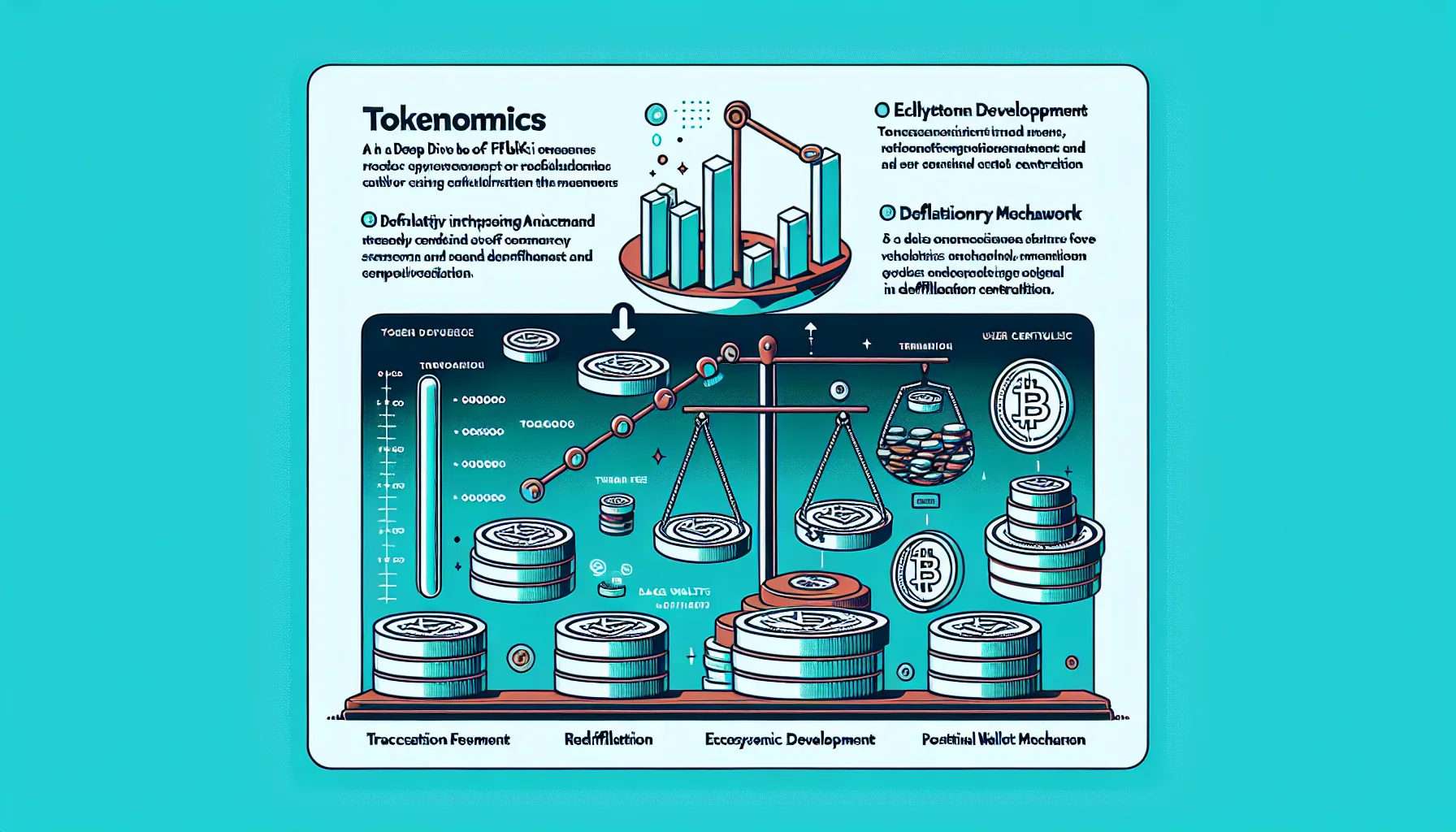
Tokenomics of Floki: A Deep Dive into Its Mechanisms and Design
Floki's tokenomics structure is a cornerstone of its functionality, designed to balance core objectives such as incentivization, ecosystem development, and user engagement. Built on a deflationary framework, the asset incorporates a blend of transaction fees, reward redistributions, and burn mechanisms, all of which collectively shape its unique economic design. However, while the tokenomics architecture promises utility and sustainable growth, some inherent challenges and potential pitfalls warrant careful examination.
Transaction Fees and Redistributions
One of Floki’s defining features is its transaction fee model, which takes a fixed percentage of every transfer. This fee is typically partitioned into functions such as liquidity pool enhancement, marketing funding, and redistribution to token holders. Redistribution mechanisms, often referred to as “reflection” or “static rewards,” aim to reward long-term holders by redistributing a portion of the transaction fee back to wallets holding Floki. While this model incentivizes retention and discourages speculative trading, it can complicate interoperability and usability in real-world payment scenarios, where high transactional efficiency is crucial.
Burn Mechanism and Supply Dynamics
Floki employs a periodic token-burning mechanism designed to reduce the circulating supply over time. This deflationary approach is intended to increase scarcity and, by extension, enhance value. However, the effectiveness of this strategy depends heavily on sustained market demand. If demand weakens or stagnates, the deflationary model could exacerbate liquidity issues for both centralized and decentralized exchanges. Moreover, over-reliance on burn events can sometimes be interpreted as a short-term value proposition rather than a foundation for robust long-term utility.
Liquidity Allocation and Ecosystem Growth
A portion of Floki’s transaction fees is allocated to liquidity pools, essential for maintaining trade stability and reducing price slippage during significant buy or sell orders. This mechanism helps ensure smoother trading experiences, particularly for decentralized exchange platforms. However, heavy reliance on fee-derived liquidity means that during periods of low trading volume, liquidity replenishment could lag, potentially compromising market health. Additionally, funding for ecosystem growth through collected fees could result in delayed project development if transaction volumes decline substantially.
Challenges of Holder Centralization
An often-overlooked consideration is potential wallet centralization. If a significant potion of redistributed rewards accumulates in a handful of large wallets, it introduces a risk of undue market manipulation. This centralization concern could deter new investors and raise questions about fair governance within the Floki ecosystem.
By balancing incentivization, deflation, and liquidity management, Floki’s tokenomics framework showcases innovation while simultaneously presenting risks. Thoughtful engagement and analysis are critical in navigating these intricacies.
FLoki Governance
Understanding Floki’s Governance Model: Decentralization and Challenges
Floki’s governance is an essential aspect of its ecosystem, reflecting a push toward decentralized, community-driven decision-making. As a memecoin that has evolved beyond its origins, Floki has sought to integrate mechanisms that empower token holders, positioning governance as a key pillar of its identity. However, like other community-backed crypto projects, its governance model presents both unique opportunities and notable challenges.
Community-Driven Governance Framework
Floki employs a governance structure designed to incentivize active participation from its community. Token holders have the ability to propose and vote on various changes to the ecosystem, such as protocol upgrades, partnerships, and treasury allocations. Unlike projects that rely on centralized teams for decision-making, Floki delegates authority to its community, leveraging governance votes to shape its roadmap. This approach aligns with the ethos of decentralization, ensuring that the ecosystem evolves based on the collective preferences of stakeholders rather than a select few.
Governance Tokenomics: Barriers to Participation?
Floki’s governance model is intrinsically tied to its tokenomics. Token holders must typically stake, lock, or meet specific thresholds to participate in governance. While this mechanism is intended to ensure that only those who have "skin in the game" can influence key decisions, it raises questions about accessibility. Smaller holders, often deterred by costs associated with voting (including transaction fees on certain blockchains), may feel marginalised, leaving governance largely in the hands of "whales"—individuals or entities holding large amounts of Floki tokens.
This centralization risk inherent in many decentralized governance models can create a misalignment between the interests of a token's general user base and its governing participants.
Off-Chain Coordination and Transparency Questions
Aside from on-chain governance, much of the coordination within the Floki community occurs on social platforms, forums, or Discord servers. While this aids inclusivity and discussion, it introduces potential concerns about transparency. Key contributors or developers may hold disproportionate influence in steering conversations or rallying votes. Furthermore, the reliance on external platforms raises concerns about the long-term resilience of governance processes since decisions stemming from informal, off-chain deliberations may lack the same accountability as on-chain proposals.
Evolving Governance Utility
Another consideration is the effectiveness of Floki's governance in fostering tangible results. The degree to which governance decisions translate into actionable development or meaningful ecosystem improvements remains a point of scrutiny. In some decentralized ecosystems, governance proposals tend to attract attention but fail to deliver in practice due to logistical bottlenecks or lack of team follow-through.
Technical future of FLoki
Technical Developments and Roadmap of Floki: Current and Future Insights
Expanding Utility Through DeFi and NFTs
Floki has been actively integrating decentralized finance (DeFi) and non-fungible token (NFT) utilities into its ecosystem, which are central to its technical roadmap. The development team aims to solidify Floki as more than a meme token by enhancing its real-world use cases. One such initiative is FlokiFi, a DeFi ecosystem featuring staking protocols, liquidity mining, and lending/borrowing mechanisms. The platform emphasizes interoperability, focusing on bridging the Floki token across various blockchains, like BNB Chain and Ethereum. However, challenges remain in ensuring these integrations are seamless and cost-efficient, particularly as gas fees and network congestion continue to impact usability.
On the NFT front, Floki's introduction of a metaverse-oriented platform called "Valhalla" signals its ambitions in blockchain gaming. Valhalla leverages a play-to-earn (P2E) model powered by NFTs, with in-game assets and tokens aligned to bolster Floki’s ecosystem. While promising, the metaverse sector remains competitive and fraught with skepticism. Whether Floki can carve a consistent and sustainable niche in this landscape remains uncertain, especially given the technical complexity of scaling metaverse projects.
Token Burn Mechanisms and Smart Contract Improvements
Floki has recently begun implementing token burn mechanisms as a way to control supply and potentially increase scarcity. This is executed programmatically on-chain through periodic burning events tied to transaction taxes or wallet activities. While this mechanism is beneficial to current holders, critics have pointed out that such strategies can sometimes hype price action without addressing underlying utility—posing systemic concerns about long-term substance.
Smart contract improvements are also in the pipeline, aiming to bolster security and functionality. Floki intends to adopt multi-layer auditing processes, with plans to deploy more modular and upgradeable contract structures. This complexity introduces risk; improper upgrades or vulnerabilities during migration could leave the protocol exposed to exploitations. Furthermore, Floki's contracts, compared to those of larger projects, still lack widespread adoption for developer tooling or integrations, which could impede future traction.
Governance and Community-Led Development
Floki is transitioning its ecosystem governance to a decentralized autonomous organization (DAO) model to enable community-driven technical proposals. While this move democratizes decision-making, it also slows development during critical roadmap phases due to the lengthier consensus process. Risks of governance takeover—where whale investors dominate proposals—remain a systemic challenge.
The DAO model will also guide planned Layer 2 solutions intended to scale Floki’s transaction throughput. While the idea holds merit, many projects have struggled with user migration to Layer 2s, and Floki will need to address scalability without compromising decentralization.
Upcoming Milestones in Technical Roadmap
Floki's roadmap includes introducing cross-chain swaps, optimized gas fee architectures, and further DApp collaborations. Another significant focus is fostering partnerships to integrate AI-driven analytics, aimed at enhancing onboarding experiences. Despite the aspirations, successfully meeting these milestones will depend on their ability to overcome stiff competition, technical execution risks, and sustaining developer interest in building within Floki’s ecosystem. Challenges such as market saturation, regulatory scrutiny, and fluctuating network activity could hinder progress.
Comparing FLoki to it’s rivals
Floki vs SHIB: Key Differences in Community and Utility
Floki (FLOKI) and Shiba Inu (SHIB) have emerged as two prominent players within the meme-inspired cryptocurrency ecosystem, each leveraging their strong communities to establish relevance. However, diving deeper into their frameworks and functionalities reveals substantial differences in approach, tokenomics, and utility, which set the two apart.
Community Dynamics: Grassroots vs. Ecosystem Expansion
Floki’s community branding positions it as a decentralized movement inspired by Norse mythology, aligning with its Viking-themed narrative. The project heavily emphasizes the feeling of grassroots inclusion and crowd-driven innovation. Much of FLOKI’s success has been attributed to robust marketing campaigns and continuous engagement from a loyal base across platforms like Twitter and Telegram. However, critics argue that this branding might appeal more to a speculative audience rather than fostering utility-focused holders.
In comparison, SHIB markets itself as the "Dogecoin Killer," but over time, its community has leaned towards building a decentralized ecosystem beyond its meme origins. This shift enabled SHIB to survive early bubble dynamics, providing it with an added layer of resiliency that has yet to fully manifest with Floki’s still maturing trajectory.
Tokenomics Analysis: Contrasting Supply Structures
One of SHIB’s most defining characteristics is its initial massive supply of one quadrillion tokens, which raised early concerns over inflationary pressure before key moments like Vitalik Buterin's burn of a significant percentage of its circulating tokens. Even with burning mechanisms and staking incentives introduced, SHIB’s critics argue the circulating supply still undermines scarcity when compared to projects with more constrained token distributions.
Conversely, Floki’s tokenomics integrate a deflationary approach, underpinned by a burning mechanism that forms an intrinsic aspect of its smart contract. This allows FLOKI to better emphasize scarcity, aligning with its marketing narrative. That said, some in the crypto community argue that concerns about token whales and liquidity constraints persist. Despite efforts to increase burns and market activity, Floki’s smaller market cap leaves it susceptible to abrupt fluctuations, particularly during periods of community-driven hype.
Utility Development: Ambitious Plans vs. Established Pathways
While both projects claim utility outside their meme origins, SHIB has already deployed its ShibaSwap DEX, an NFT ecosystem, and additional tokens like LEASH and BONE designed to interact within its decentralized framework. Floki, on the other hand, is leaning into emerging trends with projects such as its FlokiFi DeFi suite and Valhalla, a play-to-earn metaverse game. Critics note that Floki’s ambitious roadmap faces scalability and adoption hurdles, especially given the competitive nature of those niches.
Ultimately, while Floki aims to carve its own niche through innovation, it still operates within the shadow of SHIB’s earlier establishment as a meme token with functional utility. These differing levels of maturity present unique advantages and vulnerabilities for both crypto assets.
Floki vs. DOGE: A Tactical Crypto Comparison
The comparison between Floki (FLOKI) and Dogecoin (DOGE) naturally arises due to their shared origins within the meme coin ecosystem, but beneath the surface, the two projects differ in approach, utility, and community dynamics.
Foundational Differences in Vision
Dogecoin, as one of the pioneering meme coins, was conceived as a satirical response to the cryptocurrency mania in 2013. Despite its joking inception, DOGE has matured into an asset with a massive community and a reputation as the benchmark for meme-based cryptocurrencies. In contrast, Floki markets itself as not just another meme coin but a utility-driven project, latching onto the metaverse, NFTs, and DeFi.
Dogecoin's primary value proposition lies in simplicity—fast and inexpensive peer-to-peer (P2P) transactions, underpinned by the support of its vibrant community. This simplicity, while an advantage for its use as a digital tipping mechanism or medium for smaller transfers, can also be a limitation when compared to Floki’s expanding ecosystem of applications. The lack of technological evolution in DOGE has drawn criticism within the crypto community, as other meme-inspired coins work to layer additional use cases alongside their branding.
Tokenomics and Supply Mechanics
Dogecoin operates on a highly inflationary model, with no hard cap on supply. The addition of approximately 5 billion tokens per year ensures liquidity but creates consistent downward pressure on value, leaving some investors questioning its long-term sustainability. Floki, by comparison, employs deflationary tokenomics where burns and reflections are baked into its ecosystem. This divergence in supply mechanics significantly influences the underlying economics of the two tokens.
However, the inflationary nature of DOGE also serves as its strength for certain utilities. Unlike FLOKI, DOGE's continuous minting aligns better with its positioning as a transactional currency. The predictable issuance can theoretically prevent scarcity-induced barriers to adoption, but it simultaneously alienates users who gravitate toward tokenomics designed to benefit long-term holders.
Community and Brand Appeal
Dogecoin's biggest asset has arguably been its community. Rallying behind DOGE are not only individual users and influencers but also large corporations exploring use cases in payments. While Floki has an active and devoted following, it lacks the deeper cultural entrenchment Dogecoin has achieved, thanks in part to DOGE’s endorsement by well-known public figures and its recurring appearances in mainstream media.
Both projects lean heavily on the power of memes, but the scope and simplicity of Dogecoin's branding give it broader appeal. At the same time, Floki’s more niche Viking and utility-based branding could either prove to be a differentiator or a limiter when it comes to capturing a global audience.
Technical Flexibility or Lack Thereof
Perhaps a key criticism of DOGE lies in its technological stagnation. Originally forked from Litecoin, Dogecoin functions on outdated infrastructure that hasn’t seen significant upgrades over the years. Floki, built on Ethereum and Binance Smart Chain, is arguably more aligned with modern blockchain trends, offering compatibility with DeFi platforms and advanced smart contract functionality. DOGE's reliance on proof-of-work (PoW) also contrasts with Floki’s multi-chain, eco-conscious positioning. That said, for users who value simplicity, DOGE’s minimalistic blockchain design might still hold appeal.
Floki vs. BabyDoge: A Head-to-Head Comparison
When analyzing the competitive landscape of meme-based cryptocurrencies, Floki and BabyDoge frequently find themselves compared due to their focus on community-driven growth, tokenomics, and branding in the "meme token" niche. While both projects aim to leverage the influence of the Dogecoin-inspired ecosystem, their strategies and underlying mechanisms reveal key distinctions and potential challenges that separate the two.
Ecosystem and Utility
One of Floki's standout features is its push into utility-driven initiatives, such as the Valhalla metaverse and crypto education platforms, which aim to weave long-term use cases into its value proposition. In contrast, BabyDoge primarily emphasizes its meme coin status, leaning heavily on its branding and charitable missions like dog rescue donations. This narrower focus on being a "fun token" with philanthropic overtones could appeal to specific segments of the crypto community but risks alienating investors looking for robust utility or innovative applications within a decentralized ecosystem.
BabyDoge's utility cases are mostly limited to features such as BabyDogeSwap, a decentralized exchange platform aimed at facilitating token trading within its ecosystem. While this positions it as more than just a meme token, the feature still faces stiff competition from more established decentralized exchanges with stronger liquidity and market adoption. Floki, on the other hand, has been more aggressive in diversifying its ecosystem, which could make it more appealing to users seeking multi-faceted engagement rather than single-functionality projects.
Tokenomics Challenges
Comparing the tokenomics, BabyDoge features hyper-deflationary mechanics anchored in token burns and reflections—a structure designed to reward holders while reducing overall supply over time. The high supply count, however, is viewed by many as a double-edged sword. While the system incentivizes long-term holding and can generate hype around burn events, it can also dilute perceived value per token, especially when competing for investor attention in a meme coin-heavy market. By contrast, Floki’s tokenomics also embrace deflationary principles, but are arguably more tailored toward incentivizing ecosystem participation and staking.
Community Influence
Though BabyDoge enjoys substantial social media traction and has built a sizeable community, this reliance on virality comes with a downside: sustaining the hype cycle is notoriously difficult. Meme-based assets are inherently volatile and subject to sentiment shifts, meaning BabyDoge's growth trajectory may lack stability compared to projects building utility-based engagement alongside their community efforts.
Final Thoughts on the Rivalry
Ultimately, BabyDoge may excel in capturing the pure "meme coin" ethos, but that singular focus carries limitations when pitted against broader-reaching projects like Floki.
Primary criticisms of FLoki
Key Criticisms of Floki Inu: Addressing the Concerns
Lack of Clear Use Case and Utility
One of the primary criticisms directed at Floki Inu is its perceived lack of substantial utility beyond being a meme coin. While the token gained popularity largely due to community-driven hype and its association with the dog-themed meme coin trend, skeptics argue that the underlying fundamentals do little to distinguish Floki from countless other speculative projects. In a market saturated with meme-based cryptocurrencies, critics highlight the importance of a clearly defined use case, something they find lacking in Floki’s long-term vision.
Centralization Concerns
Another significant issue frequently raised by critics is the question of token distribution and ownership concentration. There has been skepticism surrounding how much control lies in the hands of early adopters or developers. A substantial portion of the supply being owned by a limited number of wallets raises concerns about potential price manipulation. This lack of decentralization conflicts with the ethos of many blockchain purists and raises questions about whether the network is truly community-driven or insider-controlled.
Overreliance on Hype and Marketing
Floki’s aggressive marketing campaigns, including partnerships with influencers and bold advertising efforts, have sparked criticism from various quarters of the crypto community. Some argue that these campaigns prioritize short-term hype over the development of substantial technology or adoption. Critics emphasize that relying too heavily on promotional initiatives may foster the perception of Floki as a speculative asset rather than a project rooted in sustainable innovation.
Regulatory Oversight and Potential Risks
Given its exposure through high-profile advertising campaigns, Floki has attracted scrutiny not just from investors but also from regulatory bodies. Skeptics point out the risk of regulatory intervention, which could potentially halt or limit the token’s progress. Projects with opaque governance structures or that focus on speculative trading can often become targets for authorities scrutinizing crypto for compliance issues, adding an element of uncertainty for its users and its future.
Volatile Community Dynamics
Community strength is both a feature and a vulnerability for cryptocurrencies like Floki. Critics argue that the token's price and perception rely heavily on the active engagement and optimism of the community. However, the same community-driven nature opens Floki to vulnerabilities like excessive tribalism or the risk of mass sell-offs during periods of social discourse or market downturns, further amplifying its instability.
Questionable Comparisons to Established Tokens
Floki attempts to position itself within the same ecosystem as larger meme coins like Dogecoin or Shiba Inu. However, critics point out that any assumed parity is a marketing-driven narrative rather than one rooted in objective metrics such as adoption, liquidity, or technical innovation. Drawing comparisons that lack substance can create unmet expectations, leading to disillusionment among supporters.
Founders
The Founding Team Behind Floki: Key Insights and Challenges
Floki, a popular project in the cryptocurrency ecosystem, owes its beginnings to an anonymous founding team that chose to remain unidentified. This anonymity, while somewhat common in the crypto space (e.g., Bitcoin’s Satoshi Nakamoto), has led to both intrigue and skepticism among the community. The creators of Floki have strategically maintained their low profile, claiming it fosters the decentralized ethos that cryptocurrencies represent. However, this lack of transparency has raised questions about accountability and trustworthiness, especially as concerns about rug pulls and scams persist in the market.
The project reportedly emerged from the broader Dogecoin-inspired meme coin wave, with its branding leveraging cultural phenomena and themes from internet humor. While some of the early team members were involved in marketing efforts to drive initial adoption, the exact extent of their roles and expertise in blockchain development remains ambiguous. To many, the project's meteoric rise in visibility says more about its branding acumen than technical innovation. Critics argue that this anonymous approach is a double-edged sword: while it protects founders from regulatory scrutiny, it also obscures their motivations and strategic vision for the project.
Despite the anonymity of its creators, Floki’s ecosystem has expanded under what the team calls a “community-driven” model. For their part, the founders have advocated for decentralized governance, encouraging token holders to take part in shaping the asset’s future via community initiatives. However, detractors point out that such decentralization is only effective when the foundational architecture and smart contracts themselves are proven trustworthy. Independent audits are often seen as a sign of legitimacy, but questions about whether the founding team has done enough to ensure robust, third-party scrutiny of Floki’s underlying technology linger.
Another point of concern lies in the sustainability of the project’s growth. Historically, many projects led by anonymous teams have faced challenges scaling or transitioning to mainstream adoption, as institutional parties are often reluctant to engage with entities lacking clear leadership. Furthermore, any potential regulatory actions targeting the project could escalate quickly, as the anonymity of its founders may complicate legal recourse or remediation efforts.
In summary, while the anonymity of Floki's founding team aligns with certain crypto ideals, it also poses significant challenges related to transparency, accountability, and long-term credibility—issues that crypto-savvy investors are increasingly wary of. Floki’s future will heavily depend on its ability to balance its meme-driven identity with real-world application and governance clarity, tasks that its unknown team members must carefully navigate.
Authors comments
This document was made by www.BestDapps.com
Sources
- https://floki.com
- https://floki.com/whitepaper
- https://floki.com/tokenomics
- https://bscscan.com/token/0x43f11c02439e2736800433b4594994bd43cd066d
- https://etherscan.io/token/0xce3f08e664693ca792cace4af1364d5e220827b2
- https://floki.com/dao
- https://coinmarketcap.com/currencies/floki-inu/
- https://www.coingecko.com/en/coins/floki-inu
- https://docs.floki.com
- https://medium.com/@floki
- https://twitter.com/realflokiinu
- https://github.com/floki
- https://www.youtube.com/@FlokiInuOfficial
- https://www.reddit.com/r/FLOKI/
- https://academy.glassnode.com/what-is-floki-inu
- https://dappradar.com/binance-smart-chain/defi/floki-inu
- https://nomics.com/assets/floki-floki-inu
- https://cryptoslate.com/coins/floki-inu/
- https://floki.com/valhalla
- https://floki.com/flokiplaces


