History of FET
The History of Fetch.ai (FET): Origins and Development Milestones
Fetch.ai (FET) has its roots in the convergence of artificial intelligence (AI), machine learning (ML), and blockchain technology, aiming to create a decentralized platform for autonomous economic agents (AEAs). Launched in 2017, the project was co-founded by Humayun Sheikh, Toby Simpson, and Thomas Hain, each bringing their expertise in AI and distributed systems to the venture. Fetch.ai sought to address inefficiencies in various industries by enabling machines to autonomously optimize and execute tasks, such as logistics, supply chain management, and autonomous mobility.
The project began with its conceptual framework designed around a unique combination of multi-agent systems and decentralized technology. It sought to establish a digital economy driven by autonomous agents capable of interacting and transacting independently within a decentralized network. By leveraging AI, these agents were envisioned to operate seamlessly in dynamic and complex environments, including smart cities and IoT networks.
In February 2019, Fetch.ai conducted its Initial Exchange Offering (IEO) through Binance Launchpad. Despite significant enthusiasm during the IEO phase, the project faced skepticism from parts of the crypto community due to its ambitious goals and the complexity inherent in combining AI with blockchain technology. Critics questioned whether the on-chain infrastructure was robust enough to support the high computational demands of Fetch.ai’s use cases.
The mainnet for Fetch.ai was launched in March 2021. The network employs a customized proof-of-stake (PoS) consensus mechanism, aimed at achieving scalability and energy efficiency, though questions regarding the true decentralization of its validator set were raised during early iterations. The platform was designed to provide a flexible framework for developers to deploy AEAs and execute smart contracts, yet adoption faced challenges due to its relatively niche focus and competition from other generalized blockchain networks with stronger developer ecosystems.
Another pivotal milestone in the project’s history involves its integration of multi-chain interoperability. Through partnerships and the adoption of the Cosmos SDK, Fetch.ai enhanced its cross-chain operability, enabling its agents to interact with assets and data across blockchain ecosystems. However, these advancements were met with mixed reception, as the persistent complexity of onboarding for both developers and enterprise users remained a barrier.
Fetch.ai's history reflects a balance between innovative breakthroughs and practical challenges tied to the ambitious nature of its vision. While the groundwork for a decentralized machine economy has been laid, the project's execution has been subject to scrutiny, particularly regarding its scalability, adoption, and competitive positioning within the evolving blockchain and AI landscape.
How FET Works
How Does FET Work? A Technical Breakdown
Fetch.ai (FET) operates as a decentralized platform that leverages Artificial Intelligence (AI) to optimize and automate processes in a multi-agent system. At its core, FET enables autonomous agents—digital entities acting on behalf of individuals, devices, or organizations—to perform complex tasks across a variety of sectors such as supply chain logistics, mobility, and finance, all while eliminating intermediaries. Here’s a closer look into its functional architecture and mechanics:
The Role of Autonomous Economic Agents (AEAs)
FET’s primary innovation lies in its Autonomous Economic Agents (AEAs). These agents interact with one another on the network, autonomously executing smart contracts and machine learning models. Deployed as lightweight software processes, AEAs can negotiate, trade, and access data without human intervention. They are highly customizable, enabling users to define specific roles and decision-making logic for services such as price discovery, data sharing, or purchasing computational resources.
The Underlying Technology Stack
FET’s infrastructure operates on a purpose-built blockchain that combines Directed Acyclic Graphs (DAG) with classic distributed ledger structures to improve scalability and transaction speed. Unlike traditional blockchains, Fetch.ai incorporates a layer designed specifically for AI computation, allowing agents to execute deep learning algorithms directly on the network. This setup drastically reduces computational inefficiencies usually associated with running external AI models in blockchain ecosystems.
For consensus, the protocol employs a hybrid Proof-of-Stake (PoS) mechanism. Validators are incentivized to secure the network while also providing computational resources to support agent activities. However, this reliance on validators raises questions about centralization and potential attack vectors, particularly in scenarios where validator pools are limited.
Open Economic Framework (OEF)
The OEF is a critical component that acts as an interface allowing AEAs to discover and interact with one another on the platform. It leverages AI to optimize agent discovery and matchmaking, substantially improving network efficiency. Nevertheless, the OEF’s complexity creates a steep learning curve for developers looking to integrate their services. The onboarding process for creating and configuring AEAs can pose a barrier for adoption, especially for smaller organizations lacking technical expertise.
Limitations in Interoperability
While FET’s focus on AI-driven automation is impressive, its interoperability with external blockchains and data silos is limited. Bridging capabilities remain rudimentary, raising concerns for users seeking a seamless exchange of data and assets between multiple blockchain networks. Without robust cross-chain functionality, FET could struggle to accommodate broader applications in industries requiring diversified data pipelines.
Gas-Free Transactions Model (Under Construction)
In an effort to increase usability, FET has been exploring mechanisms to enable gas-free interactions on the network. However, this is not yet fully implemented and raises critical questions about incentive structures and potential risks of network abuse if transaction costs are completely abstracted.
Use Cases
Exploring the Use Cases of FET: Applications and Industry Insights
Fetch.ai (FET) serves a variety of specialized use cases by integrating artificial intelligence with blockchain technology. Designed for decentralized automation and optimization, FET offers solutions across several industries, enabling independent agents to execute tasks autonomously. Below, we delve into its key applications and the challenges it faces within these domains.
Autonomous AI Agents in Supply Chain Management
One of the primary use cases for FET lies in supply chain optimization. Autonomous AI agents leverage FET to process real-time data and negotiate contracts, optimizing logistics, inventory management, and demand forecasting without requiring a centralized system. This enables on-demand solutions that allow supply chain participants to interact directly without intermediaries. However, scalability challenges persist. As network participation grows, ensuring seamless communication among a vast number of autonomous agents while maintaining efficiency remains a technical hurdle.
Decentralized Smart Mobility Solutions
FET is also applied in the realm of smart mobility. Autonomous economic agents (AEAs) can facilitate real-time interactions between vehicles, infrastructure, and service providers in urban environments. For instance, parking space detection, ride-sharing, and electric vehicle charging solutions can be managed more efficiently using such decentralized frameworks. Nonetheless, adoption barriers exist. Smart mobility use cases often rely on interoperability between multiple stakeholders, yet there’s a lack of globally accepted standards to guarantee compatibility across different platforms.
Personalized IoT Ecosystems
FET provides functionality for IoT devices, enabling them to operate autonomously within decentralized ecosystems. Individual devices, such as home appliances or industrial machinery, can interact with one another through autonomous agents, optimizing power use or scheduling maintenance without human intervention. However, concerns around data privacy and security loom large. Ensuring that personal or industrial data shared in these systems is protected from misuse or malicious attacks remains critical. Additionally, IoT adoption is uneven across regions, which limits universal implementation.
Decentralized Finance (DeFi) Integration
Another potential area for FET is within DeFi applications. Autonomous agents can independently handle tasks such as liquidity provision, arbitrage trading, and executing complex financial strategies. While this represents a frontier for decentralized financial automation, it is not without limitations. For example, smart contract vulnerabilities and unexpected edge-case scenarios pose risks to automated systems handling significant financial transactions.
Challenges in Mainstream Adoption
While FET’s unique approach to decentralization and AI-driven automation creates a wide array of use cases, industry-wide adoption faces practical hurdles. The technology’s complexity may deter less tech-savvy stakeholders from engagement, and developing robust user interfaces that bridge this gap is still a work in progress. Additionally, energy efficiency concerns arise when implementing high-frequency autonomous agent interactions on the blockchain.
By addressing these challenges, FET could further refine its use cases and demonstrate broader practical applicability. Nonetheless, users and developers must navigate these limitations carefully to unlock the full potential of this innovative crypto asset.
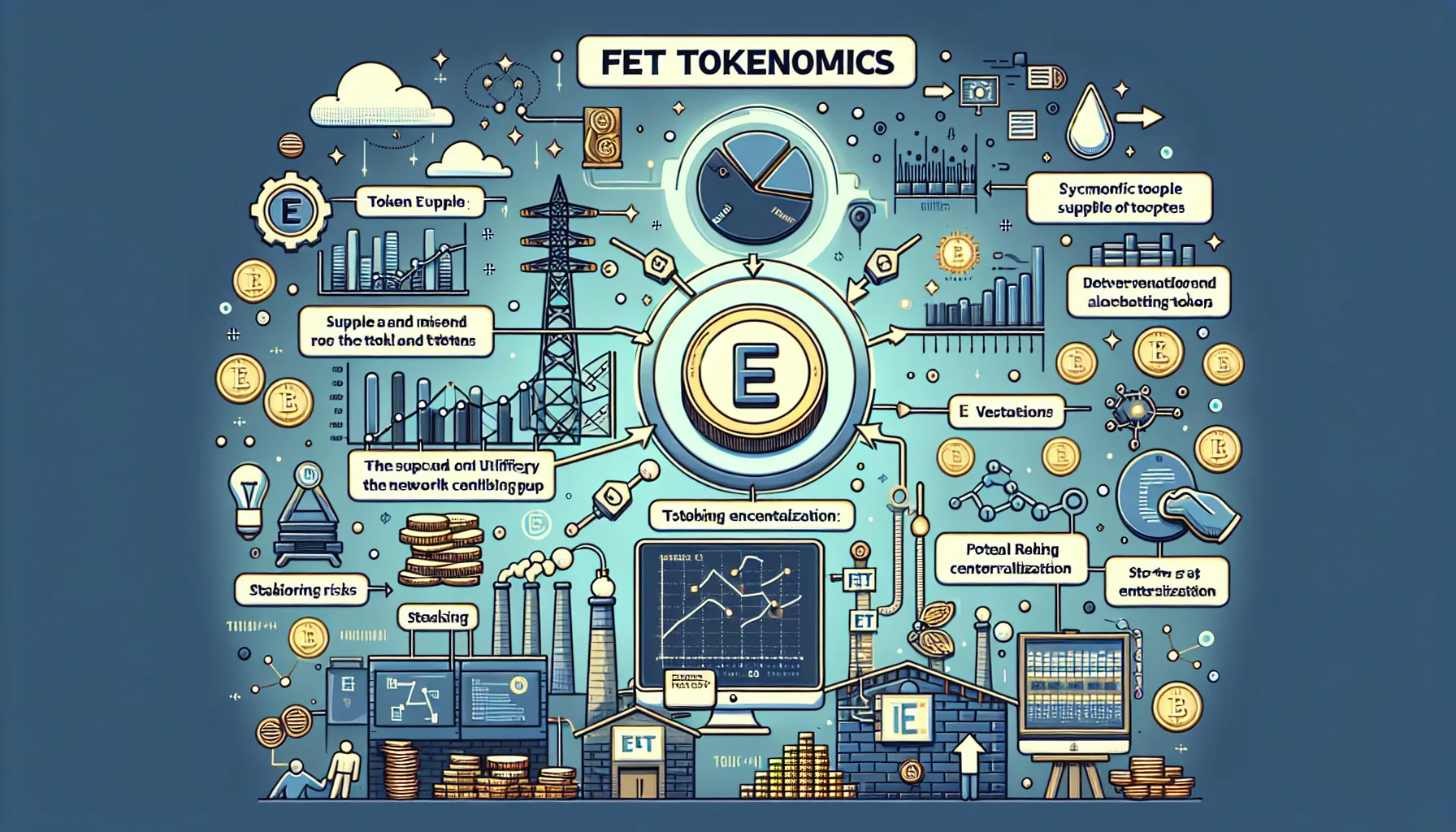
FET Tokenomics
FET Tokenomics: Analyzing Supply, Distribution, and Utility
Fetch.ai's native token, FET, serves as the backbone of its decentralized machine learning ecosystem. A detailed examination of its tokenomics reveals critical aspects such as supply mechanics, distribution structure, and the functional role of the token within the network. While FET's design enables robust functionality and incentivization, there are challenges and potential risks to consider for those examining its long-term sustainability and usage dynamics.
Supply and Emission Schedule
The total supply of FET is capped at 1,152,997,575 tokens. This hard cap ensures a finite token supply, aligning with the deflationary narratives common in the crypto space. However, it's essential to consider the actual circulating supply, which is influenced by periodic emissions and token unlock schedules. These emissions include rewards for staking, node operators, and ecosystem participants.
One risk factor is the potential inflationary pressure caused by staking rewards. Although such mechanisms are designed to incentivize network participation and secure the ecosystem, they could dilute token value if demand for FET doesn’t scale proportionally. Market participants should closely track changes in circulating supply over time to understand its impact on secondary market dynamics.
Distribution: Allocation and Vesting Mechanisms
When analyzing FET's distribution, the initial token allocation is a key factor in understanding the balance between decentralization and centralized control. A significant percentage of the supply was allocated to early-stage investors, the Fetch.ai Foundation, and team members during the project's token generation event (TGE). While this ensures funding for development and ecosystem expansion, it does raise concerns about disproportionate influence.
Furthermore, the vesting schedules tied to these allocations warrant attention. If large tranches of tokens become unlocked at specific intervals, they could create sell pressure on the open market. This could lead to volatility, especially if those holding early allocations opt to liquidate positions. Such events are worth monitoring for participants interested in long-term investment or staking opportunities.
FET’s Utility and Network Reliance
FET is integral to the Fetch.ai ecosystem, facilitating interactions between autonomous agents, smart contracts, and various on-chain functionalities. The token is used for staking to secure the network, paying transaction fees, and incentivizing participants in the network’s AI-driven marketplace. While this versatility supports a wide range of use cases, it also introduces dependency risks.
A key consideration is the degree to which FET's utility relies on the active adoption of Fetch.ai's broader technology framework. If the network fails to attract users or developers, the token’s utility could diminish, hindering demand growth. This highlights the interplay between the success of the Fetch.ai ecosystem and FET's long-term usability.
Potential Centralization through Staking
Staking is a cornerstone of FET's tokenomics, both for securing the network and distributing rewards. However, the concentration of staked tokens among a small number of validators poses potential centralization risks. The presence of well-capitalized entities dominating staking operations could undermine the network's decentralization ethos, leading to governance challenges. Tracking validator distribution and stake delegation trends is critical to assessing network health.
FET Governance
Governance in FET: Decentralization and Decision-Making Dynamics
Fetch.ai (FET), operating as a decentralized infrastructure for autonomous agents, brings its unique approach to governance, prioritizing community involvement while maintaining operational efficiency. With a blockchain ecosystem designed to support AI-powered services, the governance framework is integral to ensuring sustainable development, equitable participation, and alignment with technological goals.
On-Chain Governance Mechanics
Fetch.ai's governance model incorporates on-chain voting mechanisms, enabling token holders to participate directly in decision-making processes. Token-based voting allows stakeholders to propose and vote on updates related to protocol improvements, fee structures, and resource allocations. This democratic process theoretically ensures that participants with a vested interest in the network’s success have a voice. However, the reliance on token-weighted systems can raise concerns about centralization, as entities or individuals holding significant portions of FET tokens may disproportionately influence critical votes. This creates potential vulnerabilities where decisions could reflect the interests of a few rather than the broader community.
Proposal System and Community Engagement
Fetch.ai governance revolves around a structured proposal system. Network members are encouraged to submit FIPs (Fetch Improvement Proposals), detailing their suggested changes or enhancements. These proposals are discussed within the community before proceeding to a formal vote. This layered approach provides transparency and ensures thorough deliberation before implementing changes.
Despite this structured process, the engagement level within the governance ecosystem can vary. One challenge lies in mobilizing enough participation for quorum requirements. Low voter turnout is a common issue in decentralized governance, and Fetch.ai is no exception. This can result in delayed decision-making or the abandonment of proposals due to insufficient support. Additionally, the complexity of proposed changes can discourage participation from less technically inclined stakeholders, further limiting inclusivity.
Governance Decentralization vs. Efficiency Trade-Offs
The Fetch.ai team walks a fine line between decentralization and operational efficiency. Fully decentralized governance can be slow and cumbersome, especially for a project with diverse stakeholders and technical objectives. To address this, certain decision-making processes may still require coordination or input from core developers, introducing a layer of centralization. While this approach helps expedite critical updates, it can also create tensions within the community, particularly regarding the perception of fairness and transparency.
Smart Contracts and Governance Risks
As governance relies heavily on smart contracts, any vulnerabilities in these contracts could compromise the process. Governance-related exploits in the broader DeFi space highlight the risks Fetch.ai must navigate. A successful attack could undermine token holders' confidence, disrupt voting mechanisms, or manipulate the outcome of proposals, posing a risk to the ecosystem’s integrity.
Technical future of FET
Technical Developments and Roadmap for Fetch.ai (FET)
Ongoing Developments in Autonomous Agent Technology
Fetch.ai (FET) is fundamentally built around autonomous agents, which are digital entities that can perform tasks, make decisions, and execute transactions within a decentralized network. One key area of focus has been improving the efficiency of these agents through advancements in their negotiation protocols, decision-making algorithms, and adaptability to different environments. Recently, updates have been introduced to allow agents to handle increasingly complex scenarios, such as predictive modeling for supply chain optimization and dynamic pricing strategies in decentralized marketplaces. However, scaling these functionalities while maintaining low computational and gas costs remains an unresolved challenge, potentially slowing mass adoption.
Machine Learning Enhancements and Integration
The platform integrates artificial intelligence (AI) and machine learning (ML) to enhance the functionality of its agents. Current efforts are geared toward enabling real-time learning for agents, which would allow them to improve performance continuously without requiring manual updates. Additionally, Fetch.ai is exploring how to enhance privacy-preserving ML by leveraging cryptographic techniques like multi-party computation and federated learning. While these advancements are promising, the heavy computational demands of such systems pose potential scalability challenges, especially on resource-constrained devices.
Interoperability with Broader Blockchain Ecosystems
Fetch.ai has been implementing solutions to enhance interoperability with other blockchain networks to broaden its use cases and ecosystem compatibility. Initiatives like cross-chain bridges and support for ecosystems such as Cosmos and Ethereum are pivotal to this strategy. However, the high level of network fragmentation and differences in smart contract execution standards add significant complexity. In practice, the success of these efforts will depend on the project's ability to deliver user-friendly tools for developers and seamless transitions between networks.
Roadmap for Decentralized Oracles
Fetch.ai’s roadmap includes plans for expanding its decentralized oracle infrastructure, which aims to bring off-chain data securely into its ecosystem. By integrating AI-driven data processing with oracle systems, the platform seeks to offer more reliable, real-time data feeds in areas like IoT devices and environmental monitoring. That said, the reliance on accurate and consistent off-chain data sources introduces a layer of vulnerability to the system, particularly if data providers are compromised or unreliable.
Smart Ledger Enhancements
Fetch.ai is also focused on bolstering its smart ledger technology — a directed acyclic graph (DAG)-based framework designed to handle microtransactions with high speed and low energy consumption. Future developments include refining its consensus mechanisms to further improve throughput while reducing susceptibility to network attacks. Yet, adapting these features for widespread usage outside niche applications is an ongoing challenge, especially in ensuring security without sacrificing decentralization.
Scaling Challenges and Developer Adoption
Although Fetch.ai continues to innovate, its roadmap highlights ongoing scalability challenges. Network congestion, high computational requirements for agents and AI models, and limited developer tools could hinder large-scale adoption. To address these issues, the team is developing enhanced SDKs and APIs, but adoption from third-party developers remains a critical bottleneck.
Comparing FET to it’s rivals
Comparing FET to OCEAN: Decentralized Data AI Ecosystems
Fetch.ai (FET) and Ocean Protocol (OCEAN) both occupy key positions in the decentralized data and AI ecosystems, but their approaches, architectures, and target use cases diverge in significant ways. While FET focuses on autonomous agents and machine-to-machine (M2M) operations, OCEAN concentrates on the tokenization and decentralized exchange of data assets. Understanding these differences is critical in comparing the two platforms, especially considering their technical capabilities, infrastructure, and adoption challenges.
Core Focus and Use Case Distinctions
FET emphasizes the development and deployment of autonomous economic agents (AEAs). These software agents are designed to perform automated tasks, such as negotiating contracts, optimizing supply chains, or predicting energy demand, without requiring constant human input. In contrast, OCEAN targets the monetization of data by allowing users to tokenize datasets and share them while retaining privacy and control. This methodology inherently limits OCEAN’s scope to data liquidity solutions rather than behaviorally dynamic services like FET's AEAs.
For applications where AI-powered decision-making and autonomous interaction are critical, FET has positioned itself uniquely with its focus on agent-based solutions. However, this also means that FET operates in a niche where adoption heavily depends on developer understanding of AEAs and their complexities. OCEAN’s comparatively simpler onboarding process and structured data marketplace lower its barrier to entry, giving it an advantage in attracting broader early adoption.
Protocol Design and Operation
Fetch.ai utilizes a Directed Acyclic Graph (DAG)-like approach in its ledger, called the "Agent Communication Network," enabling agents to interact dynamically. This design prioritizes scalability and real-time agent coordination. By contrast, OCEAN implements a more predictable structure surrounding data exchanges with data tokens and its Automated Market Maker (AMM) mechanism for trading datasets.
The disparity in design philosophies raises questions about interoperability. FET's bespoke technical stack can present challenges in broad integration with other blockchain ecosystems, whereas OCEAN aligns more closely with the Ethereum network and industry standards, enhancing its interoperability. This can give OCEAN the upper hand when it comes to linking data-focused projects from diverse sectors.
Challenges in Adoption
FET’s AEAs, while innovative, require specialized skills to develop and deploy. The ecosystem’s heavy reliance on agent-based infrastructure could alienate projects that need simpler, plug-and-play decentralized data solutions. OCEAN avoids this pitfall by offering a clean, modular framework for connecting and sharing data, though its narrower focus limits the broader capabilities seen in FET’s design.
FET vs. GRT: How They Stack Up in the Decentralized Data Economy
When comparing Fetch.ai (FET) with The Graph (GRT), the primary distinction lies in their approach to solving challenges in the decentralized data economy. While both projects focus on creating infrastructure for efficient data utilization, their methodologies and target applications diverge significantly.
The Graph, often referred to as the "Google of blockchains," positions itself as an indexing protocol for querying blockchain data. Its primary value proposition lies in enabling developers to access and organize on-chain data through its decentralized indexing protocol. Subgraphs—open APIs created by users—allow seamless querying of blockchain data across different networks. This simplicity has made GRT a foundational layer for projects using protocols like Ethereum, IPFS, and beyond. In contrast, FET focuses on enabling autonomous agents to perform complex tasks, including peer-to-peer data exchange, which targets use cases like decentralized finance (DeFi) automation, supply chain optimization, and IoT ecosystems.
One critical differentiation is the type of data each network caters to. GRT primarily works with static on-chain data, enabling transparency and accessibility but limiting its scope to pre-organized blockchain datasets. FET, on the other hand, emphasizes dynamic off-chain data, adding flexibility that enables use cases extending into machine learning and AI-driven systems. However, this flexibility can also introduce complexity, as developers working with FET's autonomous economic agents might face a higher technical barrier compared to leveraging The Graph's straightforward query capabilities.
Scalability is another dimension where these two diverge. The Graph is built using subgraphs that operate within modular ecosystems, but that structure can lead to issues of centralization. Subgraph hosting on The Graph is currently reliant on centralized gateways, creating a bottleneck for the protocol's vision of complete decentralization. Meanwhile, FET embraces a more decentralized operational model through the deployment of autonomous agents operating on a multi-chain framework—but this model, while ideologically sound, may face latency and coordination challenges on a larger scale.
It's worth noting that FET's focus on AI integration differentiates it clearly from GRT but introduces skepticism regarding adoption. Many developers may prefer The Graph's single-purpose focus on data indexing over FET's broader ambitions, especially in scenarios where simplicity and clarity outweigh flexibility.
In summary, while GRT excels in indexing and querying on-chain data with its mature tooling, FET stakes its territory in dynamic data interactions leveraging AI, albeit with added complexity that might deter certain users.
FET vs. AGIX: A Deep Dive into the Competitive Landscape
When comparing Fetch.ai (FET) to its peer in the AI and blockchain convergence space, SingularityNET (AGIX), several distinctions emerge in terms of technological focus, network structure, and utility applications. Both projects are centered on the intersection of artificial intelligence and decentralized systems, but their methodologies and ecosystem priorities set them apart, offering unique advantages and challenges for each.
Decentralized AI Marketplaces: Contrast in Approach
FET and AGIX aim to decentralize AI-driven services but diverge in their core strategies. FET emphasizes autonomous agent-based systems designed to optimize processes like supply chain management, mobility, and decentralized finance (DeFi). In contrast, AGIX is structured as a marketplace enabling developers to monetize AI algorithms by deploying them as services on the network. While AGIX has gained traction with its singular focus on AI as a service (AIaaS), some critics argue that this model creates dependency on a marketplace approach, potentially leading to bottlenecks due to varying levels of developer contributions.
On the other hand, critics of FET’s agent-driven model point out potential scalability risks as the number of autonomous agents in its ecosystem grows. The complexity associated with communication and coordination among agents remains a challenge, particularly when cross-chain interoperability or multi-agent consensus is required.
Tokenomics and Stakeholder Incentives
From a tokenomics perspective, FET and AGIX tokens are integral to their respective ecosystems, but their utility models highlight different strengths and gaps. AGIX’s primary focus is on enabling transactions within its AI services marketplace and incentivizing developers to provide high-quality AI models. However, centralization concerns have occasionally been raised within the AGIX ecosystem, primarily due to singular leadership decision-making and resource allocation, which some argue could lead to uneven development priorities.
FET’s token serves as the fuel for autonomous agent operations, enabling services like data exchange, network participation, and AI-driven insights. While this provides a broader spectrum of use cases, it also necessitates a deeper level of network adoption to sustain long-term demand. Critics have noted that FET’s pathway to mass adoption might face hurdles considering its dependency on widespread acceptance of autonomous agents, a concept not yet mainstream in many industries.
Community and Development Ecosystems
From a community perspective, AGIX benefits from its ties to well-known efforts like OpenCog and its historical associations with high-profile AI leaders. This has created a perception of legitimacy and thought leadership but has also raised concerns about whether its development pace is spread too thin across ambitious, concurrent initiatives. For FET, its focus on agent-based systems has encouraged a niche but highly technical developer base. However, fostering wider adoption beyond this ecosystem has been flagged as a critical challenge.
In summary, the contrast between FET’s autonomous agent focus and AGIX’s marketplace model highlights key differentiators, but also underscores specific limitations inherent to each approach.
Primary criticisms of FET
Primary Criticism of FET: Key Issues Facing the Fetch.ai Ecosystem
Fetch.ai (FET) is an ambitious blockchain project aiming to revolutionize autonomous economic agents (AEAs) and decentralized AI applications. However, despite its innovative premise, the protocol faces several pointed criticisms and challenges that may hinder its adoption and development. Below, we break down the primary critiques of the FET ecosystem.
Scalability Concerns and Network Efficiency
One of the criticisms frequently directed at FET centers on its scalability. The platform’s framework, which combines multi-party computation and distributed ledger technology, requires significant computational resources to run efficiently. Critics argue that as the network scales with the demand for autonomous agents and decentralized transactions, it could face throughput limitations. These limitations may lead to latency issues, especially as user volume increases beyond what the infrastructure can currently accommodate.
Additionally, the intricate nature of running AI-driven agents on-chain introduces an added layer of complexity not seen in many other blockchain protocols. This complexity could further compromise the network’s ability to process high volumes of interactions quickly and effectively.
Development Fragmentation
The Fetch.ai ecosystem encompasses various components, including machine learning models, decentralized finance (DeFi) tools, and IoT (Internet of Things) integrations. While this interdisciplinary approach is a strength, it also comes with the pitfall of development fragmentation. Skeptics highlight that Fetch.ai might be spreading itself too thin by attempting to address so many use cases simultaneously—ranging from transportation logistics to decentralized marketplaces. This lack of focused development could delay progress in critical areas, leaving the network without a streamlined, standout application to drive adoption.
Adoption and Usability Challenges
While the concept of AEAs is innovative, it often presents significant barriers to entry for developers and businesses seeking to adopt the technology. The learning curve for building and deploying autonomous agents remains steep, as many entities lack familiarity with how to integrate Fetch.ai’s decentralized AI tools into practical business processes. Without further user-friendly development resources and practical examples, Fetch.ai risks alienating mainstream developers who might otherwise contribute to the ecosystem.
Tokenomics and Incentive Structures
Critics also raise concerns regarding Fetch.ai’s tokenomics model, particularly how FET tokens are distributed and utilized. Some argue that the economic incentives within the network are not adequately structured to encourage mass participation from both developers and node operators. For example, the rewards for running validator nodes or deploying agents may not be attractive enough to sustain long-term network security and involvement. Others point out that inflationary pressures and token supply allocation could lead to centralization risks if large token holders dominate governance decisions.
AI Expectations Versus Reality
Fetch.ai markets itself as a platform leveraging artificial intelligence to enable efficient, autonomous decision-making processes. However, detractors note that the integration of AI within blockchain is still in its infancy and may not deliver the promised performance or innovation in the near term. Achieving truly autonomous agent behavior powered by decentralized AI demands groundbreaking advances in machine learning and blockchain interoperability—fields that are still evolving. This disconnect between vision and current technical feasibility raises skepticism about the platform’s ability to meet its bold claims.
By addressing these fundamental criticisms, the Fetch.ai team and its community must confront significant hurdles to push the ecosystem toward broader adoption and more robust functionality within the competitive blockchain landscape.
Founders
Founding Team of Fetch.ai (FET): Visionaries Behind the Protocol
Fetch.ai (FET) was conceptualized and developed by a diverse and technically proficient team with backgrounds spanning artificial intelligence, blockchain engineering, and economics. The founding team has played a pivotal role in shaping the project's unique vision of creating a decentralized, autonomous framework for machine learning and economic automation. However, while the team boasts significant expertise, there are areas where certain challenges have arisen over time.
Key Members and Their Backgrounds
Fetch.ai was co-founded by Humayun Sheikh, a tech entrepreneur known for his early involvement with artificial intelligence and machine economy concepts. Sheikh is also recognized as an early investor in DeepMind, prior to its acquisition by Google, a factor that lends substantial credibility to his leadership in AI-centric ventures. His deep understanding of machine learning has influenced Fetch.ai's emphasis on autonomous economic agents (AEAs). While Sheikh's vision stands out, critics have occasionally questioned whether the project’s scope, heavily tied to theoretical AI constructs, was perhaps overly ambitious, potentially creating a mismatch between development timelines and expectations from investors.
Another integral member of the founding team is Toby Simpson, a veteran technologist who has contributed significantly to the project's computational frameworks. As a former Chief Technology Officer of Fetch.ai, Simpson brought experience in complex system design, particularly from his time at DeepMind, where he was instrumental in implementing software architectures. However, Simpson’s departure from the team in 2021 led to speculation about internal strategic direction—though official statements highlighted a smooth leadership transition, the community remains divided on the long-term impact of this shift.
The third key player is Thomas Hain, an academic with a strong background in machine learning and natural language processing. Hain’s role as Director of Artificial Intelligence further solidifies the project's focus on combining blockchain with AI. His extensive research and academic achievements provide a strong foundation for the project's technical credibility. Yet, while Hain’s expertise is indisputable, critics have occasionally pointed out that Fetch.ai’s execution in deploying scalable AI solutions still faces hurdles, particularly in navigating real-world application complexities.
Leadership Dynamics and Transparency Concerns
Despite their credibility, the founding team's communication practices have come under scrutiny. Community members have raised concerns over the transparency of progress reports and development roadmaps. This has occasionally fueled skepticism about the feasibility of bridging AI innovation with blockchain applications on the aggressive timeline originally envisioned.
Moreover, some investors have noted a lack of clarity on how Fetch.ai's lofty engineering goals—driven by the founding team’s vision—align with the practical needs of its ecosystem participants. This raises questions about whether the founding team’s approach is overly research-focused at the expense of operational execution.
Authors comments
This document was made by www.BestDapps.com
Sources
https://fetch.ai/whitepaper.pdf
https://fetch.ai/yellowpaper.pdf
https://fetch.ai
https://github.com/fetchai/ledger
https://etherscan.io/token/0xaea46A60368A7bD060eec7DF8CBa43b7EF41Ad85
https://fetch.ai/fetch-ai-ecosystem-overview
https://coinmarketcap.com/currencies/fetch-ai/
https://docs.fetch.ai/
https://medium.com/fetch-ai
https://blog.fetch.ai/introducing-fetch-ai-blockchain-5e14ef1c9987
https://fetch.ai/developers/roadmap/
https://www.coingecko.com/en/coins/fetch-ai
https://fetch-ai.network/
https://hub.fetch.ai/
https://docs.fetch.ai/tokenomics/
https://github.com/fetchai/agents-aea
https://twitter.com/fetch_ai
https://defillama.com/protocol/fetch-ai
https://github.com/fetchai/fetchd
https://academy.binance.com/en/articles/what-is-fetch-ai-fet


