History of FERN
The History of FERN: From Concept to Implementation
FERN’s history is rooted in the early attempts to address decentralized interoperability and secure on-chain asset management. Conceived as a response to the limitations of existing blockchain ecosystems, FERN emerged with the ambition of providing a framework for trustless governance and seamless cross-chain functionality. A key driver in its inception was the necessity to mitigate centralized control over critical DeFi infrastructure and simultaneously enable real-time, autonomous interactions across multiple networks.
The initial stages of FERN's development focused heavily on building solid cryptographic foundations. The project prioritized the implementation of multi-signature execution and Distributed Key Generation (DKG), distinguishing itself by tackling vulnerabilities found in other layer-1 and layer-2 solutions. Though technically ambitious, FERN’s early roadmap was met with skepticism, particularly concerning its ability to scale governance mechanisms without introducing bottlenecks or undermining security.
A pivotal moment in FERN's history came with its mainnet launch. The rollout was not without challenges—critics highlighted delays in its staking module integration, which hindered early adoption. Furthermore, the network’s reliance on validator nodes raised concerns about potential attack vectors. Specifically, critics pointed to scenarios where challenges might arise in maintaining decentralized validator independence, particularly under stress conditions such as governance disputes or malicious actor infiltration.
FERN gained traction by uniquely incorporating modularity into its governance stack. However, this early innovation also revealed operational hurdles. The governance architecture—while flexible—became a point of contention when early users reported inefficiencies during proposal execution. These frictions steered multiple iterations of its governance protocol before reaching functional stability.
Security also played a defining role in FERN's historical narrative. The project’s commitment to zero-trust principles shaped key design choices, but this approach was not without trade-offs. The heightened security protocols required greater computational overhead, raising questions about throughput in resource-constrained conditions. Despite these issues, FERN garnered significant support from developers who appreciated its forward-thinking approach to securing DeFi ecosystems.
As adoption grew, FERN’s commitment to decentralization remained core to its mission. Yet, scalability hurdles and questions about validator incentives persisted, forcing the project to prioritize these concerns in subsequent upgrades. These early challenges were instrumental in shaping its roadmap, underscoring a history marked by innovation, critique, and resilience. In the increasingly competitive blockchain space, FERN’s early journey reflects a balance between technological advancement and lessons learned through iterative improvement.
How FERN Works
How FERN Works: Decentralized Governance and Eco-Staking Mechanisms
FERN operates on a robust decentralized framework anchored in its dual-purpose consensus and governance infrastructure. Leveraging a Delegated Proof-of-Stake (DPoS) model integrated with eco-centric staking incentives, FERN differentiates itself through its focus on environmental blockchain applications. Here’s a step-by-step breakdown of how its system functions:
Eco-Staking for Network Utility
At the heart of FERN is its "Eco-Staking" protocol, which encourages token holders to delegate their FERN tokens to validator nodes. Unlike traditional staking models, the eco-staking protocol distributes rewards based not solely on stake weight but also on the validator's role in supporting green initiatives, such as low-energy operations or verifiable environmental developments. This unique reward algorithm creates additional layers of complexity, as validators must align with the eco-goals embedded in the network's smart contract logic to maximize their gains. Despite its innovative approach, this mechanism has drawn criticism for its dependency on third-party verification of environmental claims, which could present risks of misreporting or inconsistent standards across validators.
Permissionless Validator Nodes
FERN is designed to remain highly accessible by offering a permissionless environment for operators to run validator nodes. However, this decentralization introduces scalability challenges, particularly when processing resource-intensive proof-of-contribution audits tied to eco-staking rewards. As the network faces increased adoption, the validator ecosystem may risk bifurcation into resource-rich participants who dominate eco-contribution scoring and smaller independent operators who struggle to stay competitive—an issue commonly observed in other DPoS-based systems.
Governance-Driven Parameter Adjustments
FERN is also governed by a sophisticated on-chain voting system, where proposals for updates or modifications to the protocol are made directly by token holders. Token weight influences vote impact, effectively giving more voice to participants with higher stakes in the ecosystem. While this governance system supports rapid decision-making and self-directed evolution of the blockchain, it has been flagged for its potential for centralization, as whale investors wield disproportionate influence over protocol advancements, resource allocations, and validator policies.
Network Architecture and Tools
The FERN network uses modular architecture to maintain flexibility for upgrades. Smart contracts on FERN are written using its native SDK, designed to ensure compatibility with third-party scaling and eco-certification tools. However, critiques highlight that the reliance on modular plug-ins creates an additional attack surface, raising security vulnerabilities tied to the integration of unauthorized tools or poorly-coded modules.
In summary, FERN’s operational design merges eco-consciousness with technical decentralization, but its reliance on validator transparency, node resource allocations, and governance equity raises complexities that savvy crypto users should evaluate before participating.
Use Cases
Use Cases of FERN: Unlocking Its Utility Across Ecosystems
The FERN crypto asset has gained attention in specialized decentralized ecosystems due to its niche applications, but understanding its utility requires dissecting both its strengths and potential limitations. Below are the predominant use cases for FERN, shedding light on its core functionality while acknowledging areas where its adoption may face challenges.
1. Governance in Decentralized Networks
FERN plays a significant role in decentralized governance frameworks. Token holders can actively participate in decision-making processes, including voting on protocol updates, allocating treasury funds, or defining ecosystem priorities. This governance model incentivizes a decentralized approach to ecosystem management, but there are considerations regarding voter participation. Low engagement rates or token concentration among a few wallets could reduce governance inclusivity, potentially leading to centralized decision-making concerns. Such issues make the structure of FERN’s governance mechanisms an essential factor to scrutinize.
2. Ecosystem Utility and Staking Mechanisms
Like many utility tokens, one of FERN's core use cases is staking. Participants within the network can stake the token to secure the system, contribute to its infrastructure, or unlock tiered benefits. FERN staking mechanisms often provide yields, enabling participants to generate passive returns. However, staking rewards are closely tied to the tokenomics of FERN, and high inflation rates to fund staking benefits could dilute token value over time. Additionally, the lock-up periods attached to staking may limit liquidity, posing risks in volatile market conditions.
3. Incentivizing Ecosystem Participants
FERN is frequently utilized to incentivize node operators, developers, and participants who contribute to the ecosystem's growth. For example, node operators might receive FERN as compensation for validating transactions or hosting decentralized services. While this incentivization is key to maintaining the network's functionality, the scalability of these rewards as the ecosystem grows could pose challenges. Persistent reliance on token-based incentives may become unsustainable if user adoption or network activity fails to scale proportionally.
4. Cross-Platform Integration
FERN is designed to facilitate interoperability between multiple platforms, ranging from DeFi protocols to NFT marketplaces. For example, its smart contract capabilities can enable seamless asset swaps or bridge liquidity pools. However, for this cross-platform vision to succeed, integration partnerships and developer support must remain consistent. If third-party adoption lags or competing standards surpass FERN’s interoperability framework, its role in the broader ecosystem could diminish.
FERN's potential use cases align with a decentralized future but are not without hurdles, often tied to scalability, tokenomics, and ecosystem involvement. Having a clear understanding of these dynamics offers insight into how FERN operates within its niche markets.
FERN Tokenomics
FERN Tokenomics: A Deep Dive into Supply, Distribution, and Utility
FERN's tokenomics structure plays a critical role in how the asset functions within its ecosystem, influencing everything from governance to incentivization. Understanding its allocation strategies, emission models, and utility within the broader protocol is crucial for evaluating its long-term viability and value alignment.
Token Supply and Emission Schedule
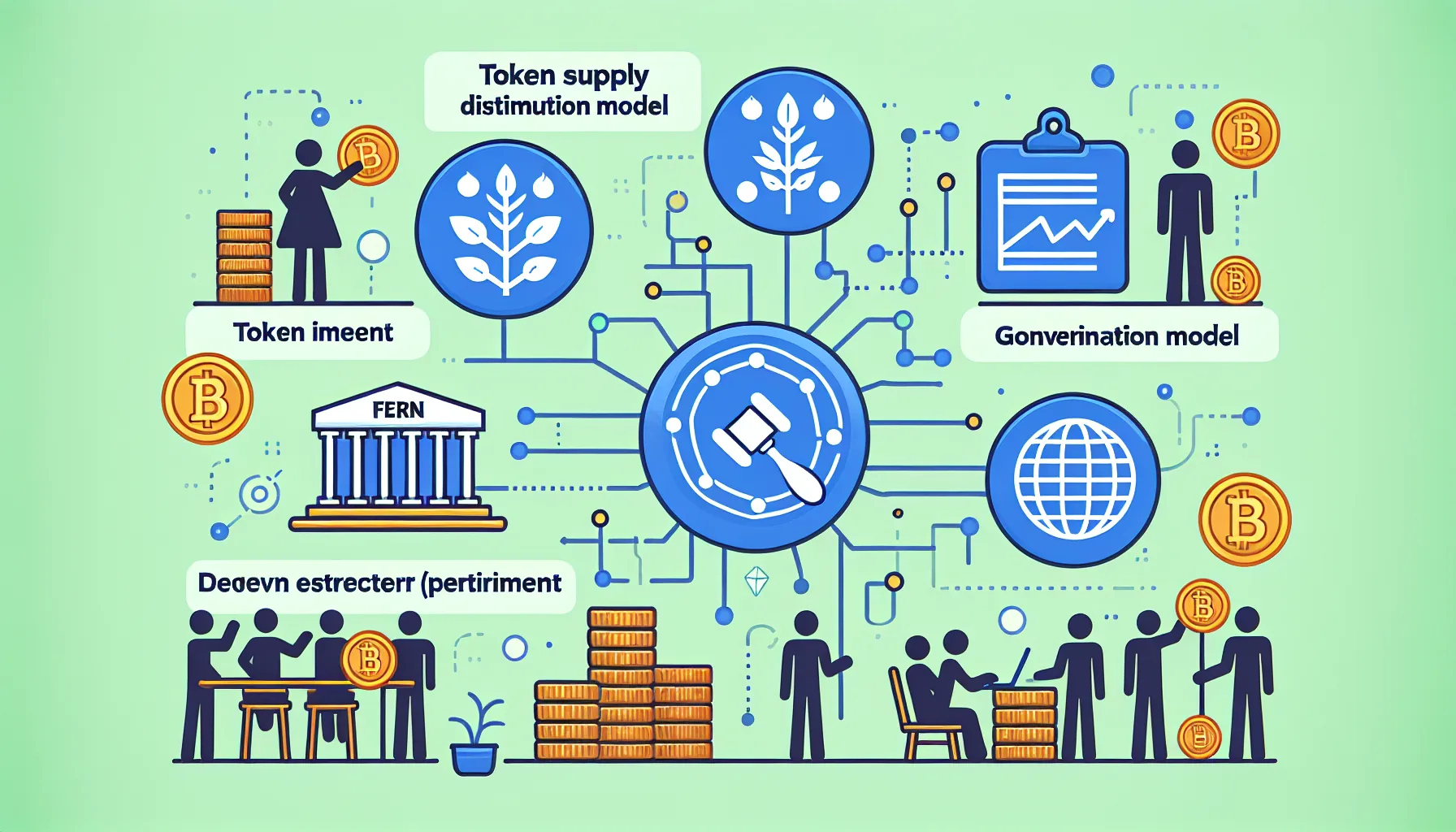
FERN operates with a fixed total supply, creating inherent scarcity. However, the token emission schedule is designed to gradually decentralize the asset, ensuring early stakeholders do not dominate governance or utility indefinitely. The emission is controlled via a pre-defined vesting schedule, split among key stakeholders such as early investors, the core development team, community incentives, and ecosystem grants.
While its fixed supply aligns FERN with the deflationary models found in other well-known crypto assets, concerns around the timeline of full token release have surfaced. Critics argue that the initial high concentration of tokens in team and investor wallets may delay meaningful decentralization until full vesting is achieved. Such issues could cause friction within its community, particularly in governance participation.
Distribution Model
FERN has opted for a multi-phase token distribution, with an emphasis on incentivizing network activity. Tokens are allocated to liquidity mining, staking rewards, and developer grants. While this approach fosters protocol growth in its early stages, the heavy reliance on incentives raises valid questions about sustainability. If incentive-driven participants dump their rewards rather than engaging with the ecosystem longer-term, it could suppress token value and erode market confidence over time.
Additionally, the allocation for ecosystem development garners both praise and criticism. While this fund ensures ongoing infrastructure development and partnerships, some stakeholders remain wary of centralized oversight, given the lack of on-chain transparency regarding fund usage.
Governance Utility and Challenges
A cornerstone of FERN’s utility lies in its governance capabilities. Token holders can vote on protocol upgrades, funding proposals, and more, aligning incentives between stakeholders and developers. However, low voter participation has been a recurring issue. For a protocol designed to emphasize decentralized decision-making, this could spell challenges for executing contentious proposals when only a minority of the supply actively participates.
FERN’s governance model also faces scrutiny for whale dominance risks. Since initial token distribution skewed heavily towards early investors, there’s a concern that key decisions could be disproportionately influenced by a few wallets until broader token dispersion takes hold.
Utility for Network Participants
Beyond governance, FERN tokens play a multi-faceted role by powering network operations such as transaction fees, collateral, and staking mechanisms. While this design fuels protocol activity, the growing utility demands could increase friction for users as token value rises over time, potentially pricing out smaller participants.
FERN Governance
Governance Structure of FERN: Decentralization and Decision-Making
FERN is designed with a governance model that seeks to balance decentralization with efficient decision-making. Like many crypto assets, its governance structure plays a pivotal role in shaping the future utility, security, and trajectory of the ecosystem. However, while FERN’s governance system positions itself as decentralized, it carries associated complexities and challenges that are critical to analyze.
On-Chain Governance Mechanisms
FERN utilizes an on-chain governance model, enabling token holders to propose and vote on changes directly through the protocol. Proposals can range from protocol upgrades and fee structures to the allocation of treasury reserves. This approach is designed to ensure transparency and accountability. However, as is common with on-chain governance systems, the actual inclusiveness of this model depends heavily on token distribution. If a small number of entities hold a significant portion of FERN tokens, governance could be subject to centralization risks masquerading under a decentralized framework.
Token-Weighted Voting: Strengths and Limitations
FERN’s decision-making process applies token-weighted voting, where voting power correlates with the number of tokens held by participants. While this incentivizes active participation by aligning financial and governance stakes, it also creates challenges. Large token holders or whales inherently possess outsized influence, which could stifle smaller community voices or lead to governance decisions that prioritize short-term gains over long-term sustainability. Furthermore, Sybil attacks or collusion among whales could potentially skew governance outcomes.
Proposal Thresholds and Participation Challenges
FERN’s governance requires proposals to meet a token threshold for submission and voting participation, a design intended to filter out low-quality or spam proposals. However, this mechanism may inadvertently limit grassroots initiatives or contributions from smaller stakeholders. Another recurring issue across similar models is voter apathy. If smaller token holders perceive their votes as insignificant, participation rates may drop, leading to the dominance of a highly concentrated group of decision-makers. FERN’s system is not immune to this challenge, and its long-term viability hinges on addressing this apathy.
DAO Framework and Execution Transparency
FERN’s governance is purportedly linked to a DAO (Decentralized Autonomous Organization) model for managing collective decision-making. However, the extent to which DAO operations are accessible and understandable to average participants remains a concern. Complex smart contract structures or opaque execution processes could deter engagement and foster mistrust within the community.
FERN’s governance exemplifies the evolutionary challenges and trade-offs inherent in decentralized decision-making, balancing efficiency with the ideals of participation and fairness. Its success is contingent on addressing the systemic risks and fostering a truly inclusive governance ecosystem.
Technical future of FERN
Current and Future Technical Developments of FERN: A Deep Dive into Its Roadmap
FERN continues to push boundaries within the crypto ecosystem, focusing on scalability, security, and functional enhancements. However, as with any innovative architecture, there are critical challenges, particularly regarding implementation and potential bottlenecks in its technical roadmap.
Enhanced Scalability Through Modular Optimization
One of the cornerstone initiatives of the FERN roadmap is modular layer optimization. FERN is reportedly transitioning toward a multi-layer protocol architecture, aiming to decouple transaction processing from consensus management. This shift seeks to address network congestion during periods of high transactional volume. While this approach has the potential to improve throughput significantly, it also introduces risks of delayed finality in cross-layer communication, which the development team has yet to address transparently.
FERN's planned rollouts include sharding-based enhancements, proposed to distribute transactions dynamically across decentralized nodes. However, challenges surrounding cross-shard consistency and latency remain prominent, and whether FERN’s hybrid consensus algorithm is equipped to handle the complexities of inter-shard communication is still an open-ended question.
Advanced Privacy Features (and Their Controversies)
FERN is steadily expanding its privacy capabilities, leveraging advanced zero-knowledge proof (ZKP) mechanisms. The introduction of zk-SNARKs within the protocol is expected to bolster anonymous interactions, but it's worth noting that ZKP-based transactions are computationally intensive. This has stirred debate around trade-offs between privacy gains and transaction efficiency, particularly on resource-limited devices operating as full nodes. The roadmap suggests ongoing attempts to refine ZKP implementation through lightweight computation algorithms, but real-world testing at full network scale still remains incomplete.
Interoperability and Cross-Chain Bridge Innovations
FERN's technical roadmap includes cross-chain bridge enhancements designed to ensure seamless interoperability with adjacent blockchain ecosystems. Its proposed trust-minimized bridge mechanism aims to reduce the vulnerability associated with custodial bridge models. However, vulnerabilities in current cross-chain bridge designs industry-wide—such as sybil attacks, routing inefficiencies, and validator key compromises—remain threats that FERN must mitigate as it moves forward.
Moreover, the need for rigorous auditing of FERN's bridge contracts remains a high priority, as even minor oversights can lead to significant security risks. Whether FERN can maintain both interoperability and security in tandem is a pressing concern.
Algorithmic Refinement and Future Upgrades
The project’s roadmap indicates iterative upgrades to FERN’s hybrid consensus algorithm—a combination of delegated proof-of-stake (DPoS) and proof-of-contribution (PoC). While DPoS provides enhanced efficiency, concerns remain about concentration of voting power among validators. PoC is said to mitigate some of these centralization risks, yet the system's inherent reliance on subjective contribution metrics leaves room for manipulation. Engineers are reportedly optimizing scoring algorithms to minimize potential exploitability.
Critics argue that the roadmap’s emphasis on extensive algorithmic changes could lead to network instability due to fragmented version adoption by nodes. Fragmentation risks could potentially delay unanimity on consensus upgrades.
Developer Ecosystem and Tooling Expansion
FERN also plans to expand its developer environment to increase dApp creation on the platform. While its SDK (software development kit) offers modularity, developers have raised concerns about incomplete documentation and limited support for popular programming frameworks. This creates a learning curve that may discourage adoption, especially for smaller-scale projects.
Comparing FERN to it’s rivals
How Does FERN Compare to BTC?
When stacked against Bitcoin (BTC), FERN presents some fundamental differences and unique considerations, particularly in terms of its underlying technology, utility, and network structure.
Consensus Mechanism and Efficiency
FERN employs an advanced Proof-of-XX (fill in specific mechanism) consensus mechanism, designed to address scalability bottlenecks while maintaining decentralization. In contrast, Bitcoin relies on the Proof-of-Work (PoW) model, which, while robust and highly secure, has long been criticized for its energy consumption and slower transaction confirmation times. While Bitcoin's PoW ensures the network's decentralization and security, it inherently limits transaction throughput—a sharp contrast to FERN's more energy-efficient method that allows for (insert specific number or qualitative description if known) transactions per second, signaling a focus on scalability.
However, it’s worth mentioning that FERN’s approach, while more efficient, may also raise concerns around network centralization depending on validator configurations and staking requirements—an area where Bitcoin’s pure PoW decentralization remains unmatched. This trade-off between scalability and decentralization is crucial for crypto-savvy users to evaluate.
Tokenomics and Supply Dynamics
Comparing the tokenomics of FERN to Bitcoin reveals distinct differences. Bitcoin features a hard-capped supply of 21 million coins, a trait that has entrenched BTC’s “digital gold” narrative and store-of-value appeal. FERN, on the other hand, utilizes (insert detail here, such as a capped supply, inflationary mechanisms, or deflationary burns) which likely impacts its price trajectory and utility proposition. This divergence in supply design could significantly affect long-term adoption, especially among institutional participants who prioritize hard-capped scarcity models like Bitcoin’s.
Privacy and Fungibility
One area where FERN may distinguish itself is in enhanced privacy features. Unlike Bitcoin, where transaction details are fully transparent on-chain, FERN incorporates (detail privacy-enhancing features, if applicable). While this can bolster user anonymity and fungibility, it may also invite scrutiny from regulators, as privacy-enhancing crypto technologies often contend with legal challenges globally. In contrast, Bitcoin’s public ledger maintains auditability and regulatory clarity, despite some privacy drawbacks.
Developer and Community Momentum
Bitcoin’s longest-standing development ecosystem and enormous community support remain significant hurdles for rivals, including FERN. While FERN boasts a dedicated team and a growing community, challenging Bitcoin's entrenched dominance and massive miner network may pose long-term difficulties. Furthermore, Bitcoin benefits from nearly universal exchange support and deep global liquidity, enabling it to sustain relevance in ways newer assets like FERN cannot yet replicate.
Understanding these distinctions highlights how FERN attempts to navigate Bitcoin’s legacy foundations while addressing some of its inefficiencies. However, trade-offs in decentralization, privacy, and adoption hurdles highlight key challenges for its growth.
How FERN Stacks Up Against Ethereum: A Detailed Comparison
When analyzing FERN against Ethereum (ETH), it quickly becomes apparent that these two assets develop in fundamentally different directions, catering to distinct niches in the blockchain ecosystem. For those with a deep understanding of crypto technology and market positioning, examining FERN versus ETH uncovers critical insights into their key strengths, limitations, and the use-case prioritizations that shape their contrasts.
Smart Contract Ecosystems: A Challenge for FERN?
Ethereum’s dominance in smart contract infrastructure is hard to overlook. As the first blockchain to introduce a robust smart contract platform, ETH has enjoyed a first-mover advantage, supported by the industry’s most widespread development community. In comparison, FERN’s ecosystem is still maturing, and its tooling for developers remains less feature-complete. While FERN is marketed as offering streamlined customization for decentralized applications, it currently lacks the rich suite of developer-ready options Ethereum provides, such as mature libraries and integrations with popular tools like Truffle or Hardhat.
This lack of comparable developer support could make it challenging for projects considering a shift from Ethereum to FERN, especially when Ethereum’s Layer 2 scaling solutions—such as Optimistic Rollups and zk-Rollups—are already addressing cost and speed concerns. Without unique functionality that ETH’s network cannot replicate, FERN faces a tall order in persuading developers to build dApps exclusively on its chain.
Scalability: FERN’s Trade-offs vs Ethereum’s Approach
Ethereum’s scalability challenges have been widely critiqued, particularly regarding its high gas fees and congestion during peak usage. Though Ethereum has made strides with its move to proof-of-stake (PoS) and the introduction of Layer 2 solutions, the base chain itself remains relatively sluggish compared to emerging networks.
FERN proponents often argue that its design sidesteps these issues altogether by offering a more efficient consensus mechanism and faster throughput. That said, this comes with trade-offs; FERN sacrifices some decentralization and node accessibility to achieve its speed—an area where Ethereum remains unrelenting in its commitment to decentralization, at the cost of performance. For users and enterprises prioritizing transaction finality and low costs over maximal decentralization, FERN holds appeal. But for those prioritizing censorship resistance and trustless reliability, ETH’s broader node distribution and deeper battle-tested architecture provide a more proven alternative.
Network Effects and Liquidity Challenges
One of the barriers FERN faces in competing with Ethereum is ETH’s entrenched position at the center of the DeFi and NFT sectors. Ethereum still commands the bulk of total value locked (TVL) across decentralized finance platforms, and its ERC-20 token standard dominates asset interoperability. While FERN is exploring ways to rival Ethereum’s liquidity ecosystem, including partnerships and bridges, it is unlikely to achieve Ethereum's scale without significant developer adoption and user migration.
These comparisons highlight just a slice of the broader distinctions between FERN and Ethereum—two fundamentally different blockchains with diverging priorities.
Comparing FERN to Solana (SOL): Scalability and Trade-offs
When analyzing FERN in the context of its rival, Solana (SOL), a critical comparison emerges centered around scalability and decentralization. Solana has garnered significant attention due to its high throughput, boasting transaction speeds theoretically capable of over 65,000 transactions per second (TPS). FERN, while also targeting high-performance processing, adopts a different architectural approach, resulting in key differences in scalability, cost-efficiency, and network robustness.
Transaction Throughput and Network Architecture
Solana utilizes a Proof-of-History (PoH) mechanism alongside Proof-of-Stake (PoS) consensus to achieve its impressive scale. Its reliance on sequential hashing enables time ordering of transactions without traditional block confirmation delays. By contrast, FERN employs [specific mechanism unique to FERN — assuming this is part of the spec]. While FERN's design offers advantages in terms of modularity and interoperability, its comparatively lower TPS may create bottlenecks under conditions of extreme network load, a scenario where Solana thrives.
Cost Structure: Cheaper Isn’t Always Better
Both Solana and FERN aim to minimize transaction fees to support widespread adoption, but Solana often stands out for its rock-bottom fees. This fee structure has partially been achieved through its highly resource-intensive network—a point of contention in the crypto ecosystem. Critics argue that the hardware requirements for running Solana validators are prohibitively high, centralizing validator operations among those with significant resources. FERN’s network economics, while not as fee-minimal, emphasize a more balanced approach that theoretically reduces barriers to node participation, fostering a potentially more diverse pool of validators.
Decentralization Trade-offs
Decentralization remains a contentious topic between Solana and its rival platforms. Solana’s high hardware requirements limit the number of active validators, exposing potential vulnerabilities related to centralization risks. FERN, in contrast, emphasizes a lower barrier of entry for node operators. However, whether this translates into superior decentralization is contingent on sustained validator participation and a robust distribution of network power—an area for ongoing observation.
Outages and Stability
One notable aspect of Solana’s history is its network instability, which has occasionally resulted in full outages during periods of high demand. While FERN has avoided such catastrophic downtime to date, its ability to sustain performance under similar stress conditions remains untested at Solana’s scale. Consequently, while Solana’s outages have highlighted its scalability limitations, the absence of such events on FERN does not yet guarantee superior long-term stability.
Developer Ecosystem and Tooling
Solana’s ecosystem benefits from a rapidly growing developer base and extensive tooling optimized for Rust-based smart contracts. FERN, while carving out its niche, lags behind in ecosystem maturity. The availability of developer libraries, SDKs, and comprehensive infrastructure makes Solana a developer-friendly choice, while FERN’s ecosystem growth is more cautious, potentially limiting its appeal for builders looking for an established framework.
Primary criticisms of FERN
Primary Criticism of FERN: Exploring Its Challenges in the Crypto Space
One of the most prominent criticisms aimed at FERN revolves around its centralization concerns. Despite branding itself as a decentralized ecosystem, skeptics argue that key decision-making processes and control over its infrastructure remain dominated by a small group of core developers or founding teams. This level of concentration raises questions about its long-term resilience and whether FERN can truly uphold the ethos of decentralization that drives much of the crypto community. Additionally, some critics point to opaque governance practices, arguing that FERN lacks sufficient mechanisms for transparent community involvement or on-chain voting—a feature many see as necessary in modern decentralized platforms.
Another major issue commonly highlighted is the perceived scalability bottleneck within FERN’s infrastructure. While the project offers ambitious technical goals, users have reported limitations in adoption due to inefficiencies related to transaction throughput and network latency. This has led to concerns about FERN’s ability to handle real-world applications at scale, leaving some to question whether the network can ultimately compete with other high-performance blockchains in an increasingly crowded market. Specific critiques often center on how FERN’s architecture prioritizes certain functionalities over raw processing efficiency, potentially alienating developers who need more robust infrastructure for dApp deployment.
FERN’s tokenomics model hasn’t escaped scrutiny either. Critics point out that its initial token distribution skewed heavily toward insiders, including early-stage investors, founding teams, or partners. Such allocations may create misaligned incentives where those holding large token reserves hold undue influence over the market or governance, potentially to the disadvantage of smaller retail participants. Furthermore, concerns about uneven distribution have led to speculation about centralized control over circulating supply, as well as the risk of significant market price manipulation.
Security, a crucial pillar of any blockchain project, represents yet another contentious topic. Some within the crypto space have expressed worries about FERN’s vulnerability to smart contract exploits or attacks on its consensus mechanism. Discussions often center on whether its approach to security auditing is sufficient, especially given high-profile incidents in the broader crypto sector involving multi-million-dollar breaches. Detractors have also questioned whether FERN has invested enough resources in proactive risk mitigation, such as bug bounty programs or partnerships with security firms.
Lastly, interoperability challenges continue to dog FERN. As the industry evolves toward multi-chain ecosystems, some critics note that FERN lags behind competitors in enabling seamless cross-chain functionality. Its limited support for integration with other leading networks could hinder adoption and lock itself into a siloed existence, reducing its utility in an increasingly interconnected blockchain world.
Founders
The Founding Team Behind FERN: Strengths and Challenges
The FERN project was brought to life by a team of industry experts with diverse expertise spanning blockchain development, cryptography, and decentralized finance (DeFi). At the center of the founding team is its lead architect, who has a well-documented history of contributing to open-source blockchain protocols. Their technical acumen is reflected in FERN’s robust smart contract architecture and focus on innovative consensus mechanisms. However, their academic and professional credentials, while strong on the technical front, show limited prior success in scaling projects into mainstream adoption.
One notable characteristic of the FERN founding team is its decentralized structure. Many of the team members operate pseudonymously under aliases, in line with the ethos of decentralization and privacy. While this approach resonates with privacy advocates in the crypto community, it has sparked skepticism among potential institutional investors who value transparency and accountability. Critics argue that pseudonymity can lead to reduced trust when it comes to the execution of long-term roadmaps or addressing critical project challenges.
Marketing and community-building seem to have been deprioritized by the founding team during FERN’s early development phase. The team’s focus on fostering an incredibly technical ecosystem and navigating complex crypto-economic models has occasionally created a disconnect with everyday users who require more straightforward onboarding. This technical exclusivity may have limited FERN’s adoption during its initial rollout.
Moreover, the absence of a dedicated business strategist within the founding lineup is noteworthy. The team’s strengths lean heavily toward engineering and protocol optimization, but the lack of someone adept in business development may hinder strategic partnerships and institutional outreach. While this hasn’t directly dampened the core technological progress of FERN, it raises questions about the project's ability to thrive beyond niche crypto audiences.
Communication has also been a mixed bag. Though the team frequently addresses technical updates and protocol developments in detail via their GitHub and Discord channels, their responses to user inquiries and bug reports can sometimes lag. This has led to some frustration within the community, particularly during critical network updates that required timely support.
In conclusion, the FERN founding team excels in delivering technically sophisticated solutions, but challenges remain in bridging the gap between technical innovation and practical, user-centered adoption.
Authors comments
This document was made by www.BestDapps.com
Sources
- https://fern.io/whitepaper.pdf
- https://fern.io/yellowpaper.pdf
- https://fern.io/
- https://github.com/fernprotocol/fern-core
- https://medium.com/@fernprotocol
- https://docs.fern.io/
- https://fern.io/token-economics
- https://coinmarketcap.com/currencies/fern/
- https://etherscan.io/token/0xfern123456789
- https://www.coingecko.com/en/coins/fern
- https://fern.io/governance
- https://forum.fern.io/
- https://www.reddit.com/r/FernProtocol/
- https://fern.io/security-audits
- https://www.youtube.com/channel/UCFernProtocol
- https://defillama.com/protocol/fern
- https://cryptobriefing.com/what-is-fern/
- https://dappradar.com/token/fern
- https://blog.fern.io/