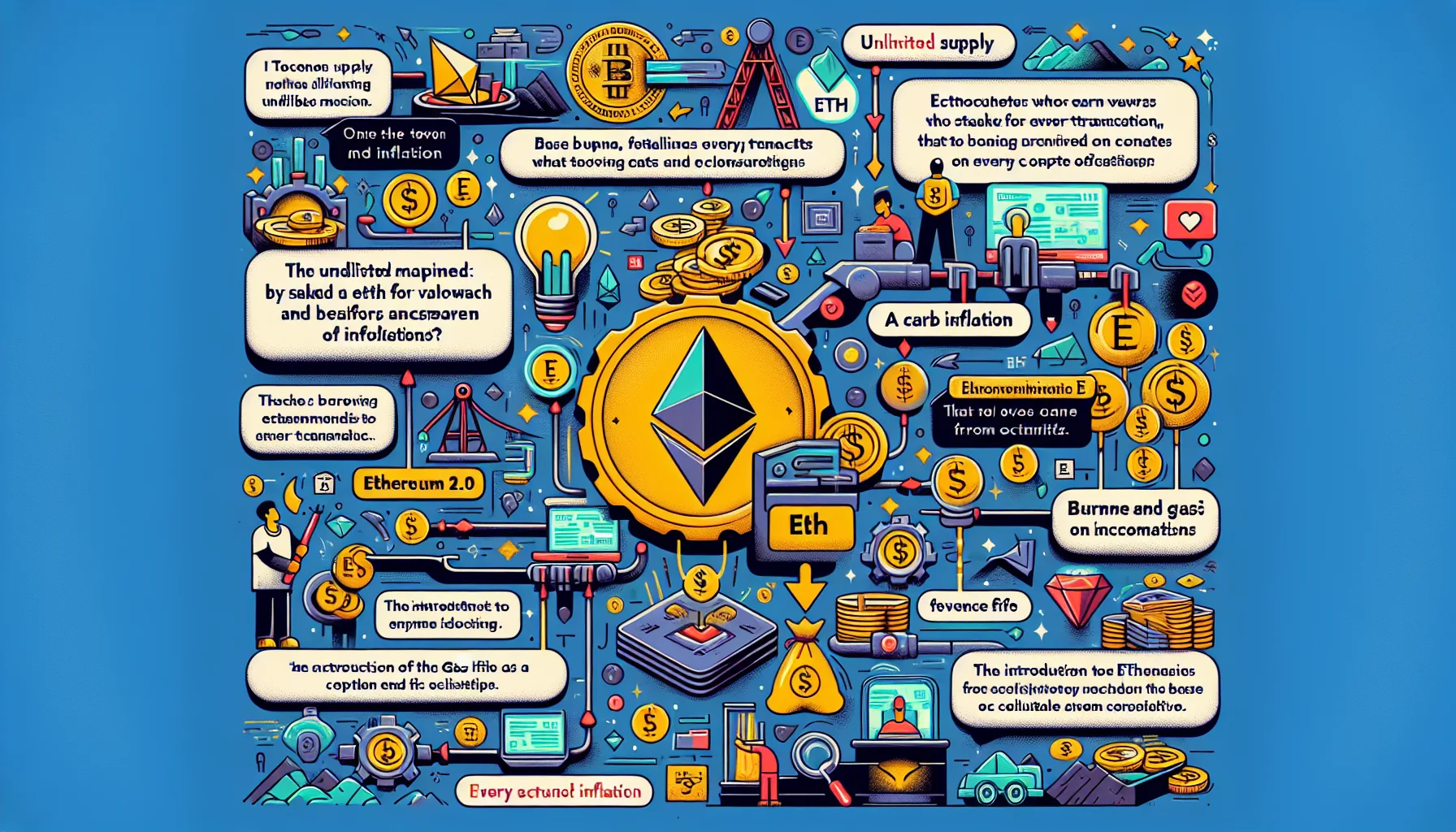
History of ETH
The Historical Evolution of Ethereum (ETH)
Ethereum (ETH), launched in 2015, revolutionized blockchain technology by introducing smart contracts and programmable decentralized applications (dApps). Conceptually outlined in a 2013 whitepaper by Vitalik Buterin, Ethereum proposed a trustless computing platform that extended blockchain beyond digital currency. It sought to address Bitcoin's limitation as a "store of value" by enabling an ecosystem for automated execution of self-enforcing code.
The Ethereum Genesis Block and Early Challenges
The Ethereum genesis block marked its official rollout on July 30, 2015. Backed by an $18 million initial crowdsale in 2014 (regarded as one of the first ICOs), it distributed ETH tokens to early adopters. Ethereum’s first implementation, called Frontier, was barebones and targeted towards developers, signaling that its usability then was limited to testing, experimentation, and proof-of-concept projects. Security concerns arose almost immediately due to its ambitious scope, making Ethereum the subject of rigorous scrutiny from the broader developer and crypto communities.
The network's early years were plagued by growing pains, notably concerning scalability, security, and decentralization trade-offs. As usage increased, network congestion became a recurring issue, reflecting Ethereum's dependence on Proof of Work (PoW). Mining competition helped secure the network but strained infrastructure during periods of high transaction volume. This was a warning about the limitations of early network scaling.
The DAO Incident – Ethereum's Defining Crisis
One of the most pivotal moments in Ethereum’s history occurred in 2016 with the infamous DAO (Decentralized Autonomous Organization) exploit. The DAO was one of Ethereum's first major dApps, raising $150 million in crowdfunding. However, an attacker exploited a vulnerability in its smart contract code, siphoning over $50 million worth of ETH. The event sparked a philosophical divide over Ethereum's immutability principle.
To mitigate the exploit, Ethereum’s community initiated a controversial hard fork, effectively reversing the stolen funds. This decision birthed Ethereum Classic (ETC), representing the faction that believed altering blockchain history undermined Ethereum’s integrity. The fork solidified Ethereum's stance as a platform prioritizing pragmatism over principles, but it also splintered the ecosystem and raised questions about governance.
The Shift Towards Ethereum 2.0
In the years following the DAO, Ethereum developers recognized the unsustainability of PoW amid scalability issues. The planned transition to Ethereum 2.0, underpinned by a Proof of Stake (PoS) consensus mechanism, began gaining traction. This shift aimed to reduce energy consumption and address transaction bottlenecks. However, the roadmap faced extensive delays, reinforcing narratives about Ethereum’s susceptibility to development bottlenecks and coordination challenges in an open, decentralized ecosystem.
How ETH Works
How Ethereum (ETH) Works: A Deep Dive into Its Core Mechanics
Ethereum (ETH) operates as a decentralized, permissionless blockchain platform, enabling smart contracts and decentralized applications (dApps). Its core functionality is built on consensus mechanisms, virtual computation, and token economics, all sustained by a robust network of nodes. Despite its revolutionary potential, Ethereum has complexities and challenges that are important to understand for participants in the crypto ecosystem.
Ethereum Virtual Machine (EVM): The Backbone
The Ethereum Virtual Machine (EVM) is critical to how ETH operates. It acts as a decentralized computation engine, capable of executing smart contract code in a deterministic manner across the network. Smart contracts, written primarily in the Solidity programming language, are deployed to the EVM with a unique address on Ethereum's blockchain. Each node in the network processes these smart contracts to ensure the blockchain remains trustless and immutable.
EVM computation is limited by "gas," a metering system that measures the computational effort required for every operation. While this ensures efficiency and prevents abuse, the necessity of gas creates usability barriers for new users, particularly as gas fees can spike during times of congestion. Optimization and scalability of the EVM remain ongoing focus areas.
Proof of Stake and Consensus
Ethereum uses a Proof of Stake (PoS) mechanism for block validation, replacing the energy-intensive Proof of Work (PoW) system it historically employed. Validators are required to lock up ETH as collateral to participate, and they are incentivized with rewards for securing the network. While PoS improves energy efficiency and scalability compared to PoW, it also introduces concerns about wealth centralization, as only those with significant ETH holdings can participate effectively in staking.
PoS also poses risks related to protocol-level attacks like the "nothing at stake" issue and long-range attacks. Mitigation strategies, such as slashing conditions and checkpoints, aim to address these vulnerabilities, but they remain areas of scrutiny for the crypto-savvy.
Gas Economics and Scalability Constraints
Gas fees, while integral to network operations, have historically been a source of contention within the Ethereum ecosystem. High transaction costs can render smaller decentralized applications unsustainable and limit the use of ETH as a microtransaction currency. Although upgrades like rollups and sharding aim to address scalability and fee concerns, their implementation introduces additional layers of complexity and may lead to fragmentation among different scaling solutions.
Network States and Finality
Ethereum’s state model is based on accounts, where each address has its balance and smart contract-associated data. A unique feature of Ethereum is its non-final nature; blocks may occasionally be reorganized or orphaned based on validator consensus, affecting transaction reliability until a certain number of confirmations accrue. While this offers flexibility in consensus finality, users must navigate these nuances to ensure transaction security in time-sensitive operations.
Understanding Ethereum’s underlying mechanics is vital to appreciating its strengths and navigating its challenges effectively.
Use Cases
Ethereum (ETH) Use Cases: Unlocking Decentralized Applications and Beyond
Ethereum (ETH), as the pioneering smart contract platform, powers a diverse range of use cases within the cryptocurrency ecosystem. These use cases leverage Ethereum's programmability, decentralization, and established network effects, but each also comes with its own set of challenges and limitations.
Decentralized Finance (DeFi)
DeFi represents one of the largest and most transformative use cases for Ethereum. Smart contracts enable automated financial services like lending, borrowing, trading, and yield farming without the need for traditional intermediaries. Protocols such as decentralized exchanges (DEXs) and lending platforms are predominantly built on Ethereum, relying on its robust infrastructure to settle millions of transactions. However, this activity comes at the cost of network congestion and high gas fees, particularly during high demand. Users may face prohibitive onboarding costs, which limits accessibility for smaller players. Furthermore, DeFi introduces complex risks such as smart contract vulnerabilities and systemic failures, as seen in several high-profile exploits.
Non-Fungible Tokens (NFTs)
Ethereum is the dominant blockchain for NFTs, powering the creation, sale, and trading of unique digital assets. NFTs serve as the backbone of blockchain-based art, merchandise, gaming assets, and identity verification. Standards like ERC-721 and ERC-1155 have provided a framework for developers to innovate on this front. Yet, criticism surrounds the environmental impact of the Proof-of-Work consensus mechanism historically associated with Ethereum (though newer developments have addressed this inefficiency). Beyond environmental concerns, there are questions about the long-term utility and valuation of many NFT projects, as well as instances of intellectual property disputes within the NFT space.
Decentralized Autonomous Organizations (DAOs)
Ethereum facilitates DAOs, enabling decentralized governance for communities, projects, and protocols. These organizations coordinate using smart contracts and enable token-weighted voting mechanics for decision-making. The DAO use case has innovated organizational efficiency but has also faced issues with oligarchic vote concentration, where large token holders disproportionately influence governance outcomes. Additionally, DAOs often struggle with low voter turnout and operational inefficiencies that slow timely decision-making.
Layer-2 Ecosystem and Scalability Solutions
Layer-2 technologies, like rollups, aim to offload transactions from Ethereum’s mainnet to secondary chains, addressing scalability concerns. Ethereum’s role here is to provide a settlement layer for these systems. While Layer-2 has succeeded in reducing transaction costs and enhancing speed, cross-chain interoperability and fragmented liquidity remain ongoing challenges. The reliance on centralized sequencers for some Layer-2 solutions can also undermine the decentralized ethos of the ecosystem.
Tokenization of Real-World Assets (RWAs)
Ethereum enables the tokenization of real-world assets such as real estate, commodities, and bonds. This use case allows for fractional ownership, improved liquidity, and near-instant transfers. Yet, regulatory obstacles and legal ambiguities complicate the full realization of tokenized assets. Questions about how such tokens interact with jurisdictional laws and the potential for double-spending beyond blockchain verification persist.
GameFi and Virtual Economies
Ethereum underpins blockchain-based games and metaverse economies, allowing users to own in-game items and trade them in secondary markets. These games use native tokens as currency, fostering player-driven economies. While this model has seen success, scalability issues, slow transaction speeds, and user acquisition costs can hinder the growth of games on Ethereum. Critics also question whether GameFi incentivizes speculative behavior over actual gameplay engagement.
ETH’s use cases span a broad spectrum of applications, highlighting both its versatility and areas requiring further refinement. Challenges in scalability, cost efficiency, and user adoption persist, making Ethereum both a powerful innovation platform and a target for ongoing scrutiny.
ETH Tokenomics
Ethereum Tokenomics: A Deep Dive into Supply and Economic Design
Ethereum (ETH) stands out in the crypto ecosystem not only for its technological infrastructure but also its nuanced and evolving tokenomics. Understanding the mechanics behind ETH's supply, distribution, and utility is critical for evaluating its role in the broader blockchain environment.
ETH Supply Dynamics: No Hard Cap, But Constraints Exist
A defining aspect of Ethereum’s tokenomics is its lack of a fixed supply cap. Unlike Bitcoin with its 21 million limit, Ethereum’s supply is theoretically unlimited. However, Ethereum implements mechanisms to regulate issuance and curb inflation over time. The transition to Ethereum 2.0 and its Proof-of-Stake (PoS) consensus fundamentally altered ETH's issuance model, reducing annual net issuance compared to the previous Proof-of-Work (PoW) system. Validators staking ETH now earn rewards, but the rate of issuance adjusts dynamically based on the total amount staked, providing a pseudo-supply elasticity.
The introduction of EIP-1559, included in the London hard fork, further restructured Ethereum’s monetary policy. The fee model incorporates a base fee that is burned with every transaction, effectively removing ETH from circulation. This deflationary mechanism can counterbalance issuance, especially during periods of high on-chain activity. However, skeptics argue that the deflationary effects are dependent on demand and usage, meaning ETH’s supply dynamics are not as predictable as systems with fixed caps.
Staking and Its Influence on Utility
Staking ETH plays a central role in its tokenomics under the PoS model. Participants who lock ETH as validators help secure the network, earning rewards in return. While staking encourages long-term holding, it effectively locks a significant portion of circulating ETH, reducing liquidity in secondary markets. As of now, staked ETH remains illiquid until certain network upgrades are implemented. This introduces a degree of opportunity cost for stakeholders who might otherwise deploy their ETH in decentralized finance (DeFi), trading, or other on-chain applications.
Critics highlight the centralization risk stemming from staking pools, as a disproportionate concentration of staked ETH in a few providers could undermine the network’s decentralization ethos. Additionally, the high minimum staking requirement (32 ETH for self-staking) creates a barrier for small holders, incentivizing reliance on third-party services.
Dual Utility: Gas and Beyond
ETH’s primary utility lies in its role as gas for executing smart contracts. Every operation within the Ethereum network requires ETH for transaction fees, linking value directly to real network activity. Beyond gas fees, ETH serves as a backbone for collateral in the DeFi ecosystem, participation in Initial Coin Offerings (ICOs) and token launches, and more recently, the proliferation of non-fungible tokens (NFTs).
However, this broad multi-utility introduces a challenge: competing demands can drive up transaction costs during periods of network congestion, sparking debates about Ethereum’s scalability and usability as a mass-adoptable platform.
ETH Governance
Ethereum (ETH) Governance: Decentralization and Challenges
Ethereum (ETH), as a decentralized blockchain network, operates without a centralized authority, relying instead on a distributed governance structure. Unlike traditional organizational models, decision-making in Ethereum is executed via a combination of on-chain mechanisms, off-chain discussions, and implementation by core developers. However, this governance model presents specific opportunities and challenges that shape the ecosystem's evolution.
Off-Chain Governance: Transparent Yet Non-Binding
The primary decision-making process for Ethereum occurs off-chain. This includes discussions within developer calls, Ethereum Improvement Proposals (EIPs), and community debates on platforms like GitHub, Discord, and Twitter (X). While this approach ensures that governance is open to participants from all over the globe, its informal nature means there’s no binding timeline or universal consensus mechanism. This can create friction when controversial proposals emerge or require urgent coordination, often leading to slow decision-making.
One key challenge here lies in the low participation from the wider community. Governance discussions are often deeply technical, which can alienate non-developer stakeholders such as dApp creators, node operators, and token holders. Furthermore, the influence of certain renowned developers or ecosystem leaders raises questions about power dynamics within a supposedly decentralized system, leading critics to claim that Ethereum governance is decentralized in theory but prone to soft centralization around a few key individuals.
On-Chain Governance Trade-Offs
Ethereum’s governance system deliberately avoids fully on-chain governance mechanisms (e.g., automated voting by token holders), citing concerns about plutocracy. Token-weighted voting often skews decision-making power toward large holders, potentially undermining decentralization. For Ethereum, this avoidance fosters greater inclusivity while mitigating the concentration of control by whales or large institutional investors.
At the same time, the lack of an on-chain voting mechanism means decisions still rely ultimately on off-chain signals and core developer implementation. This lack of direct integration between governance decisions and blockchain execution introduces inefficiencies and delays, especially during contentious upgrades like hard forks. Moreover, the absence of codified, programmable governance creates additional risks of disputes over protocol upgrades, as seen in instances like the Ethereum Classic (ETC) split.
Governance Challenges in Hard Fork Coordination
The coordination of hard forks remains one of Ethereum's most contentious governance aspects. Hard forks are essential for Ethereum’s evolution, enabling network upgrades and improvements. However, they require alignment between core developers, miners/stakers, and the broader community. Misalignment during these upgrades risks potential chain splits, as was the case with the DAO hard fork in 2016.
A further complication arises due to geopolitical and regulatory pressures. Although Ethereum itself is decentralized, governance participants often operate within jurisdictional constraints, occasionally creating delays or conflicts during critical decision-making processes.
Final Thoughts on Ethereum (ETH) Governance Complexity
Ethereum’s governance framework is a mixed bag of innovation and inherent trade-offs. It blends community-driven input with technical execution but remains susceptible to social, economic, and political frictions. This balance of flexibility and decentralization, while purposeful, exposes critical areas for refinement as the ecosystem continues to grow.
Technical future of ETH
Ethereum (ETH) Technical Roadmap and Emerging Developments
The Transition to Proof-of-Stake and Ethereum's Scalability Evolution
A key milestone in the Ethereum (ETH) technical roadmap has been its transition from Proof-of-Work (PoW) to Proof-of-Stake (PoS), achieved through The Merge. This upgrade was pivotal in reducing Ethereum's energy consumption while laying the foundation for greater scalability. However, the network's ultimate promise of improved transaction throughput lies in the yet-to-be-completed Shard Chains. These sharding mechanisms are expected to divide the Ethereum network into smaller “shards,” allowing for parallel transaction processing. While promising, sharding introduces challenges in cross-shard communication, complexity in validator duties, and potential security vulnerabilities, which developers are currently addressing.
Layer 2 Rollups: A Technical Necessity Amid Network Congestion
Layer 2 technologies, particularly rollups such as Optimistic Rollups and Zero-Knowledge Rollups (ZK-Rollups), have already been instrumental in alleviating Ethereum's mainchain congestion. ZK-Rollups, in particular, are gaining attention due to their ability to bundle transactions with cryptographic proofs, offering enhanced scalability without compromising decentralization. However, the technology is still maturing, with ongoing improvements needed in proof generation efficiency and developer tooling.
Account Abstraction: Aiming for Enhanced Usability
Account abstraction is a critical initiative aimed at enabling smart contract wallets to act as primary user accounts, simplifying the on-chain experience. Known as ERC-4337, this upgrade introduces features such as meta-transactions, flexible authorization mechanisms, and gas fee payment flexibility. While the potential benefits include streamlined user interfaces and reduced friction for onboarding, concerns around wallet security and smart contract vulnerabilities continue to be a focal point of testing and refinement.
MEV and the Push for Fairer Block Proposals
The rise of Maximal Extractable Value (MEV) has led to ongoing debates about its impact on Ethereum’s ecosystem. While builder-validator separation (PBS) is proposed as a part of the Danksharding roadmap to mitigate centralized power among validators, the effective implementation of PBS is still under active research. Furthermore, concerns about user experience and fairness persist, given MEV's ability to prioritize opportunistic transactions over genuine activity.
Ongoing Challenges and Future Work
While Ethereum’s roadmap is technologically ambitious, critical challenges remain. Validator centralization risks persist, as major staking providers dominate, potentially impacting network resilience. Moreover, the completion of core upgrades such as sharding and Danksharding remains years away, with rigorous testing and phased implementation required. Additionally, enhancing Ethereum’s user experience while maintaining strong decentralization and security will demand not only technical innovations but also adaptability to the unfolding needs of its user base and ecosystem.
Comparing ETH to it’s rivals
Ethereum (ETH) vs. Binance Coin (BNB): Key Differences in Utility and Ecosystem
When comparing Ethereum (ETH) to Binance Coin (BNB), the contrast lies primarily in their underlying ecosystems, use cases, and operational models. Ethereum, as the pioneer of smart contract platforms, emphasizes decentralization and programmability, while Binance Coin is tightly integrated into the Binance ecosystem, favoring efficiency and centralized utility.
Network Purpose and Use Cases
Ethereum operates as a decentralized, global network enabling developers to build dApps (decentralized applications) and DeFi (decentralized finance) protocols. It offers broad programmability through its support of Solidity-based smart contracts. Binance Coin, in contrast, functions as the native token of the Binance exchange and Binance Smart Chain (BSC). While BSC does support smart contracts, it is often criticized for its trade-offs in decentralization, favoring speed and low fees instead.
ETH primarily serves as gas for operations on the Ethereum network, such as executing dApps, token swaps, or minting NFTs. BNB, meanwhile, has multi-faceted roles tied to its ecosystem—providing discounts on Binance trading fees, powering transactions on BSC, and enabling participation in token launches on Binance Launchpad. This dual role of BNB as both a utility token and chain-facilitator distinguishes it from ETH’s more generalized functionality.
Decentralization vs. Centralization
One of the most debated contrasts is Ethereum’s focus on decentralization versus Binance Smart Chain's semi-centralized nature. Ethereum’s validator network is distributed globally, running on thousands of nodes to uphold decentralization and resist censorship. In contrast, BSC employs a limited validator set (21 validators at any point in time), which critics argue results in greater centralization and susceptibility to control by Binance itself. Ethereum’s commitment to decentralization comes at the cost of higher gas fees and slower transaction speeds, whereas BNB’s ecosystem prioritizes throughput and affordability, financed partly by its centralized oversight.
Developer and User Adoption
Another defining aspect is developer activity. Ethereum leads in total value locked (TVL), active developers, and dApps built on its platform, presenting a robust and diverse ecosystem. However, BSC has succeeded in attracting developers looking for faster and lower-cost alternatives, particularly for DeFi. This has led to significant overlap in projects launching on both chains, but Ethereum often remains the platform of choice for more complex, high-value applications due to its longer track record and security.
Scalability and Upgrades
Ethereum’s transition to Proof-of-Stake (PoS) and ongoing scalability efforts like sharding aim to address its longstanding congestion and high gas fee issues. While these upgrades hold promise, they are part of a staggered and multi-year roadmap. Binance Smart Chain, by design, circumvents many of these issues with its centralized model, but at the expense of relying on a smaller validator base, which may not align with the ethos of decentralization.
Both assets play pivotal roles in the crypto ecosystem, setting benchmarks for competing priorities: Ethereum’s focus on decentralization and programmability versus BNB’s efficiency and ecosystem integration. The choice between the two often hinges on the specific needs of users and developers, as well as their tolerance for trade-offs in decentralization versus throughput.
Ethereum vs Solana: A Deep Dive into Decentralization and Scalability
When comparing Ethereum (ETH) to Solana (SOL), the conversation often centers around decentralization, network performance, and developer ecosystems—key factors in assessing the value proposition of each network. While both exist as platforms for smart contracts and decentralized applications (dApps), their fundamental design choices create clear distinctions.
Scalability Trade-offs
One of Solana’s core advantages lies in its high throughput and low transaction fees, achieved through an innovative proof-of-history (PoH) mechanism alongside proof-of-stake (PoS). This architecture enables Solana to process tens of thousands of transactions per second (TPS), outpacing Ethereum’s current TPS, which remains limited until its broader upgrades under Ethereum 2.0 (often referred to as "the Merge") fully materialize.
However, Solana’s performance-centric architecture comes with trade-offs. The network’s low barrier to entry for validators and reliance on high-performance hardware have led to concerns over centralization. A significant portion of validators are controlled by well-capitalized actors, with fewer nodes compared to Ethereum’s expansive network. Ethereum, with its ongoing shift to PoS, maintains a focus on decentralization, ensuring that participation remains feasible even for smaller validators.
Network Reliability Challenges
Despite its impressive scalability, Solana has faced criticism for recurring network outages, which are often triggered by spikes in activity overwhelming nodes or exposing vulnerabilities in the network’s design. Such downtime poses risks for applications relying on the blockchain for continuous operation. Ethereum, while not free from network congestion or high gas fees during peak demand, has maintained a reputation for stability, albeit at the cost of slower throughput. For many developers, Ethereum's reliability outweighs Solana’s faster, but less predictable, network.
Ecosystem Development and Interoperability
Ethereum benefits from the first-mover advantage and a well-established developer ecosystem, with the majority of decentralized finance (DeFi) projects, NFT markets, and Layer 2 solutions building on its network. Solana, on the other hand, positions itself as a growing hub for NFT platforms and high-speed trading applications, but adoption remains smaller in scale compared to Ethereum’s ecosystem. Furthermore, Ethereum’s composability is enhanced by numerous Layer 2 protocols and cross-chain compatibility, while Solana has yet to achieve the same level of integration with the broader blockchain landscape.
Security and Governance
Lastly, the principle of decentralization extends beyond validator participation and into governance models. Ethereum enables a robust and contentious debate among its stakeholders for network upgrades, while Solana often executes changes more swiftly but with less widespread input. Security concerns have also emerged for Solana, as its smaller validator set and faster block timings offer less resistance to certain attack vectors compared to Ethereum’s heavily peer-reviewed and tested infrastructure.
In conclusion, while Solana’s emphasis on speed and cost-efficiency is appealing, Ethereum continues to differentiate itself through its commitment to decentralization, resilience, and a thriving ecosystem, raising pertinent questions about trade-offs in blockchain design.
Ethereum vs. Cardano: A Detailed Comparison of Smart Contract Platforms
Ethereum (ETH) holds the distinction of being the first-mover in the smart contract domain. However, when compared to Cardano (ADA), distinct architectural and philosophical differences come to light. These distinctions have led to a robust debate among developers, businesses, and users about which platform offers a superior framework for decentralized applications (dApps) and blockchain solutions.
Consensus Mechanisms: Proof-of-Stake Variations
Both Ethereum and Cardano utilize proof-of-stake (PoS) consensus, but their approaches diverge considerably. Cardano employs Ouroboros, a PoS protocol that emphasizes energy efficiency and is underpinned by peer-reviewed academic research. Ethereum, on the other hand, transitioned to PoS through the Ethereum 2.0 upgrade (Ethereum's Beacon Chain), introducing its own staking model with higher levels of financial inclusivity but without the same level of academic rigor Cardano proponents often emphasize.
This contrast highlights a key tension: Ethereum’s consensus mechanism was developed to prioritize developer adoption and decentralization while Cardano has taken a slower, more academic route, a point of contention for those in the crypto community. Critics argue that Ethereum’s ecosystem is less theoretical and more pragmatic, offering a tested and operational environment, albeit one with scaling challenges.
Scalability and Layered Design
Cardano positions itself as a layered blockchain—its computational layer (for executing smart contracts) is separated from its settlement layer (for ADA transactions). This architecture is said to allow greater flexibility for scaling without affecting settlement stability. By comparison, Ethereum’s scalability endeavors are mainly focused on Layer 2 solutions, such as rollups. Ethereum's monolithic architecture does create bottlenecks in times of high demand, but its broader ecosystem of scaling tools and developer adoption arguably offsets this limitation.
Smart Contracts: Solidity vs. Plutus
Ethereum dominates in terms of programming language adoption with Solidity, which is widely used across its ecosystem. Cardano leverages Plutus, a Haskell-based language, promoting formal verification and functional programming. While Plutus is theoretically sound, it is perceived as harder to learn and has yet to reach the traction level of Solidity. For developers, this creates a significant barrier to entry on Cardano versus Ethereum, where the tools and libraries are far more mature.
Ecosystem and Adoption
Ethereum’s dApp ecosystem and DeFi applications vastly outnumber those of Cardano, which remains comparatively underdeveloped despite its technically rigorous approach. Cardano’s ecosystem has drawn criticism for a slower rate of development and deployment. While Ethereum contends with network congestion and high gas fees, it has the advantage of being the primary platform for innovation, which Cardano has yet to challenge at scale.
Conclusion TBD …
Primary criticisms of ETH
Primary Criticism of Ethereum (ETH): Challenges and Limitations
Scalability Issues
One of the most significant criticisms of Ethereum lies in its scalability constraints. Despite being the pioneer of smart contracts, Ethereum’s Proof of Stake (PoS) consensus mechanism still struggles to handle the network's growing demand efficiently. Transaction throughput remains limited, forcing developers to rely on Layer 2 solutions or sidechains to address congestion. This reliance adds complexity and raises questions about Ethereum’s capacity to scale natively without external dependencies. For high-frequency applications that require minimal latency, Ethereum's mainnet can be a bottleneck, hindering scalability-sensitive projects.
Rising Gas Fees
Ethereum’s fee mechanism, while improved by the adoption of EIP-1559, continues to attract criticism. Gas fees, especially during network congestion, can skyrocket to levels that price out smaller users. This disproportionally affects retail participants and smaller decentralized applications (dApps), which may find Ethereum uneconomical for day-to-day operations. High fees also deter casual transactions, contradicting Ethereum’s vision of global accessibility. As DeFi and NFT activity surges, there remains skepticism about Ethereum’s ability to balance demand with affordability.
Centralization Concerns Post-Merge
Ethereum's transition to PoS has introduced new centralization concerns. The consolidation of staking pools has amplified fears of multi-party dominance, with large entities controlling a significant portion of staked ETH. Critics argue that this undermines the core principle of decentralization, making the network potentially vulnerable to regulatory pressure or coordinated attacks. Questions persist about whether Ethereum has traded off decentralization for energy efficiency.
Smart Contract Vulnerabilities
The programmable nature of Ethereum is both a strength and a burden. The complexity of coding on Ethereum’s Virtual Machine (EVM) often leads to exploits and vulnerabilities. High-profile smart contract breaches, from reentrancy attacks to logic flaws, highlight the risks inherent in Ethereum-based development. Critics assert that the flexibility of Ethereum’s infrastructure creates an unpredictable ecosystem, where even minor developer errors can result in catastrophic financial losses. This raises concerns about the maturity and security of the broader Ethereum environment.
Network Fragmentation Risks
The growing reliance on fragmented scaling solutions like Layer 2s and rollups introduces a new category of risks. These solutions address immediate scaling needs but create interoperability challenges within the ecosystem. Fragmentation between Layer 2 platforms can lead to a lack of cohesive user experiences and even liquidity silos. Critics note that solving Ethereum’s scaling limitations at the expense of network unity could undermine its value proposition in the long run.
Regulatory and Compliance Ambiguities
As a public blockchain, Ethereum is frequently under scrutiny from regulators globally. The ambiguity surrounding ETH’s classification—whether as a decentralized commodity or security—adds an element of uncertainty. With smart contracts enabling permissionless activity, from decentralized finance (DeFi) to token minting, Ethereum has become a focal point for regulatory interventions. Developers and users alike must navigate the complex and often vague compliance landscape, which could potentially stifle innovation within the network.
Founders
Ethereum's Founding Team: Visionaries and Controversies
Ethereum, one of the most influential blockchain projects, was founded by a diverse group of visionaries who brought unique contributions to the platform's inception. However, the dynamics of this founding team, their philosophies, and the eventual splintering of their paths remain a point of intrigue and, at times, contention within the crypto community.
Vitalik Buterin: The Architect of Ethereum
Vitalik Buterin is often regarded as the face of Ethereum. As a programmer and former contributor to Bitcoin Magazine, Buterin's initial frustration with Bitcoin's limited scripting capabilities inspired the concept of Ethereum as a world computer capable of decentralizing myriad use cases. His technical vision for Ethereum's ability to support Turing-complete smart contracts laid the foundation for what the platform would become. However, critics occasionally view Buterin as overly academic or idealistic, leading to skepticism about whether his conceptual vision always aligns with practical scalability or implementation challenges.
Gavin Wood: The Technologist Behind the Scenes
Gavin Wood, Ethereum's co-founder and first CTO, played a pivotal role in Ethereum's development by authoring its technical specification and coding its first implementation in C++ (eth1). Wood also developed the Ethereum Yellow Paper, a critical document outlining the protocol's technical architecture. Despite his immense contributions, Wood's departure from Ethereum to establish Polkadot and Web3 Foundation underscored ideological divisions within the founding team. Specifically, Wood's focus on governance frameworks and technical modularity hinted at differing perspectives on Ethereum's roadmap.
Anthony Di Iorio: The Financial and Strategic Catalyst
Anthony Di Iorio provided financial backing and strategic guidance during Ethereum's formative stages. While less involved in technical development, his early belief in the project helped secure resources and bridge conversations with the investment community. Di Iorio eventually distanced himself from the Ethereum project and the broader crypto space, citing concerns over personal security as a high-profile figure in a volatile industry.
Charles Hoskinson: The Friction of Visionary Leadership
Charles Hoskinson joined Ethereum to contribute entrepreneurial expertise and championed a formalized corporate structure for the project. However, tensions quickly arose between Hoskinson and other founders, particularly Buterin, over competing visions for Ethereum’s governance. Hoskinson's departure led to the creation of Cardano, a blockchain platform with a contrasting approach to consensus, formal methods, and scalability.
Joseph Lubin: Building the Ecosystem
Joseph Lubin turned his focus toward fostering Ethereum's ecosystem rather than technical development. By founding ConsenSys, Lubin played an instrumental role in creating tools and applications to drive Ethereum's adoption. However, ConsenSys has faced criticism over centralization concerns, conflicts of interest, and its influence on Ethereum-related decision-making.
Mihai Alisie and Amir Chetrit: Less Visible Roles
Mihai Alisie and Amir Chetrit rounded out Ethereum's founding team. Alisie focused on operational aspects during Ethereum’s early stages, leveraging his background as co-founder of Bitcoin Magazine with Buterin. Chetrit, meanwhile, contributed to the project during its infancy but stepped back early on, leading to questions about his level of long-term involvement compared to other founders.
Ethereum’s founding team, while visionary, was not without conflict. Ideological differences, governance debates, and competing priorities ultimately shaped the individual trajectories of these early contributors, leaving a lasting imprint on the broader blockchain space.
Authors comments
This document was made by www.BestDapps.com
Sources
https://ethereum.org/en/whitepaper/
https://ethereum.github.io/yellowpaper/paper.pdf
https://github.com/ethereum/go-ethereum
https://eips.ethereum.org/
https://ethereum.org/en/roadmap/
https://blog.ethereum.org/
https://ethresear.ch/
https://etherscan.io/
https://beaconcha.in/
https://stakinglaunchpad.ethereum.org/
https://notes.ethereum.org/@vbuterin/BkhDbo3mD
https://notes.ethereum.org/@ethereum/removing-extra-fields
https://github.com/ethereum/EIPs
https://docs.ethhub.io/
https://developer.consenlabs.com/docs/en/ethereum-key-things
https://github.com/ethereum/py-evm
https://medium.com/tag/ethereum
https://dune.com/home
https://debank.com/
https://cryptofees.info/


