History of ETH
The History of Ethereum (ETH): Genesis, Innovations, and Challenges
Ethereum, one of the most prominent crypto assets, has a history rooted in a vision for decentralized applications and programmable money. Its conceptual foundation was laid in late 2013 by Vitalik Buterin, who sought to build a blockchain platform capable of supporting more than just cryptocurrency transactions. While Bitcoin revolutionized peer-to-peer electronic cash, Ethereum aimed to introduce a framework for deploying decentralized applications via smart contracts.
The Ethereum project formally began to take shape after Buterin published the Ethereum whitepaper. By mid-2014, the Ethereum team—comprising key contributors like Gavin Wood, Joseph Lubin, and others—launched a public crowdsale to fund development. This Initial Coin Offering (ICO) became one of the first large-scale fundraising efforts in the emerging blockchain ecosystem, attracting widespread support from early adopters. However, the ICO and the centralized nature of fundraising later raised questions around regulatory compliance and whether ETH tokens could be classified as securities.
Ethereum's network went live with its "Frontier" release in July 2015, providing developers a functioning blockchain to experiment with. This was followed by incremental updates such as "Homestead" in 2016, which strengthened the platform's stability and usability. The following years were marked by rapid adoption of Ethereum-based applications, with the rise of ERC-20 tokens contributing to the ICO boom of 2017. ETH's role as "gas" for powering transactions and smart contracts firmly established it as a utility token within the ecosystem.
Despite its groundbreaking impact, Ethereum's history is not without challenges. The infamous DAO hack in 2016, which exploited vulnerabilities in a decentralized autonomous organization running on Ethereum, resulted in the theft of approximately 3.6 million ETH. This incident split the community, leading to Ethereum's first hard fork. The original chain persisted as Ethereum Classic (ETC), while the new chain retained the Ethereum (ETH) identity. This pivotal moment highlighted both the resilience and contentious governance dynamics within the ecosystem.
Scalability has remained a persistent issue throughout Ethereum’s evolution. The network's proof-of-work architecture led to congestion and high transaction fees during periods of heavy usage, particularly during previous surges in DeFi and NFT activity. These challenges underscored the limits of Ethereum's initial design, prompting the ongoing transition toward Ethereum 2.0 and the adoption of proof-of-stake consensus mechanisms.
Ethereum’s decentralized ethos, while central to its identity, has also presented governance hurdles. Decisions around updates, forks, and protocol changes often involve lengthy debates and trade-offs among developers, miners, and stakeholders. These tensions serve as a reminder that true decentralization comes with complexities that must be navigated carefully.
How ETH Works
How Ethereum Works: A Technical Overview of the ETH Ecosystem
Ethereum, powered by its native cryptocurrency Ether (ETH), operates as a decentralized, programmable blockchain designed to execute smart contracts and deploy decentralized applications (dApps). At its core, Ethereum utilizes a distributed ledger maintained by a global network of nodes that reach consensus using the Ethereum consensus mechanism. Initially operating on a Proof of Work (PoW) model, Ethereum transitioned to a Proof of Stake (PoS) model with the Ethereum 2.0 upgrade, fundamentally altering its operational framework.
The Ethereum Virtual Machine (EVM)
The Ethereum Virtual Machine (EVM) is the execution environment for Ethereum’s smart contracts. It functions as a decentralized computational engine, ensuring that the code deployed on the network behaves as intended. The EVM processes high-level programming languages like Solidity and Vyper by compiling them into bytecode, enabling deterministic execution across participating nodes. Every computation on the EVM requires "gas," a unit of computational cost paid in ETH. This design discourages resource overuse and incentivizes efficient code.
Smart Contracts and Decentralized Computing
Smart contracts, self-executing agreements written in code, are the backbone of Ethereum's functionality. Unlike traditional contracts, they don’t require intermediaries to operate. Instead, they run autonomously once predefined conditions are met. These contracts are immutable after deployment, which ensures trustless operation. However, this immutability poses issues. Errors or vulnerabilities in the code, such as the infamous DAO exploit, can lead to irreversible consequences unless drastic interventions, like hard forks, are initiated.
Proof of Stake and Validators
With Ethereum’s transition to Proof of Stake through the introduction of the Beacon Chain, the network began relying on validators rather than miners for block generation and transaction validation. Validators are required to stake a minimum amount of 32 ETH to become active participants. Instead of expending energy as in PoW, PoS aligns economic incentives: validators are rewarded with ETH for honest behavior and penalized (via slashing) for malicious activities or prolonged inactivity. While PoS consumes substantially less energy, it introduces risks of centralization, as wealthier participants, or pooled staking services, may disproportionately influence the network.
Layer 1 and Scalability Concerns
Ethereum's Layer 1, though extremely versatile, faces considerable limitations in scalability and throughput. The network can only process a finite number of transactions per second (TPS), leading to congestion and elevated gas fees during periods of high activity. While Layer 2 solutions like rollups and sidechains aim to alleviate these constraints, their adoption necessitates more trust in third-party systems and introduces complexities in bridging assets securely.
Finality and Security
With the PoS consensus, finality is achieved through checkpoints, where validators collectively agree on the blockchain’s state. While this approach enhances security against certain attack vectors, concerns remain over potential exploits. For example, “long-range attacks” or “finality reversion” scenarios could become a risk under adversarial conditions if validators collude or compromised keys are misused.
Ethereum’s design is a blend of innovation, flexibility, and technical complexity, but its growing ecosystem constantly grapples with scalability, centralization risks, and operational resilience. These challenges define how Ethereum operates today and frame the infrastructure’s evolution.
Use Cases
Exploring Ethereum's Use Cases: Decentralization Beyond Cryptocurrency
DeFi (Decentralized Finance) Applications on Ethereum
Ethereum has emerged as the backbone for DeFi applications, facilitating decentralized exchanges, lending platforms, yield farming, and synthetic asset creation. Its smart contract functionality enables trustless transactions without intermediaries. However, scalability remains a challenge; periods of high network activity can result in exorbitant gas fees, making small-scale transactions inefficient and limiting access for users with less capital.
NFTs (Non-Fungible Tokens) and Digital Ownership
Ethereum plays a critical role in the NFT ecosystem, powering marketplaces and digital art platforms where unique tokens represent ownership of assets. The ERC-721 and ERC-1155 standards make tokenized content interoperable across platforms. Despite this progress, Ethereum's environmental impact has been a contentious issue. High energy consumption before the network's transition to proof-of-stake raised concerns, although subsequent improvements have reduced some criticisms.
DAOs (Decentralized Autonomous Organizations)
Ethereum provides the infrastructure for DAOs, enabling collective decision-making and governance through code-driven protocols. These organizations operate with transparency and decentralization at the core, removing traditional central authorities. Nevertheless, DAOs face challenges in reaching consensus efficiently, and vulnerabilities in smart contracts can lead to exploits, as evidenced by historical incidents.
Tokenization of Real-World Assets
Ethereum enables tokenization of assets like real estate, stocks, and intellectual property, allowing fractional ownership and increased liquidity. Through standards like ERC-20 or ERC-1400, these real-world assets can now be traded digitally. However, bridging the gap between blockchain systems and off-chain legal and regulatory structures remains a friction point, raising compliance and enforceability questions.
Gaming and Metaverse Integration
Ethereum powers blockchain-based games and virtual metaverses where in-game assets and currencies are tokenized. This gives players verifiable ownership of digital items and facilitates secondary markets. Yet, the limited throughput of the Ethereum network often results in slower transaction times compared to traditional gaming systems, impacting user experience.
Identity and Reputation Systems
Projects leveraging Ethereum aim to decentralize identity management by providing self-sovereign identity solutions. These systems enable users to control their digital identities and certify credentials without relying on centralized authorities. A key limitation, however, is the lack of widespread adoption and the technical complexity that can deter less experienced users.
Challenges in Scaling Ethereum Use Cases
Despite its wide array of applications, Ethereum is not without its limitations. Network congestion, gas inefficiencies, and competition from alternative blockchain platforms threaten its dominance. Layer 2 solutions like rollups are addressing scalability issues, but fragmentation within the ecosystem can hinder seamless integration for end users.
ETH Tokenomics
Ethereum (ETH) Tokenomics: Key Mechanisms and Considerations
Ethereum’s tokenomics is centered around the functionality and distribution of its native cryptocurrency, ETH, which serves as the backbone of the network. Understanding its tokenomics involves analyzing supply mechanisms, economic incentives, and the implications of its design choices on the broader ecosystem.
Deflationary Mechanisms and Issuance
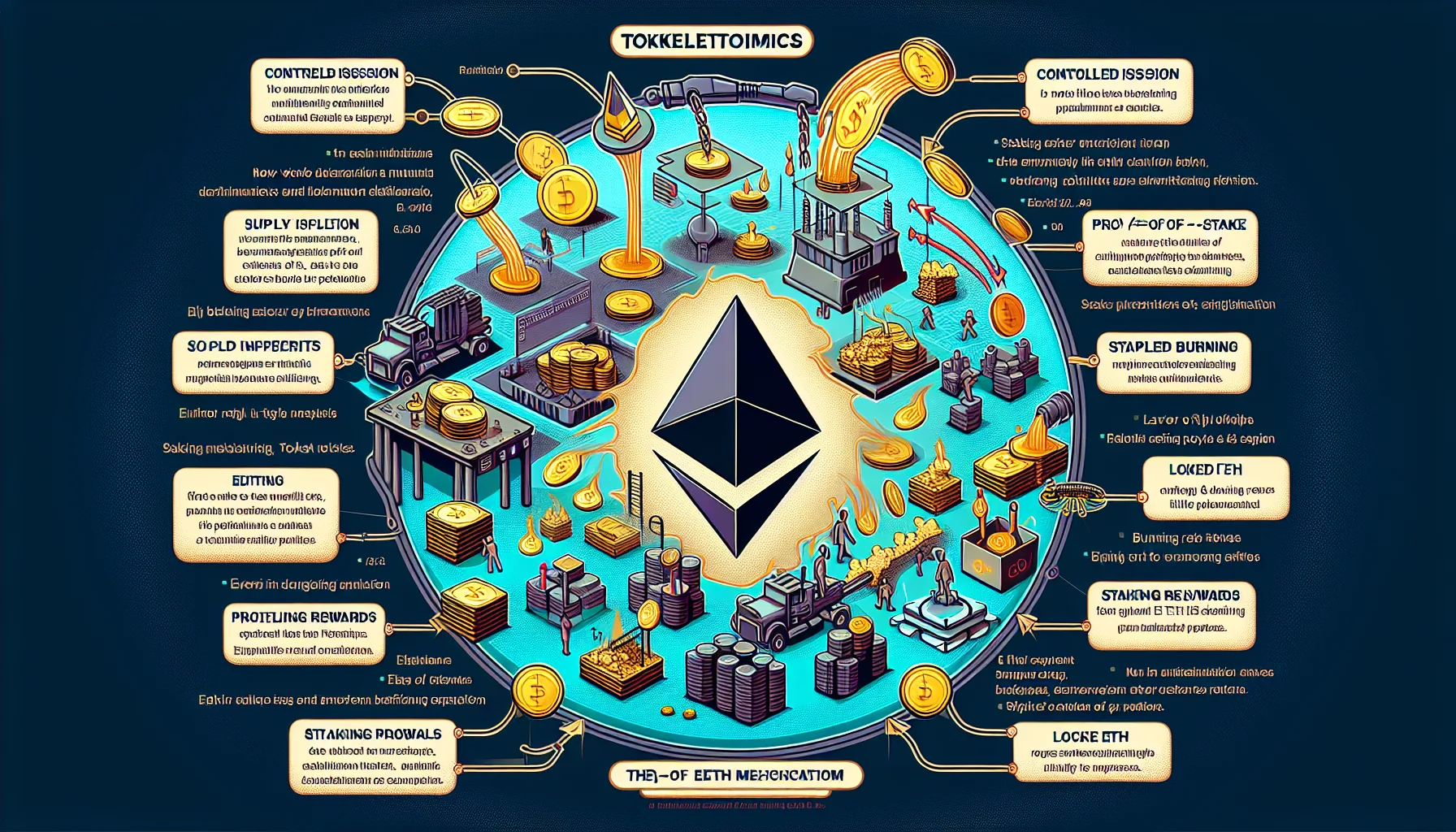
One of the most critical aspects of Ethereum’s tokenomics is its transition from a proof-of-work (PoW) consensus mechanism to proof-of-stake (PoS) via Ethereum 2.0, a migration that fundamentally altered ETH issuance dynamics. Under PoS, ETH issuance is tied directly to validator participation, with new ETH minted as staking rewards. However, the introduction of Ethereum Improvement Proposal (EIP) 1559 introduced a deflationary force through the base fee burn mechanism. With every transaction, a portion of ETH is permanently removed from circulation. This mechanism leads to periods where the burn rate outpaces issuance, creating a net deflationary effect.
The dual forces of controlled issuance and token burning create an unprecedented model where ETH's circulating supply can contract, particularly during periods of high network activity. However, critics argue that these mechanisms may overly concentrate ETH in the hands of large-scale stakers, raising concerns about centralization risks.
Staking and Yield Implications
Ethereum’s PoS model introduces economic incentives through staking. Validators secure the network by locking ETH, earning rewards in return. While this provides passive income opportunities for stakers, barriers to entry exist. The minimum requirement of 32 ETH for solo staking is prohibitive for retail participants, driving reliance on staking pools or centralized exchanges. Notably, these intermediaries aggregate staking power, which can centralize control over the network and weaken Ethereum’s decentralization ethos.
Moreover, ETH staked in the protocol enters a withdrawal queue, limiting liquidity. This illiquidity of staked ETH has created demand for synthetic staking derivatives, such as liquid staking tokens, which introduce another layer of risk through smart contract vulnerabilities.
Supply Constraints and Utility
While ETH's utility extends beyond its role as a transactional currency—fueling smart contracts, DeFi protocols, and NFT markets—certain factors influence its overall supply dynamics. Locked ETH in staking contracts, DeFi protocols, and Layer 2 bridges temporarily removes significant portions of the circulating supply. However, this utility-driven demand can magnify network congestion issues during periods of high usage, raising gas fees and disproportionately hurting smaller users.
Furthermore, ongoing developments in Layer 2 scaling solutions aim to ease congestion and reduce gas costs. While these may improve affordability and inclusivity, they could also reduce base layer transaction volumes, ultimately impacting the rate of ETH burned through EIP-1559.
By combining deflationary mechanisms, utility-driven scarcity, and staking incentives, Ethereum's tokenomics is uniquely positioned, but not without its challenges.
ETH Governance
Ethereum (ETH) Governance: Mechanisms and Challenges
Ethereum’s governance is a critical component of its decentralized infrastructure, influencing its protocol upgrades, ecosystem decisions, and overall evolution. Unlike corporate governance, where decisions are made in a hierarchical manner, Ethereum employs a mix of on-chain and off-chain mechanisms, making its governance both innovative and contentious.
Off-Chain Governance: Decision-Making Beyond the Blockchain
Ethereum’s off-chain governance primarily revolves around informal discussions, proposals, and consensus-building within its broad community. Core developers, researchers, node operators, and the Ethereum community engage in debates on platforms like GitHub, Discord, and developer calls. The Ethereum Improvement Proposal (EIP) process is a key tool in off-chain governance, allowing contributors to propose updates or changes.
However, off-chain decisions are not without criticism. Power often concentrates informally among influential core developers, leading to questions about decentralization. Additionally, for non-technical participants, the EIP process can feel opaque, as nuanced discussions demand a deep understanding of Ethereum’s mechanics. This raises concerns about inclusivity and whether the “average stakeholder” truly has a voice in governance.
On-Chain Governance: Limited but Evolving
Ethereum is notably less reliant on on-chain governance compared to some other blockchains. For example, there is no native mechanism for token holders to directly vote on upgrades. However, aspects of on-chain governance do exist through mechanisms like gas fee adjustments and staking in Ethereum 2.0, particularly for validators participating in Ethereum’s consensus layer (Proof of Stake).
One sticking point is the lack of formal on-chain voting processes for broader decisions, such as protocol changes. Critics argue this avoids governance capture by whales (large ETH holders), while others suggest it limits the ability of the wider community to steer Ethereum’s development.
Challenges in Balancing Decentralization and Coordination
Ethereum governance highlights the inherent tension between decentralized ideals and the need for effective coordination. For instance, contentious upgrades, such as those that required hard forks in the past, exposed divisions within the community. Coordination among diverse stakeholders can be slow, at odds with the fast-moving blockchain industry. Additionally, the absence of formal accountability mechanisms for core developers or community leaders leaves gray areas when decisions affect the ecosystem negatively.
The Role of Validators in Ethereum 2.0
The shift to Proof of Stake introduces a new layer to governance. Validators, who must stake ETH to participate, now play a critical role in maintaining the network and implementing updates. However, centralization concerns arise, as higher staking requirements can concentrate power among wealthier participants or centralized platforms offering staking services.
Ethereum’s governance, while innovative, remains a work in progress, reflecting the complexities of decentralization at its scale. Understanding its mechanisms is key to assessing its strengths and ongoing challenges.
Technical future of ETH
Ethereum's Current and Future Technical Developments: A Detailed Look at the Roadmap
Ethereum (ETH) remains a pivotal platform within the blockchain ecosystem, continuously evolving to address scalability, security, and sustainability challenges. Central to its trajectory are the significant upgrades outlined in the Ethereum roadmap, which aim to enhance its technical capabilities while tackling its known limitations.
Ethereum's Transition to Proof of Stake and Beyond
The shift from Proof of Work (PoW) to Proof of Stake (PoS), completed in the Ethereum Merge, marked a critical milestone in reducing the network's energy consumption and setting the stage for future advancements. However, the PoS consensus mechanism is not without concerns. Validator centralization has become a growing issue, as entities controlling large portions of staked ETH pose risks to decentralization and network governance. Additionally, while PoS addresses mining-related energy inefficiencies, it has yet to fully address high gas fees and network congestion under high demand.
Sharding and Scalability Enhancements
Sharding represents one of Ethereum's most anticipated upcoming upgrades, designed to distribute network load and enhance throughput. By dividing the blockchain into smaller, more manageable segments (shards), Ethereum aims to process significantly more transactions in parallel. While promising, sharding introduces technical challenges, particularly around cross-shard communication and security synchronization. If improperly implemented, cross-shard interactions could make the system more vulnerable to attacks or slow down transaction finality.
Layer-2 Integration and Rollups
The ecosystem has also witnessed a rise in Layer-2 solutions leveraging rollups to ease congestion and improve network efficiency. Optimistic Rollups (e.g., Optimism) and Zero-Knowledge Rollups (ZK-rollups) are critical in scaling Ethereum. However, their reliance on external protocols introduces complexity. ZK-rollup innovation, in particular, faces hurdles in cryptographic efficiency, with computational overhead posing a challenge for mass adoption. Furthermore, interoperability between Layer-2 solutions and Ethereum's mainnet requires continuous iterative improvements.
Account Abstraction and User Experience
For broader accessibility, Ethereum developers are pushing Account Abstraction (EIP-4337) to streamline user operations by allowing smart contracts to function as accounts. While this opens the door for features like custom signatures and improved wallet security, it adds new layers of technical complexity. Balancing usability with ensuring system robustness remains an open question.
Long-Term Focus on Decentralization
Ethereum’s roadmap reflects a commitment to maintaining the foundational values of decentralization. However, recurring challenges like validator centralization, MEV (maximal extractable value) exploitation, and governance bottlenecks require ongoing innovation. Solutions such as PBS (Proposer-Builder Separation) seek to mitigate MEV-related centralization risks, though widespread adoption of such solutions is still in early stages. Maintaining decentralization as Ethereum scales is a balancing act that continues to test the network's adaptability.
The technical roadmap of Ethereum reveals a push-and-pull dynamic: ambitious upgrades promise to propel its dominance as a blockchain platform, but persistent challenges require precise execution and vigilance. Each development, while powerful, carries inherent trade-offs that must be carefully managed to preserve the network's long-term viability.
Comparing ETH to it’s rivals
Ethereum (ETH) vs Solana (SOL): Key Differences for Blockchain Powerhouses
When comparing Ethereum (ETH) to Solana (SOL), the focus often centers on their underlying architectures, transaction models, and trade-offs in decentralization versus scalability. Both networks aim to provide robust platforms for decentralized applications (dApps) and smart contracts, yet their approaches to achieving this differ significantly.
Consensus Mechanism: Proof-of-Stake Evolution
Ethereum's transition to Proof-of-Stake (PoS) via Ethereum 2.0 represents a major shift from its original Proof-of-Work (PoW) system. The Beacon Chain enables validators to secure the network while significantly reducing energy consumption. However, Ethereum's PoS model faces challenges like high barriers to entry for staking (32 ETH required for node operation without pooling) and centralization concerns due to the dominance of large staking pools.
In contrast, Solana employs a unique consensus model called Proof-of-History (PoH) combined with PoS. PoH acts as a cryptographic clock, which enhances scalability by pre-ordering transactions. While theoretically faster, this reliance on PoH has been criticized for prioritizing speed over decentralization, as its validator requirements are resource-intensive, potentially limiting participation.
Scalability: Transaction Speeds and Costs
One of Ethereum's most pressing issues is its scalability. Despite Layer-2 solutions like Optimistic Rollups and zk-Rollups, Ethereum still struggles during periods of high demand, resulting in network congestion and exorbitant gas fees. Until Ethereum fully implements sharding, scalability will remain a bottleneck for the network, limiting its ability to handle large-scale dApp adoption.
Solana, on the other hand, is famously associated with high throughput, often processing tens of thousands of transactions per second (TPS) with near-negligible fees. However, critics argue that this scalability comes at the cost of decentralization and network stability, as Solana has experienced multiple network outages caused by high load or validator misconfigurations. Ethereum, while slower, has maintained higher uptime and resilience to such disruptions.
Smart Contract Ecosystem: Maturity vs Rapid Growth
Ethereum boasts the most mature and diverse ecosystem for smart contracts, with the vast majority of DeFi protocols, NFT platforms, and decentralized exchanges built on its blockchain. Its developer community is unrivaled, contributing to frequent network upgrades and open-source tooling.
Solana, by contrast, offers faster execution for resource-intensive dApps but lacks the extensive infrastructure and standardized tooling that the Ethereum ecosystem provides. This creates a higher barrier for developers transitioning to or working on Solana.
Decentralization and Security Trade-offs
Decentralization is a core tenet of blockchain technology, and Ethereum continues to lead in this regard with over 500,000 active validators worldwide. While not immune to concerns over staking pool consolidation, it is considerably more inclusive than Solana’s network, where high hardware requirements limit validator accessibility. Furthermore, Ethereum's battle-tested network security remains a key differentiator, with fewer incidents of downtime or exploitative vulnerabilities in its operational history.
Solana's focus on speed and efficiency has inevitably led to criticism regarding its level of centralization. With fewer validators and greater reliance on powerful hardware, the network becomes more susceptible to centralized influence and potential censorship.
Ecosystem Saturation and Capital Inflow
Ethereum’s dominance has resulted in a somewhat congested landscape, where developers face fierce competition and rising costs. Solana leverages this by marketing itself as a "developer-friendly" alternative with faster execution and lower fees, though these advantages are undercut by concerns over centralization and recurring network reliability issues.
By analyzing these technical and structural differences, it's evident that Ethereum and Solana operate at opposite ends of the blockchain design spectrum, each appealing to developers and users with distinct priorities.
Ethereum (ETH) vs Cardano (ADA): A Technical and Structural Comparison
When comparing Ethereum (ETH) to Cardano (ADA), the technological and philosophical approaches of the two platforms showcase significant contrasts, each with distinct strengths and challenges.
Consensus Mechanism and Network Design
Cardano operates on Ouroboros, an academically peer-reviewed Proof-of-Stake (PoS) consensus protocol that emphasizes energy efficiency and security through a unique delegation system. Ethereum, after its transition to Ethereum 2.0, also adopted a PoS approach, but its design focuses on incentivizing validators through a broader economic stake model, leveraging its pre-existing network scale. Cardano’s multi-layer architecture (separating computational and settlement layers) contrasts with Ethereum’s monolithic structure, which still consolidates execution and consensus. While Cardano’s layered design theoretically offers advantages in scalability, in practicality, Ethereum’s robust developer resources have allowed for rapid iteration on scaling solutions such as layer-2 rollups. This gap in development velocity is often flagged as a disadvantage for Cardano despite its ambitions.
Smart Contract Capabilities: EVM vs. Plutus
Ethereum is well-known for its extensive decentralized application (dApp) ecosystem, largely due to its Ethereum Virtual Machine (EVM), the standard for smart contract functionality in the blockchain space. Cardano’s Plutus framework, however, takes a different path by employing Haskell, a functional programming language, aimed at enhancing security and reducing vulnerabilities in smart contract code. While Plutus may appeal to developers seeking mathematically verified code, it has also been criticized for its steep learning curve and relative immaturity. As a result, Ethereum continues to dominate the smart contract space, with Cardano lagging behind in terms of active dApps and total value locked (TVL).
Development Activity and Decentralization
Ethereum benefits from its expansive developer ecosystem driven by its long-standing dominance in the blockchain space. Cardano, despite its methodical and research-driven approach, has sometimes been criticized for what is perceived as slow progress. Cardano’s roadmap prioritizes formal verification and long-term scalability, which has delayed certain features and upgrades. Furthermore, Ethereum's network currently operates with a higher level of functional decentralization compared to Cardano, whose validator distribution has occasionally raised questions over central control.
Approach to Upgrades
Cardano’s rigid adherence to its research-driven development ethos, while unique, has led to slow deployment cycles. Ethereum’s upgrade strategy is more dynamic, emphasizing community-driven EIPs (Ethereum Improvement Proposals). Cardano’s model, while cautious and arguably more methodologically secure, has occasionally struggled to keep pace with Ethereum’s iterative advancements.
The comparison underscores key differences in philosophy: Ethereum leans on adaptability and massive adoption, while Cardano prioritizes methodical precision that sometimes sacrifices speed for theoretical rigor.
How ETH Stacks Up Against BNB: A Deep Dive Into Ecosystem and Functionality
When comparing ETH (Ethereum) to BNB (Binance Coin), it’s crucial to delve into their core differences in scope, scalability, and ecosystem composition. While both are pivotal players in the crypto space, they serve distinct purposes, and technical contrasts between them can reveal significant insights for developers, investors, and blockchain users alike.
Network Design and Ecosystem Focus
Ethereum operates as a decentralized blockchain platform prioritizing programmability through its smart contract layer. It provides a versatile environment for dApps (decentralized applications), NFTs, DeFi systems, and even layer-2 frameworks. BNB, by contrast, originates from Binance and underpins the BNB Chain (formerly Binance Smart Chain), which is geared toward fast and cost-efficient transactions. BNB's core design emphasizes competitive transaction fees and quick settlement times, making it a popular choice for users seeking lower overhead costs compared to Ethereum’s often congested and expensive network.
Though BNB has evolved to support dApps and smart contracts, Ethereum’s ecosystem remains significantly more diverse. Vital tools like EVM (Ethereum Virtual Machine), Solidity, and the vast array of existing frameworks give ETH a strategic advantage for developers. However, BNB Chain’s straightforward integration with Binance's ecosystem – a centralized exchange powerhouse – affords it unique utility for those looking to seamlessly interact with trading and centralized finance (CeFi) infrastructure.
Scalability and Transaction Throughput
A notable sticking point is scalability. Ethereum’s historical struggles with network congestion and high gas fees are well-documented. Efforts such as Ethereum’s shift to proof-of-stake (PoS) have improved energy efficiency and laid groundwork for scalability solutions, but high-fee spikes during periods of heavy network demand remain a pain point.
BNB Chain, on the other hand, uses a Proof-of-Staked-Authority (PoSA) consensus mechanism, which achieves faster throughput thanks to its semi-centralized architecture. While BNB Chain processes transactions more efficiently than Ethereum in raw terms, skeptics argue that sacrificing decentralization introduces potential vulnerabilities tied to governance and censorship resistance.
Decentralization vs. Centralization
Ethereum’s ethos revolves around decentralization, with thousands of nodes contributing to its consensus mechanism. This ensures resilience and censorship resistance but can create inefficiencies that prolong scalability challenges. Conversely, BNB Chain operates under a more centralized model, with a limited number of validators that are effectively handpicked by Binance. Critics argue this centralization undermines the trustless nature of blockchain solutions, favoring efficiency at the expense of decentralization.
Target Audiences and Market Niches
Ethereum’s user base skews toward developers and projects seeking maximum flexibility for custom blockchain solutions, particularly in DeFi, NFTs, and DAO governance. BNB, thanks to its streamlined usability and Binance's market presence, predominantly attracts retail participants and developers focused on affordability and simpler implementations.
While BNB's cost and speed advantages position it as a compelling rival, Ethereum’s lead in developer engagement and its robust ecosystem ensure that the trade-offs between centralization and decentralization will remain a fundamental point of differentiation.
Primary criticisms of ETH
Primary Criticism of Ethereum (ETH)
Scalability Challenges and Network Congestion
One of the most significant criticisms of Ethereum is its scalability limitations. Despite being the most widely used smart contract platform, Ethereum's blockchain operates as a single-layer network with limited throughput. The network has a maximum capacity of approximately 15 transactions per second (TPS), which becomes insufficient during periods of high demand. This limitation often leads to severe network congestion, causing slower transaction confirmations and higher gas fees, making it impractical for mainstream adoption in certain use cases.
High Gas Fees and User Experience
Ethereum's reliance on a first-price auction mechanism for transaction fees has been a consistent point of contention. During peak network activity, gas fees can spike dramatically, pricing out average users and making applications built on Ethereum less accessible. These high fees are particularly problematic for decentralized finance (DeFi) applications, where users often need to interact with multiple smart contracts in a single transaction, further compounding the costs.
Energy Consumption Debate
While Ethereum is in the process of transitioning to a proof-of-stake (PoS) consensus mechanism, the significant time spent on proof-of-work (PoW) mining has raised concerns about its environmental impact. Though less energy-intensive than Bitcoin's network, Ethereum's PoW mechanism has historically required a large amount of computational power, leading to heavy criticism from sustainability advocates. Whether this transition will fully address concerns about energy consumption and miner centralization in existing PoW ecosystems remains an open argument.
Smart Contract Exploits and Security Concerns
Ethereum enables the creation of highly advanced smart contracts, but this flexibility comes with risks. Smart contract vulnerabilities have been exploited repeatedly, with high-profile hacks resulting in the loss of hundreds of millions of dollars worth of ETH and ERC-20 tokens. Audit processes and development safeguards have improved over time, but the inherent complexity of smart contract programming leaves room for occasional critical failures.
Centralization Criticism
Despite being a decentralized network, Ethereum has faced criticism about the centralization of its development and infrastructure. A significant portion of core development is spearheaded by the Ethereum Foundation, raising questions about governance and decision-making. Furthermore, key infrastructure providers, such as Infura, have been accused of creating central points of failure in what is supposed to be a decentralized ecosystem.
Competitive Pressure and Market Fragmentation
Ethereum remains the dominant platform for decentralized applications (dApps), but it has been losing market share to newer networks that tout higher scalability and lower transaction fees. Competitors leveraging alternative consensus mechanisms, Layer 2 solutions, and cross-chain interoperability are eroding Ethereum's first-mover advantage. This fragmented ecosystem has led developers and users alike to question Ethereum’s ability to maintain its dominance in the face of such competition.
Founders
Ethereum (ETH) Founding Team: Visionaries and Challenges Behind the Scenes
Ethereum’s origin lies in the ambitious vision of a multi-disciplinary founding team that sought to expand blockchain technology beyond Bitcoin’s limited scripting capabilities. Vitalik Buterin, a coder and writer deeply immersed in Bitcoin discussions, is widely recognized as Ethereum's creator. His 2013 whitepaper conceptualized a platform that could execute decentralized applications (dApps) and smart contracts. Despite his visionary approach, Buterin’s leadership style and the scope of his technical brilliance have occasionally been questioned for prioritizing theoretical ideals over practical product implementation.
Joining Buterin in forming Ethereum were several key personalities, each bringing unique skills and perspectives to the forefront. Mihai Alisie, a former journalist and co-founder of Bitcoin Magazine with Buterin, contributed to Ethereum’s initial conceptualization and worked on its early communication strategies. Anthony Di Iorio, who provided critical funds to kickstart the project, was key in Ethereum’s operational setup but has remained relatively low-profile in public discussions about the ecosystem's growth.
Joseph Lubin, one of the more commercially-minded co-founders, went on to establish ConsenSys, a significant Ethereum-focused entity that has played a central role in the network’s development, from developer tooling to dApp incubation. Lubin’s involvement has been polarizing; some view his business-oriented approach as crucial to Ethereum scaling, while critics argue it introduced elements of centralization within the ecosystem.
Gavin Wood, who penned Ethereum's yellow paper detailing its technical specifications, is often regarded as the architectural mastermind behind the project. His development of the Solidity programming language set the groundwork for the explosion of smart contracts, though his more rigid, academic approach led to philosophical disagreements with Buterin. Wood eventually departed Ethereum to found Polkadot, which some see as a competing ecosystem targeting Ethereum’s scalability limitations.
Charles Hoskinson, another influential co-founder, was instrumental in Ethereum’s early business strategy and governance structure. However, his push for a for-profit model clashed with Buterin’s open-source ethos. This divergence in vision led to his departure and subsequent creation of Cardano, another prominent blockchain often juxtaposed with Ethereum.
The internal dynamics of Ethereum’s founding team were far from frictionless. Disagreements on governance, commercial strategy, and long-term vision led to an eventual fracturing, with different co-founders taking divergent paths to pursue their blockchain endeavors. While this diverse set of perspectives was foundational to Ethereum’s rapid growth, it also highlighted the difficulty of balancing innovation with the challenges of collaborative leadership.
Authors comments
This document was made by www.BestDapps.com
Sources
- https://ethereum.org/en/whitepaper/
- https://ethereum.github.io/yellowpaper/paper.pdf
- https://etherscan.io/
- https://blog.ethereum.org/
- https://ethereum.org/en/developers/docs/
- https://github.com/ethereum/ethereum-org-website
- https://docs.ethhub.io/
- https://github.com/ethereum/EIPs
- https://consensys.net/knowledge-base/
- https://beaconcha.in/
- https://decrypt.co/resources/what-is-ethereum
- https://ethereumworldnews.com/
- https://ethereum-magicians.org/
- https://ethresear.ch/
- https://stakingrewards.com/earn/ethereum/eth-2-0/
- https://www.alchemy.com/ethereum
- https://www.coindesk.com/learn/ethereum-101/
- https://eips.ethereum.org/EIPS/eip-1559
- https://ultrasound.money/
- https://ethers.org/


