History of ENJ
The History of Enjin (ENJ): A Decentralized Asset for Virtual Economies
Enjin (ENJ) was introduced in 2009 as the backbone of the Enjin platform, initially a community-building tool for gamers. It wasn’t until later that the project underwent a significant transformation into a blockchain-powered ecosystem aimed at disrupting the gaming industry. Enjin Coin (ENJ), its native token, officially launched on the Ethereum blockchain in 2017 following the project's successful $18.9 million ICO. The move was prompted by a need to create a secure, transparent, and efficient environment for virtual assets—a response to perceived inefficiencies in traditional gaming economies, such as lack of ownership rights and the rampant duplication of digital items.
The launch of Enjin Coin was not purely ideological; it presented a solution for existing challenges in the gaming industry. ENJ was designed to function as a backbone for minting, managing, and trading blockchain-based in-game assets. Unlike many token releases that rely solely on speculative value, ENJ has a "melting" mechanism—a chosen amount of ENJ is locked when a user creates an asset (e.g., in-game items, collectibles, or virtual real estate) on the blockchain, providing inherent value. This innovation directly addressed key concerns regarding the lack of intrinsic worth in many digital assets, though it also created an immediate limitation: ENJ’s utility grows only when adoption of its ecosystem does.
Despite early adoption by independent developers, Enjin faced the challenge of competing in an incredibly crowded blockchain landscape, especially during its early years on Ethereum. Gas fees and blockchain scalability concerns impacted adoption, especially for gamers, who are typically used to low-cost, high-speed transactions. This later prompted Enjin’s involvement in the development of Efinity, a next-generation blockchain designed specifically for NFTs and interoperable assets, which introduced further diversification to its utility.
Critics of ENJ point to the centralized governance structure of the Enjin team, which, while efficient for development, has led to concerns about decentralization. Additionally, while Enjin’s architecture shows promise, its reliance on partnerships and industry-wide adoption presents a risk—without sustained growth and integration into mainstream gaming ecosystems, the project's utility could stagnate.
Enjin’s trajectory reveals a blend of innovation and hurdles, reflecting both the potential and functional limits of blockchain-driven virtual economies. Its dual role as both a digital asset and the foundation for tokenized ecosystems has positioned it as both a technological advancement and a subject of scrutiny in the crypto world.
How ENJ Works
How ENJ Works: A Deep Dive into Its Mechanisms and Utility
Enjin Coin (ENJ) is a utility token powering the Enjin ecosystem, designed primarily to facilitate the creation, use, and management of non-fungible tokens (NFTs) within blockchain-based gaming and digital collectibles. Here's an in-depth look at how ENJ operates and its inner mechanics tailored for a crypto-savvy audience.
The Role of ENJ in NFT Minting and Backing
ENJ is fundamentally an asset-backing mechanism for NFTs. Developers or creators mint NFTs on the Enjin platform by locking ENJ tokens into a smart contract. This process ensures that each NFT has intrinsic, tangible value pegged to the amount of ENJ infused during minting. For example, an NFT could be backed by 10 ENJ, meaning that 10 ENJ tokens are irreversibly locked and removed from circulation to "back" the asset. This protocol not only creates scarcity for ENJ but also gives the NFT a liquid, redeemable value at any time. However, this introduces a potential drawback: the reclaiming process, wherein users melt (destroy) the NFT to extract the ENJ backing, could incentivize short-term value arbitrage over holding or utilizing NFTs for their intended use cases.
Smart Contract Mechanics and Transaction Workflow
ENJ operates on the Ethereum blockchain, leveraging ERC-1155, a standard co-authored by the Enjin team, which combines the best of ERC-20 (fungible tokens) and ERC-721 (non-fungible tokens). This dual functionality enables developers to deploy not only unique NFTs but also semi-fungible tokens (e.g., game items like skins or weapons with interchangeable but finite quantities). A major advantage of ERC-1155 lies in its batched transaction functionality, reducing gas fees compared to traditional individual transfers. However, as ENJ and the Enjin ecosystem remain dependent on Ethereum, network congestion and rising gas costs can still pose challenges to user adoption, particularly around periods of high traffic.
Integration Within the Enjin Ecosystem
In addition to minting, ENJ serves as a medium of value exchange within the Enjin ecosystem. Projects, players, and developers can trade, buy, or sell assets backed by ENJ directly through Enjin’s wallet application. Notably, Enjin leverages a suite of APIs and SDKs to allow seamless integration with external platforms like gaming engines (e.g., Unity, Unreal Engine). While this streamlines the onboarding process for developers, the complexity of implementing blockchain solutions and managing tokenomics could deter independent creators without significant technical expertise.
Potential Limitations and Centralization Concerns
While ENJ provides a strong foundation for securing value in NFTs, critics often point out the reliance on the centralized governance of Enjin Corporation. The ecosystem’s scalability and interoperability are also highly dependent on Ethereum’s ongoing advancements and Enjin’s ability to expand its platform capabilities. As competitors introduce layer-2 solutions or alternative blockchains optimized for NFTs, ENJ's reliance on Ethereum could become a vulnerability, particularly if rivals offer lower-cost or faster transactions.
In summary, ENJ functions as a flexible, value-stabilizing token for NFTs, but its overall efficiency remains tethered to the technical and economic progress of its foundational layers.
Use Cases
ENJ Use Cases: Powering the Future of Digital Assets in Blockchain Gaming and Beyond
ENJ (Enjin Coin) is a utility token that plays a pivotal role in enabling blockchain-based use cases, particularly within the gaming industry, asset tokenization, and digital identity verification. Its integration into the Enjin ecosystem has allowed developers and businesses to mint, manage, and trade non-fungible tokens (NFTs) backed by ENJ, unlocking unique functionalities and value propositions.
1. Backed NFTs for Gaming Assets
One of ENJ’s most significant use cases is its function as the foundational backing for in-game items on the blockchain. Developers within the Enjin ecosystem can mint NFTs by infusing ENJ into them, providing each asset with an inherent value tied to the coin itself. This mechanism enhances trust and liquidity, as players can melt these NFTs to recover the underlying ENJ.
However, a challenge here lies in the potential for users to undervalue gameplay assets purely for their ENJ content, potentially disincentivizing engagement in the broader gaming ecosystem if prices shift adversely.
2. Cross-Game Interoperability
The Enjin platform leverages the ERC-1155 standard to foster interoperability between various games, allowing players to use the same NFT asset across different titles and ecosystems. This use case can redefine digital ownership; for instance, a single gaming weapon, skin, or character could exist across multiple games or virtual worlds.
Though a transformative idea, cross-game interoperability is partially hindered by the lack of widespread adoption among AAA game developers. The scalability and utility are largely restricted to early adopters within niche blockchain gaming communities.
3. Tokenized Real-World Assets
ENJ also extends beyond gaming, enabling the tokenization of real-world assets. Enterprises can use ENJ-backed NFTs to represent ownership or access rights to physical goods, digital files, or even certifications. The fungibility and liquidity of ENJ give blockchain-backed ownership credentials verifiable value.
Nevertheless, regulatory uncertainty surrounding asset tokenization could limit adoption in jurisdictions with unclear crypto laws or frameworks.
4. Enterprise and Marketing Applications
Brands and companies are exploring ENJ-backed NFTs for their marketing campaigns, offering customers collectible digital merchandise infused with ENJ. These campaigns provide users with tangible ownership benefits while increasing brand visibility. However, the environmental impact of NFTs, despite Enjin's push toward eco-friendly solutions like JumpNet, remains a concern among corporations targeting sustainability-conscious audiences.
ENJ’s utility-based design offers a robust framework for creating value-driven ecosystems. Despite its innovative use cases, barriers such as adoption hurdles, regulatory ambiguity, and ecological concerns present challenges the ecosystem must navigate to achieve broader recognition and practical integration.
ENJ Tokenomics
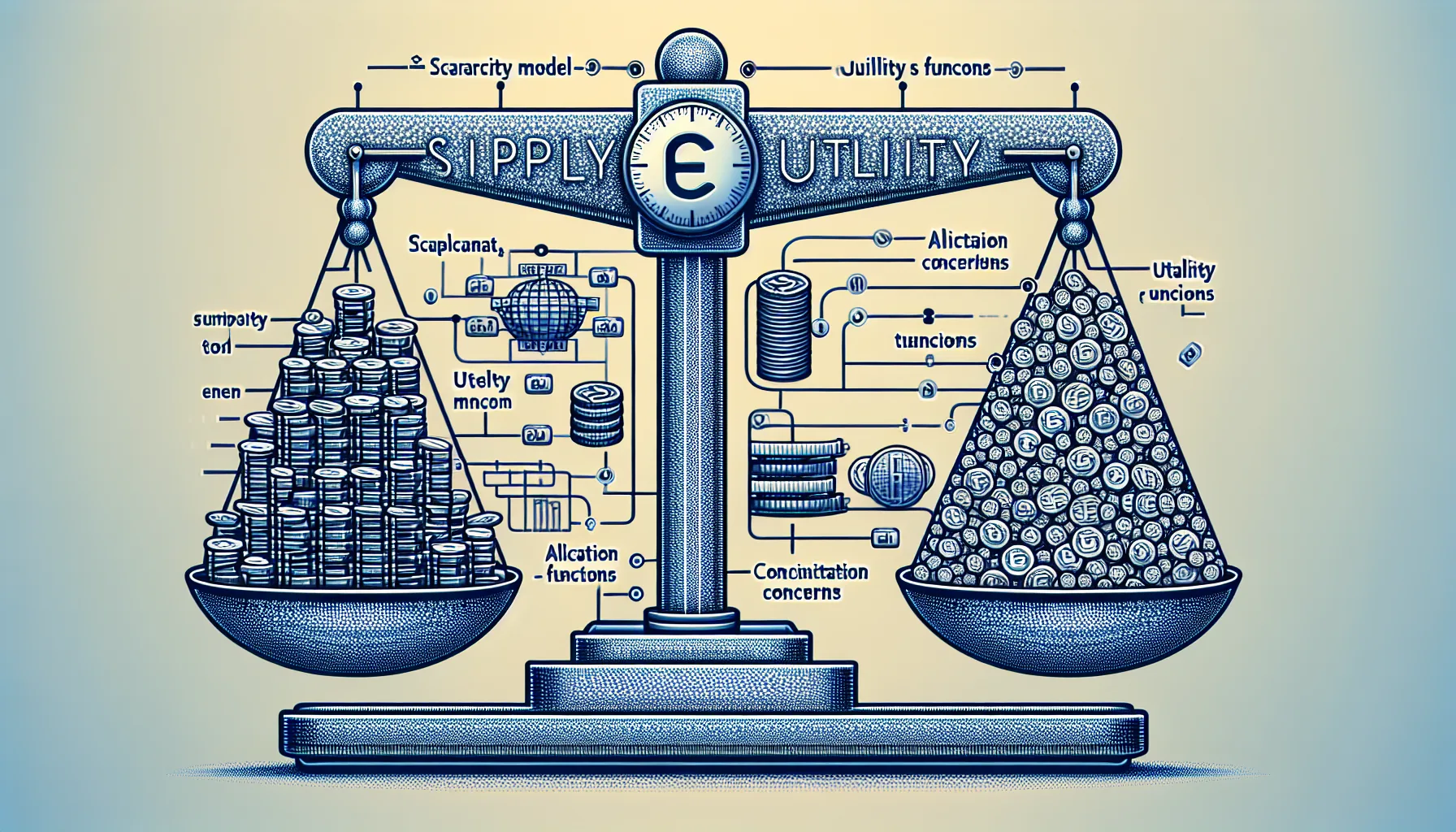
ENJ Tokenomics: A Deep Dive Into Supply, Utility, and Allocation
The ENJ token operates within a unique tokenomics framework that underscores its utility in the Enjin ecosystem while highlighting several challenges related to its supply mechanisms and distribution model. For crypto-savvy investors and builders, understanding these intricacies is critical for evaluating ENJ’s long-term viability and its implications on the NFT and gaming sectors.
Supply Mechanics and Scarcity Model
ENJ has a hard-capped maximum supply of 1 billion tokens, ensuring scarcity is baked into its economic model. However, the token's burning mechanism is one of its defining features. ENJ is permanently removed from circulation whenever it is infused into digital assets like NFTs, creating a direct deflationary pressure. This system ties the token’s value to its use case of backing blockchain-based assets. While this scarcity model incentivizes adoption within the gaming and NFT ecosystems, it also introduces challenges. The rate at which ENJ is burned depends heavily on user engagement with Enjin's tools and platforms, leaving the system's deflationary dynamics somewhat uncertain and highly influenced by external demand drivers.
Utility Functions and Ecosystem Demand
ENJ’s primary utility lies in backing digital assets created using the Enjin ecosystem’s tools. By infusing ENJ into NFTs, developers provide tangible value to the assets, as they can be melted down to reclaim the token. This link between ENJ and asset creation adds a novel layer of utility but also introduces questions about liquidity. Tokens locked in NFTs are effectively removed from circulation until they are melted, creating artificial illiquidity. Should adoption stall, this dual locking mechanism could exacerbate supply constraints without yielding proportional ecosystem activity, thereby creating inefficiencies in how ENJ interacts with its broader market.
Allocation and Concentration Concerns
The initial token allocation for ENJ was split among crowd sale participants (80%), the Enjin team and related operations (10%), and strategic partnerships and marketing efforts (10%). While this seems relatively well-distributed, the token’s vesting schedules and concentration in certain wallets have occasionally raised concerns within the community. Wallet tracking analyses suggest that a significant portion of ENJ may still be heavily clustered among early adopters and institutional partners, potentially leaving the ecosystem vulnerable to market manipulation or centralized sell-offs. Furthermore, liquidity across decentralized and centralized exchanges appears uneven at times, influencing both pricing stability and accessibility.
ENJ’s tokenomics provide a compelling framework tethered to real-world utility, but scalability, adoption dependency, and allocation imbalances merit scrutiny from participants and observers alike.
ENJ Governance
ENJ Governance: Decentralization and Limitations
The governance structure of Enjin Coin (ENJ) plays a vital role in defining how decisions are made within the ecosystem and how key upgrades or changes are implemented. Unlike many crypto assets with prominent decentralized decision-making or formalized voting systems, ENJ governance relies partly on centralized oversight, raising questions among blockchain purists about the trade-offs between control and community-led participation.
Lack of Fully Decentralized Governance
ENJ operates in conjunction with the Enjin platform, which is governed primarily by the core Enjin team. This results in a model where the protocol's development, updates, and broader ecosystem decisions are largely top-down. While this centralized oversight has enabled faster innovation and coherent product integration—such as with Enjin’s wallet and NFT creation tools—it limits the ability of the broader community to contribute or veto major changes. For those who prioritize decentralization as a core tenet of blockchain technology, this governance structure may be seen as restrictive.
Community Involvement: Limited but Evolving
Although the governance framework doesn’t employ features like token-based voting or consensus-driven decision-making, the Enjin team has made efforts to engage with its user base. Feedback from the gaming and NFT communities, which form a significant proportion of ENJ users, occasionally influences platform development. However, this influence remains informal and does not carry the same weight as codified on-chain governance systems seen in projects like Polkadot or Ethereum. As a result, there’s no guaranteed mechanism for users to hold the core team accountable or to participate in protocol upgrades.
Centralization Risks and Security Oversight
Centralized governance inherently introduces risks associated with single points of failure or favoritism in decision-making. For ENJ, this model places a significant amount of trust in the Enjin team to act in the best interests of all stakeholders. While this trust has been maintained to date, it leaves the ecosystem vulnerable to potential mismanagement or slow response to rapidly evolving market demands. Additionally, lack of decentralized processes for addressing critical issues or vulnerabilities could expose the project to potential governance-related inefficiencies if disputes or forks arise.
Future Governance Evolution?
It remains unclear whether ENJ will transition to adopt a more decentralized governance framework or token-holder decision-making model in the future. Although the current system has enabled consistency and streamlined execution, ongoing debates highlight the need for broader community empowerment to sustain trust and long-term adoption in an increasingly decentralized crypto economy.
Technical future of ENJ
ENJ: Current and Future Technical Developments and Technical Roadmap
Expanded Utility Through the Enjin Ecosystem
ENJ (Enjin Coin) is deeply integrated into the Enjin ecosystem, which provides tools for creating, managing, and transferring NFTs (non-fungible tokens) with real-world applications. Technically, ENJ is locked within Enjin-backed assets, giving them intrinsic value tied to the token. Moving forward, the team is actively developing additional SDKs (Software Development Kits) to expand cross-platform integrations, allowing developers to incorporate ENJ-backed NFTs into more gaming engines, applications, and web services. Notably, advancements in Unity and Unreal Engine SDKs are expected, potentially addressing scalability for large multiplayer implementations.
A key concern is whether these integrations will gain meaningful adoption in competitive developer environments. With blockchain-specific hurdles like transaction throughput and high learning curves, the need for streamlined tools is critical. Some developers remain hesitant, citing existing complexity in legacy implementations.
JumpNet and Efinity: Tackling Scalability and Interoperability
One major technical improvement was the introduction of JumpNet, a high-speed bridge solution enabling gas-free transactions on NFTs and ENJ tokens. However, despite its benefits, JumpNet’s reliance on a Proof-of-Authority (PoA) consensus mechanism has drawn criticism for being less decentralized compared to other Layer 2 solutions. This creates an architectural trade-off between accessibility and decentralization, a topic of ongoing debate within the community.
Beyond JumpNet, the centerpiece of Enjin’s scalability roadmap is Efinity, a Polkadot-based parachain designed to tackle interoperability and transaction inefficiency. By placing a heavy emphasis on cross-chain functionality and lower fees through its use of pragmatic consensus, Efinity aims to address friction within the broader NFT space. The roadmap outlines native support for parathreads and interoperable token standards like ERC-1155 and ERC-721, although full implementation timelines remain uncertain. Concerns have been raised regarding onboarding complexities for non-technical users navigating a multichain ecosystem.
UX Enhancements and Decentralization Challenges
Enjin Wallet, a cornerstone of its ecosystem, has undergone substantial iterative updates, focusing on UI/UX improvements and security efficiency. Future developments aim to enhance multi-chain support, including tighter integrations with Efinity’s ecosystem. However, achieving this without compromising end-user experience or increasing wallet vulnerabilities remains a technical challenge.
Another ongoing consideration is decentralization. Critics argue that while Enjin’s ecosystem architecture optimizes efficiency, certain aspects (e.g., centralized dependencies on both JumpNet and wallet infrastructure) could impede wider adoption within the Web3 ethos. If left unaddressed, these issues may limit ENJ’s ability to position itself as a truly open and democratic digital asset.
Developer-Driven Roadmap Hurdles
Many upcoming roadmap features rely heavily on third-party developers—specifically, to utilize Enjin's tools and token standards. Questions about whether sufficient incentives exist for developers to choose ENJ over other blockchain-native NFT solutions persist. This could impact network effects and slow ecosystem maturity.
Comparing ENJ to it’s rivals
ENJ vs. SAND: A Deep Dive into Key Differences
When comparing Enjin (ENJ) to The Sandbox (SAND), the contrast often comes down to their approach to virtual assets and how they position themselves within the intersection of gaming, NFTs, and the broader metaverse ecosystem.
Ecosystem Scope and Integration
ENJ is laser-focused on providing a universal framework that allows gaming developers to easily tokenize in-game assets using the Enjin blockchain. Its ecosystem emphasizes portability and interoperability, offering tools like the Enjin Wallet and SDKs for seamless integration of NFTs across a variety of gaming environments. This focus on cross-game asset mobility appeals to developers looking for a standardized backend framework.
SAND, on the other hand, is intrinsically tied to The Sandbox metaverse—a virtual space where users can purchase LAND, build experiences, and monetize assets. While SAND also facilitates the creation and trading of NFTs, its reliance on its own metaverse limits asset interoperability outside the Sandbox ecosystem. This creates a closed-loop, ecosystem-focused model as opposed to ENJ’s more flexible, open-focus infrastructure.
Token Utility and Economic Design
ENJ stands apart for its approach to NFT backing. Each ENJ-backed token is infused with a specified amount of ENJ, giving digital assets an intrinsic, minimum value. This "melting" feature ensures a layer of liquidity for any asset created within its ecosystem. SAND tokens, however, primarily function as a native currency within The Sandbox platform. They are used for transactions, staking, and governance but lack a similar liquidity backing mechanism, making value retention entirely dependent on ecosystem activity rather than intrinsic token economics.
Development Complexity and Barriers to Entry
From a developer's standpoint, the ENJ ecosystem offers SDKs and plug-and-play tools that simplify asset tokenization. This pragmatic approach lowers the technical barrier and attracts a broader range of developers, especially those less familiar with blockchain protocols. In contrast, development in The Sandbox requires users to adhere to its builder tools and scripting guidelines, which can be a limiting factor for projects that aren’t specifically designed for their metaverse. This divergence could deter some developers seeking cross-platform compatibility versus those fully committed to building within one specific virtual world.
Challenges and Criticisms
While ENJ offers flexibility, its broad focus on external games and NFTs may dilute its ability to maintain cohesive vertical integration compared to SAND's singular, ecosystem-driven strategy. Additionally, the long-term reliance on developer adoption raises questions about scaling demand sustainably outside gaming’s niche sectors. Conversely, while SAND benefits from having a concentrated metaverse for monetization, the closed nature of its ecosystem may limit growth opportunities tied to broader market trends in asset interoperability.
ENJ vs. MANA: How They Differ in Approach to Virtual Ecosystems
When comparing Enjin (ENJ) to Decentraland's MANA, it’s essential to understand their contrasting strategies in addressing virtual ecosystems and asset ownership. Both projects cater to gamers, creators, and developers, but the underlying architecture and use cases set them apart.
Underlying Ecosystem Design
ENJ operates as a foundational blockchain asset that underpins the creation of in-game items, providing a universal framework for minting, trading, and integrating NFTs across a wide spectrum of games. Its flexibility is its strength, enabling developers to adopt Enjin’s APIs and SDKs to integrate blockchain functionality seamlessly within existing or new game universes. This multi-game ecosystem focus offers developers significant creative freedom without being tied to a single virtual world.
On the other hand, MANA forms the backbone of Decentraland’s ecosystem, which is a self-contained metaverse platform that combines virtual real estate, user-generated content, and immersive experiences. While MANA supports NFT creation and ownership, its functionality is intrinsically tied to the specific ecosystem of Decentraland. This focused verticalization means users are investing in the growth and vibrance of a singular platform.
Token Utility Divergence
ENJ's utility is tied closely to the value of the digital items it backs, creating an inherent baseline confidence since ENJ is locked into these NFTs. This "melting" mechanism allows users to retrieve underlying ENJ if they choose to destroy their NFTs, creating potential liquidation options for dormant assets. Conversely, MANA’s utility revolves around participation in Decentraland – from purchasing virtual land parcels to accessing paid events or virtual goods exclusively within the Decentraland ecosystem. The intrinsic token economy of MANA requires user retention and platform engagement for sustained adoption.
Scalability and Interoperability
Interoperability remains a significant advantage for ENJ, as assets backed by ENJ can theoretically transcend the boundaries of specific games or platforms, making them more versatile across the broader gaming landscape. MANA, however, is intrinsically locked to Decentraland, which limits its use in external ecosystems. This singular focus can either be a strength – as it creates a unified and consistent metaverse experience – or a bottleneck compared to ENJ’s multi-platform ambitions.
Community and Developer Ecosystem Challenges
While Decentraland has fostered a creative and active community around MANA, including robust DAO governance mechanisms, the platform has faced criticism for its relative lack of scalability and limited mainstream adoption. In contrast, ENJ benefits from its modular development tools, though critics argue it still grapples with onboarding mainstream developers who are newer to blockchain-based systems.
Ultimately, the divergence in ecosystem openness, token flexibility, and project goals creates a clear distinction between ENJ and MANA, catering to different types of users and developers.
ENJ vs AXS: How Enjin Stacks Up Against Axie Infinity
When examining Enjin (ENJ) in the context of Axie Infinity (AXS), the contrast lies in their differing approaches to blockchain gaming ecosystems. While both projects cater to the intersection of gaming and blockchain technology, their philosophies and technical implementations diverge enough to warrant closer inspection.
Asset Utility and Ecosystem Integration
Enjin positions itself as a platform-first solution, focusing on providing tools for developers to mint, manage, and integrate blockchain-based assets into a variety of games and applications. ENJ underpins this ecosystem, being locked into every Non-Fungible Token (NFT) minted through the Enjin platform, giving it a tangible, asset-backed quality. Axie Infinity, by contrast, is narrowly focused, centralizing its use case around its successful play-to-earn ecosystem and its in-game currency, SLP (Smooth Love Potion). AXS serves a dual purpose as a governance token and a staking currency, but lacks ENJ's direct backing of NFTs, which might appeal to projects requiring liquidity guarantees.
Enjin's broader developer toolkit provides greater interoperability and flexibility across gaming ecosystems, while Axie Infinity’s model is purpose-built for its specific game, potentially limiting adaptability outside of its predefined framework. This raises concerns about scalability for Axie outside its current player base, while Enjin's infrastructure aims to be metaverse-agnostic.
Community Dynamics and Accessibility
One of Axie Infinity's clear advantages lies in its enormous community-centric approach, with consistent player-generated demand fostering AXS token usage. However, the game's entry barrier, especially during periods of popularity, has been criticized—initial investment costs in Axie NFTs are often prohibitive for new users. This clashes with Enjin's vision of democratizing NFT minting and utility across games, where developers and creators retain flexibility and users aren't tethered to a singular gaming experience.
Moreover, Axie Infinity's reliance on its play-to-earn mechanic inherently faces sustainability concerns due to in-game token inflation and the eventual saturation of user rewards. This contrasts with Enjin’s focus on creating assets with lasting utility outside a single game that are tied to real-world value.
Technical Challenges and Risks
Axie Infinity’s dependence on its Ronin sidechain introduces concerns around centralization, as issues like the historic network hack exposed vulnerabilities that could weaken user trust. Enjin, while utilizing Ethereum's mainnet and Layer-2 scaling solutions, faces its own challenges regarding network congestion and rising gas fees during peak usage, albeit these are ecosystem-wide issues rather than project-specific pitfalls.
In summary, while both projects excel in marrying gaming with blockchain, their execution and focus are worlds apart, with Enjin leaning into flexibility and developer utility, and Axie Infinity zeroing in on a singular gaming experience. Ultimately, their comparative strengths highlight differing philosophies about blockchain's role in the gaming world.
Primary criticisms of ENJ
Primary Criticism of ENJ: Challenges Facing the Enjin Ecosystem
Centralization Concerns Despite Blockchain Roots
One of the recurring criticisms of Enjin (ENJ) is the perceived level of centralization within its ecosystem. While blockchain technologies are generally associated with decentralization, many aspects of Enjin's operations rely heavily on centralized entities, particularly the Enjin team itself. For instance, the development of tools such as the Enjin Wallet, Enjin Marketplace, and integration toolkits are managed almost exclusively by the core team. This has raised questions about the project’s resilience and degree of decentralization, especially in scenarios where dependency on centralized leadership can introduce risks such as governance disputes or potential single points of failure.
Limited Adoption Beyond the Gaming Niche
Though Enjin boasts a strong reputation within the blockchain gaming space, its utility beyond this specific niche has been limited. Critics argue that focusing almost exclusively on gaming may restrict ENJ when compared to other crypto assets that have diversified use cases spanning finance, supply chain, and beyond. For a blockchain project to achieve long-term viability and scalability, a broader, more flexible range of applications may be necessary, and ENJ’s lack of significant traction outside gaming raises concerns about its adaptability.
Tokenomics and Market Dependency
The inherent design of ENJ as a token locked into NFTs to provide digital assets with "real value" faces scrutiny for its long-term sustainability. Critics point out that while locking ENJ into NFTs indeed provides scarcity and value backing, it also effectively reduces the circulating supply of ENJ tokens. This dynamic can exacerbate market illiquidity, particularly during high-usage periods, potentially amplifying volatility or accessibility issues. Moreover, some argue that the use of ENJ to back NFTs may function as a double-edged sword if demand for ENJ-backed NFTs wanes over time.
Barriers to Accessibility for Non-Gaming Users
While Enjin provides innovative solutions for creating blockchain-powered virtual assets, it currently emphasizes a gaming-centric ecosystem that can unintentionally alienate non-gaming participants. Critics frequently raise accessibility concerns for individuals or businesses that wish to integrate Enjin's ecosystem into non-gaming-related sectors, where simpler and more agnostic platforms might appear more appealing.
Ecosystem Fragmentation
Another area of criticism is the fragmented nature of Enjin’s ecosystem. While the platform offers features such as the Enjin Wallet, Marketplace, and SDKs, users and developers sometimes report friction in cohesively integrating these tools. Instead of a seamless user journey, some perceive Enjin's ecosystem as disjointed, creating additional barriers for new developers or less experienced blockchain users.
Founders
Enjin Coin (ENJ): Founding Team and Origins
Enjin Coin (ENJ) was created by Enjin, a company known for its focus on blockchain-based gaming solutions. The founding team is led by co-founders Maxim Blagov and Witek Radomski, whose complementary skill sets have helped shape the direction of ENJ and its ecosystem. However, like many crypto projects, the team’s decisions and strategic focus have not been without scrutiny from the community.
Maxim Blagov - Creative Visionary and CEO
Maxim Blagov serves as the CEO and is often described as the creative force behind Enjin. With a background in the tech and gaming industries, his vision has been instrumental in positioning Enjin as a major player in blockchain gaming and NFTs. Blagov has emphasized the importance of user-centric design and accessibility in Enjin's ecosystem, which resonates with developers aiming to integrate ENJ into virtual assets like in-game items.
However, some detractors have questioned whether the team’s ambitious goals—such as mass adoption in a notoriously resistant gaming industry—are realistic given the current blockchain scalability limitations. Maxim’s optimistic public statements sometimes raise eyebrows among critics who feel the team may be underestimating the competitive landscape for NFT standards and interoperability.
Witek Radomski - Technology Lead and CTO
Witek Radomski, Enjin’s Chief Technology Officer, is widely respected in the blockchain space for his technical expertise. He is credited with authoring the ERC-1155 standard, a widely admired token standard that allows developers to create fungible and non-fungible tokens under one smart contract. His contributions have positioned Enjin as an innovator in token utility and efficiency, particularly in gaming applications.
Radomski’s leadership in technical development ensures ENJ holds a strong position in token infrastructure. Yet, some observers point out that the company’s reliance on his technical contributions raises concerns about talent centralization. Should Radomski’s focus shift away or should he take a less active role, this central dependency could pose risks to the project’s long-term stability.
Concerns Around Lack of Decentralization
While the Enjin team continues to make strides, there are ongoing criticisms regarding the centralized decision-making structure. Skeptics argue that Enjin’s leadership style leans more toward centralized corporate strategy than decentralized community-driven governance. For blockchain purists, this lack of decentralization raises questions about ENJ’s alignment with the ethos of the broader crypto ecosystem.
Additionally, the team’s heavy focus on gaming and NFTs has at times been seen as limiting, especially by those who believe ENJ could gain traction in other sectors if its use cases were expanded. Whether this focus will pay off in the long term remains a subject of debate among the crypto-savvy crowd.
Authors comments
This document was made by www.BestDapps.com
Sources
- https://enjin.io/
- https://enjin.io/enjincoin
- https://github.com/enjin
- https://enjin.io/whitepaper
- https://medium.com/enjin
- https://etherscan.io/token/0xf629cbd94d3791c9250152bd8dfbdf380e2a3b9c
- https://coinmarketcap.com/currencies/enjin-coin/
- https://coingecko.com/en/coins/enjincoin
- https://enjin.io/blog
- https://enjin.io/docs
- https://discord.gg/enjin
- https://enjin.io/efinity
- https://twitter.com/enjin
- https://enjinx.io/eth/
- https://blog.enjin.io/enjin-ecosystem-update-march-2023/
- https://developers.enjin.io/
- https://enjin.io/software
- https://enjin.io/marketplace
- https://enjin.io/wallet
- https://www.binance.com/en/trade/ENJ_BTC


