History of ELF
History of Aelf (ELF): A Modular Blockchain Solution
Aelf (ELF) entered the blockchain landscape as an ambitious project aimed at creating a highly customizable and performance-optimized decentralized ecosystem. The project was conceptualized as a response to the inefficiencies of early blockchain platforms, including scalability limitations and the inability to efficiently host multiple decentralized applications (dApps) without performance degradation.
The Aelf Foundation was established to oversee the development of the network, with a roadmap focused on creating a modular, multi-layered blockchain infrastructure. The initial design incorporated two key features: a Mainchain-Sidechain architecture and resource segregation. This architecture, inspired by existing challenges in public blockchains, sought to create a system where sidechains could operate independently and handle specific use cases while being anchored to a higher-level Mainchain. This modularity significantly differentiated Aelf from monolithic, single-layer systems like Ethereum at its inception. The network's incentivization model tied the use of the ELF token to sidechain creation, transaction costs, and voting on governance matters, embedding utility into the token from the start.
The project gained recognition during its initial coin offering (ICO) period, which occurred during the height of the 2017 ICO boom. However, the timing of the ICO, while advantageous for raising capital, also exposed the project to skepticism and scrutiny as the market later dealt with the fallout of many failed ICO projects. Despite this, Aelf managed to sustain development and avoid falling into obscurity, as many competitors did following the 2017 bull-run collapse.
Technologically, Aelf has emphasized adapting to enterprise needs, which has been both an advantage and a challenge. While it has enabled the project to differentiate itself by targeting business-specific use cases, critics have often pointed to the inherent trade-offs between decentralization and private, enterprise-focused blockchain solutions. These critiques argue that Aelf's modular approach, while innovative, still contends with adoption hurdles and widespread integration issues.
Another notable aspect of Aelf’s development history is its deployment of Delegated Proof-of-Stake (DPoS) as its consensus mechanism. While DPoS offers faster transaction speeds and energy efficiency compared to Proof-of-Work systems, it has drawn criticism for its centralization risks, as control over network governance remains concentrated among a limited number of nodes. This has led some blockchain purists to question whether Aelf adequately balances decentralization and scalability within its architecture.
How ELF Works
How Does Aelf (ELF) Work? A Technical Breakdown
Aelf (ELF) operates as a decentralized blockchain network designed to tackle scalability, cross-chain interoperability, and enterprise-level customization challenges. Its unique architecture centers on a multi-chain structure that separates resources and functionality, aiming to optimize efficiency and address limitations present in monolithic blockchain designs.
Modular Blockchain Architecture
Aelf’s ecosystem revolves around a Mainchain-Sidechain framework. The mainchain is the backbone of the network and primarily focuses on the governance model, token transactions, and sidechain indexing. Sidechains are independently deployed to handle individual tasks or run specific decentralized applications (dApps), ensuring that heavy computation tasks don't congest the mainchain. This modular setup allows specialized chains to run industry-specific solutions, isolating workloads to avoid resource contention.
Each sidechain operates on its own identifiable ledger and can communicate with the mainchain when necessary to finalize transactions or reference data. However, this structure requires careful coordination of cross-chain data validation and consensus mechanisms, introducing technical challenges in seamless interoperability.
Consensus Mechanism: Delegated Proof of Stake (DPoS)
Aelf employs a Delegated Proof of Stake (DPoS) consensus algorithm to enhance scalability while mitigating decentralization trade-offs. Stakeholders vote for a fixed number of nodes that serve as block producers, which execute consensus for the network. By limiting the number of block-producing nodes, Aelf is able to achieve higher throughput and low latency. However, this centralization of block production has raised concerns within crypto-savvy communities regarding reduced resistance to censorship and collusion risks among delegates.
Resource Segmentation Through Parallel Chains
Unique to Aelf is how it handles resource allocation. The network uses parallel sidechains to distribute computational activities, such as executing smart contracts or handling specific use cases like gaming, supply chain management, or DeFi platforms. This segmentation prevents computational bottlenecks but introduces complexity in unifying data when dApps span across multiple sidechains, potentially leading to synchronization delays or added protocol overhead.
Interoperability Through Indexed Cross-Chain Communication
Aelf’s interoperability strategy hinges on "sidechain indexing." Each sidechain maintains its own set of rules while periodically updating its state to the mainchain. This enables efficient communication between disparate chains without overwhelming the mainchain with granular data. However, reconciling conflicting data states between sidechains still presents a technical hurdle, particularly in scenarios involving high-frequency cross-chain transactions.
Customization and Risks
Aelf enables enterprises to customize their own sidechains, including governance structures, consensus algorithms, and execution environments. While this flexibility is advantageous for tailored implementations, it also introduces risks in standardization and compatibility. Fragmented governance across sidechains could hinder cohesive upgrades or lead to inconsistent security standards in the broader ecosystem.
Token Utility as an Operational Backbone
The ELF token serves as the operational backbone of the ecosystem, functioning as a means of transaction fees, network security, sidechain deployment, and governance participation. As the reliance on ELF for multiple layers of functionality grows, concerns have emerged regarding systemic risks if token liquidity or user adoption fails to support the ecosystem's demand.
This multi-layer architecture makes Aelf a unique player in the blockchain space but introduces intrinsic trade-offs in complexity, centralization, and interoperability that demand careful consideration.
Use Cases
Use Cases of Aelf (ELF) in the Blockchain Ecosystem
Aelf (ELF) is an evolving blockchain infrastructure project that positions itself as a high-performance, highly customizable solution targeting the inefficiencies observed in first and second-generation blockchain networks. Here’s an in-depth look at its specific use cases and practical applications:
1. Cross-Industry Decentralized Applications (dApps)
Aelf’s multi-layer architecture enables the deployment of decentralized applications across diverse industries. By facilitating isolated smart contract execution via side chains, Aelf avoids congestion on the main chain, ensuring scalability. This architectural design makes it particularly appealing for applications such as DeFi (decentralized finance) platforms, supply chain management solutions, gaming ecosystems, and health data exchanges. However, a critical consideration is the potential complexity of side chain management, as it introduces additional interoperability challenges that developers must navigate.
2. Governance Through Decentralized Autonomous Organizations (DAOs)
Aelf integrates a governance model conducive to DAOs, giving token holders the power to influence network decisions, such as node selection and feature rollouts. While this fosters decentralization, it raises concerns related to voter apathy or the centralization of voting power in the hands of whales—issues that are often seen in other governance-focused blockchain ecosystems.
3. Private and Consortium Chain Deployments
Aelf Core offers the ability to deploy private or consortium chains alongside its public main chain. This makes it an attractive option for businesses seeking blockchain solutions that combine both privacy and customizability. For instance, enterprises requiring secure transaction environments can use private chains, while still benefiting from connections to the public chain for broader ecosystem participation. However, the dual-chain design may lead to concerns regarding synchronization and consistency between private chains and the public ledger.
4. Interoperability Framework
Aelf has built-in mechanisms to support seamless communication across chains, whether public, private, or side chains. This is particularly valuable in enabling composability between different blockchain networks, a critical need for the highly fragmented crypto ecosystem. That said, achieving robust interoperability often comes with higher transaction latency and potentially increased attack vectors, particularly if the cross-chain bridges aren’t properly secured.
5. Tokenized Resource Management
Aelf introduces a unique approach to managing computing resources through resource tokens (CPU, RAM, Storage), which are distributed in a transparent staking model. This allows dApp developers to pay exactly for the resources they need with predictable costs. While this is a step forward in economic efficiency, the system might pose barriers for smaller developers who are outcompeted by larger players staking resources at scale.
6. Decentralized Cloud Computing
One of Aelf’s prominent aims is to serve as a blockchain-based decentralized cloud computing solution. It leverages its side chain framework to allocate workload efficiently, integrating blockchain with concepts traditionally tied to cloud infrastructure. However, scalability claims in this space remain largely theoretical until tested against high levels of demand in production environments.
The versatility of Aelf’s design supports a wide array of applications, but careful consideration of its technical and governance trade-offs is essential for understanding its broader potential. Whether it's the efficient allocation of blockchain resources or integration across industries, Aelf presents both opportunities and challenges specific to its use cases.
ELF Tokenomics
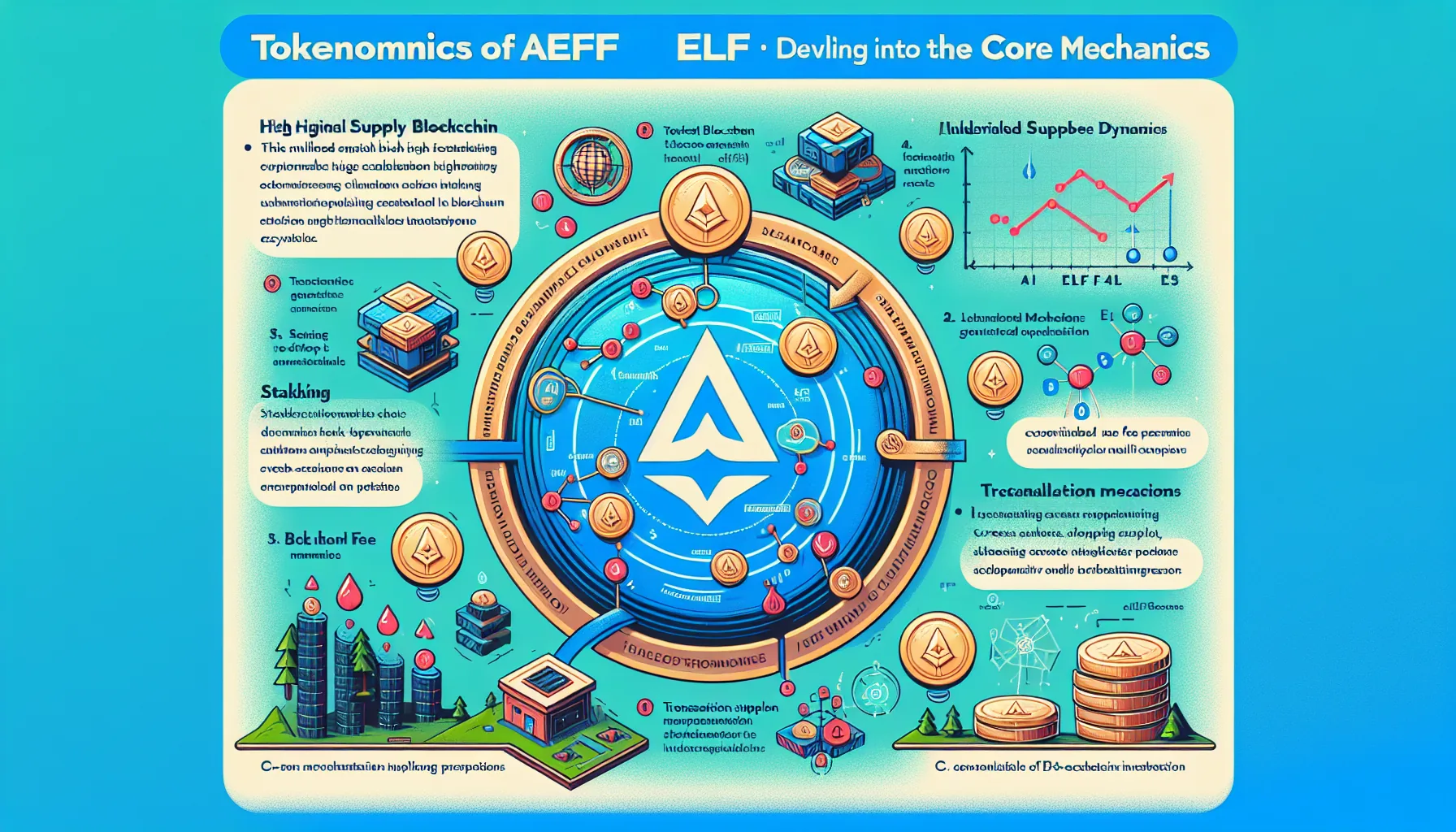
Tokenomics of aelf (ELF): Delving into the Core Mechanics
aelf (ELF) operates as a multi-layered blockchain designed to enable highly scalable and customizable decentralized applications (dApps). At its core, the ELF token plays a central role in maintaining and incentivizing the network's ecosystem. Understanding its intricate tokenomics is key to evaluating both its utility and sustainability.
ELF Token Supply Dynamics
The total initial supply of ELF tokens was capped at 1 billion, with a distribution strategy broken into several key allocations. Of the genesis allocation, approximately 25% was designated for token sales, while the rest was reserved for the foundation, partnerships, marketing, community incentives, and mining rewards. Notably, the mining reward pool accounts for a significant percentage, aligning with aelf's proof-of-stake (PoS) consensus mechanism, which underscores long-term network participation and security.
Although the finite supply model provides some degree of deflationary pressure, concerns about token release schedules (e.g., foundation or partnership allocations) remain pertinent. Gradual unlocking of reserves has the potential to affect circulating supply dynamics, introducing risks of short-term dilution. For experienced investors, monitoring smart contract-controlled vesting schedules is a critical move.
Staking Mechanism and Utility
ELF tokens are fundamentally utilized within the network's staking mechanism under its delegated proof-of-stake (DPoS) governance structure. Token holders stake ELF to elect “nodes”—essentially validating entities responsible for transaction processing and network operation. Incentives are distributed proportionally to stakers as block rewards, creating alignment between network health and token utilization.
However, the concentration risk in DPoS systems is a potential drawback. Token-weighted voting can lead to centralization if large holders dominate the power structure, which may conflict with blockchain decentralization principles. Monitoring staking behavior over time can help assess whether power imbalances grow, creating a potential governance challenge.
Fee Payments and Interoperability
A unique aspect of ELF tokenomics is its role in enabling cross-chain interoperability through transaction fee payments. The modular design of aelf's architecture ensures that the cost of deploying and running dApps across sidechains is accounted for using ELF tokens. This decentralized resource-pricing mechanism incentivizes network utility while controlling resource overuse.
That said, fee economics for sidechain development—one of aelf's primary value propositions—can potentially introduce cost inefficiencies based on transaction volume or fluctuating demand. A surge in activity on resource-intensive sidechains may unintentionally lead to network congestion or higher operational barriers for developers.
Burn Mechanisms and Ecosystem Incentives
aelf has outlined burn mechanisms designed to enact permanent token reductions over time. Revenues generated through transaction fees and network services can trigger burns, reducing supply and theoretically driving long-term scarcity. While this model aligns incentives, its sheer dependence on consistent transaction volume and adoption raises questions. Without sustained growth in ecosystem activity, the full benefits of such deflationary strategies may not materialize as intended.
In summary, while aelf's tokenomics leverages staking, cross-chain fees, and deflationary mechanisms, factors such as centralization risks, supply inflation, and adoption scalability remain areas requiring ongoing scrutiny.
ELF Governance
Governance in the aelf (ELF) Ecosystem: A Complex Framework for Decentralized Decision-Making
The governance model of aelf (ELF) is designed to facilitate decentralized decision-making across its multi-chain architecture. Leveraging a Delegated Proof-of-Stake (DPoS) consensus mechanism, aelf’s governance framework primarily revolves around elected node validators and token holders, providing a structured yet dynamic system for managing protocol upgrades, resource allocation, and ecosystem development. However, like any governance model, it faces both strengths and challenges.
The Role of Token Holders and Voting Power
In the aelf governance ecosystem, ELF token holders play a critical role by voting for block producers—who serve as validators for the network’s main and sidechains. The voting process is weighted, meaning the more ELF tokens a participant holds, the greater their voting power. While this ensures that those with the most at stake have a say in the platform's direction, it also raises concerns about centralization, particularly when token concentration among a small number of wallets leads to disproportionate influence.
DPoS Validators: Decision-Making and Rewards
Validators elected through the voting system are responsible for decisions such as protocol changes, system optimizations, and dispute resolutions in the network’s multi-chain ecosystem. In return, validators are rewarded with ELF tokens, incentivizing them to act in the network’s best interest. However, the economic incentives tied to validator roles can introduce potential conflicts of interest. For example, validators may prioritize short-term profitability over long-term network health, especially when the voting base lacks adequate participation or awareness.
Resource Allocation and Governance Challenges
A notable feature of aelf’s governance system is its approach to resource allocation via its economic model, where transaction fees are distributed among validators and token holders. However, this allocation method has sparked concerns about systemic inequality, as validators and high-stake token holders inherently benefit more than smaller stakeholders. Additionally, debates around how resources are distributed within the ecosystem often hinge on subjective criteria, which could foster disagreements among community participants.
On-Chain Transparency and Off-Chain Risks
Aelf’s governance operates on-chain, ensuring transparency and traceability in voting and decision-making processes. However, governance can't be fully disentangled from off-chain factors like collusion among validators or external manipulations in voting dynamics. These vulnerabilities present risks to the integrity of the governance framework, especially within a competitive and evolving crypto landscape.
This governance model reflects aelf’s vision for scalable and decentralized operations, yet its reliance on DPoS and token-weighted voting underscores inherent trade-offs between decentralization and effectiveness.
Technical future of ELF
Current and Future Technical Developments for aelf (ELF)
Modular Blockchain Framework
aelf (ELF) has positioned itself as a highly customizable blockchain platform designed with a focus on modularity. Its distinguishing feature is its ability to assign individual blockchains—or “side chains”—to specific business use cases or decentralized applications (dApps), effectively minimizing congestion on the main chain. The aelf ecosystem is constructed around its Main Chain-Side Chain architecture, enabling horizontal scaling by adding new side chains to support increasing workloads. However, the complexity of managing multiple interoperable chains has posed challenges in ensuring seamless communication and consistent performance. While their interoperability protocol is robust, its adoption across diverse projects remains a work in progress.
Cross-Chain Integration
aelf emphasizes interoperability with external ecosystems, an important factor in the increasingly interconnected world of blockchain. Its cross-chain transfer protocol is designed to interact with other prominent networks while maintaining high levels of security. One area of development includes integrating more mainstream blockchains into its interoperability protocol. However, implementing comprehensive cross-chain functionality without compromising speed or security is a technical challenge for aelf as it expands. Furthermore, cross-chain bridges have historically been security vulnerabilities within the broader crypto space, raising concerns that future iterations of aelf will need to address rigorously.
Resource Model: Delegated Proof of Stake (DPoS) and Governance
aelf operates on a Delegated Proof-of-Stake (DPoS) consensus mechanism to enhance scalability and efficiency. However, the model's reliance on a limited number of block producers could centralize influence within the ecosystem. While aelf has implemented resource staking to allocate transaction resources effectively, the model’s intricate design may introduce a high barrier to entry for less-experienced teams or individuals. Nonetheless, enhancements to its resource system are expected to allow for more granular control over resource allocation, though no fully detailed roadmap has been provided.
Smart Contract Hub and Progress on Multi-Language Support
The platform provides a highly efficient environment for deploying and managing smart contracts, supporting multiple programming languages. Recent updates have focused on refining multi-language implementation, particularly for developers coding in widely-used languages like C#. However, widespread use of aelf’s multi-language smart contract functionality has been relatively limited to date. Ongoing updates are expected to improve developer tooling and expand the possible programming capabilities significantly.
Scalability Upgrades and Sharding
To deliver high throughput, aelf has prioritized sharding within its architecture. The technical complexity associated with maintaining both high parallel transaction processing and strong consistency across the network presents a considerable challenge. Future technical roadmaps suggest ongoing optimization to this method, though transitioning innovations from test environments to live networks is inherently resource-intensive.
Security and System Resilience
aelf has shown a commitment to improving on-chain security mechanisms, but ensuring the resilience of its architecture as the system grows in complexity will require constant advancements in its technical defenses.
Comparing ELF to it’s rivals
Comparing ELF to ATOM: A Detailed Insight
When examining ELF in relation to ATOM, the comparison primarily revolves around their respective blockchain infrastructures and approaches to interoperability. While ELF's multi-chain architecture aims to create dedicated chains for specific applications, ATOM's Cosmos ecosystem employs the Inter-Blockchain Communication (IBC) protocol to connect a diverse set of blockchains. Both projects tackle scalability and cross-chain interoperability, but their methodologies reveal distinct advantages and challenges.
Architecture Divergence: Multi-Chains vs. Hubs
ELF's design is heavily focused on a multi-chain framework, where each side chain is tailored to the needs of specific dApps or industries. This isolated chain model provides performance optimization but comes at the cost of complexity in syncing, maintaining, and building a unified ecosystem. By contrast, ATOM operates under the concept of hubs and zones, where the Cosmos Hub serves as a central point for connecting blockchains. ATOM's hub-centric approach enables broader interoperability but can also create bottlenecks, with increased reliance on the stability and capacity of the main hub.
Consensus Models: DPoS vs. Tendermint
Another key difference is in their consensus mechanisms. ELF uses Delegated Proof of Stake (DPoS) to enhance scalability and throughput, leveraging a limited number of block producers for faster finality. This method, while efficient, concentrates control among top stakers, potentially leading to centralization concerns. On the other hand, ATOM utilizes the Tendermint consensus algorithm, a hybrid approach that combines Byzantine Fault Tolerance (BFT) with periodic leader elections. While Tendermint ensures robust security and resilience, its throughput may struggle under higher transaction loads compared to ELF's DPoS model.
Development Ecosystems: Focused vs. Decentralized
In terms of developer tools and ecosystems, ELF has adopted a more application-specific philosophy, encouraging developers to launch custom-built side chains. However, this requires significant technical expertise and can fragment resources. In comparison, ATOM positions itself as the "Internet of Blockchains," fostering an open ecosystem where developers can build sovereign chains without compromising on interoperability via IBC. The downside for ATOM is that the plug-and-play nature of its infrastructure might attract projects lacking long-term viability, potentially affecting network quality.
Token Utility and Network Growth
The ELF token emphasizes staking, governance, and incentivizing side chain operations, effectively tying its value directly to its unique infrastructure. ATOM, meanwhile, positions its token as essential for governance and staking within the Cosmos Hub, though criticism has been levied at the lack of intrinsic value capture across the broader network. This raises questions about both tokens' long-term sustainability, as ELF's narrower scope contrasts with ATOM's ambition to support an expansive ecosystem.
Comparing ELF to SOL: A Technical and Strategic Analysis
When evaluating ELF alongside SOL, it's evident that both ecosystems cater to distinct use cases driven by their underlying architectures and scalability goals. However, their fundamental differences expose certain limitations and advantages for each, shaping how crypto-savvy users and developers might approach them.
Consensus Mechanisms and Scalability
ELF employs a Delegated Proof of Stake (DPoS) system combined with a multi-layered blockchain structure, which segregates resource-intensive smart contracts and consensus processes. This modular design optimizes efficiency for specific use cases, such as enterprise-grade applications and sidechain customization. Conversely, SOL operates on its own hybrid consensus mechanism called Proof of History (PoH), which enhances throughput dramatically by timestamping transactions prior to their inclusion in the proof-of-stake chain. While SOL’s design enables it to support an incredibly high transaction per second (TPS) rate, skeptics often highlight its trade-off between decentralization and speed.
A key distinction arises in infrastructure. ELF's modular chain allows for the specialization of each chain in the network, offering flexibility but introducing a steeper learning curve for developers unfamiliar with multi-chain structures. On the other hand, SOL simplifies developer onboarding with its single-layer, monolithic chain model but faces regular criticism over network outages and downtime, which cast doubts on its reliability for mission-critical DApps.
Developer Ecosystem and Tooling
SOL boasts a robust developer ecosystem, largely due to its extensive tooling, documentation, and developer-friendly frameworks targeting high-performance blockchain applications. This advantage has enabled SOL to attract a significant number of NFT projects, gaming platforms, and DeFi protocols. ELF, while offering innovative features like sidechain interoperability, suffers from comparatively limited developer adoption, partially because its unique architecture can pose additional challenges for coding and integration when adapting from single-layer ecosystems.
Cost Efficiency
One area where both projects come into frequent comparison is transaction cost efficiency. SOL’s near-zero transaction fees make it a suitable choice for high-frequency, low-margin applications, such as micropayments and blockchain gaming. ELF, while offering cost effectiveness through its DPoS consensus and resource isolation mechanisms, doesn’t consistently match SOL’s affordability, especially as its ecosystem matures and demand for sidechain usage increases.
Network Reliability
A recurring pain point for SOL is its occasional tendency toward network instability, which has led to performance bottlenecks during periods of peak demand. ELF, while not immune to its own growth-related challenges, benefits from its layered approach and governance flexibility, enabling its stakeholders to address scalability bottlenecks without compromising the functionality of the core network. However, ELF’s reliance on DPoS does raise concerns about centralization risks, particularly as the number of active validators might not match SOL’s broader validator participation.
This side-by-side comparison underscores operational choices, which ultimately influence how each asset can address real-world scaling and reliability challenges in DeFi, GameFi, and other sectors.
How $ELF Compares to $DOT: A Feature-by-Feature Breakdown
When analyzing $ELF versus $DOT, both projects stand out in the crowded blockchain ecosystem with their unique approaches to scalability and interoperability. However, their architectural choices, consensus models, and ecosystem strategies reflect key differences worth dissecting.
Consensus Mechanisms: DPoS vs. NPoS
$ELF utilizes a Delegated Proof of Stake (DPoS) mechanism, offering high throughput and energy efficiency by delegating block production to a smaller set of trusted nodes. This design aligns with $ELF’s modular chain infrastructure, enabling parallel processing across its network. In contrast, $DOT employs Nominated Proof of Stake (NPoS), which combines decentralization with validator selection based on party nominations. While $ELF arguably benefits from simplified governance and faster block validation, its DPoS model raises concerns about potential centralization risks compared to $DOT’s validator-nominator relationship, which distributes power more broadly.
Layered Design vs. Relay Chain Architecture
$ELF’s approach centers on a multichain framework with modular “sidechains” that allow dedicated chains for different workloads. This design segments transactions and smart contracts into separate chains, effectively isolating performance bottlenecks. $DOT, meanwhile, integrates parachains with a relay chain at its core. $DOT’s relay chain ensures interoperability and cross-chain connectivity, allowing parachains to securely communicate under the same unified framework. While $DOT achieves robust cross-chain compatibility, $ELF’s modularity offers more flexibility for specialized use cases that do not rely as heavily on interconnectivity.
Ecosystem Development: A Gap in Network Maturity
When comparing ecosystem size, $DOT leads by fostering an expansive array of projects and active developer participation. Its Web3 focus and well-funded grant programs have contributed to its recognition as a hub for dApp developers. In contrast, $ELF’s ecosystem remains relatively nascent, with fewer projects leveraging its modular blockchain infrastructure. This disparity translates into a gap in decentralization and user adoption. While $ELF’s architecture is theoretically capable of supporting diverse applications, its smaller community and less mature tooling may be an adoption barrier for developers.
Interoperability Challenges
interoperability fuels $DOT’s growth, as its parachain auctions attract substantial developer interest. $ELF’s interoperability strategy emphasizes chain-to-chain collaboration within its internal network, but fails to match $DOT’s scale of cross-chain bridging. Developers targeting heterogeneous blockchain environments may encounter limitations within $ELF’s ecosystem.
Final Thoughts on Comparison
$DOT’s more established ecosystem and focus on interoperability give it an edge in attracting talent and projects, while $ELF’s modular chains provide specific advantages for isolated workloads. However, $ELF’s relatively closed system and limited toolkits present real challenges when directly compared to $DOT’s expansive blockchain environment.
Primary criticisms of ELF
Primary Criticism of ELF: Examining the Challenges
aelf (ELF), an ambitious blockchain project targeting decentralized cloud computing and enterprise-grade solutions, has attracted significant attention in the cryptocurrency industry. However, like many blockchain projects, it is not immune to criticism. Below are some of the key issues and drawbacks often highlighted by crypto-savvy analysts and users.
1. Centralization Concerns in Consensus Mechanism
ELF employs a Delegated Proof-of-Stake (DPoS) consensus model, praised for its scalability and energy efficiency. However, this approach has drawn criticism for potentially leaning too heavily on centralization. With a fixed number of consensus nodes, some community members worry that control is concentrated in the hands of a few powerful actors, potentially undermining the trustless and decentralized nature that blockchains are supposed to embody. Critics highlight that this governance model might raise risks around collusion or censorship, especially as it scales to enterprise applications.
2. Complexity of Sidechain Architecture
Aelf’s implementation of a multi-chain ecosystem, where sidechains handle specific business functions, is a core differentiator, but it’s not without its trade-offs. The architecture introduces a significant layer of complexity—both for developers who need to design applications capable of interacting across multiple chains and for users who may struggle to navigate this fragmented ecosystem. Furthermore, the technical barrier to entry may deter smaller developers, leading to slower adoption or reliance on centralized intermediaries to simplify processes.
3. Lack of Widespread Adoption
Critics often point out the current lack of aelf’s adoption among large enterprises or developers despite its enterprise-focused branding. While it promises a robust solution for businesses, questions remain about whether the project has effectively delivered on its use case or distinguished itself from competitors within the crowded layer-1 and layer-2 blockchain space. The slower pace of tangible partnerships or real-world applications has fueled speculation on whether the protocol has overpromised relative to its actual market relevance.
4. Resource-Heavy Hardware Requirements
Aelf’s blockchain infrastructure has been noted for its emphasis on high-performance execution and resource optimization. However, these design priorities necessitate some reliance on resource-heavy hardware to maintain efficiency. This reliance raises questions about the accessibility of the network for smaller participants, potentially discouraging broader validator or node participation—a hurdle for projects seeking more decentralization across their ecosystems.
5. Overambitious Roadmap Concerns
Aelf’s roadmap has been criticized by some as overly ambitious, given the broad scope of its goal to become an enterprise-grade “Linux” of blockchains. While the vision is undeniably compelling, the sheer scale of the technical and operational benchmarks required has led to skepticism. This creates the perception that the project might be spreading its resources too thin while attempting to tackle large and complex challenges simultaneously.
Founders
Founding Team Behind aelf (ELF): Visionaries and Challenges
The origins of aelf (ELF) lie with a team of blockchain professionals who sought to address the scalability and interoperability limitations within the cryptocurrency ecosystem. aelf was founded by Ma Haobo, a blockchain innovator known for his previous experience as the founder of Hoopox, a blockchain technology and application services company, and his tenure as CTO of GemPay. Ma Haobo’s technical expertise in blockchain architecture provided the foundation for aelf's ambitious vision of creating a performance-optimized, decentralized cloud computing blockchain network.
The founding team also included an array of blockchain developers, business strategists, and researchers with experience across multiple industries. This multidisciplinary approach suited aelf’s goal of building a blockchain tailored for enterprise use, featuring multi-layered side chains and customizable consensus mechanisms. Early on, the team forged partnerships with industry players and utilized an open-source development model to encourage global collaboration—moves that helped aelf generate early interest within the crypto community.
However, despite a promising concept and initial traction, challenges within the project’s founding team dynamics have occasionally raised questions. Like many blockchain projects, aelf’s complexity required not just strong technical leadership, but also a clear organizational roadmap. Observers in the crypto space have noted that the ambitious goals set by the founding team may have encountered roadblocks in execution, as building the modular architecture required for their decentralized cloud computing demands deep R&D investment and ongoing iterations. Some critics argue that the project might have underestimated the timeline and resources required for industrial adoption of a system this multifaceted.
Another point of interest, particularly to those scrutinizing its governance model, is the perceived concentration of decision-making power. While aelf was established with the aim of decentralization at its core, the founding team initially played a dominant role in shaping the protocol and driving development. Crypto-savvy users advocating for more transparent and democratic processes within blockchain ecosystems have occasionally highlighted this as a potential flaw.
In sum, the founding team of aelf managed to spark significant interest by addressing scalability and interoperability issues with their innovative structure. However, navigating technical complexities and achieving community-driven decentralization remains an ongoing challenge rooted in the project’s early formation and leadership.
Authors comments
This document was made by www.BestDapps.com
Sources
- https://aelf.io/
- https://github.com/aelf
- https://aelf.io/gridcn/assets/file/aelf_whitepaper_v1.2_en.pdf
- https://aelf.io/resource.html
- https://medium.com/@aelfblockchain
- https://aelf.io/gridcn/assets/file/aelf_economics_and_governance_whitepaper.pdf
- https://coinmarketcap.com/currencies/aelf/
- https://docs.aelf.io/
- https://explorer.aelf.io/
- https://github.com/aelf/aelf-sdk.js
- https://aelf.readthedocs.io/en/latest/
- https://github.com/aelf/aelf-core
- https://aelf.com/
- https://twitter.com/aelfblockchain
- https://www.coingecko.com/en/coins/aelf
- https://www.binance.com/en/trade/ELF_USDT
- https://cryptoslate.com/coins/aelf/
- https://www.reddit.com/r/aelfofficial/
- https://www.youtube.com/aelfblockchain
- https://messari.io/asset/aelf


