History of EGLD
The History of EGLD: The Evolution of Elrond’s Native Token
EGLD, the native token of the Elrond blockchain, has undergone a transformation that reflects the evolution of the protocol itself. Originally introduced as ERD during Elrond's initial launch in mid-2019, the token first garnered attention through an Initial Exchange Offering (IEO) on Binance Launchpad. At the time, 20 billion ERD tokens were minted, serving as the backbone of a blockchain network focused on scalability and performance through sharding.
The tokens distributed during the IEO accounted for 25% of the total supply, with the remainder allocated to ecosystem incentives, staking rewards, and development funding. Early on, ERD was met with significant enthusiasm due to its association with Binance, a meticulously crafted roadmap, and Elrond's ambitious approach to solving the blockchain trilemma of scalability, decentralization, and security.
However, the Elrond team announced a tokenomics overhaul in September 2020, restructuring both the token supply and branding. As part of this monumental shift, ERD underwent a rebranding into EGLD (eGold), signifying a step towards establishing its utility as a value storage mechanism within Elrond’s ecosystem. A redenomination process reduced the total supply drastically from 20 billion ERD to 20 million EGLD at a 1,000-to-1 ratio. This caused some controversy in the crypto-savvy community, as the drastic reduction altered token perception, with critics citing potential confusion and concerns over the implications of supply compression on liquidity and accessibility.
The redenomination was preceded by the launch of Elrond’s mainnet in July 2020. The transition solidified EGLD as the network's linchpin, powering staking, governance, transactions, and smart contract deployment. Despite its technical upgrades and ambitious tokenomics, Elrond faced setbacks, including skepticism about its competitiveness with established platforms like Ethereum and layer-1 alternatives. Critics also questioned the sustainability of its deflationary tokenomics and whether supply reduction could inadvertently hinder adoption.
Despite these debates, Elrond continually emphasized community-driven initiatives, developer incentives, and integrations to build traction. This proactive approach has enabled EGLD to maintain relevance in a rapidly changing blockchain landscape while showcasing the platform’s continuous development and adaptability.
The history of EGLD serves as a case study of how crypto projects evolve, for better or worse, through branding, tokenomics, and technical innovation—a journey marked by bold changes and challenges alike.
How EGLD Works
How EGLD Works: A Deep Dive into the Tech Behind Elrond's Native Token
EGLD (eGold) is the native cryptocurrency of the Elrond network, a blockchain ecosystem designed to deliver high throughput and low latency through its innovative approach to architecture. At its core, EGLD serves multiple purposes within the network, including staking, governance, transaction fees, and smart contract execution. Let’s dissect the mechanics behind its functionality.
Adaptive State Sharding: The Backbone of Scalability
Elrond's protocol utilizes adaptive state sharding, a breakthrough that enables the network to optimize scalability without compromising security or decentralization. Sharding in Elrond is implemented on three dimensions: state, transactions, and network. This approach ensures that as the number of validators or demand on the network increases, shards dynamically adjust. Consequently, network performance scales horizontally, allowing thousands of transactions per second (TPS). EGLD is integral to this process, facilitating value transfer across shards.
However, sharding introduces complexity, particularly in shard re-allocation and cross-shard communication. The network employs a specialized protocol to minimize delays in cross-shard transactions, but critics point out that such systems remain unproven at large-scale, real-world levels. Any vulnerability or inefficiency in shard syncing could jeopardize performance metrics.
Secure Proof-of-Stake (SPoS): Consensus Mechanism
EGLD holders can participate in network security through Secure Proof-of-Stake (SPoS), Elrond’s consensus mechanism. Validators are selected based on a ranking that factors in stake amount and network history. SPoS is designed to reduce consensus latency by selecting validator nodes in under 100 milliseconds while maintaining robust Byzantine Fault Tolerance (BFT).
Notably, SPoS slashes energy consumption relative to traditional Proof-of-Work systems, but its reliance on staking raises concerns over wealth centralization. Large token holders can amass disproportionate influence, potentially leading to governance imbalances.
Token Utility: Incentives and Economics
EGLD serves both as a transactional currency and a medium for staking rewards. Transaction fees are calculated using a dynamic cost model, reducing the likelihood of network congestion. The token also underpins smart contracts, requiring fees to be paid exclusively in EGLD for execution.
Tokenomics play a critical role here; the hard-capped supply of EGLD introduces scarcity but may also stifle liquidity during periods of high demand. Additionally, staking lock-up periods, while incentivizing long-term network stability, may deter users less comfortable with illiquid positions.
Developer and User Ecosystem
EGLD empowers Elrond’s ecosystem by acting as the fuel for decentralized applications (dApps) and platform-wide interactions. Features like the Elrond Standard Digital Token (ESDT)—an extension of EGLD—allow developers to mint custom tokens with minimal friction. While adoption has been growing, onboarding challenges remain, particularly in offering user-friendly infrastructure for non-technical participants.
EGLD’s success fundamentally hinges on network adoption. High throughput alone may not suffice if developer participation stagnates or if the complexities of adaptive state sharding persist. While the architectural promises are ambitious, long-term limitations may emerge in balancing decentralization against scale and performance.
Use Cases
Exploring the Use Cases of EGLD: Practical Applications and Limitations
Elrond's native token, EGLD, is integral to the ecosystem's utility and functionality, built on a high-performance blockchain designed for scalability, interoperability, and efficiency. Below is an in-depth look into specific use cases of EGLD, paired with some key considerations:
1. Transaction Fees and Network Functionality
EGLD is the primary means of paying transaction fees on the Elrond blockchain. Thanks to the Adaptive State Sharding mechanism, the network is structured to handle high throughput at low costs. However, skeptics point out that reliance on network transaction fees as a revenue source can raise questions about long-term token utility, particularly if user adoption does not scale to meet the expectations set by the ecosystem’s design.
2. Smart Contract Execution
EGLD is essential for deploying and executing smart contracts on the Elrond network. Its fast finality and scalability make it attractive for decentralized application developers, particularly in DeFi, gaming, and NFTs. Nonetheless, the lack of widespread developer adoption compared to industry leaders like Ethereum raises questions about the potential for limited network effect, which could stymie broader applications for EGLD in this space.
3. Staking and Validator Incentives
EGLD plays a critical role in securing the Elrond network through staking. Validators are incentivized with EGLD rewards, while delegators can contribute their tokens to staking pools. This dual-layer staking system is touted as both flexible and decentralized. However, the staking model's economics rely heavily on participation rates and token availability, which could present challenges if large amounts of tokens exit the circulating supply, creating potential for centralization or liquidity imbalances.
4. Payment Integration
EGLD is increasingly positioned as a payment solution for merchants and online platforms. The blockchain’s low transaction latency and fees are designed to facilitate seamless payments. Still, competition with established crypto payment solutions and stablecoins introduces hurdles, particularly in terms of expanding merchant adoption and consumer trust.
5. Governance via EGLD
EGLD holders possess governance privileges within the Elrond ecosystem, enabling them to vote on proposals related to protocol upgrades, economic models, and other critical decisions. While governance tokenomics support decentralization, participation in such processes often skews toward whales or larger token holders, leading to potential centralization risks despite the democratic architecture.
In sum, EGLD serves multiple critical functions within the Elrond ecosystem. Its design reflects Elrond's ambitions for scalability and utility, yet certain challenges—such as limited adoption, competition, and token distribution dynamics—may shape its ultimate impact within the broader crypto landscape.
EGLD Tokenomics
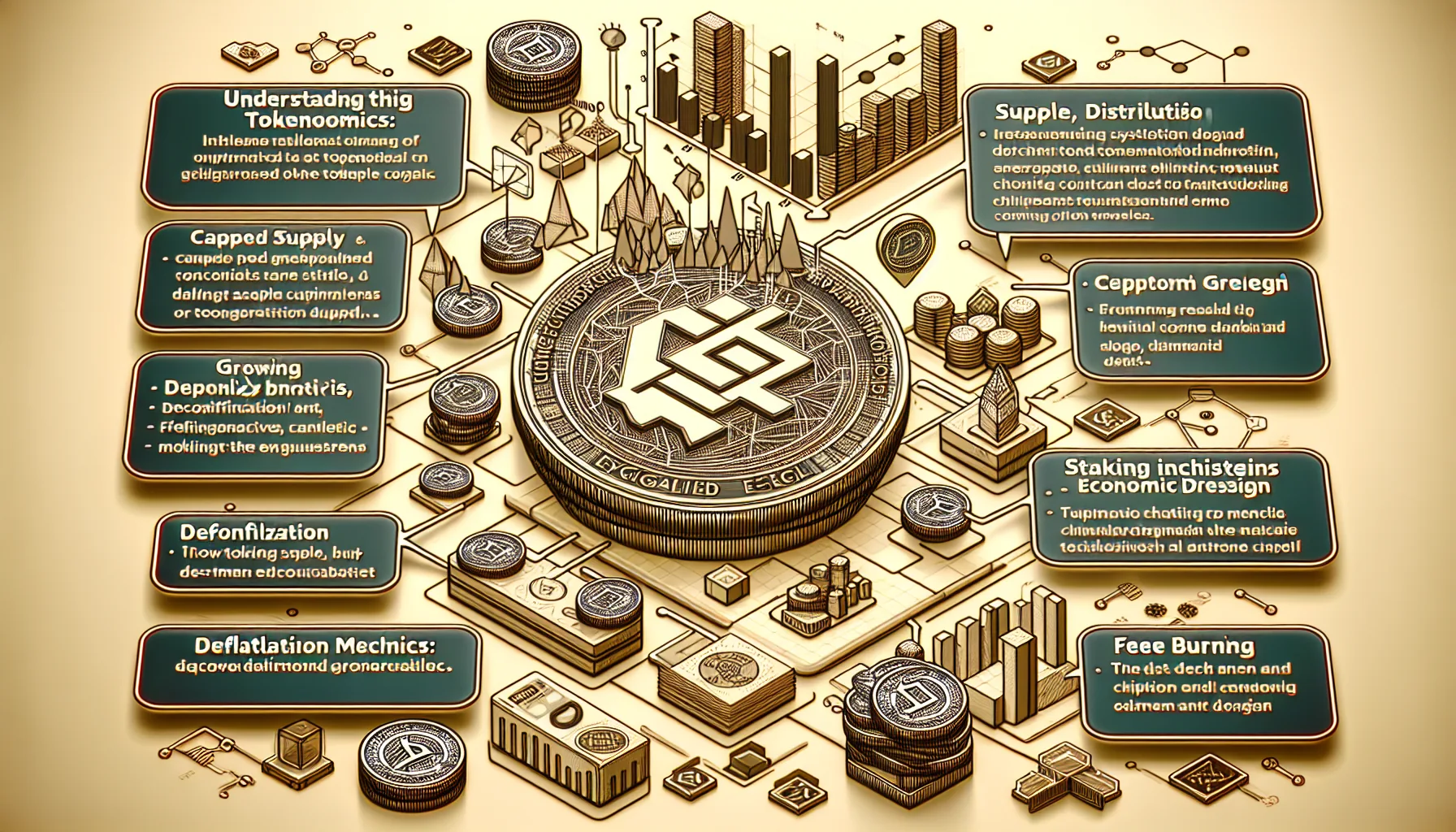
Understanding the Tokenomics of EGLD: Supply, Distribution, and Economic Design
EGLD, the native token of the MultiversX (formerly Elrond) blockchain, exhibits a meticulously designed tokenomic model aimed at sustaining network growth, decentralization, and utility-driven adoption. With its deflationary mechanics and capped supply, EGLD’s structure focuses on creating long-term value; however, certain aspects of its design warrant further examination.
Maximum Supply and Circulating Dynamics
EGLD has a hard-capped maximum supply of 31,415,926 tokens, which introduces a straightforward deflationary element to its economics. This cap prevents unchecked inflation, often a criticism of blockchains with uncapped or loosely defined supply mechanisms. However, a notable factor to consider is the pace of token circulation relative to staking and vesting schedules. A significant portion of EGLD supply remains locked in staking or under vesting contracts, which could create liquidity constraints, especially in periods of intense market activity. Reduced liquidity may exacerbate price volatility, an important factor for users seeking to transact with EGLD as a utility token.
Initial Distribution and Concerns of Centralization
The initial token distribution is an area of scrutiny in evaluating EGLD’s tokenomics. A notable percentage of the supply was allocated to early investors, team members, and the ecosystem reserve. While such allocations are justified to some degree for fostering development and adoption, they also raise concerns about potential centralization risks. A disproportionate degree of influence held by a small number of parties may introduce vulnerabilities, such as the risk of large-scale token unlocks affecting the market or governance decisions being skewed by dominant holders.
Staking Incentives and Inflation Balancing
One of the key mechanisms incentivizing user participation in the network is EGLD staking. By locking their tokens to secure the network, stakers earn rewards paid out in EGLD. While this model is crucial for ensuring validator engagement and network security, it introduces a pseudo-inflationary mechanism, at least during the reward emission period. If these staking rewards are not balanced by adequate demand from network participants, there remains a risk of supply outpacing utility, which could adversely impact the token’s economic equilibrium.
Utility-Driven Deflation and Fee Model
The tokenomics of EGLD are uniquely tied to transaction fees within the MultiversX ecosystem, which are burned upon use, reducing total supply over time. This fee-burning mechanism aligns with value accrual to token holders. However, the extent of value capture depends on widespread network adoption and sustained transactional utility. Without sufficient real-world usage or ecosystem demand, the deflationary mechanism risks being limited in its long-term impact on scarcity.
EGLD Governance
Governance in the Elrond Network (EGLD): Structure, Challenges, and Mechanisms
Elrond's governance framework is an integral component of its ambitious goal to create a highly scalable, fast, and secure blockchain network. At its core, EGLD governance is driven by a hybrid mechanism of off-chain and on-chain functionalities, enabling the community and network stakeholders to influence protocol upgrades, economic parameters, and long-term ecosystem direction.
Decentralized but Validator-Centric Governance
The governance model revolves heavily around Elrond’s validators, making them central players in decision-making processes. Validators are responsible for securing the network, producing blocks, and enabling consensus within Elrond’s Adaptive State Sharding mechanism. However, their outsized role in governance raises critical questions about power centralization, especially since the number of validators might not fully represent the diversity of the broader community.
While staking mechanisms allow EGLD holders to delegate their tokens to validators, thereby indirectly participating in governance decisions, this system inherently privileges larger token holders who can exert disproportionate influence on the protocol’s direction. This concentration of governance power in large staking pools remains a contentious issue that the network is yet to fully address.
On-Chain Proposals and Voting Mechanisms
Network upgrades and major protocol changes are initiated through governance proposals submitted on-chain. These proposals typically undergo a community discussion phase before validators and delegators vote on their acceptance. Voting power is weighted by the amount of EGLD staked, which further reinforces the governance dynamics mentioned earlier.
While on-chain governance mechanisms increase transparency and auditability, they also expose the protocol to potential plutocratic tendencies. Wealthier stakeholders could push decisions beneficial to their financial interests, potentially sidelining smaller holders and non-financial considerations that could impact long-term network usability and decentralization.
Lack of Formal Representation for Non-Validator Stakeholders
Elrond’s governance system is validator-focused, leaving limited room for non-technical contributors, developers, or end users to have a structured say. While discussions occur off-chain in forums and community channels, these informal mechanisms lack the binding nature of on-chain voting. This gap may alienate grassroots contributors who play vital roles in onboarding new users, driving innovation, and expanding network awareness but lack the technical or financial capital to ascend to governance-relevant positions.
Security and Governance Risks
Another consideration revolves around governance security. Inadequate measures to prevent malicious activity in staking pools or validator cartels could threaten on-chain voting processes. A coordinated attack by a subset of validators could theoretically pass detrimental proposals, highlighting the need for enhanced safeguards against governance-related exploits or collusion risks.
By placing validators at the heart of its governance model, Elrond enables agility and efficiency in decision-making. However, this approach is a double-edged sword, presenting risks of centralization and governance manipulation that should not be overlooked.
Technical future of EGLD
Technical Developments and Roadmap for EGLD
Adaptive State Sharding: A Scalable Backbone
EGLD operates on the Elrond blockchain, which is built on an innovative Adaptive State Sharding mechanism. This solution dynamically merges state, transaction, and network sharding to optimize performance under varying loads. While this architecture delivers significant scalability, efficiently processing thousands of transactions per second, it is not without complexities. The computational overhead required for shard binding and redistribution can occasionally result in latency spikes during high-volume shard reassignments. Ensuring consistent real-time performance as the network grows remains an ongoing challenge for the development team.
Secure Proof of Stake (SPoS): Enhancing Consensus
EGLD’s consensus model, Secure Proof of Stake (SPoS), builds on traditional PoS by introducing a “randomness source” for validator selection. The low-latency selection process (under 100 ms) enhances both speed and decentralization. However, as validator participation increases over time, open technical discussions remain on mitigating the network broadening equilibrium issue, where smaller validators may find it harder to compete against larger operators. Further refinement to level the playing field for staking and delegating participants is critical for maintaining decentralization in the long term.
WASM-Compatible Virtual Machine: Paving the Way for dApps
The native Arwen WASM Virtual Machine powers smart contracts on the network, opening the ecosystem to developers familiar with WebAssembly. This cross-language compatibility supports a wide range of programming languages like Rust, C, and C++. Though a robust engineering achievement, developer adoption for WASM-based dApp creation remains slower than anticipated compared to Ethereum’s dominance in Solidity development. Elrond’s team is actively addressing this learning curve, but transitioning existing projects to this environment has proven to be a gradual process.
Key Roadmap Enhancements: Focus on Interoperability and Usability
The roadmap has outlined notable advancements, such as enabling broader cross-chain interoperability through integrations with protocols like IBC and bridges for high-utility assets. This positions EGLD as an integral part of ecosystems spanning multiple chains. However, interoperability inherently raises concerns about potential vulnerabilities and exploits stemming from cross-chain bridges—an area notorious for introducing risk vectors.
In tandem, the development of Elrond’s Maiar app, designed to foster widespread adoption through usability improvements, is a core focus. Efforts to minimize onboarding friction and reduce the gaps in user experience remain ongoing tasks. Yet, such consumer-facing initiatives can inadvertently divert resources from core protocol refinement, occasionally drawing critique from the more technically oriented community.
ZKP Integrations: Future-Proofing Privacy
EGLD has also signaled intentions to adopt zero-knowledge proofs (ZKP) as a stepping stone toward offering privacy-centric solutions. While the addition of ZKP functionalities would make EGLD a competitive player in confidential transactions, implementation is technically intensive and has not been thoroughly outlined in immediate development phases. Keeping up with ZKP maturation across the landscape could present a bottleneck if delayed.
Comparing EGLD to it’s rivals
Comparing EGLD to ATOM: Key Differences in Blockchain Strategy and Ecosystem Dynamics
Elrond (EGLD) and Cosmos (ATOM) are both blockchain platforms aiming to address scalability and interoperability issues, but their approaches and technological architectures differ markedly, leading to distinct use cases and adoption paths.
Architectural Focus: Sharding vs. Hub-and-Spoke Model
EGLD utilizes Adaptive State Sharding, combining state, transaction, and network sharding into a unified system. This enables parallel processing and a high degree of scalability. Cosmos, on the other hand, employs a hub-and-spoke model, centered around the Cosmos Hub and the Inter-Blockchain Communication (IBC) protocol. While Cosmos prioritizes interoperability among various sovereign blockchains, Elrond is more focused on creating an all-in-one high-throughput ecosystem.
EGLD's architecture offers predictable performance and near-instant finality, appealing for dApps requiring high scalability, such as DeFi integrations or NFT marketplaces. ATOM's differentiated value lies in connecting independent blockchains, making it advantageous for developers seeking cross-chain interoperability. Despite this contrast, EGLD's lack of an interoperable-first design can appear limiting when measured against Cosmos' expansive cross-chain focus.
Development Ecosystem and Tooling
Cosmos offers a developer-friendly stack built around the Cosmos SDK, which has gained traction for its modularity and straightforward integration. In contrast, EGLD employs its proprietary tools like Arwen WASM VM, limiting accessibility for developers unfamiliar with its frameworks. While this vertical integration provides EGLD unique ecosystem control, it may act as a bottleneck to onboarding developers already vested in more mainstream SDKs or environments.
Validator Requirements and Decentralization
Elrond's staking mechanism necessitates validator nodes to hold a relatively high amount of EGLD to participate in the network, centralizing participation to an extent and making it less accessible for smaller validators. By comparison, Cosmos employs a delegated proof-of-stake (dPoS) model, enabling smaller ATOM holders to participate in staking through delegation. As a result, Cosmos showcases a broader angle for democratic participation, whereas EGLD’s model, while aimed at ensuring high security, veers slightly towards centralization.
Ecosystem Maturity
Cosmos has advanced significantly in fostering a multi-chain ecosystem, with several projects like Osmosis and Kava leveraging the IBC protocol for real-world interoperability. Elrond, while showing promise in specific niches like NFTs and tokenized assets, has yet to realize similar cross-chain integrations. This underscores a gap in network effects, where Cosmos has arguably established greater interconnected utility.
While both projects are building infrastructures for the next generation of decentralized applications, the divergence between Elrond’s high-performance monolithic blockchain and Cosmos’ multi-chain interoperability initiative defines their respective strengths and tradeoffs.
EGLD vs ADA: Key Differences in Blockchain Design and Ecosystem
When comparing EGLD (MultiversX) to ADA (Cardano), it's essential to focus on their distinct blockchain designs and approaches to ecosystem development. Both platforms aim to solve scalability, decentralization, and security challenges, but they take fundamentally different routes to achieve their goals.
Consensus Mechanism: Elrond’s SPoS vs. Cardano’s Ouroboros
EGLD employs a Secure Proof of Stake (SPoS) consensus mechanism, which prioritizes low latency and fast finality. This approach allows validator selection in milliseconds and supports high throughput, critical for scaling decentralized applications and complex interactions in real time. In contrast, ADA operates on Ouroboros, a proof-of-stake protocol with a strong academic foundation, emphasizing energy efficiency and security. While Ouroboros is rigorously peer-reviewed and praised for its theoretical underpinnings, some critics argue that its focus on security can come at the expense of immediate performance and throughput when compared to SPoS.
Smart Contracts and Development Frameworks
EGLD uses its proprietary Arwen WASM Virtual Machine, allowing developers to write smart contracts in familiar languages like Rust, C, or C++. This enhances accessibility for developers who may not want to learn specialized coding languages. On the other hand, ADA relies on its Plutus framework, which uses the Haskell programming language. While Haskell is powerful and mathematically robust, it has a steep learning curve, which can deter developers unfamiliar with functional programming paradigms. This divergence in developer accessibility could impact the pace of ecosystem growth for both projects.
Ecosystem Expansion and Focus
EGLD has positioned itself as an aggressively expanding ecosystem, centered around decentralized finance (DeFi), non-fungible tokens (NFTs), and its rebranding toward a metaverse focus. The protocol utilizes adaptive state sharding to ensure scalability under increasing network demands. ADA, however, takes a more methodical, research-driven approach. Much of Cardano’s roadmap is executed in stages, like the Alonzo upgrade, which introduced smart contract functionality. While this cautious approach ensures stability, it has faced criticism for being slow to market compared to competitors.
Criticisms and Challenges
Although ADA has a larger and well-established community, its ecosystem has seen slower smart contract adoption due to its late-stage deployment. This could potentially leave gaps for rivals like EGLD to capitalize on. Conversely, EGLD’s rapid expansion raises questions about long-term network sustainability and decentralization. Critics also point out that ADA’s dependency on rigorous academic processes might limit ideological flexibility in adapting to real-world market demands.
In summary, EGLD and ADA represent contrasting philosophies: one focuses on high performance and rapid deployment, and the other on methodical, academically-informed progress. Both approaches have their trade-offs, which shape their appeal to developers and investors alike.
EGLD vs SOL: A Detailed Comparison of Blockchain Performance and Ecosystem
When evaluating the competitive landscape between EGLD (MultiversX) and SOL (Solana), it becomes evident that these two projects prioritize high-performance architectures but approach scalability and usability in fundamentally different ways. While both target decentralized application (dApp) ecosystems, their methodologies reveal distinct trade-offs.
Fundamental Design Comparison
EGLD employs a Sharded Proof-of-Stake (SPoS) consensus mechanism, which is specifically designed to split the workload across multiple shards to optimize throughput. In contrast, Solana relies on its unique Proof-of-History (PoH) system in tandem with a Proof-of-Stake (PoS) model. PoH timestamps transactions, creating a verifiable order and reducing validation overhead. This innovation contributes to Solana’s exceptional throughput but raises questions regarding decentralization and objectivity, as the mechanism inherently favors computationally intensive operations.
One of the key issues with Solana’s approach is its reliance on high-grade hardware for validators. This restricts accessibility to individuals or organizations with the resources to deploy such equipment, potentially centralizing participation over time. EGLD’s staking requirements and sharding model, while not entirely free from centralization concerns, have comparatively lower hardware thresholds, enhancing inclusivity.
Scalability and Network Activity
Solana boasts a theoretical maximum of 65,000 transactions per second (TPS), a widely marketed figure supported by its block propagation time of 400 milliseconds. However, critics argue that real-world performance has periodically fallen short, with network slowdowns or temporary halts during periods of high activity. This has sparked debates over Solana's reliability for mission-critical use cases.
In contrast, EGLD’s adaptive state sharding claims to dynamically adjust to network demand, although its overall TPS is modest relative to Solana’s maximum claim. This design minimizes risks associated with single points of failure but imposes complexity in execution, which some developers view as a barrier to entry.
Developer Ecosystem and Adoption Challenges
The Solana ecosystem has attracted a significant number of developers due to its focus on throughput and transaction cost efficiency, but it also faces challenges regarding tooling and infrastructural reliability. Frequent forks during heavy loads have made some projects leery of deployment, prioritizing stability over raw performance.
For EGLD, developer engagement tools such as the Maiar SDK emphasize user-friendly interfaces and plug-and-play solutions. However, EGLD struggles to match Solana’s vast network effect and the sheer number of dApps and integrations already present in the Solana ecosystem. While EGLD’s growth strategy hinges on carefully curated partnerships, Solana’s broader outreach has led to its quicker adoption.
Fee Structures and Economic Trade-offs
Transaction costs on Solana are among the lowest in the crypto space, often less than a cent per transaction. While this is advantageous for users, the long-term sustainability of this fee model has come under scrutiny, as validators must reconcile operating expenses with meager rewards during periods of low network activity.
EGLD, on the other hand, employs a balanced fee structure. Though not as cheap as Solana’s transactions, its framework introduces price stability by allocating fees to its sharding infrastructure, which ensures long-term viability. This model prioritizes robustness over the ultra-low fee environment Solana provides.
Primary criticisms of EGLD
Primary Criticism of EGLD: Challenges and Limitations Facing Elrond’s Blockchain Ecosystem
EGLD, the native token powering Elrond Network’s ambitious blockchain ecosystem, has garnered attention for its promise of scalability and high transaction throughput. However, seasoned participants in the crypto space have raised valid criticisms regarding several aspects of the project, shedding light on potential risks and limitations.
Centralization Concerns Around Validator Nodes
Despite Elrond’s claims of decentralization, critics often point out that the validator node infrastructure exhibits a significant degree of centralization. The staking requirements for operating a validator node are notably high, creating a barrier to entry for smaller participants and concentrating power in the hands of larger entities with substantial capital. This dynamic raises questions about the network’s resistance to censorship and long-term decentralization. Furthermore, existing node operators hold considerable influence over governance decisions, potentially leading to a consolidation of voting power and limiting the effectiveness of decentralized decision-making.
Accessibility and Onboarding Limitations
While Elrond positions itself as a cutting-edge blockchain protocol, the complexity involved in onboarding new users and developers has drawn criticism. The reliance on proprietary tools and infrastructure, such as the Elrond-specific integrated development environment (IDE) and smart contract language, may alienate developers already accustomed to more widely adopted technologies like Solidity. The steep learning curve threatens to limit adoption, especially when competing platforms streamline their tooling and interoperable capabilities.
Token Distribution and Early Advantage to Insiders
Another focal point of criticism is the perception of unfair token distribution stemming from the project’s early phases. Tokenomics favoring insiders, including founders and early investors, have drawn comparisons to wealth concentration, which contradicts the ethos of decentralization. This structure raises concerns about over-reliance on these stakeholders for the token’s stability and poses potential risks if large-scale liquidations occur.
Lack of Clear Differentiation
Despite the highly efficient architecture of the Elrond Network, some critics argue that EGLD lacks clear differentiation within the blockchain ecosystem. While its Adaptive State Sharding and Secure Proof of Stake (SPoS) mechanisms are innovative, competing projects address scalability challenges through similar or alternative methods. This overlap may dilute EGLD’s value proposition and lead to difficulty in maintaining market dominance amidst fierce competition.
Security Risks of Rapid Scalability
Elrond’s focus on rapid scalability has opened up debates about the trade-offs between speed and security. Some in the crypto community warn of potential vulnerabilities arising from prioritizing high throughput over robust security measures—an issue compounded when protocols are scaled at such an aggressive pace. As the network grows, any discovered vulnerabilities could have amplified impacts, potentially affecting reliability and trust among users.
Founders
The Founding Team Behind EGLD: Visionaries and Challenges
The origins of EGLD can be traced to the team behind MultiversX (formerly Elrond), a blockchain platform aiming to redefine scalability and efficiency in the decentralized landscape. At the core of this initiative are its three co-founders: Beniamin Mincu, Lucian Todea, and Lucian Mincu. Each brings a unique expertise to the project, but like any founding team, they have faced both acclaim and scrutiny from the crypto community.
Beniamin Mincu: Strategy and Vision
Beniamin Mincu serves as the public face of the project, leveraging a background in blockchain strategy and investments. Before launching MultiversX, he played a significant role at NEM, a project that gained early traction in the crypto industry. Mincu’s ability to articulate the technical and economic implications of EGLD has earned him respect, but also criticism in some forums for what skeptics deem as overly ambitious timelines in the platform’s development phases. While his entrepreneurial leadership is evident, critics question whether greater transparency is needed regarding long-term execution beyond market hype cycles.
Lucian Todea: Operational Leadership
Lucian Todea, a successful tech entrepreneur, complements the team with his operational expertise. Prior to co-founding MultiversX, Todea was known for his work with Soft32, a global software download platform. His experience scaling businesses has added credibility to the project, particularly in building a strong foundation for product deployment. However, detractors argue that Todea’s previous roles lack direct blockchain involvement, leading to skepticism about whether his skills align optimally with the deep technological challenges posed by a complex Layer 1 blockchain.
Lucian Mincu: Technology Infrastructure
Lucian Mincu, Beniamin’s brother, spearheads the technical development of the project. His engineering background spans enterprise-grade IT infrastructures, working with organizations in industries where scale and robustness are critical. Developers in the blockchain ecosystem respect the technical advancements of the EGLD platform, particularly its Secure Proof of Stake (SPoS) mechanism. Yet, questions persist about whether the technical roadmap has been overly ambitious, as delays and feature prioritizations have caused periodic frustration among the developer community.
Challenges Related to the Founding Team
One recurring critique directed at the MultiversX team is its centralized decision-making structure, which some believe contradicts the ethos of decentralization championed by blockchain technology. Additionally, community members have called for more structured, transparent communication to address concerns about governance, development progress, and ecosystem support.
Authors comments
This document was made by www.BestDapps.com
Sources
https://multiversx.com/
https://multiversx.com/whitepaper
https://github.com/ElrondNetwork/elrond-go
https://medium.com/multiversx
https://explorer.multiversx.com/
https://docs.multiversx.com/
https://research.binance.com/en/projects/elrond
https://stakingagency.com/
https://academy.binance.com/en/articles/what-is-elrond-egld
https://messari.io/asset/elrond/profile
https://www.coingecko.com/en/coins/multiversx
https://coinmarketcap.com/currencies/multiversx-egld/
https://multiversx.com/technology
https://forum.multiversx.com/
https://docs.multiversx.com/developers/developer-tools/
https://aws.amazon.com/marketplace/pp/prodview-pmdkpibzf3eha
https://twitter.com/MultiversX
https://elrondpartners.com/
https://cryptoslate.com/coins/elrond/
https://www.reddit.com/r/elrond/


