History of DYTEX3
The History of DYTEX3: Origins and Development
DYTEX3 has a layered and somewhat enigmatic history that has intrigued crypto enthusiasts since its emergence. Initially conceived as a response to scalability and interoperability issues plaguing second-generation blockchain networks, DYTEX3's development began quietly, with its whitepaper dropped under the radar of mainstream attention. Spearheaded by a team of pseudonymous developers, the project’s origins mirror those of many early decentralized initiatives, shrouded in anonymity and decentralization ethos.
Its first major breakthrough came when the project introduced its hybrid consensus model, which combined elements of Delegated Proof of Stake (DPoS) with a Modified Adaptive Proof of Availability (MAPA). This innovative dual-layer approach promised better transaction throughput and higher network security. However, early implementations were not without their setbacks. Critics in the open-source community pointed out inefficiencies in MAPA, particularly issues related to its resource-heavy verification process, which alienated smaller validators. This received significant pushback, leading to an upgrade cycle that attempted to address these bottlenecks.
DYTEX3’s roadmap took an interesting turn when it decided to forego the traditional initial coin offering (ICO) route. Instead, it distributed a small tranche of tokens through a now-controversial retroactive airdrop targeting early adopters of competing platforms. This move was widely viewed as both clever and contentious. Some saw it as an aggressive way to bootstrap adoption, while others accused it of being a zero-sum gimmick. Allegations also surfaced that the airdrop disproportionately favored insiders, although these claims remain speculative due to the project’s opaque history.
The broader blockchain ecosystem began taking DYTEX3 more seriously when it introduced its cross-chain bridge protocol, setting a precedent for unlocking liquidity across previously siloed ecosystems. This marked a critical point of adoption but was not without challenges. Early versions of the bridge exposed vulnerabilities within its smart contract infrastructure, leading to minor security breaches that were exploited within weeks of its deployment. These flaws, while quickly patched, damaged initial trust and sparked debates around the project’s testing rigor.
Despite these growing pains, the project made notable headway when institutional-grade entities showed interest in DYTEX3's on-chain utilities. However, this alignment with centralized heavyweights also raised questions about the project's adherence to its initial decentralized principles. Critics pointed out instances where governance votes appeared to tilt in favor of centralized stakeholders, drawing attention to a potential centralization risk baked into its governance tokenomics.
How DYTEX3 Works
How DYTEX3 Operates: Mechanisms and Architecture Analyzed
DYTEX3 is built on a modular architecture designed to optimize speed, scalability, and composability within decentralized finance (DeFi) ecosystems. At its core, DYTEX3 operates as a hybrid protocol that combines Layer-2 scalability with native cross-chain operability, making it uniquely decentralized while maintaining high transaction throughput.
Underlying Technology and Consensus Model
The backbone of DYTEX3 lies in its proprietary ZK-Rollup implementation. Using zero-knowledge proof constructs, transaction batches are processed off-chain to reduce congestion while ensuring cryptographic validity. This minimizes Ethereum mainnet gas fees and accelerates finality times. However, while ZK-Rollups offer inherent advantages in scalability and privacy preservation, criticisms around centralization are prevalent due to the reliance on sequencers. These sequencers often function in a semi-permissioned manner, posing the risk of network bottlenecks or censorship.
DYTEX3 complements its ZK-Rollup with a Delegated Proof-of-Stake (DPoS) structure for additional verification. Validators are elected by token holders, ensuring token-weighted governance over the network’s consensus. While DPoS mitigates energy demands compared to Proof of Work (PoW), it has also been criticized for favoring whales, as voting power scales with token ownership. This dynamic can concentrate control in the hands of large stakeholders, creating potential vulnerabilities in governance.
Interoperability Framework
One of DYTEX3’s standout features is its native cross-chain bridge built using a multi-signature (multisig) architecture. It allows seamless asset transfers and smart contract interactions across Ethereum Virtual Machine (EVM) compatible chains and non-EVM networks. This interoperability, however, introduces a critical vector for risk. Multisig bridges, while efficient, have been heavily scrutinized in the past due to their susceptibility to exploits, particularly in scenarios of private key compromise or procedural errors in key assignment.
Despite this, DYTEX3’s architecture attempts to mitigate such threats through the incorporation of time-locked contracts and continuous audits, though the latter’s effectiveness depends on consistent implementation — a variable that remains outside the protocol’s technological guarantee.
Token Economics and Incentive Mechanics
DYTEX3’s token, denominated as $DYT, exists at the center of network security and economic operations. Validators and sequencers are incentivized via staking yields, but these rewards are algorithmically adjusted based on network demand. This dynamic model could result in reward fluctuations, potentially discouraging long-term validator commitment during periods of low activity.
Transaction fees on the platform are algorithmically distributed between the burn mechanism and validator payouts, creating a semi-deflationary pressure on $DYT. However, this is only effective if the transaction volume sustains sufficiently high levels, meaning the protocol’s tokenomics are intrinsically tied to continuous user participation and platform utility.
In summary, while DYTEX3 leverages a sophisticated set of technologies, it is not without trade-offs between decentralization, security, and scalability.
Use Cases
Use Cases of DYTEX3: Applications, Strengths, and Limitations
DYTEX3, as an advanced crypto asset, has found utility across various blockchain-related functions, leveraging its underlying protocol architecture. However, like any digital asset, its applications also raise specific concerns. Below is an exploration of the most prominent use cases for DYTEX3 and the associated considerations.
1. Decentralized Finance (DeFi) Integrations
DYTEX3 functions as a governance and utility token within decentralized finance environments. By leveraging its staking mechanism, users can actively participate in on-chain voting processes, enabling the community to guide updates, operational shifts, or treasury allocations. Its functionality extends to liquidity pools, where it serves as a pairing token on multiple DeFi platforms. However, liquidity fragmentation remains a challenge, as adoption is uneven across exchanges and protocols. This creates potential inefficiencies for users attempting to swap or stake DYTEX3 outside of its more popular ecosystems.
2. Programmable Assets for Smart Contracts
Through its compatibility with smart contracts, DYTEX3 can be seamlessly integrated into tokenized business arrangements or creative applications like digital collectibles. Developers favor DYTEX3 for its extended scripting capabilities, allowing contracts to process complex logic. However, its utility in this area is limited by relatively higher on-chain transaction costs compared to competitors, potentially disincentivizing micro-transactional use cases. Additionally, while its script structure is powerful, its learning curve and lack of detailed documentation can delay adoption among new developers.
3. Cross-Platform Exchange Payments
DYTEX3 has gained recognition as a means of settlement within cross-chain ecosystems. Its interoperability allows for fast and secure transaction processing across various blockchain infrastructures. These features make it well-suited for enterprise-level payment solutions. Yet, network congestion and scaling issues might hinder performance, particularly during periods of high activity. This raises questions about its viability as a payment protocol for high-frequency transaction workflows without long-term performance upgrades.
4. Synthetic Asset Collateralization
One standout application is the use of DYTEX3 as collateral to mint synthetic assets. Users deposit DYTEX3 into dedicated protocols to access tokenized versions of commodities, fiat, or other crypto assets. The utility here lies in its liquidity and value stability. That said, synthetic systems reliant on DYTEX3 face risks tied to systemic dependencies. If the asset itself becomes volatile or illiquid, the broader collateralized ecosystem could encounter cascading failures.
Key Takeaways
While DYTEX3 is versatile and has carved out niches in DeFi, smart contracts, payments, and collateralization, it’s not without limitations. Scalability, uneven adoption between networks, and challenges in usability for broader audiences could limit its long-term growth in use cases if not addressed by ongoing development efforts.
DYTEX3 Tokenomics
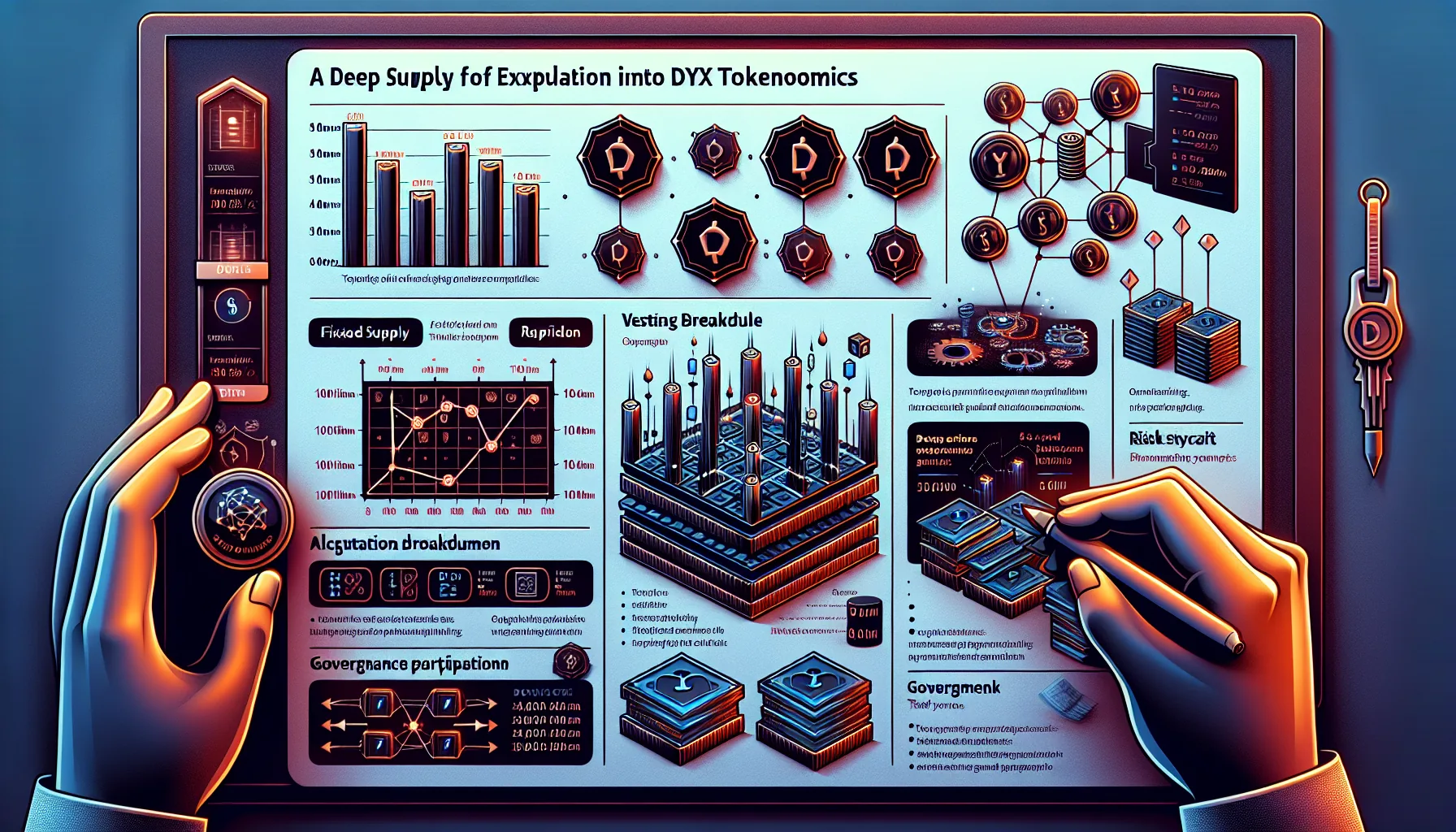
DYTEX3 Tokenomics: A Deep Dive into Supply, Distribution, and Utility
Fixed Supply and Emission Schedule
The tokenomics of DYTEX3 are centered around a fixed total supply of 100 million tokens. This capped supply model aims to establish scarcity, a feature that often appeals to long-term holders. However, one point of consideration is the relatively rapid emission schedule during the early phases. Critics argue that this could lead to short-term supply shocks, especially if a significant portion of tokens is released into circulation before the ecosystem is meaningfully developed.
Allocation Breakdown: Transparency or Centralization Woes?
DYTEX3’s allocation model divides its total supply into several predefined categories:
- Ecosystem Development and Incentives: 40%
- Team and Advisors: 20%
- Token Sale (Private and Public): 25%
- Reserve Treasury: 10%
- Liquidity Provision: 5%
While this structured allocation seems comprehensive, the 20% allocation to team and advisors has raised concerns within the community about the potential for excessive centralization. Critics often cite the risk that if these tokens are unlocked too quickly, it could lead to a lack of alignment between early contributors and long-term ecosystem growth.
Vesting Schedules: Balancing Incentives
DYTEX3 employs a multi-stage vesting schedule for both its team and ecosystem allocations. For instance, team tokens are locked for a 12-month cliff, followed by linear vesting over 24 months. Similarly, ecosystem tokens for staking rewards are designed to be distributed gradually over a 5-year period. This approach is generally seen as a mechanism to prevent immediate token dumping. However, the staggered release of ecosystem tokens does raise questions about the sustainability of rewards, especially if adoption levels fail to align with the emission pace.
Utility within the Ecosystem
The token’s primary utility within the DYTEX3 ecosystem lies in governance participation, staking for yields, and transaction fee discounts in partnered dApps. While these utilities are fairly standard, critics argue that there isn’t yet a killer application that sets DYTEX3 apart from other similar assets. The token is heavily reliant on ecosystem growth to sustain demand, a potential point of vulnerability if broader adoption stagnates.
Inflation Risk via Staking Yields
One of the more contentious aspects of DYTEX3’s tokenomics is its staking yield model. Token holders are rewarded for staking via inflationary emissions. While this incentivizes participation in securing the network, it introduces potential downward pressure on the token’s price unless the staking APR significantly outweighs inflation. This dynamic poses risks for long-term holders, as runaway inflation could dilute the token's value if staking fails to absorb a large supply.
DYTEX3 Governance
Governance Mechanisms of DYTEX3: A Comprehensive Breakdown
The governance structure of DYTEX3 is rooted in a decentralized framework, enabling active participation by its community while balancing decision-making authority and procedural oversight. However, its complexities and mechanics demand scrutiny, particularly regarding inclusivity, scalability, and susceptibility to centralization over time.
Token-Based Voting and Power Dynamics
DYTEX3 operates predominantly on a token-weighted voting model, granting governance rights based on the amount of DYTEX3 tokens held. While this model incentivizes token accumulation and engagement, it disproportionately favors large holders, creating a potential oligarchic dynamic. Smaller stakeholders often find their votes overshadowed, raising concerns about equitable representation.
Furthermore, the absence of quadratic voting—where votes grow more expensive exponentially relative to the tokens held—amplifies this issue. Without mechanisms to dilute the influence of whales, the project risks alienating smaller contributors, undermining the ethos of decentralization.
Proposal Submission and Approval Workflow
Proposals within the DYTEX3 ecosystem undergo a stringent process before reaching the governance forum. Community members can submit ideas, which must gain a predefined level of traction—typically in the form of upvotes or preliminary stakeholder feedback—before advancing to a formal on-chain vote.
However, the threshold for advancing proposals has been a topic of contention. Critics argue that it is prohibitively high, deterring participation from smaller players or those without marketing influence to garner initial support. Additionally, the technical expertise required to structure a viable on-chain proposal creates bottlenecks, limiting accessibility to the process.
Decentralized vs. Delegated Governance
To address participation gaps, DYTEX3 has incorporated a delegated voting mechanism. Token holders can assign their voting power to elected representatives, streamlining decision-making for complex proposals. While this approach aids operational efficiency, it has introduced concerns surrounding potential gatekeeping and lobbying.
Delegates with significant voting power may be swayed by private interests, eroding transparency over time. Moreover, delegate elections themselves have faced criticism for being popularity-driven rather than meritocratic, further intensifying the centralization debate.
Concerns Around On-Chain Transparency
While DYTEX3 emphasizes fully on-chain governance for transparency, the high costs associated with on-chain voting could deter smaller participants from engaging consistently. Gas fees disproportionately impact smaller holders, skewing participation demographics toward wealthier stakeholders in the long run. Critics have urged the implementation of Layer 2 solutions or subsidized voting mechanisms, but these remain under discussion, reflecting the ongoing governance friction points.
Technical future of DYTEX3
DYTex3: Current and Future Technical Developments
Layered Protocol Architecture
DYTex3 operates on a sophisticated multi-layer protocol architecture designed to enhance modularity while addressing scalability. Its foundation employs a combination of Proof-of-Stake (PoS) consensus with adaptive sharding for higher throughput. While this architecture allows for theoretically limitless scalability, its real-world efficiency remains under scrutiny. One of the ongoing challenges involves latency spikes when network activity surges, particularly during high-frequency contract execution. Developers are actively investigating this bottleneck, but resolution timelines remain indefinite.
zk-Rollup Implementation Progress
A significant technical milestone for DYTex3 is the integration of zero-knowledge rollups (zk-rollups) to optimize on-chain operations. While initial beta stages have demonstrated promising reductions in transaction gas fees and confirmation times, the technology has faced criticism for insufficient documentation. This transparency gap may alienate third-party developers and slow adoption of zk-centric dApps within the DYTex3 ecosystem. The core team has stated that refining zk-rollup algorithms remains a high priority, but practical applications outside test environments are relatively immature.
Cross-Chain Interoperability via DY-Bridge
With an emerging focus on interoperability, the DYTex3 roadmap prominently features DY-Bridge—a native cross-chain bridging mechanism aimed at facilitating asset and data transfers between networks such as Ethereum, Polkadot, and Cosmos. Although initial testing has confirmed seamless execution for smaller transactions, concerns around the scalability of its cryptographic relay system have been raised. Particularly, vulnerabilities tied to bridge contract exploits (seen in other projects) underline an area where proactive auditing is imperative.
Smart Contract Evolution
DYTex3’s smart contract layer distinguishes itself through an embedded formal verification system aimed to minimize bugs and vulnerabilities in deployed contracts. Despite this, adoption has been hindered by the steep learning curve required for developers transitioning from Solidity to DYLang, the unique programming language underpinning DYTex3’s contracts. Additionally, the lack of robust third-party tooling ecosystems poses a barrier to faster adoption by the broader Web3 developer community.
Future Developments: Adaptive Governance
The introduction of adaptive governance mechanisms is another highlight from DYTex3's roadmap. By leveraging quadratic voting and on-chain DAOs, governance decisions aim to be more equitable. Yet, critics have pointed out the susceptibility of quadratic voting schemes to manipulation via sybil attacks. Upcoming updates seek to integrate identity-verification solutions to counteract this, though balancing decentralization with user privacy remains a complex challenge.
Comparing DYTEX3 to it’s rivals
DYTEX3 vs. DYTEX2: A Detailed Comparison
When comparing DYTEX3 to its primary competitor, DYTEX2, significant differences emerge in both technical structure and functional approach. While both are designed to address scalability and interoperability, their mechanisms vary in ways that directly impact user experience and developer adoption.
Consensus Mechanism Divergence
DYTEX3 operates on an innovative hybrid consensus mechanism, blending Proof-of-Stake (PoS) with a delegated governance layer aimed at optimizing transaction speeds and decentralization. In contrast, DYTEX2 relies on a traditional PoS framework, which, while simpler, has drawn criticism for centralization risks due to high token staking requirements leading to validator dominance by a few large stakeholders. This dynamic makes DYTEX2 potentially less accessible to smaller participants, whereas DYTEX3's layered approach decentralizes decision-making more effectively at the governance level. However, the additional complexity in DYTEX3’s system can make onboarding more challenging for less-experienced validators.
Smart Contract Prowess
A key battleground between DYTEX3 and DYTEX2 is smart contract execution. DYTEX3 features an advanced virtual machine built for multi-chain operability, allowing seamless execution of contracts across different blockchain ecosystems. Conversely, DYTEX2 employs a more isolated contract environment with limited cross-chain capabilities, often requiring external bridging solutions to interact with other platforms. While DYTEX3’s interoperability is a clear advantage, it comes at the cost of increased resource requirements for running its virtual machine, potentially discouraging smaller developers from frequent deployment.
Tokenomics and Utility Differences
The native tokens for DYTEX3 and DYTEX2 also showcase stark contrasts. DYTEX3’s token is heavily utility-focused, with use cases stretching beyond staking or transaction validation. Its integration into decentralized identity frameworks has been a unique draw, catering to developers building Web3 infrastructure. DYTEX2’s token, on the other hand, leans towards more traditional crypto use cases, such as staking and governance voting. However, DYTEX2 has been scrutinized for its token distribution model, which grants a disproportionate amount of governance power to early investors. In this regard, DYTEX3’s more balanced distribution scheme appears to create more equitable opportunities for ecosystem participants.
Security and Risk Considerations
Security profiles represent another core differentiation. DYTEX3 employs multi-layered encryption and automated threat monitoring within its protocol, reducing vulnerabilities common in fast-paced blockchain environments. DYTEX2, while respectable in terms of its security infrastructure, has experienced notable incidents of validator collusion in the past. Though rectified, these events have left some lingering concerns about DYTEX2’s ability to enforce robust accountability mechanisms – areas where DYTEX3 has not yet faced similar scrutiny but remains untested under extreme stress scenarios.
DYTEX3 vs. DYTEX1: A Detailed Comparison
When comparing DYTEX3 to DYTEX1, there are critical distinctions in technology, community dynamics, and operational structure that set them apart within the competitive crypto landscape. DYTEX1, the older and more established rival, offers insights into challenges and advantages that DYTEX3 both addresses and continues to contend with.
Consensus Mechanism and Scalability
One of the key differentiators between DYTEX3 and DYTEX1 lies in their consensus mechanisms. DYTEX1 utilizes a traditional proof-of-stake (PoS) model that has, over the years, demonstrated reliable durability but struggled with performance bottlenecks during periods of heavy network activity. In contrast, DYTEX3 employs a modular hybrid consensus model, blending PoS with coordinated off-chain validation layers. While this gives DYTEX3 an efficiency edge, reducing network congestion during high volume periods, it introduces added complexity, making onboarding for new validators more challenging compared to DYTEX1's simpler validation process.
Ecosystem Interoperability
DYTEX1’s ecosystem is notable for its compatibility with older blockchain infrastructures, which has positioned it as a foundational element in various tokenized projects. However, this legacy compatibility comes at a cost—DYTEX1 often struggles to integrate with newer Layer-2 solutions without requiring significant adaptations. DYTEX3, in contrast, was designed with interoperability at its core, supporting seamless integration with emerging blockchain networks and cross-chain solutions. Yet, this forward-leaning approach has occasionally led to criticisms of overcomplicating bridge functionalities, resulting in sporadic complaints of failed transaction relays.
Tokenomics and Governance
The tokenomics of DYTEX1 heavily favor early adopters, with its inflation schedule allowing early stakers to lock in substantial rewards. While this has built a loyal base, it has also led to criticisms over centralization risks, making the network governance occasionally prone to dominance by a limited subset of stakeholders. DYTEX3 positions itself differently with broader token distribution models and a more democratic voting mechanism. However, while these principles align well with decentralization ideals, the slower decision-making process in voting rounds has opened DYTEX3 to critiques regarding responsiveness to emerging threats or system improvements.
Development Community Activity
DYTEX1 retains a strong, dedicated developer community driven by its significant first-mover advantage. DYTEX3, while attracting attention for its innovative architecture, has not yet matched DYTEX1 in terms of developer toolsets or third-party integrations. The perception that DYTEX3 requires a steeper learning curve has, at times, hindered onboarding for new developers compared to DYTEX1’s more accessible and documented ecosystem.
Both assets reflect unique priorities and trade-offs, with DYTEX1 maintaining its core strengths in simplicity and legacy adoption, while DYTEX3 pushes boundaries in modernization and interoperability.
DYTEX3 vs. DYTEX4: A Niche Battle in Crypto Utility
When comparing DYTEX3 to DYTEX4, the battle largely revolves around contrasting use cases, technology infrastructure, and governance models. DYTEX4, a prominent competitor, has carved out a reputation for its heavy focus on scalability, yet this edge also introduces trade-offs that set it apart from DYTEX3.
Scalability vs. Decentralization: A Double-Edged Sword
DYTEX4 has built its ecosystem around Layer 2 scaling solutions, providing the capacity to handle high transaction volumes with relatively low fees. This scalability is a significant draw, particularly for decentralized applications (dApps) requiring constant throughput. However, this scaling mechanism comes at the cost of decentralization—a sticking point often emphasized by advocates of DYTEX3. The governance of DYTEX4 is perceived by some to lean too heavily toward a few centralized entities controlling key decision-making powers, contrasting with DYTEX3's effort to maintain a more fully decentralized model.
For savvy investors, this creates a philosophical and practical conundrum. While DYTEX4 may be better suited for quick, cost-efficient transactions, the centralization risk could potentially undermine the trust fundamental to blockchain systems. DYTEX3, while arguably slower in throughput, prioritizes decentralization as a bedrock principle.
Tokenomics Comparison: Flexibility vs. Fixed Caps
Tokenomics also provides a interesting divergence between these projects. DYTEX4 employs an elastic monetary supply, often adjusting issuance rates to meet network demands. While this mechanism aims to curtail inflationary or deflationary spirals, it also leaves the project susceptible to criticisms of unpredictability and potential manipulation. DYTEX3, by contrast, operates with a fixed token supply, which appeals to participants seeking long-term scarcity as a value proposition but limits the flexibility to incentivize activity during network stagnation.
Interoperability and Ecosystem Depth
One area where DYTEX4 might claim an edge is its interoperable architecture. Its focus on cross-chain compatibility has made it a go-to platform for projects needing seamless interaction across multiple blockchains. In comparison, DYTEX3 has been slower to expand its interoperability, a choice criticized by some as a barrier to broader adoption. However, this may reflect a more cautious and deliberate approach by DYTEX3, ensuring security and robustness before expanding its reach.
That said, DYTEX4’s broader ecosystem could leave DYTEX3 looking more insular in comparison, particularly for developers seeking an extensive suite of tools and integrations.
Security Trade-offs in Design Philosophy
Another point of contention lies in the security models. DYTEX4’s reliance on third-party validators for its scaling solutions has raised concerns about potential vulnerabilities to exploits. While DYTEX3 isn't immune to criticisms in its approach to security governance, its stricter design framework prioritizing validation integrity over speed arguably provides a more resilient infrastructure.
Primary criticisms of DYTEX3
Primary Criticism of DYTEX3: Key Flaws and Challenges
The decentralized finance (DeFi) ecosystem has no shortage of assets vying for dominance, and DYTEX3 is no exception. While proponents of DYTEX3 often tout its underlying technology and tokenomics, a critical examination reveals a set of concerns that cannot be ignored. Below are some of the primary criticisms surrounding this crypto asset.
Overly Complex Mechanics Create Accessibility Barriers
One of the most glaring issues with DYTEX3 is its intricate operational structure. The protocol relies on a highly specialized system of staking, liquidity provision, and reward mechanisms, which have been labeled by some as unnecessarily convoluted. While complexity can lead to innovative opportunities for niche users, it often alienates a significant portion of the crypto community, including seasoned investors who value usability and efficiency. This complexity increases the risk of user error, potentially locking funds in smart contracts or leading to suboptimal investment outcomes for less experienced participants.
Centralization Concerns Behind the Facade of Decentralization
Despite its marketing emphasis on decentralization, critics have pointed to DYTEX3’s governance model as a red flag. Token distribution skews heavily toward early backers, protocol developers, and associated private entities, creating an imbalance in governance power. This disproportionate concentration of influence has led some observers to question the true decentralization of the ecosystem. Critics argue that such structural centralization undermines the democratic ethos that DeFi is supposed to represent.
Smart Contract Vulnerabilities
Another significant area of concern involves the security of DYTEX3’s smart contracts. The project’s hurried rollout of features has amplified fears of insufficient code audits and potential vulnerabilities. Even minor flaws in smart contracts could result in devastating exploits, as has been seen in other high-profile DeFi incidents. While the team emphasizes its commitment to security, detractors argue that the risks associated with DYTEX3’s technical underpinnings remain uncomfortably high.
High Reliance on Market Conditions for Sustainability
A recurring critique of DYTEX3 revolves around the sustainability of its reward mechanisms. Critics argue that the protocol’s dependency on aggressive token emissions to incentivize participation creates an ecosystem highly reliant on favorable market conditions. Should market interest wane, the token’s inflationary pressures could significantly devalue holdings, destabilizing its overall economic model.
Limited Interoperability Hinders Broader Adoption
DYTEX3’s ecosystem operates with limited cross-chain compatibility, a drawback that places it at a disadvantage compared to other DeFi projects embracing interoperability. Without seamless integration into broader ecosystems, its utility remains constrained, limiting its ability to capture a wider audience or achieve significant traction across diverse blockchain networks.
These critical points highlight the pressing concerns around DYTEX3, presenting challenges that demand scrutiny from even its most dedicated supporters.
Founders
The Founding Team Behind DYTex3: Unpacking the Origins
DYTex3 emerges from the vision of a relatively small but technically proficient founding team, whose expertise spans cryptography, blockchain development, decentralized finance, and game theory. The core team consists of five principal members, all of whom possess verifiable histories in crypto-related ventures. However, the project remains partially opaque about the exact scope of responsibilities held by each individual, raising concerns about lack of transparency in governance and decision-making processes.
One of the most significant figures driving DYTex3 is a pseudonymous leader who goes by the name “Nyko A.” While details about Nyko’s identity remain undisclosed, online discourse suggests they have been involved in other high-profile, albeit controversial, blockchain projects. This lack of clarity regarding their prior track record has led to skepticism around the project’s credibility from certain portions of the crypto community.
The backing development team boasts ties to both open-source blockchain projects and institutional ecosystems. A notable mention is their head of smart contract engineering, who contributed to the architecture of several Ethereum Layer 2 solutions. However, a dive into the team’s GitHub repositories reveals less-than-consistent commit histories, sparking questions about the team's ability to maintain a steady development pace long term. Moreover, while their on-paper qualifications are impressive, there has yet to be a significant public audit of their professional claims, which further complicates assessments of the team’s credibility.
It's also worth mentioning that DYTex3's founding team has positioned itself to operate in a decentralized but highly selective manner. Key decisions are purportedly driven by a hybrid governance model, supposedly combining elements of community DAO voting with the development team's direct input. However, critics have flagged the founding team’s over-representation in the governance process, asserting that it undermines true decentralization. Many crypto-savvy onlookers view this as a deliberate tactic to retain substantial control over the protocol, potentially alienating portions of their target demographic seeking a fully decentralized solution.
Though the team successfully cultivated partnerships with established liquidity providers in the early phases of DYTex3’s development, there are still unresolved concerns around team compensation. Speculation continues to grow on whether token allocations disproportionately favor founders, raising red flags about long-term alignment with the broader community’s interests. Without detailed documentation to address such concerns, the founding team’s credibility is likely to remain a point of contention in the broader discourse surrounding DYTex3.
Authors comments
This document was made by www.BestDapps.com
Sources
- https://dytex3.org/whitepaper.pdf
- https://dytex3.org/yellowpaper.pdf
- https://dytex3.org
- https://docs.dytex3.org/
- https://github.com/dytex3
- https://explorer.dytex3.org/
- https://medium.com/dytex3
- https://forum.dytex3.org/
- https://blog.dytex3.org/
- https://dytex3.org/roadmap
- https://dytex3.org/tokenomics
- https://dex.dytex3.org/
- https://security.dytex3.org/audit.pdf
- https://partners.dytex3.org
- https://governance.dytex3.org/
- https://staking.dytex3.org/
- https://dytex3.org/legal/terms
- https://dytex3.org/legal/privacy
- https://community.dytex3.org/
- https://dytex3-assets.s3.amazonaws.com/technical-overview.pdf


