History of DYTEX2
The History of DYTEX2: From Concept to Blockchain Deployment
DYTEX2's journey began as an experimental edge-case solution to address scaling inefficiencies in decentralized ecosystems. Initially conceptualized by a small group of cryptographic developers and blockchain architects, the project aimed to build a streamlined Layer-2 protocol that could enhance transaction throughput without compromising decentralization. The project gained traction in niche developer communities, primarily due to its novel consensus model and its ability to execute high-complexity smart contracts while reducing gas costs.
The early days of DYTEX2 were not without challenges. Its whitepaper, released during a period of saturating blockchain projects, faced initial skepticism for its ambitious claims. Critics pointed out potential centralization risks in its protocol design, particularly due to its unique validator incentive structure. This skepticism, however, did not deter the project team. They engaged in extensive testing and publishing of Proof-of-Concept (PoC) models, which eventually silenced some detractors by showcasing practical viability.
The project’s pivotal milestone was its rollout of a public mainnet. This transition came after a prolonged testnet phase plagued by delays and technical setbacks. Notably, DYTEX2 encountered difficulties in striking a balance between validator node efficiency and network-wide security, leading to several postponements of its anticipated launch timeline. The final deployment reflected significant compromises in certain aspects of the architecture, including a capped number of active validators, which some critics argue undermines its decentralization ethos.
Security also cast an early shadow on the history of DYTEX2. A high-profile testnet vulnerability exposed a potential attack vector that could allow certain validators to manipulate state updates. Although patched before the mainnet launch, it raised questions about the thoroughness of its initial audits. The incident further fueled debates around whether the project prioritized innovation over robust security practices—a criticism that continues to linger in parts of the crypto community.
Despite these hurdles, DYTEX2 quickly garnered interest from niche blockchain developers, particularly those needing solutions for high-volume, low-latency applications. Its adoption among several decentralized fintech projects cemented its reputation as a practical, though imperfect, option in certain use cases. It remains a polarizing asset, often praised for its ingenuity but criticized for the perceived trade-offs in its architectural choices. Whether these trade-offs were justified is a topic of ongoing debate among blockchain purists and Layer-2 advocates alike.
How DYTEX2 Works
How DYTEX2 Works: Underlying Mechanics and Protocol Design
DYTEX2 operates on a dual-layer blockchain architecture designed to optimize both scalability and transaction efficiency. At its core, the asset leverages a Proof-of-Delegated-Stake (PoDS) consensus mechanism, which combines elements of traditional Proof-of-Stake systems with a tiered delegation model. This allows users to stake their holdings while optionally designating trusted node operators to validate blocks, which reduces network congestion and lowers the overall barrier to entry for participation.
Smart Contract Framework and Implementation
DYTEX2’s smart contract functionality is built around a modular, upgradeable framework. This approach prioritizes flexibility, allowing contracts to evolve without necessitating hard forks. While this offers a degree of resilience against protocol ossification, it has raised concerns within the community regarding security. Critics argue that upgradeable contracts could be exploited by malicious actors or compromised by poorly audited updates, introducing an element of centralization risk.
Interoperability and Cross-Chain Functionality
One of DYTEX2’s standout features is its native support for cross-chain communication. Through an integrated bridge protocol, DYTEX2 facilitates seamless asset transfers across multiple blockchains, including both Ethereum Virtual Machine (EVM)-compatible networks and non-EVM chains. The protocol employs a multi-signature validation model to prevent double-spending and ensure the integrity of transactions. However, the complexity of cross-chain transfers has led to occasional delays and user confusion, specifically when bridging high-frequency assets.
Tokenomics and Utility
DYTEX2 uses a deflationary tokenomics model to regulate its total supply. Transaction fees are partially burned, effectively reducing the circulating supply over time. Additionally, the network necessitates token-locking for governance participation, incentivizing long-term holding while aligning user incentives with protocol growth. However, this token-locking mechanism has been critiqued for limiting liquidity and potentially alienating users seeking short-term utility.
DYTEX2 tokens are also essential for accessing certain protocol-exclusive features, such as lowered transaction fees and priority access to new dApps launched within the ecosystem. While this bolsters token utility, it creates an inherent gatekeeping dynamic that has drawn criticism for potentially favoring larger stakeholders over smaller participants.
Governance and Decentralization
The governance model employs token-weighted voting, granting more influence to users holding significant amounts of DYTEX2. Proposals must meet quorum thresholds before being approved, ensuring that major decisions are not made lightly. However, this has raised questions about whether true decentralization is achievable, as the governance system could disproportionately favor wealthier participants, potentially undermining the democratic ethos often associated with blockchain ecosystems.
Use Cases
Exploring the Use Cases of DYTEX2: Beyond Speculation
DYTEX2 is a crypto asset uniquely tailored for specific applications within decentralized ecosystems, attracting attention for its innovative utility and limitations. In this section, we delve into the core use cases of DYTEX2 and assess its functionality within the crypto landscape.
1. Governance and Voting Mechanisms
One of the primary use cases of DYTEX2 lies in decentralized governance. Holders of DYTEX2 can participate in protocol governance by voting on upgrades, parameter adjustments, and other critical decisions. The asset operates as a means to decentralize control, empowering its community to influence the platform’s evolution. However, like many governance tokens, the influence of whale wallets—entities or individuals holding disproportionately large amounts—has sparked concerns about equitable representation in decision-making.
2. Network Staking and Security
DYTEX2 also plays a vital role in validating and securing its associated blockchain network. Through staking, individuals lock up their tokens to support consensus mechanisms, such as Proof-of-Stake (PoS) variants. This process not only enhances network security but also enables participants to earn rewards. Nevertheless, staking comes with risks, including illiquidity during lock-up periods and potential penalties for validator downtime or misbehavior, which can impact less-experienced users.
3. Incentivizing Ecosystem Participation
To drive ecosystem activity, DYTEX2 is often used as a reward mechanism. It incentivizes behaviors such as liquidity provisioning in decentralized finance (DeFi) protocols, data validation in decentralized storage solutions, or participation in network maintenance. While this encourages adoption, some critics argue that these rewards could lead to short-term “farm-and-dump” behavior, where users exploit incentives without contributing to long-term ecosystem growth.
4. Access to Premium Services
Another distinctive use case for DYTEX2 involves its role as a utility token to access premium services or features within specific decentralized applications (dApps). These might include advanced analytics, priority transaction processing, or exclusive content. While this highlights the token's versatility, it could also raise questions about the potential for creating paywalls that hinder broader accessibility.
5. Interoperability and Cross-Chain Transactions
DYTEX2 has been positioned as a cross-chain asset, facilitating transactions and interactions between different blockchain ecosystems. This enhances its utility in multi-chain environments, but cross-chain operability also introduces technical complexities and potential vulnerabilities, such as the risk of bridge exploits—a recurring issue in crypto.
The use cases for DYTEX2 demonstrate its ambitious scope, but they also underscore the challenges inherent in integrating a crypto asset into diverse application layers.
DYTEX2 Tokenomics
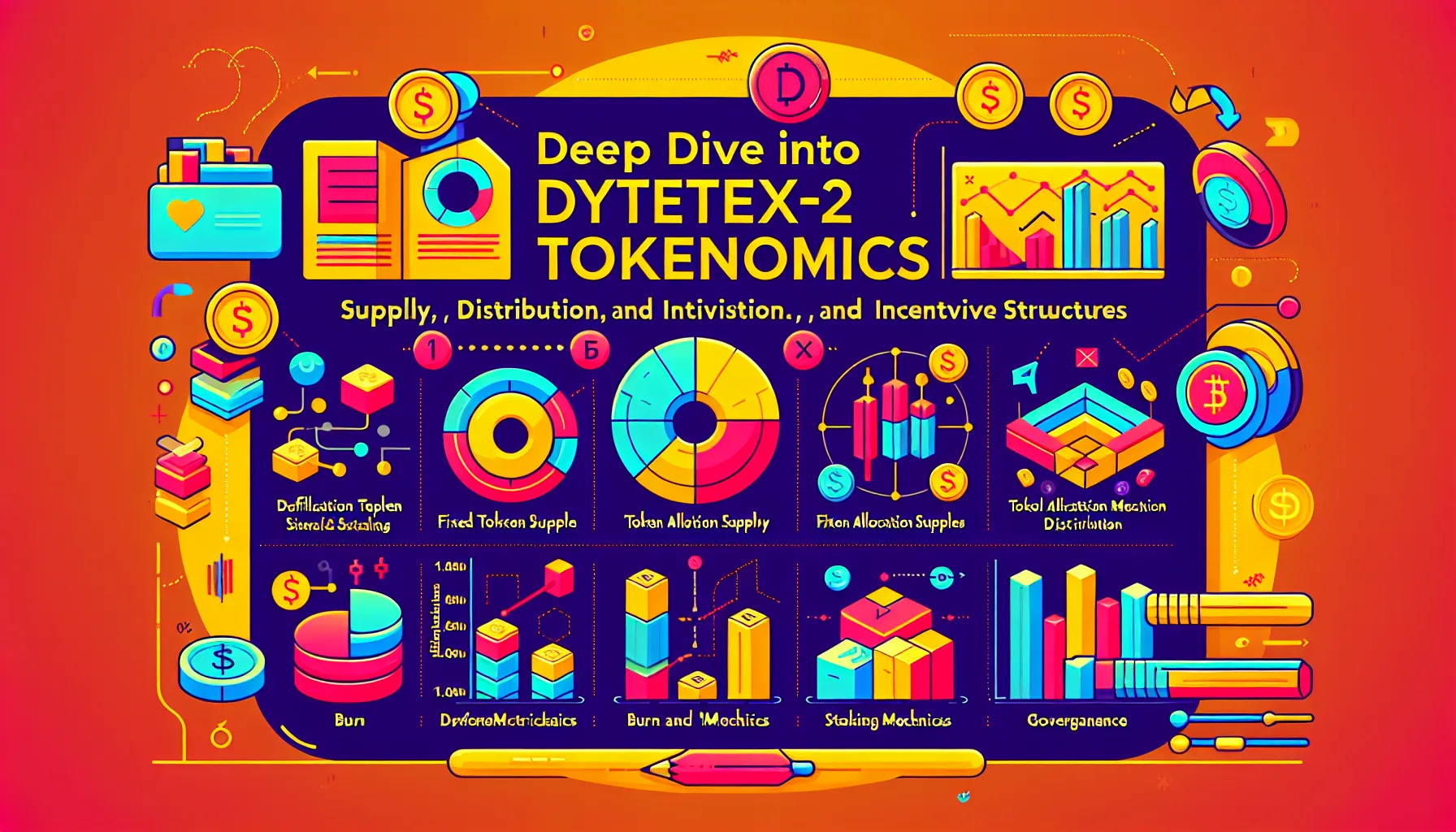
Deep Dive into DYTex2 Tokenomics: Supply, Distribution, and Incentive Structures
DYTex2 employs a deflationary tokenomics model built to balance scarcity with utility, but it’s not without its complexities. At its core, the ecosystem revolves around a fixed total supply of 100 million tokens, a feature aimed at maintaining long-term supply constraints. However, the initial token allocation raises important questions for both retail and institutional participants.
Allocation Breakdown and Utility Challenges
The initial distribution of DYTex2 is segmented into multiple categories:
- Community Incentives: 40%
- Team Allocation: 22% (locked for 24 months with staggered monthly vesting thereafter)
- Ecosystem Development Fund: 20%
- Token Sale Events: 15%
- Liquidity Reserves: 3%
While the emphasis on community incentives indicates a user-centric design, the relatively high team allocation at 22%—even with vesting schedules—could be interpreted as a potential centralization risk. Crypto-native investors often expect more aggressive decentralization during the early stages of a project, so this could limit appeal to those prioritizing grassroots ecosystems.
Burn and Staking Mechanics
DYTex2 incorporates a token burn mechanism orchestrated through transaction fees to ensure continuous deflation. Specifically, 0.5% of each transaction is permanently removed from circulation. While this strategy might appeal to holders who thrive on scarcity, it could be a friction point for frequent users requiring affordable operational costs within the ecosystem. Additionally, the burn mechanism might inadvertently set up liquidity constraints as token supply shrinks, creating potential inefficiencies in future scaling.
Furthermore, the staking model is designed to encourage investor participation but is tied to dynamic annual percentage yields (APY) that fluctuate based on network activity and the ratio of staked-to-circulating supply. While this dynamic structure creates adaptability, it can deter institutional adoption if rewards lack predictability.
Governance and Control
Token holders participate in protocol governance, a common feature in contemporary DeFi ecosystems. However, with the top 10 wallets collectively controlling over 18% of the token supply post-launch, there’s an inherent oligopolistic risk in governance decisions. Whether DYTex2 can successfully transition into genuine decentralized governance over time is yet to be demonstrated, and this remains a key consideration for those wary of concentration issues.
Inflation Concerns in Ecosystem Funds
The 20% allocated to the Ecosystem Development Fund introduces potential inflationary pressures. Although intended to foster growth, an overly aggressive or poorly timed release of these tokens could erode value for existing participants. Developers must strike a fine balance to avoid destabilizing the fledgling market dynamics.
DYTEX2 Governance
DYTEXT2 Governance: Decentralized Decision-Making and Challenges
DYTEX2 governance is built upon a decentralized framework aimed at facilitating distributed decision-making among its stakeholders. This framework empowers token holders to actively participate in the directional and operational adjustments of the ecosystem through voting mechanisms. However, while this model upholds decentralization principles, it presents both strengths and limitations that merit scrutiny.
Governance Token Utility
The primary instrument for governance within the DYTEX2 ecosystem is its governance token. Token holders possess the ability to propose, debate, and vote on various protocol changes, including updates to network parameters, treasury allocations, and potential integrations with external platforms. Proposals typically require a threshold level of support before advancing to the voting stage, ensuring a degree of consensus before community-wide decision-making takes place. The emphasis on token-weighted voting links governance power directly to token ownership, a factor that both strengthens and complicates broad participation.
Centralization Risks and Voter Apathy
While DYTEX2 governance aims for decentralization, token-weighted voting inherently raises concerns regarding uneven power distribution. Whales—entities or individuals holding large quantities of tokens—can disproportionately influence the outcomes of governance proposals. As a result, smaller token holders may feel their votes carry negligible weight, fostering disengagement from the decision-making process.
Inadequate voter participation is an additional vulnerability in the governance structure. In scenarios where a significant portion of token holders abstains from voting, decisions could be driven by a small subset of the community. This lack of engagement may lead to decisions that do not reflect the broader ecosystem's needs, posing risks to the protocol’s alignment with its user base.
Proposal Accessibility and Complexity
The proposal process within DYTEX2 governance requires a comprehensive understanding of the ecosystem’s operational mechanics and the technical implications of changes. While this ensures proposals are well-founded, it also raises potential barriers for less-experienced contributors. The high complexity of the system can indirectly centralize influence among highly technical users or specialized governing bodies, creating potential bottlenecks for diverse contributions.
Multi-Sig Governance Elements
In addition to community-led proposals, key changes to the DYTEX2 protocol may necessitate the approval of a multi-signature (multi-sig) wallet controlled by a group of trusted developers or stakeholders. While this provides a safeguard against malicious changes, it introduces potential concerns over centralization and accountability, particularly if the identities or decision-making processes of these signatories lack transparency.
Evolution of Ecosystem Governance
DYTEX2 governance is iterative, constantly adapting to emerging challenges and shifting community dynamics. Yet, the ability—or inability—to resolve governance bottlenecks, address power imbalances, and promote inclusivity will remain critical to the long-term functionality and legitimacy of its decentralized model.
Technical future of DYTEX2
Current and Future Technical Developments: DYTex2
Enhanced Layer-2 Protocol Scaling
DYTex2 is integrating advanced enhancements to its existing Layer-2 scaling framework, aiming to address transaction throughput and significantly reduce gas fees without compromising network security. The protocol employs modified zero-knowledge rollups (zk-rollups) coupled with optimized cryptographic proof generation, which allows faster computations with fewer computational resources. However, concerns remain about how the growing complexity of the zk-rollup architecture could impact developers attempting to integrate smart contracts into the DYTex2 ecosystem. Technical barriers may limit accessibility for smaller teams or individual developers without the necessary expertise.
Smart Contract Optimizations
The DYTex2 project is iterating on its core smart contract functionalities to improve composability across decentralized applications (dApps). A major focus is inter-protocol communication, with plans to implement a seamless smart contract bridging mechanism. Such a feature could reduce fragmentation between ecosystems, but critics point out challenges in maintaining robust security across these bridges. Cross-chain vulnerabilities continue to be a noteworthy attack vector across the crypto industry, and DYTex2 will need to address these risks proactively during implementation.
Onchain Governance Automation
As part of a push towards decentralization, DYTex2 is developing a comprehensive onchain governance module emphasizing time-weighted voting and quadratic funding mechanisms. The updated governance system is designed to adapt dynamically based on community participation rates, potentially mitigating voter apathy issues. While this is ambitious, governance automation risks excluding users unfamiliar with complex voting protocols. Another technical hurdle will be deploying the code in a fail-safe manner to prevent governance takeover or manipulation during the transition phase.
Integration of Modular Token Standards
To remain adaptable to emerging use cases, DYTex2 is working on compatibility with modular token standards that extend beyond ERC-20 and ERC-721. This enhancement aims at fostering advanced functionality for use cases such as fractional ownership, decentralized identity verification, and non-fungible asset bundling. However, backward compatibility and ecosystem fragmentation could pose challenges for projects already building on prior iterations of DYTex2's mainnet.
Focus on Sustainability Metrics
DYTex2 has initiated a technical roadmap to ensure more energy-efficient operation through selective proof-of-stake validators governed via a reputation-based scoring system. While this may lower the protocol’s carbon footprint, the reliance on a reputation system for validator selection raises concerns around centralization risks—the decisions about which validators receive higher reputations may inadvertently skew toward larger stakeholders.
Preliminary Quantum Resistance Research
To future-proof its security infrastructure, DYTex2 has initiated foundational research into quantum-resistant cryptographic algorithms. Although still in the theoretical stage, this proactive measure highlights a keen awareness of emerging threats. However, the lack of immediate deployment raises questions about the practical relevance of this research in the short-to-medium term.
Comparing DYTEX2 to it’s rivals
DYTex2 vs BTC: A Technical and Utility Comparison
When evaluating DYTex2 in the context of Bitcoin (BTC), the differences between the two crypto assets become a narrative of contrast: historical purpose versus modern utility, along with varying mechanisms of use and efficiency. While BTC stands as the pioneering cryptocurrency, DYTex2 positions itself as an innovative offering tailored for next-generation blockchain ecosystems.
Consensus Mechanism: Energy Efficiency vs. Proven Resilience
BTC operates on a Proof of Work (PoW) framework, where network security depends on substantial computational power. This has led to concerns about energy inefficiency and environmental sustainability, especially as BTC's mining difficulty continues to scale. DYTex2 differentiates itself by employing a next-gen consensus protocol engineered for significantly lower energy consumption while achieving high throughput. This not only makes DYTex2 appealing for eco-conscious developers and users but also positions it as a scalable solution for projects that require fast transaction validation. However, this focus on energy efficiency could raise skepticism regarding DYTex2’s ability to match BTC’s long-standing decentralized security record and resistance to censorship.
Token Utility: Store of Value vs. Ecosystem Applications
BTC is widely regarded as "digital gold," serving as both a hedge against inflation and a long-term store of value due to its limited supply of 21 million coins. On the other hand, DYTex2 does not strive to inhabit the same narrative. Instead, its utility lies in its multi-functional token design, allowing for ecosystem participation, governance, and potentially unlocking DeFi integrations. That said, while DYTex2’s versatility enables practical use cases that Bitcoin does not inherently aim to provide, it is worth noting that this diversity in function raises complexities such as potential regulatory scrutiny or diluted focus among target audiences.
Transaction Speed and Fees: Modern Fluidity vs. Legacy Constraints
Bitcoin’s limitations in transaction speed (approximately seven transactions per second) and historically high network fees during periods of congestion make it less attractive for everyday or micro-transactions. DYTex2 utilizes an infrastructure optimized for near-instant transactions and minimal fees, which puts it in direct contention with BTC's transactional inefficiencies. However, questions remain about DYTex2's ability to maintain this performance at scale without compromising its network's stability and decentralization.
This analysis highlights fundamental differences between DYTex2 and BTC, putting into context their divergent priorities and potential hurdles. While BTC’s longevity and security are undeniable, DYTex2's focus on eco-efficiency, functional versatility, and speed deserves scrutiny from developers and investors alike.
Dytex2 vs Ethereum: A Detailed Comparison of Strengths and Weaknesses
When comparing Dytex2 (DYTEX2) to Ethereum (ETH), it becomes clear that while they both operate within the blockchain ecosystem, they diverge significantly in architecture, utility, and scalability goals. Ethereum has long-established itself as the preeminent smart contract platform, a benchmark that Dytex2 is inevitably measured against. However, Dytex2 brings its own innovations and challenges, making the comparison between the two layered and multifaceted.
Smart Contract Functionality and Ecosystem Depth
Ethereum has an unparalleled advantage when it comes to developer adoption and ecosystem depth. With Solidity as its programming language and the Ethereum Virtual Machine (EVM) as its backbone, Ethereum offers a mature framework that thousands of developers leverage to design decentralized applications (dApps). Dytex2, by contrast, employs a more streamlined, proprietary smart contract system aimed at reducing development complexity and increasing on-chain automation efficiency. While this focus does simplify certain workflows, it creates a barrier for Ethereum-native developers reluctant to migrate away from the existing EVM ecosystem. This limits Dytex2’s ability to tap into Ethereum's vast pool of pre-existing tools, tutorials, and infrastructure.
Scalability and Transaction Efficiency
Dytex2 emphasizes an advanced approach to scalability that may outperform Ethereum in terms of raw throughput. Ethereum's legacy Layer-1 architecture has historically struggled with network congestion and high fees, although the Layer-2 rollup ecosystem and ongoing migration toward proof-of-stake consensus have improved efficiencies. Dytex2, however, employs a uniquely modular architecture integrating sharding and native rollups, promising a higher transaction-per-second (TPS) ceiling. However, criticisms persist regarding the complexity of implementing sharding within the Dytex2 network, which could introduce security challenges or synchronization delays during periods of peak usage.
Interoperability and Cross-Chain Integration
Where Dytex2 seeks to differentiate is in its approach to cross-chain interoperability. While Ethereum’s ecosystem has begun experimenting with interoperability solutions like bridges and sidechains, it remains primarily self-contained. Dytex2, on the other hand, is designed with built-in native tools aimed at seamless token and data transfers across multiple blockchains. Yet, this ambitious goal comes at a cost—security concerns with multi-chain architectures remain a red flag in the broader blockchain landscape, and Dytex2’s relatively experimental framework could make it a target for exploits that more entrenched networks like Ethereum are better equipped to mitigate.
Decentralization Trade-Offs
One of the critical areas of divergence is the trade-off between decentralization and performance. Ethereum’s node distribution and its active global community make it one of the most decentralized blockchain networks in existence. Dytex2, for all its technical promises, operates with a smaller validator set, raising questions about its resilience to censorship and its long-term commitment to decentralization. While this choice may facilitate faster consensus and lower latency, it risks alienating users and developers for whom decentralization is paramount.
By focusing on these contrasts, the delineation between Dytex2 and Ethereum underscores the distinct priorities informing the design and development of each platform.
Comparing DYTEX2 to Polkadot (DOT): A Detailed Look at Technical and Ecosystem Differences
When comparing DYTEX2 to Polkadot (DOT), the most striking difference lies within their design philosophies and approaches to scalability. DYTEX2 emphasizes modular functionality, integrating specific-use cases directly into its core mechanics. In contrast, Polkadot achieves modularity through its relay chain and parachain architecture, explicitly designed to enable heterogeneous blockchain interoperability.
One critical area where DYTEX2 diverges from Polkadot is governance. Polkadot employs an on-chain governance model where token holders vote on protocol upgrades, parachain auctions, and operational parameters. While this process is efficient for decentralized decision-making, it does have drawbacks such as potential voter apathy or the influence of whales with significant DOT holdings. DYTEX2, however, opts for a semi-decentralized governance structure where key decisions involve a smaller council of stakeholders alongside community consensus. This system shows a tradeoff between speed of decision-making and inclusivity, but it also draws criticism for potentially concentrating too much influence in the hands of a few.
From a technical perspective, Polkadot’s scalability stems largely from its ability to process transactions in parallel across its parachains. This differential computation architecture helps alleviate network congestion, but it also introduces vulnerabilities. Each parachain must maintain its own security, creating challenges if a smaller parachain becomes a vector for attacks. DYTEX2, by contrast, maintains a more integrated security model across all its modules. While this centralization of security can mitigate attack vectors, it also places more computational stress on the core network during spikes in activity.
Another divergent factor is developer adoption and tooling. Polkadot heavily utilizes Substrate, a blockchain framework that simplifies building custom parachains. This framework lowers development barriers for teams entering the ecosystem. Conversely, DYTEX2 prioritizes proprietary SDKs and tightly integrated tooling, which might deter some developers due to steeper learning curves. However, DYTEX2’s approach could result in more polished and performance-optimized dApps since developers must adhere to stricter infrastructure guidelines.
Finally, economic models differ significantly. Polkadot’s parachain slot auctions demand substantial upfront capital or backing from a community crowdloan. While this structure incentivizes committed projects, it can also act as a barrier for smaller players. DYTEX2 avoids such auctions by adopting a rent-based resource allocation model, which simplifies onboarding but can create ambiguity around long-term cost predictability.
Although DYTEX2 and Polkadot aim to address similar challenges in blockchain scalability and interoperability, their fundamentally different methodologies make them suitable for distinct types of projects and user bases.
Primary criticisms of DYTEX2
Primary Criticism of DYTEX2: Scalability and Centralization Concerns
DYTEX2, while boasting innovative features that appeal to certain niches within the crypto space, has drawn scrutiny for several fundamental issues that challenge its broader adoption and long-term viability. A significant portion of the criticism stems from concerns over scalability and centralization, which remain core obstacles to its growth and efficiency in a competitive blockchain ecosystem.
Scalability and Network Bottlenecks
One of the most persistent critiques of DYTEX2 revolves around its apparent limitations in scaling to accommodate a high volume of transactions. Despite its development team’s focus on optimizing transaction speeds, many users and developers have noted that the network can become congested during peak activity periods. This issue becomes particularly pronounced with the increasing popularity of decentralized applications (dApps) and tokenized ecosystems built on DYTEX2. Critics argue that as the demand for on-chain activity scales, the network’s inability to handle large transaction throughput without experiencing significant slowdowns could deter both institutional and retail investors.
The reliance on high gas fees during periods of congestion further exacerbates the problem, making the network less appealing for smaller transactions. This scalability bottleneck is viewed as a potential inhibitor to DYTEX2's ability to compete with other blockchain solutions that offer more robust Layer 2 options or interoperability enhancements.
Validity of Decentralization Claims
Another contentious issue surrounding DYTEX2 is the ongoing debate about its level of decentralization. While the project markets itself as a decentralized asset with distributed governance, critics argue that the validator network is relatively small and heavily dependent on a handful of dominant players. This creates a power imbalance, raising the risk of collusion or central points of failure that threaten the network's integrity.
Furthermore, skeptics point to the governance structure, which appears to favor early adopters and large stakeholders disproportionately. This asymmetry in voting power could lead to decision-making processes that prioritize the interests of major token holders rather than the broader community, undermining the decentralized ethos that forms the foundation of the blockchain movement.
Developer Ecosystem Friction
Another layer of criticism arises from the challenges faced by developers building on DYTEX2. Reportedly, some have encountered difficulties related to limited tooling, inadequate technical documentation, and slower update cycles compared to competing platforms. This lag in fostering a developer-friendly ecosystem could dampen innovation, leaving DYTEX2 at risk of being viewed as less accessible than alternative blockchains with better-supported infrastructures.
While DYTEX2 has its advocates, these criticisms highlight substantial roadblocks that require addressing to secure its position in the rapidly evolving crypto landscape.
Founders
The Founding Team Behind DYTEX2: Innovators or Controversial Figures?
DYTEX2 was established by a closely-knit group of blockchain developers, cryptographers, and financial engineers. The founding team operates under a semi-pseudonymous structure, with only a subset of its members publicly known—a factor that has sparked both intrigue and skepticism among the crypto community. This decentralized and somewhat secretive approach aligns with the ethos of blockchain but has also raised concerns about transparency and accountability.
At the forefront of the project is the enigmatic founder known by the pseudonym "Nexus_Zero." While not much is known about this figure's personal identity, past blockchain development experience has been cited in relation to early prototypes for distributed computing networks, although no verifiable public track record exists. This lack of verifiable credentials has drawn scrutiny and remains a sticking point for critics questioning the legitimacy of the team's expertise.
Among the publicly identified members is Elena Vargas, a seasoned software engineer with a decade of experience in decentralized application development. Vargas has openly discussed her involvement in designing the underlying consensus protocol of DYTEX2, which she claims is built for scalability while minimizing resource usage. However, Vargas’s prior involvement with a failed DeFi project three years ago has also drawn critical attention, with some skeptics questioning whether lessons from that earlier experience have been adequately addressed in the DYTEX2 framework.
Another high-profile team member is Ravi Shenkar, a cryptographic researcher with academic publications in zero-knowledge proofs and distributed systems. Shenkar has frequently engaged with the crypto community in technical forums, defending the mathematical underpinnings of DYTEX2’s architecture. Despite his technical acumen, concerns have been raised regarding his direct involvement in writing the project's whitepaper, as it reportedly omitted detailed explanations of the tokenomics model early on—a decision for which he has faced critique from institutional analysts.
A less celebrated aspect of DYTEX2's founding narrative is the presence of a venture capital firm that provided early-stage funding for the project. While the firm’s involvement ensured the team’s ability to develop and deploy the initial blockchain network without financial constraints, some community members have questioned whether this compromises the project’s decentralization ethos. Furthermore, there is lingering uncertainty about how much influence these VC stakeholders may exert in governance decisions moving forward.
Overall, the DYTEX2 founding team presents a mix of innovation-driven expertise and contentious points, leaving the community divided on its potential implications for the asset’s future trajectory.
Authors comments
This document was made by www.BestDapps.com
Sources
- https://www.dytex2.com/whitepaper.pdf
- https://www.dytex2.com/technical/yellowpaper.pdf
- https://github.com/dytex2/core
- https://explorer.dytex2.com
- https://docs.dytex2.com/developer-resources
- https://www.dytex2.com/blog/tokenomics
- https://www.dytex2.com/faqs/consensus-mechanism
- https://medium.com/dytex2-project/latest-updates
- https://www.dytex2research.org/papers/staking-mechanism.pdf
- https://www.coingecko.com/en/coins/dytex2
- https://www.coinmarketcap.com/currencies/dytex2
- https://www.dytex2.com/api-documentation
- https://forum.dytex2.com/discussions/validators
- https://www.dytex2.com/ecosystem/integration-guides
- https://dytex2.foundation/grants
- https://etherscan.io/token/dytex2
- https://dex.dytex2.com/trading-pairs
- https://audit.dytex2.com/security-assessment.pdf
- https://oracle.dytex2.com
- https://www.dytex2.com/roadmap